Wednesday 6th of May 2026

Nairobi, Kenya

The Impact of African Fashion, Food and Music on Global Pop Culture

The rich tapestry of African heritage has woven its threads deeply into the fabric of creation in the dynamic world of global pop culture, leaving an imprint that is felt by people all over the world.
The rich symphony of rhythms, colors, styles, and narratives that make up Africa’s effect on the world’s pop culture landscape has captured people’s attention.
African culture has surpassed geographical limits, influencing and enhancing the global cultural mosaic in everything from music and fashion to art and dance.

Music: A Sonic Journey
The throbbing rhythm of African music is at the core of its effect on worldwide pop culture.
Every region of the world has been influenced by pulsating rhythms, contagious melodies, and soul-stirring harmonies that have their roots in Africa.

Traditional African drumming’s rhythmic patterns have evolved into the worldwide sensation known as Afrobeat.

This genre was invented by musicians like Fela Kuti, who combined traditional rhythms with contemporary components to produce a sound that is recognized by audiences on many continents.
Today, the Afrobeat genre has captured the attention of international superstars and continues to influence contemporary music with its mix of funk, jazz, and African rhythms.

Fashion: A Kaleidoscope of Identity
A combination of color, history, and invention make up African fashion.
African textiles are more than just clothing; they are carriers of stories and symbolism, from the dexterous beadwork of Maasai jewelry to the bright designs of West African wax fabrics.

African aesthetics have been embraced by the international fashion industry, exhibiting a variety of design trends and materials.
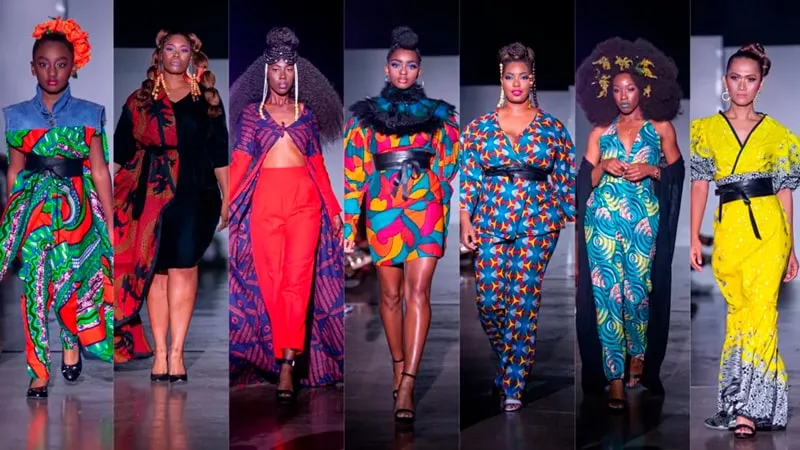
Traditional African themes are being used as inspiration by designers to create attire that is universal. African headwraps are elegant, kente cloth is regal, and modern silhouettes are combined with indigenous textiles on the runway.

Dance: A Celebration of Life
African rhythms and movements vibrate with vitality in the world of dance. African societies place a great deal of value on traditional dances, which frequently represent rites, holidays, and storytelling.
These dances have developed into a joyful, universal language.

From hip-hop to contemporary dance, the energizing and rhythmic motions have influenced many different types of dance around the world. They demonstrate the ability of dance to span cultures and eliminate language barriers.

Art: A Canvas of Diversity
The range of African art, from prehistoric rock paintings to contemporary works of art, is as diverse as the continent itself. Abstraction, symbolism, and a connection to spirituality are features of traditional African art.
These aesthetic traditions have influenced modern artists and designers by infusing themselves into worldwide pop culture. The impact of African art can be found in graffiti, street art, and modern art galleries around the world.
The blending of classic themes with contemporary platforms speaks to the interaction between the past and present that appeals to people all around the world.

Narratives: A Window into Culture
Through oral traditions, folklore, and storytelling, African narratives have captured hearts for countless centuries. These stories frequently offer illuminating cultural and moral lessons.
African storytelling has recently discovered new outlets in literature, film, and digital media.
For instance, the revival of Afrofuturism imagines alternative worlds while drawing inspiration from African mythology and experiences.
This genre serves as evidence of how African narratives continue to have an impact on and mold the imaginary worlds of popular culture.

Stories that Bind
Imagine yourself captivated by a book that interweaves tales of bravery, resiliency, and interpersonal connections. Whether written by contemporary authors or handed down through the years, African narratives provide a view into a variety of realities.

You’re not simply reading when you immerse yourself in these tales; you’re also connecting to the knowledge of African cultures.
These stories, which are frequently based on oral traditions, serve as a reminder of the ability of storytelling to connect people across time and distance and to weave a rich tapestry of experiences.

It’s not only about adopting a trend when we incorporate African elements into our daily lives; it’s also about appreciating a rich heritage that inspires the way we think, move, and express ourselves.
Africa’s influence serves as a continual reminder that culture serves as a bridge that unites us all, whether it be through the rhythm that makes us dance, the colors that decorate our clothing, or the stories that capture our imagination.

Therefore, keep in mind that you aren’t just adopting a lifestyle when you dance to an Afrobeat song, admire African-inspired clothes, or just embrace the joy of movement. Rather, you are taking part in a worldwide celebration of creativity, harmony, and the beauty of diversity.

Parting Shots; The Unifying Thread
In conclusion, the presence of African influences in popular culture around the world is proof of the ability of culture to bring people together.
Africa’s pulsating rhythms, vivid hues, expressive dances, and intriguing stories have crossed borders and influenced pop culture all over the world.

The resonance of African culture serves as a reminder of the interconnection of humanity and the benefits of accepting diversity.

Let’s recognize the beauty that results when cultures clash, work together, and inspire one another in the worldwide tapestry of innovation as we continue to celebrate the mix of tradition and contemporary.

Content courtesy of  The Guardian Life & NFH

Africa Fashion Week London: Meet the Designers

Africa Fashion Week London is still one of the most reliable fashion weeks in the world after 13 years! Following a stellar performance at Africa Fashion Week Brasil, AFWL is back to add a little samba spice to the proceedings.
Due to significant building renovations, this year’s event will relocate from its traditional home at Freemasons’ Hall to a venue in Central London.

Additionally, the show is somewhat altering our format. On Day 1 (Friday, October 27), they will serve as the venue for the UK Africa Trade Expo. People will be able to attend eminent panel discussions and workshops, shop at the exhibitor stands, and attend.

On Day 2 (Saturday, October 28), exhibitor browsing resumes before our renowned (and fantastic!) catwalk showcases of the best in African creativity and design continue.

Day 3 (Sunday, October 29) concludes with the Black History & Lifestyle Awards x AFWL VIP Gala event after additional shopping is done.
While AFWL2023, final preparations are being done, a more comprehensive itinerary will be issued.
However, the following designers and exhibitors will be on exhibition this year, along with some of the innovations that will be on display:

1. OJ Clothings
OJ Clothings, a menswear company based in Lagos’ Lekki neighborhood, adds something to a man’s silhouette.
OJ Samuel, the developer of the company, believes his designs are artistic, unique, original, and inventive since they push the boundaries of conventional and modern.

2. ÌK-PEN
K-PEN is a high-end women’s fashion label with headquarters in Abuja, Nigeria. Ikpen Yvonne Akwitti created the company in 2006 with the aim of achieving perfection and workmanship.
The firm specializes in contemporary African-inspired design and offers bespoke and prêt-à-porter services. It uses ethnic accents and interesting silhouettes to create traditional bridal gowns, everyday staples, resort wear, and dazzling dresses.

3. Elpis Megalio
The pinnacle of bespoke and ready-to-wear fashion, Elpis Megalio is designed for the contemporary woman seeking uniqueness and expression.
Olufunke Afolabi, the creative director, is inspired by the confluence of art and wanderlust and courageously explores the brilliant world of colors, pushing design boundaries with unmatched craftsmanship.
Elpis Megalio is a proponent of giving women the tools they need to embrace their individuality and exude confidence. Their carefully chosen items are made with the intention of making every woman feel truly beautiful when dressed in clothes made just for her.

4. Piilz and Poizn
Piillz & Poizn, known for their avant-garde women’s clothing that features distinctive, high-fashion pieces intended to make a dramatic statement, are back on the AFWL runway. Piillz & Poizn has swiftly established a reputation as one of the most daring and cutting-edge fashion brands available thanks to its reckless approach to fashion.
Ifeoma Kate Umenyiora established the brand in 2018 to showcase her love of pushing the limits of fashion.
Piillz and Poizn is known for its immaculate attention to detail, opulent fabrics, and cutting-edge, avant-garde designs. Piilz and Poizn’s aesthetic is based on the notion that clothing should be lively, adventurous, and entertaining.

A focus on shape and structure is one of the defining characteristics of Piillz and Poizn’s design ethos.
The clothing line Piilz n Poizn is designed with delicate draping, thoughtful cut-outs, and sculptural designs that highlight the body’s inherent curves.
Piillz and Poizn’s clothing line has a distinct, high-end vibe that is unequaled by other fashion labels because of this attention to detail.

About Africa Fashion Week London (AFWL)

Africa Fashion Week London (AFWL), which was established in 2011 by Queen Ronke Ademiluyi-Ogunwusi, is the biggest fashion event in Europe for showcasing and supporting African and African-inspired design talent.

With a collaborative catwalk, exhibition, and business development program, AFWL has been in the forefront of raising awareness of Africa’s developing fashion industry on the global market and showcasing the continent’s up-and-coming designers and apparel sector.
Since 2011, AFWL has created at least 10 events, including the Mayor of London’s Black History Month festivities, and staged 10 catwalk shows while also providing expertise to at least 10 more events.

A highlight on the yearly fashion calendar, we have also shown over 800 young designers and exhibitors from Africa, Europe, and America to close to 70,000 visitors, including buyers, retailers, key industry figures, and the media.
Designers benefit from AFWL’s contacts, expertise, and understanding within the fashion industry.

AFWL is dedicated to building a platform for African and African-inspired designers that not only presents them to an international market but also supports them in creating a sustainable business that is globally recognized and fosters social change in Africa. The core team of AFWL is made up of experienced fashion industry experts and business professionals.

Content courtesy of Business Day & NFH

Pamoja Women Organize the First African Cultural Day.

Pamoja Women celebrated African Cultural Day for the first time ever in Rochester.

The co-founders of the group intend to make it an annual event because it was such a success.
The diverse African groups gathered at Rochester’s Peace Plaza for a celebration that was accompanied by food, music, and laughter.

People were greeted by the aroma of traditional African food as soon as they stepped foot in the square.
Six distinct traditional African dances were performed on stage throughout the day.
“Pamoja Women serves these communities, and it’s amazing how that when we needed them, they came through,” said Khadija Ali, a co-founder of Pamoja Women.

The organization works to support and uplift Rochester women and girls of East African descent.
Khadija Ali remarked, “You would see all kinds of ladies who are like, you know, entrepreneurial minds, that actually came today and sold stuff that they did not have the confidence to do at first.
Women and girls in vibrant traditional clothing may be seen all around the plaza as you go around.
Some of them participated in the Sudan fashion show, and one woman even got married.

“We had a wedding ceremony that is known as a ‘jerteg,’ which is kind of peculiar in Sudan. According to Alaa Ali, who organized the Sudan Fashion Show, the bride “wears all red and kind of a gold hat.”

Sudan, Somalia, and Ethiopia had the three largest cultural representations, but Pamoja Women expects that next year there will be even more.
Khadija Ali remarked, “I just hope every year it becomes better and better and better.
Pamoja Women would like to extend their gratitude to the people of Rochester, each of their sponsors, and the various African communities that attended in order to make the event a success.

Content courtesy of ABC 6 News & NFH

A New Podcast on African Fashion Has Been Launched by King’s College London

Africa Fashion Futures is a brand-new podcast that discusses knowledge and expertise on African fashion, the creations of African designers, and chances and developments in the sector.
The series, which is hosted by Dr. Lauren England, Professor Roberta Comunian, and Dr. Eka Ikpe (African Leadership Centre), examines fashion as both a sector of the global economy and a lens through which to examine cultural expression, memory politics, the creation of traditions, as well as the broader economic and social impact of the creative economy.

We’re excited to introduce this new podcast to the world and highlight African design. It’s a fantastic approach to demonstrate the overlaps and differences between creative and cultural values, as well as the possibilities for the growth of the creative economy in Africa.

Dr. Eka Ikpe, African Leadership Center Director and co-host of the podcast
Intellectual property rights in the design industry are the main topic of the first episode. The emergence of small businesses and (isi) Shweshwe in South Africa are discussed by Professor Jen Snowball (Rhodes University), who also touches on the true effects of property rights on the lives of microenterprises.

Professor Snowball was a guest at King’s University at the time of the podcast’s recording as part of the Global Visiting Fellows program, a project that aims to expand opportunities for cooperation, promote reciprocal learning, advance equality, diversity, and inclusion, support excellent research that has an impact, share educational innovation, and advance the sharing of best practices.

Ken Kweku Nimo, a brand strategist and the author of “Africa in Fashion,” joins the second episode to discuss his research into African luxury fashion firms and the concept of luxury. Additionally, Ken’s work and the notion of Lead Firms from Below in African Fashion are connected in some ways by the conversation.

In episode three, Queen Ronke Ademiluyi-Ogunwusi, the creator of Africa Fashion Week London, discusses the festival’s development as well as her views on leadership, women’s empowerment, and sustainable fashion.

The African Leadership Centre and the Department of Culture, Media & Creative Industries collaborated on the podcast, which is edited by Cristina Cabral, with funding from the King’s Global Engagement Partnership Fund.

It is a component of the King’s Together Project – African Fashion Futures, which examines fashion in general and the work of fashion designers in particular.
Employing Kenya and Nigeria as case studies provides the chance to set up a study framework, methodology, and network of academic and outside collaborators to provide a thorough grasp of the intricate and dynamic nature of the African fashion ecology.

Content courtesy of India Education Diary & NFH

To Honor African Fashion and Culture, the Southern African Times Has Opened an Official Merchandise Shop.

In Honor Of African Fashion And Culture, The Southern African Times Opens Official Merch Store
The Southern African Times, a prestigious media company famous for its thorough reporting of news and events, is excited to announce the opening of its official merch store, a representation of African fashion and culture that goes beyond the bounds of conventional journalism.
The recently updated sat store is expected to enthrall audiences everywhere by reflecting the pulse of Africa and building a close relationship with its followers.

The Southern African Times’ executive director of commerce, Edgar Dzimiri, reveals that the store’s resurgence is motivated by factors other than financial success.

Instead, it aims to close the communication gap between media and viewers by creating an immersive environment that reflects the very best of African identity and innovation. “This endeavor extends beyond commerce and product development,” claims Dzimiri.
“Our main goal is to establish a deep connection with our audience.”

The Southern African Times has delved into the world of apparel and merchandise, handpicking a collection that has been meticulously selected. This is a break from the traditional path of media brand expansions.
We’re not working with organizations that are only interested in logo placement, Dzimiri emphasizes.
We are collaborating with committed designers whose carefully produced brands reflect our dedication to authenticity.

African fashion has dominated the global stage in the 21st century, from runways to music videos and movies. Notably, celebrities like Beyoncé and Michelle Obama have appeared on red carpets dressed in African garb, setting trends and igniting interest around the world.
This effect is further amplified by the prevalence of Afrobeat and African dancers on television.. While the world pays attention, young Africans everywhere are showing a rebirth of interest in their history, including a revived passion for traditional clothing and cultural practices.

An example in the field of African fashion, u.mi-1, connects with this story.
They produce contemporary jackets and pants known lovingly as “African denim” by maintaining and reworking the traditional handcrafted Nigerian cloth known as aso-oke.

The designs put a modern spin on tradition while showcasing the depth and variety of Nigerian culture in each piece.

The Southern African Times works with companies like u.mi-1 to promote African design and culture. The media behemoth adds to the ongoing discussion over the value of cultural heritage and artistic expression by opening an official retail store.
By transcending conventional storytelling and enabling readers to embody the precise essence they read about, the convergence of journalism and fashion in the Satstore offers a potent synergy.

The Southern African Times is steadfast in its dedication to engaging with its readers on a deeper level as the worldwide spotlight on African culture becomes brighter by the day.
The official merch store, which invites people to engage with the pulse of Africa and appreciate the richness of African design and culture, is a monument to this commitment.

As the world pays attention, young Africans all around the world have rekindled their interest in their history, including their love of traditional clothing and cultural practices.

Content Courtesy of MENAFN & NFH

A Recent Brooklyn Museum Exhibit Examines the Continent’s Thriving Fashion and Art Scenes During the Time of Liberation.

Co-curator Ernestine White-Mifetu gives us an illuminating tour of “Africa Fashion” and the greater narrative it encapsulates.
At the Brooklyn Museum, an electrifying new exhibition establishes Africa as a true fashion capital, bursting with imagination, ingenuity, and its own aesthetic heritage. “African Fashion” showcases the designers and other creatives leading the continent’s charge into the 21st century.

Yet the exhibition, which runs through October 22, is much more than a wondrous fantasia of eye-popping looks on mannequins. By highlighting key pieces from designers, artists, and artisans from the mid-20th century onward, it illuminates a panoply of artistic visions to come out of Africa and its diaspora, laying the fascinating historical groundwork for today’s stylistic revolution.

The Brooklyn Museum is the perfect place for curators Ernestine White-Mifetu and Annissa Malvoisin to compile over 300 objects, including not only clothing and textiles but also jewelry, art, photography, and video, as well as vintage posters, magazine covers, and other ephemera.

It has been a century since the Brooklyn Museum became the first art institution to present African art to a North American audience.
The Brooklyn Public Library and the museum have collaborated to offer loanable copies of the historical books on display in the exhibition. According to the museum, it is the biggest installation of its kind ever made in a place in North America.

The Victoria and Albert Museum in London hosted the debut of “Africa Fashion” in 2022, but it has since profited significantly from its voyage to Brooklyn.
During the tour, co-curator Ernestine White-Mifetu said, “It was important that we insert the narratives of creatives here in North America.”
As the museum’s curator of African art, she and her colleagues modified the performance for a new audience, incorporating it into its new setting and complementing it with pieces from the museum’s own collection, one of the largest in the country.
A unique fusion of African and diasporic identity with American flair is the eventual product.

The exhibition has, for instance, pieces by Aurora James and Christopher John Rogers, two designers from Brooklyn who are garnering significant attention. James was featured on the cover of Vogue in 2020 with a painted portrait by Jordan Casteel due to her African-inspired designs and her 15 Percent Pledge program, which calls on fashion shops to allocate at least 15 percent of their shelf space to Black-owned businesses.
The year after he unveiled his collection in 2018, Rogers, 24, won the top honor at the CFDA/Vogue Fashion Fund.

The beginning of the play coincides with the end of colonial control in Africa.
In 1956, Morocco and Tunisia declared their independence from French rule. A year later, Ghana took control of itself from Britain. 1960, known as the Year of Africa, brought the independence of 17 additional African countries.
At the conclusion of the decade, that number had increased to 48.
These singular and significant independence movements sparked profound self-reinvention and awakenings that ushered in a cultural renaissance that reverberated across the arts. It’s significant that artists take inspiration from once-disadvantaged traditions to develop entirely original and avant-garde forms.

It was a turbulent yet energetic period that, in many respects, would not have been possible without the FESTAC festival series.
The first one happened in Dakar, Senegal, in 1966, and the final one happened in Lagos, Nigeria, in 1977.
The month-long festivals, as depicted in “Africa Fashion,” welcomed performers, writers, and musicians from all over the continent and beyond.
The largest cultural festival ever held on African land, it brought together up to 15,000 participants from practically every African nation (54 at the time) and the diaspora to inspire pan-African unity via the arts. According to White-Mifetu, “You see Langston Hughes and Duke Ellington going to FESTAC in 1966, and Stevie Wonder and Alvin Ailey in 1977.

Another famous participant in 1977 was Mama Africa, a South African musician and anti-apartheid campaigner. The Black and Brown figure and its full range of creativity were widely celebrated.
The first group of clothes is found in this cheerful context. According to White-Mifetu, “As the continent freed itself, artists used fabric as a visual language to engage with the new and hopeful political landscape.”
She motioned toward a collection of commemorative garments, which were worn to mark significant political occasions.

The final one features a photograph of Nelson Mandela shortly after he was elected president of the African National Congress of South Africa in 1991 alongside a more modern print created by Nigerian designer Lola Faturoti, who is based in New York and worked to honor Barack Obama’s 2008 inauguration as president.
The next section discusses the several textile traditions prevalent on the continent, including the silk kente, raffia-woven kuba, indigo-dyed àdìrẹ, strip-woven a-kè, and mud-painted bògòlanfini, to name a few.

Both the geometric patterns painted on canvas by South African artist Esther Mahlangu and the color blocks used in Atta Kwami’s 2011 painting Another Time are inspired by the kente culture of Ghana.
“And of course,” added White-Mifetu, “we couldn’t include a contemporary Yinka Shoniba sculpture in this dialogue around the influence of textiles and their histories.”
A group of dressmakers and tailors who found themselves converted into contemporary 20th-century fashion designers developed from this crackling frisson.
Chris Seydou (Mali), Kofi Ansah (Ghana), Nama Bennis (Morocco), Alphadi (Mauritania), and Shade Thomas-Fahm (Nigeria) are five of them that are highlighted in this article.
As designers started to seek outside of their borders, a lot of the clothing on exhibit is intriguing hybridization of African and Western fashions.

The work of Thomas-Fahm, the first designer to create a store in Nigeria after visiting Britain and discovering the designer boutique, exemplifies this.
She created wrapped skirts with built-in zippers and head wraps with snaps in an effort to modernize her clients’ wardrobes.
According to White-Mifetu, “She was designed for the contemporary young woman who didn’t have time for all that draping, wrapping, and assembling.
” “Women were much more mobile and active in the post-independence world.”
A section of the display devoted to photography, which has become incredibly important to African life ever since the development of the camera, is among its more moving elements.

The portraiture of Malian photographers Seydou Keta and Malick Sidibé in the 1960s and 1970s seems to be expanded upon in two stylized fashion images by Senegalese artist Omar Victor Diop, which then lead through a corridor to the work of Brooklyn-based Kwame Braithwaite, a Guggenheim Fellow and key figure in the “Black is beautiful” movement.

There are also Hassan Hajjaj’s daring, colorfully framed images.
The “Kesh Angels” series by the Moroccan artist, which was published in 2010, featured covered and veiled ladies sitting on motionless motorbikes in front of Marrakesh’s Theatre Royal while also donning heart-shaped sunglasses and striped socks.

The exhibition’s conclusion, a last display of modern outfits created in the avant-garde attitude, most effectively drives home the idea that contemporary African fashion is a massive synthesis of various communities and influences.

The focal point is a unique burqa designed by Artsi Ifrach for Maison ArtC and fashioned of translucent crinoline in the shape of a trench coat, an idea from Europe.
It was further covered by the Moroccan designer with embroidered hands, which White-Mifetu described as “an Islamic representation of belief.”
Thebe Magugu, a well-known South African fashion designer who won the LVMH Young Fashion Designer Prize in 2019 for his investigations into African spirituality and ancestral ties, also has his Alchemy collection featured in this area.

“I hope that the exhibition challenges viewers’ perceptions of African fashion,” White-Mifetu stated. “Africa has long and richly contributed to the global conversation, whether through visual art, music, or fashion.”
“Africa Fashion” is on display at the Brooklyn Museum, 200 Eastern Parkway, Brooklyn, NY 11238 until October 22, 2023.

Content Courtesy of Art Net News & NFH

The Asian Retailer Shein Outperforms Amazon and Walmart in South Africa

Johannesburg: Shein is the most popular shopping app on the Google Play market in South Africa. And it’s not even really trying.
During the Covid-19 outbreak, the fast-fashion company from Singapore opened in the nation at the foot of the continent. It is now growing through word-of-mouth and by providing discounts to first-time customers.

Local retailers are alarmed by it already, and regulators are looking into whether it exploits import tax loopholes while delivering packages to customers.
Taahira Khumalo, a 24-year-old Johannesburg receptionist, claimed that she now purchases all of her clothing online and that Shein is a business she frequently patronizes due to its affordable rates, trendy clothing, and quick shipping.

Shein offers excellent savings, and I don’t have to wait long for my packages to arrive.
Since the pandemic, technology has advanced, and I can purchase it in the comfort of my house right now.
Shein, a Chinese company, is competing with US goliaths Walmart Inc. and Amazon.com Inc. for a piece of the emerging eCommerce industry in the most developed nation in Africa.

Walmart has made an effort to win over locals the conventional way, investing in the domestic retail company Massmart Holdings Ltd more than ten years ago in an expensive venture that hasn’t met expectations thus far.

Amazon is anticipated to begin offering e-commerce delivery services in South Africa in the upcoming months.

The company has been offering web services to the nation of around 60 million people since 2004.
Many retailers are aware that they would eventually need to find out how to make Africa work for them because of the continent’s constantly expanding populace but less formal retail and even less Internet purchasing. South Africa is the most logical location to start.

Anthony Thunström, CEO of The Foschini Group Ltd, a local company that owns Jet, a budget apparel chain, asserted that “Amazon and Shein are going to accelerate online shopping in South Africa beyond recognition.”
Since South Africa has been particularly reluctant to adopt online or digital buying, I believe there is a benefit to competition.

More people live in densely populated urban areas in South Africa than in most other countries in the region, the middle class is expanding, and nearly three-quarters of the population has access to the Internet.
There are potential fortunes to be won because only 4% of retail in the nation is eCommerce.

However, Walmart hasn’t actually benefited from being the first to market. The US company initially invested in Massmart, which offers tinned food along with clothing, refrigerators, and washing machines, with plans to expand by opening stores throughout Africa.
However, poor infrastructure and a lack of decent real estate have made that idea less realistic.

Instead, it has concentrated on increasing South African online sales over the past three years and deployed Sylvester John, one of its eCommerce gurus, to Johannesburg in order to establish Massmart as the leading general merchandise website in South Africa with same-day fulfillment.

Content courtesy of Bloomberg & NFH

Africa’s Fashion Market Will Be Led by Nigeria and Egypt With $2.5 Billion in Sales.

Nigeria and Egypt are laying out their plans to rule the African fashion market, which includes footwear, clothing, and accessories.

By the end of 2023, these two countries are expected to generate a staggering $2.5 billion in revenue.

By 2023, Nairametrics’ analysis of Statista data projects that the Nigerian fashion market would grow to a $1.31 billion industry.

The projected market volume is expected to increase at a strong rate of 10.03% per year (CAGR 2023-2027), reaching an estimated peak of $1.92 billion by 2027.

By 2027, it is anticipated that Nigeria will have a booming user base of about 83.8 million users.
This is projected to increase from a user penetration rate of 24.4% in 2023 to an outstanding 34.1% by 2027.

The average revenue per user (ARPU) is projected to increase to $24.00.

The fashion industry in Egypt is also expected to reach $1.28 billion in 2023, continuing its upward trajectory. This industry is anticipated to reach a market volume of $2.35 billion by 2027, with a compound yearly growth rate (CAGR 2023-2027) increasing at an astounding 16.40%.
By 2027, Egypt is expected to have a user base of 56.4 million in the fashion business. Egypt’s user penetration, which was 33.3% in 2023, is expected to soar to an astonishing 47.1% by 2027.
The anticipated average revenue per user (ARPU) is $34.19.

How Are Nigeria and Egypt Going to Get This Done?
Analysts at Statista claim that the fashion industry has already seen a rise in the worldwide internet revenue share to 23% by 2020.

“The East and Southeast Asian regions are poised to continue driving the global growth trajectory, buoyed by their expanding middle-class population and a lagging offline shopping infrastructure,” according to the report.

Instagram Checkout is an example of an emerging trend that seamlessly incorporates shopping functionality into social media content to facilitate high-speed “inspire and sell” customer conversion.
The audience is gradually moving away from desktop platforms and toward mobile ones, highlighting the growing significance of improving the mobile browsing and checkout experience.

Nigeria is in a unique position with demand exceeding most African countries due to its massive population of over 200 million.
The success of e-commerce fashion is also being propelled by the expanding internet culture among Nigerians, which is being fueled by a remarkable 222.5 million telephone customers estimated in 2022, per the National Bureau of Statistics (NBS).

This shift is being driven by Lagos, which is frequently praised as the center of fashion and design.
With a population that exceeds 100 million and a youthful demographic that includes a sizable portion of people under 30, Egypt also has a sizable population.

This group drives demand in the fashion industry since they are fundamentally more fashion-conscious and eager to spend money on apparel and accessories.
Egypt’s reputation as a top travel destination, which attracts travelers from all over the world, supports the fashion industry further because tourists frequently go shopping and buy local clothing and gifts.

Egypt’s fashion business is boosted by the influx of foreign interest and trade, paving the way for rapid expansion.
As we continue to observe the African fashion landscapes, it appears that Egypt and Nigeria are primed to take the lead in this sector thanks to their sizable populations, thriving internet cultures, and fashion scenes.

Content courtesy of  Nairametric & NFH

African Designers May Access Circular Tools Thanks to an Open-source Platform Roundabout.

The inventor of Roundabout, Zara Odu, recognized the need for new tools to support sustainable growth among African designers.
What does it mean to develop a trustworthy product and to conduct responsible design work from beginning to end? In regards to the future of the fashion business as a sustainable and circular one, Zara Odu has been looking for an answer to this query for more than 15 years. She used this as motivation to start the Designers Consociate, a consulting firm that encourages ethical manufacturing practices among African fashion firms.

Odu came to the realization that what was actually needed was a means to get resources into the hands of more people in the field after working for the company for more than six years and speaking with experts and influential voices in the industry.

Odu created Roundabout, a virtual gathering place and toolkit for designers and entrepreneurs to learn and share information on how to apply circular design principles to their work, from the point of sourcing materials to the finished product, with a greater awareness that finding long-lasting solutions is frequently a collaborative effort.
Her objective is to build sustainable solutions for the entire supply chain of the fashion industry, focusing on African fashion designers.
African companies frequently employ small-scale production and other time-honored design techniques, maintaining the aspect of sustainability embedded in them.
Odu, however, contends that there is still potential for creativity and a need to emphasize the intrinsic worth of traditional methods, despite the notion that fashion on the continent is inherently ethical.

“Many brands are now designing for a global audience, which means that they may be adopting a lot of practices that are not necessarily sustainable,” she says, citing examples such as brands choosing polyester as a more affordable alternative to cotton threads or using synthetic dyes in place of natural ones.
We want to assist brands in planning ahead and developing better designs using materials of the highest caliber that customers can rely on.

A cultural focus is emphasized while promoting innovative initiatives, from brand collaborations to commercial innovations that support advocacy.
Since its founding, the company has expanded beyond providing educational opportunities to produce textiles and giving partner firms the ability to reintroduce antiquated materials into their manufacturing processes.

“I’ve always been considering very carefully how brands might expand locally and do this sustainably,” she says. “Although I wasn’t articulating it in today’s terms.
“I felt that there was a disconnect between what most of the brands I was working with already understood about sustainable fashion and how to put it into practice,” she said. Putting circular ideals into effect is difficult in situations like these, where there is little availability of long-lasting materials and a heavy reliance on imported resources, forcing firms to settle for inferior alternatives.
While Designers Consociate focuses on one-on-one collaboration with designers, Roundabout establishes a setting where designers and industry professionals can meet, engage in deeper discussions about sustainability, and look at innovative methods to put it into practice.

The founder of Iamisigo, Bubu Ogisi, goes in-depth on responsible material sourcing in his dissertation. Designers Frances van Hasselt and Leandi Mulder’s dissertation explores innovative circular design with African mohair, and the Bukomansimbi Organic Tree Farmers Association examines a 700-year-old regenerative textile production process.
In order to improve access to pertinent information and tools that businesses can employ in their creative process, we are developing an ecosystem, according to Odu. The goal is to offer brands the vision they need to create sustainably while also creating possibilities for cooperation and partnership focused on finding solutions.

While practitioners and academics have access to publications and resources, Yegwa Ukpo, the director of the sustainable design firm Newtype, claims that there are still only a limited amount of sources available to designers, enthusiasts, and the general public.
People will find it simpler to relate to these abstract ideas, like circular fashion and sustainability, the more tales we give in our content, the author claims.
To present the broadest perspective possible, it is necessary to consider multiple viewpoints, not simply those within the fashion industry.
Odu’s concentration is mostly on working with African firms, but she is also collaborating with foreign brands, like Studio Hilo in Berlin, to develop forward-thinking concepts for yarn development and textile innovation.

The portal also houses The Zero Waste Online Collective, which unites teams from Scotland and the Netherlands to make zero-waste education, information, and tools accessible to everyone.
According to Odu, “the majority of the African brands we work with are either producing or designing internationally.” “The international partners we’re working with also understand how much their work can influence what we’re doing, and how they can get more brands to adopt circular practices by pulling resources together and learning from one another.”

Currently, there are strong expectations for the fashion sector to implement ecologically responsible methods. The significance of platforms like Roundabout becomes increasingly clear as there is room for African fashion to be better prepared for sustainable production when it comes time to scale.

According to Newtype’s Ukpo, “the average fashion consumer is getting more knowledgeable and aware of the issues around sustainability that fashion is directly related to.” The need for resources is greater than ever as a result, and designers are increasingly motivated to create more sustainable clothing.
The definition of sustainable fashion in the context of fashion in the Global South differs significantly from that in the Global North, making it a complex topic.

The fusion of these various frames of view is Odu’s goal for the foreseeable future as Roundabout was made public in June.
Currently, the project is being implemented in stages, with the first stage being an educational one featuring the opinions of over 60 designers and sustainability specialists.

To close the knowledge gap in the industry, these tools are available for the first year entirely free of charge.

The site will eventually provide premium memberships and expert-led classes to gain access to specified areas.
In December, a retail component will be unveiled in which a number of firms featured on the website produce a line of goods that personify the ideals of the Roundabout community.
We’ll keep looking at both established and up-and-coming individuals who are making a difference in the world and figuring out how to tell their story, she says. “New brands, products, and innovators are also a focus of ours.”

Content courtesy of Vouge Business & NFH

Kenyan Fashion Designers Protest Textile Waste With Their Designs

Nairobi’s secondhand clothing market serves as both an inspiration and a backdrop for the fashion industry.
When vendors at Gikomba, the biggest flea market in East Africa, begin setting up their goods on low wooden stalls, dawn has barely begun to paint the sky with a gentle gray tinge.
They carefully organize the secondhand clothing they purchase by weight into enormous sealed plastic bundles by category. a heap of denim.
Tennis shoes stacked high. Bras of all colors and sizes are neatly arranged in a row.
Despite the early hour, throngs of people pack the cramped Kenyan market lanes as vendors shout over one another to promote their wares.

When a trader opens a fresh shipment, the tension increases. Shoppers swarm the area looking for “cameras”. “Items that resemble clothing you would see in a magazine or on television. Isichy Shanicky, a 21-year-old designer at the Maisha by Nisria Collective, said, “That needs to be captured on camera.
She effortlessly maneuvers through Gikomba’s mazes by adhering to its unspoken norms, just like millions of other Kenyans do.

“Arrive early. When a fresh product is opened, you should be present, she advised. “Strip off. The vendor will assess your price by looking at you.
Hold onto a piece you like if you see one. Or someone person will seize your priceless discovery.
Because secondhand shopping is so common, it has its own terminology and manners.

A significant portion of the Kenyan economy is devoted to used clothing imported from overseas. They cost the nation $169 million to import in 2021.
Sixty-five thousand individuals are employed by the Gikomba market alone. The environment and the struggling home textile industry, according to critics, are sacrificed in the process.
At Gikomba, Nicholas Kilonzi began his professional life. Following the passing of his father in 2009, the family was unable to support Kilonzi’s tuition costs.
After landing his first job assisting a dealer in used shoes, he eventually saved enough cash to launch his own company, which presently has three employees.

Kilonzi’s profitability has decreased over time along with the quality of the clothing that is imported from abroad.

We find maybe 10 cameras when we open a 62kg (137lb) package, he claimed. “Five years ago, there would have been 40 or 35.”
The non-camera items, which include cheap, torn, or worn-out clothing, are sold for 50 shillings ($0.35) each.
The leftovers are either turned into commercial rugs or dumped along the banks of the Nairobi River, which flows close to Gikomba.
A third of all clothing is made of plastic garbage, which will degrade into contaminating particles for the earth and the ocean.

One effect of the fast fashion business is the colorful mountains of discarded apparel that line the river’s banks. Such scenes are now commonplace in the Global South, far from the glitzy catwalks and brightly lit storefronts of the world’s fashion capitals.

Nairobi Fashion Week’s creative team planned a photo shoot near the trash to expose the social and environmental crimes of the industry. Its Just Fashion campaign, which runs from April to November, includes the photo session.

“We are not attempting to combat used. It gives millions of people access to affordable apparel and work.
To make fashion sustainable, we support informed consumer decisions and legislative regulations.
Idah Garette, an environmental activist and shot participant, remarked that what people buy has an impact.

Idah is wearing an organic silk dress by Deepa Dosaja, a high-end Kenyan designer who is at the forefront of advocating ethical fashion choices, in marketing photographs. The outfit has hand-painted sustainability slogans.
Dosaja declared, “I have noticed a positive shift. “People who once shopped in Dubai or London now take pride in wearing Kenyan clothing.
Not only is ethical fashion better for the environment.
It generates respectable and worthwhile jobs.
Young designers are already reshaping Kenya’s fashion industry and its long-standing, contentious relationship with discarded clothing.
A new fashion house is called Maisha by Nisria. Its designers, who range in age from 21 to 28, produce unique creations using recycled clothing and leftover textiles.

Shopping at places like Gikomba helps them express their creativity and lessens the negative effects of their industry on the environment.

Conde Tausi, a 28-year-old designer, believes that using secondhand began as a need and later evolved into a goal. “You touch a piece, and it speaks to you,” she says. “I didn’t have the funds to purchase materials when I first experimented with my designs.  leftover clothing from her wardrobe. I eventually realized that the wardrobe was cleaner.
And I pondered whether we would be able to accomplish this on a global basis.

Content courtesy Al Jazeera & NFH 

Pageant Politics: Zozi Tunzi Ditches Miss SA After ‘Dress Drama’

Did Zozi Tunzi ditch the Miss SA pageant finale and unfollow them on IG – after being asked to pay for her own dresses?

There are numerous rumors claiming that former Miss SA Zozi Tunzi skipped the pageant’s grand finale due to an argument about her costume expenses.

Zimoja claimed that Tunzi was required to fit into her attire for the pageant reality TV program Crown Chasers.

The 2019 Miss Universe winner Zozi also appears to have unfollowed the competition on Instagram.

Zozi Failed To Attend Miss Sa
While many former Miss South Africa contestants, including Tamryn Green, Cindy Nel, Tansey Coetzee, and Melinda Bam, were present at the pageant’s conclusion on Sunday, August 13, Zozi Tunzi did not.

The former monarch, who hosted the six-part television series Crown Chasers, had a significant role in the finale’s build-up.

It’s interesting to see that Zozi Tunzi didn’t post anything about Miss SA’s crowning.
Additionally, she stopped following the official Instagram account.

Who Is To Blame For The Dress Dispute?
Zimoja claims that Zozi Tunzi was asked to use Crown Chasers to pay for her wardrobe bills.
That was not covered by our agreement, a person who wished to remain nameless informed the publication. I was hired as a stylist for the show, not by Zozi, and now I’m being expected to bill her.
A five-part television series called Crown Chasers gave viewers a behind-the-scenes peek at the contest.
The show’s hosts were Zozi and the judges were Leandie du Randt and Bonang Matheba.

Reply From Miss SA
Tumi Moema, Zozi Tunzi’s manager, reportedly acknowledged the dress issue to Zimoja.
“Zozi has nothing to do with the stylist’s payment,” he declared. We did not agree to that. I’ll discuss it with them.

The South African contacted Miss SA for a formal response. “Zozibini Tunzi is an in-demand personality with a full schedule,” it was stated in a statement.
Other than that, the Miss South Africa Organization is unable to comment on Ms.
Tunzi’s schedule or her use of social media. At every Miss South Africa event, she is, nevertheless, warmly greeted and recognized.

“The Miss South Africa title carries with it a lot of hope, aspirations and most importantly, it enables young women from all backgrounds to showcase the power of what one can achieve with the right mindset.

“This is a showcase of intelligent, passionate, and confident young women who are carving various paths toward success. The SABC remains the home of events of national importance and our logline for S3 is ‘Open Up’.”

“Crown Chasers” will be broadcast weekly starting from Saturday, July 8, in the lead-up to the final event and the crowning of a new Miss South Africa, which will take place at Sun International’s SunBet Arena at Time Square in Pretoria on Sunday, August 13.

Content courtesy of The South African & NFH


Diamond Platnumz – Achii ft. Koffi Olomide: True Definition Of African Fashion Sapeur To The World

Legendary Tanzanian singer, songwriter, and WCB Wasafi CEO, Diamond Platnumz lights up the music stage with a brand new breathtaking single tagged “Achii.”

In this sweet-sounding version, he tapped on the musical dexterities of  Koffi Olomide, a very talented Congolese soukous singer, dancer, producer, and composer.

Furthermore, this new release serves as a follow-up to “My Baby (Remix),” his previous delivery which featured the musical talents of Nigerian music sensation, Chike.
The production credit of this track goes to multi-skilled Tanzanian record producer, Lizer Classic.
Over and above that, this new musical composition is sure to entice you. Nonetheless, you can add to your music collection if you appreciate good music.

           Diamond Platnumz Ft. Koffi Olomide – Achii (Official Music Video)
[taq_review]

Content courtesy of NFH Digital Team

Ad