Tuesday 5th of May 2026

Nairobi, Kenya

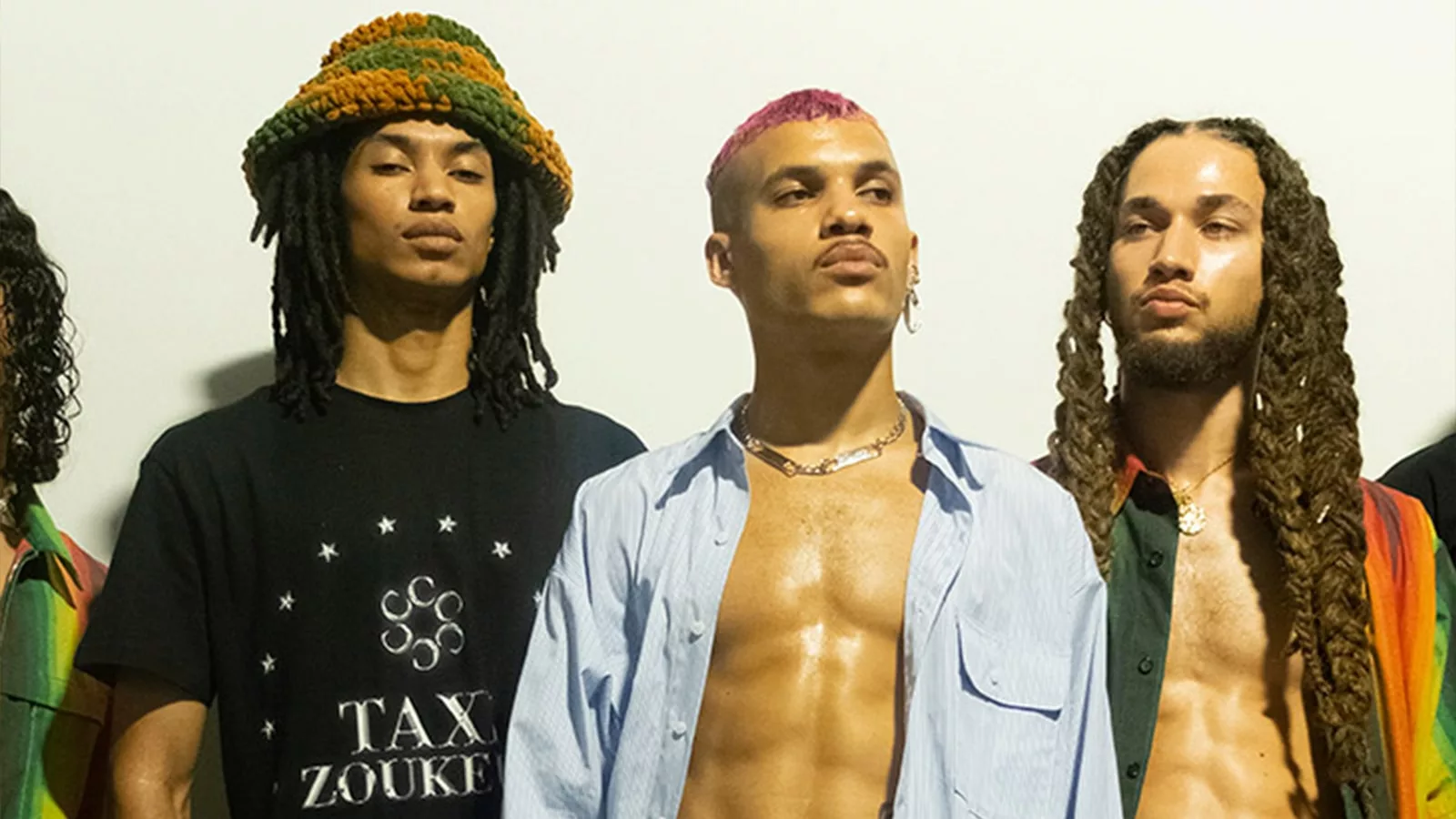
C.R.E.O.L.E. Men’s Spring 2024 Vincent Frederic Colombo Sets Out To Dismantle Preconceived Ideas Of African Fashion

Fashion label C.R.E.O.L.E. debuted its Spring Summer 2024 collection, which pays homage to Guadeloupean director Christian Laura’s 1979 movie “Coco La Fleur, Candidat.” At the conclusion of Paris Fashion Week, on June 25, the presentation took place at the Palais de Tokyo.
Coco La Fleur, Candidat, the first Antillean (French Caribbean) film in French cinema history, directed by a Guadeloupean director in Guadeloupe, served as inspiration for designer Vincent Frederic-Colombo.
In the current French overseas territories, its message is still pertinent. This movie pits technocratic elites against populist ideals, stirring up a sense of revolution during election season.

Designer Vincent Frederic-Colombo, a Guadeloupe native who was reared in Paris, said, “The whole collection is very much inspired by where I come from.”
Guadeloupe is a Caribbean archipelago that is part of France’s overseas department and region.
According to Frederic-Colombo, his clothing is intended to reflect the rich history and historical crafts-making from Africa, “and doing things in a very slow way.”
Additionally, it emphasizes the alternative African narrative. People frequently have preconceived notions about what African fashion is like.
I wish to dispel those ideas and demonstrate the diversity of African fashion.
Similarly to that, the term C.R.E.O.L.E. can stand for “Consciousness Relative to Emancipation Overcoming Obstacles.”

In an effort to decolonize his style, Frederic-Colombo said that it is inspired by not only a specific location but also by the music he listens to, the art, and the movies he likes.
By combining several universes, the designer hopes to develop a fresh look.
His designs and silhouettes draw inspiration from classic clothing, yet they propel him ahead rather than backward.

The core of C.R.E.O.L.E. is workwear, yet some tailoring and sewing methods, including lace and crochet, refer to femininity. Brown shorts with a similar trim were shown with a sheer men’s shirt with silver paillettes.
Long shorts and a blouse with wide, vertical colored stripes in greens, yellows, oranges, and reds were worn together.

A black blazer with tall, broad mock lapels and matching loose pants were two of the more fashionable items. Another was an olive-colored blazer with a longer, more conventional style.
The 1979 French movie “Coco-La-Fleur, Candidat,” about a Guadeloupian man who becomes involved in an electoral scam concocted by Parisian officials, was an inspiration for the spring collection.

Content courtesy of WWD & NFH


Top 10 African Traditional Attires That Have Gone Beyond African Borders

African traditional clothing has always been a beautiful, vibrant work of art, African attire has always made a statement, from the way it is made to the way it is designed and worn.
Some of these outfits have changed over time from their original state to a hybrid of the previous and present generation, while yet maintaining their distinctiveness.
Based on the designs and styles of their native countries’ clothing, they are easily recognized and grouped.
This proves that while traditional African clothing showcases the beauty of the continent, it also highlights the distinctiveness of particular tribes and nations.

African traditional attire practically vanished and was considered antiquated and out-of-date with the arrival and influence of the Europeans in Africa. But today, they are once again important.
African traditional attire is not just appropriate for ceremonial events and special occasions; it may also be worn to the office.
Here are 10 traditional African clothes from throughout the continent, along with information on where they originated.

1. Dashiki
The dashiki is one of the most widely worn African garments worldwide, however, it is especially common among West Africans and in some areas of East Africa.
The dashiki is a loose-fitting pullover shirt that is typically made from bright cotton designs with African influences or plain-colored textiles.
The name of the fabric, dashiki, comes from the Yoruba language and refers to a short-sleeved work shirt that is generally worn by males in West Africa.
The fabric may be traced back to Yoruba, Nigeria.
Toon van de Manakker, a textile designer for Vlisco, came up with the popular dashiki pattern known as the Angelina print in 1962. He was also influenced by the silk-embroidered tunics that Ethiopian Christian nobility wore in the middle of the 1800s.
The garment is also known as Angelina, Miriam Makeba, and Kintenge.

2. Shuka
The Maasai, a semi-nomadic ethnic group found in areas of Kenya and Tanzania, are distinguished from other tribes by their use of the shuka fabric. It is constructed of acrylic or cotton.
Clothing has long played a significant role in the East African tribe’s culture. It is an item of clothing with numerous ways to wear it. either as a skirt, a blanket, a headdress, a shawl, etc.
The shuka serves as a signal to alert aggressive animals of the presence of hunters as well as a means of camouflaging the tribe members from wild animals by blending into the landscape.

3. Kente
A vibrant hand-woven fabric from Ghana known as kente. It is acknowledged as the national cloth of Ghana and is worn toga-style, wrapped around the body, or more recently, beautifully styled.
Though it is primarily recognized as an Akan textile from Bonwire near Kumasi, the kente cloth has roots in the Ashanti and Ewe ethnic groups of Ghana.
Kente, an extremely opulent and pricey textile, is used for very special occasions and festivities.
According to history, the way the spider spins its web was imitated in kente weaving.
Kente weaving was invented in the 12th century and is still widely used today.

The weaving procedure, which was specially designed for kings and queens, can take four months to a year to finish. With cheaper prints being made available in the same patterns, it is now accessible to everyone with the means to pay for it.

4. Toghu
In Cameroon, the Toghu is particularly well-liked. In the nineteenth century, it was mostly worn by monarchs, queens, and other members of the aristocracy.
It is a multicolored, intricately embroidered outfit made of strong, black velvet that resists fading. It is one of the Bamileke people’s traditional outfits.
Nowadays, everybody who can afford it will wear it to weddings and traditional events. It has a traditional necklace and Toghu caps as decorations.

5. Habesha Kemis
Women from Ethiopia and Eritrea typically wear this hand-woven ankle-length dress to formal occasions. It is worn with a Netela, a lightweight shawl that has the same pattern as the dress.
The cotton Kemis has a waistband, cuffs, or hem that are decorated with Tibeb patterns manufactured by weaving multicolored threads. It is available in white, grey, or beige tones.

To weave enough cloth (Shemma) for the outfit, it typically takes two to three weeks. The Habesha, who live in Ethiopia and Eritrea on the Horn of Africa, is the source of this culture.
The dress can now be made in a variety of lengths and styles.

6. Kaftan
The kaftan is a long, bell-sleeved pullover robe for men. The Senegalese kaftan, which is the most well-liked and is typically worn as formal attire throughout West Africa, is the most common.
It is a top that is worn with a Kufi cap and a pair of drawstring pants that match (Tubay). It is constructed from synthetic materials, lace, or cotton brocade.

The attire is a type of robe or tunic that is worn by many different cultures all over the world.
Both men and women can wear the kaftan in Africa.

7. Agbada
A long, loose-fitting, wide-sleeved robe or gown called an Agada is worn over the head and is typically embroidered intricately.

The Yoruba people of Nigeria and the Republic of Benin wear a four-piece male outfit like this. It consists of a long under-vest (Awotele), long pants (Sokoto), a wide, flowing outer robe (Awosoke), and a cap (fila).

It has its roots in the Babban-Riga of the Hausa people of Northern Nigeria and is modeled after the clothing worn by trans-Saharan traders such as the Tuaregs, Kanuri, Toubou, Songhai, and Hausa. These traders wore robes primarily to protect themselves from the sweltering heat of the sun during the day and the chilly nighttime temperatures in the Sahara Desert.

8. Aso Oke
In Nigeria, the Yoruba people weave their own textile known as Aso Oke. It is a vibrant, hand-loomed cotton fabric that is used to produce a variety of clothing for both men and women, such as the Agbada, Buba (Yoruba Blouse), Iro (wrap skirt), Gele (head scarf), and Iborun or Ipele (shawl or shoulder sash).
Southwest Nigeria was the genesis of the fabric in the fifteenth century.
A Spindler is used to separate the cotton from the wool, and then the cotton is dyed the proper color and woven into the well-known fabric.
Weddings often feature the Ase-Oke in various patterns and designs. The bride, groom, and members of their families all wear it.

9. Isidwaba
Isidwaba is a customary leather skirt worn by Zulu women at traditional wedding ceremonies (Umemulo), as well as by women who are engaged or wedded to them. It is a wedding gift from the woman’s father and is constructed from a cow, goat, or sheep’s hide.
After being polished, the leather is sliced, sometimes woven, sometimes plated, and occasionally beaded.

The fabric has been used since the nineteenth century. The skirt is still constructed of animal hide despite its modernization.

10. Djellaba
Both men and women wear the Djellaba, a traditional Moroccan garment. The hood (Qob), which shields the head from snow and rain, is part of a long robe.

The clothing is composed of wool or cotton and is available in a variety of styles and hues. They may be shorter or extend all the way to the ankles.
It is a versatile outfit that may be used for any occasion.

Content courtesy of  Face 2 Face Africa & NFH


Opening Ceremony For The East Africa Textile And Leather Week (EATLW) 2023

With a projected market value of $31 billion in 2020, the apparel and textile business would likely overtake agriculture as the second-largest sector in Africa. It has the potential to generate millions of employment across the continent, particularly for women and young people, and it is growing every year.
The eagerly awaited EAST AFRICA TEXTILE AND LEATHER WEEK [EATLW] 2023 edition is the most prestigious gathering venue for the home textile, leather accessories, and footwear sectors and is ready to revolutionize the East African textile industry.

EATLW, a three-day conference, and exhibition (June 28–30) brings together influential industry players and thought leaders from around the world to explore business opportunities, engage in meaningful discussions, and see the incredible potential of East Africa’s garment manufacturing sector with a focus on sustainability, innovation, and craftsmanship.
Three thousand five hundred wholesalers, retailers, chains, manufacturers, and dealers from East and Central Africa will attend the event along with 150 exhibitors from East Africa, the Middle East, and Asia.


OPENING CEREMONY PROGRAM
09:00 Opening of EAST AFRICA TEXTILE AND LEATHER WEEK
10:00 VIP Gathering

11:00 OPENING SPEECHES, ORGANIZERS & MC:
11:05 Skander Negasi

CEO of Trade and Fairs Group, Germany
President, East Africa Textile and Apparel Center

WELCOME REMARKS – PARTNERS:
11:15 Mr. Hussein Adan Mohammed

Ag. Chief Executive Officer, Export Processing Zones Authority (EPZA),

11:25 Thomas Wimmer

Head of Mission, Embassy of the Federal Republic of Germany to Kenya

11:35 Ms. Floice Mukabana

Ag. CEO, Kenya Export Promotion & Branding Agency – KEPROBA`

OPENING REMARKS
11:45: Dr. Juma Mukhwana, HSC

Principal Secretary, State Department for Industry,
MINISTRY OF INVESTMENT, TRADE, AND INDUSTRY

12:10 OFFICIAL RIBBON CUTTING
12:15 OFFICIAL ROUND TOUR

13:00 END OF OFFICIAL ROUND TOUR
PRESS CONFERENCE – INTERVIEWS

Content courtesy of East Africa Textile And Leather Week ([EATLW), Couture Africa & NFH


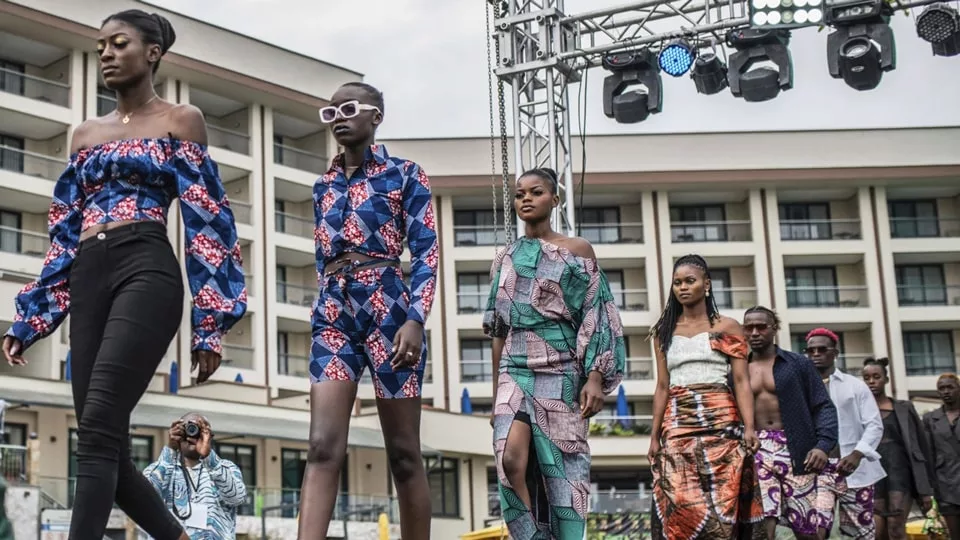
A Fashion Exhibition In Congo Aims To Promote Harmony And Creativity In A Conflict-affected Region

Congo, Goma (AP)  A clothes designer in the Congo views the pinning, stitching, and ironing of her most recent collection as a means of communicating with the rest of the world.
Flore Mfuanani Nsukula declares in her Goma workshop that “through art, all the colors that we will express, through our clothes, it will be full of emotions, trying to explain what we are going through in our country.”

As numerous armed factions battle for control of lucrative mineral resources, there has been conflict in the eastern Congo for decades. Mass murders occur often, and the unrest has led to a refugee exodus.

The ninth Liputa fashion show was conducted on Saturday. According to the organizers, this was a chance to advocate peace and peaceful cooperation throughout Africa.

“Africans must unify as one. Although we do have a very diverse range of cultures, Délia Ndougou, a fashion designer from Cameroon, emphasized that this diversity must help us come together. She displayed a collection that was based on the flag of her country.

“We really wanted to convey joy in the clothes, peace in the clothes, very cheerful styles, a question of making the world smile,” remarked Kinshasa-based creative stylist Chadrac Lumumba.
Designers, models, and artists from Cameroon, Senegal, Burundi, France, the United States, and other countries participated in the Goma event.

Nsukula said after her new collection made its runway premiere, “We think we have sent a message to say that all these people who have come from elsewhere, that means that the situation is already improving.”

“We had visitors show their collections who came from the Central African Republic, Cameroon, the USA, and France. That implies that there is comfort and optimism that things will become better in due course.

The program aims to generate a more favorable perception of the continent in addition to spotlighting Congo’s fashion sector.
According to the collection’s organizer, David Ngulu, “We showed these collections not only to promote the creators’ ideals but to demonstrate that in Africa, in the (Congo), the areas that are deemed “red,” we can carry out the same activities as in other peaceful nations.

He stated, “I believe that each creator contributes to love, peace, and coexistence.

Content courtesy of AP & NFH


Kenyan Fashion Tech Shopzetu Raises $1.0 Million In Pre-seed Funding To Revolutionize Africa’s Fashion And Lifestyle E-commerce Landscape

To meet the rising demands of young, fashion-conscious women in Africa, Kenyan fashion e-commerce company ShopZetu is expanding its portfolio to include beauty and home décor categories.
To this end, it has raised pre-seed capital to support the expansion of its marketplace beyond Kenya.
In the next few months, it plans to develop geographically while luring in worldwide fashion labels and more than double the number of sellers on its platform to 1,000.

Equipped with a $1 million pre-seed fundraising round that it recently finished, the firm intends to expand beyond Kenya, where it debuted in 2021, to test regional distribution services in Rwanda, Tanzania, and Uganda.

“The objective is for ShopZetu to emerge as the top lifestyle site.
We want to provide more options in the areas of hair, skincare, beauty, and home décor all areas where a person may show their individuality. Our goal is to become a one-stop store,” stated Marvin Kiragu, CEO of ShopZetu, who, alongside Wandia Gichuru, co-founded the well-known Kenyan fashion company Vivo.

Chui Ventures led the pre-seed investment, and Launch Africa, Roselake Ventures, and Logos Ventures also participated. The CEO of RT Knits Kendall Tang, the co-founder and CEO of Nadine West Ben Munoz, and the CEO of Estée Lauder Inc.
Sumit Bhasin, the CEO of WPP Scangroup Patricia Ithau, and the CEO of Twiga Foods Peter Njonjo are among the angel investors that participated in the round.

According to Kiragu, who spoke with TechCrunch, ShopZetu was created in response to the demand for a multi-brand marketplace to connect a severely fragmented market with “hundreds of thousands of sellers” both offline and online, including on Facebook, Instagram, and WhatsApp. He pointed out that this results in a difficult purchasing process that lacks client trust and pricing visibility.

He went on to say that because there are an endless number of different stock-keeping units, it is practically impossible for any one person to hold the whole selection in one physical area.
“ShopZetu aims to address this issue by consolidating the existing inventory of fashion and lifestyle items into a single location,” he stated.

There are presently over 20,000 goods listed on the ShopZetu marketplace, with over 300 sellers, mostly consisting of small and major local producers and traders of imported fashion products. Onboarding of vendors is free of charge; however, they get payment for extra services, such as delivery, and for sales that are made on the platform.

We also provide warehousing, digital marketing, last-mile delivery, content creation, and return management to our vendors. To guarantee that vendors are successful online, these services are provided at a fee, although they are heavily subsidized,” Kiragu added.

“We want to make it easier for anybody to launch and grow a fashion company by utilizing ShopZetu’s extensive network and resources.
He stated, “We have excellent case studies of firms that were nurtured and introduced on ShopZetu before expanding online and opening physical locations.

The startup stipulates that, among other requirements, retailers selling on the marketplace must offer inclusive sizing, high-quality items, and be well-stocked.
According to the firm, within the last 24 months, it has catered to more than 30,000 clients, sold over 100,000 items, and seen a 400% rise in monthly orders since January 2021.

ShopZetu claims to be keeping an eye on the expanding sub-Saharan African fashion market, which is now dominated by used apparel.
Startups such as ShopZetu, however, are relying on the expanding fashion-conscious and tech-savvy population in Africa as well as reasonably priced new apparel alternatives to fuel their expansion.

“We think there is a huge market for fashion because clothes are a basic human need.”
Although a significant portion of this is now satisfied by used apparel, Kiragu noted that as more reasonably priced choices become available, there is a slow transition to new apparel.

“We think that the largest e-commerce category in Africa will be online fashion retail, surpassing formal retail.”

Content courtesy of TechCrunch, ShopZetu & NFH

Wedding Gown: Disposable Plastic Dishes and Cups Were Used To Make This Beautiful Wedding Dress.

Request a bride. Finding the ideal bridal gown for your special day might be a complete nightmare.

What if, though, you took a different approach and made a garment out of plastic kitchenware? Following the discovery of this bridal outfit made out of plastic cups and plates, social media went crazy. Would you put it on?


A WEDDING DRESS MADE OF PLASTIC UTILITIES: WOULD YOU WEAR IT?


After a woman was photographed wearing a bridal dress constructed out of plastic cups and plates, social media went crazy. Although the material serves as the design’s foundation, the dress really shines because of the skillful usage of recycled plastic materials.

On TikTok, fashion designer Isabelle Tengue posted a video of a woman wearing an unusual bridal gown.
While another woman assists in carrying the stunning train of the dress, the woman can be seen in the video strolling down a flight of steps.

The bodice of the garment is nearly entirely constructed of plastic cups, but the front of the skirt has a circular pattern that looks to be formed of plastic spoons and plates. Additionally, the design has some metallic and what appear to be cut-out details.
Plastic plates were used to create the rear of the ballgown’s train and skirt, giving it an almost scalloped appearance.


Users of TikTok were eager to praise the video and the distinctive bridal dress design. The video has been viewed more than 14 million times since it was posted.
Wow, that’s creativity, a user on TikTok said in reference to the video.
Another supporter commented, “This puts all the top designers to shame; this is gorgeous.”

A third person on social media said, “This is incredibly beautiful.”


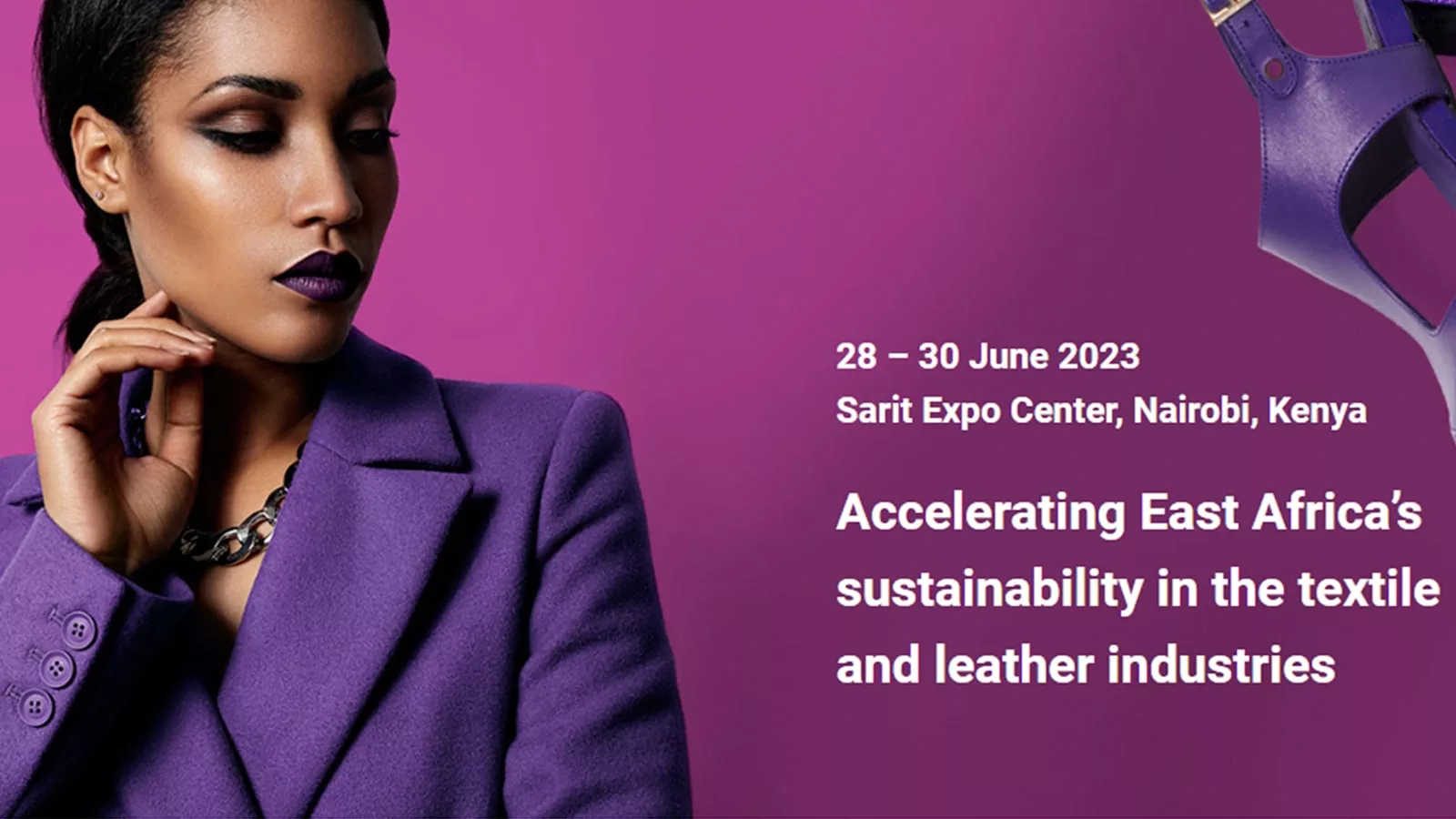
East Africa Textile And Leather Week (EATLW) 2023 Accelerating East Africa’s Sustainability In The Textile And Leather Industries

Nairobi, Kenya, Sarit Expo Center, Wed., June 28th–Fri., June 30th
With a projected market value of $31 billion in 2020, the fashion and textile business is Africa’s second-largest industry after agriculture. Growing annually, it has the capacity to produce millions of jobs across the continent, particularly for women and young people.
The eagerly awaited EAST AFRICA TEXTILE AND LEATHER WEEK (EATLW) 2023 edition is the most prestigious gathering venue for the home textile, leather accessories, and footwear sectors and is ready to revolutionize the East African textile industry.

Leading African and international decision-makers from all points along the fashion value chain will gather in June to assess upcoming trends and costs.

Key industry players and thought leaders are brought together by EATLW to have in-depth conversations, look into business opportunities, and see the incredible potential of the garment manufacturing industry in East Africa.

with an emphasis on innovation, craftsmanship, and sustainability. Three thousand five hundred wholesalers, retailers, chains, manufacturers, and dealers from East and Central Africa will attend the event along with 150 exhibitors from East Africa, the Middle East, and Asia.

Carvico Ethiopia Plc, Leather Masters Kenya, Starsewing Dubai, Desta Plc, and Josef Seibel are a few notable exhibitors. The three-day RUNWAY KENYA ready-to-wear fashion show will include clothing and accessory designers from all over East Africa, hosted by Couture Africa Magazine in partnership with Ajuma Limited.

The Ministry of Investment, Trade, and Industry, EPZA, The Leather Apex Society of Kenya, Ubunifu Association, Women in Business, and Fashion Agenda Africa are a few other significant partners.

The CEO of Trade & Fairs Consulting GmbH, Mr. Skander Negasi, said, “We are delighted to host East Africa Textile and Leather Week, a platform that highlights the rich tradition, craftsmanship, and tremendous promise of the East African textile and leather sector.
“EATLW is more than just a conference; it serves as a catalyst for the industry’s development, cooperation, and advancement. We cordially encourage all interested parties, international investors, and fashion fans to join us on this remarkable adventure.

Sarit Expo Center, Main Hall / Nairobi, Kenya
Daily 10.00 am – 6.00 pm EATLW Exhibition
Changes in program structure or exchange of speakers or referees remain reserved | www.eatlw.com

CONFERENCE PLAN
DAY 1 28th June 2023
9.00 am – 10.30 am Registration
11.00 am-noon Inauguration and opening ceremony
Principal Secretary, Department of Industry
Ministry of Investment, Trade and Industry
Exports Processing Zones Authority (EPZA)
1.00 pm – 2.00 pm LUNCH BREAK
2.00 pm – 2.45 pm A critical analysis of government policies and initiatives; Agenda to boost production and create employment in the leather and textile industries in the region
Speakers: EPZA
Ministry of Investment, Trade and Industry
3.00 pm – 4.00 pm BRAND IDENTITY AND SOURCING SME Dialog session: Establishing a brand name that speaks
to the market to enable scaling and enhancing the taking of large orders for international markets
Speakers: KENIVEST
Moderator: Ms. Grace Mbugua, CEO of Jeilo Collections and Chairperson, Ubunifu Association
5.00 pm – 6.00 pm Fashion Show
Runway Kenya by Couture Africa


CONFERENCE PLAN
DAY 2 29th June 2023
9.00 am – 10.00 am Registration
10.30 am – 11.15 am Women‘s economic empowerment in the textile, apparel, and leather industries: Strategies for
promoting gender equality and empowerment in the industry
Speakers: Women in Business
Caroline Ngumba – Program Manager Sustainable Manufacturing – Textiles & Apparel (IDH)
Catherine Ndungu – CE0, Design 365 / Ubunifu Association
11.30 am – 12.45 pm PRESENTATION Combating counterfeits in East Africa: A comprehensive approach to
enhancing local sourcing in the textile and apparel industry
Speakers: Anti-Counterfeit Authority EPZA
1.00 pm – 2.00 pm LUNCH BREAK
2.00 pm – 2.30 pm Opportunities in the leather, textile, and apparel industry: Financing and investment prospects for industry growth
Speakers: KenInvest KEPSA
2.45 pm – 3.30 pm The rise of African fashion: Sustainable textiles pioneers from East and Central Africa region
Speakers: Ms. Akinyi Odongo, OGW – President & Founder, Fashion Agenda Africa (FAA)
Ms. Aulgah Nato – International Multi Award Winning Fashion Designer
Moderator: Ms. Connie Aluoch – Award-Winning Stylist, Connie Aluoch Styling Management
3.45 pm – 4.20 pm Protecting intellectual property in the Textile and apparel industry: Strategies for
safeguarding designs, trademarks, and patents
Presentation: KIPI
4.20 pm – 5.00 pm Fashioning sustainability in design-led businesses: Systems for sustainability and the role of
diversity and Inclusivity in shaping wearable design
Speaker: EPZA
David Avido, Kibera Fashion Week
Olive Gachara
5.00 pm – 6.00 pm Fashion Show
Runway Kenya by Couture Africa


CONFERENCE PLAN
DAY 3 30th June 2023
9.00 am – 10.00 am Registration
10.30 am – 11.15 am Leveraging government support and exploring new markets to promote growth and
competitiveness in the East African leather sector
Speakers: Leather Apex Society of Kenya
Ministry of Livestock
11.30 am – 12.45 pm PRESENTATION Strategies towards overcoming challenges such as high investment costs
and the need for incentives to attract investment in the leather industry
Speaker: Leather Apex Society of Kenya
1.00 pm – 2.00 pm LUNCH BREAK
2.00 pm – 2.45 pm Panel Discussion by Couture Africa
3.00 pm – 5.00 pm Fashion Show Mega Final
Runway Kenya by Couture Africa

Kenya’s Textile And Apparel Sector
The nation’s current textile and clothing businesses create a wide range of goods.
While integrated mills provide a wide range of goods such as yarn, fabrics (knitted and woven), canvas, school and travel bags, blankets, sweaters, shawls, uniforms, towels, baby diapers, and knitted clothing, spinning enterprises generate yarn (including industrial) and sewing thread. On the other hand, garment producers provide a variety of clothing for both the domestic market and export.
Men’s apparel is produced by about 46% of the garment factories, while the remainder makes woven chemise and robes, slacks, Kaunda suits (for men), and knitted, and woven clothing.
Investments in cotton farming, cotton ginning, spinning, weaving, as well as the manufacturing of clothing and other goods, are guaranteed to have ready access to local, regional, and global markets. Kenya offers advantageous production incentives and enticing investment incentives.

Only 15 of Kenya’s 52 textile mills are now in operation, and they only use less than 45% of their total capacity. In Kenya, there are thousands of clothing businesses. There are over 170 middle and big businesses and over 74,000 small and micro businesses.
The Export Processing Zones are home to twenty-one businesses, each of which employs 1,800 people on average.

Content courtesy of Couture Africa, East Africa Textile And Leather Week & NFH


L’Oréal Paris Unveils Thuso Mbedu As The Brand’s Ambassador and spokesperson for Sub Saharan Africa

Every year on the French Riviera in the beautiful city of Cannes, the internationally renowned Cannes Film Festival serves as a shining example of superior artistic achievement. L’Oréal Paris, a beauty company dedicated to women’s empowerment and beauty innovation, is happy to introduce the renowned South African actress Thuso Mbedu as the new brand ambassador and spokesperson for Sub-Saharan Africa. L’Oréal Paris is the official partner of the Cannes Film Festival.

On the red carpet and in the breathtaking beauty and fashion photos she posed for, her presence as L’Oréal Paris’ guest of honor was felt.

L’oréal Paris Sub-saharan Africa’s New Face
Mbedu will contribute her distinct viewpoint to regional advertising campaigns, product launches, and public appearances as the brand ambassador and spokeswoman for L’Oréal Paris throughout Sub-Saharan Africa. Her love of beauty and talent for engaging audiences will be crucial in strengthening the brand’s relationship with its devoted patrons.

Thuso Mbedu, The Rising Star
Thuso Mbedu is a well-known actress who was raised in Pietermaritzburg, South Africa, and whose memorable performances have made an impression on both national and global stages. Her performance as Winnie in “Is’thunzi” in 2016 propelled her into the public eye and earned her two nominations for an International Emmy Award.

“One never thought of themselves as attractive growing up; I never dreamed that one day I would have the privilege of serving as the first Sub-Saharan African spokeswoman for L’Oréal Paris. a company with a strong commitment to diversity, sisterhood, and feminism that advocates for the empowerment of women. I’ve so far appreciated learning about the cutting-edge technology that powers L’Oréal’s product line and the revolutionary advancements made in understanding African skin. I’m honored to represent my African group within an outstanding worldwide brand because their products are amazing.

Mbedu gained more recognition when she played Cora Randall in the Amazon Prime Video series “The Underground Railroad,” which is based on the Pulitzer Prize-winning book by Colson Whitehead.

Her most recent performance with Viola Davis in Sony’s “The Woman King” solidified her position in international film. She was named one of The New York Times’ 10 Best Actors of 2022 and Variety’s 10 Actors to Watch for 2022 thanks to her portrayal of “Nawi,” a committed recruit in an all-female military squad.

More Than Just An Actor
Mbedu’s philanthropic endeavors go beyond the realm of popular culture.
Thuso Mbedu is actively involved in humanitarian projects that promote awareness of a variety of topics, particularly those that deal with education and the welfare of children and youth, in addition to her successful acting career.

When Mbedu joined the Board of Advisors of the international non-profit organization Save The Children in 2021, she demonstrated her commitment to empowering young girls and giving them the educational tools they need to thrive. Together with the other members of the Board of Advisors, Thuso serves as an advisory body and serves as a sounding board to discuss issues and identify solutions.

opportunities. Her current position has changed, and it is now known as Partnerships and Engagement Advisors.
She recently traveled to Diepkloof to witness the enormous, palpable effects that Choma Mag and the Charlize Theron Africa Outreach Project (CTAOP) have had on the neighborhood.

Her unshakable dedication to leveraging her platform for good is strongly in line with L’Oréal Paris’ brand values and mission. Together, they hope to encourage people from all walks of life to embrace their beauty, celebrate variety, and cultivate confidence.

A New Phase In African Life
“We are thrilled to welcome Thuso Mbedu into our L’Oréal Paris family,” said L’Oréal Paris Sub-Saharan Africa. “This partnership with Thuso Mbedu is intended to transform beauty standards and inspire a wave of self-worth and confidence across the continent. She truly embodies our purpose with her extraordinary talent, ageless beauty, and dedication to helping others.

We are eager to start on this amazing adventure with you in order to encourage people to embrace their individuality and appreciate their inner beauty.
Burkhard Pieroth, president of L’Oréal in Sub-Saharan Africa.

Content courtesy of I Africa & NFH


Africa’s Leading Luxury Concept Store Is Coming to the Brooklyn Museum

The Big Apple will soon be home to one of Africa’s most well-known shopping destinations.

The Brooklyn Museum will become home to Alára, a concept store with over 100 brands from Lagos, from June 23 through October 22. In collaboration with the museum, the upscale shop will debut as a component of the Africa Fashion at the Museum exhibition as a way to introduce New Yorkers to the fashion perspectives of Africa and the diaspora.
The exhibition, which was the biggest display of fashion and style from the continent when it first debuted to the public at the Victoria & Albert Museum in England, will also include some of the Alára brands.

Reni Folawiyo, an entrepreneur and tastemaker, established Alára in 2015.
The word “alára” means “wonderful performer, one who thrills endlessly” in Folawiyo’s native Yoruba language. Since opening, the store has provided the neighborhood with a wide range of initiatives, goods, and events. Today, it is regarded as a cornerstone of Lagos’s vibrant cultural scene, akin to Colette in Paris.
The Earthy Nigerian headquarters of the store, which includes several high-end luxury labels including Marni, Saint Laurent, Linda Farrow, and Comme des Garcons, was created by Ghanaian-British architect David Adjaye.
The shop also offers a variety of fashionable products from brands with strong ties to the African diaspora, like Kenneth Ize, Post Imperial, and Thebe Magugu.

Alára frequently organizes performances by Falana and Asa in addition to art shows including the works of artists like Hassan Hajjaj and Peju Layiwola. Even the iconic supermodel Naomi Campbell signed copies of The Art of Beauty there in 2018.

The Brooklyn Museum and Alára have not revealed what kinds of music, fashion, and design will be on display at the upscale retailer’s exhibition shop in New York City. But given its illustrious past and specially conceived Lagos shop floor, it might surpass your expectations.

This David Adjaye-designed lifestyle shop by businessman Reni Folawiyo is exceptional, just like its city of Lagos.
Adjaye states, “I wanted the space to function as something that would function as a new kind of cultural hub and destination for West Africa.” The venue would serve as a celebration of design skills.
With its geometric stamps, bi-chrome palette, and remarkable gravity, the building might appear at home anywhere along the artistic arc from Daikanyama in Tokyo to the Design District in Miami.
These objectives were realized in a spectacular façade and a worldly position.
However, Adjaye took care to ensure that every aspect of Alára’s graphic punch is infused with and supported by distinctively Lagosian characteristics.

The translucent screens gridding the entryway refer to the brises soleils of African modernist buildings, while the geometry of their patterns draws from Yoruban Adire fabrics. It unites the indigenous and contemporary architectural lineages of the city.

Along with local designers like Lanre da Silva Ajayi (wham-bam-glam eveningwear), Maki Oh (cool Brooklyn separates), and Lisa Folawiyo (sportswear), Folawiyo has filled Alára’s interior with international labels like Valentino, Alexander McQueen, and the Italian furniture line Moroso. She has also added a rooftop art gallery.
Adjaye comments on the shopping experience:

“Display platforms divide the area…
Visitors are encouraged to maneuver their way around the stock because of the cavernous interior and the triple-height ceiling volume.
Similar to Lagos, Alára’s main attraction might be precisely that: the thrill of exploration in a stunningly modern shrine to design and forerunner of Africa’s future.

Content courtesy Robb Report & NFH


Poor Clothing Choice Hurts Leading African Clothing Stores’ Profit

After Africa’s largest apparel retailer announced a decline in first-half profitability due to its failure to find the proper summer fashion mix, Pepkor Holdings Ltd. dismissed the president of its Ackermans division.

Pieter Erasmus, chief executive officer of Cape Town-based Pepkor, said in an interview Tuesday that the discount retailer, which began 100 years ago in rural South Africa and now has 5,929 stores in nearly a dozen countries, has hired “some new eyes from outside” to run the division as it also reviews package sizes of items like T-shirts and shorts.

Shoprite Holdings Ltd., Africa’s largest grocer, has lately built specialty clothes and infant stores in the same categories as Pepkor’s flagship Pep and Ackermans outlets, putting Ackermans under more intense competition.

“There are some very good competitors out there,” Erasmus added, mentioning the clothes division of Pick n Pay Stores Ltd. and Jet, which has better access to capital now that it was acquired by The Foschini Group Ltd. Without naming the individual, Erasmus said that the new Ackermans CEO had previously served as Pick n Pay’s chief operations officer.

New hires have been made to the women’s clothing team at Ackermans, “because that’s a key market share opportunity for us,” Erasmus added. He stated that a better performance is anticipated by the end of August and into the following summer.

Tuesday morning, Pepkor said that its net income for the six months ending in March fell by 11% to 2.98 billion rand ($151 million). As sales at Pep and Ackermans slowed, revenue increased, but inventory levels rose 12%, the business reported in a statement.

The stock experienced its largest intraday decline since September 13 as it dropped as much as 8.6% and was down 6.9% as of 11:50 a.m. in Johannesburg. With a 29% fall so far this year, it is now the worst performer among the eight stocks in the FTSE/JSE Retailers Index.

Content courtesy of Bloomberg & NFH


Beyoncé And Naomi Campbell Wear Clothing From The Senegalese Brand Tongoro.

There is a Beyoncé before and after for Sarah Diouf. Before 2020, Tongoro, which the now-36-year-old woman founded four years earlier, was growing with the measured pace of a new Senegalese label. Then, everything picked up speed with the release of Beyoncé’s musical feature film Black Is King at the end of July 2020. In the midst of pink flamingos, the American celebrity may be seen here sporting a pair of black and white pants that are labeled Tongoro.
The film, which was broadcast on Disney+ and had more than 11 million viewers in only two days, then strengthened the still-confidential brand and increased sales.

Dakar’s passion for fashion in the midst of the revolution
In the hallway of an apartment in Scat Urbam, a contemporary building in Dakar, where the designer has set up her office and her clothing workshop, the image of the queen of pop music can be seen alongside those of the American pianist and singer Alicia Keys or the British supermodel Naomi Campbell.

This is because Sarah Diouf employs clothing, fabrics, cuts, and volumes to convey the tale of her region, which is why these VIP brand ambassadors joined the company so soon. She claims that his clothes designs depict “Africa on the move” and that this is what draws her most attentive audience.

The young woman, who was living in Paris at the time, had the intuition that an African Renaissance was still in progress, but it was her contact with “Dakar the creative” that helped him improve his proposal.
full fire on craft in Dakar
The person who considers themselves to be “a child of Africa” notes, at the start of the 2010 decade, that “the craze for African fabrics allows a reappropriation of traditional cultures and encourages the emergence of contemporary designers Africans.” She was born in Paris to a Senegalese-Central African mother and a Senegalese-Congolese father and was later raised in Ivory Coast.

Though he is inspired by the fervor surrounding Africa and its exports and the enthusiasm for what the continent produces, it will take him a while to find his true calling.

By “Embodying African Pride”
She started her career as a communication specialist in 2009 with the launch of a webzine called GhubarA, which she named as a “space for the promotion of African and Arab artists in the world of art, culture, and fashion.” She holds a master’s degree in marketing and communication management from the Sorbonne in Paris. She continued in 2015 with Black, a lifestyle publication that discusses fashion and beauty in Africa. She enters the fashion industry through this back door.

One of the best shoemakers in Dakar is “Momo le Bottier”
She is gradually coming around to the notion of developing a Made in Africa brand, which she sees as a platform for the continent’s expertise.
According to Sarah Diouf, “I have long wished to embody African pride in priceless creations.”
Consequently, she is the writer and director of a narrative that promotes sub-Saharan Africa through her collections. Fashion seemed to her to be the right vehicle for this narrative, imposing itself on her like fabric.

She relocated to Dakar in 2016, when she fell in love with the city’s ubiquitous street tailors who worked nonstop to create the unique clothing that everyone ordered.

This undeveloped talent, which Sarah Diouf finds “fascinating,” is what she feeds off of and uses for her label. She immediately surrounded herself with four tailors, who in her workshop produced between one and 200 outfits every month.
She pulls out essential pieces from her closet, including dresses with long sleeves and broad shoulders and jumpsuits with wide legs. Noble pieces that respected the freedom to move and improved movement.

Sarah Diouf bases her visual identity on monochromatic prints of flowers or other patterns taken from traditional African imagery. Malick Sidibé (1936–2016) and Seydou Keta (1923–2001), two Malian portrait painters known as the “Father of African Photography,” served as inspiration for this design.
Tongoro, which translates to “star” in Sango, the language of the Central African Republic, adopted this design immediately. Sarah Diouf recently increased the chromatic spectrum of her works and the variety of items she produces at her customers’ request.

She also adds head jewelry and large earrings with highly styled contours to the colors that come to change her basic textiles. These accessories can highlight a hairdo and improve the posture of the head. According to the designer, who seeks to highlight in her clothing “the presence of a subtle Senegalese poetry of the volumes,” “the cultural mix in which I grew up infuses my brand.”

The challenge of producing locally
She wants to create attractive, well-finished clothing with Tongoro that can be worn anywhere, including America, Europe, and the Middle East. Additionally, the company that communicates in English currently generates 60% of its revenue in the United States, ahead of the United Kingdom and France, for the sake of efficiency.
Its primary markets on the continent are South Africa, where the company will soon expand, and Nigeria, far ahead of Senegal, which is developing slowly.

“The Africa World”
All Tongoro works are sold only on the company’s website thanks to Sarah Diouf’s use of her marketing expertise to develop the company’s digital business model.
Why limit yourself to physical stores, she wonders, when you can reach a larger audience of consumers online and do so across all continents? Since 2022, Tongoro has also been sold on the upscale products marketplace Net-à-porter, a distribution channel that has introduced it to a new Middle Eastern customer.
Due to the Covid-19 epidemic and the brand’s inability to produce two collections of 1,000 pieces each annually, the collaboration, which was supposed to begin in 2020, was delayed for two years.

In Senegal, increasing output continues to be difficult. Similar to other fashion designers in the nation, Sarah Diouf had to mentor her tailors in patronage. She intends to establish a bigger clothes unit in Senegal in order to obtain autonomy and boost production to 500 pieces per month. She is also establishing a collaboration with a Senegalese textile business that already employs 100 tailors.
“There is no fashion industry here due to a lack of formalization of the sector, but rather an ecosystem to which we must adapt,” she laments, regretful for this unrealized potential. Sarah Diouf, however, is determined to persevere and believes that other artists will be motivated by her story.

Content courtesy of  Globe Echo & NFH


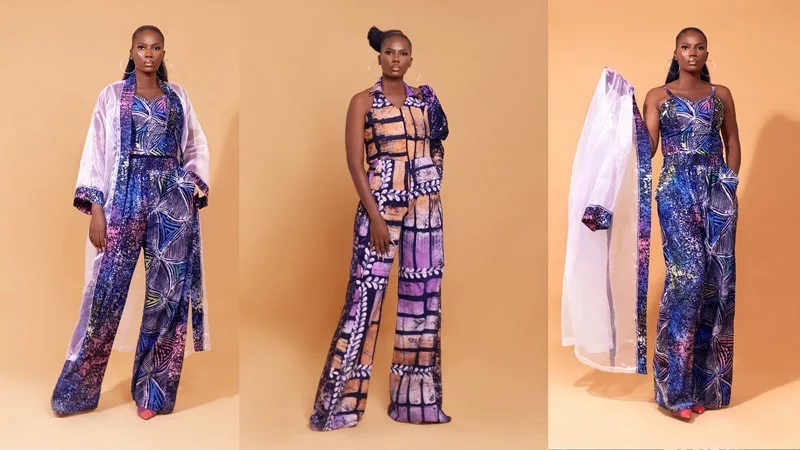
Regi Reveals Stunning Chic Collection ‘Rebirth” With Eye-catching Photos!

Following the release of a sneak preview of their current collection to commemorate the brand’s rebirth, Nigerian womenswear label Regi has released more gorgeous images of the collection dubbed Rebirth.

“Rebirth can also mean; Renaissance, the emergence of something new, an awakening, a new era,” says designer Olufisayo Dayo-Oyelakin. Just a few words to express the emotion and creativity that goes into creating these ageless, adaptable, useful, and spontaneous creations. All of which are undeniably energizing, energizing, and stunningly appealing.

These pieces offer a preview of what the rebirth collection will include. Trust that it will be the perfect wardrobe refresh.”

The exquisitely crafted outfits have remarkable designs ranging from floral print corset tops with tie-back designs to rare but magnificent skirts to match. They are also available in a variety of colors.
REGI RTW’s latest fashion products are suitable for everyday wear and are ideal for women who value simplicity and comfort.

Content Courtesy of Designer: Rebirth by Regi & NFH


Ad