Saturday 18th of April 2026

Nairobi, Kenya

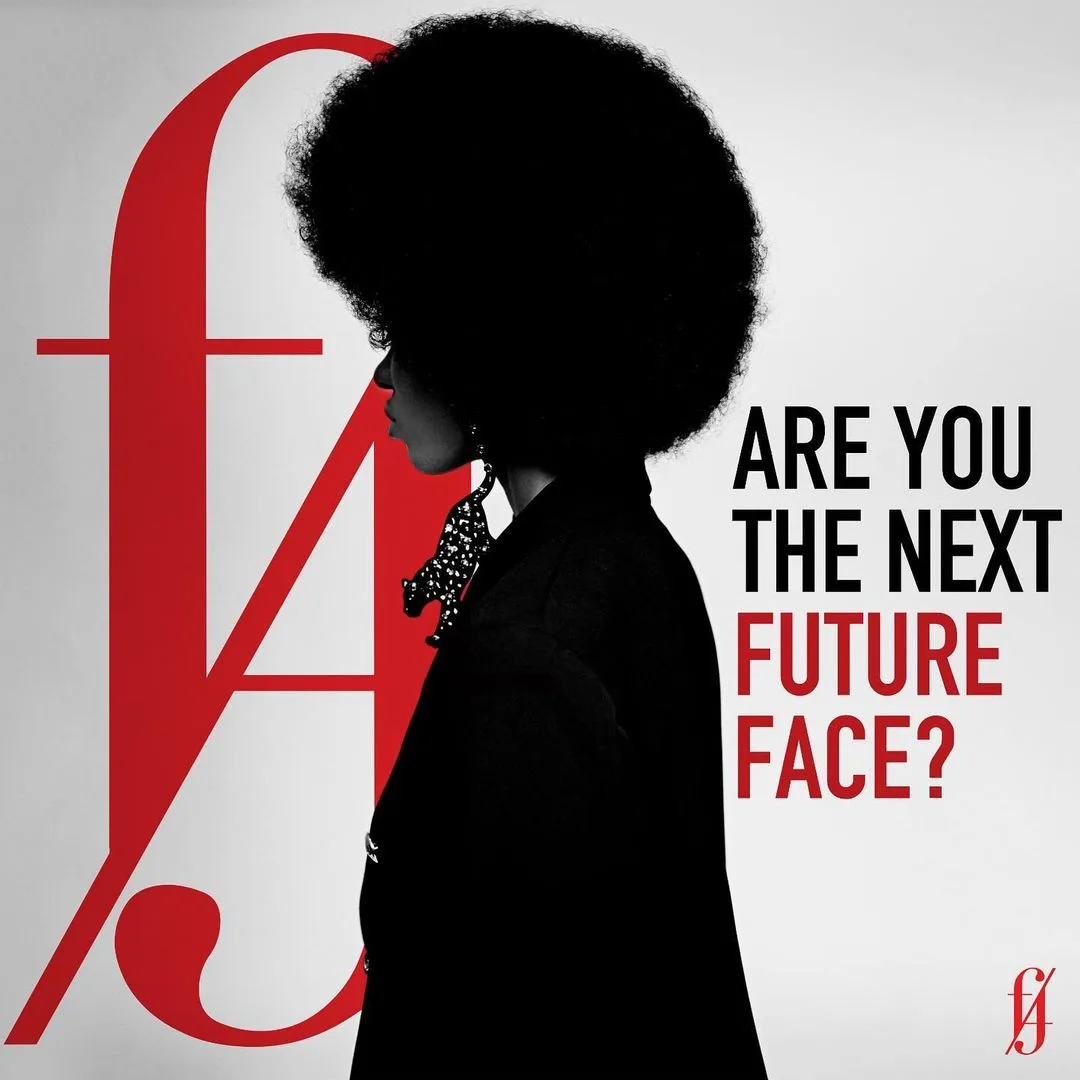
Don’t Miss Future Face Africa’s Grand Finale This Weekend

After physical castings in eight African countries and thousands of digital applications worldwide, Future Face Africa‘s grand finale will take place at Eko Hotels & Suites on Sunday the 30th of January 2022.

https://www.instagram.com/reel/CZU0KGIoPYh/?utm_source=ig_embed

Two contestants will win the title of Africa’s next future face, and the two winners will each receive a two-year international modeling contract with a top international modeling agency, as well as a USD 5,000 cash prize. In addition to providing a career start in modeling, the competition also prepares the winners for global competition.

https://www.instagram.com/reel/CZVMENQoj8P/?utm_source=ig_embed

Championed by former model Elizabeth Elohor, whose agency Beth Modelling Agency has groomed and raised a plethora of successful models through initiatives like Elite Model Look Africa, which offered African models the pivotal push needed both internationally and locally. We can expect an outstanding evening with top celebrities, prominent players in the Nigerian fashion industry, models, and more coming out for a night of glitz and glamour.

For tickets reservations call
07069999919, 08069748761

Content Courtesy Of Future Face Africa 

Future Face Africa, Africa’s Largest Model Search Competition, Prepares For A Grand Finale

Future Face Africa, Africa’s largest model search competition, is preparing for its grand finale event in Lagos. After a rigorous selection process involving physical castings in eight African countries, as well as thousands of digital applications from all over the world, the Future Face Africa judges have selected 18 finalists who will be flown into Lagos for a shot at turning their modeling aspirations into a reality.

The grand finale event will be taking place on Sunday, January 30, 2022, at Eko Hotel & Suites, where models will be competing for a chance to win a 2-year modeling contract with a top international modeling agency, as well as a $5,000 USD cash prize.

https://www.instagram.com/p/CZPUec0qPP6/?utm_source=ig_embed

The FFA project is spearheaded by none other than Elizabeth Isiorho, a pioneer in the African modeling industry and the founder of Beth Model Management Africa, Africa’s largest modeling agency, and the organization behind Future Face Africa. Over the past 17 years, Beth Model Management has served as an industry pacesetter, helping to launch the careers of dozens of internationally placed models, and has cultivated some of the best talents in the industry, such as Mayowa Nicholas and Davidson Obennebo.

Elizabeth Isiorho previously organized Elite Model Look Nigeria, but after a 2-year hiatus, re-emerged with Future Face Africa to expand her model search beyond the borders of Nigeria alone, and offer a wider range of hopefuls a chance at success. FFA will be giving opportunities to people from various countries, backgrounds, and skin tones, aiming to go beyond the buzzwords of “diversity” and “inclusivity” to create an initiative that truly celebrates the range of beauty that the industry has to offer.

https://www.instagram.com/reel/CZUlildo5Gw/?utm_source=ig_embed

FFA will be equipping selected models with the knowledge and skills to achieve international success and to have long-lasting careers in a very competitive industry. For these models, Future Face Africa will be a once-in-a-lifetime opportunity that could change their lives forever.

Future Face Africa is proudly sponsored by Ecobank, Aquafina, MAC, Haute Couture, and Natures Gentle Touch.

Content Courtesy Of  Future Face Africa

Aruba’s Thessaly Zimmerman Makes History at Miss Universe 2021

The 70th edition of the Miss Universe pageant was held on 12th December 2021 at Universe Dome, Port of Eilat in Eilat, South District, Israel where Harnaaz Kaur Sandhu of India was crowned as Miss Universe 2021. But there was one more name that made history that day, of Aruba’s Thessaly Zimmerman who put the country’s name among the semi-finalists after 25 years. Coming only third to Maureen Ava Vieira, fourth runner-up at Miss Universe 1974, and Taryn Scheryl Mansell who was first runner-up at Miss Universe in 1996.

Thessaly made it to the Top 10 of Miss Universe 2021 along with Chantel O’Brian of Bahamas, Valeria Ayos Bossa of Colombia, Clémence Botino of France, Harnaaz Kaur Sandhu of India, Nadia Tamara Ferreira of Paraguay, Beatrice Luigi Gomez of Philippines, Michelle Marie Colón of Puerto Rico, Lalela Mswane of South Africa and Elle Smith who was representing the United States of America.

The bachelor of international communication and media studies was completely stunned when host Steve Harvey called her name as one of the semi-finalists, going on to show how grounded she is.

“Thank you everyone for all the warm and kind messages that I am receiving with your support. I still don’t have words to describe how happy I am with the results and what was accomplished not only for myself but for my country. After 25 years Aruba’s name was called amongst the semifinalists. This shows that all my hard work was not in vain, because now people will remember Aruba. I couldn’t have done this without each and every one of you who helped me on this journey, who believed in me from the very start and never stopped believing. Thank you all for that,” expressed a grateful Thessaly.

Zimmerman hails from Oranjestad, Aruba, and was also one of our favorites for the title. She is proficient in speaking English, Spanish, and Dutch. Empathetic of nature, this Aruban beauty helped raise money for the cancer fund of Koningin Wilhelmina Kanker Fonds Aruba in May 2010 and the breast cancer fund of Mary Joan Foundation Aruba in April 2013.

She also competed in Aruba Model Search and finished in the Top 7 and worked as a model for KOMA Models in Aruba for four years. She was Miss Teen Aruba International 2012 and represented Aruba at Miss Teen Americas 2013 in El Salvador. She was runner-up to Fulvia Villarreal of Panama.

The queen was overjoyed and brimming with tears of happiness as she was welcomed back home yesterday.

Content courtesy of Angelopedia & NFH Digital Team

Deliah Ipupa

Deliah Ipupa is one of the most sought-after Kenyan models both locally and internationally.

Apart from being the official Face of Nivea, she also appeared in several of Nivea’s commercials. Ipupa has successfully walked down numerous runways and several other international occasions.

Although her journey began in Africa, modeling has seen her move to Amsterdam’s borders.

The 5.11 feet, the dark-skinned model has seen a lot in the fashion world, and has enjoyed walking the catwalk and graced our screens in so many advertisements.

Having recently competed and won the competition that led her to be the face of Nivea black and white. Her appearance is not the only thing that attracts people, but also her charisma as well.

Miss Ipupa is a versatile lady, having been a model, a judge, an actress, and an entertainer, she is surely one to look up to.

She aims to be the role model of many girls who want to be models in Africa by setting the right pace.

An Admirer of the London designer Victoria Beckham, she surely knows her way in the Fashion Industry. Her dream is to walk on the London fashion week alongside supermodel Naomi Campbell.

She fought her way to be the face of Nivea and so it is only right to say that Miss Ipupa is here to stay and many should watch out for her.

Content courtesy of Nairobi Fashion Hub Digital Team 


Tanzania fashion festival celebrates models of all sizes

This year’s Tanzania Fashion Festival held on October 3, embraced diversity in its choices while remaining relevant.

The show, held at the Slipway Hotel in Dar es Salaam, had models of different body sizes, heights and ages. It also gave new designers and first-time models a chance to showcase their talent.

There was a total of 21 designers – 16 emerging and five well-established.

Ruth Josephat Urio, founder of J’adore Couture which specialises in hair and cosmetics  represented different sizes and body shapes with models who don’t fit the “typical” figure.

“Fashion is for everybody. I wanted to be inclusive through action not just preaching it.

“Anyone can have a chance at fashion, what is needed is confidence to showcase products in front of the crowd,” she said.

Taff had 17-year-old model Angela walk the runway while international model and former Miss Tanzania Millen Happiness Magese made a special appearance.

Jacqueline Wolper, Bongo, a movie actress and stylist, closed the show with her collection off Wolper House of Stylish.

Some of the designers at the show were Lucky Collections, Wole, Waiz Zanzibar, Enjipai by Nasreen Karim and American-based Tanzanian designer Asia Idarous.

VIP tickets were sold at Tsh50,000 ($21.60) while normal tickets were sold at Tsh10,000 ($4.3o) advance and Tsh15,000 ($6.40) at the door.

South Africa-based fashion photographer Shawn Keiffer, who was also one of the organisers, described the country’s fashion industry as remarkable.

“The fashion industry has grown in size and sophistication. The evolution of the fashion scene in the past few years, with the changing politics of the front row and the diverse imagery behind-the-scenes, has been nothing short of remarkable,” he said.

Keiffer added that getting more support for the fashion industry would enable it to realise its potential.

“It will take joint effort to get the Tanzanian fashion industry up to speed,” he said.

However, despite the glamour of the fashion show, there are still not enough platforms for the growing number of designers, stylists and models to showcase their creativity.

“We need more platforms and fashion activities,” said Makrida Joseph, a Tanzanian model and stylist.

Besides the Tanzania Fashion Festival, there is Swahili Fashion Week and the East: The annual Tanzania fashion festival was founded by fashion TV producer and presenter Deogratius Kithama in 2018.

Content courtesy of The East African & Nairobi fashion hub 

A new Generation of E-commerce Retailers want to Globalise African fashion

Sites like Industrie Africa, The Folklore and Afrikrea are connecting African designers to customers abroad, but designers are wary of what international demand will do to their businesses.

For African designers, local e-commerce platforms can provide a gateway to an international audience eager to shop their collections. After several setbacks, a new generation of players is stepping up to bring African fashion to a global customer.

Companies including Industrie Africa, Afrikrea, Kisua and The Folklore are attracting designers wanting to gain awareness among customers outside of Africa. These companies help facilitate cross-border shipping and handling as well as marketing, all resource-intensive hurdles that could otherwise act as barriers for African fashion designers who have a willing buyer outside of their native continent, but no way to reach them sustainably.

“Shortly after launching my business on Instagram, I had people from New Zealand, Accra, New York messaging me about purchasing,” says Vanessa Iloenyosi, founder and designer of Nigerian label Nyosi, which launched in 2017. “There was no way to get things to them effectively.” Iloenyosi then partnered with The Folklore after the company, which acts as an online curator for luxury African fashion customers in the US, reached out to her.

E-commerce marketplaces for African fashion tap into a growing demand for African designer goods all over the world. Currently, Africa’s e-commerce opportunity is estimated to be $19.8 billion by Statista. According to McKinsey, the continent’s local manufacturing industry is also expected to grow to $930 billion by 2025.

This presents an opportunity for African e-tailers to promote Africa’s fashion industry globally. African designers are hoping that these partnerships, in addition to offering benefits like better shipping rates and distribution, will introduce a greater pool of customers to African fashion.

Working with a team of buyers who understand the local market also makes for a better experience selling abroad. But some designers are wary of what globalising the African fashion market means for their businesses and are pushing for a local emphasis on e-commerce plays.

https://www.instagram.com/p/CF226fFFxka/?utm_source=ig_embed

With programmes like the Africa free-trade policy, a growing middle class and internet use, initiatives to encourage artisanship and African sourcing such as the Designers Consociate and grassroots work to encourage government subsidies, designers and e-tailers on the continent are hopeful that African fashion will become more than a fad for Western customers or a luxury that only richer Africans home and in the diaspora can access.

Some see it as a long time coming, but earlier attempts to establish a go-to online marketplace for African fashion have stalled.

Zuvaa, founded in 2014, lost trust with designers after marking down prices and refusing to pay the agreed commissioning rate, resulting in a 2017 petition that racked up 3,000 signatures.

The company ended up shutting down in 2019 due to the lack of infrastructure and an operations team versed in the African e-commerce industry, according to founder Kelechi Anyadiegwu. Oxosi, a once-promising African e-commerce play positioned as “Africa’s answer to Moda Operandi” that worked with prominent brands including Maki Oh, Brother Vellies and Osei Duro and inked a deal with the costume department of HBO’s Insecure, abruptly shut down in 2017. Oxosi did not respond to requests for comment.

The perks of online partnerships

E-tailers like Afrikrea, which is based in Ivory Coast and launched in 2016, are able to address shipping costs for African designers through lucrative partnerships with DHL, a company invested in tapping into Africa’s growing e-commerce.

https://www.instagram.com/p/CGDkr7qlbI6/?utm_source=ig_embed

Designers selling on Afrikrea can create storefronts and receive payments from customers anywhere in the world, an important benefit for sellers based in Africa who have had difficulties accepting online payments from platforms like Shopify in the past.

Founder Moulaye Taboure recently raised $1 million in funding to further promote African designs and expand intracontinental distribution.

Amira Rasool, founder of The Folklore, uses a slightly different strategy. She and her team spend as much as four months on the continent sourcing products, coaching designers on how to price for a global market, helping to find stylists, product shooting, and negotiating shipping rates with third-party agencies. The designers then make the products and ship to the company’s warehouse in New Jersey, where it is then dispersed to customers.

African fashion e-commerce platforms also serve functions that go beyond shipping and distribution. Fashion education is a core component of Industrie Africa and critical in building up e-commerce on the continent, says founder and CEO Nisha Kanabar. Kanabar says she started the platform to shatter stereotypical interpretations of African design, which usually involve the Dutch Wax Print known as Ankara, and earn the market respect by amplifying Pan-African voices.

The platform launched in 2018 as an encyclopedia of contemporary African design and centuries-old artisanship native to the continent, then segued into e-commerce, allowing customers to shop by filters such as sustainability and material type important because it helps promote the work of African artisans in the textile industry. Most clientele is based in the UK and the US.

“African fashion consumers are already shopping online on Asos, Zara, Harrods. They just need to be taught [and] shown to ‘shop African’,” Kanabar says.

The drawbacks of scaling globally

While many African designers aim to get their collections in front of a global audience, that growth can strain small businesses as they try to meet customer expectations that don’t align with their operations. Fashion consumers have gotten accustomed to fast fashion practices that African designers cannot afford to bear, say Maxwell Boko and Mmuso Potsane, the South African design duo behind the label Mmuso Maxwell.

“See-now, buy-now is distorting people’s understanding of how fashion design works,” the design duo says. The designers argue that while international African e-commerce retailers are offering support for designers, an overreliance on Western imports undermines the industry.

“People want to come to the party when people are already there. It’s sad that co-signs from “international media” is what assures people of the unique lens that African designers bring to fashion,” says Boko.

Others in the industry are similarly wary of hinging too much of African designers’ success on how much they can resonate with a global customer. Zara Odu, a former buyer at Oxosi, says the platform came about as a way to represent that African fashion industry for Africa’s online shoppers. “Oxosi came at a time when designers were starting to get tired of pandering to international buyers and retailers,” she says. “They had spent so long waiting to belong in stores internationally; but Oxosi came with a ‘for us, buy us’ perspective accompanied with the most beautiful visuals and narrative. It was undeniably powerful, and everyone wanted to be a part of that.”

Even successful international partnerships introduce new pressures on designer businesses. For Iloenyosi, selling on The Folklore has been largely beneficial, but the cost of production led to a significant disparity between the cost of products on her Instagram page and the Folklore website leading to queries from some customers. The designer is launching her own e-commerce platform as an alternative for customers who are OK with waiting much longer for products.

Still, African designers are garnering notice from international retailers as the marketability of the sector becomes clearer, thanks in part to the African specific e-commerce platforms. Browns, owned by international luxury marketplace Farfetch, recently joined forces with Homecoming the multi-hyphenate platform whose aim is to support and bolster art and design in Africa  to showcase Africa’s fashion talent.

The festival ended with Nigerian designer Orange Culture announcing an e-commerce partnership with Farfetch. Designers like Kenneth Ize, Thebe Magugu and Mowalola have also earned global recognition.

African e-commerce platforms and buyers who understand the limitations that designers on the continent face are, ultimately, a boon for the industry.

“Designers will only grow if they can continue to sell at a steady and sustainable pace. With growing interest in traditions that are central to Africans, which boost the manufacturing and textile sectors, African merchandising will grow, allowing for better products to be made and sold all over the world,” says Odu.

Writen by BY ADEDOYIN ADENIJI

Content courtesy of Vogue Business & Nairobi fashion hub 

LVMH Prize finalist Sindiso Khumalo debuts at Milan Fashion Week with Harriet Tubman-inspired collection

South African designer Sindiso Khumalo made her debut at Milan Fashion Week with a collection based on American abolitionist Harriet Tubman.

With the pandemic keeping many presentations digital, Khumalo’s namesake label presented a fashion film to feature the new collection and honor the life of Tubman, who used the Underground Railroad to free dozens of slaves after reaching her own freedom in Philadelphia. The film shows a model wandering through fields and farmland, hinting at the landscape Tubman might have known as a child.

The collection, “Minty,” titled after Tubman’s childhood nickname, features illustrations by Cape Town artist Shakil Solanki and tailored styles in hand-printed silk taffeta and handwoven cotton from Khumalo’s workshop in Burkina Faso. Khumalo’s brand also works with the NGO Embrace Dignity to employ women who were previously in sex work to hand crochet and embroider garment details.

Khumalo, who earlier this year was one of the joint finalists to share the €300k ($352k) LVMH Prize for Young Fashion Designers, along with London-based Priya Ahluwalia, focuses each of her collections on the life of a historical Black woman.

Her previous collection highlighted the Egbado princess Sarah Forbes Bonetta, who was taken as a prisoner of war as a child and spent many years in the British Royal household under Queen Victoria. Her next collection will be inspired by South African activist Charlotte Maxeke.

“As a Black woman I want to make sure that we’re also part of history,” Khumalo said over a video call. “Harriet Tubman was my height — she was tiny — and freed 70 slaves. I want my kids to know that there were superheroes who were Black and female and petite.”

Having studied architecture at the University of Cape Town, Khumalo worked with lauded architect David Adjaye in London, where she also completed a masters in textiles at Central Saint Martins before returning to establish her label back in South Africa.

We caught up with Khumalo about her collection and presenting her work at Milan Fashion Week for the first time.

CNN Style: What do you want to communicate through your label?

Sindiso Khumalo: I am paying homage to specific Black women from a specific time in history to ensure their stories are told. I can’t believe there are some South Africans who don’t know who Harriet Tubman is. I want to educate people on Black culture and Black history and I think it’s really important that I use my platform to educate, and to bring hope as well. I feel like if I share these stories, people will feel like they can make some change, even if it’s small. It’s important for us to have these role models and talk about them because they are icons of our history.

Another reason I choose these women is to highlight the violence Black women experience, and the violence they experienced in the 1800s. We are still experiencing the same violence today with Uyinene Mrwetyana in South Africa and Breonna Taylor in America — there’s just this violence towards Black women that we have to address.

Why did you choose Harriet Tubman as your inspiration for your Spring-Summer 2021 collection?

In every collection I hint at the next muse. I was studying Sarah Forbes Bonetta and Harriet came through in some of the research I was doing. I embroidered Harriet on one of the dresses from Autumn-Winter. For Harriet actually there’s a lot more work to be done so I think she will have two collections.

I don’t look for the muse, it feels like we find each other in the process. The muse will always be a female and she will always be Black and she’ll always be from a specific time in history.

There are so many women who haven’t had their story told Bonetta had the most extraordinary life, and when I was telling people about her, no one knew who she was.

What are some of the details in the collection that relate to Tubman’s life?

One of the first details is that we worked with this artist Shakil Solanki on making hand-printed designs of cotton plants. I wanted to imagine Harriet in her Sunday best, but she’s six years old  my son is six picking cotton on a plantation in the sun. I wanted to portray the darkness in a very compelling way so I asked Shakil to paint the most beautiful cotton plant he could make. These plantations were beautiful with lovely homes and well-dressed women. But (the designs) are also a reminder that this is the plant that a six-year-old girl was picking. It’s a beautiful plant but it has a very dark history.

Sometimes when we talk about slavery, we abstract things so much that you don’t actually understand the human story there. I’m a mum  the idea of a child picking cotton is just repulsive to me. It’s not just slavery, but the human story within that.

The other way I brought her into the collection is through her name. Philadelphia was such a crucial part of her life, and when she was there she named herself Harriet after her mother. She was born Araminta, Minty for short. But on the garments it’s Harriet because that’s what she named herself. We included the Philadelphia Fleabane, which was the first wildflower she would have seen crossing into freedom.

Did you find that the limitations of this year’s Fashion Week allowed for more creative expression?

We’ve never made a fashion film before. We’ve never had a reason to. It’s a very different thing from the stills. Strangely there’s a small town called Philadelphia outside of Cape Town, and Philadelphia was the borderline where Harriet stepped into her freedom, so we wanted to tell that story.

I don’t think I could have made the same statement in a (runway) show. And that I think is the joy of everything slowing down everyone has had to sit and watch and engage. Fashion week is a flurry everyone’s going from show to show to show and you’re just hoping somebody sees your stuff. Maybe from now on we’ll always have a film to go with the collection because it’s a way for people to really go deeper and understand our message.

Tell me more about the NGO you partnered with for this collection.

I’ve been working with Embrace Dignity for a few months now. They work with women in Cape Town who are former sex workers and place them with work that is safe and non-exploitative.

We actually train these women up in our studio in crochet and hand embroidery. For me, it’s also about imparting a skill that they can also use themselves because in Cape Town we have a tourist market. It’s a combination of giving them a safe place to work, a non-judgemental place, and then also giving them a skill that they can then use. Everybody needs the chance at a second chapter we have so much poverty in South Africa.

I like to think of myself as a bit of a modern-day Robin Hood. I sell these luxury clothes and then try to make some kind of change within a community. I think people get overwhelmed and they feel like they can’t change anything, but I look at icons like Harriet Tubman and Nelson Mandela and I think you can make a change. You have to do something, even if it’s small.

Content Courtesy of CNN & Nairobi fashion hub

Saint International Jamaica Limited Make a Come Back To Africa Plan to Find Model Stars

Recognizing their pure and authentic beauty, African queens have readjusted their crowns and reclaimed their rightful place on the runway, with the help of one of the leading local style and talent agencies. Saint International has successfully expanded its reach to Africa and now represents a fast-growing list of next-generation fashion stars from the continent.

Within just two years, Saint has signed talent from the motherland and has already garnered enviable advertising and impressive runway work for such elite luxury labels as Balmain, Balenciaga, Celine, Hermès, Louis Vuitton and Miu Miu.

“There is no model agency in Jamaica or anywhere in the Caribbean that has done what we did; taking models from continental Africa, specifically Nigeria and Cameroon, and directly booking them for the most prestigious fashion jobs in the world,” the characteristically bold Saint founder and head honcho Deiwght Peters to The Gleaner.

Peters outlined that he was able to leverage Saint’s powerful global network within the industry to be able to discover a model in an African country. And within a few weeks, getting her on a plane to Paris to start a career that once was only a dream.

“The tastemakers in the international fashion industry embraced our new African models with a fervent passion that exceeded my expectations,” he enthused. “In a relatively short span, we have made major inroads across the continent of Africa and have identified, developed and made tangible stars from Nigeria and Cameroon.”

One of Saint’s African breakout models is Nigerian stunner Tomiwa. A nursing student resident in the Osun state, she was discovered online in late 2018 by Peters.

The 21-year old beauty made her debut as an exclusive model for French label Celine (negotiated directly from Jamaica by Peters) at their much-lauded 2019 runway show in Paris last year February. “Deiwght believed in me and felt I could do well internationally, and he still does, which boosted my confidence to a hundred,” she shared.

Overnight success
Overnight, Tomiwa became an in-demand runway face, racking up bookings for Valentino, Dior, Maison Margiela, Marni and Tod’s. She also landed multiple campaigns for Miu Miu, starring in the Italian label’s recent Fall/Winter 2020 global ads, and their Spring/Summer campaign before that.

Also making waves is Nigerian Saint David Oyinloye, currently starring in the lookbook for the French luxury goods manufacturer Hermés. “I am happy to be putting Africa on the map,” the genetically blessed model said. A trained electrical engineer, Oyinloye admitted that “the ups and downs in the industry before I joined Saint almost made me give up, and thank God I didn’t as I would have missed out on a lot”.

Not missing a beat on golden opportunities was Aworo Mayowa, an English literature graduate from Lagos State University. “I randomly followed Deiwght on Instagram and he immediately showed interest. I had been scouted by a lot of agencies, but I decided on choosing him when I saw he could be trusted (from the questions he asked) and had a lot of experience with managing top models such as Tami Williams,” she explained. Soon she was strutting the Parisian and Italian runways for Balenciaga and Alberta Ferretti and working extensively in Germany.

The story of finding fame on the Saint model express is echoed, too, by Cameroon national Gedon Kit, who was discovered on Instagram last year. “It was the beginning of a dream,” he recalled. “Before being recruited by Deiwght, I was in university doing a master’s degree, and then I got booked as an exclusive model for Balenciaga this past February at Paris Fashion Week.” The 24-year-old was also booked for Balenciaga’s Fall/Winter 2020 global ad campaign.

Life has come full circle for Saint in Africa as in its nascent days, the then fledgling agency signed a host of Jamaican models directly to South African model agencies, including Kibwe McGann, Janine Henry, Kirk Headley, and Kanhai Condison, who worked extensively in the fashion industry there, appearing in magazines, on billboards, and landing fragrance and clothing campaigns.

Winner Of African Kids Fashion Week is June Alaare Wisse a 7 years old Nigerian Dutch Model

A 7-year-old winner, June Wisse has emerged following this year’s African Kids Fashion Week competition; an event created to showcase the best of African fashion for children. The second runner ups ae Jayson Egbon and Oladeji Excel respectively.

This year’s edition themed the “SHOWCASE ” gave African kids the platform to showcase the best of African Fashion Inspired by the rich and diverse African culture with traditional fabrics in a creative and stylish way as organised by Smart Code Africa.

The competition was held virtually, where contestants with the highest likes and engagement online became the African Kids Fashion Week (Showcase) winner.

https://www.instagram.com/p/CBiM2wJDE20/?utm_source=ig_embed

In a statement made available to the press, the Creative Director of the event, Mr Ajibola Akande, said that the African Kids Fashion Week is an event created to showcase the best of African fashion for kids

“This years’ edition aims to build the attitude and develop personality for the young African to love and embrace African attires, ” he added.

Ajibola further explained the economic value of the project which is aimed at retaining the foreign exchange that goes out of Africa within Africa.

He said, “Billions of dollars goes out of Africa from the children fashion industry and one of the main objectives of the African Kids Fashion Week is to help retain those funds within Africa.

https://www.instagram.com/p/CCJkjmjDO9q/?utm_source=ig_embed

“When the children grow up wearing African fashion, they will definitely stick to it when they are of age. Imagine all the children in African are wearing African fashion, you cannot imagine how much that will contribute into the Africa economy in respect to IGR.”

The event gave children between the ages of 4 to 12 years the opportunity to showcase the best of African Fashion Inspired by the rich and diverse culture in Africa.

The online event started with an entry which started on the 9th of August and closed on the 22nd of August. Voting started on the 23rd of August and ended on the 29th of August 2020. The voting was filled with interesting activities as contestants scramble for votes from all over the world. Some Nigerian celebrities also joined in the competition by endorsing their chosen candidates to win the competition via the Instagram platform @africankidsfashionweek.

This year’s African Kids Fashion Week was powered by Smartcode Africa and was supported by Mobiwura Children Fragrance, Afrikayla, wonder child for kids, Wealahkids among other top kids designers

Content Courtesy of This Day Live & Nairobi fashion hub 

Sudanese Model Nyakim Gatwech Enters Guinness Book Of Records For Having The Darkest Skin Tone On Earth

Sudanese Model, Nyakim Gatwech is the latest in the Guinness Book of Records,Nyakim is known for her naturally dark skin color and has been nicknamed the Queen of the Dark, Nyakim has faced self-esteem issues and comments from people who promote bleaching to lighten skin color, but learned to embrace her beauty and pigmentation with love and support from her fans.

While millions of women across the globe are paying the high price for bleaching, Nyakim Gatwech got recognized by the Guinness book of World records for having the darkest skin tone on earth.

The model has graced covers of countless magazines as her alluring and uniquely black yet divine skin tone redefines the very definition of beauty, Nyakim has set the standard for many African ladies who have felt insecure about their different skin tones and whenever she walks the red carpet or runway, she commands the attention of everyone and steals the moment without an apology.

Nyakim Gatwech is best known as a Model. Model known as Queen of the Dark who found acclaim with her distinctive dark complexion. She was born on January 27, 1993 in Sudan. Another model named Shaun Ross shattered beauty expectations in the world of fashion with his skin pigment. She has faced discrimination for her skin since moving to the United States.

[taq_review]

She is one of the successful African Model , She has ranked on the list of those famous people who were born on January 27, 1993. She is one of the Richest Model who was born in Sudan.According to Trending Celebs Now, Nyakim Gatwech’s estimated Net Worth, Salary, Income, Cars, Lifestyles & much more details has been updated below. Let’s check, How Rich is Nyakim Gatwech in 2020?

Estimated Net Worth in 2019$1 Million – $5 Million (Approx.)
Previous Year’s Net Worth (2018)$100,000 – $1 Million
Annual SalaryUnder Review.
Income SourcePrimary Income source Model (profession).


According to Boredpanda, African model and fashion icon, who now lives in Minneapolis, Minnesota, Nyakim Gatwech she proud and  not shame about her melanin, and she makes sure the world is aware. She once said while captioning one of her photos on Instagram that her Chocolate is elegant and she represents a nation of warriors.

Content  courtesy of Nairobi fashion hub Digital Team 

Priscilla Ray Covers Satisfashion UG Magazine’s March 2020 Issue

Priscilla Ray makes her magazine cover debut, 16 years after her last appearance on Zenji magazine. Then a glamour model, she was a fixture on Kampala’s social scene, runway shows and magazine spreads. She then quietly stepped out of the limelight, got her Master’s degree and became a mother.

Satisfashion UG’s March 2020 issue is here starring Priscilla Ray

Now a businesswoman, she’s enjoying a quiet life out of the spotlight. She talks to us about finding herself and the beauty of being content.

In person, Ray is a delight; she’s bubbly, talkative and insanely funny. She greets me with a big hug, and agrees that we leave Café Javas to have our chat at Riders Lounge, Acacia Place, which was a lot quieter. Dressed in a blue Baum und pferdgarten ruffled striped shirt, and a pair of off-white printed textured Derek Lam 10 Crosby wide-leg pants. Her hair, which she flips incessantly (because who wouldn’t?) is in a beautiful dark brown shade, a perfect match for her skin tone. She’s carrying a brown Chanel purse, which I later find out set her back a staggering $5000.

Read exclusive interview here courtesy of  Satifashion Ug

Content courtesy of Satisfashion UG & Nairobi fashion hub Digital Team

Trevor Stuurman South Africa Street Style photography

Kimberley born, Trevor stuurman, is an award winning contemporary multimedia visual artist, afda graduate with a ba (hons) motion picture & live performance who sees the world through his creative lens and finds beauty in that which reminds him of home a place that is imbued with colour, love and belonging that reflects africa.

Ever since he burst onto the creative scene scooping the elle style reporter title in 2012, trevor has easily cemented himself as a creative force to be reckoned with.

A seasoned explorer, he cites travel as his core inspiration. “the more I leave home, the more I realise the power and currency that home has. And I think that in turn makes me a better storyteller because I am able to find pieces of home wherever I go and then create tangible products”.
This essence of belonging inspired him to host his first solo exhibition entitled “home”, a love letter to the himba women of nambia that enjoyed a successful run at the hazard gallery in johannesburg. Subsequently, trevor has exhibited in a group exhibition at digitalia; the art and economy of ideas in san francisco at the museum of the african diaspora.

Trevor has curated his own installations; “teleporting into afrika” and “this is home” for the absolut one source live creative festivals and “this is home” at the motsepe foundation’s mandela 100 summit.

Trevor has cemented himself as a co-pilot with brands such as mini as brand ambassador, standard bank, simon and mary’s fez hats line, eponymous fashion brand rich mnisi, vlisco and laurence airline. He has collaborated with artists such as black coffee, ciara, nelson makamo, african rhythm, dear ribane and the carters – beyoncé and jay-z.

As marie claire magazine’s image maker 2018 recipient and gq style declared “king of creativity”, trevor has lived up to these titles having been commissioned in the same year by disney to interpret marvel’s black panther with manthe ribane as his muse.

His work with global humanitarian foundations includes the united nations, gates foundation and the auma obama foundation to document former american president barack obama.

Described as “a cultural force” by cnn’s african voices feature, trevor continues to hone in on his creative eye and centres diverse beauty and fashion. He has captured the likes of teyana taylor, naomi campbell shanelle nyasiase, gigi & bella hadid, kendall jenner and imaan hammam.

As a british vogue contributor, trevor’s work at arise and afro punk johannesburg has made him a sought after photographer able to capture inclusive representations of beauty, culture and fashion expression. It is no wonder he believes that “being african is his superpower.”

Content courtey of Trevor Stuurman & Nairobi Fashion Hub

Ad