Friday 24th of April 2026

Nairobi, Kenya

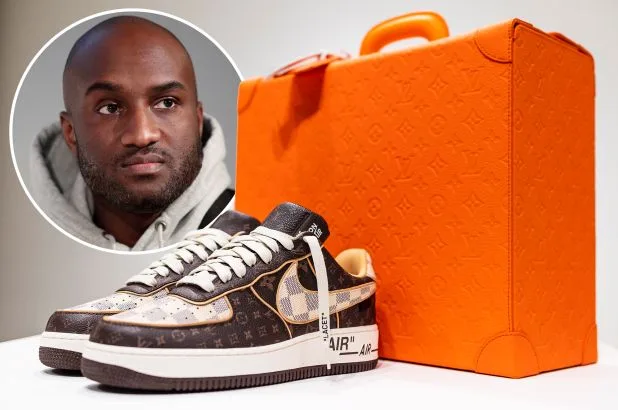
The Louis Vuitton And Nike Expression Of The “air Force 1” By Virgil Abloh

The Nike Air Force 1, celebrating its 40th year, was designed in 1982 and is one of the most successful and iconic shoes ever created. On the occasion of the Louis Vuitton Men’s Spring-Summer 2022 runway show, Virgil Abloh collaborated with Nike to design 47 pairs of bespoke Air Force 1s, fusing the trainer’s classic codes with the insignia and materials of Louis Vuitton in homage to the hip-hop culture that shaped him.

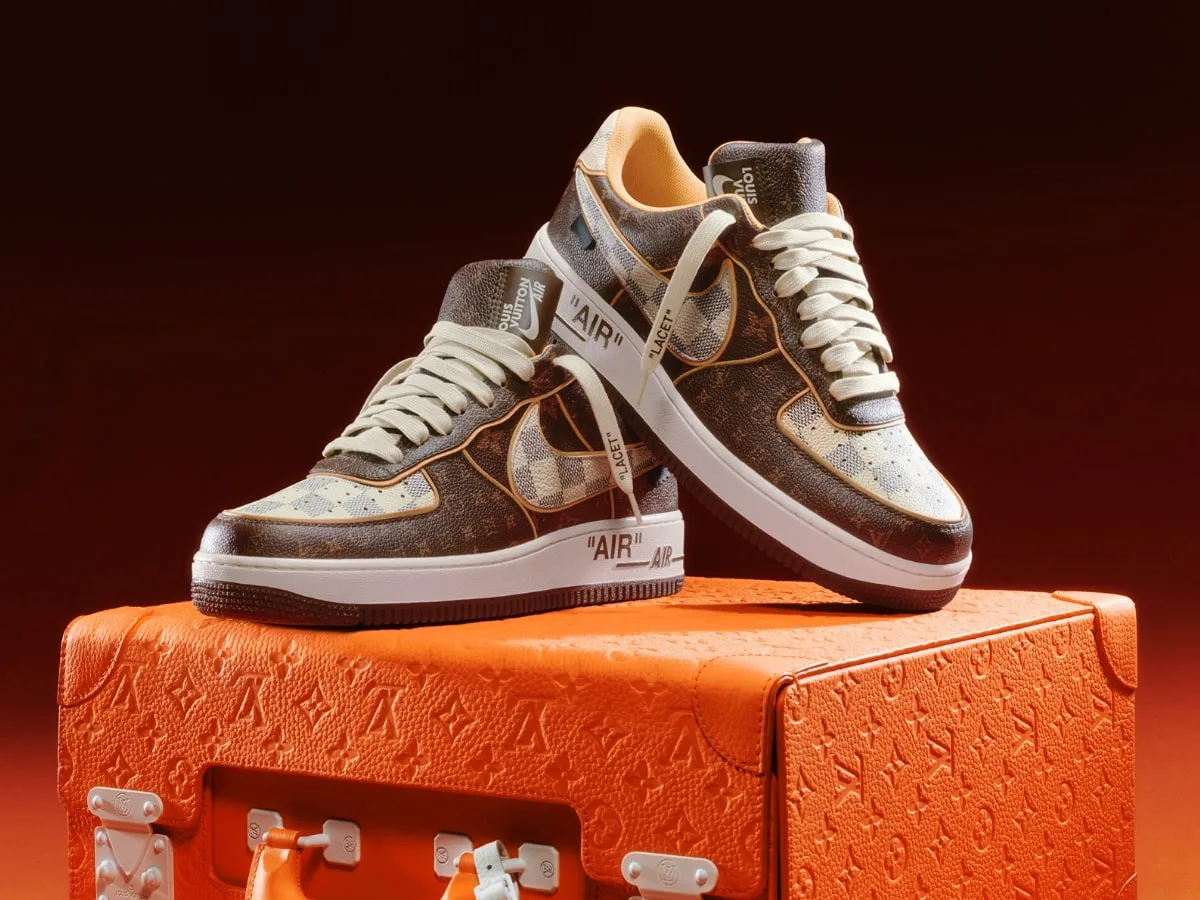
The sneakers were made with materials employed in Abloh’s Louis Vuitton men’s collections, and styled with his signature quotation marks, echoing the written graphics Abloh often used in his work. The individual styles designed for the show were made by Louis Vuitton in its shoe manufacture in Fiesso d’Artico, Italy.

A total of 200 pairs are being made available for this auction in an exclusive colorway and in a range of sizes. The sneakers, entirely made in leather, are embellished with Louis Vuitton’s emblematic Monogram and Damier patterns with natural cowhide piping. Each pair will be sold with a Louis Vuitton pilot case, also from the Louis Vuitton Spring-Summer 2022 collection, which was reinterpreted from Maison’s archive in an iconic orange colorway and made of Monogram Taurillon Leather.

The pilot case features Louis Vuitton’s classic S lock closure in white metal finishing and includes a luggage tag in the shape of the Nike Swoosh. The pilot case adapts to every shoe size, based on an internal cushion system. It will be sold exclusively in this auction

Louis Vuitton’s proceeds from the sale* will benefit The Virgil Abloh™ “Post-Modern” Scholarship Fund, which in partnership with the Fashion Scholarship Fund, supports the education of academically promising students of Black, African American, or African descent

In this size – 7 – only 20 pairs will be produced by Louis Vuitton. The fit is true to other Nike Air Force 1 models.

The lot is in new condition and is being manufactured concurrently with the auction. All lots are sold directly by Louis Vuitton. Due to variations in the manufacturing process as well as sizing, there may be small, immaterial differences as compared to the provided photos and display. This lot is currently scheduled to ship in the first half of 2022, but the timing is subject to change.

100% of the Hammer price is being donated by Louis Vuitton to The Virgil Abloh™ “Post-Modern” Scholarship Fund. The Buyers Premium and Overhead Premium will be retained by Sotheby’s. No portion of the purchase price is tax-deductible.

Content courtesy of NFH Digital Team 

Louis Vuitton and Nike “Air Force 1” Sneakers by Virgil Abloh Beating Auction Estimates

The sale, which the Louis Vuitton creative designer helped to plan before his death from cancer at age 41 in November, will benefit The Virgil Abloh “Post-Modern” Scholarship Fund for Black, African-American and students of African descent in the fashion industry.

Bids for 200 pairs of Nike/Louis Vuitton “Air Force 1” sneakers designed by Virgil Abloh are running well beyond Sotheby’s initial estimates in an auction with a week to go.

The sale, which the Louis Vuitton creative designer helped to plan before his death from cancer at age 41 in November, will benefit The Virgil Abloh “Post-Modern” Scholarship Fund for Black, African-American and students of African descent in the fashion industry.

“We’re currently at around $6.1 million in hammer price,” said Sotheby’s head of streetwear and modern collectibles, Brahm Wachter, on Tuesday, when bids ran as high as $60,000.The original total estimate was $1 million to $3 million for the Jan. 26 to Feb. 8 auction.

The leather sneaker features Abloh’s signature quotation marks and Louis Vuitton’s emblematic patterns. Each comes with a limited-edition orange pilot case.

“On a size 5, there’s just one pair and a size 18, again, there’s just one pair. When you get to a size 10 or a size 8, there are more,” Wachter said.

The sneakers were the first official collaboration between Nike and Louis Vuitton.

“It’s really bringing together two of the great Goliaths of the industry. And of course, the genius of Virgil Abloh, who so many people love and respect and miss,” Wachter said.

“Bringing all three of these worlds together is really an incredible thing, which I think is driving global interest.”

Abloh, one of the highest-profile Black designers, had been the creative mind behind Louis Vuitton’s menswear collection since 2018. In July 2021, LVMH mandated him to launch new brands and partner with existing ones in non-fashion sectors such as furniture and luggage.

Content courtesy of NFH Digital Team 


Lukhanyo Mdingi Debuts His AW22 Collection at Paris Fashion Week

Multi-award-winning South African designer Lukhanyo Mdingi is starting the new year on a high note as he launches his Autumn/Winter 2022 collection in Paris.
Mdingi was set to debut the Bodyland AW22 collection at Paris Fashion Week on Tuesday, January 18.

In this collection, he wants to celebrate the human hands that work tirelessly in creating different designs.
Emerging menswear designers showing in Paris this month have faced difficult choices in the countdown to the Autumn/Winter 2022 season.

When the Federation de la Haute Couture et de la Mode announced a go-head for Paris Fashion Week Men (18–23 January), it was easy enough for major luxury brands to mobilize their resources. With limited funds, emerging designers, however, have had to calculate carefully. While foreign emerging designers have been wary of the costs of physical shows, home-grown designers based in Paris have generally been ready to plow ahead.

While Parisian brands can plan physical shows in uncertain times and develop contingency plans, international young designers showing at Paris Fashion Week have had to get creative to present their Autumn/Winter 2022 collections. It’s one of many hurdles for the new generation of men’s designers who still see Paris and Milan as worthwhile.

Rhuigi Villasenor, the 29-year-old founder of LA label Rhude and newly announced creative director of Swiss heritage brand Bally, was originally excited to show in Paris this season for the first time since the pandemic. When he launched his brand in 2015, making hoodies and T-shirts, he considered Paris “the main stage” of fashion, inspired as a child by flipping through magazines he couldn’t afford in the bookstore, Barnes & Noble.

However, a flip-flopping of travel restrictions and rising Omicron cases forced the designer to reconsider. “Weeks ago we were planning to go to Paris and show. We were looking at venues and the production. And then in just a matter of days, I decided to pivot,” he says. “Taking off my designer cap and putting my CEO cap on, it’s quite a big expense for me not to have the certainty whether we’ll be able to even actually show, let alone have an audience. I had to make the proper choices to pull back from a physical show and do something that feels a bit safer.”

Instead, Rhude has presented his collection digitally with an accompanying showroom, maintaining a laser-like focus on the clothes. Known for hoodies, T-shirts, and bold logo jackets retailing for up to $2,500, Villaseñor is looking to more classic styles for this season, says the designer, who aims to create what the new version of the power suit looks like for today’s Gen Z investor.

South African designer Lukhanyo Mdingi arrived in Paris on 13 January, just five days before his first-ever presentation at Paris Fashion Week, showcasing his bold artisanal and textured prints. Without a network of collaborators in Paris, the young designer found it tricky to organize the components of a fashion presentation, from venue to lighting.

“In South Africa, when you’re part of the fashion week, you pay a set fee and the whole production is pretty much-taken care of and includes hair, makeup, casting, and producers,” Mdingi says. “You walk in with your collection and that’s pretty much it.”

Mdingi, who founded his business in 2013, launched Ssense, and Net-a-Porter’s Vanguard program after Autumn/Winter 2021. He hopes his presentation and showroom will attract more stockists and further growth. Mdingi was invited to show at Paris Fashion Week after winning LVMH’s Karl Lagerfeld Prize 2021, shared with New York’s KidSuper and Shanghai brand Rui. Each designer received €150,000.

Physical shows, with extra, can work for local talent

Many of the menswear designers who are based in Paris have considered a physical show to be the right option. Florentin Glemarec and Kevin Nompeix, the duo behind gender-free brand Egonlab, showed on Monday, following their Pierre Bergé Prize win at Andam 2021. Running parallel to the show was Egomanati, a metaverse experience accessible via the brand’s website featuring NFTs from Egonlab, in collaboration with Crocs.

“I think for young brands, the physical show is an important thing because it’s a validation of our business,” says Nompeix. “We want a real show to meet people, to meet our community, to feel a real energy with the models a real experience.”

Egonlab built a strong online community during the pandemic, Nompeix says (the brand has over 90,000 Instagram followers). Now, as the brand broadens to include womenswear, the new show, and NFT activation are intended to provide a new marketing boost.

French designer Louis Gabriel Nouchi was also set on a show for AW22. Launched in 2017, the brand’s sales have doubled since 2020, bolstered by a store in Paris. Now, he’s keen to win stockists and further press attention with an in-person runway show on Saturday at Palais de Chaillot.

Nouchi’s show for Spring/Summer 2022, staged in July, was an easier challenge because it was held outdoors, he says. Despite the social distancing demands on guests and complex organizing backstage, he was still determined to proceed with AW22. “After making so many videos, it’s really complicated to transmit an emotion through digital,” he says. “Everybody’s going to watch it on their phone it’s not a movie screen. You lose a lot of the atmosphere and the immersive effects. For me, if we’re able to respect all the conditions, let’s do it!”

Pre-pandemic, designers had relative flexibility, confirming show venues three weeks before the event. Now, the lead time is closer to three months, Nouchi says. “It takes longer to source materials, and also we have to have a Plan B, Plan C, and Plan D.” The designer has planned a video and exhibition as backup ideas in the event that the physical fashion show is scuppered. “We’ve had to be very fluid in our planning,” he sighs. “It’s been like this for two years.”

Trialing new formats

For this season, the focus of Rhude’s Rhuigi Villasenor is on the clothes, contrasting with the star-studded show–party the brand held for SS22 in LA, which featured A-list celebrities and a champagne tower. Villaseñor wants to ensure the foundations of the business are solid before taking on new retailers or partnerships. “I’m championing the clothes and the design and the hard work that the team and I put in,” he says.

Rhude has maintained a year-on-year rapid growth rate of around 50 percent. It’s important to take stock at this juncture, says Villasenor. “It’s very easy to be dictated by the consumer. And then you end up on this train where you don’t have control.”

Egonlab’s metaverse project reflects how brands want to extend their online presence. “We want people to find refuge online,” Nompeix says. “You can move through and touch things, or walk through a door and find our collaboration with Crocs.” To date, Crocs has dabbled in the metaverse with the NBA and Minecraft, but this marks its first NFT project, says Yann Le Bozec, senior marketing director EMEA at Crocs. Egonlab reflects Crocs’ gender-free ethos, he adds.

Meanwhile, Lukhanyo Mdingi is strengthening a connection with the Ethical Fashion Initiative. Mdingi and his team went to Burkina Faso to meet artisans who create fabrics for their collections. After the visit, Mdingi decided to invite one of the artisans, Veronique Ouedraogo, to join him in Paris, participating in the presentation and meeting press and buyers.

“Being in that space and really understanding the provenance of the craft and the human beings behind it really ignited something within us,” Mdingi says. “That in itself will add a layer to understanding the genesis of the clothes. And help people recognize that there’s a human behind them.”

Key Takeaway: The pandemic is teaching emerging brands that physical fashion shows aren’t the only route to building brand awareness or winning stockists. Emerging designers are responding to the wants of their individual fanbases, to deliver unique collection experiences, from pared-back presentations to metaverse experiments and NFTs.

Content courtesy of Vogue Business, IOL & NFH

Out of Africa and Onto Vogue: What’s the Story Behind British Vogue’s February Cover?

“It is about the elevation of a continent,” says Editor-In-Chief Edward Enninful of the landmark cover celebrating “a new generation of African supermodels”

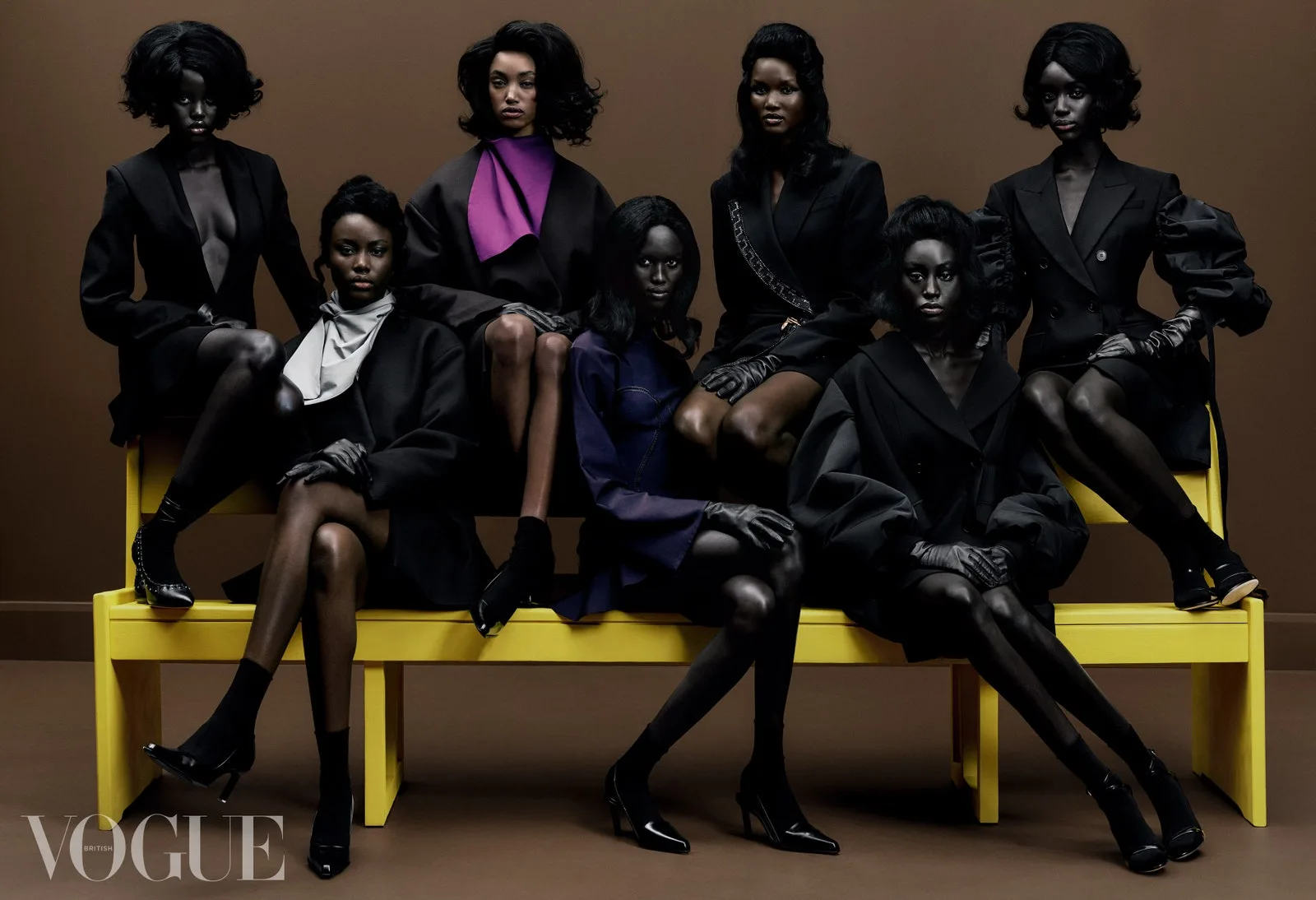
At first glance, British Vogue’s February cover might seem jarring to some; the shadowy tableau of nine dark-skinned Black women, stone-faced and stiffly posed, almost evokes the feeling of mannequins arranged in a store window. Arguably, this might be exactly its intent: to present Black, dark-skinned beauty and unabashedly African features as aspirational rather than an anomaly as a standard, rather than a token.

“This is a celebration of women, of matriarchy, and of the beauty of Black women,” said photographer Rafael Pavarotti of the milestone. “They are the past, the present, and the future.”

The cover is Pavarotti’s first for British Vogue, as well as a first for several of the array of emerging African stars featured: Adut Akech, Amar Akway, Majesty Amare, Akon Changkou, Maty Fall, Janet Jumbo, Abény Nhial, Nyagua Ruea and Anok Yai.

“I saw all these incredible models from across Africa who were just so vivacious and smart,” explained British Vogue’s Editor-in-Chief and European Editorial Director Edward Enninful OBE, himself a dark-skinned British-Ghanaian. “These girls are redefining what it is to be a fashion model.”

While the shift is undeniably overdue, as we know, change is often hard, particularly for an industry that has long reinforced the marginalization of Black models and by extension, Black fashion lovers by simply declaring them not in vogue (pun intended).

“In the beginning, I felt really isolated…I got thrown into the modeling industry very quickly and I kind of had to navigate it on my own,” Yai, who was famously discovered at Howard University’s 2017 Homecoming and has since appeared in campaigns and on catwalks for luxury brands across the world, tells contributing editor Funmi Fetto.

“Backstage, there would maybe be one other Black girl, but now my tribe is backstage,” Yai added. “I can speak my own language to my friends. They are basically like my family.”

Top African supermodel Adut Akech garnered her own alternate cover for the February 2022 issue. Inside, the 22-year-old echoed Yai’s sentiments while reflecting on her own still-growing career.

“I would literally be the only Black, dark-skinned girl in the show. There were no Sudanese models, no African models,” she recalled. “Now, I go to a show and there are girls from my country, girls from Africa who look like me. So yes, there has been a huge change. It has gone from me being the only one at a show to 15 or 20 of us. I’m just so happy that we are finally at this place. I was tired of always feeling out of place and feeling like an outcast.”

https://www.instagram.com/p/CYtqCecFEFT/?utm_source=ig_embed

The cover undoubtedly marks a triumphant moment, but will the overdue inclusion prove to be just another fashion trend?

“You know, fashion tends to follow waves,” noted Enninful, who also styled the cover. “We’ve had the Brazilian wave. We had the Dutch wave, the Russian wave, the Eastern European wave…And while, in the last decade, the Black model has come to prominence, I love that we are finally giving more space to African beauty.”

The highly stylized looks created for the shoot were intended to exaggerate that beauty, reportedly drawing on influences ranging from The Supremes to the often poised and strategically posed portraits of West African photographers James Barnor and Malick Sidibé. Strikingly, the most direct reference is to Grace Jones’ legendary Nightclubbing album cover, on which the Jamaican-American icon appears almost ebonized as she stares piercingly into photographer Jean-Paul Goude’s lens.

“African women and their elegance are at the center of this beauty look,” explained make-up artist Ammy Drammeh, who is of Gambian-Spanish descent. “That elegance is innate, you know? They’re not trying, they just are.”

As the rest of the fashion world finally takes notice of that cover-worthy elegance, Enninful asserts that now, “We need to ensure these girls last. We have to invest in them, nurture them, and support them with editorial, with advertising, with shows. It has to be 360…Getting these girls and then throwing them away after one season? That has to stop.”

The February issue of British Vogue arrives on newsstands Tuesday, Jan. 18. The full cover story can be read online.

Content courtesy of British Vogue & NFH Digital Team

British Vogue’s Momentous All African Cover Spotlights 9 Young Women Redefining What It Is To Be A Model

With a new generation of African models in the spotlight, fashion is, at last, embracing what it is to be truly global. Funmi Fetto talks to some of those redrawing the map.

Photographs by Rafael Pavarotti. Styling by Edward Enninful.

It’s a grey, mild-for-November Tuesday morning, in a brutalist indoor car park off an industrial road within a not particularly fashionable enclave of west London. There’s a large table, methodically laid with lateral flow tests. One would be justified in thinking that this is not where the magic happens. But then, a door opens into a cavernous studio with dramatic black drapes. Inside, nine striking Black models – their facial features varied and distinct – await hair and make-up.

They are playfully conversing; I note snippets of Dinka and hints of other mother tongues peppering the conversation. They’re laughing and teasing one another while moving and mouthing the lyrics to Wizkid’s “Don’t Dull”, “Ojuelegba”, “Essence” and pretty much the entire tracklist of Made in Lagos. These women are a wholly different type of model and are currently pushing the boundaries not only of beauty but of the entire fashion world.

Adult, Anok, Nyagua, Janet Jumbo, Maty Fall, and co are representative of an ongoing seismic shift that became more pronounced on the spring/summer ’22 runways. Prada, Louis Vuitton, Balenciaga, Saint Laurent, Miu Miu, and many more were awash with dark-skinned models whose African heritage stretched from Senegal to Rwanda to Sudan to Nigeria to Ethiopia. For an industry long criticized for its lack of diversity, as well as for perpetuating beauty standards seen through a Eurocentric lens, this change is momentous.

“I saw all these incredible models from across Africa who were just so vivacious and smart,” recalls Edward Enninful, British Vogue’s editor-in-chief, and European editorial director, explaining the inspiration behind shooting an all-Black, all African cover. His excitement for this moment is tangible: “These girls,” he continues, “are redefining what it is to be a fashion model.”


This, he asserts, is well overdue. “You know, fashion tends to follow waves. We’ve had the Brazilian wave. We had the Dutch wave, the Russian wave, the Eastern European wave… And while, in the last decade, the Black model has come to prominence, I love that we are finally giving more space to African beauty.” Unlike the trends that have gone before, which favored a certain aesthetic – the perpetually sun-kissed Amazonian curves of the Brazilians, the strong jawlines of the Eastern Europeans – this African wave taps into a variety of aesthetics from across that vast continent.

Consider Adut Akech. At 22, she is arguably the most successful African model working today. Following her runway debut at Saint Laurent, in 2016, her international Vogue covers have run into double digits, she has notched up numerous fashion and beauty campaigns – from Valentino to Estée Lauder – and recently bought a house in LA. Undoubtedly she has inspired other African models, such as Janet Jumbo, the 19-year-old Nigerian who walked Louis Vuitton and Burberry and says the wave of success African models are riding right now “gives me hope that I can succeed at this”.

Akech, dressed in a toweling robe, her tousled hair redolent of a protagonist in a James Barnor photograph, recalls the landscape of five years ago as a world away from what we see now. “When I first started modeling internationally…” She makes a face, eyes incredulous and lets out a wry laugh. “I would literally be the only Black, dark-skinned girl in the show. There were no Sudanese models, no African models. Now,” she says, smiling, “I go to a show and there are girls from my country, girls from Africa who look like me. So yes, there has been a huge change. It has gone from me being the only one at a show to 15 or 20 of us. I’m just so happy that we are finally at this place. I was tired of always feeling out of place and feeling like an outcast.”

The experience of not belonging resonates with Anok Yai, a fellow Sudanese model, who in February 2018 became only the second Black model ever to open a Prada show (the first was Naomi Campbell, in 1997). “In the beginning, I felt really isolated,” she says. “I got thrown into the modeling industry very quickly and I kind of had to navigate it on my own. I also have social anxiety, so I struggled a lot with connecting with people. Backstage, there would maybe be one other Black girl, but now my tribe is backstage. I can speak my own language to my friends. They are basically like my family.”

For all the celebration of this moment, the elephant in the room remains. Why are we only just beginning to truly embrace African models on the international runways? Particularly when, as Omoyemi Akerele, the founder of Lagos Fashion Week, says, the issue cannot be put down to a lack of fresh talent: “Over the last decade, we have worked alongside agencies dedicated to discovering and nurturing new faces from across the continent. Models like Mayowa Nicholas started out walking at Lagos Fashion Week.”

The pandemic, as well as the logistics of the African continent, have, Vogue contributing casting director Ashley Brokaw explains, played a significant role in the lack of African models on the international runways. “The reason everyone saw a lot of new faces this season was really a function of access,” she says. “Prior to the pandemic, we had sorted through initial visa issues – some countries were definitely easier than others – we got all the paperwork, we got all the necessary travel documents for the girls done in advance, and then everything shut down. So, the explosion of African girls on the catwalk that we suddenly see is a result of things opening up.”

The previous scarcity of African models, continues Brokaw, can also be attributed to outmoded casting processes. “Over the years, I have had to do my scouting through an agent, perhaps based in Milan or Paris, who would filter their choices down to me. Now, thanks to social media, I can reach out directly to scouts in say Rwanda or Burundi, or Uganda and find a great girl. They can also text, WhatsApp, or find me through Instagram. The level of access through social media is just incredible. This means I’m now able to choose girls through my own lens, which makes the process so much more democratic and inclusive.”

The power of social media has also been a game-changer for Piergiorgio Del Moro, the founder of DM Casting, which he runs together with Samuel Ellis Scheinman. “Every day,” begins Del Moro, who discovered Akech, “I receive tons of messages and images from scouts and potential models from all over the world.”

The previous system, which, Scheinman explains, “came down to where money was invested to find models”, meant that the Black girls cast were predominantly light-skinned African Americans, and only one or two were African because the agencies didn’t have the right connections to get girls from Africa into Europe. “And so, for us, we see social media as a real change in terms of how scouting has blossomed in Africa. We are now able to have a photo of a girl sent to us in a nanosecond.”

Logistics, economics, and technology aside, there is no denying how much the global reckoning around race, diversity, and inclusion, heightened in the wake of George Floyd’s murder, has forced a shift in mindset towards racial inequities and unconscious bias. The casting process, agrees Scheinman, is no exception. “The industry has definitely gone through a soul search about what diversity means, what inclusivity means, and what being truly global means when it comes to casting. We really saw this starting to shift about five years ago, and so for us as casting directors, the more options we have, the more we’re going to want to explore every version of beauty. Now that we have access to these amazing girls, there’s no reason not to work with them.”

As the casting director for Kerby Jean-Raymond’s label Pyer Moss, which actively celebrates Blackness and casts accordingly, Katherine Mateo has long been vocal about the narrow ideals of beauty perpetuated by the fashion industry. And she’s not afraid to highlight the complicity of the casting process. “For many years, we have been stuck on what society has trained us to believe is the ‘perfect’ skin color, size, age, height. But the fact of the matter is people want to see the world that reflects their reality. Our world does not have one type of beauty, and we as casting directors have the power to directly connect with brands and publications and hold them accountable for the change we would like to see.”

Del Moro adds, “It is our job to push diversity. Diversity of age, diversity of size, diversity of skin color. Some editors, like Edward [Enninful], have over the years raised their voices about diversity, and you also have some designers who have it at the forefront of their minds. But where they don’t, it’s our job to push for it.”

Valentino’s Pierpaolo Piccioli is known to champion African models such as Akech; his groundbreaking spring/summer ’19 haute couture show famously featured an all-Black cast. “For months, I had been nourishing the desire, the fantasy, to make couture inclusive. Simple as it may seem, it started with an iconic picture by Cecil Beaton of the Charles James salon. I said to myself, ‘What if instead of these white-swan models we had a salon filled with Black women wearing couture?’” His research took him to archive editions of Jet and Ebony.

What he discovered strengthened his resolve. “Magazines aimed at a Black readership had to buy most of the clothes for their editorials because couture houses didn’t want to lend to them. The more I delved into it, the more I felt I had to do something. Not to say or to promise, but to do. Fashion is the language I use to express my values and ideas, and I thought the only trustworthy, valuable statement that I could make was through a couture show with only Black models. Do I think it’s enough? No, it’s not. But every time I look at that finale picture, I know it meant something, and I know I want to do more.”

While he is under no illusion about the mammoth hurdle to eradicate racial inequity in fashion, Piccioli is excited about the current trajectory of African models. “I am pretty sure there is no coming back from this. It is unlikely to be replaced by constraints and unreachable standards of beauty. These must be defeated because being standardized does not belong in the future we wish to witness.”

The characteristically straight-talking Bethann Hardison, a trailblazing veteran Black model, agent, and long-time activist for diversity in the industry, has reservations. She suggests caution over what could potentially be a double-edged sword. To be clear, she asserts that this isn’t to rain on anyone’s parade; her perspective comes from experience:

“Remember, I’ve been around for a while, so I see these things through a different gaze,” she explains. “Of course, I believe in racial diversity, but the good news and the bad news is that fashion changes. I worry that this situation becomes this thing where, ‘If you’re Black you’re in,’ which means then at some point, you could be out.” Again, to avoid misinterpretation, Hardison adds a caveat. “Look, I’m not saying that this will absolutely be the case in this situation, but generally when you lean so hard in one direction, the natural move after a while is to begin to lean far into the opposite end.”

There is validity to her point. There is a constant tug of war within the thorny triad of diversity, authenticity, and longevity. Is it real? Will it last? For how long? Scheinman admits that there is an element of casting that is performative. “We have some clients for whom diversity is embedded in their DNA, and there are others where we have had to have very active discussions with them, where they then say, ‘I really want to change, I want to be more inclusive.’

While the industry perhaps hasn’t necessarily invested much in the way of size inclusivity, I feel like the racial aspect of diversity is the one that is most embedded. It’s like a non-negotiable. For Piergiorgio and me, there’s no question that the world could go back to, say, a ‘Russian casting’. It’s just not modern. Not only is diversity an obligation, but it would also be irresponsible to treat it as something so disposable.”

This is music to the ears of Akerele, who stresses that while ensuring representation from marginalized communities to reflect our “global village”, stakeholders must be mindful to ensure no one is left out of the conversation. “Casting directors across the world must hold themselves accountable to a higher standard. The underlying question should be, ‘Who am I excluding?’” This responsibility, however, argues Abrima Erwiah of the Ghana-based brand and social enterprise Studio One Eighty-Nine, extends far beyond casting directors.

The onus, she believes, is on everyone, from consumers to brands to editors and anyone who engages with the industry. “Yes,” she admits, echoing some of Hardison’s misgivings, “some people might see it as a trend and a moment and try and suck it dry to move on to the next sexy thing, but whether we believe we have power or not, we all have to come together and work on this as a community. If the logistics and the infrastructure are there to support these models, I think it will work.”

It is a sentiment, a clarion call if you will echoed by Enninful. He believes the way to ensure that this “moment” isn’t transient, is to ensure the models’ careers go the distance. “It’s sad and heartbreaking for me to see girls who are on the rise suddenly taper off. We need to ensure these girls last.


We have to invest in them, nurture them, and support them with editorial, with advertising, with shows. It has to be 360.” Recalling Alek Wek’s early modeling career, he reveals the secret to her longevity: “Alek Wek didn’t suddenly become Alek Wek. There was a group of us behind girls like her, propelling them forward. This is what we have to do in all our different roles. Getting these girls and then throwing them away after one season? That has to stop.”

Outside, the grey skies have dimmed to a blue-black. The energy among the models is still high. The infectious sound of Afro B’s “Drogba (Joanna)” reverberates around the studio, and the frisson of excitement that permeated the air earlier in the day shows no sign of abating.

As the hairstylist prepares her for another shot, Akech mulls over the hope that the uprising of African models goes beyond a trend. “I mean,” she says, choosing her words carefully, “that is the goal, that it becomes more than a moment.” And then, almost immediately, as if to correct herself, she answers more resolutely: “Actually, I don’t see it being a trend. Also,” she says, laughing, “there are so many of us – we are just not going to go out of style.”

Iman, the groundbreaking original African model, who not only paved the way but has long campaigned for diversity on the catwalk, has a message for Akech et al. “If beauty is in the eye of the beholder, then let the beholder be you.” And her charge to the world? “All hail our African models with their jet-black skin, impossibly long limbs and natural hair, full of joy and absolutely no compromise.”

Content courtesy of British Vogue Magazine & NFH Digital Team

Rapper Kanye West is reportedly being lined up as Creative Director at Louis Vuitton

Kanye West could be taking on a prestigious new role as the creative director for Louis Vuitton following the sad death of fashion legend Virgil Abloh, according to new reports.

The rapper has branched out in recent years, from best-selling musician to launching his own clothing line, Yeezy, and even dabbling in politics – short-lived as that was.

Now it seems the Donda rapper could be taking his love of fashion design even further as reports indicate he has been tipped for a prestigious role in world-renowned brand Louis Vuitton.

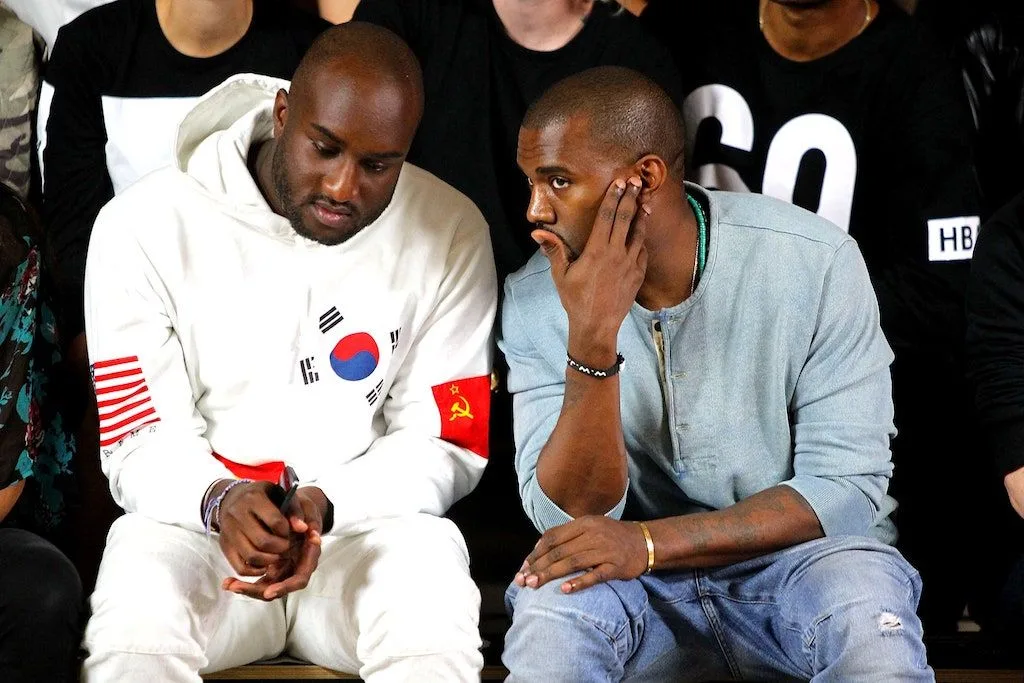
According to The Sun, Louis Vuitton plans to replace icon Abloh with the musician, 44, who was a close friend of the late designer.

The outlet reports that Kanye and Abloh discussed the rapper taking over the role shortly before Abloh’s death aged 41 last month.

A source told the outlet: ‘Kanye is devastated about Virgil’s death because they had been friends for years and worked together a lot.

‘They shared a similar vision and now Kanye feels he owes it to Virgil to continue his work at Louis Vuitton.’

Ye and Abloh had been firm friends for over a decade, first meeting in 2009, and the designer held the role of creative director at Kanye’s own firm, Donda.

The Off-White founder and Louis Vuitton designer died on November 28, after a private two-year battle with cancer.

Devastated Kanye dedicated his Sunday Service to Abloh following the news of his death, and later attended his memorial with ex-wife Kim Kardashian and their daughter, North.

At the memorial, Kanye was seen placing a supportive hand on Abloh’s sister as she delivered a heartfelt eulogy for her beloved brother.

Abloh first sparked his love for fashion when he was attending the Illinois Institute of Technology, while getting his Masters of Architecture, and soon began designing his own T-shirts.

The designer launched his debut company, Pyrex Vision in 2012, and founded his iconic fashion house Off-White in 2013.

Kanye’s sneakers and menswear line, meanwhile, is said to be worth ‘billions’ of dollars.

Content courtesy of Metro Uk & NFH Digital Team


City Walk Donates 2000 Pairs Of Shoes To Ajuma Foundation

Over the weekend, the Ajuma Foundation received 2,000 pairs of shoes from the shoe retail company City Walk. The company made the handover at its 30th-anniversary celebration event which was attended by influencer Maureen Waititu who also became the company’s brand ambassador and supermodel Ajuma Nasanyena.

https://www.instagram.com/p/CXQWznNokyL/?utm_source=ig_embed

Speaking at the event Ajuma said that the shoes donated would help keep the children of Turkana in school.

“The reason why I’m standing here today and have partnered with City Walk is because of the children. The teachers told me the children walk eight hours a day back and forth from school. And when you look at the children’s feet, they have wounds on their feet from thorns and rocks. It’s just a handful of them who have shoes. It was a really huge weight for me to carry. And I just wanted to say, thank you so much to City Walk for taking that part of that weight.”

City Walk opened its doors in 1991 with an initial branch located at the Mall Westlands as a women’s shoe shop. Within a year, the men’s shoes were introduced to the catalog. It has since become a retail chain with over 25 branches across Kenya.

https://www.instagram.com/p/CXVVkNLt2lY/?utm_source=ig_embed

Speaking at the anniversary celebration the City Walk Director, Sheriffi Hassan Ali, said that he started the company with no experience, only spurred on by the dream of opening a shoe shop. He says the company’s continued success can be attributed to its customers and the company’s core belief in family.

“What we do is not just selling shoes. It is connectivity. A connection that is sole to soul. As we move ahead there are many causes we would like to support.

We have partnered with Imani orphanages and at the end of this month, or next month we are opening a City Walk orphanage for prisoner kids at Kasarani. And then our goal is to plant a hundred thousand trees in this country over the next 10 years.”

https://www.instagram.com/p/CXEbB-mIrFL/?utm_source=ig_embed

Keeping up with the tradition of family, the company named influencer and mother of two Maureen Waititu their new brand ambassador.

“I’m telling you, this (City Walk) is a real family, I have never felt more at home. And it’s in the actions, it’s in your work of charity, because I know we are about to launch their children’s home for mothers in prison in addition to what you’re doing for Ajuma today…I do not take this opportunity for granted. Thank you for embracing my children. This is such a huge win for me, seeing me and the boys on a billboard.”

As part of her campaign as the brand ambassador, Maureen will offer her followers giveaways for spotting the new billboards as well as a promo code with a 10% discount on all City Walk products.

Content courtesy of KBC & NFH Digital Team 

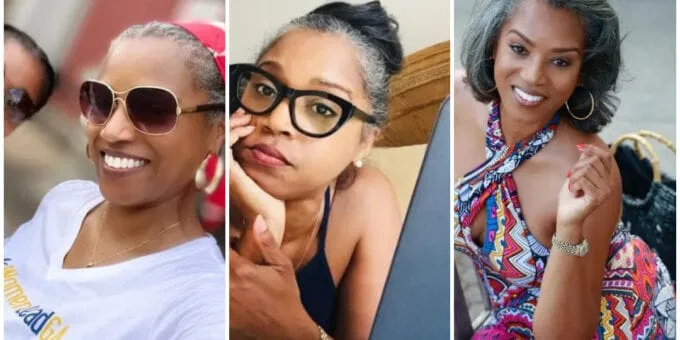
Rolonda Rochelle 53 Years Old Who Has proven That Age is Just a Number for Beauty

Rolonda Rochelle is an African-American, based in Atlanta, United States of America. She is a brand ambassador and pro-aging advocate and a licensed real estate sales agent at Palmerhouse Properties, a full-service Atlanta-based residential and commercial real estate brokerage.

https://www.instagram.com/p/CPl9W11h0eL/?utm_source=ig_embed

Rolanda’s real name is Rolanda Wright. We know very little about her family. Rolonda posted a photo on IG where she wished her dad Father’s Day.

A picture was also included, showing her father looking like Richard Roundtree. But, he was not mentioned.

According to some sources, Rolonda is currently living in Decatur Georgia. Her hometown was Atlanta, Georgia.

She might not be as famous as Nicki Minaj or Beyonce or Cardi B but her striking beauty and youthful looks hideout the fact that she is 53 years old. Rolanda Rochelle is an African American living in the United States of America.

Rolanda is a realtor, brand influencer, lifestyle and travel blogger, and a pro-aging advocate who chose to live a single life with many people imagining that she got a husband but her youthful looks and elegance come from a no husband relationship, meaning she got no stressing in her life. She recently teased her fans on tick-tock about her imaginary husband with many not getting how such a beautiful and youthful-looking 53 years Rolanda lives without having a man in her life.

Height, Diet, Distinct Features

Rolonda Rochelle is 5 feet 8 inches tall. Her distinctive features are her dark brown eyes and grey hair. And of course, her wide smile.

Rolonda, even though she was older than 50 years old, was still active and healthy. Her healthy diet that includes lots of fruits and vegetables and plenty of nuts is the key to her fitness. However, she does enjoy a good glass of wine.

https://www.instagram.com/p/CWgMckML3v-/?utm_source=ig_embed

Social Media Reach: Instagram. Facebook. Twitter

Rolonda was a huge social media presence as of February 2021. She was active on all major social media platforms. She had 277k Instagram followers. Similar to her Instagram page, she had 13k followers and 14k likes.

On her Instagram handle going by the name Rogirll, she shows off her beauty and proves the phrase ‘Black doesn’t crack’ fully embellishing itself in her.

Rolonda Rochelle Net Worth, Movies, Realtor

Rolonda is most well-known for her appearance on the comedy skits of Kountry. She also had her own career. Rolonda was an Atlanta realtor. She was a luxury agent in real estate.

https://www.instagram.com/p/CQUexWgh11Q/?utm_source=ig_embed

On her Facebook page, she listed her professional information as an actress and pro-aging advocate. She was mostly known for her Instagram videos with Kountry Wayne. She didn’t have any movie credits. We don’t know what brand she was a brand ambassador.

Rolonda was a strong pro-aging advocate. Rolonda is openly accepting her age. She’s a social media celebrity who inspires others to embrace their own age without being embarrassed.

She was also a CASA volunteer. CASA volunteers are legal volunteers that are trained to fight for the rights of neglected and abandoned children.

Our sources indicate that the average base income for an Atlanta realtor was more than $76 000 per year.

Rolonda must earn around this amount, give or take. Her net worth was $800 million as of February 2021.

Rolonda Rochelle Husband, Daughter, Married

Rolonda revealed in an Instagram post that she was still single with no husband. She also shared that she has a grown-up son.

Rolonda’s video showed her talking with an imaginary husband, only to discover later that she wasn’t married and didn’t have a husband.

Rolonda also posted an Instagram photo with her daughter in which Rolonda was out protesting injustice and equality for black women.

Rolonda is most well-known for her role in Kountry’s cougar girlfriend, which she did in many of his skits.

https://www.instagram.com/tv/CQuLTkpA-Y1/?utm_source=ig_embed

Kountry is a comedian on social media. He posts short, funny videos to Instagram.

Kountry’s videos tend to be about everyday things, such as relationships and children.

Content courtesy of Nairobi Fashion Hub Digital Team 

Kejeo Designs Launches Holidays Collections SS21 For Modern Curvy Women 

Kejeo Designs has been turning vibrant textiles into modern styles for Western women since 2016. Now, the fashion brand is releasing its newest Holidays 2021 Collection on October 29, 2021, that founder, Sena Ahohe, created with modern, curvy women in mind.

The fashion boutique gets its name, Kejeo (Ké-Jé-O), from the word “nou kéjéo-a,” which means something looks beautiful on you in the Mina language spoken in Benin and Togo in West Africa. Kejeo Designs prides itself on bringing the beauty and vibrancy of African culture to the West with its clothing decorated with premium African print fabrics such as Ankara or Mud Cloth.

And for over five years now, Kejeo Designs has made African clothing lines for men and African clothing lines for women that inspire a sense of pride in African ancestry.

Kejeo Designs has released many colorful and beautiful collections over the years that feature clothing for men and women of all sizes and stylish accessories. But their newest drop, the Holidays 2021 Collection, has been long-awaited.

The Holidays 2021 Collection will feature size-inclusive styles for the modern woman who’s been searching high and low for fashion that compliments their shape and style!

Size-inclusive clothing doesn’t have to be boring.

And Kejeo Designs proves just that with their new collection that’s full of bold African print, feminine and classic silhouettes, and clothes that show off your curves not hide them.

Discover dresses, tops, outerwear, and more in the Holidays 2021 Collection that comes in a range of accessible prices that’ll make any woman feel confident in their skin this season.

Kejeo Designs is committed to the belief that regardless of your size, shape, or color, you deserve to wear clothing that makes you feel confident in your self-expression and feel proud of African culture. The brand plans to release more collections in the future and expand its reach. But for now, you can find their new Holidays 2021 Collection on October 29th

Content courtesy of Ein Presswire and Nairobi Fashion Hub 

Birimian Unveils the First Cohort of the IFM-Birimian Accelerator x Africa, the Accelerator Program Launched with Institut Français de la Mode

Birimian, the first operational investment company dedicated to African luxury and premium heritage brands, has selected the finalists of its first call for applications (see list below). These finalists will join the acceleration program IFM-Birimian Accelerator x Africa, in partnership with Institut Français de la Mode (IFM). The designers selected will also be highlighted at the Première Classe event organized by WSN as part of Paris Fashion Week on October 1–4, giving the brands valuable exposure to the European fashion scene.

Launched in June 2021, IFM-Birimian Accelerator x Africa is an innovative acceleration program for emerging African heritage brands in the fashion, accessories, and jewelry sectors. Every year for ten months, the program, funded by Birimian, intends to support ten young designers selected by a committee of experts from the international creative scene. The brands participating in the program will also receive investment and/or consulting and support services from Birimian.

The accelerator program provides essential tools to develop emerging brands:

  • Defining a brand platform
  • Strengthening the creative process
  • Targeting the relevant audience
  • Establishing a consistent marketing strategy
  • Financial management
  • Planning and structuring of collections
  • Distribution strategy
  • Communication policy, and more.

This program is a unique opportunity for designers and emerging brands, both on the continent and in the diaspora, to get strategic, operational, and financial support for ten months, thus allowing them to make their activities more professional and organized. It is a program focused on training the young African creative guard and promoting creative entrepreneurship.

The talent identification process took two months and involved scouting, active engagement with brands, and selection of candidates from three segments: ready-to-wear (general public and premium) for 80% of the brands, ready-to-wear fashion (premium and luxury), and accessories for 20%. 85% of them are “made in Africa.” Their collective customer base reflects Birimian’s ambitions with a strong openness to the international market (40%) and significant potential for influence beyond the borders of the continent. 80% of them boast a revenue of over $US50,000, one of the main selection criteria.

The first group, characterized by a geographic diversity representative of the continent’s main economic hubs, illustrates the richness of the brands’ creative worlds. It includes the following finalists:

Laureen Kouassi-Olsson, CEO of Birimian, commented, “The class of designers invited to join the IFM-Birimian Accelerator x Africa program embody the new creative African guard: reinvented tradition, undeniable creative talent, Afropolitan, urban, and digitally focused on the world, proudly showcasing their heritage through collections whose originality no longer needs to be proven.

However, it remains fragile, hence the need to strengthen their basics and provide them with operational, strategic, creative, and financial support. This is the entire purpose of this program, which is fully aligned with our investment strategy. The network of experts it draws on and the unique access to the ecosystem of the French and European creative scene will inevitably create value. We cannot wait to warmly welcome them to Paris alongside Institut Français de la Mode.

“The 10 brands selected for this first intake of the IFM-Birimian Accelerator x Africa are full of creative talent and ambition for their development. The designers and entrepreneurs will work on all the components of their brand with the objective of not only boosting their reputation but also developing sustainable businesses in an international ecosystem while preserving their African heritage.

The right balance will be struck by working together towards creative, inclusive and sustainable entrepreneurship”, concludes Thomas Delattre, Director of the Fashion Entrepreneurship Center at Institut Français de la Mode.

About Birimian
The first operational investment platform dedicated to African luxury and premium heritage brands, Birimian supports designers on the continent in their growth and international development over the long term. Birimian’s main objective is to accelerate the international emergence of African creators by positioning itself as their major partner in four main sectors: fashion, accessories, beauty & cosmetics, and gourmet.
Birimian is aimed at brands that carry the continent’s culture, tradition, history, and cultural heritage, magnificent in its diversity, in their DNA and identity, brands that adapt to modern and contemporary codes.

About IFM
Institut Français de la Mode is a higher education institution, a training center for apprentices, a provider of executive education, as well as a center of expertise for the textiles, fashion, and luxury industries. It offers 16 educational programs at vocational, Bachelor, Master, Executive MBA, and doctorate levels, which prepare students for all the professions in the fashion industry in the fields of management, design, and craftsmanship.
Based in the heart of Paris on a new 9,000 m² campus, Institut Français de la Mode welcomes more than 1,000 students of some fifty nationalities – managers, designers, technicians, entrepreneurs – encouraging meetings, collaborations, and cultural effervescence.

Institut Français de la Mode is a member of HESAM Université, of the Conférence des Grandes Ecoles and of the International Foundation of Fashion Technology Institutes (IFFTI). It is supported by the French Ministry of Economy. It is recognized by the French Ministry of Higher Education.

Content courtesy of IFM-Birimian Accelerator x Africa 


Oakland Clothing Designer Sources Textiles from Africa

How an Oakland clothing designer Ade Dehye is challenging fashion industry norms, sourcing directly from Africa with his 100% Black-owned and operated brand, “Tunde” Ahmad is merging textiles from Ghana with urban streetwear designs.

East Oakland’s Akintunde “Tunde” Ahmad had long wanted to visit the African continent and reconnect with his ancestry. When he arrived at the University of Ghana in Accra in 2016, taking a semester off from Yale to study abroad, he was captivated by everything about the bustling city.

“I was fortunate to be able to go for an entire semester and have a deeper and longer connection out there, learning African history from an African perspective, rather than Eurocentric or American perspective,” he said. “I was able to dispel a lot of myths and stereotypes that are negative, overwhelmingly, and put into our heads about the continent.”

One of the most stunning revelations to Ahmad was how prosperous Ghana’s fashion industry is but not in the fast-fashion, the mass-produced way we’re accustomed to in America. In Accra, you’ll see a lot of people in completely custom outfits, rather than something you’d find at a chain store.

The reason: It’s extremely easy to access affordable tailors, along with endless unique fabrics, from bògòlanfini (traditionally dyed with fermented mud) to woven kente (a handwoven cloth with strips of silk and cotton).

“Even every dorm on campus had a tailor,” he said. Ahmad started getting garments made and visiting different fabric markets. “The tailors get your measurements and can make different custom pieces.”

These experiences laid the groundwork for what is now Ahmad’s successful clothing brand in Oakland, called Ade Dehye, which uses custom West African textiles sourced directly from Ghana to create urban streetwear designs. It’s all operated under an ethical business model that aims to respect, rather than exploit, African culture and workers.

“It was a very natural progression,” he said. “I never really had a huge interest in fashion. But once you actually get to try stuff and see how it looks on yourself, that is how I caught the fashion bug.”

Now, his 100% Black-owned and operated brand works with a dozen tailors in Accra to create around 250-300 pieces at a time. Ade Dehye is known for its fusion of intricate prints stylized as streetwear, bomber jackets, lined trench coats, and two-piece outfits that you can mix and match. The pieces are then shipped to Oakland and sold online or through pop-ups. The timeframe from Ahmad selecting the fabrics and designs to receiving the garments can take anywhere between 10 weeks to five months.

“There needs to be more investment in Ghana, in the continent as a whole,” Ahmad said. “And not just in the clothing industry, but in industrializing the country as a whole, and getting West Africa more up to speed and competitive with the rest of the world in every sector.”

Although Ahmad wasn’t always interested in fashion, he was familiar with West African textiles. His mom often wears clothing made out of West African prints, so Ahmad was exposed early on to textiles like Kente cloth, Ankara, and mud cloths. “I was no stranger to these fabrics. But I’d never been able to get stuff tailor-made to me,” he said.

Ahmad’s path to fashion wasn’t always clear, but he always had a goal to make a difference. When he graduated from Oakland Tech High School in 2014 he was praised on national television for his achievement as a senior who was accepted into some of the most elite Ivy League universities. Ahmad received his bachelor’s in sociology from Yale in 2018, and his master’s in journalism and documentary film from Columbia Journalism School in 2019.

“I got a lot of attention for [my college acceptances], and I always wanted to return the favor to come full circle and actually get into education,” he said of his goal to return home and pay it forward like he watched his mom do as being an educator with the Oakland Unified School District for three decades.

While he wanted to make his way home eventually, he decided to stay in New York to work as a journalist and filmmaker in Harlem after graduating from Columbia. But when COVID-19 hit, he and his partner, Elena, traveled back home to Oakland for what was supposed to be no more than a 10-day shelter in place. They ultimately canceled their return flight to New York and stayed in the Bay Area.

When he came home, he got the opportunity to teach at OUSD’s African American Male Achievement program, designed to improve academic and life outcomes for male students. At the same time, he took part in the prestigious Ida B. Wells fellowship in investigative reporting. While Ahmad was forging a budding journalism career, he never stopped thinking about the time he spent in Ghana. He started dreaming up creating a 100 percent Black-owned brand solely sourced and produced out of Ghana.

Having no fashion knowledge other than what he learned during his time abroad as a college student, he reached out to the people in the fashion industry he had met during his stay back in 2016. One of them was local Ghana fashion designer Awurama Mankatah, owner of the Threaded Tribes clothing brand.

So far, Ahmad has self-funded the entire project, and money generated from pieces sold is reinvested into the brand.

Because tailors in Ghana specialize in making a limited number of custom-made pieces at a time, one of the biggest challenges was recruiting them to be involved. He leaned on Mankatah for guidance on finding the right tailors, as well as learning how long certain handmade fabrics take to make, and the different types of stitching and patterns. The roughly dozen tailors that work for Mankatah also work for Ahmad, and the entire manufacturing operates out of Accra.

For the most part, Ahmad has worked remotely to bring his vision to life, but he was able to travel to Ghana this past February.

From the beginning, Ahmad wanted to ensure his brand helped the African workers he partnered with financially and didn’t become an exploitative source as is the case in so many industries operating on the continent. Cacao is one of the most obvious examples of how Western countries take advantage of West Africa’s natural resources with little benefit to locals. While Ghana is currently one of the largest exporters of cacao, Western Europe and the United States have the highest number of chocolate manufacturers reaping profits.

“You see all of these folks from other places coming in and running things, and you understand this is a raw resource grab,” he said.

Ahmad knew he was taking a risk with his ethical vision for how to run Ade Adehye given how much easier and more lucrative it would be to run the brand out of China’s mass production infrastructure. “I purposefully chose not to do that,” he said.

So far, Ahmad has hosted two pop-ups, one in Alameda in May and one in downtown Oakland in August. During the Oakland pop-up inside Dish Boutique on 23rd Street, friends and visitors got the chance to mingle with Ahmad, ask questions about the pieces, and walk away with shopping bags filled with unique garments priced at $80-$250, which Ahmad says is a reasonable price for the handwoven items given the labor-intensive hours that go into making the garments.

Ahmad’s ultimate goal is to help other Black entrepreneurs follow the blueprint that he created with the help of other people in the fashion industry like Mankatah of Threaded Tribes to show how it is possible to run an ethically and sustainable company that’s successful.

For now, he’s getting ready to travel to Ghana for the second time to start working on what new pieces he will add to the Ade Dehye collection. In the end, he is keeping accessibility and his hometown in mind as he rolls out designs.

“I want to see my folks wearing my stuff. I come from East Oakland, I come from Oakland public schools, folks aren’t going to be paying $800, $900 for a trenchcoat,” he said. “I want the pieces to be accessible to my folks. It’s more about brand integrity, having morals and values that I’m trying to stick to.”

Content courtesy of The Oakland Side & Nairobi fashion hub


Nigerian Born Fashion Designer Joy Ijeoma Meribe Opens Milan Fashion Week 2021

Designer Joy Ijeoma Meribe opened Milan Fashion Week on Wednesday with her debut runway collection, a concrete success for a movement to promote diversity in Italian fashion just a year after launching

MILAN — Nigeria-born designer Joy Ijeoma Meribe opened Milan Fashion Week on Wednesday with her debut runway collection, a concrete success for a movement to promote diversity in Italian fashion just a year after launching.

The Italian National Fashion Chamber tapped Meribe to open six days of womenswear previews for Spring-Summer 2022 after her inaugural collection for the “We Are Made in Italy” initiative last year found commercial success.

“Beyond whatever video, proclamation, or manifesto that we make, the real test is whether clients buy your products. Joy passed that exam,’’ said Italian-Haitian designer Stella Jean, who helped launch the initiative in the summer of 2020, asking the question, “Do Black Lives Matter in Italian Fashion?” inspired by the U.S. movement and following racists gaffes by major Italian fashion houses.

“It wouldn’t have been so quick if there wasn’t an acceleration from the United States,’’ said Jean, who basked in the early success in the front row alongside Italy-based U.S.-born designer Edward Buchanan and Afro Fashion Week Milano founder Michelle Ngonmo.

Meribe broke down in tears after the show as she thanked the fashion chamber and the movement’s founders for getting her to the runway.

The collection featured tiered and ruffled skirts and jackets with built-in capes that were both regal, as seen in an off-shoulder dress sweeping the ground, and hip, including a mini day-dresses and shoulder-baring tunic. Textiles were an explosion of bright yellow against sky blue, with tropic prints featuring thatched cottages against flourishing banana trees, which Meribe said was meant to celebrate a return to more normality.

“We have passed from a dark moment, and I wanted to create something full of hope and light, the joy of restarting,’’ she said backstage.

The initiative that launched Meribe opened its second edition this fashion week, an all-female group of designers working in Italy with roots in Togo, Morocco, Haiti, Cuba, and India, following last year’s “Fab Five” inaugural class of all African-born designers.

“There is a movement happening,’’ said Buchanan, the American designer behind the Sansovino 6 label. “Of course everything takes time, but it takes somehow an industry to get used to the idea that these are talents like any other.”

To point, they have created a database of more than 3,000 fashion professionals with diverse racial and ethnic backgrounds living in Italy, including designers, merchandisers, photographers, and stylists, with the aim of putting to rest the notion that diverse talents weren’t available in Italy.

But even while marking progress on diversity being made in the industry, organizers said that a racist incident at a four-star hotel in Milan aimed at this year’s “Fab Five” underlined the work still ahead.

Ngonmo said that she was checking into the hotel with the five women when the desk clerks rudely dismissed routine requests by paying guests, indicating that they didn’t belong there. She posted the incident on social media and later spoke with management, who apologized and fired the two workers responsible.

“They dehumanized us, taking away our humanity and treating us like animals. It is really, really bad,’’ Ngonmo said.

Jean said the incident “is the proof that everything we are doing today, more than ever, needs to be done. It is a necessity.”

Content courtesy of abc News & Nairobi fashion hub 


Ad