Saturday 24th of October 2026

Nairobi, Kenya

Oakland Clothing Designer Sources Textiles from Africa

How an Oakland clothing designer Ade Dehye is challenging fashion industry norms, sourcing directly from Africa with his 100% Black-owned and operated brand, “Tunde” Ahmad is merging textiles from Ghana with urban streetwear designs.

East Oakland’s Akintunde “Tunde” Ahmad had long wanted to visit the African continent and reconnect with his ancestry. When he arrived at the University of Ghana in Accra in 2016, taking a semester off from Yale to study abroad, he was captivated by everything about the bustling city.

“I was fortunate to be able to go for an entire semester and have a deeper and longer connection out there, learning African history from an African perspective, rather than Eurocentric or American perspective,” he said. “I was able to dispel a lot of myths and stereotypes that are negative, overwhelmingly, and put into our heads about the continent.”

One of the most stunning revelations to Ahmad was how prosperous Ghana’s fashion industry is but not in the fast-fashion, the mass-produced way we’re accustomed to in America. In Accra, you’ll see a lot of people in completely custom outfits, rather than something you’d find at a chain store.

The reason: It’s extremely easy to access affordable tailors, along with endless unique fabrics, from bògòlanfini (traditionally dyed with fermented mud) to woven kente (a handwoven cloth with strips of silk and cotton).

“Even every dorm on campus had a tailor,” he said. Ahmad started getting garments made and visiting different fabric markets. “The tailors get your measurements and can make different custom pieces.”

These experiences laid the groundwork for what is now Ahmad’s successful clothing brand in Oakland, called Ade Dehye, which uses custom West African textiles sourced directly from Ghana to create urban streetwear designs. It’s all operated under an ethical business model that aims to respect, rather than exploit, African culture and workers.

“It was a very natural progression,” he said. “I never really had a huge interest in fashion. But once you actually get to try stuff and see how it looks on yourself, that is how I caught the fashion bug.”

Now, his 100% Black-owned and operated brand works with a dozen tailors in Accra to create around 250-300 pieces at a time. Ade Dehye is known for its fusion of intricate prints stylized as streetwear, bomber jackets, lined trench coats, and two-piece outfits that you can mix and match. The pieces are then shipped to Oakland and sold online or through pop-ups. The timeframe from Ahmad selecting the fabrics and designs to receiving the garments can take anywhere between 10 weeks to five months.

“There needs to be more investment in Ghana, in the continent as a whole,” Ahmad said. “And not just in the clothing industry, but in industrializing the country as a whole, and getting West Africa more up to speed and competitive with the rest of the world in every sector.”

Although Ahmad wasn’t always interested in fashion, he was familiar with West African textiles. His mom often wears clothing made out of West African prints, so Ahmad was exposed early on to textiles like Kente cloth, Ankara, and mud cloths. “I was no stranger to these fabrics. But I’d never been able to get stuff tailor-made to me,” he said.

Ahmad’s path to fashion wasn’t always clear, but he always had a goal to make a difference. When he graduated from Oakland Tech High School in 2014 he was praised on national television for his achievement as a senior who was accepted into some of the most elite Ivy League universities. Ahmad received his bachelor’s in sociology from Yale in 2018, and his master’s in journalism and documentary film from Columbia Journalism School in 2019.

“I got a lot of attention for [my college acceptances], and I always wanted to return the favor to come full circle and actually get into education,” he said of his goal to return home and pay it forward like he watched his mom do as being an educator with the Oakland Unified School District for three decades.

While he wanted to make his way home eventually, he decided to stay in New York to work as a journalist and filmmaker in Harlem after graduating from Columbia. But when COVID-19 hit, he and his partner, Elena, traveled back home to Oakland for what was supposed to be no more than a 10-day shelter in place. They ultimately canceled their return flight to New York and stayed in the Bay Area.

When he came home, he got the opportunity to teach at OUSD’s African American Male Achievement program, designed to improve academic and life outcomes for male students. At the same time, he took part in the prestigious Ida B. Wells fellowship in investigative reporting. While Ahmad was forging a budding journalism career, he never stopped thinking about the time he spent in Ghana. He started dreaming up creating a 100 percent Black-owned brand solely sourced and produced out of Ghana.

Having no fashion knowledge other than what he learned during his time abroad as a college student, he reached out to the people in the fashion industry he had met during his stay back in 2016. One of them was local Ghana fashion designer Awurama Mankatah, owner of the Threaded Tribes clothing brand.

So far, Ahmad has self-funded the entire project, and money generated from pieces sold is reinvested into the brand.

Because tailors in Ghana specialize in making a limited number of custom-made pieces at a time, one of the biggest challenges was recruiting them to be involved. He leaned on Mankatah for guidance on finding the right tailors, as well as learning how long certain handmade fabrics take to make, and the different types of stitching and patterns. The roughly dozen tailors that work for Mankatah also work for Ahmad, and the entire manufacturing operates out of Accra.

For the most part, Ahmad has worked remotely to bring his vision to life, but he was able to travel to Ghana this past February.

From the beginning, Ahmad wanted to ensure his brand helped the African workers he partnered with financially and didn’t become an exploitative source as is the case in so many industries operating on the continent. Cacao is one of the most obvious examples of how Western countries take advantage of West Africa’s natural resources with little benefit to locals. While Ghana is currently one of the largest exporters of cacao, Western Europe and the United States have the highest number of chocolate manufacturers reaping profits.

“You see all of these folks from other places coming in and running things, and you understand this is a raw resource grab,” he said.

Ahmad knew he was taking a risk with his ethical vision for how to run Ade Adehye given how much easier and more lucrative it would be to run the brand out of China’s mass production infrastructure. “I purposefully chose not to do that,” he said.

So far, Ahmad has hosted two pop-ups, one in Alameda in May and one in downtown Oakland in August. During the Oakland pop-up inside Dish Boutique on 23rd Street, friends and visitors got the chance to mingle with Ahmad, ask questions about the pieces, and walk away with shopping bags filled with unique garments priced at $80-$250, which Ahmad says is a reasonable price for the handwoven items given the labor-intensive hours that go into making the garments.

Ahmad’s ultimate goal is to help other Black entrepreneurs follow the blueprint that he created with the help of other people in the fashion industry like Mankatah of Threaded Tribes to show how it is possible to run an ethically and sustainable company that’s successful.

For now, he’s getting ready to travel to Ghana for the second time to start working on what new pieces he will add to the Ade Dehye collection. In the end, he is keeping accessibility and his hometown in mind as he rolls out designs.

“I want to see my folks wearing my stuff. I come from East Oakland, I come from Oakland public schools, folks aren’t going to be paying $800, $900 for a trenchcoat,” he said. “I want the pieces to be accessible to my folks. It’s more about brand integrity, having morals and values that I’m trying to stick to.”

Content courtesy of The Oakland Side & Nairobi fashion hub
 

Nigerian Born Fashion Designer Joy Ijeoma Meribe Opens Milan Fashion Week 2021

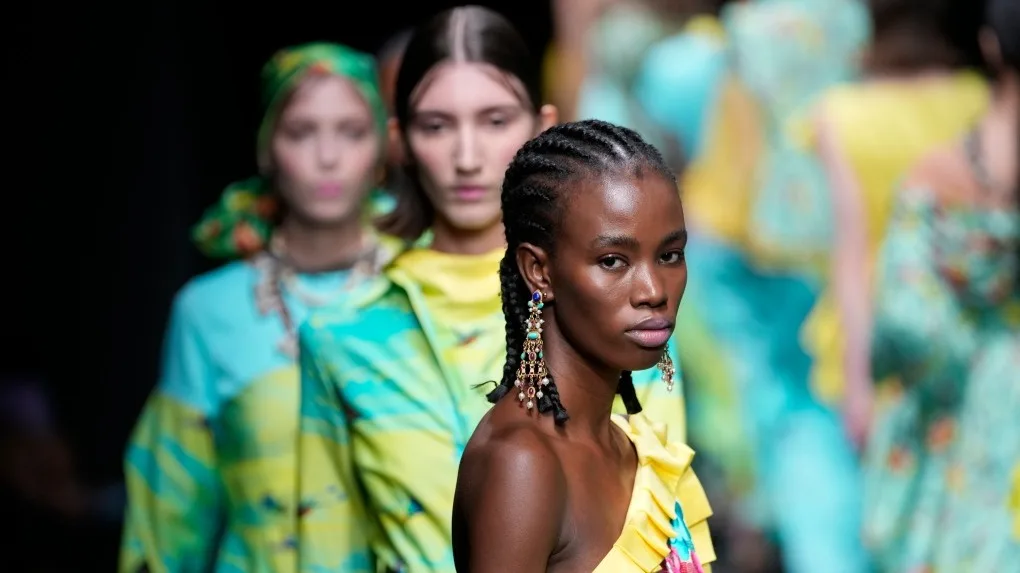
Designer Joy Ijeoma Meribe opened Milan Fashion Week on Wednesday with her debut runway collection, a concrete success for a movement to promote diversity in Italian fashion just a year after launching

MILAN — Nigeria-born designer Joy Ijeoma Meribe opened Milan Fashion Week on Wednesday with her debut runway collection, a concrete success for a movement to promote diversity in Italian fashion just a year after launching.

The Italian National Fashion Chamber tapped Meribe to open six days of womenswear previews for Spring-Summer 2022 after her inaugural collection for the “We Are Made in Italy” initiative last year found commercial success.

“Beyond whatever video, proclamation, or manifesto that we make, the real test is whether clients buy your products. Joy passed that exam,’’ said Italian-Haitian designer Stella Jean, who helped launch the initiative in the summer of 2020, asking the question, “Do Black Lives Matter in Italian Fashion?” inspired by the U.S. movement and following racists gaffes by major Italian fashion houses.

“It wouldn’t have been so quick if there wasn’t an acceleration from the United States,’’ said Jean, who basked in the early success in the front row alongside Italy-based U.S.-born designer Edward Buchanan and Afro Fashion Week Milano founder Michelle Ngonmo.

Meribe broke down in tears after the show as she thanked the fashion chamber and the movement’s founders for getting her to the runway.

The collection featured tiered and ruffled skirts and jackets with built-in capes that were both regal, as seen in an off-shoulder dress sweeping the ground, and hip, including a mini day-dresses and shoulder-baring tunic. Textiles were an explosion of bright yellow against sky blue, with tropic prints featuring thatched cottages against flourishing banana trees, which Meribe said was meant to celebrate a return to more normality.

“We have passed from a dark moment, and I wanted to create something full of hope and light, the joy of restarting,’’ she said backstage.

The initiative that launched Meribe opened its second edition this fashion week, an all-female group of designers working in Italy with roots in Togo, Morocco, Haiti, Cuba, and India, following last year’s “Fab Five” inaugural class of all African-born designers.

“There is a movement happening,’’ said Buchanan, the American designer behind the Sansovino 6 label. “Of course everything takes time, but it takes somehow an industry to get used to the idea that these are talents like any other.”

To point, they have created a database of more than 3,000 fashion professionals with diverse racial and ethnic backgrounds living in Italy, including designers, merchandisers, photographers, and stylists, with the aim of putting to rest the notion that diverse talents weren’t available in Italy.

But even while marking progress on diversity being made in the industry, organizers said that a racist incident at a four-star hotel in Milan aimed at this year’s “Fab Five” underlined the work still ahead.

Ngonmo said that she was checking into the hotel with the five women when the desk clerks rudely dismissed routine requests by paying guests, indicating that they didn’t belong there. She posted the incident on social media and later spoke with management, who apologized and fired the two workers responsible.

“They dehumanized us, taking away our humanity and treating us like animals. It is really, really bad,’’ Ngonmo said.

Jean said the incident “is the proof that everything we are doing today, more than ever, needs to be done. It is a necessity.”

Content courtesy of abc News & Nairobi fashion hub 


The Story Behind Lupita Nyong’o’s Denim-Inspired Met Gala 2021 Beauty Look

Given that the springboard for Lupita Nyong’o’s 2021 Met Gala beauty was a Versace dress defined by a confluence of beaded detailing and denim panels, an above-neck approach equal parts pretty and irreverent seems a natural match. Fortunately, longtime conspirators Vernon François (hair) and Nick Barose (makeup) were more than up to the task, each ensuring that, in this case, an “American” moment meant a supremely creative one.

https://www.instagram.com/p/CTyOkp2ojmz/?utm_source=ig_embed

“Brooklyn-born conceptual artist Lorna Simpson inspired the look,” said François of Nyong’o’s molded mane, its transparent folds designed to echo the delicacy of tulle. “[Simpson’s] take on texture is powerful, and I wanted to imitate the effortless wave and movement that she conveys in her work.”

François relied on hairpieces, ample pins, and a spritz of Redken’s Triple Pure 32 for maximum hold, along with an ardent communication of contrast, artistic freedom, and history. “Lupita is incredibly visionary and adventurous, not only does she have the most versatile kinky, coily, hair but the ability to wear and show the beauty of all hair textures,” he says. “I’ve always wanted to bring this technique to life within the Afro hair experience, and doing it for the Met Gala is mind-blowing.”

And while the striking hair may have matched the sculptural nature of the actor’s Versace dress, Barose’s makeup took its cues from its blue hue. The makeup artist used ten different shades of blue shadows pulled from two separate Lancôme Hypnôse 5-Color Eyeshadow Palettes, Bleu Hypnotique, and the soon-to-release Drama Denim with bright accents here and there for even more dimension. A rim of black eyeliner and brickish lipstick completed the look. The trick is the ’90s one, in step with Barose’s overarching inspiration.

“We’ve been exchanging images of the denim dress, which is kind of my heyday,” explained Barose. “I was so inspired by the supermodels of the ’90s and Versace, so it’s something that’s second nature to me. But we didn’t want to do anything too on the nose. It’s a different spin.” The makeup artist also cites Old Hollywood and Western films as references, the shared characteristic of all genres that of a femme fatale a woman who is strong, powerful, glamorous, and fierce. “Mostly fierce,” said Barose. “That word is thrown around a lot, but a Versace moment is always fierce.”

Content courtesy of Vogue Magazine & Nairobi fashion hub

Met Gala 2021 The Best Dressed on the Red Carpet

Last night saw the long-awaited return of the Met Gala, an event that is often dubbed ‘the Oscars of fashion, and which always sees celebrities and designers pull out all the stops to create truly memorable red-carpet moments. After 18 months of cancelled events as a result of the Covid-19 pandemic, last night’s gala was even more special than usual as the biggest supermodels, actresses, sports stars and influencers made their way up those very famous steps for the first time in a while.

This year’s exhibition, and therefore the accompanying theme, was ‘In America: A Lexicon of Fashion’ or ‘American Independence’ which celebrates the Costume Institute’s 75th anniversary and explores a modern vocabulary of American fashion. When it came to the gala outfits, we saw both obvious and subtle nods to American fashion, culture, and history, while plenty of American designers were represented at the event.

It was a truly exciting night for fashion and there were plenty of memorable red-carpet moments.

One of America’s greatest exports is the image of the rugged cowboy, so it’s honestly surprising that the beige carpet at the Met Gala 2021 wasn’t full of spurs, wide-brimmed hats, and sturdy boots. Despite that, plenty of stars lived up to the “In America” theme by embracing Western wear in some way. From Leon Bridges who went traditional in a fringed Bode jacket to Jennifer Lopez who channeled a couture adventurer in an earthy brown Ralph Lauren gown, the looks that embraced the West were also the ones that felt riskiest and most alive.

Ben Platt, in Christian Cowan and Lupita N’yongo, in Versace, both embraced denim, while Shawn Mendes opted for a shirtless look in leather pants by Michael Kors. Kacey Musgraves was more abstract in an equestrian-inspired high-waisted skirt and boots by Ralph Lauren, while Kim Petras honored her childhood as a horse girl by wearing a spectacular printed Collina Strada gown complete with a horse’s head hanging from her neck.

Iman in Harris Reed

It takes a lot to steal attention on the Met Gala red carpet, but Iman managed to do exactly this in a striking look by Harris Reed. The model wore a completely handmade crinoline and gold leaf gown, jacquard bustier, and flares, with an enormous statement hat which Reed created in collaboration with Vivienne Lake. The stylist described the moment as their “biggest dream come true to date”.

https://www.instagram.com/p/CTx8bY3I7av/?utm_source=ig_embed

Zoe Kravitz in Saint Laurent

Post-pandemic, naked dressing is definitely back on the menu. This was proven by a number of stars last night, including Zoë Kravitz, who looked absolutely breathtaking in a completely sheer, beaded Saint Laurent gown, with sparkling Jessica McCormack diamonds.

https://www.instagram.com/p/CTyHxtrqZQe/?utm_source=ig_embed

Paloma Elesser in Zac Posen

Model Paloma Elesser was the picture of old Hollywood glamour in a deep red satin gown by American designer Zac Posen, which featured a dramatic feathered train.

Kendall Jenner in Givenchy

Supermodel Kendall Jenner is no stranger to the Met Gala, and she is also no stranger to a sheer dress, but last night’s custom Givenchy ensemble may have been her best effort to date. The gown – which was embellished with crystals and featured a fishtail train and a jewelled neckpiece – was inspired by the house’s most famous muse, Audrey Hepburn, and a dress she wore in My Fair Lady.

https://www.instagram.com/p/CTyGAMoq67p/?utm_source=ig_embed

Lupita Nyong’o in Versace

While there was plenty of amazing fashion to be seen last night, the Met Gala theme of ‘American Independence’ was not always obvious with every single look. However, Lupita Nyong’o ticked all the right boxes with her denim Versace ballgown, which definitely nodded to all things USA.

https://www.instagram.com/p/CTyGYdxq1ua/?utm_source=ig_embed

Rihanna in Balenciaga

It was a big night for Balenciaga with the house responsible for dressing some of the biggest stars in the world. This included Rihanna, always the queen of the Met Gala red carpet, who this year wore a black voluminous gown and beanie from the house’s latest couture collection, which she paired with lots and lots of Bulgari diamonds.

https://www.instagram.com/p/CTyOxrKK00y/?utm_source=ig_embed

Gemma Chan in Prabal Gurung

British actress Gemma Chan pulled out all the stops with her embellished Prabal Gurung mini dress, which featured a dramatic mint-green train. The dress was a tribute to Anna May Wong, the first Chinese-American film star of Hollywood’s golden era. “A trailblazer, fashion icon, and woman ahead of her time – she paved the way for those who came after and continues to inspire,” Chan wrote.

Michaela Coel in Balenciaga

It was Michaela Coel’s first time at the Met Gala, and she certainly did not disappoint. The actress, writer, and director arrived in a full Balenciaga look, where she was covered in sequins. The jumpsuit was made in a bright electric blue colour, which was presumably a nod to the American flag.

Kaia Gerber in Oscar de la Renta

Another star that nodded to old Hollywood glamour was Kaia Gerber who looked timeless and beautiful in a strapless black ball gown by Oscar de la Renta. The custom black faille gown featured ivy vines, which were made of black thread-work embroidery and lined the top of the corset bodice.

https://www.instagram.com/p/CTx65YKoeom/?utm_source=ig_embed

Normani in Valentino

Normani had a picture-perfect moment in a Valentino couture gown for the 2021 Met Gala. The dress featured an enormous skirt, a dramatic train, and huge sleeves, all of which made for big, head-turning fashion, which is what this event is all about.

https://www.instagram.com/p/CTyJ9R0KxkE/?utm_source=ig_embed

Content courtesy of Harpers Bazaar, Met Gala & Nairobi fashion hub 

Kenyan Genge Musician Nonini Launches Footwear Line In US, Shoe Designed in Italy

Kenyan rapper Hubert Nakitare better known as Nonini has launched a footwear line under his Mgenge2RU in the US. The artiste confirmed the info through his social media platforms. The shoe edition was created by Italian master-crafts, AliveShoes, who have many of their shoe editions appearing in international magazines like Vogue.

According to Nonini, he has invested over Ksh 2million in the shoe line and hopes the merchandise gets global recognition. “The shoes going for Ksh24, 000 are real international quality wear. They have been produced and endorsed by one of the best Italian shoe companies,” said the rapper.

His latest design is a unique and limited edition shoe wear in which he has collaborated with Italian master-crafts AliveShoes, through its founder and CEO, Luca Botticelli, AliveShoes, certified Nonini’s designer shoes for distribution and sale to the public this week.

The announcement comes days after Nonini and his team met the Floyd Mayweather African team in Las Vegas to discuss collaborative ideas they can work on touching on the apparel business.

“The US is a lucrative market because as you know, their economy is thriving and that is why my products are doing well here,” he expounded on his choice of launching in the US. Besides seeking performance opportunities, the rapper relocated to the United States of America four months ago, where he has been consulting on how to expand and monetize his ‘Mgenge2Ru’ brand.

“I am still working on my music with two major collaborations; one with Redsan and the other with Tanzanian rapper Chege, coming out soon. But I have discovered that all creatives in the world including US rapper Kanye West are trying to make it through brands.

“Fashion can take you places including those international fashion platforms like the New York Fashion week and so I have my eyes on the prize. This is where all my focus is now,” the celebrated hip-hop star who was part of the Kenyan hip-hop revolution in the 2000s said.

Popular for his big songs such as ‘Furahiday’, ‘Mtoto Mzuri’, ‘Keroro’ and ‘Nimetoka Mbali’, Nonini started working on his fashion design Mgenge2Ru when he was still at Calif Records.

He recalls how he would visit Gikomba market to buy clothes that he would then brand and sell to his fans. This is how the popular Calif Records T-shirts came up.

“It is only that Mgenge2Ru apparel is exploding now otherwise what people are seeing now is a result of constant work dating back many years. The time I have put in this cannot be measured.

“In the last two years, I have put in about Sh2 million into the work and that tells you that since I have no partner this is a real investment that has gone into it. I am trying to create merchandise that is self-sustainable and one that earns itself a good international identity. This is a game-changer,” he said.

Nonini’s music career is also thriving.

“Last Saturday I performed in Oakland in California among other shows and it is during my interactions with fans that I am learning what they want in terms of fashion,” Nonini said.

Nonini is not the only Kenyan making it big in the US when it comes to fashion designs.

Zedekiah Lukoye, aka Zeddie Loky, the founder and CEO of California-based Blkkburd Genes has been making waves in the US with his designs showcasing Kenya’s exquisite features, recently, he hit international headlines after rapper Jay-Z was spotted wearing his designer T-shirt showing Lamu’s Riyadh Mosque.

Each pair of kicks comes with collector edition packaging, You can buy your own pair here.

Mgenge 2Ru Kicks 
Mgenge2ru Jeshi Ed
Mgenge2RU Ladies 
Mgenge2ru Kids 
Mgenge2ru Kids 

Content courtesy of Mgenge 2ru Brand & Nairobi fashion hub 

Afreximbank and  Portugal’s ANJE to Promote the African Textile Industry

African Export-Import Bank (Afreximbank) and Portugal’s National Association of Young Entrepreneurs (ANJE), have announced a three-year partnership to support and promote Africa’s fashion apparel and textile manufacturing industry in Portugal and across Europe. This partnership is part of Afreximbank’s Creative Africa Nexus (CANEX) program.

CANEX aims to facilitate investments in Africa’s creative and cultural economy through financing, capacity building, export and investment promotion, digital solutions, linkage, and partnership promotion, and policy advocacy, the two entities said in a joint press release.

Within the framework of this partnership, ANJE, through its fashion project called Portugal Fashion, will provide African designers with showcasing platforms, facilitate their access to international markets and strengthen their capacities through business mentoring and technical assistance in apparel production. In the long-term, Afreximbank and ANJE aim to attract more investment opportunities into the sector while developing the technical skills of African industry players, thereby improving Africa’s manufacturing and production capabilities.

The cultural and creative industries of Africa, with the right investments, can contribute to the structural transformation of the continent, thereby creating jobs and increasing exports and other development outcomes. The partnership between Afreximbank and ANJE aims to address the challenges faced by African designers, providing them with the opportunity to access international markets while building their capacity through brand incubation.

The program is designed to promote at least 40 African designers annually on Portugal Fashion’s runways. Designers will also benefit from networking opportunities with international industry experts, retailers, manufacturers, and other key stakeholders. The inaugural fashion showcase will take place in Porto, Portugal from October 13-16, 2021.

In addition to this event, Afreximbank and ANJE have structured a partnership to advise and support European and Portuguese companies seeking to invest in Africa, where ANJE will act as a one-stop-shop for investors looking into Africa and seeking advisory services and support from both Afreximbank and ANJE.

Prof Benedict Oramah, President of Afreximbank, said: “We believe that the vast creative talent pool on the continent is an opportunity to accelerate Africa’s economic transformation. Through CANEX the bank is providing tangible support for the development of an ecosystem to monetize the creative sector and increase its contribution to Africa’s economy under the African Continental Free Trade Area (AfCFTA).”

Manuel Mota, vice president of ANJE, said: “The creative industries in Africa have immense potential to become key drivers for economic growth and I believe this initiative will have a positive and sustainable impact. It is a privilege for ANJE to host and work together with Afreximbank on this important milestone.”

Content courtesy of Fabire 2 Fashion & Nairobi fashion hub 

Prudent Gabriel Turning passion into a Fashion Empire

She is fast becoming the choicest of celebrities, and an emblem of African fashion in a world of numerous fashion and beauty stylists, with a dynamic market where only the strong can thrive and expand.

Also, the business of designing and styling is becoming even more prominent and ubiquitous. In this competitive and ever-growing industry is where she has taken advantage of her love for fashion, as she is creatively aggrandizing her brand and fashion entrepreneurship to top-echelon.

https://www.instagram.com/p/CLmWcH4lLv4/?utm_source=ig_embed

Multiple award-winning fashion designer and the CEO, creative head of Prudential Styling and Prudential Fashion Academy, a fashion empire located in Lagos, Prudent Gabriel, has been in the fashion designing and styling industry for a while now. Her journey has not been a smooth ride but she has remained relevantly consistent for the past three years.

According to the Lagos-based fashion Designer and styling expert who quit her job as a waitress to pursue fashion, “fashion and modeling is something I had always wanted to do most. I was working as a waitress and I making tired of the job because there was no satisfaction. I could not create time for myself and my passion, and at the end of the day, I just had to resign and moved on to my passion full-time.”

Starting out was a very daunting task, being a low-profile design with a small shop in the industrial city of Lagos, Prudent had gone through many challenges. It was difficult to convince clients of her dexterity because no one was willing to be a lab rat for a neophyte in the business.

The Nigerian fashion market was highly competitive and mostly embraced accomplished designers, so it was an arduous undertaking for novices to break in. Another challenge for her was creating unique designs that no one else has ever styled. “Also, working with difficult customers is also very pressurizing because you’re trying to prove your worth. I keep designing even when I don’t have people ordering for them, I make sure always have clothes up there, I post about them, ask my friends to share and that’s how I kept pushing till the brand got this big.” Prudent said.

https://www.instagram.com/p/CPlf-MCnPpp/?utm_source=ig_embed

Today, her list of clients at Prudential Styling is endless, but, she mentions Tim Godfrey and Xtreme Crew, Debbie Rise of Big Brother Naija Season 2, Naomi Mac of Nigerian Idol, and Queen B of Ultimate Love as some of her celebrity clients. With Prudential Fashion Academy, she has produced over 150 fashion designers and has received multiple awards for her service and excellence in the fashion industry.

Prudent’s role models in the industry are Matopeda, YomiCasual, Valdrin Sahiti, and Veekee James who make bespoke outfits. She advises other young designers who draw inspiration from her works to be ready to work very hard and give it they’re all. Keep positive people around themselves and make sure their circle consists of people that are helping them grow, people that encourage them every day.

With her passion and goal-driven momentum, Prudent Gabriel has grown from her small shop into a highly valuable fashion empire.

The fashion world has only been better since the presence of her brand, with more hopes for the future.

Content courtesy of Vanguard & Nairobi fashion hub  

10 Creative Ways to Shrink your Jeans

Denim jeans are the type of clothing that you never miss in a closet. Jeans are comfortable and easy to rock. With a fitting t-shirt and jacket on top, you can rock your jeans like a fashionista. But what happens when your jeans start getting baggy in select areas? You do not throw them away; you learn how to shrink jeans.

Can you permanently shrink jeans?

It is almost impossible. You can, however, shrink it to the size you want for a while. Permanent shrinkage of jeans will only damage them. How to shrink jeans with ease There are several methods of how to shrink stretch jeans. Most are DIY methods and can be done at home without help from a second party.

The main element in the shrinkage of jeans for most methods is water. Learn how to how to shrink Levi jeans using the following tips:

1. The Boiling Method

Turn your jeans inside out and put them inside a pan or pot of boiling water. Ensure that the entire jeans outfit is submerged. Let it stay there for about 30 minutes. Drain and squeeze out the excess water. This takes a while to ensure there is no excess water. Put the jeans in a dryer and set the dryer to high heat. Once dry, remove the jeans.

2. Have Leggings Underneath

Leggings are light and comfortable. Many wear them during cold months to keep away the cold. But did you know that they also come in handy when you want to constrict your jeans?

Wearing leggings underneath your jeans will provide sufficient snugness to your legs. The best thing about leggings is that they are light and so no one will notice what you have under your jeans.

3. Take a Bath with Your Jeans On

Get into a hot bathtub and ensure that your outfit is submerged for half an hour. Then, get out of the tub and stay with your jeans on for another 15 minutes. Your attire will mold properly, taking the shape of your figure. Then, carefully remove it and put it in a dryer.

4. Crank Up The Heat On The Dryer

This is another easy method of shrinking your jeans to the size you want. Cranking up the heat on the dryer will make the cotton fibers tighten and shrink on your jeans.

5. Sewing In a New Seam

The method requires patience and skill. You can look for a local sewer to do it for you if you are unsure how to go about it. Tear the old seam of the leg of your pants and make a new, tighter one. You can also sew a 6- to 7-inch piece of elastic into the inside back of your waistband if the area appears larger for you.

6. Use Fabric Softener

A fabric softener can be used to constrict jeans. First, mix 3/4 water and 1/4 fabric softener into a clean bottle and spray the areas on the jeans that require a little straightening. Finally, place the jeans into the dryer set until they are dry.

7. Wash and Dry in a Hot Dryer

How many washes does it take to shrink jeans? It takes up to 5% shrinkage with a single wash. This, however, depends on the amount of heat and steam. The more you want your jeans to shrink, the more you wash. Can jeans shrink in the dryer? Absolutely. This method is simple and will only take a few minutes. The temperature regulations help in constricting your outfit.

8. Ironing

Ironing is one of the easiest methods of constricting jeans and requires little effort. Quickly apply direct heat on the areas of the jeans that need straightening. You can also iron the entire jeans if you want to. Then, allow the jeans to cool down before you can wear them.

9. Don’t Forget Your Belt

Do you know how to shrink jeans at the waist? Use your belt. Other than helping one fit their pants and appear as accessories to the outfit people rock, belts also come in handy when you want to shrink your jeans. This method may not be as effective as the methods shared above, but the belt works wonders in making your jeans fit properly and not appear baggy.

10. Look For a Tailor

When all has failed, look for a tailor in your neighborhood and tell them how you want your jeans shrunk. Tailors and fashion designers do some neat work and will deliver your desired shape and size of jeans after taking your measurements. What is one great thing about denim? It can be worn year-round. With the above tips, it will be easy to learn how to shrink jeans. All it takes is persistence and commitment.

Content courtesy  of YEN & Nairobi fashion hub 


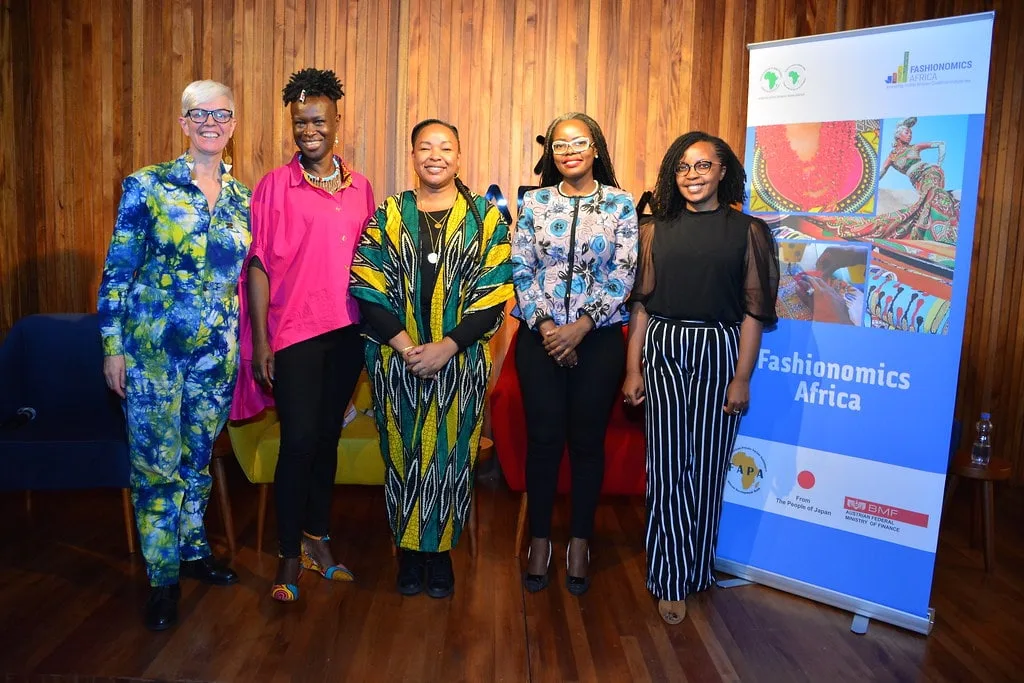
Fashionomics Africa, Google Train African Fashion Entrepreneurs in Digital Marketing Strategies

The African Development Bank’s Fashionomics Africa initiative and Google held a 2-hour virtual masterclass on using digital tools and social media for African fashion entrepreneurs.

The online session, on 2 July, aimed to equip African fashion entrepreneurs with tools to plan and execute a digital marketing strategy; how to use social media and e-mail effectively; and creating a digital presence using Google digital tools. Building a brand and engaging with customers and potential customers is one of the key challenges faced by African entrepreneurs, particularly the youth and women.

“We are very excited to collaborate with the African Development Bank to support fashion entrepreneurs in Africa, especially during the pandemic,” said Khadija Abdul Juma, a marketing specialist at Grow with Google, an initiative supporting African entrepreneurs and small businesses across Africa. Women Will Africa, an initiative that supports women to take advantage of the Internet, also participated.

Since the onset of the pandemic, e-commerce has grown considerably, with total global retail sales estimated to exceed $5.8 trillion this year

“To be competitive in our changing world, African creatives need to be well-armed with greater digital skills and tools. Technology and digital tools must be at the heart of their businesses if they want to amplify their voices and join the global fashion sphere,” said Bintou Sadio Diallo, cultural and creative industries expert at the African Development Bank.

Fashionomics Africa intends to attract foreign direct investment in the African textile, apparel, and accessories industry and support the growth of micro, small and medium-sized businesses – with an emphasis on women and youth. Through the Fashionomics Africa program, the African Development Bank works with public and private sector partners to develop local, regional, and international textile and fashion value chains, taking advantage of the opportunities arising from the African Continental Free Trade Area Agreement.

For more information about Fashionomics Africa and to sign up for the next masterclass, click here. To (re)watch the session, click here.

Content Courtesy of Fashionomics Africa

Creative DNA x Fashion Scout present WAUZINE ‘Matatu’ Cross Cultural Collaborations

The first issue of WAUZINE titled ‘Neighbourhood’ came out in December 2020, and it explores Nairobi’s cultural landscape. In this issue, Sunny, with photographer and artistic luminary Maganga Mwagogo, showcase the striking and beautiful work of the designers through models Shekinah Imani, Adhel Bol and Ronnie Nyongesa, against the contrasting architectures of two socially significant parts of Nairobi—Kariokor and Kilimani. The issue is accompanied by a captivating piece by the amazing Awuor Onyango that speaks on the relationship between Kenya’s colonial past and its contemporary artistic output.

The second issue of WAUZINE titled ‘Joy and Rebellion’ is out now, and it explores Nairobi’s CBD through a fashion story by the talented photographer Sarah Waiswa. From Uhuru Park to the streets of Nairobi’s city centre, Sarah showcases the bold and diverse work of the designers through models Janet Muthoni, Chuony and Alex Kirimi.

This issue is accompanied by a fun piece by Abigail Arunga, who writes about the life and heart of Nairobi’s city centre. Issue 002 is also a reflection of the many Nairobians who go against the law to have a good time (enjoyment) and as Sunny puts it in his letter from the editor, “…this issue joins thousands of other funny stories and love letters by defiant Nairobians to their city as part of their overarching super narrative of joy, mischief and rebellion.”

WAUZINE issue 003 titled ‘Matatu’ will be out in February just before the London Fashion Week. In issue 003, Sunny and photographer Edwin Maina showcase the bold and beautiful work of the designers alongside Nairobi’s iconic matatu art. The issue is also accompanied by an insightful piece by Wanjeri Gakuru telling the story of the matatu culture, reflecting on the designs featured of the matatus, and their specific cultural resonance.

The WAUZINE short film was co-directed by our very own Sunny Dolat and Noel Kasyoka. The 5-minute fashion film is an audiovisual accompaniment to the magazine, and features the models and the beautiful work of the designers, moving in, and as part of, the hustle and bustle of the Nairobi city centre.

Photoshoot Creative team

Creative Director: Sunny Dolat
Producer: Njeri Gitungo
Production Assistant: Jane Pauline
Photographer: Edwin Maina
Styling Assistant: Bryan Emry
Make-up Artist: Sinitta Akello
Hair: Richard Kinyua,
Model: Juliet Kiruhi, Steven Juma, Silvia Tonui

Project Manager Kenya
@sunnydolat @zi.ggie @janeywaithera @photoman254 @bryan.emry @sinittaakello @rickykish @kiruhij @stevenjuma_ @eastafricaarts

Designers part of Creative DNA:
@endasportswear  @epicajewellery @favolosobynanu @genteel_ke @ohanaswimwear  @sevaria.ke  @styletech_by_teshie  @suitedbygordon  @thenisisifactory @vintaracollections @we.are.nbo

Larry Casual Returns with a Bold, Timeless & Sophisticated collection

While the wedding guest numbers may have been taken down, in a bid to observe S.O. Ps, your attire shouldn’t be a letdown as well.

And with the new fashion collection that has been released by Larry Casual, your wedding
fashion just went a notch higher.
The bespoke luxury men’s designer has just released a new 20-piece collection, that he says was birthed last year during the lengthy lockdown.

https://www.instagram.com/p/CQNU44dK_Dh/?utm_source=ig_embed

“Because we were stuck home for a really long time, I began looking at things differently and realized that we needed to experience and create something new with the men’s fashion when it came to weddings. And that is how this collection was born,” Martyn Larry, the designer explains.
He adds that this collection was made for the man/groom who is seeking to make a statement with their fashion, not afraid to go bold, and also very expressive.

“I need the man who wears any of the pieces from this collection to feel bold, bright, and truly Africa, which is something that we endeavored to emphasize with this collection.

The Larry Casual man is unapologetic, stylish, and fashion-forward. And that is what this collection is aimed to achieve!” he adds.

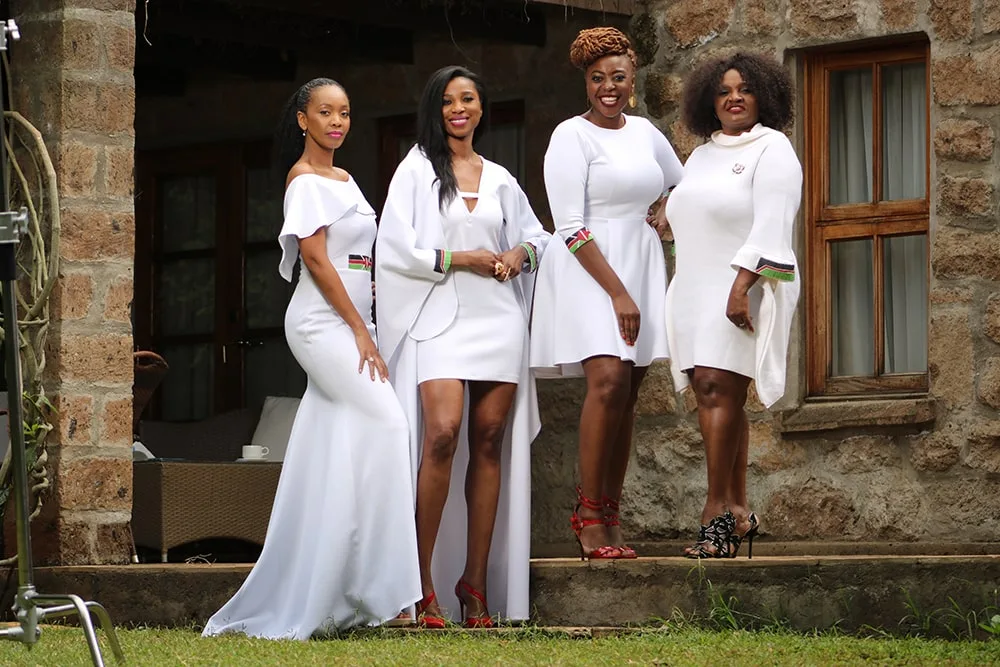
Fashion icon Connie Aluoch, Carole Kinoti, and Model Bidanya Barasa, Debra Sanaipei out to showcase designs during the Madaraka day fete

Four top models and fashion icons Debra Sanaipei, Bidanya Barasa, Connie Aluoch, and Carole Kinoti are preparing to showcase their self-designed outfits on June 1

The white dresses, embroidered with the Kenyan flag beads on the wrist, wraps, and waist, will be worn on Madaraka Day.

The designers, Carol Kinoti, Connie Aluoch, and models Bidanya Barasa and Debra Sanaipei described their style as unique and contemporary.

Their motivation is their love and compassion for being an African woman.

Speaking to Star Sasa, Carol, in Lad Flo-Cape, said the creativity of their dresses is highly inspired by the different physical aspects they have.

“I asked Connie what it takes for a Kenyan woman to wear best, then I remembered she is a typical example of an African woman and I decided to use her as my muse,” she said.

The dresses, described as Lad Occasional, Lad Red Carpet, Lad Skater, and Lad Flo-cape, symbolize peace, tranquillity, and patriotism.

Connie, in Lad Skater, attributed the success of her fashion career to a global approach and constant innovations. She is the brand ambassador, Lad Little Afro Dress, and a lecturer.

“I decided to be constantly innovative and I ventured into image consultancy, one-on-one image styling. I lecture fashion and give mentorship,” she said.

Bidanya, in Lad Occasional, and Debbie, in Lad Red Carpet, are legends in the modeling industry. They have now embarked on family business and real estate respectively.

Written By: Laura Shatuma
Photo Credit: Victor Imboto And Wilfred Nyangaresi

Content courtesy of The Star 

Ad