Africa on the Runway: How Fashion and Modeling Are Rewriting the Continent’s Story.
Africa’s fashion and modeling industries are no longer whispers in the wings of the global style conversation. They are a chorus loud, inventive, and insistently original, pulling the continent’s textiles, stories, and faces onto international runways, into glossy editorials, and onto e-commerce storefronts. That rise is not accidental: it’s a product of grassroots creativity, entrepreneurial grit, strategic partnerships, and a growing recognition from international buyers and media that African fashion is not a niche but a market and cultural force. Yet the lift-off comes with persistent friction, structural, financial, and logistical, that the industry is learning to overcome in real time.
The landscape: creative abundance, structural scarcity.
From Lagos to Johannesburg and Nairobi to Dakar, designers are mining local crafts, indigenous textiles, and contemporary sensibilities to produce work that reads modern and memorably African. The continent’s apparel and footwear sector is sizeable and growing: recent industry analyses describe a multi-billion-dollar market driven by a young, urbanizing population hungry for styles that speak to identity and aspiration. At the same time, major gaps remain limited capital flowing into creative businesses, weak local supply chains, high costs of quality raw materials, and underdeveloped intellectual-property protections that make scaling risky for designers. These are not cosmetic issues; they shape whether a designer can move from a market stall to sustainable factory runs and from seasonal shows to year-round international distribution. (Euromonitor)
Models, agencies, and representation: progress and persistent gatekeepers.
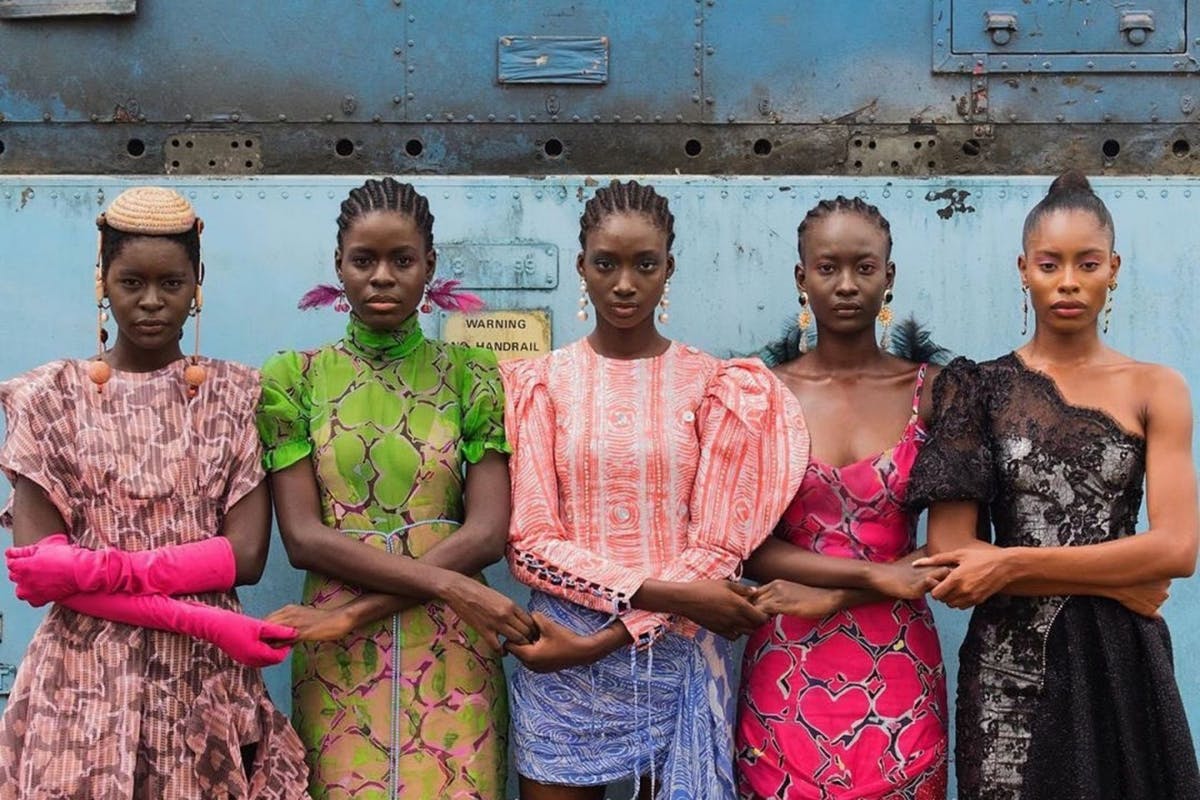
The modelling side has made visible strides. A new generation of African faces, not merely tokenized but celebrated for their variety and cultural specificity, has appeared on major magazine covers and in advertising campaigns. Publications and runways have started to reflect a broader beauty code, from British Vogue’s landmark Africa-focused features to boutique agencies exporting talent overseas. Yet pipelines are uneven. There are still too few professional agencies with scouting, training, and welfare systems that match international standards, and many aspiring models lack access to education on contracts, health, and financial planning. Where models and agencies collaborate with reputable fashion weeks and hubs, the speed and quality of career development rise. (British Vogue)
The twin engines: local markets and foreign support.
Growth is being fuelled by two complementary currents. First, robust local demand: middle-class growth, the rise of luxury boutiques across African capitals, and digital platforms are expanding domestic consumption. Second, strategic foreign interest from global retailers in cultural institutions that open distribution channels and funding pipelines. International prizes, retail partnerships, and editorial coverage have helped put designers on global maps and provided practical capital and mentorship. Still, dependence on foreign grants or one-off placements is risky; sustainable scale requires stronger domestic investment, better trade policy, and predictable financing instruments for creative SMEs. (Vogue)
Private sector, individuals, and corporate sponsorship: the new patrons of style.
Where governments have been slow to act, individual entrepreneurs and corporations are stepping in. High-net-worth patrons, local retailers, hair and beauty brands, and multinational sponsors are underwriting runway shows, pop-ups, and incubators. These contributions are catalytic: they offer marketing reach, seed capital, and platform visibility. Corporate sponsorships, when thoughtfully structured, can professionalize events and link designers to logistics, export know-how, and retail distribution. But sponsorships must be strategic and long-term: short promotional spends boost visibility but don’t replace investments in production capacity, digital infrastructure, and skills development.
Nairobi Fashion Hub: a case study in market-making
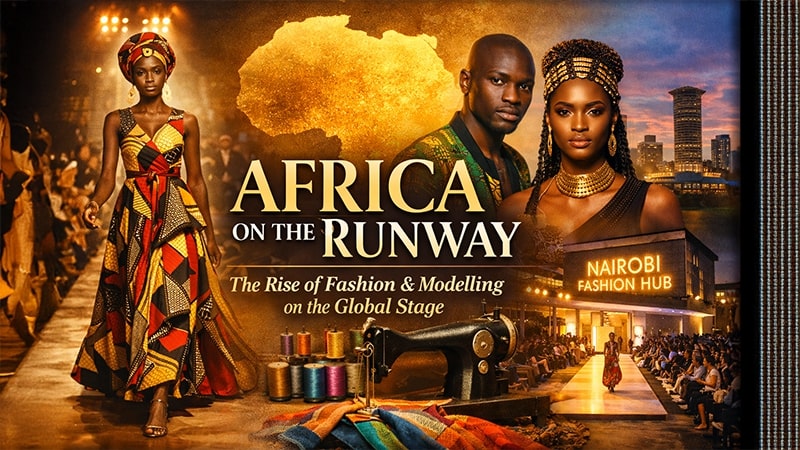
In Nairobi, one organisation exemplifies how a local initiative can alter industry dynamics. Nairobi Fashion Hub (NFH) began as a digital platform and has since developed into a multifaceted ecosystem builder: promoting designers, staging showcases, profiling models and fashion professionals, and creating networking opportunities across East Africa. By amplifying local talent and connecting creators to commercial and editorial channels, NFH helps convert creative capital into economic capital. Its programming, from runway events to training and editorial features, addresses a key industry bottleneck: visibility. For many Kenyan designers and models, platforms like NFH are the bridge between local recognition and regional or global opportunity. (NFH – African Fashion)
What’s changing the rules of the game
Several converging trends are reshaping possibilities:
- Digitization: E-commerce, social media, and digital lookbooks let designers sell globally without traditional wholesale deals. The pandemic accelerated virtual showcases and direct-to-consumer models. (Vogue)
- Sustainability and craft revival: A pivot toward regenerative materials, circular fashion, and elevated craft narratives gives African brands a competitive edge in conscious luxury markets.
- Pan-African collaboration: Fashion weeks and platforms are increasingly pan-African, pooling designers and buyers across borders to build scale. Lagos Fashion Week, for example, has emerged as a major node linking local talent to sponsors and international buyers, a model that other hubs emulate. (Vogue)
The obstacles that won’t vanish overnight
For all the momentum, friction points remain stubborn:
- Financing: Creative businesses are often high-risk to conventional lenders; alternatives like creative funds, impact investors, and blended finance are still nascent across the continent. (UNESCO)
- Manufacturing and sourcing: Without integrated supply chains (from spinning yarns to dye houses to finishing facilities), designers face long lead times and quality variability that deters large buyers.
- Skills and standards: Technical training in pattern cutting, grading, manufacturing management, and modelling professionalism is unevenly distributed. Bridging that gap requires structured vocational programs and private-public partnerships.
- Market access costs: Trade tariffs, logistics, and export paperwork add layers of cost that make international expansion expensive and slow.
Practical wins: what accelerates success
A set of practical interventions has proven effective in markets that have moved faster:
- Incubation + Market Access: Hubs that combine business training with buyer introductions (like NFH’s programming) shorten the runway to commercial deals. (NFH – African Fashion)
- Sponsorships with capacity building: Corporate funding tied to supply-chain investments, training, and production support builds durable capacity instead of one-off events.
- Regional trade facilitation: Lowering intra-African trade frictions helps brands scale across borders before taking on far-flung export markets.
- Investment vehicles for creatives: Dedicated fashion funds, blended finance, and grant-to-equity structures reduce early-stage risk and help brands professionalize.
The human story that matters
At the heart of every statistic are designers, models, tailors, textile workers, and entrepreneurs turning ideas into livelihoods. For them, fashion is not mere glamour; it is jobs, cultural preservation, and new career pathways. Initiatives that respect that human dimension, offering fair pay, worker protections, and sustainable growth, will create an industry that is both stylish and just.
Looking forward: from creative bursts to a durable industry.
Africa has the ingredients for a globally resonant fashion ecosystem: raw creativity, rich textile heritages, a hungry consumer base, and an increasingly connected diaspora market. To turn that potential into long-term impact requires patient capital, smarter public policy, and more hubs that combine visibility with commercial scaffolding. Organisations like Nairobi Fashion Hub are doing the hard, unglamorous work of shaping markets: cataloguing talent, staging consistent platforms, and building the networks that turn runway applause into export contracts.
If stakeholders, designers, models, funders, governments, and media double down on infrastructure and skills while protecting creative agency, Africa will not just contribute to global fashion: it will help redefine the industry’s aesthetics, ethics, and economy. The continent’s next decade in fashion is not a matter of if but how fast and how sustainably it chooses to run.
Sources & further reading: UNESCO’s report on the African fashion sector (trends and challenges); market analysis on apparel in sub-Saharan Africa; Vogue coverage of African fashion and Lagos Fashion Week; Nairobi Fashion Hub’s platform and programming. (UNESCO)
Content courtesy of NFH Digital Team