Wednesday 29th of April 2026

Nairobi, Kenya

Wedding Gown: Disposable Plastic Dishes and Cups Were Used To Make This Beautiful Wedding Dress.

Request a bride. Finding the ideal bridal gown for your special day might be a complete nightmare.

What if, though, you took a different approach and made a garment out of plastic kitchenware? Following the discovery of this bridal outfit made out of plastic cups and plates, social media went crazy. Would you put it on?


A WEDDING DRESS MADE OF PLASTIC UTILITIES: WOULD YOU WEAR IT?


After a woman was photographed wearing a bridal dress constructed out of plastic cups and plates, social media went crazy. Although the material serves as the design’s foundation, the dress really shines because of the skillful usage of recycled plastic materials.

On TikTok, fashion designer Isabelle Tengue posted a video of a woman wearing an unusual bridal gown.
While another woman assists in carrying the stunning train of the dress, the woman can be seen in the video strolling down a flight of steps.

The bodice of the garment is nearly entirely constructed of plastic cups, but the front of the skirt has a circular pattern that looks to be formed of plastic spoons and plates. Additionally, the design has some metallic and what appear to be cut-out details.
Plastic plates were used to create the rear of the ballgown’s train and skirt, giving it an almost scalloped appearance.


Users of TikTok were eager to praise the video and the distinctive bridal dress design. The video has been viewed more than 14 million times since it was posted.
Wow, that’s creativity, a user on TikTok said in reference to the video.
Another supporter commented, “This puts all the top designers to shame; this is gorgeous.”

A third person on social media said, “This is incredibly beautiful.”


Car And Bike Show: Rick Ross’ Massive Car Show Featured Performances From Meek Mill, Gucci Mane

The evening also featured performances by Gunplay, Tyler, the Creator, and other artists.
Meek Mill and Gucci Mane performed at Rick Ross’ car show on Saturday, June 3, at his Atlanta residence.
Ross guided fans through his Promised Land home while posting videos from the occasion to his Instagram account throughout the day. Gucci played 2010’s “I Think I Love Her” on a stage in the artist’s backyard, and Meek performed 2012’s “I’m a Boss” for the audience.

In addition to celebrities, Ross’ auto display attracted some of the rapper’s pals. Tyler, the Creator, Gunplay, 2 Chainz, and more notable guests were there.

According to Fox 5 Atlanta, Fayette County police praised Ross for a drama-free, peaceful celebration.

Fayette County Sheriff Barry Babb remarked, “He hired a really good team that produced a lot of good work for us.”
“We’ve been able to collaborate with numerous agencies, the only drawback being a few minor traffic hiccups. Because we’re able to work together in a way we’ve never worked before, it’s been incredibly wonderful for the community in terms of law enforcement.

But there was a lot of drama leading up to the incident. Rozay’s initial application for a car show permit was turned down, according to WSB-TV, because of Ross’ neighbors.
His neighbors complained about the traffic last year’s inaugural Car and Bike Show generated to the Fayetteville Board of Commissions.

The “Biggest Bawse” ultimately obtained his permit after considerable wrangling.
Additionally, DJ Envy from The Breakfast Club brought smoke to his auto display. Envy told the talking head that he would throw his own auto show to honor Young Dolph, and Ross responded that he “wasn’t on his level.”
And people shouldn’t construct cars just to attend your car show, Envy. No one should travel from another state to attend your auto exhibition, Envy.
The Florida native made fun of “Da Beige Rage.” you observe? However, Envy, sees to it that they have everything they require. Memphis, you all had best hold Envy accountable. Be humble, envy. Respectfully, beige lad. You’re a brown boy! And see to the welfare of my people.

These have been around. We genuinely display love. All you do is market.

https://www.instagram.com/reel/CsY-sjMAdHA/?utm_source=ig_web_copy_link&igshid=MmJiY2I4NDBkZg==

Rick Ross wants people to be able to see his automotive collection in person rather than only admiring it online.
The “Hustlin'” rapper did this by allowing the inaugural Promise Land Car and Bike Show to take place this past Saturday at his Fayettville, Georgia, plantation. Rozay’s cherished goods were on display for auto and rap enthusiasts equally during what appeared to have been a beautiful spring day.

Content courtesy of Vibe & NFH


The Digital Influencer: Vovó Izaura Demari The Renowned And Stylish Brazilian Grandmother

The most influential fashionista in Brazil today, Izaura Demari, 82, was introduced to fashion by her youngest son, Marcio Demari.

Together, they tour the globe selecting the ideal outfits and headgear for their performances, each one more recognizable than the last. As a result, Grandma Izaura ranks among the top global fashion influencers and serves as an inspiration to many women.

However, the always stylish woman acquired national and worldwide notoriety on Instagram, where she has amassed more than 66 thousand followers, thanks to her lovely appearance and her sturdy headwear.
However, the always stylish woman acquired national and worldwide notoriety on Instagram, where she has amassed more than 66 thousand followers. She is known for her breathtaking appearances and her sturdy headwear, and she has collaborated with more than 25 businesses, including 2Rios, Comfortflex Atelier Kaleb Aguiar, Joulik, and Reinaldo Lourenço.

In addition to appearing in more than 300 national and 80 international journals and portals, she has taken part in a number of TV programs. She paraded in SPFW by the Free Free Institute and garnered media attention in Africa, Italy, France, China, and the USA.

Along with Grandma Izaura Demari, her three daughters, five grandchildren, and three great-grandchildren are all savoring their fame.
Images in the blogger-style with flamboyant sceneries and painstaking appearances. When referring to an Instagram profile, nothing about this is novel. However, it gets noticed on social media when these photos are shot and posted by a nice 82-year-old woman.

Izaura Demari is a digital influencer, and thanks to her extravagant outfit choices, she already has more than 76 thousand social media followers.
The photographs on the Paraná-born woman’s page combine her two loves, traveling and maintaining her appearance. “I am quite pleased with the results.
I adore getting dressed up, going to the mall, and taking pictures with my pals,” the influencer, who has already made appearances in fashion magazines and TV shows as a result of all this commotion, explains.

After seeing how people responded to her fashion sense, the idea of uploading the photos emerged. She claims that as she crossed the street or walked through the mall, she was frequently approached.

People started requesting photos with her and asked how they could follow her on social media. At that point, Márcio Aurélio Demari, her 50-year-old son, made the decision to start a Facebook page and an Instagram account. The response was immediate, and Granny Izaura, as she is known on social media, has amassed 5,000 followers in just one week.
“There is a striking moment every day.” Izaura feels unable to name the best ones because there were so many memorable occasions and displays of devotion from the people. Izaura recalls on a trip she went to Gramado with her son that “Ladies would even stop looking at artwork in museums to talk to me.”

People started asking to take selfies with her and how they might follow her on social media. Márcio Aurélio Demari, her 50-year-old son, made the decision to start a Facebook page and an Instagram one at that point.
The response was immediate, and in only one week, Grandma Izaura, as she is known on social media, gained 5,000 followers.
“A striking moment occurs every day.”
Izaura feels unable to name the best parts of the special occasions because there were so many of them and so many displays of affection from the people.
Izaura recalls a trip to Gramado she took with her son, saying, “Ladies would even stop looking at artwork in museums to talk to me.”

A woman once spotted her in the street and stopped the car to give her a bear embrace.
The proud son recalls that she enquired as to which fairy tale she originated from. A number of other women benefit from the near-octogenarian’s way of life.
Her age group is motivated to dress more outrageously and get out more. “This is a joy in my life, and I feel very happy,” she exclaims.
At her house, Izaura once raised orchids. But she decided to reconsider her routine after her spouse passed away 16 years prior and she moved into an apartment. She developed a penchant for travel after that.

https://www.instagram.com/p/CqTlS47pwFZ/?utm_source=ig_web_copy_link&igshid=MmJiY2I4NDBkZg==

She relocated back to Florianópolis, where many of her pictures were taken, four months ago.
Along with Izaura Demari, her three sons, five grandchildren, and three great-grandchildren are profiting from their mother’s popularity. They proudly display their grandmother’s social networks and buy newspapers to show their acquaintances. Márcio chuckles as he continues, “My sister says: ‘Mother, I can’t be like you!'”
Izaura’s distinctive fashion sense is what makes her stand out, but the son notes that instead of favoring pricey or well-known labels, she concentrates on unique yet affordable clothing.
She owns approximately 780 items of clothing already, not counting hats, kerchiefs, and turbans. She also doesn’t like minimalism. On the other hand, the influencer like bright colors, stilettos, jewelry, and big sunglasses. To have fun is the rule.

Content courtesy of Style Rave & NFH


Africa’s Leading Luxury Concept Store Is Coming to the Brooklyn Museum

The Big Apple will soon be home to one of Africa’s most well-known shopping destinations.

The Brooklyn Museum will become home to Alára, a concept store with over 100 brands from Lagos, from June 23 through October 22. In collaboration with the museum, the upscale shop will debut as a component of the Africa Fashion at the Museum exhibition as a way to introduce New Yorkers to the fashion perspectives of Africa and the diaspora.
The exhibition, which was the biggest display of fashion and style from the continent when it first debuted to the public at the Victoria & Albert Museum in England, will also include some of the Alára brands.

Reni Folawiyo, an entrepreneur and tastemaker, established Alára in 2015.
The word “alára” means “wonderful performer, one who thrills endlessly” in Folawiyo’s native Yoruba language. Since opening, the store has provided the neighborhood with a wide range of initiatives, goods, and events. Today, it is regarded as a cornerstone of Lagos’s vibrant cultural scene, akin to Colette in Paris.
The Earthy Nigerian headquarters of the store, which includes several high-end luxury labels including Marni, Saint Laurent, Linda Farrow, and Comme des Garcons, was created by Ghanaian-British architect David Adjaye.
The shop also offers a variety of fashionable products from brands with strong ties to the African diaspora, like Kenneth Ize, Post Imperial, and Thebe Magugu.

Alára frequently organizes performances by Falana and Asa in addition to art shows including the works of artists like Hassan Hajjaj and Peju Layiwola. Even the iconic supermodel Naomi Campbell signed copies of The Art of Beauty there in 2018.

The Brooklyn Museum and Alára have not revealed what kinds of music, fashion, and design will be on display at the upscale retailer’s exhibition shop in New York City. But given its illustrious past and specially conceived Lagos shop floor, it might surpass your expectations.

This David Adjaye-designed lifestyle shop by businessman Reni Folawiyo is exceptional, just like its city of Lagos.
Adjaye states, “I wanted the space to function as something that would function as a new kind of cultural hub and destination for West Africa.” The venue would serve as a celebration of design skills.
With its geometric stamps, bi-chrome palette, and remarkable gravity, the building might appear at home anywhere along the artistic arc from Daikanyama in Tokyo to the Design District in Miami.
These objectives were realized in a spectacular façade and a worldly position.
However, Adjaye took care to ensure that every aspect of Alára’s graphic punch is infused with and supported by distinctively Lagosian characteristics.

The translucent screens gridding the entryway refer to the brises soleils of African modernist buildings, while the geometry of their patterns draws from Yoruban Adire fabrics. It unites the indigenous and contemporary architectural lineages of the city.

Along with local designers like Lanre da Silva Ajayi (wham-bam-glam eveningwear), Maki Oh (cool Brooklyn separates), and Lisa Folawiyo (sportswear), Folawiyo has filled Alára’s interior with international labels like Valentino, Alexander McQueen, and the Italian furniture line Moroso. She has also added a rooftop art gallery.
Adjaye comments on the shopping experience:

“Display platforms divide the area…
Visitors are encouraged to maneuver their way around the stock because of the cavernous interior and the triple-height ceiling volume.
Similar to Lagos, Alára’s main attraction might be precisely that: the thrill of exploration in a stunningly modern shrine to design and forerunner of Africa’s future.

Content courtesy Robb Report & NFH


Poor Clothing Choice Hurts Leading African Clothing Stores’ Profit

After Africa’s largest apparel retailer announced a decline in first-half profitability due to its failure to find the proper summer fashion mix, Pepkor Holdings Ltd. dismissed the president of its Ackermans division.

Pieter Erasmus, chief executive officer of Cape Town-based Pepkor, said in an interview Tuesday that the discount retailer, which began 100 years ago in rural South Africa and now has 5,929 stores in nearly a dozen countries, has hired “some new eyes from outside” to run the division as it also reviews package sizes of items like T-shirts and shorts.

Shoprite Holdings Ltd., Africa’s largest grocer, has lately built specialty clothes and infant stores in the same categories as Pepkor’s flagship Pep and Ackermans outlets, putting Ackermans under more intense competition.

“There are some very good competitors out there,” Erasmus added, mentioning the clothes division of Pick n Pay Stores Ltd. and Jet, which has better access to capital now that it was acquired by The Foschini Group Ltd. Without naming the individual, Erasmus said that the new Ackermans CEO had previously served as Pick n Pay’s chief operations officer.

New hires have been made to the women’s clothing team at Ackermans, “because that’s a key market share opportunity for us,” Erasmus added. He stated that a better performance is anticipated by the end of August and into the following summer.

Tuesday morning, Pepkor said that its net income for the six months ending in March fell by 11% to 2.98 billion rand ($151 million). As sales at Pep and Ackermans slowed, revenue increased, but inventory levels rose 12%, the business reported in a statement.

The stock experienced its largest intraday decline since September 13 as it dropped as much as 8.6% and was down 6.9% as of 11:50 a.m. in Johannesburg. With a 29% fall so far this year, it is now the worst performer among the eight stocks in the FTSE/JSE Retailers Index.

Content courtesy of Bloomberg & NFH


Beyoncé And Naomi Campbell Wear Clothing From The Senegalese Brand Tongoro.

There is a Beyoncé before and after for Sarah Diouf. Before 2020, Tongoro, which the now-36-year-old woman founded four years earlier, was growing with the measured pace of a new Senegalese label. Then, everything picked up speed with the release of Beyoncé’s musical feature film Black Is King at the end of July 2020. In the midst of pink flamingos, the American celebrity may be seen here sporting a pair of black and white pants that are labeled Tongoro.
The film, which was broadcast on Disney+ and had more than 11 million viewers in only two days, then strengthened the still-confidential brand and increased sales.

Dakar’s passion for fashion in the midst of the revolution
In the hallway of an apartment in Scat Urbam, a contemporary building in Dakar, where the designer has set up her office and her clothing workshop, the image of the queen of pop music can be seen alongside those of the American pianist and singer Alicia Keys or the British supermodel Naomi Campbell.

This is because Sarah Diouf employs clothing, fabrics, cuts, and volumes to convey the tale of her region, which is why these VIP brand ambassadors joined the company so soon. She claims that his clothes designs depict “Africa on the move” and that this is what draws her most attentive audience.

The young woman, who was living in Paris at the time, had the intuition that an African Renaissance was still in progress, but it was her contact with “Dakar the creative” that helped him improve his proposal.
full fire on craft in Dakar
The person who considers themselves to be “a child of Africa” notes, at the start of the 2010 decade, that “the craze for African fabrics allows a reappropriation of traditional cultures and encourages the emergence of contemporary designers Africans.” She was born in Paris to a Senegalese-Central African mother and a Senegalese-Congolese father and was later raised in Ivory Coast.

Though he is inspired by the fervor surrounding Africa and its exports and the enthusiasm for what the continent produces, it will take him a while to find his true calling.

By “Embodying African Pride”
She started her career as a communication specialist in 2009 with the launch of a webzine called GhubarA, which she named as a “space for the promotion of African and Arab artists in the world of art, culture, and fashion.” She holds a master’s degree in marketing and communication management from the Sorbonne in Paris. She continued in 2015 with Black, a lifestyle publication that discusses fashion and beauty in Africa. She enters the fashion industry through this back door.

One of the best shoemakers in Dakar is “Momo le Bottier”
She is gradually coming around to the notion of developing a Made in Africa brand, which she sees as a platform for the continent’s expertise.
According to Sarah Diouf, “I have long wished to embody African pride in priceless creations.”
Consequently, she is the writer and director of a narrative that promotes sub-Saharan Africa through her collections. Fashion seemed to her to be the right vehicle for this narrative, imposing itself on her like fabric.

She relocated to Dakar in 2016, when she fell in love with the city’s ubiquitous street tailors who worked nonstop to create the unique clothing that everyone ordered.

This undeveloped talent, which Sarah Diouf finds “fascinating,” is what she feeds off of and uses for her label. She immediately surrounded herself with four tailors, who in her workshop produced between one and 200 outfits every month.
She pulls out essential pieces from her closet, including dresses with long sleeves and broad shoulders and jumpsuits with wide legs. Noble pieces that respected the freedom to move and improved movement.

Sarah Diouf bases her visual identity on monochromatic prints of flowers or other patterns taken from traditional African imagery. Malick Sidibé (1936–2016) and Seydou Keta (1923–2001), two Malian portrait painters known as the “Father of African Photography,” served as inspiration for this design.
Tongoro, which translates to “star” in Sango, the language of the Central African Republic, adopted this design immediately. Sarah Diouf recently increased the chromatic spectrum of her works and the variety of items she produces at her customers’ request.

She also adds head jewelry and large earrings with highly styled contours to the colors that come to change her basic textiles. These accessories can highlight a hairdo and improve the posture of the head. According to the designer, who seeks to highlight in her clothing “the presence of a subtle Senegalese poetry of the volumes,” “the cultural mix in which I grew up infuses my brand.”

The challenge of producing locally
She wants to create attractive, well-finished clothing with Tongoro that can be worn anywhere, including America, Europe, and the Middle East. Additionally, the company that communicates in English currently generates 60% of its revenue in the United States, ahead of the United Kingdom and France, for the sake of efficiency.
Its primary markets on the continent are South Africa, where the company will soon expand, and Nigeria, far ahead of Senegal, which is developing slowly.

“The Africa World”
All Tongoro works are sold only on the company’s website thanks to Sarah Diouf’s use of her marketing expertise to develop the company’s digital business model.
Why limit yourself to physical stores, she wonders, when you can reach a larger audience of consumers online and do so across all continents? Since 2022, Tongoro has also been sold on the upscale products marketplace Net-à-porter, a distribution channel that has introduced it to a new Middle Eastern customer.
Due to the Covid-19 epidemic and the brand’s inability to produce two collections of 1,000 pieces each annually, the collaboration, which was supposed to begin in 2020, was delayed for two years.

In Senegal, increasing output continues to be difficult. Similar to other fashion designers in the nation, Sarah Diouf had to mentor her tailors in patronage. She intends to establish a bigger clothes unit in Senegal in order to obtain autonomy and boost production to 500 pieces per month. She is also establishing a collaboration with a Senegalese textile business that already employs 100 tailors.
“There is no fashion industry here due to a lack of formalization of the sector, but rather an ecosystem to which we must adapt,” she laments, regretful for this unrealized potential. Sarah Diouf, however, is determined to persevere and believes that other artists will be motivated by her story.

Content courtesy of  Globe Echo & NFH


The Top 10 Celebrities Who Rocked The Red Carpet’s Best Outfits At The 2023 Met Gala

This year’s theme, “In honor of Karl,” pays homage to the life and career of Karl Lagerfeld, the formidable and frequently contentious designer who transformed some of fashion’s most illustrious houses. In contrast to last year’s theme, which leaned into the opulence of the Gilded Era. When Lagerfeld passed away in 2019 at the age of 85, he was still in charge of Chanel and Fendi, where he headed design for more than 50 years, as well as his own namesake label.
During the decades he worked as a creative director, Lagerfeld became identified with Chanel.

Penélope Cruz, who made her Chanel runway debut shortly after Lagerfeld’s passing, Dua Lipa, Michaela Coel, Roger Federer, and Penélope Cruz are the co-chairs of this year’s event alongside Vogue’s global editorial director Anna Wintour.

The first Monday in May of 2023 was the date of the Met Gala. At the event honoring the late, great Karl Lagerfeld, celebrities paid homage to the designer in a variety of ways. Some wore vintage pieces created by the man himself, while others wore pieces inspired by his aesthetic as rival fashion houses reinterpreted some of his most well-known pieces.

There were many monochromatic outfits on the red carpet, with black and white dominating. We also saw numerous references to the camellia, loads of pearls, a hint of tweed, and hundreds upon thousands of crystal embellishments.

1.  Naomi Campbell in vintage Chanel
The night called for a little vintage Chanel, and Naomi Campbell, along with many other Nineties supermodels, gave Karl Lagerfeld a wink by going out in one of his designs. She selected a sophisticated, exquisite pink satin dress from Chanel’s spring/summer 2010 couture line with embellished accents.

2. Anok Yai in Prabal Gurung
One of the night’s best outfits came from Anok Yai and Prabal Gurung, who played with tulle, crystals, and the most beautiful silhouette. She accessorized her tiny dress with edgy sunglasses and silky opera gloves that reached her elbows.

3. Michaela Coel in Schiaparelli
Michaela Coel had a huge night because she was one of the hosts of the event. Because of this, she needed to look amazing on the red carpet, which she most surely did. For the occasion, the actress and director wore a Schiaparelli gown embellished with 130,000 crystals.

4. Rihanna in Valentino haute couture
Rihanna consistently ranks among the Met Gala attendees with the best outfits, and she did not let us down in 2023. The singer went for a stunning white haute couture ballgown by Valentino that came with a flowery headpiece that referred to the Camellia, the emblematic Chanel flower.

5. Lily Collins wearing Vera Wang
We also had the chance to witness how different designers interpreted Karl Lagerfeld’s creations, and we particularly liked Vera Wang’s interpretation. Actress Lily Collins donned a beautiful Karl Lagerfeld dress, which had a white bodice and a flowing black skirt with the word “Karl” embroidered on the train.

6. Nicole Kidman in vintage Chanel
The Met Gala is about more than simply looking amazing; it’s also about using your ensemble to tell a story, and Nicole Kidman may have had the best one of the evening.
The actress wore the same Chanel couture dress that she had debuted in 2004 for the renowned Baz Luhrmann-directed Chanel No. 5 fragrance commercial.

7. Camilla Morrone in Rodarte
On the Met Gala red carpet, there were many monochrome outfits, but one of our favorites was actress Camilla Morrone’s stunning Rodarte dress. The dress had a dramatic train and cape element, and it was constructed of white lace and black velvet. In a very Rodarte sense, it brilliantly nods to Lagerfeld’s aesthetic.

8. Anne Hathaway in Versace
It’s always wonderful to watch fashion houses show respect to one another, and this topic provided many examples. The outfit worn by Anne Hathaway, which was the ideal mash-up of Versace and Chanel, was one of our favorite interpretations of this.
The actress donned a floor-length, tweed gown with safety pins by Versace that was made in one color.

9. Lily Aldridge in Oscar de la Renta
Lily Aldridge consistently pulls off easy chic. Her 2023 Met Gala ensemble reflected exactly that, with Oscar de la Renta designers adding their own flair to Karl Lagerfeld’s creations. The pink train and eye-catching shoulder bows on the black gown stood out.

10. Allison Williams in Patou
Allison Williams chose to wear a Patou creation as a reference to some of Karl’s earlier moments.
She accessorized the dramatic and elegant bright orange satin dress with black opera gloves and a complementary hairband. It had a large bow on the shoulder and a statement belt.

Content courtesy of  Harpers Bazaar & NFH


Regi Reveals Stunning Chic Collection ‘Rebirth” With Eye-catching Photos!

Following the release of a sneak preview of their current collection to commemorate the brand’s rebirth, Nigerian womenswear label Regi has released more gorgeous images of the collection dubbed Rebirth.

“Rebirth can also mean; Renaissance, the emergence of something new, an awakening, a new era,” says designer Olufisayo Dayo-Oyelakin. Just a few words to express the emotion and creativity that goes into creating these ageless, adaptable, useful, and spontaneous creations. All of which are undeniably energizing, energizing, and stunningly appealing.

These pieces offer a preview of what the rebirth collection will include. Trust that it will be the perfect wardrobe refresh.”

The exquisitely crafted outfits have remarkable designs ranging from floral print corset tops with tie-back designs to rare but magnificent skirts to match. They are also available in a variety of colors.
REGI RTW’s latest fashion products are suitable for everyday wear and are ideal for women who value simplicity and comfort.

Content Courtesy of Designer: Rebirth by Regi & NFH


Ikojn Announces a Partnership With Ncba Bank, Introduces the Ikojnic Club, and Unveils a Cover Feature in Couture Africa Magazine.

The IKOJNIC CLUB, the brand’s exclusive loyalty club, was launched on Sunday, May 7, 2023, at a cocktail party and magnificent pop-up at The Social House in Nairobi.
Celebrities and fashion enthusiasts, like Pinky Ghelani, Joy Kendi, Sonal Maherali, and Victor Peace, attended the event.

Customers who use THE IKOJNIC CLUB receive free benefits for doing business with IKOJN. Every transaction a member makes results in points that may be exchanged for savings, free shipping, and other benefits.
The initiative aims to increase customer value and foster a sense of community among IKOJN supporters.

IKOJN announced a relationship with NCBA Bank in addition to the creation of THE IKOJNIC CLUB.
Customers of IKOJN will receive a 15% discount on all NCBA Card purchases as a result of the cooperation. This alliance demonstrates IKOJN’s dedication to giving its customers the greatest shopping experience possible.

“IKOJN is a womenswear brand that is 100% made in Kenya and it has a focus on sustainability. We love our customers at IKOJN we have been serving our customers for 8 years now. Our growth has been because of our customers and I thought we need to find a way to reward the IKOJN consumer who keeps coming back. They’re loyal to us and we need to give them something exciting in return,” said IKOJN’s founder, Cris Njoki.

Finally, IKOJN unveiled its cover story and fashion spread in Couture Africa magazine. The article is a significant accomplishment for the company and a reflection of its expanding reputation in the East African fashion sector.

IKOJN founder and CEO Janet Mbugua expressed her excitement about the introduction of THE IKOJNIC CLUB and her company’s collaboration with NCBA Bank.
“These alliances are proof of our dedication to giving our customers the finest purchasing experience possible. We are also delighted to be highlighted in Couture Africa.

This is a significant accomplishment for our company and a reflection of the dedication of our team.

Since its launch in 2015, IKOJN has become increasingly well-known. In addition to its bustling online store, www.ikojn.com, the ready-to-wear business has three more store locations in Nairobi Westgate Mall, Imaara Mall, and Greenhouse Mall. It is the height of femininity, with clothes that range from colorful dresses to chic co-ord shirts and bottoms. Given their superb construction, use of eco-friendly fabrics, and constantly flawless tailoring, it is easy to see why the brand has had such significant market growth since its inception and especially over the past few years.

“The IKOJNIC woman has a strong sense of self. She desires to have style. She wants to use her clothes as a means of self-expression, but she doesn’t want to stand out too much.

She wants to look classy with a bit of playfulness,” added Cris Njoki

Pinky Ghelani, Joy Kendi, Sonal Maherali, Brian Babu, and Victor Peace, to name a few renowned fashionistas, were among those present at the event held at The Social House in Nairobi, which was a big success.
IKOJN’s devoted clients had the opportunity to speak with Cris and her staff during the event while learning more about the company.
Visitors began to arrive around 3 pm and began to drink some Tusker Cider and Gordon’s Cocktails compliments of EABL as they went about their Sunday socializing and shopping.

IKOJN has established itself as a strong player in the Kenyan fashion sector, and we can’t wait to watch where they go from here.

Content courtesy of Couture Africa, Ikojn, NFH

Ikojn Kenyan Fashion Designer: Fashionistas Congregate at the Social House for an Event With Ikojn and Couture Africa

The Kenyan Fashion Brands Redefining Style And Glamour, Ikojn, and Couture Africa, two additional fashion and lifestyle brands, gathered together Kenyan fashion enthusiasts and supporters on Sunday, May 7th, 2023, at The Social House. EABL, who provided some cocktail service and had some chic bars, also sponsored the event and contributed to its gloss and glam.

We also got to witness a blown-up replica of the impending “comeback” print issue of Couture Africa Magazine. Ikojn, who are now selling at the hotel, had their creations on show.

We’ve taken a long break from publishing during and after the COVID-19 Pandemic, so we’re happy to be back. I think there’s still a place for print in the East African market, especially for specialized magazines, and this collaboration with IKOJN is a great opportunity to reenter the market. Founder and Chief Editor Olive Gachara made a point.
The Social House will still host the pop-up, which will stock limited-edition selections that are exclusively available there.

IKOJN, which was founded in 2015, is the perfect embodiment of seductive femininity and ladylike strength. The company’s mission is to build the continent and its fashion sector while teaching the world about cultural tales via design in the form of flawless tailoring and excellent construction.

Fashion and beauty entrepreneurs, celebrities, members of the media, content creators, and influencers from all walks of life mingled while they snacked, drank, and shopped in the Social House garden and the nearby event space, which had been converted to be worthy of the fashion content.

The chance to interact with the businesses, learn more about their vision and mission, and keep up with their most recent developments was fantastic for the guests.

The ninth issue of Couture Africa Magazine, which is currently distributed throughout East Africa, will be available in June both in print and online through the Issuu Digital Magazine Newsstand. The platform also manages the website: mycouture.africa, which hosts online content, and they just created the YouTube channel COUTURE Africa TV.

In addition, the group organizes fashion shows including the Couture Style Awards.

Content courtesy of Couture Africa, Ikojn & NFH

Unveiling the Unique Elegance: A Glimpse into the World of Kenyan Fashion

The essence and uniqueness of a country are reflected in fashion, which acts as a canvas for cultural expression. Kenya, a nation rich in history, variety, and a thriving fashion sector that captures its distinct history and modern influences, is located in the heart of East Africa.
Kenyan fashion skillfully combines the old and the new, fusing traditional craftsmanship with contemporary interpretations to produce a tapestry of styles that continues to amaze the world.
This essay goes deeply into the alluring world of Kenyan fashion, examining its multifaceted cultural heritage, cutting-edge styles, and path to global acclaim.

Cultural Fusion: A Tapestry of Traditions

Kenyan fashion is an embodiment of the nation’s cultural diversity, celebrating over 40 ethnic groups, each with its distinct traditional attire and craftsmanship. The Maasai, known for their vibrant beadwork and bold patterns, contribute to Kenya’s fashion narrative with their iconic shukas (traditional blankets) and intricate jewelry. The Kikuyu, on the other hand, add their unique touch with brightly colored fabrics and finely detailed embroidery.

However, it’s the art of weaving and hand-dyeing fabrics by the Luo community that has gained international attention. The “Kanga,” a rectangular piece of cloth adorned with intricate designs and Swahili proverbs, stands as a symbol of unity and cultural pride, transcending regional boundaries.

Innovative Design: Where Tradition Meets Modernity

The Kenyan fashion scene is not confined to the echoes of the past; it thrives on innovation and modern interpretations. Emerging designers are adept at infusing traditional elements with contemporary aesthetics, creating clothing that resonates with both local and global audiences. These designers experiment with fabrics, colors, and silhouettes, often finding inspiration in nature, wildlife, and urban landscapes.

Brands like “Nairobi Apparel District” and “KikoRomeo” have mastered the art of fusing traditional fabrics with modern designs, capturing the essence of Kenya’s multifaceted identity. The incorporation of sustainable practices, such as ethical sourcing and eco-friendly materials, further propels Kenyan fashion onto the international stage, resonating with the growing global demand for conscious clothing.

Global Recognition: From Local Markets to International Catwalks

Kenyan fashion’s journey from local markets to international catwalks is a testament to its growing influence. Nairobi, the capital city, has become a hub for fashion events, with platforms like the Nairobi Fashion Week showcasing the diversity and talent of Kenyan designers. Additionally, fashion enthusiasts and influencers from around the world are drawn to Kenya’s unique designs, often incorporating them into their own wardrobes.

International designers and brands are taking note of Kenya’s fashion scene, collaborating with local artisans to infuse their collections with an authentic touch. The incorporation of traditional Kenyan fabrics and craftsmanship into global fashion trends not only boosts Kenya’s economy but also fosters cross-cultural collaborations that celebrate diversity.

Empowering Communities: Fashion as a Catalyst for Change

Beyond aesthetics, Kenyan fashion serves as a catalyst for social change and economic empowerment. Many fashion initiatives prioritize sustainability and fair trade practices, providing employment opportunities for local artisans, especially women. By preserving traditional crafts and investing in skill development, these initiatives uplift communities and empower individuals, allowing them to showcase their talents on a global stage.

Conclusion

Kenyan fashion is more than just fabric and design; it’s a dynamic reflection of the nation’s history, diversity, and aspirations. From the intricate beadwork of the Maasai to the modern interpretations of emerging designers, Kenya’s fashion scene is a captivating blend of tradition and innovation. As the world continues to embrace the beauty of cultural diversity, Kenyan fashion stands poised to make an indelible mark, showcasing the nation’s rich tapestry of stories and talents on the global stage.

Content courtesy of NFH Digital Team
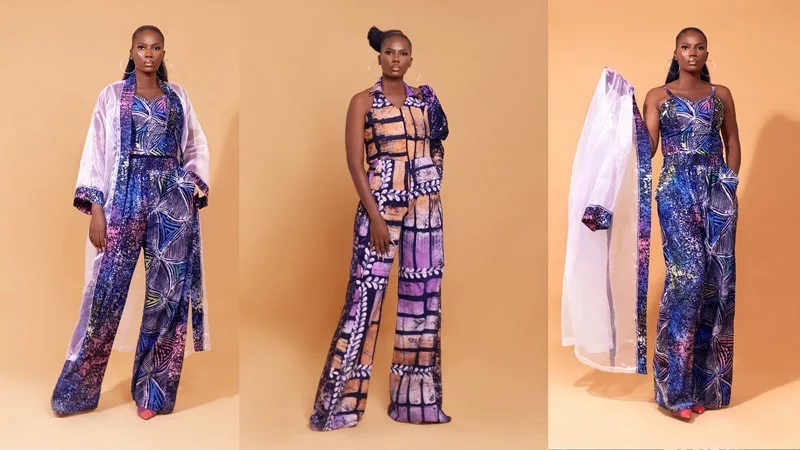
Nairobi Brings Fashion and Art Together: Nairobi Fashion Week And Chez Sonia Collaborate To Host A One-of-a-kind Afternoon Event On April 21st.

On April 21st, 2023, Nairobi Fashion Week sponsored a one-of-a-kind afternoon event that blended the worlds of fashion and art while presenting the “JUST fashion” campaign at Chez Sonia.
This event promised to be a feast for the senses and delivered, with spectacular visual art displays from Little Art Gallery, live music, and a fashion show featuring five selected designers, Deepa Dosaja, Inna Design, Kenya Nashipai Leather, Normand Ayats, and Maisha.

Nisria brought together outstanding artists and designers to create an extraordinary day of creativity and beauty.

The event also included a panel discussion on sustainable fashion moderated by media personality Yvonne Ndege, with Katrin Aidnell, the Regional Environment and Climate Change Specialist, Betterman Simidi, the General Manager of Africa Collect Textiles, and Deepa Dosaja, a pioneer in a sustainable fashion.
The conversation centered on the necessity for a fair and environmentally friendly transformation of the country’s fashion industry.

The Nairobi Fashion Week campaign “JUST fashion,” the ultimate aim of which is to support the country’s fashion sector in its JUST, i.e. environmentally sustainable and socially equitable, transition feature’s four advocacy and promotional areas throughout 2023,

focused on Just transition, sustainable fashion, and the protection of the Nairobi National Park.

Credits:
Video by Valde
Photography by: Levi King

Content courtesy of Nairobi Fashion Week & NFH


Ad