Monday 4th of May 2026

Nairobi, Kenya

Bubu Ogisi The designer choosing pan-African pride over Western attention

Bubu Ogisi is making African fashion in Africa for Africans. The Nigerian creative director, stylist and the designer behind the label IAMISIGO, Ogisi is committed to celebrating African philosophies, fabrics and techniques. She and her close-knit teams of artisans have created a label which breaks many of the “rules” about what African brands are and should be.

https://www.instagram.com/p/6dLhM4gix5/?utm_source=ig_embed

Not interested in capturing Western audiences or selling big, IAMISIGO’s work is focused on using fashion to tell the colorful and complicated story of Africa’s history, present and future.

“In 100 years, what will our descendants reference about us?” Ogisi said over the phone. “Are they going to be referencing Western pieces that we tried to Africanize, or this new age of African design that was able to bring the continent together? That’s my long-term goal.”

And it’s a goal she has been working towards for quite some time. After leaving Nigeria to study computer science in Ghana, Ogisi began to become aware of the complexity of West African style. Noticing the difference in aesthetics, body shapes, fabrics and styling between Ghana and her home country, Ogisi realised that she could use her lifelong interest in clothing to showcase the diversity of Africa.

Not one to rest on intuition and talent alone, Ogisi studied fashion at the Ecole Supérieure des Arts et Technique de la Mode (ESMOD) in Paris. Having mastered the technical elements of fashion, IAMISIGO was born in 2009. The label’s name combines the words “I AM” with Ogisi’s surname stylized in the reverse — a nod to the fact that the label is Ogisi’s stamp on the world.

She has since showcased collections at Paris and London fashion weeks, been featured in British Vogue and had one of her garments handpicked by supermodel Naomi Campbell. But the mission has not shifted. Despite an increase in international interest, Ogisi is clear about what she is (and isn’t trying) to do with the brand.

“I’ve had offers from China and Italy and all over; people who want to buy my designs and mass produce them. I’m not interested in that,” she said. “I spend time with old men in villages who pass on their weaving craft to their grandchildren, because that is the only way the skills will survive”.

This dedication to locally focused craftsmanship and materials shows itself in each of her garments. Operating between studios in Lagos, Accra and Nairobi, regular road trips to source materials and learn new skills are crucial to Ogisi’s creative process. Her most recent collection, Chasing Evil, makes use of palm leaf from the Congo, which she transported cross-continent in bags filled with sand to preserve the delicate material. She says that some of the garments require an intricate weaving process, which she said can take up to a full day to complete.

For Chasing Evil, Ogisi enlisted Kenyan master jeweler Brian Kivuti to create once-off pieces to accompany her apparel. Where appropriate the designs make use of secondhand fabrics and accessories, where making or buying a new item would have meant unnecessary waste. The collection also makes use of Ugandan unbleached cotton as a staple material. The name of collection was chosen to reflect this return to African pride,

“The only way to chase evil is through unity across borders and truly believing in the works of our hands,” Ogisi said.

While her pro-Africa outlook is by no means novel in the world of fashion, the commitment to applying it to all elements of the label is part of a shift in approach taken by African designers. Like the LVMH Prize 2019 winner, South African Thebe Magugu, who continues to operate from his inner-city Johannesburg studio, Ogisi recognizes that being accepted by the Western fashion world does not necessarily mean that she should take her sights off the many markets across the continent.

“I want to see my clothes on women in Nairobi, Cape Town, Lagos, Accra,” she said. “I want these women to feel that somebody understood their history and their bodies and the lives they lead. Every piece is a love letter to them, and to my continent.”

IAMISIGO represents the hope of a self-affirming, self-sufficient Africa. While fashion is often dismissed as frivolous, or separate from “real issues,” Ogisi proves that politics is everywhere: in the products we consume, in the people with whom we work and even the clothes we wear.

Content courtesy of CNN & Nairobi fashion hub  

Industrie Africa New Shopping Site Makes It Easy to Discover African Fashion Brands

Returning home to Dar Es Salaam with a global fashion pedigree two degrees from the Parsons School of Design and stints at Vogue in New York and Vogue India in Mumbai Nisha Kanabar took stock of how disjointed access to high-end African fashion was.

“Coming from the media industry, not having this clear, cohesive point of education about the industry and access to the market was jarring,” she says. This led her to create Industrie Africa in 2018, a platform highlighting some of the continent’s premiere luxury fashion brands. While it was a well-designed resource for fashion enthusiasts to learn about designers they might have otherwise spent hours scouring Instagram for, one key component was missing: shopping.

A glossy revamp this summer means users can now browse and buy everything from AAKS totes from Ghana and Kikoromeo jumpsuits from Kenya to Pichulik earrings from South Africa, all in one digital showroom. The new site also features an editorial component, Imprint, for which Kanabar teamed up with Natasha Nyanin, a New York-based writer and creative consultant. We spoke with the duo to learn more about their vision for bringing a wide-reaching African fashion experience to curious shoppers around the globe.

Nisha, what inspired you to start Industrie Africa?

Nisha Kanabar: I wanted to address misconceptions and shatter the stereotypical exoticized impressions of what African design really is. We’re building this 360-degree hub of contemporary African fashion: a place of commerce, a place of content, and a place of community. We’re able to weave context through the shopping process.

Natasha, what drew you to what Nisha was creating?

Natasha Nyanin : I am a global citizen, I am a traveler, and I’m someone who lives a borderless existence but I’m also from Ghana, and I’m passionate about sharing African stories. The paramount thing was to capture a diverse set of voices from as many corners of the continent as possible, and bringing a local perspective and understanding of fashion within a global context.

When people think about Africa they’re thinking about Black people, but there are all sorts of people who make up Africa. It’s important to me and to Nisha she’s of Indian heritage to expand the understanding of Africa through the lens of fashion.

What do you look for in the brands you work with?

Nisha Kanabar  : There are a lot of interesting ways designers take storied techniques and bring them into 2020 through modern interpretations. Aso-Oke is a Nigerian fabric used by Shekudo based in Lagos; they mix them with leather to create contemporary and very wearable footwear. There’s a label called Nkwo in Nigeria that is inherently sustainable:

They create their own fabric called Dakala cloth through offshoots of fabric scraps, using this Japanese stripping technique. It’s super interesting how they’ve taken something that’s effectively scraps and transformed it to something innovative.

Awa Meité, based in Bamako, is quite a new kid on the block, and she’s gaining acclaim for her work with local artisans in Mali. She works with materials like Bogolan, or mudcloth, to create pieces that are quite exceptional. Ivorian designer Loza Maleombho was recently featured in Black Is King. Her signature is hand-hammered embellishments in the shape of West African masks some of Beyoncé’s pieces are held together with these beautiful buckles, with this urban glamour.

Natasha, what are some of your favorite designers on the site?

Natasha Nyanin : Emmy Kasbit is a Nigerian designer who works with an Igbo textile called akwete. It’s nice to see that fun juxtaposition of bright colors and the woven textures of the fabric breathing new life into menswear. Sidai Designs works very closely with the Maasai community in Tanzania to use Maasai beading to make contemporary jewelry. Ami Doshi Shah is based in Nairobi, and her Torque necklace and Form earrings are both quite interesting sculptural studies. Diarrablu out of Dakar does really lovely resortwear, flowy dresses, bathing suits very ethereal, diaphanous, easy dresses.

Americans might not be able to get to them for a while, but what are some of your favorite destinations on the continent for shopping?

Nisha Kanabar  : Nairobi is one of my favorite cities: It’s a little bit glam, a little bit urban, a little bit edgy, and full of character and there are a ton of interesting subcultures and artistic pockets that give it so much life. Nairobi has a diverse culinary scene, and Talisman in Karen is quite popular, very refined. I also like to check out designer ateliers like Designing Africa Collective.

Cape Town is an obvious choice but I find it super design forward. Merchants on Long, owned by Hanneli Rupert, is the original mothership of African luxury retail. And I love indulging in a mini excursion to wine country—Leeu Estates in Franschhoek is at the intersection of modernity and country charm. The art is amazing.

I think of Lagos as this glittering population against a backdrop of concrete jungle, it’s overflowing with high-energy glamour and grit. Alara, designed by David Adjaye, and Temple Muse are two luxury retail concept stores, and the visual splendor is inspiring. You’ll see Kenneth Ize beside Amina Muaddi—the merchandising is beautiful and merges western luxury with African brands.

Dar Es Salaam is not much of a shopping city, but the Green Room is a great concept store that collaborates with local designers and makers on homeware and beauty products.

Content courtesy  of Conde Nast Traveler  & Nairobi fashion hub 

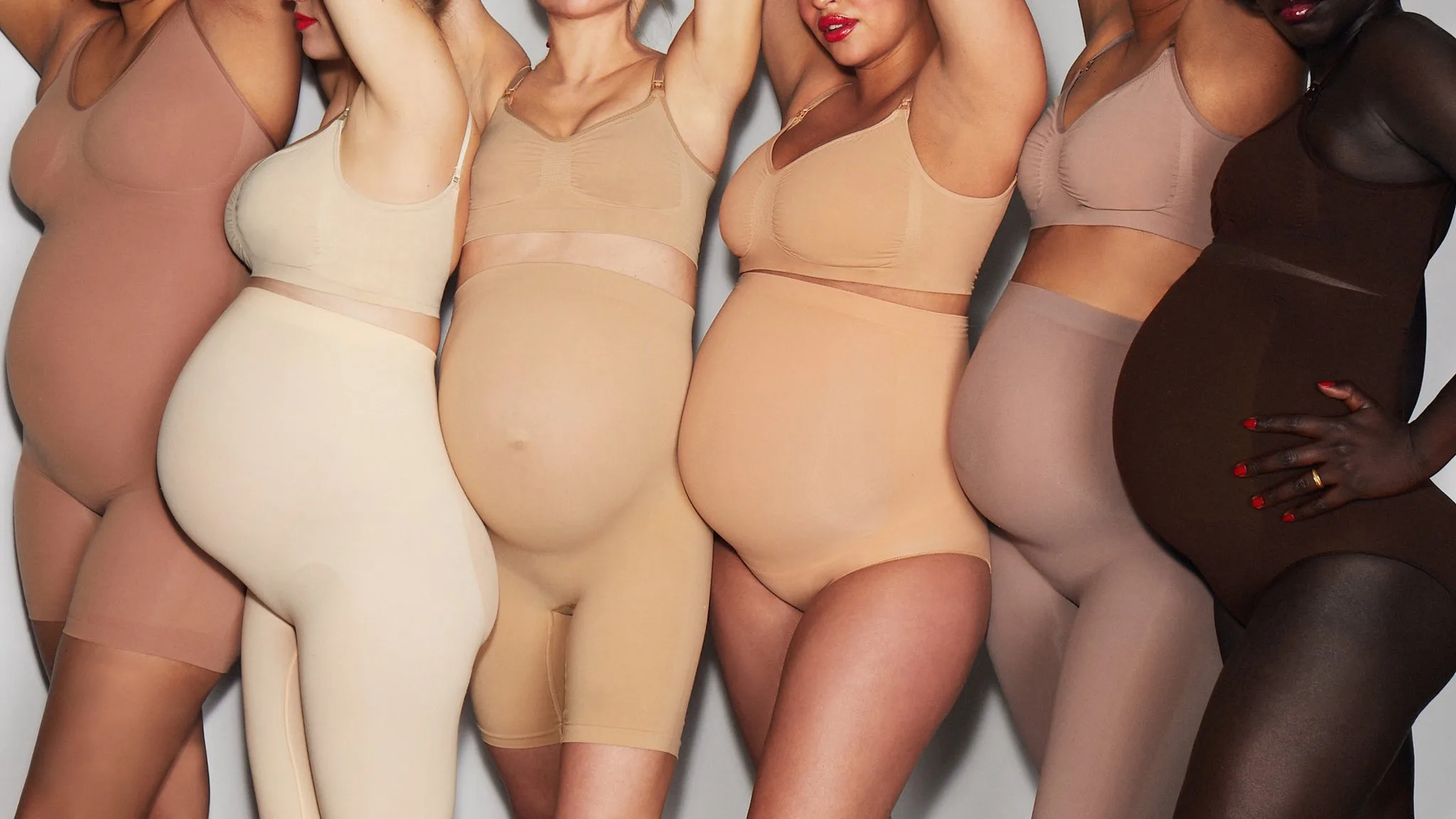
Kim Kardashian Defends Skims Maternity Shapewear Collection And Hits Back At Trolls Over Her Maternity Wear Range.

Reality TV star Kim Kardashian West hits back at trolls over her maternity wear range.

After announcing that she’ll be soon releasing Skims Maternity Solution range, the businesswoman received criticism that pregnant women want to be comfortable, not shape their bodies.

“Excuse my ignorance but who’s trynna shape their pregnant bodies? Y’all don’t like being comfy and free and loose when pregnant? It’s pretty much the only time you can be as shapeless and free and comfy as you want!” said @brownythefirst.

Kardashian West was quick to defend her brand in a series of tweets. She said: “To anyone who has an issue with maternity solution wear, and if you haven’t been pregnant before you may not know the struggle of what it’s like carrying all of this weight the way I did along with millions of strong women, @skims maternity line is not to slim but to support.

“The belly part doesn’t slim your belly, it’s sheer and a thinner layered material compared to the rest of the garment. It provides support to help with the uncomfortable weight being carried in your stomach which affects your lower back, and the compression on the leggings helps with pain relief caused by swelling. It is also worn after you have given birth and provides the comfort and support that most women need after delivery especially if you are recovering from a Caesarean.”

Kardashian West said she added the maternity range to her Skims collection “in response to the tens of thousands of pregnant women who wrote us requesting it and because it was something I needed when I was pregnant myself”.

“Based on the … positive feedback we have received so far from pregnant women around the world, I am incredibly proud to provide a solution that will provide comfort and support during the times that we all need it most, during pregnancy and after.”

The new Skims Maternity Solution range will be launched on Wednesday, September 16.

Content courtesy of IOL & Nairobi fashion hub 

South Africa Fashion Week is taking its shows to The Mall Of Africa

South African Fashion Week (SAFW) is back with Spring/Summer 21, and they are taking it to the Mall of Africa (MOA).

The organisation announced that owing to the Covid-19 pandemic, they’ll be moving from their home, Sandton City, to a much bigger space.

On a three-year partnership with the MOA, SA Fashion Week will stage its first hybrid designer collections showcase this year.

SAFW director Lucilla Booyzen said: “This hybrid combination of both a digital and live fashion experience allows us to navigate the complexities of trading and doing business effectively while simultaneously being mindful of the safety aspects associated with the pandemic.”

According to Booyzen, the 2020 SAFW Collections are trans-seasonal in line with international trends towards collections that incorporate both cool, and warm weather elements. They are also increasingly representing a move towards a “slow fashion” ethos of timeless design and sustainable production.

She added: “While the move towards cleaner fashion production in South Africa still faces many challenges, there is a real commitment from many designers to pursue this necessary transition to a new fashion order. The designer community is predominantly SMME’s, they all employ small contingents of artisans such as seamstresses and pattern makers. It has been a superhuman challenge for these businesses to stay afloat and retain jobs in the absence of any trade or cash flow. This opportunity to showcase their collections in preparation for summer is vital.”

SAFW SS21 starts on October 22 with Gert-Johan Coetzee’s show.

Content courtesy of SA fashion week & Nairobi fashion hub

Jamaican-born acclaimed fashion designer returns to Ghana

New York-based, Jamaican-born, international fashion designer Glenroy March and his fashion brand D’Marsh Couture is set to make a return to Ghana for a three-month long project D’Marsh Ghana 2020.

This is the designer’s third time to the Ghana following previous visits to participate in Mercedes Benz Fashion Week in Accra and Bryte Africa Fashion Week.

While in Ghana, March said he will be based in Accra for the duration of the project, which comprises a masterclass, model development workshops, and culminate with the Face of D’Marsh Model Competition.

For the masterclass, the independent designer said he will draw on his more than 17 years of experience in the industry to assist other young and upcoming designers and brands expand.

“The class will be intimate, interactive and purposeful,” March said, adding that he will take participants behind the scenes, sharing his personal industry experiences about navigating the pros and cons, the failures and the successes, and the lessons learned throughout his journey.

“The Face of D’Marsh Model Competition wraps up the three-month project and will be used to identify a young male and female model that can represent the brand internationally, and be used as a platform to expose them to the global market,” March said.

“Like most industries, the pandemic has forced them to rethink their business strategy and, as an independent designer, I had to pivot quickly to figure out a way to ensure the brand remains sustainable and continues to grow,” March added. “With that in mind, I sought to leverage my relationships in Ghana to undertake this project which is in keeping with our vision of making the brand’s presence stronger in the international market.”

March said Ghana holds a special place in his heart as his previous collection, “Sankofa by D’Marsh”, Fall 2018/2019, was inspired by one of his visits.

He said that undertaking such a project at this time has not been without its challenges, but is looking forward to the experience.

“I hope to learn a lot from this visit and get to understand the international market and what is required to grow and promote an independent brand in the African market,” March said.

“I will get the opportunity to meet with logistics partners and determine how I will be better able to position the brand to explore the global market,” he added.

Content courtesy of Caribbean Life News & Nairobi fashion hub 

Fabric Map of Africa By Mia Kora

Fabric map of Africa celebrating the richness of this beautiful continent through Mia Kora work and passion where art meets fashion.

Mia kora is a range of luxury scarves and shawls centered around the concept of bringing art into your everyday lives. Artwork and designs originally done by priya shah, mia kora now has a portfolio of artists joining the team to help create an art inspired fashion trend!
The team has expanded now to 25 graphic designers working in house, agents in Africa and Australia, collaborations with various design companies who share our passion for conservation and a great team on the factory floor who help bring Mia Kora designs to life.

I’m honoured and humbled at the impact this map has had, and how it has evoked a range of strong opinions. This map was born during lock down. It was created as a mood board to inspire my next collection based on my love of African textiles and patterns.

It took time to evolve, and I was constantly editing images until it was aesthetically pleasing and showed a range of fabrics. The map is a visual representation of the richness and beauty of African fabrics. It is an artistic reflection. Art sees no political boundaries, cast, religion or gender. Art in its truest form speaks across all barriers and lines. The map’s aim is to spread positivity and joy.
My dearest hope, as an African, is that this map raises worldwide appreciation and acknowledgment of African textiles and its high standing in influencing fashion and art.

Mia Kora Conservation

As life itself has been the very source of inspiration for Mia Kora’s collections, they have joined the worldwide movement to protect Africa’s elephants. By wearing one of Mia Kora ‘iconic elephants’ scarves, come together with them towards this cause.

Their latest collection is a tribute to the conservation efforts of the David Shepherd Wildlife Foundation. Alongside the other Artists who support this cause, they have designed scarves and shawls that are not only starting a new trend, but have a purpose. Mia Kora is also proud to be associated with Ol Pejeta Conservancy, helping raise funds through our scarves and paintings.

Content courtesy of Mia Kora 

Mia Kora Inspired with Conservation Conscience and Fashion Sense

Where Art Meets Fashion

MIA KORA (100 Gold Coins) is a collection of scarves and shawls that is centered around the concept of WEARABLE ART.

Some of Mia Kora scarves collections.

A collection of scarves and shawls bridging the gap between art and fashion.

Originally inspired solely by Artist and Mia Kora founder Priya Shah’s artwork, we now have a growing portfolio of talented Artists and designers whose diverse work keeps our collections unique, creating on-trend surface patterns and collections every season.

Priya graduated with a degree in Textiles but started off her career working in a Bronze foundry where she got to experience both 2D and 3D art. She started painting full time and worked as a freelance artist for about 12 years before going back full circle and heading back to her first love… fabric!

Painting A New Trend

Putting her artwork onto beautiful fabrics and wearing them became an addiction. Her paintings and designs adorn Scarves, Shawls, Soft furnishings, Sarees, Wall paper and much more!

Not one to work within boundaries and limitations, Mia Kora has now branched out to being a full scale fabric production house offering digital printing on a variety of fabrics for the Fashion, Art and Interior industries. We are able to offer a wide range of fabrics from synthetic to natural fibres to suit all kinds of creative ventures.

(More information on DIGITAL PRINTING visit Mai Kora website Here).

“I felt restricted with paintings being hung up, with this concept and my training in textiles I could bring them more to life by being able to wear my work and wrap myself in my own comfort bubble.” Priya

Mia Kora Conservation

Born and brought up in Kenya where the wildlife, flora and fauna has become a part of her being, it was natural to become protective of her surrounding ecosystem.  Mia Kora has introduced a charity collection where between 40% – 100% of the profits go towards selected organisations.

Currently we are working with and been a part of the David Shepherd Wildlife Foundation (UK), Ol Pejeta Conservancy (Kenya), Helping Rhinos (UK), Tofauti Foundation (UK), Anne Kent Taylor Fund (Kenya), Heed India (INDIA) as well as the Amboseli Trust for Elephants (Kenya) which has become one of our favorite wildlife conservation projects. Alongside wildlife projects we are now working with local communities, especially women from marginalized communities, providing them with healthcare essentials and education.

For more details on any of our conservation projects please feel free to get in touch with Mia Kora.

London Mia Kora +44 7895711331 info@miakora.com, Kenya Bansi Shah +254733782788 bansi@miakora.com, Tanzania / south Africa Kiran Ahluwalia +254722523966 runninwild@iconnect.co.ke, Australia Neha Shah +61 435 596 630 shahnb01@gmail.com

Stockists

Zoophoria – UK
Trentham Shopping Village, Trentham Estate, Staffordshire,ST4 8AX, UK

Tel: +44 7503 15644

Watlings Gallery – UK
15 East Street, Lacock, Wiltshire SN15 2LF, UK

David Shepherd Wildlife Foundation (DSWF) – UK
Saba House, 7 Kings Road, Shalford, Guildford, Surrey, GU4 8JU, UK

Tel: +44 1483 272323

Giraffe Manor – Nairobi (Kenya)
Gogo Falls Road, Nairobi

Solio Lodge – Laikipia (Kenya)
The Safari Collection

Le Sport Boutique – St Lucia
Body Holiday, Cariblue Beach, Castries, St Lucia, west Indies

Rendezvous Boutique – St Lucia
The Landings, St Lucia, west Indies

Emara by Ole Sereni – Kenya
Mombasa Road, Nairobi

Ngorongoro Crater Lodge – Tanzania
Lake Manyara tree Lodge – Tanzania

Bateleur Camp – Maasai Mara, Kenya

Kichwa Tembo – Maasai Mara, Kenya

Content courtesy of Mia Kora 

Cardi B Is the New Face of Balenciaga Billboard

Only a few weeks after Cardi B released her bold and empowering new hit song “WAP” with Megan Thee Stallion, the rap sensation has managed to top herself once again.

Today, Cardi took to her Twitter account to share the news that she is now the face of Balenciaga’s latest ad campaign for the winter 2020 season. Shot and styled by Cardi B’s team in her home in L.A., the  imagery features the rapper wearing a black catsuit-dress hybrid from creative director Demna Gvasalia’s fall 2020 collection.

Cardi is lying on what appears to be an astro-turf surface, surrounded by a slide and kids toys, as well as Balenciaga’s Neo Classic bag in white.

On Instagram, the rapper also shared an image of a giant billboard featuring the new campaign, which is being displayed on the side of the Louvre museum in Paris. In her caption, she wrote that she remembers how it felt to see herself on a billboard in Times Square for the first time but, in her words, “PARIS! Wish I was there to see it in person.”

This is Cardi’s first campaign for a luxury fashion house, though she’s definitely no stranger to the Parisian style scene. In the last few years, Cardi has become a front row fixture at shows including Chanel, Tom Ford, and Thom Browne. Her street style swagger during fashion month has also gone viral: Remember when she wore a floral printed Richard Quinn ensemble that literally covered her from head to toe?

She and her stylist Kollin Carter have been wildly successful in carving out a much-needed space for Cardi within the fashion industry, and they’ve cultivated a personal style that is all her own while being inspiring to all. To say that she is deserving of this new Balenciaga campaign is an understatement.

Cardi is the risk-taking, unapologetic sartorial muse we all need right now, whether she’s showing us the power of the WAP or making her mark on European fashion, from the side of one of the most famous buildings in the world.

Content courtesy of Vogue Magazine & Nairobi fashion hub 

Winner Of African Kids Fashion Week is June Alaare Wisse a 7 years old Nigerian Dutch Model

A 7-year-old winner, June Wisse has emerged following this year’s African Kids Fashion Week competition; an event created to showcase the best of African fashion for children. The second runner ups ae Jayson Egbon and Oladeji Excel respectively.

This year’s edition themed the “SHOWCASE ” gave African kids the platform to showcase the best of African Fashion Inspired by the rich and diverse African culture with traditional fabrics in a creative and stylish way as organised by Smart Code Africa.

The competition was held virtually, where contestants with the highest likes and engagement online became the African Kids Fashion Week (Showcase) winner.

https://www.instagram.com/p/CBiM2wJDE20/?utm_source=ig_embed

In a statement made available to the press, the Creative Director of the event, Mr Ajibola Akande, said that the African Kids Fashion Week is an event created to showcase the best of African fashion for kids

“This years’ edition aims to build the attitude and develop personality for the young African to love and embrace African attires, ” he added.

Ajibola further explained the economic value of the project which is aimed at retaining the foreign exchange that goes out of Africa within Africa.

He said, “Billions of dollars goes out of Africa from the children fashion industry and one of the main objectives of the African Kids Fashion Week is to help retain those funds within Africa.

https://www.instagram.com/p/CCJkjmjDO9q/?utm_source=ig_embed

“When the children grow up wearing African fashion, they will definitely stick to it when they are of age. Imagine all the children in African are wearing African fashion, you cannot imagine how much that will contribute into the Africa economy in respect to IGR.”

The event gave children between the ages of 4 to 12 years the opportunity to showcase the best of African Fashion Inspired by the rich and diverse culture in Africa.

The online event started with an entry which started on the 9th of August and closed on the 22nd of August. Voting started on the 23rd of August and ended on the 29th of August 2020. The voting was filled with interesting activities as contestants scramble for votes from all over the world. Some Nigerian celebrities also joined in the competition by endorsing their chosen candidates to win the competition via the Instagram platform @africankidsfashionweek.

This year’s African Kids Fashion Week was powered by Smartcode Africa and was supported by Mobiwura Children Fragrance, Afrikayla, wonder child for kids, Wealahkids among other top kids designers

Content Courtesy of This Day Live & Nairobi fashion hub 

The Online Festival Putting Nigerian Fashion on The Global Map 

While it’s undoubtedly reductive to think of an entire continent as a trend, there’s clearly a growing appetite to connect with stories out of Africa, as demonstrated by Beyoncé’s stunning Black is King visual, which invokes symbolism from a broad range of ancient African traditions.

And, with the rise of Afro-beats (the genre was recently given its own official music chart) and African designers such as LVMH prizewinner Thebe Magugu, it has certainly become a cultural force to be reckoned with of late and that’s not lost on Grace Ladoja, CEO of Metallic Inc. and co-creator of Homecoming, the festival that prides itself on “taking the world to Africa and Africa to the world.”

“Obviously, there’s so much focus on Africa, but I think it’s really important to learn from those who have experienced the culture firsthand rather than the U.K. or elsewhere deciding what Africa is,” explains Ladoja. “A continent with 1.3 billion people, 54 countries, 200 million Nigerians, over 50% under 30, has so many stories to connect with globally. They are going to be in charge of the narrative.

They’re the future.” Now in its third year, the festival has earned a reputation for putting cool, on-the-rise creatives on the map via its pop-up shops, workshops, and riotous live shows in Lagos, Nigeria. She is excited that, despite the pandemic, Homecoming will still be able to lend its platform to exciting new voices from the continent, starting with a virtual pop-up featuring 15 up-and-coming labels from the diaspora including British-Nigerian designer Mowalola, Lago-based skate crew Motherlan, and British-Nigerian tailoring specialists Tokyo James that goes live today on Browns Fashion. “It’s about empowerment, platforming, equality, ownership, and education,” she says.

Several designers championed by Homecoming over the last three years have experienced huge success, among them Kenneth Ize and Mowalola, who has garnered a cult following for her provocative, body-skimming leather designs. Ladoja, who met Mowalola when she was at university in 2017 and started buying her pieces back then, describes her as a “a once-in-a-decade designer.”

“We’re so happy to have had her be a part of our story and that some people met her through our festival,” she says. “We’re just a platform and we want to position people in the right place. We’re not a production house trying to break brands, we’re just trying to make people connect the dots.”

While there’s been an uptick in interest for Nigeria fashion, it’s still relatively difficult to get your hands on the clothes themselves. This year’s partnership with Browns will help bring this talented new generation of designers to a global audience.

Beyond shopping, the festival is also a marketplace of ideas. Browns will host a limited-edition e-zine, a collaboration between a number of publications leading Nigeria’s cultural conversation, including music connoisseurs The Native and the thought-provoking team behind The Republic. It features fashion editorials from Sheffield-born British-Nigerian photographer Ruth Ossai and artwork by Nigerian Gothic and Moses Adesanya.

To round off the week, there will be a series of panels on August 27 and 28 that give attendees a chance to learn from heavyweights across the cultural spectrum, from the U.S., the U.K., and Nigeria. Virgil Abloh, Gee Patta of the Amsterdam-based streetwear brand Patta, and AWAKE founder Angelo Baque will discuss how Africa can regenerate streetwear with the founders of Motherlan, Vivendii, and Daily Paper.

Ladoja predicts that this is one area of fashion in which “Africa can set a new blueprint” due to it being more affordable and therefore accessible. Wale Lawal, the editor of The Republic, Post Imperial creative director Niyi Okuboyejo, and Tremaine Emory of No Vacancy Inn are also coming together for a talk, entitled “Pushing the African Visual Identity Discourse Forward,” which aims to dissect the cultural impact of the continent.

Overall, the event is a testament to a new crop of young creatives who are bringing Africa’s rich style history into the future. “I hate trends. I lean towards designers that have their own consistent identities, but if there is a ‘trend’ on the horizon, it’s seeing how these traditions will be reimagined, reinvented, and modernized by the next generation,” she says.

“There’s a new generation flipping tradition and bending old practices with the new. You see this with the weaving that Kenneth Ize does or the Adire dyeing that Post Imperial and Waffles N Cream do, and that’s never going to get old.”

Content courtesy of Vogue & Nairobi fashion hub 


Beyoncé’s Black Parade Route catalog giving African owned businesses a boost

Designs from the new Anyango Mpinga collection are worn by 3D avatar models. Kenya’s Mpinga is behind one of the businesses featured on Beyoncé’s website.

Anyango Mpinga woke up August 1 to multiple social media comments and messages informing her that her fashion brand was featured on the website of one of the most popular entertainers in the world  Beyoncé.

“There was a comment from one of my followers on Instagram that said, “Oh, your work is featuring on Beyoncé.”
“I was confused at first because as far as I knew, I hadn’t sent Beyoncé anything,” Mpinga said, laughing.

The fashion designer from Kenya would later find out that her business Anyango Mpinga had been listed as part of the “Black Parade Route,” a directory of Black- and African-owned small businesses curated by Beyoncé and Zerina Akers.

Akers is Beyoncé’s stylist and the founder of Black Owned Everything, a compilation of businesses across various fields run by Black entrepreneurs.

Black Parade Route

Black Parade Route highlights brands and businesses across different industries, including restaurants, beauty, arts, and design, as well as multiple fashion brands from different countries in Africa.

The directory was released alongside a song titled “Black Parade” on Juneteenth. The June 19 holiday celebrates the end of slavery in the United States. It’s the anniversary of the day in 1865 when news of their emancipation reached slaves in Galveston, Texas.

“Happy Juneteenth Weekend! I hope we continue to share joy and celebrate each other, even in the midst of struggle. Please continue to remember our beauty, strength, and power,” the singer wrote on Instagram at the time. “‘BLACK PARADE’ celebrates you, your voice and your joy and will benefit Black-owned small businesses.”

Mpinga told CNN that she is a fan of Beyoncé and was excited to see that the award-winning musical artist had posted her brand on the website.

Through her brand, the 36-year-old designs and produces re-imagined white shirts, bold prints, jewelry, and leather bags.
“I was excited to see that my business is on Beyoncé’s site. And I was also thrilled to see so many beautiful brands that she wore in her album on the website, and I loved them,” she said.

More visibility

Being featured on Beyoncé’s website is giving many African owned businesses greater visibility and by extension more customers, according to Edwin Okolo.
Like Mpinga, Okolo’s fashion brand, Studio Imo, was spotlighted on Black Parade Route.

“I was not expecting it at all because I am a small brand … I was pleasantly surprised to find that I had been featured,” he told CNN.

The 33-year-old Nigerian has been running his business since 2013 and makes dresses and jumpsuits, knitting them by hand.
Since the feature, he has noticed a lot more activity on his business page with people pre ordering some of his designs, he said.

“A lot of people are showing interest. I have already gotten new commissions and more people have ordered from the online store. I don’t know how that will play out in the long term but just being recognized has been very good for my brand,” he added.

Mpinga said her brand has also attracted more attention.

“It brought a wider audience to my platform. What has happened is that I’ve been getting a lot more requests from people asking how they can get the pieces from my collection, people wanting to make orders,” she explained.

‘There are many Black creatives’
Mpinga said that the directory is proof that there are many Black and African creatives across different industries.

“The industry has been saying they don’t know where to find Black designers or good creators, it has been an excuse for a long time with the big retailers,” she said.

Edwin Okolo’s brand, Studio Imo, designs and produces handmade dresses and jumpsuits in Nigeria.

“What Beyoncé has done is show everyone where to find these creatives so that there are no more excuses,” she added.
And while Okolo is excited that Beyoncé is featuring businesses on her website, he said he hopes the singer and her team will give an additional boost to brands by promoting them outside Black Parade Route.

“It is wonderful to see Africans get this kind of platform without doing anything extra but I am hoping more can be done in terms of PR. I don’t know if that will happen in the near future.”

Beyonce Knowles Carter released her latest surprise single, “Black Parade” on Juneteenth last week. Along with the release of the single, she launched an initiative that supports Black owned businesses

She brought the song and the news to her Instagram account where she has more than 149 million followers. “BLACK PARADE” celebrates you, your voice, and your joy and will benefit Black-owned small businesses,” she states.

Content courtesy of CNN & Nairobi fashion hub

Evelyne Akinyi Odongo

Akinyi Odongo Kenya  is an authentic high end, rejuvenating and invigorating African fashion line by MEFA Creations, cutting across the local, regional and international apparel industry. Inspired by a Kenyan fashion industry indefatigably knocking on the international market galaxy, Akinyi Odongo has tilted the establishment with African inspired designs exuding timeless sophistication, class and ever present diversity that has carved its niche in the local and international fashion arena.

Akinyi Odongo is now a bespoke designer of perfect cuts with refined details and fabrics that are of high quality yet sustainable for everyday use, a touch of rich African culture that creates the distinction. We talk the talk in targeting high net worth individuals from all over the world. Our Jackets, dresses, skirts and suits have been won by first ladies of African countries, presidential candidates, and corporate high flyers and hugely acclaimed by fashion enthusiasts.

Akinyi Odongo Kenya primarily has its market base in Kenya as its headquarters are located in Nairobi, at Sifa Towers on Cotton Avenue. The line also boasts a large foreign-based client base in South Africa, Zimbabwe, Rwanda, USA and UK. To serve its global markets, the line is on course to establish retail access outside Kenya. Akinyi Odongo Kenya designs are becoming a fixture in global exhibitions and fashion shows like the famed Origin Africa, Source Africa (yearly sourcing event in Cape Town)

She is an extraordinary story of passion, diligence, work ethic, integrity and God! With ‘fashion designer’ genes flowing in her blood, inspired by her mother, a ‘fundi’ (tailor) in a Small village Called Rangala In Siaya County in western part of Kenya who taught her the mastery of a sewing machine at a tender age, Evelyne Akinyi Odongo set up MEFA Creations a decade ago in the corner of her house  humble beginnings. Her trailblazing journey, building her clientele from a handful of friends to celebrity endorsement status can only be typified by Evelyne Akinyi Odongo’s

words, “I love fashion, I love creativity and art, and it’s my purpose and I’m pursuing it to the highest place, and being good Steward of what God has bestowed upon me.” It has been a journey of perfecting her concepts, designs, systems and structures while amassing valuable experience in exploring new frontiers of fashion designs and marketing that will match and meet international fashion standards. The launch of brand Akinyi Odongo Kenya  in 2015 represents the new beginning of a legacy she has amassed over the years and of her future endeavours, giving her brand a face to go with it.

Akinyi Odongo  has earned numerous accolades for an inestimable contribution to the Kenyan fashion industry. In 2005, its designs were exhibited in a gallery in Dusseldorf Germany garnering international recognition for the brand and consequently credit for Kenyan fashion designers. In 2014, MEFA Creations and Evelyne Akinyi Odongo were awarded the prestigious ELNET Business Leader Ethics Award for exemplary ethical standards in business.

The company boasts a 5 star rating for ethical compliance. In September 2014, Akinyi Odongo was the only Kenyan designer who represented the country at the 14th World Export Development Forum in Kigali, Rwanda and in August 2015 participated in the 18th Rwanda International Trade Fair in Kigali through Export Promotion Council. In 2015, the founder, Evelyne Akinyi Odongo was

among Kenya’s trendsetting entrepreneurs that showcased their products and business ideas at the 6th Global Entrepreneurship Summit held in Nairobi, Kenya. She was among the high-level delegation that represented Kenya at the Milan Expo Kenya Week 2015, led by The President of the Republic of Kenya, H.E Uhuru Kenyatta. Akinyi Odongo KenyaTM continues to dress Kenya’s First lady Margaret Kenyatta and former Presidential aspirant, Hon. Martha Karua, among others.

The Company has attained various Kenya Bureau Standards (KEBS) standardization marks including the Diamond and the Standardization Quality marks. As a designer, she continues to work with several institutions including Kenya Industrial Research & Development Institute (KIRDI), African Cotton,

Kenya National Chambers Of Commerce and Industry (KNCCI), Export Promotion Council (EPC), African Cotton & Textile Industries Federation (ACTIF), and Proudly Kenyan (IED) counselling on issues affecting the fashion industry.

Board of Advisors The Board consists of nine members who are responsible in formulating, reviewing and provision of counsel in matters relating to Akinyi Odongo Kenya’s business strategy and development, marketing and communications efforts and corporate governance Executive Directors Evelyne Akinyi Odongo: Founder, Managing Director and Head of Fashion Design Martin Oluoch: Director Catherine Jadeya: Financial Consultants

Content courtesy of Akinyi Odongo Kenya & Nairobi fashion hub 

Ad