Monday 4th of May 2026

Nairobi, Kenya

Beyoncé Amplifies The Diversity Of Cultures Throughout The African Diaspora

In this op-ed, fashion historian and curator Darnell-Jamal Lisby breaks down the fashion from Black Is King and their connections to specific African regions, cultures, and traditions.

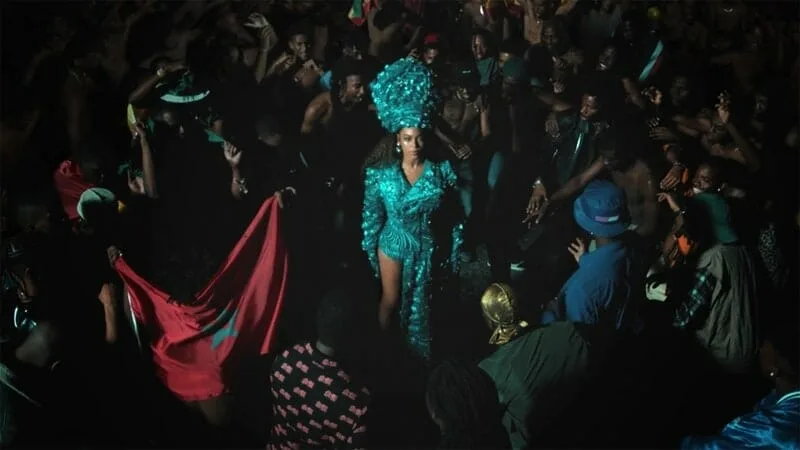
Throughout the years, fashion has been an essential element to the way Beyoncé communicates, specifically Black empowerment. As an extension of her 2019 Lion King: The Gift studio album, her latest musical film Black is King reimagines the Disney classic The Lion King through the eyes of people instead of digitally animated animals.

In this way, Beyoncé, who acts as the film’s narrator, is able to help push society away from conditioned tropes of African peoples while using clothing to overtly and subtly subvert the 1994 narrative into a tastefully executed ode to the true beauty of Africa and its people. Through the fashion in Black Is King, it introduces us to new perspectives through design that amplifies the collective elegance of Black bodies and the diversity of African diasporic cultures.

Beyoncé’s long-time stylist Zerina Akers served as the film’s costume designer, commissioning custom designs from a bountiful selection of designers from and outside of the African Diaspora. Although Beyoncé worked with many fashion houses like Burberry, Valentino, and Mugler, there was a concerted effort to present a range of work by Black and other designers of color on par with their heavyweight fashion peers.

Designers like Jerome LaMaar, Loza Maléombhoa, and Alon Livné and labels like Tongoro Studio interpreted traditional symbols from various African cultures to pay homage to the continent’s artistic richness. Setting name recognition aside and looking at pure materiality and narrative, the styles throughout Black is King are cohesive and electrifying, allowing the inspirational perspective of each designer to add to the captivating story and highlight the multitudes of African people and cultural traditions

There are nods to specific accouterments that help tie into the plot of Black is King while maintaining a consistent level of admiration for these cultures. One uniform representation in Beyoncé’s artistry is the Yoruba goddess of rivers and fertility, Oshun. Whether ushering the film’s beginning wearing a white Wendy Nichol gown pieced in white Japanese organza and white silk habotai walking in the rolling waves or wearing the Balmain marigold dress with a pleated off the shoulder bodice towards the end of the film, these designs conveyed a connection to Oshun and spirituality.

As celebrated in Lemonade, Oshun signifies renewal and life. Additional fashions in Black Is King that showed the essence of Oshun include Senegalese designer Adama Ndiaye’s sprawling dress and halo-like gele. There is also, of course, the beaded gown by Brazilian designer Alexandrine that we saw in shots in the 2019 release of “Spirit” and styled with the stunning cowrie mask by “Queen of the Cowries” Lafalaise Dion.

When it comes to African textiles and dress traditions, particularly West Africa, the costumes in the film create a dialogue between respected customs and contemporary fashion. The history of wax print in the region, which has Dutch origins, and its reclamation by African communities is very vital to the continent. During the Dutch colonization of Indonesia, wax prints did not penetrate the local market as a profitable good; turning their sites on a new consumer, West African communities adopted the textile as a way to assimilate into the Eurocentric colonial landscape.

The subversion of this textile by contemporary African designers to direct a new empowering course of wax print is incredible. Pieces such as the printed Mugler jumpsuit (in “My Power”), the Vrettos Vrettakos crystal-encrusted multicolored dress (in “Find Your Way Back”), the Venny Etienne cinched floral printed jacket (in “Already”), or the Erdem floral printed gown (in “Mood 4 Eva’) unwittingly directed attention to the essence of the decorative nuances of wax print.

Another textile tradition delineated throughout the film is the intricate textile practice of Bògòlanfini, which is an integral practice in Mali. The unique arrangement of symbols and shapes created by undyed spaces on the Bògòlanfini textile is undeniably felt through the Loza Maléombho broad-shouldered black and white geometric patterned bodysuit with figural mask buttons in the “Already” scene.

The repetitive pattern in its black and white colorway in the bodysuit is almost an abstract extrapolation of the traditional textile’s geometric patterns, creating continuity with the West African setting of that portion of the film – the Ghanian flag was swung by backup dancers, giving away that portion of the narrative. Additionally, the buttons on the Maléombho bodysuit also speak to a similar adornment of gold seen on the crowns worn by rulers of Akan people in Ghana and the Ivory Coast. There are also references to the geometrical spirit of the Bògòlanfini in the billowing NGOR and BIRMA dresses by Tongoro Studio Beyoncé wore in “Brown Skin Girl.”

With dance being a cornerstone of Beyoncé’s visual experiences, in addition to being functional, her costumes and fashions are constructed to add drama to the performance and specific movements. Dance has always been integral to many African cultures, religiously and for entertainment. In the more religious vein of dance and ceremony, the Mossi people, native to modern-day Burkina Faso, are known for their Ouangos dance costume consisting of elongated stylized masks and layered fibrous cloaks.

From longtime Beyoncé collaborator Timothy White’s voluminous fringed dress and fringed fedora in “Water,” the crystal poncho by Area in “Find Your Way Back,” and the crystal cape-dress designed by Lace by Tanaya also in “Find Your Way Back” create this romantic connection to Mossi art form through their excessively layered fringed constructions like the Mossi’s beautiful coarse dance costume, creating additional and accessible points for viewers to approach the education of African communities.

Headwraps are another glorious symbol of the legacy of the African diaspora because of their crown-like attributes. The sumptuous characteristics of headwraps signify a sense of pride for many African people. Identified as the gele in Nigeria and duku in Ghana, headwraps are the vocal points to each of Beyoncé’s ensembles to complement her non-verbal celebration of Blackness.

Notable illustrations of the headwrap are present in the custom turban by Sarah Soko Millinery styled with a matching hand-beaded Nigerian lace trench-jumper by Jerome LaMaar in “Already;” the pink structured gele styled with a chiffon gown by Molly Goddard in “Water;” as well as the Laurel DeWitt and Alon Livné turbans as seen in “Find Your Way Back” and throughout the entire film.

Moving away from West African connections, the fashionable imagery in Black is King also has powerful signals to cultures native to central and southern Africa. During the Lemonade era, fashion pointing to the peoples of these regions was essential to conveying her appreciation of them.

The Mangbetu practiced Lipombo head-elongation, which in “Brown Skin Girl,” Beyoncé reinterprets with the arrangement of her braided hairstyle in a scene wearing a black Timothy White mermaid tiered tulle gown. Briefly, the braided ties woven onto the bodice of the lace dress designed by Déviant La Vie in “Nile” brings about a question of whether the tradition of crochet hats and masks popular amongst Bamileke people native to Cameroon was the inspiration.

When thinking about the culture of southern African indigenous groups, the fashions in the film illuminate delineations of Herero dress. The Herero are native to Namibia; after the country’s colonization by the Germans in the early twentieth century, Herero women integrated Edwardian style into their daily lives. During the end of the nineteenth-century into the first decade of the twentieth, women’s fashion continued to perpetuate the broad-shouldered Gibson-girl-like silhouette, cinching the waist and having voluminous sleeves and skirts which created an hour glass like shape.

When the Germans gave up control of the region, Herero women reclaimed this style as a form of solidarity and keeping memories of the Herero genocide alive. Between the leg-of-mutton sleeve gown by the Alejandro Collection in “Mood 4 Eva” as well as the floral printed with grey ground headpiece styled with a matching wrapped and draped dress designed by Mia Vesper in “Water” while dancing with a calabash bowl on her head highlight the power of Herero dress and culture.

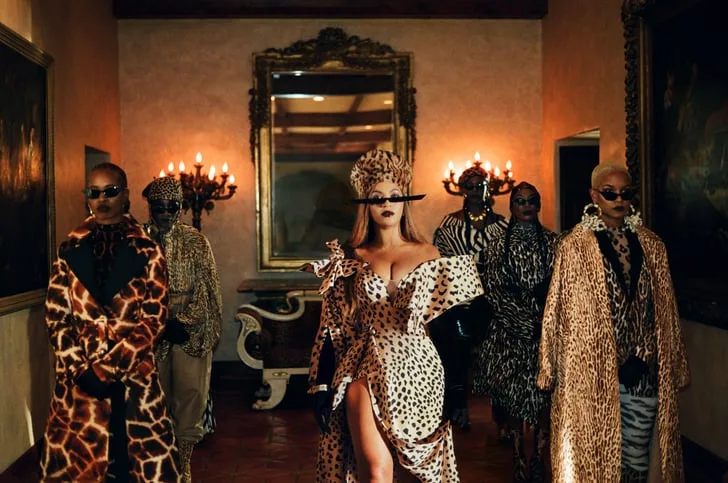
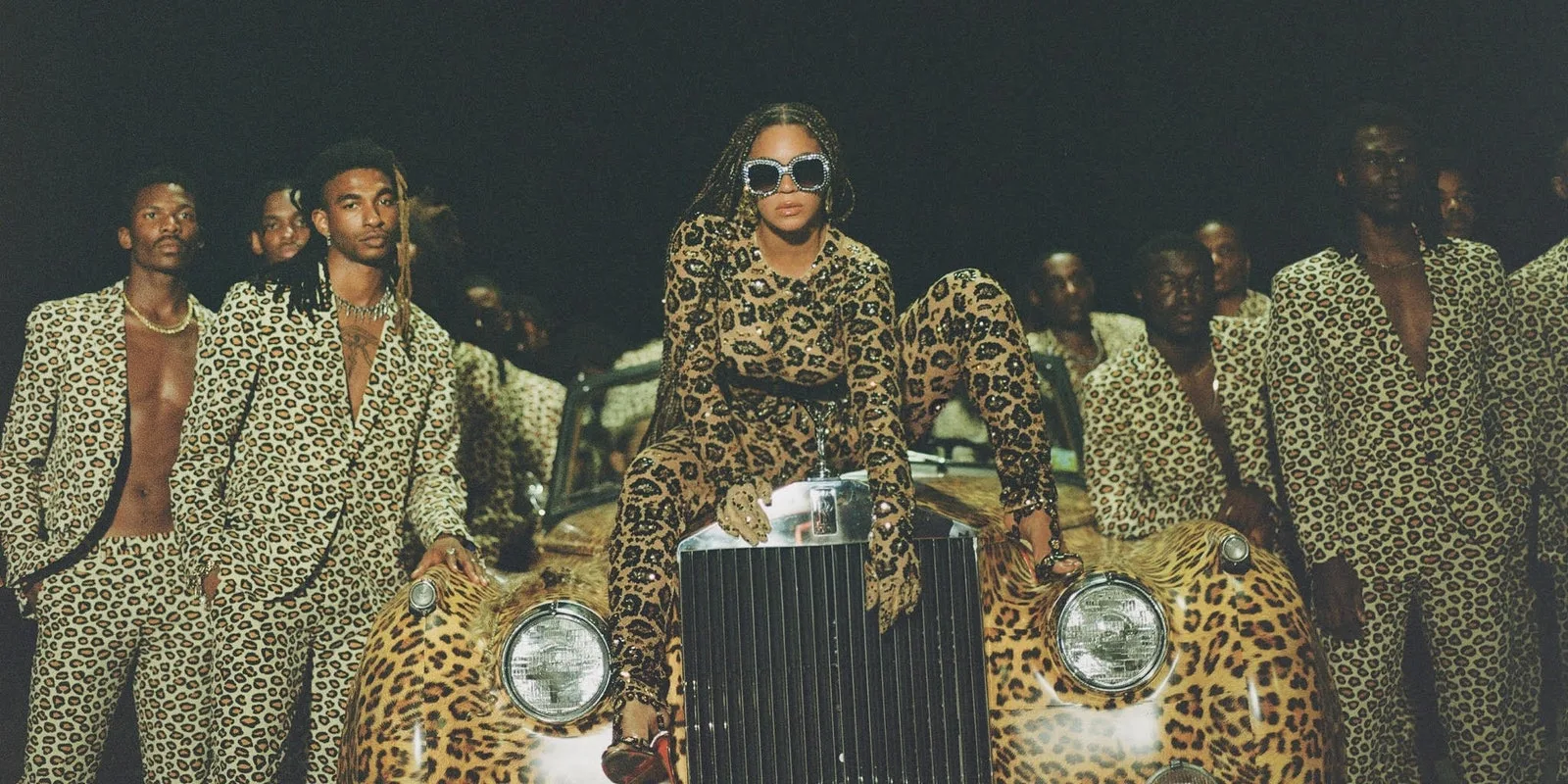
There was also a significant presence of using fashion to draw links to the Zulu, who are native to South Africa. The cowhide Burberry ensembles in “Already” speak to the use of this material for Nguni shields. The custom leopard printed and crystal-embellished jumpsuit and matching cape by Valentino worn in “Mood 4 Eva” elicits thoughts of the Zulu’s widely known history of leopard skins in ceremonial dress.

Building on the leopard connotations, the Kujta & Meri off-the-shoulder dress with a deep slit and hat in the same scene exudes more abstract interpretations of the animal skin, especially being surrounded and walking regally amidst the extras wearing leopard printed ensembles. Again, Black is King represents how the designers in the film interpret, connect, and celebrate African diasporic cultures.

In a time when we are unlearning conditioned history that supported white Eurocentrism, Black is King simultaneously addresses the fact that Black people are not monoliths but possess cultural nuances that bind them together through art, music, dance, and dress, among others.

Even though Beyoncé was the central figure of the film, she selflessly elicited the colorful and brilliant character of the African continent and all of its peoples. In addition to continuing to create, assumedly, a deep spiritual connection to the continent and its people, this film continues the collective work to dissipate disastrously historical perceptions in favor for illuminating the exquisite cultural abundance of African and Afro-Diasporic cultures.

In a time when we are unlearning conditioned history that supported white Eurocentrism, Black is King simultaneously addresses the fact that Black people are not monoliths but possess cultural nuances that bind them together through art, music, dance, and dress, among others.

Even though Beyoncé was the central figure of the film, she selflessly elicited the colorful and brilliant character of the African continent and all of its peoples. In addition to continuing to create, assumedly, a deep spiritual connection to the continent and its people, this film continues the collective work to dissipate disastrously historical perceptions in favor for illuminating the exquisite cultural abundance of African and Afro-Diasporic cultures.

Content courtesy of Teen Vogue & Nairobi fashion hub 

Top 10 Fashion Designers From Tanzania

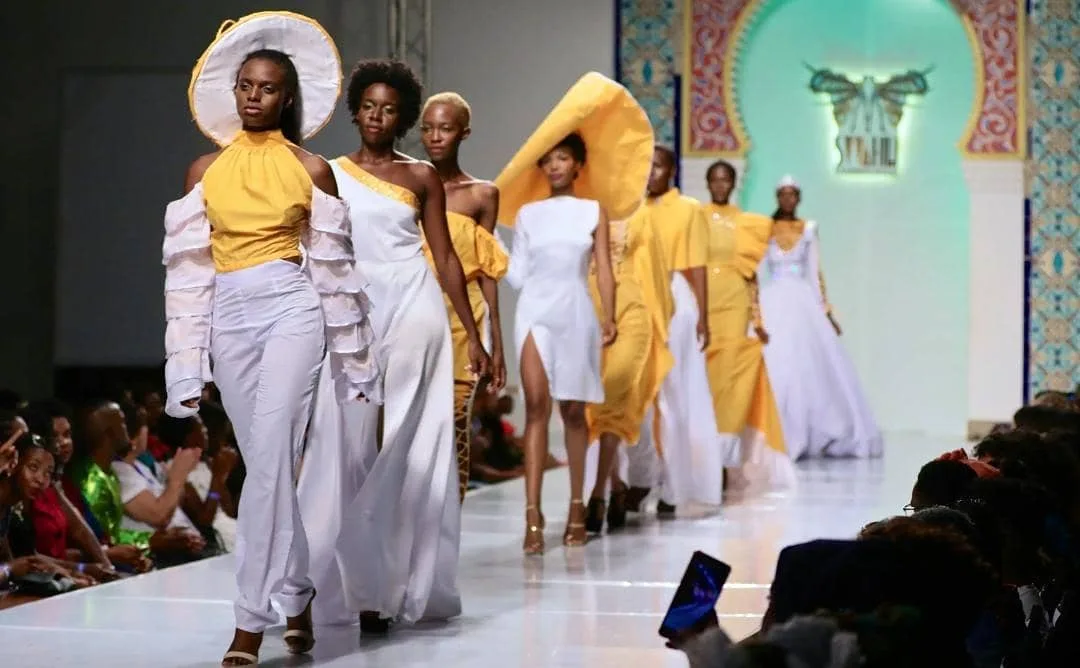
Swahili Fashion Week is one of the biggest and largest annual fashion events in East and Central Africa providing a platform for fashion and accessory designers from Swahili-speaking countries and beyond to showcase their talent, market their creativity, and network with clientele and the international fashion industry.

This is all aimed at emphasizing to the region that fashion is an income-generating creative industry, meanwhile promoting a Made in Africa concept, Swahili Fashion Week is a platform founded and created by celebrated Pan African couturier from Tanzania, Mustafa Hassanali in the year 2008.

1. Doreen Mashika

Doreen Mashika was born and raised in Tanzania, studied and work in Switzerland, and is now part of a growing homeward-bound African diaspora. While in Switzerland she began her career in the financial industry, specializing in goods fund management, Doreen doesn’t only design bags but she is an all-around designer she designs anything from shoes, bags, and stunning clothes. What I like about her designs is that she incorporates the western culture and African style.

She is also one of the designers who manage to create something new and exciting with African textiles – in this case with Kitenge fabrics, This is where she had her first contact with the fashion industry and designers, providing her a unique insight and appreciation of the sector. Inspired by a deep sense of affection for the cultural heritage and wealth of design possibilities in Africa, she returned to Tanzania and settled in Zanzibar to pursue her passion for design while building a successful company.

2. KiKi’s Fashion

Kikis fashion founder and CEO, Christine Kissa Zimba popularly known as Kiki Zimba, was born on Christmas day 25th December 1977 in Dar Es Salaam, Tanzania, Kiki Zimba is married and a mother of 3yrs old son, she is a new designer in town and a businesswoman as well.

Kikis Fashion is another fashion home owned by Kiki Zimba.  She portrays her fashion and personality via her fashion brand, through her creativity and designs. She mostly customizes her designs to women and children and captures their hearts with stylish long dresses, evening gowns, or short skirts.  If you’re a fashion-savvy lady, you will always find something new at Kiki Fashion. She incorporates her designs with Kitenge and Ankara. She is currently big on African prints.

Well Fashion is in her blood, Kiki feel that fashion design is an art and a way of expressing oneself creatively and she has been able to make people wear her label, and she is so proud of that, Kiki Zimba has also designed Vodacom Miss Tanzania 2011 Dance and Beachwear and her target was to sell her brand worldwide.

3. Mustafa Hassanali

Tanzanian Mustafa Hassanali is a medical doctor who began fashion designing as a hobby in 1999. Hoyce Temu wore one of his first creations and was crowned Miss Tanzania that same year, wearing his signature evening gown. This initial hobby has turned into a fully-fledged career for Mustafa who has shown his collections across Africa and outside the continent in promoting the Tanzanian fashion industry.

Mustafa has showcased his creations in over 31 cities across 21 countries globally representing Tanzania as a Fashion and Cultural ambassador. He is highly appreciated at the international level by working alongside Naomi Campbell. Mustafa is still on that ladder to leave his mark on his work globally.

His zest for fashion is not limited to fostering his own creations and offering something new to his target audience, but he is also concerned about the growth of the industry. In 2008, he launched the Swahili Fashion Week, which has created a promising platform for established designers and models, as well as emerging talent. This event has now become the largest fashion event in East and Central Africa. Hassanali was also appointed by the minister for information, youth, culture, and sports as a member of the steering committee to search for the Tanzania national attire.

4. Khadija Mwanamboka

Khadija’s 24 years of progressive achievements in fashion designing, organizing events, opportunities to youth and women to express themselves through fashion, marketing promotions, ambassador/influencer for different organizations, initiatives, and campaigns through the promotion of different services and products. She is very enthusiastic, highly motivated, and resourceful. Khadija is Poised and self-confident in dealing with a wide variety of people.

One of the top trail-blazers and trendsetters in the Tanzanian fashion industry, Khadija continues to set the pace in the African fashion arena locally, regionally, and internationally.

Khadija is not only a fashion designer but enjoys giving back to her community. She is a founder and chairperson of Tanzania Mitindo House, a not-for-profit social initiative to utilize fashion designing in the country for community-based charities geared at assisting HIV/AIDS orphans.

5. Evelyn Rugemalira

Evelyn is the creative director of Eve Collection. All she needed to set her on the fashion path was the inspiration she got during a trip to Lagos Nigeria.  Her passion was ignited after seeing and experiencing western African fashion enthusiasts at work. She believes that Fashion has the ability to inspire, inform and document what society says. She mostly uses kitenge and Ankara for her designs. Her audience is mostly women with an endearing soft spot for curvy women.

In the last few months Eve has been very privileged to dress several Tanzanian celebrities in the likes of Madame Rita Paulsen of Bongo Star and Wema Sepetu a well known Tanzanian businesswoman and actress and most recently Eve had the honor of dressing Miss Tanzania 2012 who represented Tanzania in the Miss World competition in Malaysia, Eve Collections was also featured in Mashariki Mix in October 2013.

In a span of few years, Evelyn has had a huge success in different fashion shows and Exhibitions namely the Women Worth Fashion Show June 2011, Swahili Fashion Week November 2011, Red Ribbon Gala Dec 2011 and 2012, Khanga za Kale November 2012, and recently the South African Fashion Week April 2012. Eve has also been featured in the popular and trendy Bang Magazine in 2011

6. Kemi Kalikawe

Kalikawe is the founder of Naledi Fashion House, which was established in 2008. By profession, Kemi is an interior designer who is inspired by all forms of designs and creativity. She found passion in fashion as a natural progression from interior designing. Naledi fashion house designs are all created by Miss Kemi Kalikawe herself and they are ready-to-wear casual or contemporary afro-urban fashion for both men and women.

The name Naledi means “star” in Tswana, one of the languages spoken in Botswana and Amazing Africa thinks that is a perfectly fitting name for one of Botswana’s rising young entrepreneurial stars, Kalikawe’s uses indigenous Tanzanian fabrics Khanga and Kitenge for some of her women’s dresses too.  But her best selling item is the sandal.

The designer makes heavy use of one of national Tanzania’s fabric Khanga alongside the Kitenge and the Ankara. Kemi recently participated and won the award of Innovative Designer of the Year award at the Swahili Fashion Week in Tanzania.

7. Jamilla Vera Swai

Jamilla Vera Swai’s label caters to women who infuse exotic vibrant style, glamour, and sophistication into their professional and social lifestyle, vibrant, exotic, all in your face extraordinaire designs. Jamilla’s love affair with fashion started at the tender age of 7 when she came across her auntie’s fashion sketches.

At the age of 14, while she was still in high school, she started modeling for adverts on a local TV station in Maputo as well as designing for the agency she was signed with, Estudio Stilo. To perfect her skills she joined Institute de Bela Artes in Maputo to study fashion then, later on, moved to Fashion College International in Nairobi to complete her studies.

8. Ally Rhemtullah

Ally Rhemtullah is one of the upcoming fashion designers of Tanzania, Young at heart and creative, There was a time where the arena was dominated by “so-called” designers but with the emergence of this new blood, new talent, everything is changing for the development and betterment of the fashion industry of Tanzania
Ever since he was a child he was always in love with drawing, painting, and using colors as his daily playing elements. Ally had a dream to be a fashion designer, and after a lot of hard work, he achieved his goals and is now starting his career in the fashion industry.

Allys fashion talents are like the unique Tanzanian art of “Makonde” carvings. His creations are a blend of wearable garments which are in the true sense combination cultures, styles, and fabrics. Ally is a Tanzanian, born and raised within Indian ethnicity. The opportunity to go to the west to obtain his degree made him knowledgeable of all three different parts of the world, thus the ability to create designs with inspiration from all the cultures.

Different colors in nature inspire Ally to create his designs, he also gets inspiration from his fellow colleagues who have been in the industry for a long time.

9. Fatma Amour

Fatma Amour is a fashion designer from Tanzania who makes use of traditional materials like leather and tree bark, inspired by the designs of the Hadzabe people of north-central Tanzania.

The moment she set foot in Hadzabe land, Amour knew she had found her calling bringing the richness of Hadzabe tradition to the outside world, the Hadzabe live around Lake Eyasi in the central Rift Valley and in the neighboring Serengeti plateau, where Western “civilization” hasn’t touched the ground.

They are one of the few groups left in Tanzania whose life still revolves around hunting and gathering. Their garments are mostly made from leather from animals they hunt and tree bark from the natural forest, for people who still believe that Europe and America are the founts of fashion, Amour has a message with her eye-catching traditional creations

10. Farha Sultan

Farah Sultan, Founder of ARNAA and graduate of the AUS Design Management Program in the College of Architecture, Art and Design (CAAD), will give a talk on how to create your international brand. Farah Sultan is an example of an AUS alumna who studied hard and applied the knowledge she learned on the design management degree program to her life, to her graduate studies in Italy, and to the prolific creative businesses she built. Farah is a world-class role model and success story–an award-winning AUS graduate who made it big internationally.

Farah Sultan is an entrepreneur, philanthropist, and fashion investor. As the founder of the luxury footwear brand ARNAA and the owner of and buyer for the multi-brand store GRAIN, she is a prolific patron of fashion and philanthropist of new talent. Farah is one of the youngest serving patrons of the British Fashion Council Fashion Trust. In 2017, she won the Arab Women Award for Young Designer of the Year.

Farah holds a Bachelor of Science in Design Management from AUS. After completing the London Business School Executive Leadership Program, she went to Italy to specialize in footwear at Milan’s Ars Sutoria under the apprenticeship of sought-after professors. As ARNAA’s founder, Farah aims to create shoes that are one-of-a-kind style statements of the highest quality and comfort for distinguished women around the world.

11. Zamda George

Life has a way of turning things around and surprising us in so many different ways in our journey to finding ourselves in being who we want while trying to live life to the fullest at the same time.

Some call this journey of figuring out who we will be in the end as finding our destiny; others just put it as fate, but for Ms. Zamda George it’s passion.

12. Ailinda Sawe
13. Asia Idarous Khamsin
14. Manju Msita

Content Courtesy Of Nairobi Fashion Hub


Japesa Featuring Khaligraph Jones – Nyakalaga Official HD Video

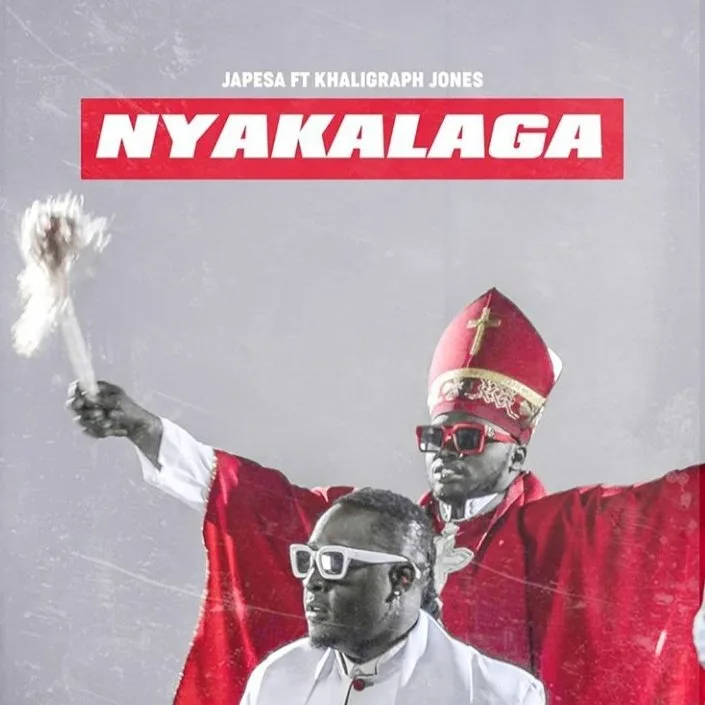
Kenyan Luo King Hip-hop Artist Japesa has dropped a new video dubbed ‘Nyakalaga’ featuring Khaligraph Jones. ‘Nyakaga’ is a ground breaking afro centric gospel hip hop fused with luo rap.

In the new song release on 4th August, the duo asks God for the forgiveness of their sins, and for him to bestow His blessings upon them, In the video, the duo has adopted a church setting with both of them donning Lego Maria regalia, with Khaligraph playing the role of the Bishop.

Khaligraph drops his verse in Duhluo, English and Swahili creating a nice blend that is worth listening to, On an Instagram post after the video premiered on YouTube, Khaligraph acknowledged that he was grateful for the opportunity to feature on ‘Nyakalaga’.

“Big shout To the Luo Rap King @japesakenya for featuring me on this project,” he posted.

[taq_review]

The new release is proof that Khaligraph is dynamic and can rap effectively even in his mother tongue, which he previously noted that he is not so fluent in it.

The new release is proof that Khaligraph is dynamic and can rap effectively even in his mother tongue, which he previously noted that he is not so fluent in it.

Barely a day after it premiered, the video is doing well on YouTube with over 100,000 views, ‘Nyakalaga’ is a pioneer afro centric gospel song and will surely open doors for other vernacular artistes majoring on the same to freely churn out their content.

Content courtesy of Nairobi fashion hub Online Digital Team 

Top 10 Fashion Designers from Uganda

Kampala Fashion Week  Uganda’s most influential fashion platform, (KFW) promotes Ugandan designers and Fashion designers African continent to a large global market. The organization was created to support and strengthen the design industry in Uganda as well as enhancing the cultural and creative talent that our country and continent has to offer. KFW is powered by the Ugandan Fashion Council (UFC).

Fashion in Uganda is flourishing, if the work we’ve seen this year is anything to go by. Design labels are turning into highly respectable brands, attracting attention from all over the world. This is thanks to platforms such as Kampala Fashion Week which foster talent and creation of high-quality garments.

1. Anita Beryl

Anita Beryl born 11 January 1986 is a Ugandan Fashion Designer, Couturier and Entrepreneur. She is the creative director of Beryl Qouture, a Ugandan fashion house. The Ugandan magazine, Satisfashion Uganda, named Beryl one of “The 40 Movers and Shakers of 2016”, in December 2016.

Anita Beryl of Beryl Qouture has positioned herself as the go-to dressmaker for exquisite red carpet looks. Her label which started as a bridal house has dressed some of the best-dressed women this year, attracting massive PR in the process.

She has also featured at a slew of fashion weeks the previous years , Accra Fashion Week and Swahili Fashion Week being some of them. We look forward to the surprises she has under her sleeve in 2018

2. Sylvia Owori

She was born 1976 is a Ugandan fashion designer, businesswoman political lobbyist and entrepreneur. She is the Chairperson and Chief Executive Officer of Zipa Modeling Agency, a company that she founded and owns. She is reported to be one of the wealthiest individuals in Uganda, the third-largest economy in the East African Community.

Sylvia Owori is one of today’s leading figures in East Africa’s Fashion, media, and modeling industries, famous for both her entrepreneurial skills as well as for her creative talent.

Her break into fashion happened when she took on the challenge of revitalizing the ‘Miss Uganda Beauty Pageant’, (2001-2004) which following her input became one of the most significant events on the Ugandan social calendar. She also revealed her innovative talent by designing outfits for the contestants of the M-Net Face of Africa in Dar es Salaam (2000) and Cape Town, which resulted in immense acclaim from the public as well as from fashion critics. Following this positive feedback, Sylvia was appointed to design the Nokia Face of Africa’s Ugandan finalist’s outfit in 2001.

Sylvia Owori, the brand, launched in 2004 and provides a range of prêt-a-porter exclusively on sale in the flagship store in Kampala and in an outlet in Nairobi. Described as a balanced mix between smart and elegant outfits for work and trendy casual wear for leisure, her label is all designed with sophisticated and modern working women in mind.

3. Philip Buyi
​​​​​​​Philip Buyi is an actor, founder and creator of the Kkoolo fashion brand. Kkoolo means “crow” in Buyi’s native language, Gisu. The brand specializes in designing and manufacturing customized street, haute and ready-to-wear apparel for both men and women. Buyi’s goal for Kkoolo is to return, rediscover, and redefine African culture today. “Fashion is an image and character we portray.”

Kkoolo is afro urban wear trend with beauty to colour your world, K koolo reproduces african fabrics and recycled materials ,customized products such as caps , jackets ,vests , pants for both men women, Kkoolo, an afro-urban label made its KFW debut with a collection filled with Samurai inspired outfits, long coats and jumpsuits with dandelions, and lots of leather. We can’t wait to see what the youthful brand has up their sleeves for 2018.

https://www.instagram.com/p/BbxyxRhh9RG/?utm_source=ig_embed

Kkoolo operates at the intersection of the art projects and economic development. Kkoolo is dedicated to the development of the local job market and youth empowerment through skill development, employment opportunities to the youth using fashion, design and craft.

With her activities, Kkoolo addresses issues in regards to innovation, creativity and inclusiveness. Kkoolo Organizers believe that with Art and unemployment can be addressed through gender, innovation and creativity

4. Santa Anzo
​​​​​​​
Anzo is a Ugandan model, fashionista, fashion designer and businesswoman, who is the founder, chief fashion designer and managing director of Arapapa Fashion House, based in Kampala, Uganda’s capital city. She is also the founder and President of Uganda International Fashion Week, an annual fashion exhibition.

Santa Anzo is another pioneer of Uganda’s fashion industry. Anzo is the Chief Fashion Designer and Managing Director of Arapapa Fashion. Anzo says that fashion is not just about glamorous models and glitzy catwalks, it is also a multi-million dollar industry that creates millions of jobs just like any other business. “The fashion industry includes many sub-industries, it has an amazing value chain.”

5. Charles Kasozi

Charles Kasozi, aka Ras Kasozi, is founder and creative director of Kas Wear. It was his lack of financial capital that motivated him to explore new and unusual avenues through recycling to create unique designs. Kasozi began experimenting with different textiles and materials to create one-of-a-kind looks which he is now famous for.

6. Raphael Allan Kasule

Raphael Kasule is the owner of K-Rafael Couture fashion brand. Kasule began his fashion journey at the age of 13, when he started tinkering with his mother’s sewing machine. His fashion brand is famed for its unconventional concepts and approach to style. Rafael’s highlight was when he designed the official national ceremonial wear for Uganda’s Olympic team, which was quite well received at the Rio 2016 Olympics.

“Fashion means so many things; a way of life, culture, an art, source of income. But in general I take it as a platform to express fantasies, thoughts, emotions, among other things. As for the K-Rafael brand, the vision is to make it to the top African designers, to spread outlets and a wide employment and training scheme around Uganda, equipping the less privileged. I would also like to get into the global film costume industry, mainly with adventure, sci-fi, and video production.”

7. Brenda Maraka

Brenda Niwagaba Maraka, who is undoubtedly among Uganda’s top fashion designers, describes herself as “just a simple person who loves work and fashion”. She is also quick to recognise people who have inspired her, including renowned fashion designer and artist Stella Atal and Xenson Samson Ssenkaaba

In January 2007, Maraka officially launched ‘Brendamaraka’ as a fashion label, Brenda Maraka is a textiles designer with a passion for promoting Uganda’s art, culture and traditions through fashion.

For Maraka, fashion is a channel of expression, not just for herself but also for her clients. “It’s been my livelihood and has propelled me to where I am today. Fashion has opened up doors for me, to meet people I never imagined I would meet, to make friendships and visit several countries.”

8. Shiela Lukwanzi

Shiela Lukwanzi is a Ugandan fashion designer who has worked before as a studio assistant for Emanuel Ungaro in Paris and Gloria Wavamunno in Kampala where she assisted in the preparations for the first ever Kampala Fashion Week in 2014. she discovered her signature style while at the university and continue to portray her attention to asymmetric cuts in the collections.

Sheila Lukwanzi is the force behind the formidable Lukwanzi fashion label. Lukwanzi aims to remain enthralling and show a degree of inventiveness through its signature style. It is a unisex brand, currently producing one collection a year. “Fashion to me is freedom, the freedom to change and break barriers. It’s an art and therefore a means of deep communication. Fashion is courage, it’s bold and beautiful.”

Lukwanzi is currently contributing to the fast growing fashion industry in Africa as the creative director for LUKWANZI, a local fashion brand, and also the head designer for Haute Uganda Limited, manufacturers of industrial garments, and corporate and school uniforms.

9. Stella Atal

Stella Atal was born in the Northern Region of Uganda, along the northern shores of Lake Kyoga. Stella started her schooling in Kampala, Uganda’s capital and largest city. She relocated to Kenya and continued her education there. Later, she completed her education in the United Kingdom. She has a bachelors and a master’s degree in Fine Art.

Stella Atal is based in Paris, France. Atal, a professional painter, describes her fashion as wearable art. Having grown up in an artistic family, it was only natural to take on fashion. Atal uses the opportunity of living in the fashion capital to elevate Uganda’s fashion industry to an international level by connecting upcoming fashion designers to international fashion communities.

https://www.instagram.com/p/BqBYPXfl9br/?utm_source=ig_embed

In 2007, she started her own label, Atal Stella. There she focuses on using what is locally available, including eco-friendly, natural and re-cycled material. Her designs have showcased at the Africa Fashion Week New York, in 2010 and at the Green Fashion Switzerland, in 2011. Stella’s work has been featured in two issues of the prestigious Italian Vogue magazine.

In 2016, she relocated from Kampala, Uganda to Paris, France. The following year, she received a license that allows manufacturing and selling of her branded clothes and copyrighted art pieces in France and the rest of the European Union. She tours internationally in Continental Europe, United Kingdom and the United States.

10. Xenson

Xenson know as Samson Ssenkaaba is a multimedia artist and the brilliant brain behind the Xenson fashion brand. Xenson is famed for its creativity greatly influenced by the grandeur of African arts, culture, the vitality of African dance and hip-hop as a free, expressive art form.

​​​​​​​“For me, every creation is a narrative of a complex historical idiom correlated with a poetic contemporary occurrence. The process is very organic and embodies modern African ingenuity and ancient craftsmanship. Materiality involves recycling consumerist by-products, interplayed with organic or natural materials.”

Content courtesy  Nairobi fashion hub 

Sylvia Owor

Sylvia Owori She was born 1976 is a Ugandan fashion designer, businesswoman political lobbyist and entrepreneur. She is the Chairperson and Chief Executive Officer of Zipa Modeling Agency, a company that she founded and owns. She is reported to be one of the wealthiest individuals in Uganda, the third-largest economy in the East African Community.

Sylvia Owori is one of today’s leading figures in East Africa’s Fashion, media, and modeling industries, famous for both her entrepreneurial skills as well as for her creative talent.

Her break into fashion happened when she took on the challenge of revitalizing the ‘Miss Uganda Beauty Pageant’, (2001-2004) which following her input became one of the most significant events on the Ugandan social calendar. She also revealed her innovative talent by designing outfits for the contestants of the M-Net Face of Africa in Dar es Salaam (2000) and Cape Town, which resulted in immense acclaim from the public as well as from fashion critics. Following this positive feedback, Sylvia was appointed to design the Nokia Face of Africa’s Ugandan finalist’s outfit in 2001.

Sylvia Owori, the brand, launched in 2004 and provides a range of prêt-a-porter exclusively on sale in the flagship store in Kampala and in an outlet in Nairobi. Described as a balanced mix between smart and elegant outfits for work and trendy casual wear for leisure, her label is all designed with sophisticated and modern working women in mind.

Most recently Sylvia Owori launched an Uganda Organic Collection which she showcased in Italy.

This collection represents Uganda and the rich cotton that is grown from its fertile soils. It depicts fashion with an aspect of environmental friendliness exuding from Uganda. Sylvia Owori, therefore contributing to the development of the society. This collection is very special to Sylvia Owori, and has a theme of ‘fashion with a purpose’!

The other aspect to this collection is the ‘paper beads’. These beads are made from coloured paper by the rural women in Uganda. This empowers their lives, as employment is created and poverty eradicated in Uganda.

Content courtesy of Nairobi fashion hub 

Top 10 Fashion Designers From Rwanda

Kigali Fashion Week is an annual fashion event that takes place twice a year. It is a platform that promotes Rwandan creative industry in fashion and modelling; the event attracts international attention with both designers and models from across the globe. Kigali fashion week was appointed as a founder member on the commonwealth fashion council in London.

This platform will open up a wider door for Rwandan fashion industry in over 53 countries in the commonwealth. Kigali fashion week in partnership with Rwanda cultural fashion show have created the first ever Rwanda fashion council a regulatory body that will manage and promote the image of fashion industry in Rwanda and the region as a whole.

Most Influential Fashion Designer In Rwanda

1. Moses Turahirwa

Moshions is an elegant culturally inspired brand with a distinctive world-class taste. Since 2015, the award-winning brand has created clothing that celebrates Rwanda’s eclectic culture by a fusion of ancient motifs with contemporary designs.

Founded by model turned designer Moses Turahirwa in 2011, Moshions has gained prominence as a bespoke tailoring brand. His unique label is inspired by contrasting elements such as modernity and ancestry, anarchy and severity, and spectacle and depth.

His clothing, often minimalistic and with small flourishes of traditional Rwandan influence, is known to be of excellent quality, creative, and easy to wear. He recently showed his designs at the CollectiveRw fashion show in Kigali, as well as across the region and Nigeria. Moshions is simple, elegant, and only getting better with time.

2. Linda Mukangoga

Haute Baso is an ethical fashion brand for the modern individual looking for thoughtful, simple and functional designs. We are centered around the belief that “two heads are better than one” using fashion as vehicle for positive change towards the empowerment of women and youth who are integral to our value chain while contributing to preservation of culture in Rwanda.

Founded by Linda Mukangoga, Haute Baso produces some of Rwanda’s most creative, colorful, and innovative clothing and accessories. As the creative director, Mukangoga started Hatue Baso upon realizing there were few options for Rwanda-made gifts and apparel. Passionate about collaborating with fellow designers and individuals in the creative sector, Haute Baso is a ready-to-wear lifestyle brand, designing contemporary pieces with subtle Rwandan accents.

Their quality and craftsmanship is not limited to just their designs, as they also invest in young women throughout Rwanda by way of vocational training, entrepreneurial mentorship, and employment. Haute Baso’s minimal yet fashion-forward style is becoming known around the world, and Mukangoga’s lines have appeared recently at the Mercedes-Benz Fashion Week in Johannesburg.

Additionally, Haute Baso has also been featured in Vogue, Forbes, Vanity Fair, CNBC Africa, CNN, and many other publications. Keep an eye on their website for an e-commerce shop to come that will service North America and Europe.

3. Matthew Rugamba

House of Tayo was created out of the desire to find a unique way through which to showcase African sophistication, style and flavor through contemporary, locally-made clothing and accessories. With style influences ranging from the Motown era to traditional British tailoring, House of Tayo seeks to combine elegance and class with a strong sense of African heritage and iconography.

Matthew Rugamba is the founder and creative director of House of Tayo, with a signature style described as ‘Afrodandy,’ has steadily gained prominence across Rwanda. Established in 2011 by Matthew Rugamba, House of Tayo is known for their colorful bow ties, shirts, and custom suits. Rugamba, as one of Rwanda’s early fashion designers and co-founder of CollectiveRw, has been dedicated to building up the fashion community, changing Rwanda’s fashion narrative, and collaborating with like minded brands.

Rugamba creates iconic designs inspired by the Motown era, traditional British tailoring, and his own African heritage. In using design as a tool to tell stories about his home country of Rwanda, he paints a richly diverse, fantastical, fast-paced, and sophisticated picture of Rwanda today.

4. Teta Isibo

Inzuki is a dynamic young Rwandan brand specialising in jewellery, accessories and interior decor that are handmade, of local materials. All products are Rwanda-made, Africa-inspired and globally-loved. their products are a fusion of traditional craftsmanship and contemporary style and their design philosophy seeks to transcend traditional Rwandan design and customize it to suit modern needs.

Bold and colorful accessories, jewelry, and interior decor are the cornerstones of Inzuki’s bourgeoning fashion label. Founded by Teta Isibo in 2010, Inzuki’s unique designs simultaneously merge traditional and contemporary Rwandan styles, and have quickly become known as some of Rwanda’s best work.

All pieces are made in the country with local materials, and her collaboration with other designers and sectors in the country is exciting to witness. Recently, Isibo designed the interior decor of the new and luxurious Bisate Lodge, one of Rwanda’s premier accommodation offerings. Further, with countless features in prominent online publications and an online store opening soon, Inzuki is becoming even more well known outside of Rwanda as an African lifestyle brand.

5. Nathalie Remera and Rwema Umutoni

UZI Collections was founded in July 2015 by Rwandans, Nathalie and Laurene, as a result of their passion and love for fashion. Their main focus is to create a brand of impact that empowers young people and to increase the economy of Rwanda through the fashion industry.

Newcomers Nathalie Remera and Rwema Umutoni founded Uzi Collections in 2015, and are dedicated to uniting their love of fashion with their focus on youth empowerment, Rwandan entrepreneurship, and creativity. Using colorful and handmade batik fabric, their designs are centered around a comfortable vintage feel.

The brand works to lift up and impact young people that did not originally have opportunities in Rwanda’s creative sector. Noting that the fashion industry in Rwanda has grown tremendously in the last five years, Uzi plans to keep that momentum going with further innovation and cross-sector collaboration.

6. Bernadette Umunyana

Dokmai was founded in 2014 as a private, family owned limited company by Mrs Bernadette Umunyana, DOKMAI is Rwanda’s premier leather fashion accessories company. DOKMAI thoughtfully designs and handcrafts purses, bags, wallets, and more in Rwanda. By pairing local leather with local kitenge fabric, these custom and handmade products have become immensely popular throughout the country.

Umunyana, before moving back to Rwanda, got her start in fashion in Laos and Burkina Faso. There, she focused on silk production and design. By bringing her talents back to Rwanda and working with leather, she has filled an important niche. In the future, DOKMAI is looking at expanding its offerings to include shoes, and focus on targeting clients throughout East Africa.

7. Sonia Mugabo

Mugabo a businesswoman, fashion designer and fashionista in Rwanda. She is the founder and chief executive officer of the fashion label Sonia Mugabo, which is named after her.

Sonia Mugabo (SM) began in 2013 as the brainchild of Sonia Mugabo herself. SM is one of the premier fashion houses in Rwanda, and Mugabo, as the chief designer and entrepreneur, creates beautiful clothing for the stylish and modern individual. Her timeless designs have become known as some of Rwanda’s finest, and her brand is undoubtedly a reflection of herself; elegant, feminine, and whimsical.

By breaking barriers and creating an accessible and genuine brand story, Mugabo is on her way to becoming one of the region’s most beloved designers. She has been featured in several major publications, and recently showed her designs in the CollectiveRW fashion week.

SM also plans to eventually expand to other global fashion markets, and hopefully present seasonal collections on the runways of major fashion shows around the world. Named one of the 30 Most Promising Young Entrepreneurs in Africa by Forbes and one of Glam Africa’s 5 African designers to watch, Mugabo is going places.

8. Ituze Ndutiye Colombe

Ituze Ndutiye Colombe is a fashion designer and an ICT trainer with the Rwanda Workforce Development Authority (WDA). She is also the Founder and Creative Director of “INCO icyusa” which is the first fashion label owned by a Rwandan and introduced in Rwanda. She designs all of her clothing and accessories and works with women cooperatives to produce and sell products that are available in retail and custom order.

Her collections have been showcased in several Fashion shows in Burundi, Rwanda, Uganda, Kenya, and also in the United States through the “Cowboy and Couture 2012” in Oklahoma. The Africa Diva Award recognized Colombe with the Rwanda Fashion/Style Role Model award in 2013. She holds a bachelor’s degree in Business and Information and Communication Technology from Mount Kenya University.

After completing the Washington Fellowship program, she will coach and create networking opportunities for young girls involved in the Duhugurane Project and the Young Adolescent Initiative (AGI) to help them successfully get internships and employment opportunities.

Content courtesy of Nairobi fashion hub Online Digital Team 

The rise of the £1,000 status basket bag

From Fendi Baguettes to Hermes Birkins, fashion has forever placed value on It bag styles, their owners carrying them as much as status symbols as because they actually like the design.

Typically, though, a trophy tote is made from luxury leathers  expensive materials, with a retail price to match. So how does one explain the ascent of the £1,000 wicker bag, a trending style which, in many cases, could be mistaken for a bread basket with a top handle?

Summer 2020’s trophy basket bags come with a steep price tag

Basket bags are now ubiquitous in British summer time you’ll find them everywhere, from supermarkets to seaside scenes, as soon as the weather comes good. They are an ideal accompaniment to a lockdown-popular gingham dress at a socially-distanced picnic. For the last five years, though, they have been the bag of choice for any chic holiday goer looking to throw all her essentials in one beach-to-town tote.

Content courtesy of Telegraph & Nairobi fashion hub Online Digital Team 

Wabosha Maxine

Wabosha  Maxine is a  Kenyan beauty influencer based in Nairobi, She is a professional make-up artist, and a vlogger. Wabosha Maxine is well  known for her talent and desire to grow in the make-up industry in Africa at a tender age as well as her skill in the art.

Wabosha views makeup as a way of diversifying a person’s beauty. She is a true believer of inner beauty but still believes in the confidence makeup instills to an individual. Maxine enjoys exploring that world with others, enabling them to transform into something entirely different from what they could ever have imagined.

Maxine Wabosha’s devotion to her career has seen her working with top artists and gigs with huge brands. She landed her first big job courtesy of House of Elzuri. This is a body wellness and beauty company which specializes in makeup and body art. Maxine Wabosha worked for them as a backstage designer for a model and still works there with the team in assisting young beauticians and beauty bloggers in developing their brand and expounding their client base.

On the social media arena, Wabosha features a YouTube channel on which she showcases various do-it-yourself makeup videos. These videos are mostly liked by the young girls who hunger to get tips on how to wear every-day makeup. ‘Beauty by Wabosha’ is the brand name she uses for her YouTube channel.

Wabosha Maxine’s YouTube channel helps her make videos used as marketing strategies which give her an upper hand in the industry compared to other makeup artists. In these videos, Maxine Wabosha speaks on travels, how to apply to make up, shaping eyebrows (which are her signature look) and also about hair and how to keep it looking good.

Wabosha Maxine hair brand has also earned her more subscribers and followers  since she shows the young ladies how to keep it flawless. It’s important to build a subscriber base who love your channel and keep on to it. Wabosha enjoys a huge YouTube-follower base of 175, 000 subscribers, she has a massive followers of 286k  on her instagram page

Content courtesy of Wabosha Maxine & Nairobi fashion hub Online Digital Team 

Nicki Minaj Announces Her Pregnancy, Expecting Her First Child With Kenneth Petty

Nicki Minaj revealed that she’s expecting her first child with husband Kenneth Petty. Get the details on her pregnancy announcement!

She is going to be a new mom!

On Monday, July 20, the superstar rapper took to Instagram to confirm that she’s pregnant. In a series of photos on the social media platform, a bikini-clad Minaj can be seen cradling her baby bump. The 37-year-old star captioned one of her posts, “#Preggers.”

Shortly after announcing her baby news, Minaj thanked her fans for the well wishes. “Love. Marriage. Baby carriage. Overflowing with excitement & gratitude,” she wrote.

This will be her first child with husband Kenneth Petty, who she wed in Oct. 2019 after more than a year of dating. As fans might recall, Minaj and Petty obtained a marriage license in July 2019, months before officially announcing the news.

“I think I have what I was striving for, just happiness,” Minaj previously confessed. “It was so hard to get to a happy place. Now that I’m there, I don’t want to compromise that for anyone or anything.”

Minaj has also previously shared that she was looking forward to becoming a mother and was willing to give up her career to achieve that dream.

“I’ve decided to retire and have my family,” she tweeted in September 2020. “I know you guys are happy now.”

She later said in May that she was “throwing up,” experiencing “nausea and peeing non stop,” which prompted questions about whether she was pregnant. She wouldn’t confirm or deny a pregnancy, but when asked if she would share a pic of her baby bump, she responded, “Yea in a couple months. The world ain’t ready yet.”

Prior to her relationship with Petty, Minaj was in a relationship with Meek Mill. However, the stars called it quits in 2017. Minaj was also previously in a longterm relationship with Safaree Samuels.

Content courtesy of E-News and Nairobi fashion hub Online Digital Team

Symply Tacha Fashion Vlogger and Makeup artist from Nigeria 

Anita Natacha Akide (Born December 23, 1995), known professionally as “Tacha” is a reality TV star, makeup artist, vlogger and a serial entrepreneur. Born and raised in the Niger Delta region of Nigeria, Rivers State to be precise, Tacha grew up in Port Harcourt City to which earned her the tag; Port Harcourt First Daughter. In early 2016, Tacha became an Instagram sensation after several of her videos became viral on Instagram.

From 2018, she started her own beauty vlog on youtube which she delved into makeup tutorials as well as some social contents about trending topics. She went on to venture into a business as a serial entrepreneur to launch the “Everything Tacha” online fashion, beauty and electronics store.

Akide rose from being an instagram sensation to a reality star after being announced as one of the housemates in the 2019 edition of Africa’s biggest reality show, Big Brother Naija Season 4. Being the only only familiar face on the show due to her instagram presence.

Tacha remained the most talked about housemate during the period of the show and after the show, which made her “The Media It Girl.” Midway into the show, Tacha who was known for her unhinged and unapologetically bold personality, amassed a legion of ruthless loyal fans who are known as “Tacha Titans.” It became obvious during and after the show that her fans who are currently the largest fanbase in Africa, mirror her traits. Upon her exit from the show, Akide immediately signed a management deal with Billz Vizion founded by Teebillz.

In mid october 2019, the 24-year-old star became a brand ambassador to the biggest sunglasses distributor in Nigeria, House of Lunettes. House of Lunettes reportedly sold over 1500 glasses in two hours after announcing Tacha as their brand ambassador.

She went on to sign another endorsement deal with Get Fit Technology, Nigeria’s most wanted wearable fitness solutions.

In November 2019, Tacha bagged a major influencing deal with one of the world’s most renowned Alcoholic beverage, Ciroc Vodka. She represents the brand in Nigeria, Africa for their Ciroc Circle Tour across Tier 1 Cities in Nigeria.
In addition to these, Tacha signed a major endorsement deal with Royal Hair, the biggest hair brand in Nigeria. She also signed as a brand ambassador to Hype and Steam, a U.K high-street Online fashion store.

Tacha’s influencing power has made her the most sought after brand in Africa as the announcement of her deals with these brands were featured in top Newspapers, radio stations and blogs all over Africa

On December 23, 2019 Tacha celebrated her 24th Birthday with so much buzz on the internet as she became the first Big Brother Naija season 4 housemate to receive a gift of Mercedes Benz from her fans.
Towards the end of December 2019, Tacha announced her departure from Bilz Vision management which was a mutual agreement between both parties.

Tacha who is a force to reckon with has become one of Africa’s most inspiring personality of 2019 as she recently made it to Chude Jideonwo’s list of the 150 most interesting people in the culture (2019).

Tacha who is now an household name has constantly remained on everyone’s lips with a very engaging social media presence with average views of 1,300,000+ on her instagram videos on her official account, @symply_tacha. She has an average of 45% of her following as her engaging audience with the females at 55% and males at 45%. The demographics of her audience has 18 – 40 years owning a larger share of 70% all over Africa. On twitter she has a mass follower  of 500k, it is no news that the reality TV star trended worldwide and has been trending daily on Nigeria trends since September till date, and not forgetting her Youtube channel with 58k Subscribers.

https://www.instagram.com/p/CA_QVFXDpuc/?utm_source=ig_embed

She has become the only brand to trend consecutively for more than 50 days at a stretch on the platform. This is believed to have caught the attention of the co-founder and CEO of Twitter, Jack Dorsey due to analytics from the Twitter headquarters, prompting Dorsey to follow her account (Symply_Tacha) and verifying her twitter account. On Jack’s birthday, Tacha broke the Internet after sharing a FaceTime video with Jack Dorsey. The attention she has from Africans is overly impressive.

Everything Tacha by Natacha Akide is a beauty, fashion and electronics brand.
The brand was launched in 2018 with Tacha’s famous ‘PINK LIP KIT’ alongside POWER TACHA, SMILE TACHA, EYELASHES and GLOW TACHA.

Tacha was inspired to create her own brand after years of studying and understanding what works best for everyone. She saw the need to venture into business to make these products affordable and reliable for everyone.
From the best-seller PINK LIP KIT which changed the game for lip balms, Tacha’s aim is to create products that inspire young people in the world.

Tacha has since gone on to re-brand all the products to even more luxurious packages, while ensuring that her line of products caters for everyone irrespective of status and gender.

Content courtesy of Simply Tacha and Nairobi fashion hub 

Viola Davis Grace Vanity Fair Magazine July/August Cover

Viola Davis: “My Entire Life Has Been a Protest”

The Oscar and Emmy winner overcame long odds to make it in Hollywood. Then the real work began.
During the fraught, emotional days after the killing of George Floyd, Viola Davis wanted, more than anything, to be out on the streets of Los Angeles, shouting, protesting, holding a sign.

Davis was photographed in Culver City, California, with social distancing precautions in place. Jacket by Lavie by CK; earrings by MOUNSER.PHOTOGRAPHS BY DARIO CALMESE; STYLED BY ELIZABETH STEWART.

She wanted to join the thousands of others who flooded cities across the nation and around the world to call for justice for Floyd and all the other Black men and women unjustly killed by the police.

“She called me and said she was going,” Davis’s close friend and neighbor, the actor Octavia Spencer, tells me by email. “I immediately talked her out of that.” Spencer and Davis were both concerned about putting themselves or their loved ones with health conditions at risk and were acutely aware that due to systemic health care inequality, COVID-19 has a much higher mortality rate for Black Americans. “Both of us cried,” Spencer continues. “This WAS our civil rights movement, and we were sidelined because of health issues. We felt isolated from the movement.”

Then they had an idea: What about a neighborhood demonstration with friends and family members who needed to be mindful of their health? They banded together with Davis’s husband of 17 years, the actor and producer Julius Tennon; fellow actor Yvette Nicole Brown; and a handful of others and camped out on Laurel Canyon Boulevard in Studio City. They wore masks, which also rendered them unrecognizable, but even so someone across the street brought them a pizza in a show of solidarity. Davis’s sign read, simply, “AHMAUD ARBERY.”

“We said we’d just be out there for a few minutes, and it ended up being hours, hours,” Davis tells me a few weeks later from her home in Los Angeles. “Almost like a big dam bursting open.” She pauses. “We got a lot of beeps,” she says. “We got a few fingers.” She means middle fingers, of course. “But this was the first time the fingers did not bother me.”

I ask Davis if she had protested like that before, and with a kind of resignation and pride, she says, “I feel like my entire life has been a protest. My production company is my protest. Me not wearing a wig at the Oscars in 2012 was my protest. It is a part of my voice, just like introducing myself to you and saying, ‘Hello, my name is Viola Davis.’”

let me tell you about that voice. I know you’ve heard it. But to be enveloped by it, to have it directed at you, while she is swaddled in plush black terry cloth, at ease in her kitchen, is spine-tingling. Davis’s voice, so much like the stringed instrument she shares a name with, is deeper than you might expect resonant, warm, filled with purpose. Her presence radiates even through cyberspace.

At times, Davis is delivering a reckoning, or a buried history, or a call to arms. Occasionally she says my name to emphasize a point and it stops me in my tracks. Has anyone ever said my name before? Has anyone ever taken such care over it? I have no idea what to do with my hands, my face, but I keep assenting, nodding, just trying not to fall behind.

Our interview takes place on Juneteenth, a holiday celebrating Black emancipation that has never before had so much mainstream recognition. For a woman who entwines her voice and mission inextricably into her career, it’s fitting. Davis, who turns 55 in August, languished in the margins for years before vaulting into the public consciousness in the last decade.

In 2015, she became the first Black woman ever to win an Emmy for lead actress in a drama for How to Get Away With Murder, which finished its twisty, unsettling six-season run this spring. In 2017, she won an Oscar for her supporting role as Rose Maxson in Fences a part for which she also collected a Tony.

She will portray Michelle Obama in Showtime’s upcoming series First Ladies, which is being produced by JuVee Productions, the company run by Davis and her husband. Davis lends extraordinary gravity to the roles she plays, a presence both weighty and magnetic. Her performance in The Help as maid Aibileen Clark helps elevate it from apologetic pablum to a sincere examination of the psychological warfare of deep-seated racism: The emotional stakes of the whole movie happen on her face.

Gown by Armani Privé; earrings by MOUNSER; cuff by Giles & Brother.PHOTOGRAPHS BY DARIO CALMESE; STYLED BY ELIZABETH STEWART.

Davis credits the power of her work to the despair of her impoverished childhood in Central Falls, Rhode Island. The fifth of six children, with an alcoholic and sometimes violent father, the young Viola Davis was often in trouble at school, hungry, and unwashed. Her family couldn’t always afford laundry and soap, let alone breakfast and dinner. She wet the bed until she was 14 and sometimes went to school stinking of urine. “When I was younger,” says Davis, “I did not exert my voice because I did not feel worthy of having a voice.”

It was the support and affection of people who knew she was worthy that lifted her out of what she calls “the hole”: her sisters Deloris, Diane, and Anita, and her mother, Mae Alice. “[They] looked at me and said I was pretty,” she says. “Who’s telling a dark-skinned girl that she’s pretty? Nobody says it. I’m telling you, Sonia, nobody says it. The dark-skinned Black woman’s voice is so steeped in slavery and our history.

If we did speak up, it would cost us our lives. Somewhere in my cellular memory was still that feeling that I do not have the right to speak up about how I’m being treated, that somehow I deserve it.” She pauses. “I did not find my worth on my own.”

In school, Davis learned the accepted version of American history, which only raised more questions. “I was taught so many things that didn’t include me,” she says. “Where was I? What were people like me doing?” One summer when Davis was a teenager, a counselor at Upward Bound heard her and her sister repeating what they’d learned: that the slaves were illiterate. He hauled them to the Rhode Island Black Heritage Society in Providence and showed them microfiche of the Black abolitionists to inspire them. “We sat there for hours and we cried,” says Davis. “We cried the entire time.”

Now let me tell you about Davis’s mind. She insists that she is not at her sharpest at the moment. “For the last six years my brain has been mush because I’ve been on a TV show,” she says. “I used to be a voracious reader.” Her brain, to put it very mildly, does not seem like mush. Over the course of our interview, Davis will quote playwrights Arthur Miller and George C.

Wolfe, author and professor Brené Brown, existentialist psychiatrist Irvin Yalom, civil rights leader Barbara Jordan, Nuremberg prosecutor Ben Ferencz, monk and theologian Thomas Merton, Aristotle, and, on the necessity of using ham hocks when making collard greens, Meryl Streep.

“When I was younger I did not exert my voice,” says Davis, “because I did not feel worthy of having a voice.”

Davis does not do small talk. We were only minutes into the interview when she told me that her fundamental need, the root of her being, is to be worthy and valued. It is somewhat disconcerting to converse with someone with so much self-knowledge and not just self-knowledge but knowledge. Right now Davis is reading a book that is opening her mind to her history, Post Traumatic Slave Syndrome, by Joy DeGruy.

Discussing the book, she runs me through an abbreviated history of the oppression of Black Americans, citing the Casual Killing Act and the Protestant ethic on her way to mass incarceration and Black maternal mortality. Having discovered her worth and she credits theater, as well as her mother, sisters, and educators she clutches it with both hands, refusing to let go.

After graduating from Rhode Island College in 1988, Davis went to Juilliard. Her experience was unlike the other students’. She celebrated her graduation with what her skimpy funds allowed her: instant ramen and pickled pigs feet. Juilliard has since evolved, she believes, but when she was there, “It was a very Eurocentric training. It was the type of school that did not acknowledge my presence in the world.”

When she graduated from Juilliard in 1993, Davis was deep into James Baldwin, Claude Brown, Nikki Giovanni, and Malcolm X. “I was reading everyone at that point,” she says. “Because I was angry.” It was then she began to dive into the plays of August Wilson, a voice not acknowledged at school. Davis won a Tony for King Hedley II and received early acclaim for Seven Guitars on Broadway.

Her turn as Rose Maxson in Fences is considered definitive, and this year, she’ll star as legendary blues singer Ma Rainey in the adaptation of Ma Rainey’s Black Bottom on Netflix, as well as executive produce a documentary for the streamer called Giving Voice, about high school students competing in a monologue contest based on his plays. “He writes for us,” Davis says of Wilson. “I love August, because he lets [Black characters] talk. A lot of times I don’t get to talk. And then sometimes even when I do talk, I’m like, that’s not what I would say.” She makes a disdainful moue.

Set during a recording session in 1927, Ma Rainey’s Black Bottom inspires a performance from Davis that’s closer to her morally ambiguous lead in How to Get Away With Murder, Annalise Keating, than to the long-suffering Rose Maxson. As Rainey, she’s earthy, sweaty, and demanding, her talent nearly outmatched by her ego.

Heavyset, gold-toothed, and bisexual, Rainey required a transformation: “She was 300 pounds. In Hollywood, that’s a lot…. Everybody wants to be pretty, so they’ll say, Ooh, I don’t want to be 300 pounds, can we just ignore that? In my opinion no. If they say she’s 300 pounds, you have to be 300 pounds, or else you’re not honoring her.” Davis gained weight and wore padding to approximate Rainey’s girth.

The hardest part, she says, isn’t even the superficial circumstances of a character. It’s discovering what they strive for and what holds them back. She quotes a famous passage from Merton’s novel My Argument With the Gestapo: “If you want to identify me, ask me not where I live, or what I like to eat, or how I comb my hair, but ask me what I am living for, in detail, ask me what I think is keeping me from living fully for the thing I want to live for.”

For Davis, this is both life advice and acting credo. “It’s always something basic,” she says, at the heart of every individual, every character. But it’s the hardest element to isolate. “Sometimes I skip it,” she says dryly. “I say, ‘Maybe I’ll get the revelation later.’ ” For Rainey, she says, it’s about being respected. At one point, in a fit of pique, Rainey asks for three Coca-Colas and won’t perform, or cooperate, until she gets them. Noisily she glugs them down while the white agent, white producer, and her Black band wait. It’s infuriating but also, totally badass.

Partway through our conversation, Davis lifts her screen and carries me from her dazzling white kitchen to a more secluded office. I float past a wall covered in framed pictures; high ceilings; mansion comfort. (“Here’s the thing,” she told The New Yorker in 2016. “Because I grew up in such tight spaces, I don’t get manicures, pedicures, I’m not into cars, but I am into a fabulous house.”) Davis has changed locations because Tennon, her husband, began loading the dishwasher.

I didn’t get to say hello, but I did see his arm, and the open, affectionate look on her face when Davis turned toward him. “We are a loud family,” she tells me as she settles into her office. She says that if her daughter, Genesis, were there, she would absolutely want to say hello. The 10-year-old appeared in her first movie, The Angry Birds Movie 2, last year.

Throughout: hair products by Shea Moisture; makeup by L’Oréal Paris; nail enamel by Essie.PHOTOGRAPHS BY DARIO CALMESE; STYLED BY ELIZABETH STEWART.

The office is one big trophy case, with Davis’s many awards crowded along one wall. Davis does not like the room “As soon as I go in there, my anxiety goes up” so she’s facing away from the statuettes, focusing instead on a photo of her and Streep on the set of 2008’s Doubt. Though Davis had made a name for herself on Broadway, Doubt was her mainstream breakthrough a seven-minute performance that ended up snagging her an Oscar nomination. Streep, during her own awards run for the movie, championed her scene partner, crying out at one point, “Somebody give her a movie!”

“What do you call someone who shares your belief system?” Davis asks me. “She’s in my tribe, Meryl is.”

Streep’s career galvanizes Davis. In an industry that prizes ingenues, both actors have made a mark playing meaty, complex, mature women, though Davis didn’t have the benefit of the first 20 years of Streep’s career, with roles designed to showcase her gifts. At this point, with a production company of her own, Davis knows she can find work. What concerns her are the Black actresses who are younger and fighting not to be invisible—the earlier versions of who she was.

“There’s not enough opportunities out there to bring that unknown, faceless Black actress to the ranks of the known. To pop her!” She names other performers Emma Stone, Reese Witherspoon, Kristen Stewart all “fabulous white actresses,” who have had “a wonderful role for each stage of their lives, that brought them to the stage they are now. We can’t say that for many actors of color.”

Davis took her part as Aibileen in The Help because she herself was hoping to pop. “I was that journeyman actor, trying to get in.” The film became a nationwide sensation and nabbed her another Oscar nomination, but its reductive view of race relations troubled many critics. In 2018, Davis told the New York Times that she regretted taking the role.

She still does, even though The Help recently became the most viewed film on Netflix. Davis is effusive in her praise of writer-director Tate Taylor, who is white, and the majority-female cast. “I cannot tell you the love I have for these women, and the love they have for me,” she says. “But with any movie are people ready for the truth?”

“Viola is one of the great actors of all time,” says Denzel Washington. “She’s been recognized later than some. But some people get the opportunity early, and they’re done by Tuesday.”

The Help was filmed partly in Greenwood, Mississippi, and Davis was acutely conscious of the area’s racist roots: Emmett Till was tortured and killed a few miles away, in Money, and the first White Citizens’ Council was said to be founded in nearby Indianola. The film reaches toward the tragedy of Aibileen’s story, then rapidly undermines its own high stakes, turning racism into a social farce.

“Not a lot of narratives are also invested in our humanity,” says Davis. “They’re invested in the idea of what it means to be Black, but…it’s catering to the white audience. The white audience at the most can sit and get an academic lesson into how we are. Then they leave the movie theater and they talk about what it meant. They’re not moved by who we were.”

Here, Davis references the power of Wilson’s work, versus what she calls “watered-down” material. She points to To Kill a Mockingbird, recently revived as a stage play by Aaron Sorkin on Broadway. It’s beloved for good reason, she says. But, “Atticus Finch was the hero. Tom Robinson was slaughtered and killed in a prison for something he did not do!” She laughs, the humor of disorientation, frustration, disbelief. “He’s not the hero.”

“There’s no one who’s not entertained by The Help. But there’s a part of me that feels like I betrayed myself, and my people, because I was in a movie that wasn’t ready to [tell the whole truth],” Davis says. The Help, like so many other movies, was “created in the filter and the cesspool of systemic racism.”

And, astoundingly, while The Help raised her profile, it did not open the floodgates to more substantive acting roles. People sometimes ask Davis why she did network TV for six years when she had a movie career. “I always ask them, What movies? What were those movies?” she says with an incredulous shake of her head. “Listen, I got Widows” the 2018 action thriller about a team of women who plan a heist—“but if I just relied on the Hollywood pipeline…. No, there are not those roles.”

Widows director Steve McQueen agrees. “The main point for me,” he tells me, unprompted, is that “she needs to play more characters on film. She has got to be given more attention.” He cannot contain his praise for Davis’s talent: “She goes where others dare not tread. She’s not afraid to be human,” adding, “She hasn’t been given her due that’s a fact.”

But Davis has worked wonders with the opportunities she’s been afforded, to say the least. “Viola is one of the great actors of all time, not just her time,” says Denzel Washington, who produced Fences and Ma Rainey while also directing and starring in the former. “She’s been recognized obviously not too late, but later than some. But she’s gone farther than most. So, you know, which would you prefer? Some people get the opportunity early, and they’re done by Tuesday.”

With the #MeToo movement, Hollywood has taken up the cause of sexual harassment and pay discrepancy, highlighting how differently the industry treats men and women. But commenting on harassment and money is still especially fraught for Black talent. Says Davis, “We know as women, when you speak up, you’re labeled a bitch immediately. Unruly immediately. Just as a woman.

Dress by Alexander McQueen; Earrings by Jennifer Fisher; Bracelet by Céline by Phoebe Philo.PHOTOGRAPHS BY DARIO CALMESE; STYLED BY ELIZABETH STEWART

As a woman of color, there is very, very, very little you have to do. All you have to do is maybe roll your eyes, and that’s it.” In moments like that, she feels that post-traumatic slave syndrome once again: “Negro, you do as I say, when I tell you to do it.” Later, she’ll tell me, “If there is a place that is a metaphor for just fitting in and squelching your own authentic voice, Hollywood would be the place.”

With the caveat that “when we talk about our pay as celebrities, it gets almost obnoxious…50 percent of Americans make $30,000 or less,” Davis mentions an old news report in which a female performer making $420,000 per episode for a TV show was frustrated to find that her male costar was commanding $500,000.

(She appears to be referring to House of Cards stars Robin Wright and Kevin Spacey, but there was a similar story about Ellen Pompeo and Patrick Dempsey of Grey’s Anatomy.) The discrepancy was wrong, Davis says. “But how I saw it was” she drops her voice an octave “You’re making $420,000 per episode?! Me, Taraji P. Henson, Kerry Washington, Issa Rae, Gabrielle Union we’re number one on the call sheet!”

Not speaking out is unthinkable for Davis; her voice is her identity, her emancipation. It’s still daunting, though. “Should I say it? Should I not? What’s a good hashtag? Is there going to be some kind of silent backlash, where I just stop getting phone calls? Stop getting jobs?”

And, as if those questions aren’t formidable enough, here’s another: How could Davis ever address everything that demands addressing when racism in this country is both subtle and systemic? I’ve watched Davis do video interviews with white men (like Tom Hanks, in Variety’s Actors on Actors series) and Black women (like Oprah Winfrey, for OWN). The difference is remarkable. Of course Davis is a skilled code switcher. She’d have to be. But her openness in Winfrey’s presence is markedly different to the glassy, careful facade she maintains around Hanks, who for whatever reason, and maybe it’s just excitement or inexperience as an interviewer constantly interrupts her.

Davis brings up Vanity Fair’s own history of inclusiveness, or lack thereof and fair enough. “They’ve had a problem in the past with putting Black women on the covers,” she says. “But that’s a lot of magazines, that’s a lot of beauty campaigns. There’s a real absence of dark-skinned Black women. When you couple that with what’s going on in our culture, and how they treat Black women, you have a double whammy. You are putting us in a complete cloak of invisibility.”

She agreed to star as Annalise in How to Get Away With Murder, as well as serve as a producer, to try to reshape and expand the Overton window for Black women to make moral ambiguity, bisexuality, and wigless, makeup-free grief part of the conversation.

This year, in the New York Times, filmmaker and journalist Kellee Terrell described Annalise as “a pop-culture revelation” and “one of the most complicated black women in television history.” Still, an earlier Times piece lingers like a toxic cloud. In 2014, critic Alessandra Stanley prompted a backlash with her review of the show, describing executive producer Shonda Rhimes as an “angry black woman” and proclaiming, jaw-droppingly, that Davis was “less classically beautiful than [Kerry] Washington.”

Davis isn’t furious about the Times piece, but neither will she dismiss it as a random or meaningless event. “Whatever her name is from the New York Times…just write a review!” She has to pause here, because I am laughing. “In not just writing a review, you have revealed your own underlying racism. All you see is a Black woman, that’s it. You don’t see a woman.

Davis draws strength from both the Black women who made a path for her and the little girls, like her daughter, following in her footsteps. “We have survived a hellified history.”

“People share their stories with me a lot,” she continues. I nod to her over Zoom. Of course they do. “People hug me in grocery stores. Parking lots at Target.” Stores like Target and Vons, she adds, are her “happy place.” When I consider the little girl she once was, it makes sense. They’re pristine, fluorescent landscapes of the semi-affordable trappings of human dignity a little grocery, a little fashion, a little décor.

As with many of us, the pandemic has given Davis a taste of a slower life. “I don’t put any limits on myself,” she says. “But I feel the disillusionment of being busy…. My work is not all of me.” She pauses, then adds with suppressed mirth: “I used to say when I was younger, Acting is not what I do, it’s who I am. I look back at myself like, what the hell were you talking about?” She laughs her bell-like laugh.

I think I understand. Acting helped her find her voice. But she has discovered that her worth transcends her talent.

“To the world she’s a warrior,” says Octavia Spencer. “To those of us who love her, she’s simply our sister.”

By Sonia Saraiya
Photography By Dario Calmese
Styled By Elizabeth Stewart

Hair By Jamika Wilson; Makeup By Autumn Moultrie; Manicure By Christina Aviles Aude; Set Design By Lizzie Lang; Art Director, Natalie Matutschovksy; Produced On Location By Westy Productions; For Details, Go To Vf.com/credits

This article originally appeared on Vanity Fair 

Fenty Reveals Its Debut Shoe Drop Designed by Amina Muaddi

Working on the designs in the Fenty studio Photo: Courtesy of Fenty

“Jahleel, you have to admit that you slid in my DMs,” begins Amina Muaddi over the phone with Jahleel Weaver, the creative director of Fenty. The pair have jumped on a conference call to discuss Muaddi’s footwear collaboration with Fenty.

The collab has produced some of this summer’s cattiest, most insouciant heels, but most important to note is that these vampish shoes started from a place of friendship.

“This is true. This part of the story is actually true,” Weaver laughs, noting that the pair have mutual friends but didn’t connect until Muaddi launched her eponymous shoe collection in the summer of 2018. “I had purchased some of her shoes for Rihanna for projects we were doing, and I reached out saying I was such a fan. We later scheduled a meet-up and a cocktail from there it’s been history.”

History, in this case, is an on-going partnership between Muaddi and Fenty that debuts today. To those of us outside the Rihanna friend group looking in, Muaddi and her work feel like a perfect fit for the label: powerful, a little sexy but with a clever wink, not too self-serious just like Rihanna herself. “Aside from her immaculate taste, something that I thought was really important between the connection of Amina and Rihanna.

They are both modern women designing for modern women. I think that connection is really, really important. Obviously, Amina thinks about that with her designs in her line and Rihanna thinks about that in everything that she does. There’s something invaluable about women doing it for themselves. That is very important.”

When Weaver moved to Paris to head up Fenty, he started to share his ideas with Muaddi as friends first but, really, it was only a matter of time before the designer got into the mix. “We started talking about the brand and I was very excited to see Rihanna’s launch.

She’s obviously someone I admire and whose work I love and whose style I also admire. It’s iconic. I was excited just as a person what the brand was going to look like,” Muaddi says. “Jahleel would share with me his enthusiasm for us potentially doing something together in the future, so when he told me he was thinking about me collaborating with them on the shoes I immediately said yes.”

Working on the designs in the Fenty studio Photo: Courtesy of Fenty

Muaddi workshopped her debut collection alongside Rihanna, bringing a different perspective than that of her own label. For Fenty, the shoes are grounded with an architectural metal heel at 10cm, high enough to add a little lift without sacrificing comfort. “It was very exciting to find that Fenty identity. I wanted to start from scratch,” the designer says. “I wanted the shoes to emphasize Fenty’s aesthetic and have Rihanna’s feminine yet edgy vision and style, but do it through my own lens.”

The resulting four styles are a mule, a lace up sandal with crystal, a sandal with PVC straps, and a cage pump that ties all the way up the leg. “It was fun showing Jahleel ideas, and he would give me references and photos he liked,” Muaddi begins. “Jah and I have such a similar aesthetic. We match outfits without even planning it. We show up dressed the same way all the time.”

“It’s actually really weird,” Weaver cuts in.

“He told me which he liked the most and was super happy with the proposal,” she continues. “Later on we had a meeting with Rihanna in London and that’s when we showed her and the other people in the meeting the colored sketches. She chose the ones that she liked the most,” and here they are, available for sale on Fenty’s e-commerce site on July 15th.

Which ones do Muaddi and Weaver expect will sell out first? “You never know when you get the right one,” Muaddi demurs. “In a way, it is similar to the process of making music: You don’t know if something is a hit or not until you listen to it or see it.”

This article originally appeared on Vogue Magazine 


Ad