Saturday 26th of September 2026

Nairobi, Kenya

Dakar Fashion Week Returns to Baobab Forest to Promote ‘Inclusive’ Fashion 

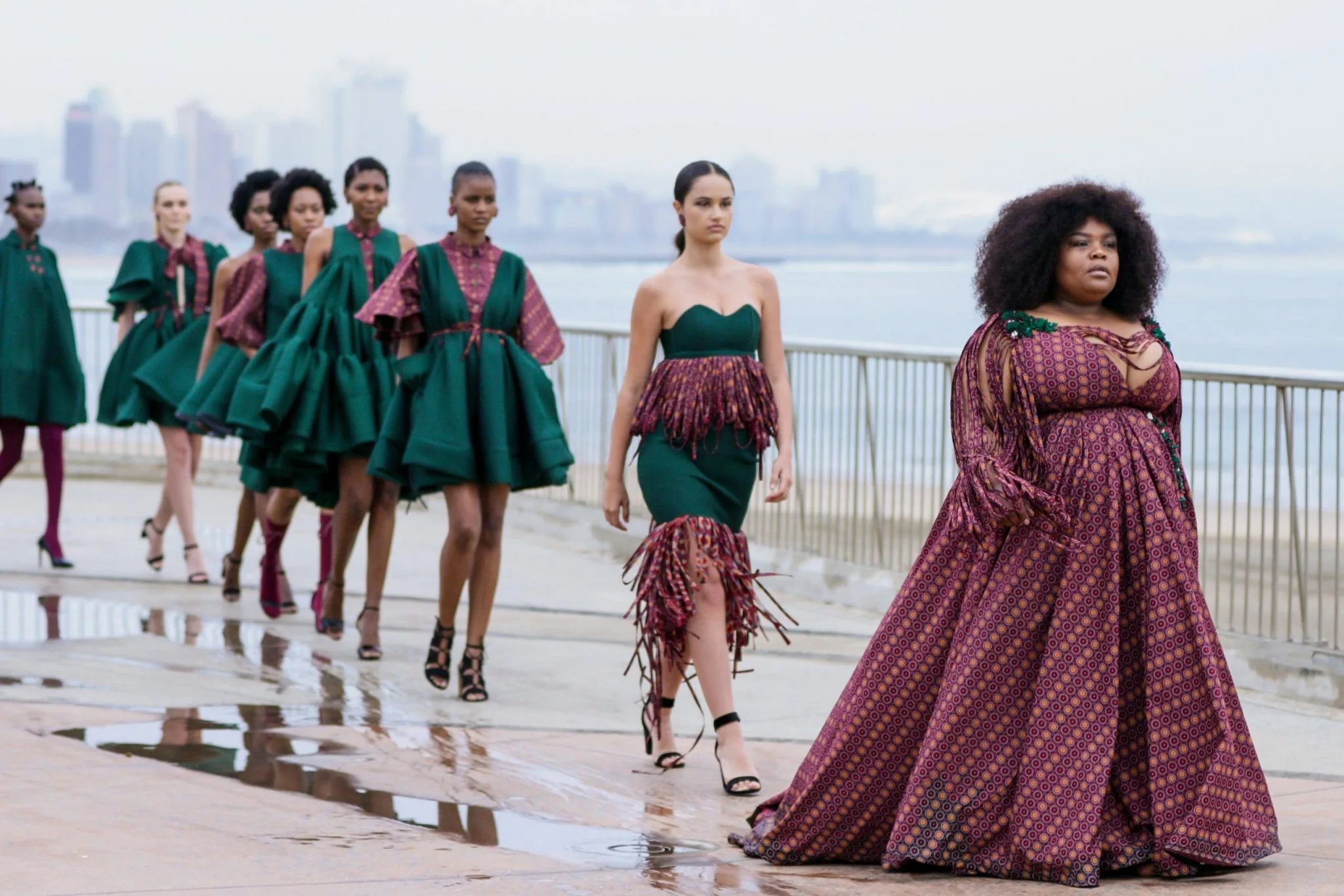
At the foot of a towering baobab tree outside Senegal’s capital Dakar on Saturday, cameras flashed in the waning dusklight as 20-year old Najeebah Samuel strode down the catwalk to zealous applause. Born with cerebral palsy, Samuel, 20, was the first of two dozen models of all shapes and sizes to take the runway at Dakar’s 19th annual Fashion Week event, held at the weekend with the dual themes of inclusiveness and sustainability.

At the foot of a towering baobab tree outside Senegal’s capital Dakar on Saturday, cameras flashed in the waning dusklight as 20-year old Najeebah Samuel strode down the catwalk to zealous applause.

Born with cerebral palsy, Samuel, 20, was the first of two dozen models of all shapes and sizes to take the runway at Dakar’s 19th annual Fashion Week event, held at the weekend with the dual themes of inclusiveness and sustainability. “I want to prove to other disabled kids that you’re not your disability – you’re just you,” Samuel said, wearing an orange and blue dress by Fashion Week founder Adama Ndiaye. “You have to come out and show people who you are.”

Featuring designers from across Africa, the Dakar Fashion Week is one of the continent’s longest-running fashion exhibitions. Forced outdoors to abide by COVID-19 restrictions last year, the organizers of this edition chose to return to the baobab forest to remind attendees of the fashion world’s responsibility to operate in a sustainable way.

Textile production generates 1.2 billion tonnes of carbon emissions annually, and if current rates continue, the industry could account for more than a quarter of global emissions by 2050, according to a 2015 study from the Ellen MacArthur Foundation. Known by her brand name Adama Paris, Ndiaye, who also created the first Black Fashion Week show in the French capital, routinely attaches progressive themes to Senegal’s marquee fashion event.

She sets high minimum quotas for female designers and once banned models using skin depigmentation cream to promote self-acceptance. She chose inclusiveness as one of this year’s themes to contrast the often rigid beauty standards of Western fashion. “I don’t want to live with fashion as the European diktat tells us to,” Ndiaye said. “I want women who represent so many different things, more than just bodies.”

(This story has not been edited by Devdiscourse staff and is auto-generated from a syndicated feed.)

Content courtesy of Devdiscourse & NFH Digital Team

Davido, One Of Africa’s Most Successful Artists, Joins Puma As A Global Brand Ambassador

Herzogenaurach, Germany, December 17, 2021 – Sports company PUMA has signed a long-term agreement with Davido, one of Africa’s most successful music artists, underscoring the company’s commitment to the rapidly growing African market.

https://www.instagram.com/p/CXl6xpxo-Us/?utm_source=ig_embed

With more than 20 million followers on social media and four successful albums to his name, Davido has become a cultural ambassador for his native Nigeria as well as a prominent voice of human rights on the continent.

“We could not be more excited to welcome Davido to the PUMA family!” said Johan Kuhlo, PUMA’s General Manager EEMEA Distribution. “Throughout our history, PUMA has had strong roots in Africa, football, and beyond. Signing Davido is both a clear commitment to Africa as a key market and a sign that African culture is becoming more and more relevant globally”.

https://www.instagram.com/tv/CXli3r2oIl2/?utm_source=ig_web_copy_link

After today’s announcement, Davido will act as a brand ambassador for PUMA in sub-Saharan Africa, North America, and across the world. He will wear PUMA’s Sportstyle collections, including the company’s iconic T7 tracksuits. As an avid sports fan, Davido will also don the company’s Basketball and Football styles. “Growing up, I saw PUMA play an important part in African sports, sponsoring many different football federations”, said Davido.

https://www.instagram.com/p/CYE24Czrt2r/?utm_source=ig_embed

“I also saw the kind of family PUMA had built with the likes of Usain Bolt, Maradona, Neymar, Jay Z, Nipsey, Rihanna, Lewis Hamilton among other superstars and I thought, that’s an amazing family to be a part of! All these contribute to my excitement to collaborate with this brand and take it to the next level in Nigeria, Africa as well as with fans across the world.”

Media Contact:
Robert-Jan Bartunek, Team head Corporate Communications;
Email: robert.bartunek@puma.com

Content courtesy of Puma & NFH Digital Team 

Six Finalists Announced for 2021 Tommy Hilfiger Fashion Frontier Challenge

The global program, which aims to support entrepreneurial start-up and scale-up stage businesses that develop solutions that make a positive social impact on the fashion landscape, received over 430 applications for its third edition.

Applications opened in January and following a multi-step year-long process, applications were thoroughly reviewed by internal and external experts based on a dedicated set of criteria including potential social impact and market growth.

https://www.instagram.com/p/CXTzn03IqO0/?utm_source=ig_embed

The six finalists have been announced for the third edition of the Tommy Hilfiger Fashion Frontier Challenge.

The challenge aims to amplify and support Black, Indigenous, and people of color (BIPOC) entrepreneurs who are “working to advance their communities, while fostering a more inclusive future of fashion”.

Over 430 applications were made by global startups and scale-ups, before being narrowed down by a dedicated set of criteria including potential social impact and market growth.

The six finalists are:

1. Clothes to Good: A South African-based social enterprise that creates micro-business opportunities and jobs for people with disabilities and their families, especially mothers, through textile recycling.

2. Haelixa: A Switzerland-based product traceability technology that aims to accelerate the global transition to transparent consumer goods supply chains.

3. Mafi Mafi: An Ethiopia-based sustainable fashion brand that crafts ready-to-wear collections, preserving ancient traditions and empowering marginalized artisans.

4. Lalaland: A Netherlands-based platform that uses artificial intelligence to generate customized and inclusive synthetic models of different ethnicities, ages, and sizes, all with over 35 pose variations.

5. Soko: A Kenya-based jewelry business that uses mobile technology to connect marginalized Kenyan artisans directly to the global marketplace via a mobile platform.

6. Uzuri K&Y: A Rwandan-based eco-friendly shoe brand that uses recycled car tires from sub-Saharan Africa and employs local youth, equipping them with skills and economic independence.

https://www.instagram.com/p/CWuqcDjouLi/?utm_source=ig_embed

Next, the six finalists will pitch their business ideas to a jury panel consisting of business and sustainability leaders at the virtual global Tommy Hilfiger Fashion Frontier Challenge final event on January 12-13, 2022.

The jury will award €200,000 to be split between two chosen winners in order to support their ventures. The winners will also receive a year-long mentorship with both Tommy Hilfiger and INSEAD experts, as well as a place in the INSEAD Social Entrepreneurship Program (ISEP). An additional €15,000 will be awarded to the finalist who Tommy Hilfiger associates select as their ‘Audience Favorite’ vote.

An additional 15,000 euros will be awarded to the ‘Audience Favorite’ finalist.

https://www.instagram.com/p/CRRVfRiJ-Oa/?utm_source=ig_embed


“As key players in the fashion industry, it is our responsibility to support, empower and encourage inclusivity. The Tommy Hilfiger Fashion Frontier Challenge is a testament of our commitment to make a meaningful and lasting contribution towards a better fashion industry,” said Martijn Hagman, CEO, Tommy Hilfiger Global, and PVH Europe.

“It is in our nature to drive change, even in the most challenging of times. We are proud to continue amplifying the ideas of entrepreneurs that are creating the fashion landscape we want, and need, to see.”

Content courtesy of Fashion Network & NFH Digital Team

BAFA Buy Black Bazaar Affords Alternative to Traditional Black Friday

This year’s Black Friday saw many shoppers return to stores in person, but the social-justice group Black Allies for Our Advancement hosted an alternative event in Los Angeles’ Leimert Park neighborhood on November. 26 to encourage patronage of Black-owned businesses.

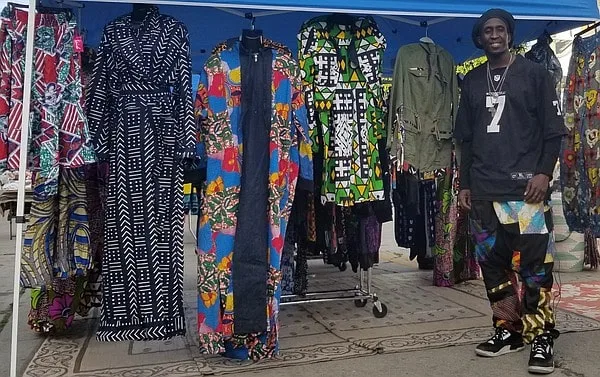
The event hosted California vendors who were organized on Degnan Boulevard with businesses such as Dekonchko Mullings’s Love Smells Good beauty and wellness goods, African beads by Zahra Import, and Wolofwear, which is West African clothing with a modern twist presented by Buna Diagne.

Originally from Senegal, Diagne’s wife, who is formerly of South Central Los Angeles, moved to the West African country where she now designs Wolofwear clothing and enlists the skill of local artists and tailors to manufacture pieces. Featuring African wax fabric, the pieces are colorful with silhouettes in dresses, jumpsuits, and skirts.

By selling the goods during the Leimert Park African market on Sundays from 10 a.m.-7 p.m. and taking advantage of events such as BAFA’s Buy Black Bazaar, Diagne hopes to support the local community and the artists back in Senegal.

“We have people working for us. Our tailor was able to move his family into a better house in a better neighborhood,” Diagne said. “We are supporting at least 10 people back home. We are making sure we are supporting people back home in the motherland and we are making sure we are giving African Americans a way to express themselves through clothing.”

In addition to the vendors who were selling through temporary spaces, the permanent shops that lined the street such as Eso Won Books, Neighbors Skate Shop, and Sole Folks also welcomed the message that was being spread by the Buy Black Bazaar.

At Sole Folks, a cooperative that sells goods such as clothing, wellness items, and home pieces affords a place for Black creatives to cultivate their businesses and grow their entrepreneurial mindsets. In addition to the retail services, the location houses Kicks B Clean a sneaker, hat, and bag restoration business, a design lab where members of the cooperative create their work, and an art space across the street, which includes sewing classes.

“Because the area, Leimert Park is a very sacred and special place for the community, it really is called a ‘village,'” said Himyo Green, program director of Sole Folks and founder of the brand Humans Expressing Compassionate Action, which is also known as HECA.

“To be able to have a space and a place to amplify the wonderful cohesion and welcoming ness that we create in this village is paramount to be able to allow us to exist in a happy space and create environments that are welcoming inviting and uplifting.”

Content courtesy of Apparel In News 


Durban Fashion Fair Celebrates 10 Years In The Fashion Industry

Next week from December 15 to 17, Durban Fashion Fair (DFF) is hosting the 10th annual DFF fashion show at the Durban Exhibition Centre.

Reflecting on 10 years of growth in the local fashion industry, DFF will present 12 shows held over three days where established and emerging designers will be showcasing their talents under the theme ‘Reflections’.
eThekwini Mayor Councillor Mxolisi Kaunda says the ten-year mark is an important milestone to reflect on the achievements made over the past decade.

“Not only are we able to look back on the many achievements made over the past decade, but we can also celebrate the platforms that we have created for emerging designers.

“The DFF has and will continue to provide an important platform for talent and skills development. It has already played an important role in building the Durban fashion industry, which has helped us to grow the economy and create jobs,” he says.

Some of the DFF achievements include Mxolisi Luke Mkhize from House of Saint Luke, who has gone from his first showing as a DFF mentee to showcasing his designs in Africa. Meanwhile, Eli Ball from Made in Africa has wowed fashionistas on runways in Paris.
Again, this year, four DFF mentees became the first-ever South African designers to team up with Mr. Price Sport to design Team SA’s opening ceremony outfits for the Tokyo 2020 Olympic Games.

Content courtesy of IOL 

African Fashion Brings Beauty and Glamour to Niger

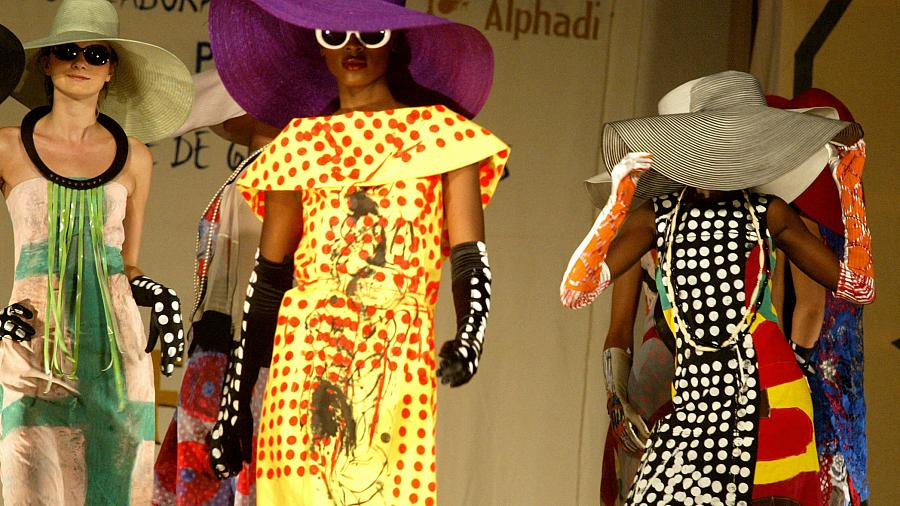
For five days the capital of Niger vibrated in glamour and beauty as the International Festival of African Fashion, FIMA, held its 13th edition, about fifty top models and thirty fashion designers showcased clothes, accessories, and jewelry from all over Africa.

Alphadi, the founder of FIMA has always given a very important place to young people in the fashion industry, founded in 1998, almost half of the program of this event is dedicated to young African talent.

Dozens of designers took part in the young designers’ competition, Sun Alejandro, a Rwandan designer based in Gabon, was inspired by the diversity of the Bantu culture – the population of Central and Southern Africa.

“This collection is a little bit of tribal code because I love Bantu culture which I find very rich. That’s why we find panther prints on most of these clothes which is an animal very representative of Gabonese culture and which symbolizes strength”, said designer Sun Alejandro.

The Top Model contest is always eagerly awaited by the public, about twenty young men and women participated in the contest, the event represented an opportunity for beginners like Erudie Deberry from Benin who amazed the public.

“Winning to honor my country, I am also very proud, winning to go to other countries and travel, winning to further develop my career, winning for me first and also for my country, that’s it”, she said.

The public of Niger, a predominantly Muslim country, is very tolerant of other African cultures where the female body is widely shown.

The designers of Niger however remain very attached to the culture of Islam like sisters Adama and Aicha Seyni Seydou, creators of the brand Mam’Mode.

“The female body is something very precious, it’s a treasure in fact. Through our clothes, we try to highlight this body and at the same time respect the local culture”, explained the sisters.

FIMA will come back to Niger in full splendor as usual in 2 years.

Content courtesy of African News  & NFH Digital Team 

Mbabazi House of Style

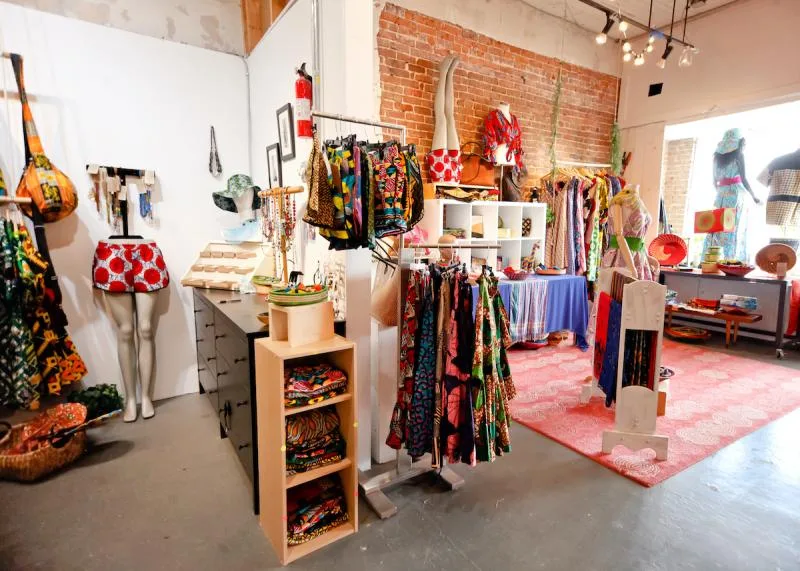
Mbabazi (House of Style) is a Fair Trade business committed to advocating  African designs through modern fashion and quality products. We are committed to training and employing women and men providing them with opportunities to make a fair living. Mbabazi has 12 permanent employees, 4 trainees (apprentices), and 6 part-timers.

https://www.instagram.com/reel/CS4l0UwArgi/?utm_source=ig_embed

Mbabazi (House of Style) was founded in 2005, by Grace Byeitima, the name is in honor of her single mother, (Mbabazi Loy Rujumba), to appreciate her for the skills she taught her at an early age and teaching her the value of hard work.

At an early age, Grace remembers her mother saying, ”With the proper skills and hard work, you can succeed in life.” This is the backbone for Grace in the creation of a thriving fashion business – a business that inspires her mother, siblings, countless others and provides revenue for hardworking women and men.

The same heart and soul that fashions a successful shop and workshop in Uganda now exists in Memphis where Grace has resided since 2014. With her own elegance and design refinery, Grace merges the fabrics and prints of African tradition into new modern statements of style.

In 2007 Grace invited her mother so they could work together. Loy now heads the production department sharing her 30+ years of experience with our tailors and trainees in Uganda. Without her, Mbabazi would be non-existent.

Mbabazi is not just about clothing, the accessories and non-clothing-related items reflect ideas that inspire Grace and add to the ideas of a House of Style.

Mbabazi has thrived in Uganda, despite issues that exist in competitive business markets of developing nations.

Many well-meaning non-profit organizations who compete in the same market as traditional businesses such as Mbabazi are supported by subsidies and grants that create an uneven playing field. We at Mbabazi believe the saying “TRADE NOT AID” describes the best way forward for Economies in countries such as Uganda.

Mbabazi is a for-profit business that is supported by people like you.

Content courtesy of Mbabazi House of Style & NFH Digital Team 

Mbabazi House of Style Kampala is a Testament to one Woman’s Passion for Fashion and Empowerment

There was a time when Grace Byeitima, owner of Mbabazi House of Style, was interested in lawyering, not pattern layouts, But her mother forced her to learn about the latter.

“I wanted to be a lawyer,” said Byeitima, who is from Kampala, Uganda. “My mother was a teacher in a vocational training institute, and she made me go where she was teaching and learn how to sew.

“I went grudgingly, but I went anyway.” Yet today Byeitima, 43, who has sold African-inspired garments, jewelry, and other knickknacks from her shop in the Broad Avenue Arts District since 2017, is grateful that her mother insisted that she learn how to sew.

That’s because it not only has allowed her to craft a life of independence for

“I would make sure that I left school on time to work on it [patchwork clothing] so that I could use the sewing machine first.”

But when her mother was ultimately laid off from her job, that dashed Byeitima’s hopes of attending college and studying law. On top of that, Byeitima, who was 16, learned that she was pregnant.

herself but for other women who want to use entrepreneurship to escape jobs that devalue them.

This is what Byeitima aimed to do back in Kampala, she said one of the ways that her mother endeared her to sewing was by bringing home unfinished sewing work – and paying her and her siblings to finish it.

“Some of the pieces, like what you’re seeing right now, is patchwork,” said Byeitima, as she pointed to ruby, saffron, and black cowl neck shift that she was wearing.

“So, I have this baby, my mom has no job, and I have this baby to take care of,” she said, It wasn’t long before Byeitima learned that she was more a target for exploitation than employment.

“I realized no one would hire you if you have a lot of baggage, and I had a baby,” she said. “The simple jobs I could have gotten would have been as a secretary or a receptionist. But you’d go to apply for these jobs, and men would want to sleep with you.”

“As I looked for jobs, I found that people don’t want to pay you what you’re worth…” But soon, Byeitima began crafting a way out.

Literally.

She began sewing garments for her baby daughter and taking the child from store to store to model them. That helped her land a year’s apprenticeship at a textile workshop that one of her mother’s former bosses owned.

“That’s where I learned actually most of what I know now, like pattern cutting and drafting and all of that,” Byeitima said.

In the meantime, she said, her mother opened a bridal shop, and together, they opened Mbabazi House of Style – Mbabazi means grace or kindness in Ugandan – in Kampala in 2005.

Mbabazi is also Byeitima’s mother’s name – Mbabazi Loy Rujumba.

“The business was thriving, because I was making African print cool for younger generations,” Byeitima said. “I was working for a lot of the embassies, doing a lot of their furnishings and everything else. We were known in the ex-pat community for doing really creative work…”

Yet Byeitima was doing more than making money. She was trying to help other women make a better way for themselves.

“We began training women in sewing skills and offering them jobs. I still work with my mom on that,” she said.

“It grew into something bigger than just me…no girl with skills should have to beg for a job if they can work for themselves, and no girl should be compromised [sexually] to get a job…

“I started it for me, to look out for myself and my baby, but then it evolved into a social business as well.”

Change continued for Byeitima.

In 2011, she met John Haley, a Memphian who was working for a Non-Governmental Organization – organizations that provide services or push for policies but are unaffiliated with any government – in Uganda. They married in 2014, and she moved with him to Memphis.

“I never dreamt of being in another country, but I knew I would fall in love with Memphis,” Byeitima said. “The trees, my God, there were so many trees…I’m from Africa, and when we see trees it’s in the forest

“I just fell in love with the city…we went to a concert at Levitt Shell, and I have never seen so many people in one place just enjoying music. And I love music.”

Byeitima fell in love with Broad Avenue after her mother-in-law took her there. That’s when she began to get ideas for a store there.

But not without the urging of her mother.

“My mom was like: ‘You’ve been in the U.S. since 2014 and you haven’t opened a store?’ I was like, ‘This woman is crazy. She thinks this is easy…”

So, Byeitima did what she learned how to do when she took her baby from shop to shop in Kampala to show her designs.

Content courtesy of Commercial Appeal & Nairobi Fashion Hub 

Naomi Campbell Celebrates Nigerian Fashion At A Runway Show In Dubai

DUBAI: British supermodel Naomi Campbell hit the runway in Dubai on Saturday as part of Arise Fashion Week, which celebrated the best of Nigerian fashion and music.

The event took place at Armani Hotel Dubai, against the backdrop of the glittering Burj Khalifa, Fashion labels such as Hudayya, Banke Kuku, and Odio Mimonet, showcased their latest collections, while singer Akon and rapper D’Banj performed for the crowd, Campbell modeled a series of vibrant looks, including a deep blue jumpsuit, patterned tunic, and floral printed suit.

Lagos is usually the home for Arise Fashion Week but there was a slight difference this year. As part of Nigeria’s Day at the ongoing Dubai Expo 2020, the show was transported to the tourist’s playground, alongside a bevy of Nigerian designers and their muses, who showcased their latest collections in front of the socially-distanced audience.

Set on Friday at the center of Dubai downtown in Armani Hotels, where the iconic Burj Khalifa is standing tall, the show started at 9 pm and ended at 11:30 pm. In the space of 2-hours and 30 minutes, guests were treated to a spectacular display of fashion created by some of Nigeria’s most celebrated designers, which includes Lisa Folawiyo, Ituen Basi, Keneth Ize, Huddaya, Odio Mimonet, Lanre Da Silva, Tzar Studios, Onalaja, Banke Kuku, Tj Who, and others.

Opening the one-night show was none other than Naomi Campbell who stomped the catwalk wearing a stunning design by Abuja-based label, Huddaya. As the original supermodel that she is, Naomi wowed the audience as she sashayed down the runway in a royal blue number.

The look comprised of a robe dress and pants which the British supermodel teamed with a pair of peep-toe heel sandals. Her long, straight hair also made a remarkable addition to the entire look as it continued to swing left and right.

She also walked for Banke Kuku wearing a beautiful lounge dress from the brand, as well as Keneth Ize’s patterned dress, There was also an exciting music performance by Wizkid who charged the audience to Afropop and Afrobeat music.

Speaking about the show, the Minister of Industry, Trade, and Investment, Otunba Niyi Adebayo, who represented the Nigerian president, said by hosting AFW in Dubai, the organizers were showcasing Nigerian fashion to the world.

“I’m very glad to be here to witness another landmark achievement for the country: the first ARISE Fashion Week in Dubai. A city described as the Jewel of the Middle East where the best of Nigeria’s fashion and entertainment have come out in full force to celebrate our great country on this day that marks Nigeria’s Day at the Dubai Expo 2020,” Adebayo said in a statement.

Content courtesy of NFH Digital Team 

Mercedes-Benz Unveils the Virgil Abloh-Designed Project Maybach Show Car at Art Basel Miami Beach

Mercedes-Benz is honoring Virgil Abloh by sharing its final collaboration with a late design visionary, The striking vehicle the late designer’s second collaboration with the automaker is a battery-powered two-seater.

The German automaker unveiled Project Maybach, a zero-emission show car dreamt up by Abloh, at Art Basel Miami Beach on Wednesday, just days after his death at the age of 41 following a private battle with cancer. The striking vehicle is the second collaboration with the brand, following the G-Wagen race car, which is a battery-powered two-seater designed to tackle the great outdoors.

First announced in October, Project Maybach is a true concept vehicle unlikely to ever go into production. That doesn’t make it any less intriguing, though. Abloh worked directly with Mercedes design boss Gorden Wagener on the commanding grand tourer, which manages to look futuristic while still drawing on the automaker’s past.

The gold and gloss black coupé span nearly 20 feet from front to back. Much of that impressive length comes courtesy of a gargantuan nose lined with integrated solar cells. As you would expect, Maybach’s trademark barred grille headlines the front, alongside an array of safari-style lights. Moving back, a sloped and transparent roofline blend into a rear end that looks like the back of a spaceship. Atop the car is a roof rack fitted with similar lights to those on the front fascia.

Abloh’s influence can also be felt inside the car. Done up almost entirely in tan leather, matching the exterior, the spartan setup looks more like the bridge of the Starship Enterprise than the cabin of a car. Abloh and Wagener may have gone for a minimalist approach, but they still found room for a cinematic infotainment screen situated in the center of the dashboard. From the pictures, it appears the screen might even fold back into the dash when not in use.

Project Maybach was always supposed to debut this week, but at Abloh’s family behest the vehicle will now be exhibited for more people than initially planned. Originally, the car was set to be unveiled during an intimate press gathering, but it will now be displayed to the public at the Rubell Museum until Thursday evening.

“Mercedes-Benz is devastated to hear of the passing of Virgil Abloh,” the marque said in a statement on Wednesday. “Our sincere thoughts are with Virgil’s family and teams. Now opening the world of our collaboration, and Virgil’s unique vision, to the public, we want to respectfully celebrate the work of a truly unique design talent, who created endless possibilities for collaboration through his unbridled imagination and inspired all that knew his work.”

The Project Maybach unveiling is just one of what are sure to be many tributes to Abloh during Art Basel Miami. On Tuesday, Louis Vuitton dedicated its Spring Summer 2022 show to his life and legacy. Abloh had worked at the fashion house since 2018 when he became the first Black artistic director of a major French luxury label.

Content courtesy of Robb Report & Nairobi Fashion Hub 

Glamorous Fashion Show: Tribal Chic 2021 A Different World

Tribal Chic 2021

Nairobi’s most anticipated annual fashion event- Tribal Chic is back after a pandemic-induced hiatus. On December 4th, fashion enthusiasts will converge at the luxurious Tribe Hotel to celebrate the 11th edition of this glamorous fashion show.

Tribal Chic fills the void as a prodigious fashion intermediary connecting the dots between exceptional creativity and culture. This year, the theme is ‘A Different World’. Concept creator for 2021 Alvaro Daza, a Colombian citizen currently based in Nairobi, Tribal Chic will present an experience that speaks about diversity and a new world under construction.

Alvaro has curated fashion shows across the globe and he promises his debut show in East Africa will be one for the books.

‘‘The Tribe runway will go through different spaces, using new and more sustainable elements like scaffolding structures with LED screen strips and lights that change videos and colors according to the moment of the night.’’

He added that the runway will consist of three different themes, A Different World, Sustainably Trendy and One Tribe is Back each with at least four designers.

This year, Tribe Hotel will be hosting a pop-up market where designers and partners will have a chance to sell and showcase their products and be part of experiential activities, such as styling tips and crypto artistic presentations.

A new concept for 2021 is Tribe Collabs that will bring together fashion & lifestyle influencers, young designers, people interested in fashion & experts to solve a challenge.

They will use new rooms at the hotel which will be adapted into workshops where 5 groups composed of 5 people (1 designer, 2 influencers, 3 community members ) will have the mission to create three Haute Couture pieces with conventional materials, which will be supported by Little Red.

Tribe Collabs will also introduce a short runway on Saturday 4th December during the day to judge creations; the winning team has the opportunity to showcase their creation on the main runway.

The designer roll call at Tribal Chic 2021 will carry fashion behemoths like Avido, Deepa Dosaja, Mercedes Campuzano, Hernán Zajar, and Anyango Adeyde.

Tribal Chic 2021 will emphasize sustainable fashion and proceeds from this year will be donated to Ghetto Classics and their subsidiaries across the country.

Deepa Dosaja
Deepa believes in a sustainable fashion. Her label is focused on using natural fabrics and abstinence from using any harmful or environmentally unfriendly products. Furthermore, Deepa makes both measure service as well as off the rack collections to her clients.

She takes pride in amazing customer service and high-quality clothing.

David Avido
David is the founder of Lookslike Avido clothing brand. This is a street-made fashion brand of handcrafted clothes created in Kibra. David’s work speaks for him and he has worked with celebrities such as Don Carlos, G Money, Kelissa, Koffee, Etana, Naiboi, Chronixx, Nasty C, Talia Oyando, Fena Gitu, Ty Dolla Sign, Cecile, Bankslave, Bruno Mars, Hon Kenneth Okoth, Everton Blender and many more.

Anyango Adeyde
Anyango is a self-taught jewelry designer and the founder of Zanta Adeyde Accessories. Her unique creations use bones, beads, brass, and stones. Without a doubt, Zanta Adeyde’s beautiful designs ooze class, style, and creativity.

Kawira Mirero
The Mambo Pambo proprietor seeks to change the way people view and experience locally made clothes by offering high-quality, beautifully crafted, and well-fitting afro-inspired apparel. This clothing line sells bespoke and ready-to-wear apparel curated to cater to individual fashion needs.

Onyango Peggy
Onyango Peggy AKA Peggie O is an expert at luxury gowns and stylish casual wear. Her brand is versatile, all-season, and promotes the use of garments and raw materials sourced from Africa.

Randy Gowon
Fashionprenuer, model and stylist Randy Gowon leads Amu Clothing. Amu is the Arabic word for Lamu. The brand crafts effortless textiles and garments with combinations of softness and structure designed for comfort. Amu focuses on minimalist design, flowing and calm designs, and coastal color palates.

https://www.instagram.com/p/CR6Mnd2l8W6/?utm_source=ig_embed

Hekaya
Fashion designer and content creator Hali Oduor partnered with Women’s clothing brand Hekaya. The brand is created to inspire young women through neutral versatile and bespoke pieces.

Hekaya, which means ‘fable‘ in Swahili, strives to tell a story through fashion

Enanai
Enanai means ‘softness’ and ‘gentleness’ in Maasai. The brand is designed to flaunt the style and sophistication of leather.

Ikwetta

Ikwetta is a brand of leather bags and footwear handcrafted by Kenyan artisans with a focus on sustainability. they believe in crafting pieces that are luxurious and timeless so they can be worn for years, even decades to come. To ensure this, Ikwetta sources only the finest materials from ethical factories.

Ikwetta on the other hand is a sustainable and handcrafted footwear brand. The gender-neutral collection has sandals, sneakers, boots, and much more.

Itikadi

Itikadi, meaning ‘traditions’ in Swahili, is a women’s and men’s contemporary apparel brand. The 3 brands will work together to make a high-quality and beautiful collection of kimonos, flats, bags, and other wardrobes

Itikadi is a Nairobi-based fashion brand with a contemporary style inspired by culture and art. With our women’s line, the brand seeks to blur the lines between femininity and strength always focusing on the Itikadi woman’s ability to embrace who they are with no apologies. Every collection tells a story that touches on the different aspects that make the Itikadi woman.

With our men’s line, it’s all about the raw aspects of manhood that are reflected in the customer of our bespoke suits and the different designs of our ready-to-wear items. This new man is rooted in the knowledge of his core purpose. That’s the Itikadi Man the brand seeks to release.

Mercedes Campuzano
Columbian designer Mercedes’ love for fashion is not a secret. Her looks iconic looks are packed with neutral tones, loose pants, flowy fabrics, clothing linen, and cotton, mostly white, beige, or earth colors. Her brand owns 14 stores, more than 30 corners in the main stores in Colombia and the world, presence in 8 market places with sales internationally in the US, Canada, Mexico, Panama, and Costa Rica. essentials.

Niku Singh
Yet another jewelry designer, Niku’s brand caters for the bold. His fearless creations have made him one of Kenya’s most sought-after jewelry designers. As a matter of fact, Niku has showcased in many local and international fashion shows some of which include London Fashion Week 2009 and Merc Benz Fashion Week 2014. His accessories use brass, aluminum & semi-precious stones.

Hernán Zajar
Hernán Zajar is one of Columbia’s finest fashion designers. He has designed for and dressed Columbian National Contest candidates for over 15 years. His stupendous fashion work has earned him opportunities to dress celebrities such as Claudia Schiffer, Joan Collins, Yvanna Trump, Jennifer López, and Former Miss Universe, Mpula Kwelagobe among others.

Content courtesy of Tribe & Nairobi Fashion Hub 

Virgil Abloh, Off-White Founder and Louis Vuitton Menswear Artistic Director Dies at 41

Ambassador and Infiltrator

Virgil Ablo, The founder of the fashion company Off-White and menswear artistic director at Louis Vuitton died on Sunday following a private, two-year battle with cardiac angiosarcoma, a rare, aggressive form of cancer. He was 41.

Abloh’s death was first announced by his labels over social media.

“We are all shocked after this terrible news. Virgil was not only a genius designer, a visionary, he was also a man with a beautiful soul and great wisdom,” wrote LVMH CEO Bernard Arnault. “The LVMH family joins me in this moment of great sorrow, and we are all thinking of his loved ones after the passing of their husband, their father, their brother, or their friend.”

“We are devastated to announce the passing of our beloved Virgil Abloh, a fiercely devoted father, husband, son, brother, and friend,” reads a statement on Abloh’s official Instagram.

According to the statement, Abloh elected to keep his cancer private after being diagnosed in 2019, undergoing treatments while continuing to work as one of the fashion industry’s leading voices.

“Virgil was driven by his dedication to his craft and to his mission to open doors for others and create pathways for greater equality in art and design. He often said, ‘Everything I do is for the 17-year-old version of myself,’ believing deeply in the power of art to inspire future generations.”

Born to Ghanaian immigrant parents on Sept. 30, 1980, in Rockford, Ill., Abloh studied civil engineering at the University of Wisconsin-Madison, receiving a bachelor’s degree in 2002. He went on to earn a master’s degree in architecture from the Illinois Institute of Technology in 2006.

Following his education, Abloh met Kanye West, who would become one of his first major collaborators. In 2011, West named Abloh creative director of his company Donda. During his tenure, Abloh worked as artistic director on some of the most popular album art of the 21st century, including West’s “My Beautiful Dark Twisted Fantasy,” “Yeezus” and “Watch the Throne.” Abloh also created the covers for A$AP Rocky’s “LONG. LIVE. A$AP,” Lil Uzi Vert’s “Luv Is Rage 2,” Kid Cudi’s “Wzrd,” 2 Chainz’s “Based on a T.R.U. Story” and more.

Abloh founded the fashion house Off-White in 2012, serving as CEO until his death. His radical approach to clothing is highly responsible for the bridge between the worlds of streetwear and luxury fashion that has emerged over the past decade. Off-White launched Abloh to an even more prominent position on the global stage, attracting the attention of Louis Vuitton. The storied fashion house signed Abloh to serve as its menswear artistic director in 2018, a role he fulfilled through the remainder of his life. Abloh is the first African-American to head the house’s menswear line.

“The first thing I am going to do is define new codes,” Abloh told The New York Times following his appointment in 2018. “My muse has always been what people actually wear, and I am really excited to make a luxury version of that.”

Moët Hennessy Louis Vuitton bought a majority stake in Off-White last year. In July, Abloh took on a position at LVMH that allowed him to work across the group’s 75 brands, becoming the most powerful Black executive in the history of the premier luxury group.

Beyond fashion, Abloh was also well-known for his work as a DJ and furniture designer. He is survived by his wife Shannon Abloh, his children Lowe and Grey, his sister Edwina Abloh, his parents Nee and Eunice Abloh, and numerous friends and colleagues around the world.

Content courtesy of Variety & Nairobi Fashion Hub Digital Team 

Ad