Tuesday 28th of July 2026

Nairobi, Kenya

East Africa Textile And Leather Week (EATLW) 2023 Accelerating East Africa’s Sustainability In The Textile And Leather Industries

Nairobi, Kenya, Sarit Expo Center, Wed., June 28th–Fri., June 30th
With a projected market value of $31 billion in 2020, the fashion and textile business is Africa’s second-largest industry after agriculture. Growing annually, it has the capacity to produce millions of jobs across the continent, particularly for women and young people.
The eagerly awaited EAST AFRICA TEXTILE AND LEATHER WEEK (EATLW) 2023 edition is the most prestigious gathering venue for the home textile, leather accessories, and footwear sectors and is ready to revolutionize the East African textile industry.

Leading African and international decision-makers from all points along the fashion value chain will gather in June to assess upcoming trends and costs.

Key industry players and thought leaders are brought together by EATLW to have in-depth conversations, look into business opportunities, and see the incredible potential of the garment manufacturing industry in East Africa.

with an emphasis on innovation, craftsmanship, and sustainability. Three thousand five hundred wholesalers, retailers, chains, manufacturers, and dealers from East and Central Africa will attend the event along with 150 exhibitors from East Africa, the Middle East, and Asia.

Carvico Ethiopia Plc, Leather Masters Kenya, Starsewing Dubai, Desta Plc, and Josef Seibel are a few notable exhibitors. The three-day RUNWAY KENYA ready-to-wear fashion show will include clothing and accessory designers from all over East Africa, hosted by Couture Africa Magazine in partnership with Ajuma Limited.

The Ministry of Investment, Trade, and Industry, EPZA, The Leather Apex Society of Kenya, Ubunifu Association, Women in Business, and Fashion Agenda Africa are a few other significant partners.

The CEO of Trade & Fairs Consulting GmbH, Mr. Skander Negasi, said, “We are delighted to host East Africa Textile and Leather Week, a platform that highlights the rich tradition, craftsmanship, and tremendous promise of the East African textile and leather sector.
“EATLW is more than just a conference; it serves as a catalyst for the industry’s development, cooperation, and advancement. We cordially encourage all interested parties, international investors, and fashion fans to join us on this remarkable adventure.

Sarit Expo Center, Main Hall / Nairobi, Kenya
Daily 10.00 am – 6.00 pm EATLW Exhibition
Changes in program structure or exchange of speakers or referees remain reserved | www.eatlw.com

CONFERENCE PLAN
DAY 1 28th June 2023
9.00 am – 10.30 am Registration
11.00 am-noon Inauguration and opening ceremony
Principal Secretary, Department of Industry
Ministry of Investment, Trade and Industry
Exports Processing Zones Authority (EPZA)
1.00 pm – 2.00 pm LUNCH BREAK
2.00 pm – 2.45 pm A critical analysis of government policies and initiatives; Agenda to boost production and create employment in the leather and textile industries in the region
Speakers: EPZA
Ministry of Investment, Trade and Industry
3.00 pm – 4.00 pm BRAND IDENTITY AND SOURCING SME Dialog session: Establishing a brand name that speaks
to the market to enable scaling and enhancing the taking of large orders for international markets
Speakers: KENIVEST
Moderator: Ms. Grace Mbugua, CEO of Jeilo Collections and Chairperson, Ubunifu Association
5.00 pm – 6.00 pm Fashion Show
Runway Kenya by Couture Africa


CONFERENCE PLAN
DAY 2 29th June 2023
9.00 am – 10.00 am Registration
10.30 am – 11.15 am Women‘s economic empowerment in the textile, apparel, and leather industries: Strategies for
promoting gender equality and empowerment in the industry
Speakers: Women in Business
Caroline Ngumba – Program Manager Sustainable Manufacturing – Textiles & Apparel (IDH)
Catherine Ndungu – CE0, Design 365 / Ubunifu Association
11.30 am – 12.45 pm PRESENTATION Combating counterfeits in East Africa: A comprehensive approach to
enhancing local sourcing in the textile and apparel industry
Speakers: Anti-Counterfeit Authority EPZA
1.00 pm – 2.00 pm LUNCH BREAK
2.00 pm – 2.30 pm Opportunities in the leather, textile, and apparel industry: Financing and investment prospects for industry growth
Speakers: KenInvest KEPSA
2.45 pm – 3.30 pm The rise of African fashion: Sustainable textiles pioneers from East and Central Africa region
Speakers: Ms. Akinyi Odongo, OGW – President & Founder, Fashion Agenda Africa (FAA)
Ms. Aulgah Nato – International Multi Award Winning Fashion Designer
Moderator: Ms. Connie Aluoch – Award-Winning Stylist, Connie Aluoch Styling Management
3.45 pm – 4.20 pm Protecting intellectual property in the Textile and apparel industry: Strategies for
safeguarding designs, trademarks, and patents
Presentation: KIPI
4.20 pm – 5.00 pm Fashioning sustainability in design-led businesses: Systems for sustainability and the role of
diversity and Inclusivity in shaping wearable design
Speaker: EPZA
David Avido, Kibera Fashion Week
Olive Gachara
5.00 pm – 6.00 pm Fashion Show
Runway Kenya by Couture Africa


CONFERENCE PLAN
DAY 3 30th June 2023
9.00 am – 10.00 am Registration
10.30 am – 11.15 am Leveraging government support and exploring new markets to promote growth and
competitiveness in the East African leather sector
Speakers: Leather Apex Society of Kenya
Ministry of Livestock
11.30 am – 12.45 pm PRESENTATION Strategies towards overcoming challenges such as high investment costs
and the need for incentives to attract investment in the leather industry
Speaker: Leather Apex Society of Kenya
1.00 pm – 2.00 pm LUNCH BREAK
2.00 pm – 2.45 pm Panel Discussion by Couture Africa
3.00 pm – 5.00 pm Fashion Show Mega Final
Runway Kenya by Couture Africa

Kenya’s Textile And Apparel Sector
The nation’s current textile and clothing businesses create a wide range of goods.
While integrated mills provide a wide range of goods such as yarn, fabrics (knitted and woven), canvas, school and travel bags, blankets, sweaters, shawls, uniforms, towels, baby diapers, and knitted clothing, spinning enterprises generate yarn (including industrial) and sewing thread. On the other hand, garment producers provide a variety of clothing for both the domestic market and export.
Men’s apparel is produced by about 46% of the garment factories, while the remainder makes woven chemise and robes, slacks, Kaunda suits (for men), and knitted, and woven clothing.
Investments in cotton farming, cotton ginning, spinning, weaving, as well as the manufacturing of clothing and other goods, are guaranteed to have ready access to local, regional, and global markets. Kenya offers advantageous production incentives and enticing investment incentives.

Only 15 of Kenya’s 52 textile mills are now in operation, and they only use less than 45% of their total capacity. In Kenya, there are thousands of clothing businesses. There are over 170 middle and big businesses and over 74,000 small and micro businesses.
The Export Processing Zones are home to twenty-one businesses, each of which employs 1,800 people on average.

Content courtesy of Couture Africa, East Africa Textile And Leather Week & NFH


Africa’s Leading Luxury Concept Store Is Coming to the Brooklyn Museum

The Big Apple will soon be home to one of Africa’s most well-known shopping destinations.

The Brooklyn Museum will become home to Alára, a concept store with over 100 brands from Lagos, from June 23 through October 22. In collaboration with the museum, the upscale shop will debut as a component of the Africa Fashion at the Museum exhibition as a way to introduce New Yorkers to the fashion perspectives of Africa and the diaspora.
The exhibition, which was the biggest display of fashion and style from the continent when it first debuted to the public at the Victoria & Albert Museum in England, will also include some of the Alára brands.

Reni Folawiyo, an entrepreneur and tastemaker, established Alára in 2015.
The word “alára” means “wonderful performer, one who thrills endlessly” in Folawiyo’s native Yoruba language. Since opening, the store has provided the neighborhood with a wide range of initiatives, goods, and events. Today, it is regarded as a cornerstone of Lagos’s vibrant cultural scene, akin to Colette in Paris.
The Earthy Nigerian headquarters of the store, which includes several high-end luxury labels including Marni, Saint Laurent, Linda Farrow, and Comme des Garcons, was created by Ghanaian-British architect David Adjaye.
The shop also offers a variety of fashionable products from brands with strong ties to the African diaspora, like Kenneth Ize, Post Imperial, and Thebe Magugu.

Alára frequently organizes performances by Falana and Asa in addition to art shows including the works of artists like Hassan Hajjaj and Peju Layiwola. Even the iconic supermodel Naomi Campbell signed copies of The Art of Beauty there in 2018.

The Brooklyn Museum and Alára have not revealed what kinds of music, fashion, and design will be on display at the upscale retailer’s exhibition shop in New York City. But given its illustrious past and specially conceived Lagos shop floor, it might surpass your expectations.

This David Adjaye-designed lifestyle shop by businessman Reni Folawiyo is exceptional, just like its city of Lagos.
Adjaye states, “I wanted the space to function as something that would function as a new kind of cultural hub and destination for West Africa.” The venue would serve as a celebration of design skills.
With its geometric stamps, bi-chrome palette, and remarkable gravity, the building might appear at home anywhere along the artistic arc from Daikanyama in Tokyo to the Design District in Miami.
These objectives were realized in a spectacular façade and a worldly position.
However, Adjaye took care to ensure that every aspect of Alára’s graphic punch is infused with and supported by distinctively Lagosian characteristics.

The translucent screens gridding the entryway refer to the brises soleils of African modernist buildings, while the geometry of their patterns draws from Yoruban Adire fabrics. It unites the indigenous and contemporary architectural lineages of the city.

Along with local designers like Lanre da Silva Ajayi (wham-bam-glam eveningwear), Maki Oh (cool Brooklyn separates), and Lisa Folawiyo (sportswear), Folawiyo has filled Alára’s interior with international labels like Valentino, Alexander McQueen, and the Italian furniture line Moroso. She has also added a rooftop art gallery.
Adjaye comments on the shopping experience:

“Display platforms divide the area…
Visitors are encouraged to maneuver their way around the stock because of the cavernous interior and the triple-height ceiling volume.
Similar to Lagos, Alára’s main attraction might be precisely that: the thrill of exploration in a stunningly modern shrine to design and forerunner of Africa’s future.

Content courtesy Robb Report & NFH


Regi Reveals Stunning Chic Collection ‘Rebirth” With Eye-catching Photos!

Following the release of a sneak preview of their current collection to commemorate the brand’s rebirth, Nigerian womenswear label Regi has released more gorgeous images of the collection dubbed Rebirth.

“Rebirth can also mean; Renaissance, the emergence of something new, an awakening, a new era,” says designer Olufisayo Dayo-Oyelakin. Just a few words to express the emotion and creativity that goes into creating these ageless, adaptable, useful, and spontaneous creations. All of which are undeniably energizing, energizing, and stunningly appealing.

These pieces offer a preview of what the rebirth collection will include. Trust that it will be the perfect wardrobe refresh.”

The exquisitely crafted outfits have remarkable designs ranging from floral print corset tops with tie-back designs to rare but magnificent skirts to match. They are also available in a variety of colors.
REGI RTW’s latest fashion products are suitable for everyday wear and are ideal for women who value simplicity and comfort.

Content Courtesy of Designer: Rebirth by Regi & NFH


Nairobi’s Fashion Elite Dazzle at the Glamorous Fashion High Tea 2023

Fashion High Tea 2023: A Dazzling Celebration of Style, Charity, and Glamour, Nairobi’s fashion scene reached its pinnacle on Saturday, February 25th, as the highly anticipated Fashion High Tea 2023 unfolded at the serene and stylish Zen Garden. Despite the sweltering heat of February, the event lived up to its reputation as the city’s most glamorous, extravagant, and fashionable affair. A crowd composed of Nairobi’s most influential figures from fashion, media, politics, and entertainment gathered to sip on carefully curated drinks from gin and bubbles to whiskey and beer while savoring an assortment of gourmet snacks and sweet treats. But it wasn’t just the beverages and bites that made the event unforgettable; the fashion was, without question, the star of the show.

Fashion High Tea 2023: A Dazzling Celebration of Style, Charity, and GlamourNairobi's highly anticipated Fashion High Tea returned in dazzling style on Saturday, February 25th, transforming the Zen Garden into a haven of glamour, extravagance, and impeccable style.#nairobifashionhub #fashion

Nairobi Fashion Hub (@nairobifashionhub.bsky.social) 2025-02-19T12:05:20.643Z

The attendees, a dynamic mix of women and men, effortlessly showcased their style prowess. From bold, statement-making pieces to sophisticated, understated elegance, the guests understood the assignment each outfit a testament to the level of sophistication that has come to define Fashion High Tea year after year. The event provided the perfect platform for fashion lovers and industry professionals to mingle, forge new connections, and celebrate all things chic.

Created by the powerhouse duo, sisters Shivani and Payal Radia, the event has become a tradition that marks the start of Nairobi’s fashion calendar. As the co-founders of Zen Garden, the venue that hosted the event, and the masterminds behind Fashion High Tea, the Radia sisters have made it their mission to blend high fashion with a noble cause. This year’s gathering was no different, as the event stood as a fusion of luxury, philanthropy, and style.

More than just a fashion spectacle, the event seamlessly blends style with philanthropy, raising funds for worthy causes. This year, Fashion High Tea proudly supported the Kenya Women & Children’s Wellness Centre (KWCWC), an organization dedicated to supporting survivors of gender-based violence.

Nairobi Fashion Hub (@nairobifashionhub.bsky.social) 2025-02-19T12:13:10.610Z

A notable aspect of Fashion High Tea 2023 is its dedication to giving back. This year, proceeds from the event went to the Kenya Women & Children’s Wellness Centre (KWCWC), a pivotal organization committed to aiding survivors of gender-based violence. The KWCWC is currently working towards the construction of a Gender Violence Recovery Centre (GVRC) on a 10-acre plot of land near the Northern Bypass, behind USIU. In the interim, the center is actively engaging in sensitization programs and educational initiatives designed to raise awareness and build capacity within the Kasarani region. The efforts of KWCWC are vital, as they aim to provide support and healing for those affected by violence, while also fostering a deeper understanding of gender equality and justice in Kenya.

The event was a resounding success, not only as a style celebration but also as a powerful reminder of the role fashion plays in supporting meaningful social change. From start to finish, Fashion High Tea 2023 was a reminder that fashion is not only about what we wear, but about the causes we support and the communities we uplift.

The 2023 Fashion High Tea proved to be a resounding success, a testament to the Radia sisters' vision and the vibrant fashion scene in Nairobi.

Nairobi Fashion Hub (@nairobifashionhub.bsky.social) 2025-02-19T12:15:01.755Z

Content courtesy of NFH Digital Team

Fashion Industry

The fashion industry is a multibillion-dollar global sector focused on the production and retail of clothing. Some analysts make a distinction between the garment industry, which creates “mass fashion,” and the fashion industry, which creates “high fashion,” but by the 1970s, these distinctions were becoming less clear.
The simplest definition of fashion is the type(s) of clothing and accessories that individuals or groups of individuals choose to wear at any particular period.
The high-end designer clothes displayed on Parisian or New York City catwalks may not look the same as the mass-produced sportswear and streetwear found in global markets and malls.

The design, production, distribution, marketing, retailing, advertising, and promotion of all kinds of clothing (for men, women, and children) are all included in the fashion industry, from the most exclusive and pricey haute couture (literally, “high sewing”) to regular, everyday items like lingerie and sweatpants.
The more general term “fashion industries” is occasionally used to describe a wide range of businesses and services that serve millions of customers worldwide.
The contemporary era is what gave rise to the fashion business. Before the middle of the 19th century, almost all clothing was produced specifically for each person, either at home or on-demand from dressmakers and tailors.

With the development of new technologies like the sewing machine, the rise of global capitalism, the growth of the factory system of production, and the proliferation of retail establishments like department stores, clothing had increasingly come to be mass-produced in standard sizes and sold at fixed prices by the beginning of the 20th century.

Although the fashion business originated in Europe and America, it has now become a worldwide, highly globalized sector. Clothes are frequently created in one nation, produced in another, and then sold in a third.
For instance, a U.S.-based fashion brand may purchase fabric from China, have the garments made in Vietnam, have the finishing touches added in Italy, and then have the finished products delivered to a U.S. warehouse for distribution to retail stores abroad.

One of the biggest jobs in the United States for a long time and it still is in the twenty-first century is the fashion sector.
However, employment significantly decreased as production shifted more and more overseas, particularly to China.
A global production estimate of textiles and clothing is difficult to find because data on the fashion industry are normally reported for national economies and expressed in terms of the industry’s numerous distinct segments.
However, it is undeniable that the industry represents a considerable portion of global economic activity by any standard.

There are four layers to the fashion industry: the manufacturing of raw materials, primarily fibers and textiles but also leather and fur; the creation of fashion goods by designers, manufacturers, contractors, and others; retail sales; and various forms of advertising and marketing.

These levels are made up of a variety of distinct but interconnected sectors, all of which are committed to meeting customer demand for garments while preserving the ability of industry players to make a profit.

Key sectors of the fashion industry

1. Textile Design and Production
Textiles are used to create the majority of clothing. One of the early successes of the Industrial Revolution in the 18th century was the partial automation of the spinning and weaving of wool, cotton, and other natural fibers. These procedures are now carried out by highly automated, quick machinery.
Fabrics used in clothing are produced by a sizable portion of the textile industry.
Both natural fibers (such as wool, cotton, silk, and linen) and synthetic fibers (like nylon, acrylic, and polyester) are employed. The usage of eco-friendly fibers like hemp has increased as a result of a growing interest in sustainable fashion, sometimes known as “eco-fashion.”

High-tech synthetic fabrics may drain away moisture (like Coolmax), resist stains (like 303 High Tech Fabric Guard), retain or release body heat, and offer protection from fire, weapons (like Kevlar), cold (like Thinsulate), ultraviolet radiation (like Solarweave), and other dangers. Through the use of dyes, weaving, printing, and other manufacturing and finishing techniques, fabrics can be created with a broad variety of effects.
To design fabrics with colors, textures, and other attributes that anticipate customer desire, textile makers collaborate with fashion forecasters well before the clothes production cycle.

2. Fashion Design and Manufacturing
Few fashion designers, such as Coco Chanel or Calvin Klein, who produce exceptional high-fashion collections, whether couture or prêt-à-porter (“ready-to-wear”), have historically achieved fame as “name” designers.
Contrary to popular assumption, these designers have a significant impact on defining fashion trends, but they do not impose new trends; instead, they work to create clothing that will appeal to consumers.
The vast majority of designers work anonymously for manufacturers as members of design teams, transforming current trends into clothes that can be sold to regular people.

Designers are influenced by a variety of things, such as active sportswear, street styles, and costumes from movies and television.

For the majority of designers, computer-assisted design processes have supplanted or replaced more traditional design procedures like drawing sketches on paper and drapeing fabric on mannequins.
These enable designers to quickly alter the silhouette, fabric, trimmings, and other aspects of a suggested design and give them the opportunity to instantly discuss the proposed modifications with colleagues, whether they are in the same room as them or on a different continent.
Only a tiny fraction of designers and producers create cutting-edge high-fashion clothing.
Even fewer (primarily in Paris) manufacture haute couture. Most manufacturers create affordable or moderately priced clothing.
Most businesses depend on independently owned manufacturing companies or contractors to make the clothing according to the fashion company’s standards, however other businesses employ their own production facilities for some or all of the manufacturing process.

Manufacturers in the women’s clothing industry often create a number of product lines (collections) each year, which they then supply to retailers at specific times of the year.
Even more regularly, certain “fast fashion” producers release new products. Planning a line and creating the designs involves the entire product development team.
To show samples to retail purchasers, the materials (fabric, linings, buttons, etc.) must be located, ordered, and procured.
The transformation of the clothing design into a pattern that comes in a variety of sizes is a crucial step in the garment-making process. Patterns can’t just be consistently scaled up or down from a basic template because the human body’s proportions change as weight fluctuates.

A traditionally highly skilled occupation, pattern creation. Despite advancements in computer programming in the early 21st century, it is challenging to alter larger designs for every figure.

No of the size, the fabric is cut into the parts that will be connected to construct a garment according to the pattern, which may be written on paper or programmed as a set of computer instructions. Fabric is cut using computer-guided knives or powerful lasers that can cut multiple layers of fabric at once for all but the most expensive clothes.

The assembling of the garment is the next step in the manufacturing process. The advent of computer-guided machinery and other technological advancements led to the automation of several garment assembly processes in this area as well.
Nevertheless, stitching is still a labor-intensive operation at its core.

This puts unstoppable pressure on apparel manufacturers to locate their operations in low-wage areas where there are frequent problems with workplace safety and labor exploitation.
Up until the Triangle shirtwaist factory fire of 1911, which led to increased unionization and regulation of the industry in the United States, New York City’s fashion industry was dominated by sweatshops that were situated on the Lower East Side.

Due to its low labor costs and highly organized workforce, China became the world’s largest producer of clothes in the late 20th century.

Clothes that have been assembled go through a variety of steps known as “finishing.” These include the addition of ornamental components (beading, embroidery), buttons and buttonholes, hooks and eyes, snaps, zippers, and other fasteners; hems and cuffs; and brand-name labels and other labels (often legally required) specifying the fiber content, washing instructions, and country of manufacture. Following pressing, finished items are packaged for shipping.

Following World War II, importing nations severely restricted the trade in textiles and clothing by imposing quotas and tariffs. Beginning in the 1980s, these protectionist restrictions that were eventually unsuccessful in halting the transfer of the textile and apparel industry from high-wage to low-wage nations were gradually dropped.

Under the regulatory auspices of the World Trade Organization and other international regulatory bodies, they were replaced by a free-trade strategy that acknowledged the competitive advantage of low-wage countries as well as the advantage provided to consumers in rich countries by the availability of highly affordable clothing.

Production may now be tightly correlated to market conditions even over vast distances thanks to the development of containerization and reasonably priced air freight.
For commercial and statistical purposes, underwear and other accessories like shoes and purses are typically not included in the garment business, but they are nonetheless strongly related to it.

Similar to clothing, accessories come in a variety of price points, from high-end luxury goods to low-cost mass-produced goods.
Similar to clothing manufacturing, accessory production frequently occurs in low-wage areas.
High-end accessory manufacturers, particularly those that make handbags, face intense competition from knockoffs, which are frequently made in the same factories as the original products using subpar materials.

The introduction of containerization and reasonably priced air freight also made it possible for production to be closely correlated with market conditions even over vast distances.
The production and distribution of accessories like shoes and handbags as well as underwear are closely related to the fashion industry, despite the fact that they are typically not included in the clothes industry for trade and statistical purposes.
Similar to clothing, a wide range of products are made for accessories, from high-end luxury goods to low-cost mass-produced items. Similar to the manufacturing of clothing, accessory production frequently occurs in low-paying contexts.
High-end accessory manufacturers, notably those who make handbags, face stiff competition from knockoffs, or fake products that are sometimes made in the same facilities as the real thing but with subpar components.

Despite being forbidden by a number of international agreements, the trade in these knockoff goods is challenging to regulate. Name-brand producers lose hundreds of millions of dollars in revenue every year as a result.

3. Fashion Retailing, Marketing, and Merchandising
After the clothing has been created and produced, it must be sold.
However, how will clothing travel from the maker to the consumer? Retail refers to the industry of purchasing clothing from producers and selling it to consumers.
Three to six months prior to the buyer being able to purchase the clothing in-store, retailers make first purchases for resale.
Fashion marketing is the act of controlling the flow of merchandise with the aim of maximizing a company’s sales and profitability, from the initial selection of designs to be made to the display of products to retail buyers.
The understanding consumer desire and responding with the relevant products are essential for successful fashion marketing.

Marketers inform designers and producers about the kind and quantity of things to be created through sales tracking data, media attention, focus groups, and other methods of gathering consumer preferences. Therefore, marketers are in charge of determining the target market for a fashion company and reacting to their preferences.

Both the wholesale and retail levels of the market are active. Companies that don’t retail their own goods must sell those goods to retailers like boutiques, department stores, and online sales companies at wholesale costs.

To find a good fit between the clients of the store and the items of the manufacturer, they use fashion shows, catalogs, and a sales force equipped with samples of the products.

For businesses that do offer their own items at retail, product compatibility with their own consumer base is of utmost importance to marketers. Marketing includes promotional efforts including print and other media advertising at both the wholesale and retail levels with the goal of building brand awareness and reputation for various traits like quality, affordability, or trendiness.

Merchandising, which aims to increase sales and profitability by persuading customers to buy a company’s items, is closely tied to marketing.

Selling the correct product, at the right price, at the appropriate time and location, to the right customers is the definition of merchandising as it is commonly used.

Thus, fashion merchandisers must rely on marketers’ knowledge of consumer preferences when making decisions about things like stocking appropriate merchandise in sufficient but not excessive quantities, offering items for sale at enticing but still profitable prices, and marking down overstocked items. By using store windows, in-store displays, and special promotional activities, merchandisers can present their products in an appealing and approachable way.

Merchandising experts must be able to swiftly acquire new stocks of the desired product in order to meet spikes in demand.

An automatic order for a given quantity of clothes of a specific sort and size to be delivered in a matter of days can be sent to a production facility in Shanghai by inventory-tracking computer software in a department shop in London, for instance.

Early in the twenty-first century, the Internet had grown to be a significant retail outlet, posing new problems (such as the inability of customers to try on clothing before buying it, the need for facilities designed to handle clothing returns and exchanges), as well as providing merchandisers with new opportunities (e.g., the ability to provide customers with shopping opportunities 24 hours per day, affording access to rural customers).

Merchandising has become one of the pillars of the contemporary fashion business in an era of expanding shopping options for consumers and fierce price competition among stores.

4. Fashion Shows
In addition to merchants (such as fashion buyers), media (such as fashion journalists), and direct customers, fashion designers and manufacturers also market their products to the media.
Paris couture houses started allowing their clientele to examine the newest looks privately as early as the late 19th century.
Starting in the first decade of the 20th century, department stores and couture companies both frequently staged fashion shows with top models. Ready-to-wear designers in other nations started staging fashion presentations in the same way as Parisian couturiers did, for an audience that included buyers, journalists, and private clientele.

Fashion shows played a bigger part in the introduction of new designs in the late 20th and early 21st centuries as they evolved into elaborate theatrical events conducted in larger settings with elevated runways (“catwalks”) specially built for the models.
Fashion shows had become a regular fixture of the fashion calendar by the early twenty-first century.

The official syndicate of couture designers, which consists of the most upscale and expensive fashion houses, hosts two couture shows a year in Paris (in January and July). These shows feature clothing that might be ordered by potential customers but are frequently intended to display the designers’ opinions on current fashion trends and brand image.
Shows of ready-to-wear clothing,

During spring and fall “Fashion Weeks,” of which the most significant take place in Paris, Milan, New York, and London, separate presentations of both men’s and women’s clothing are held. On the other hand, there are dozens of different fashion weeks worldwide, from Tokyo to So Paolo.

These events, which are far more significant commercially than the couture shows, are primarily targeted at buyers for department stores, wholesalers, and other significant markets as well as fashion journalists.
Fashion shows, which receive extensive media coverage, both reflect and push the direction of change in the industry.
Instantaneously broadcast images and recordings of fashion shows are used by mass-market manufacturers to create cheap clothing that is either a direct copy of or an inspiration for runway designs.

5. Media and Marketing
All forms of media are crucial to the marketing of fashion. In the latter half of the 18th century, specialized fashion publications first appeared in France and England.
Fashion periodicals like the French La Mode Illustrée, the British Lady’s Realm, and the American Godey’s Lady’s Book multiplied and thrived in the 19th century.

Fashion magazines, which publish articles, hand-colored illustrations (known as fashion plates), and advertisements, along with other innovations like the sewing machine, department stores, and ready-to-wear clothing made in standard sizes, contributed significantly to the modern era’s democratization of fashion.

Fashion photography and extensively illustrated fashion publications like Vogue grew in popularity as a result of the early 20th-century development of efficient and affordable techniques for reproducing photos in print media. Rapidly, magazine advertising took over as the fashion industry’s main marketing strategy.

People from all over the world can now watch fashion displays and copy the celebs’ styles thanks to the development of newsreels, short films of current events, and the growth of television.
The Internet era saw the dominance of visual media continue, with fashion blogs becoming a more significant channel for the dissemination of fashion news.

Celebrities get the chance to be photographed wearing designer clothing at red-carpet events like award ceremonies, giving the designers important publicity.

6. World Fashion
Today, the majority of people wear what can be called “global fashion,” a condensed and extremely affordable version of Western attire, frequently consisting of a T-shirt and pants or a skirt.
In addition, there are several smaller, more niche fashion sectors that serve certain national, regional, ethnic, or religious markets throughout the world.
The design, manufacture, and marketing of saris in India and boubous in Senegal are two examples.
On a smaller, regional basis, these industries coexist with the global fashion industry.

The widespread adoption of the hijab (religiously suitable attire) by Muslim women in the early twenty-first century, not only in the Middle East but also throughout the Islamic world, was a notable advance in the subject of ethnoreligious dress.

Veiling standards and fashions vary widely because there are millions of Muslim women living in different nations worldwide.

For some people, veiling entails a complete exclusion from the ups and downs of fashion. Other ladies, notably those for whom modest clothing is required in public, might put on chic European fashions under their more traditional street clothes.

Others have aimed for appearances that are stylish yet understated.
The market for modest clothing was expanding internationally at the start of the twenty-first century.
A growing number of suitable and fashionable styles were created by Muslim and non-Muslim designers, and a large number of fashion blogs and magazines specifically for Muslim women were made available.

As seen by efforts to create modest yet functional swimwear and sportswear for Muslims, certain designers and producers faced not just the aesthetics of modest apparel but also the practical issues involved with the conservative dress.

7. The Fashion System
The “fashion system,” which includes the business of fashion as well as the art and skill of it, as well as not only production but also consumption, is a bigger social and cultural phenomenon that includes the fashion industry.

In addition to the individual consumer who chooses, purchases, and wears clothing as well as the language and visuals that influence how customers think about fashion, the fashion designer is a significant factor.
All the elements involved in the entire process of fashion transformation are part of the fashion system. Some aspects of fashion, which involve variety for the sake of novelty, are inherent (e.g., when hemlines have been low for a while, they will rise).

Other elements are outside (e.g., major historical events such as wars, revolutions, economic booms or busts, and the feminist movement).
Individual trendsetters like Madonna and Diana, Princess of Wales, as well as changes in lifestyle like the introduction of new sports like skateboarding in the 1960s and music all, contribute to the development of trends (e.g., rock and roll, hip-hop).

Fashion is a complicated social phenomenon that involves a number of sometimes competing motivations, including the need to both express one’s individuality and to belong to a group, as well as the desire to both follow fashion icons and defy convention.
In order to satisfy any consumer’s desire to embrace or even to reject fashionability, however that term may be defined, the fashion business must be diversified and adaptable enough to do so.

Photo Credit Cynthia Kimathi
Content courtesy of Britannica & NFH


The Contemporary Womenswear Brand Asantii

After working in the African design sector for more than 20 years, our founder Maryse Mbonyumutwa set out to establish an international fashion company with roots in the region. This is how the Asantii story began.
a company selling classic items manufactured with integrity. A company with a mission that is leading a revolution in fashion, promoting African designers, artists, and craftspeople, and improving the brand’s employees and their families through the Pink Ubuntu social investment program.

In this uncharted territory, the first step was to establish a manufacturing infrastructure. Currently, nearly 4,000 employees, mostly women, work for Pink Mango and its partner C&D Products in Rwanda.

The second step involved assembling a dream team of African designers, assisted by a group of worldwide specialists in luxury brands and supply. By coming together in the spirit of Ubuntu, they created Asantii, a stunning fashion label that represents Africa to the rest of the world.

Pride
With each collection, we are pleased to add to Africa’s rich cultural history and foster creativity.

The designers in the Asantii team come from 12 different African nations and are passionate about sharing their distinct viewpoints with one another and the rest of the globe. These designers draw new inspiration from their nation’s craft and textile traditions, cultural histories, and natural landscapes each season to help shape the prevailing mood. They are assisted by a London-based team of fashion specialists.

Wisdom
In the field of sustainable fashion, we are employing our industry expertise to have a beneficial social, economic, and environmental impact.

Asantii is committed to bringing about change in the fashion industry by a significant dedication to mindfully sourcing materials from all over Africa and ethically creating our designs at our cutting-edge facilities in Rwanda. Asantii is sustainable by default. We encourage female collectives and craftspeople and place an emphasis on classic, year-round looks that will breathe new life into your wardrobe.

Gratitude
Asantii was established on a strong commitment to uplift everyone who works and collaborates with us, embracing the spirit of Ubuntu, a belief in our shared humanity.

Everything we do is motivated by the principle of ubuntu (giving back), from prioritizing the needs of our employees and their families through corporate social responsibility to promoting the individual brands of our designers through capsule collections. Our ultimate goal is to serve as a catalyst for the growth of Africa’s fashion, apparel, and textile industries.

Asantii expresses gratitude to a continent that has provided so much for all of us.

Content courtesy of Asantii & NFH


The Kenyan Fashion Label Ikeno Clothing Was Inspired By Life On Lamu Island

Variety of menswear in slow fashion Jemima Bornman founded Ikeno in October 2019, and it was inspired by Lamu Island in Kenya.
The equator sun’s glare is reflected by Ikeno clothes. The clothing trend is made of baggy, worn-out materials and is slow and sustainable.

The spirit of Lamu Island, where company founder Jemima Bornman lives, is immediately reflected in the airy cotton and big cuts. It readily captures the winds that pick up off the Indian Ocean, making it ideal for use in the sweltering heat of tropical climates.

Small youngsters pass by and wave in the village of Shela as young Masai men drift by and laugh together. Donkeys wander aimlessly and without attention. You sweat calm there because it moves so slowly that it almost feels hallucinogenic.

When asked what the focus of her menswear clothes is, Bornman responds to OkayAfrica, “I want to keep things extremely simple. She points to the island’s renowned boats and explains, “My last line of suits were constructed from the Dhow boat sails that you see sweeping by, look.”

One of the largest offshore islands, Lamu is only 60 miles from the Somali border. A place with no automobiles or trucks and a predominantly Muslim population who speak Swahili. Donkeys’ sturdy backs carried an enormous load of creating and maintaining the island, which was still being done today.

Bornman moved to Lamu when she was 3 years old after being relocated from Zambia when her parents divorced.
The neighborhood came together to support a young single mother and her daughters. She feels a strong connection to those who, like her, stay and have known Bornman her entire life.

She reclines in the shade. After spending a long night bringing in bass and barracuda, the fisherman tie ropes behind her. “It makes no sense for Ikeno or me to live anywhere other than Lamu. My house,” she declares. Why even leave Kenya, which has always been such a fantastic creative center for fashion, design, and art? For me, it’s a location where creativity’s magic may be found every minute.

Ikeno relies on recycling items that capture the essence of the island because it uses its rhythms and echoes. According to Bornman, who sources the fabrics for her collections from India, “Ikat handwoven cloth from India has always been exported to East Africa and all the way to Lamu.”

It is impossible to avoid being inspired by the Swahili, Arabic, Persian, and Indian influences of the region’s past given the confluence of art and trade that makes up the culture of the region.
Bornman’s eyes brighten up as she talks about the elaborate and florally carved door frames on the island that inspired the block printing of geometric designs on her brand-new shirts.

Bornman has little desire to expand her brand past where it is now. I definitely shouldn’t admit it, but I’m content to keep things modest.
In fact, I believe it to be crucial,” she asserts. “During the rainy season, Sanga, a tailor I work with, returns to his home in Malindi, which is located near the coast. When it comes to stitching, he is discrete, experienced, and thorough. Not just for Ikeno, I just feel so blessed to have him in my life.

All the clothes Ikeno makes are sewn and tailored by Sanga. Bornman is the less reluctant of the two to serve as the spokesperson in their working business relationship.

Together, they are creating something considerate and innately eco-friendly. A company that is content to be virtually alone and pleased there.

When it comes to presenting the story of Ikeno, Bornman is also picky about her collaborators. To create the editorial for the brand’s most recent collection, she teamed up with the contemporary visual art collective 199x.
When Michael Mwangi Maina, an art director, and Fred Odede, a photographer, founded 199x, they were just two friends doing what they liked. Now, 199x is a highly sought-after agency.

Any customer we work with is aware that we need to handle the creative parts, according to Maina.

“We are skilled in subtlety.” In order to prepare for their arrival on Lamu, Bornman and I exchanged ideas. Photos of desirable sites were looked at, but even though Odede had already visited the island, nothing could have prepared Maina for it.

He says, “I can’t even put it into words.” “The sea was too much for me. the local atmosphere of the location, the hues of the sky, and the mangroves. Although almost too much, it was everything we had anticipated.

Along with three other members of their collective who were chosen to model, they spent seven days shooting. Even though the workdays were long, the evenings had a celebratory atmosphere, and as things started to fall into place, the entire experience turned into an adventure.

Being able to work and have fun, as Odede puts it, “felt like everything an artist needs. Although slow fashion is very important to us, we also wanted to let everyone know that Kenya was present. We intended for that to be felt both locally and globally.

When asked if their company was expanding internationally, Maina smiles and leans back. Both culture and fashion are reflected in our work, he claims.
We are the forerunners of full campaign editorial work in East Africa, therefore we know we can never run out of ideas here. With a serious nod, Odede continues, “Africa currently owns the vision, and we have taken up the role.” Across the globe from Lamu Island.

Content courtesy of Okay Africa & NFH 

African Prints: A Celebration Of African Fashion

The late Ghanaian fashion designer Kofi Ansah famously said: “Without clothes, we cannot play our parts.” He first made news in the UK in the 1970s after designing an outfit for Princess Anne.

One of the more than 40 designers showcased in the V&A’s exhibition Africa Fashion, from pioneers like himself to the new generation looking to shake things up, is Ansah, a graduate of the Chelsea School of Art who would go on to launch Ghana onto the international catwalk with his innovative styles.

Most of the names will be obscure to anyone who does not follow the fashion industry, and a few are only well recognized in Africa, so this first UK display is long overdue.

The exhibition’s dazzling collection of clothes, along with the textiles, personal testimonies, photographs, sketches, and film that go with them, highlight the diversity and richness of African fashion as well as the difficulty of defining it across a vast continent with 54 distinct countries, each with their own history, culture, and influences. The exhibition’s prosaic title belies this.

According to lead curator Christine Checinska, “Africa Fashion celebrates the vibrancy and originality of a select group of fashion creatives, investigating the work of the vanguard in the 20th century and the creatives at the center of this multicultural and cosmopolitan scene today.”
“We hope that this exhibition will lead to a rethinking of the geography of fashion and affect the course of the industry.”

She cited the exhibition’s opening piece, a 2019 electric pink outfit made of silk and Cameroonian raffia, as an example of Paris-based designer Imane Ayissi’s work at the exhibition’s opening earlier this month. This piece “sits on the crossroads of fashion systems cementing Africa and its diaspora, blurring the borders between craft-making and couture.”

Beyond this striking display, one enters the first section of the exhibit, which is, in my opinion, the more fascinating part. It tells the tale of African fashion’s ascent to global prominence beginning in the middle of the 20th century through the eyes of several important figures, such as Shade Thomas-Fahm, a graduate of St. Martin’s School of Art, who transformed traditional print fabrics for modern wear and Chris Seydou, who combined Malian bògòlanfini cloth with opulent western

It’s also important to note Naima Bennis, who combined Moroccan and French couture textiles to produce, among other things, the female equivalent of the Maghrebi hooded cape.

In the post-independence era, the pioneers’ work matured to signify the political and cultural revolution that was underway.
A picture of Kwame Nkrumah announcing Ghana’s independence from British domination in 1957 while donning traditional kente robes rather than a Savile Row suit and the stylish youths shot by portrait photographers Seydou Keta, James Barnor, and others serve to highlight this period of pride and promise.

The “modern creatives” take the stage upstairs, where the museum transforms into a sort of store, aware of their background but actively upending expectations and prejudices.

Adebayo Oke-use Lawal’s of organza and pleated chiffon as part of his Orange Culture label questioning hyper-masculinity and Lukhanyo Mdingi’s fluffy white mohair ensemble from the legendary Angora goats of South Africa couldn’t be more dissimilar from our conventional perception of what African fashion is.

I really like the flowing elegance of Rwanda’s Moshions brand and the fitted Ankara prints worn by Lisa Folawiyo.
But the focus is no longer solely on design. Awa Meité’s focus is cotton, both in her clothing and in her attempts to promote Malian cotton workers, while Congolese designer IAMISIGO uses his “wearable artworks” to “decolonize the mind.”

Content courtesy of Camden New Journal & NFH

Top 10 Black Fashion Designers: The Most Fashionable African American Designers

African attire is lively, life-affirming, and colorful. There are so many things to adore about fashion from this area of the world, and the fabrics made in Africa can be turned into almost any type of garment.

African American fashion designers are bringing a sense of life and vibrancy to other regions of the world through brilliant colors and attractive patterns. Many minorities’ voices would be suppressed and unheard if African American designers were not there.

Items like this African print Tunic are exactly what you’d expect from the top African American designers, and you’ll appreciate having this much color and flair in one piece of apparel.

D’IYANU African dress is akin to sending a statement out into the world. You must continue reading if you want to learn more about the most fashionable African American designers.

1. Kerby Jean-Raymond

Kerby Jean-Raymond is the creative force of Pyer Moss in New York. Jean-Raymond creates fabrics and apparel that use showmanship and innovation to discuss the black American experience.

https://www.instagram.com/p/B7oYAtVHxSO/?utm_source=ig_web_copy_link

Jean-Raymond draws on his Haitian-American roots to create vibrant and unique apparel that makes a statement about social issues and the history of minorities all over the world. The capacity of African American designers to create their brands for generations has been harmed by cultural appropriation and other concerns.

All of this experience, as well as the true nature of what it means to design for minorities today, is discussed by Jean-Raymond.

With this work in film, street art, and fashion, Jean-Raymond has brought attention to societal issues that affect African Americans and has made references to the Black Lives Matter movements.

Jean-Raymond was just chosen the global director of Reebok, and he will continue to use this media, as well as his other creative endeavors, to bring the voice of African Americans to fashion.

2. Aurora James

Aurora James is the creative director and founder of the fashion label Brother Vellies. This brand is dedicated to preserving and sharing indigenous African design principles and techniques with the rest of the globe.
James has worked in the fashion, media, art, and photography industries.

All of these abilities come together to create the unique and moving apparel that James is known for.
James is also concerned in supporting the ingenuity behind African designs and their style by generating and sustaining handmade jobs.

James’ efforts to combine sustainability with fashion design in her work are unique and special in the fashion world.

If you’re looking to invest in African culture and the voices of African Americans, this is the brand to go with.

James’ brand is usually associated with celebrities such as Beyonce, Meghan Markle, Serena Williams, and others. The brand’s mission is to make one-of-a-kind fashion goods that spread the African design message over the world.

James has a very unique and meticulous attention to detail, and her work is transforming how people around the world perceive African culture and fashion.

3. Dapper Dan

Daniel Day’s socially minded brand, Dapper Dan, is his creation. Since 1982, Daniel Day has owned and maintained this store, and he has worked with a wide range of celebrities, including Salt-N-Pepa, LL Cool J, and Jay-Z.

Daniel has also collaborated with Gucci to produce a fashion brand, and he has made a name for Harlem fashion around the world. Harlem has always had its own distinct sense of style, and there is no shortage of incredible inspiration in this Harlem-inspired apparel collection.

Dapper Dan is the fashion world’s voice for Harlem, and the business aims to make an impact in the areas of poverty reduction, crime prevention, and spiritual enlightenment.

This is a brand that is inspired by everyone who has struggled to overcome social injustice, as well as those who have been told that their culture is irrelevant and that they have no right to speak up.

Day’s personal life has been marred by sorrow and hardship, and his voice and vision, which tell the experience of African Americans through the centuries, communicate to everyone in the globe.

4. Carly Cushnie

Carly Cushnie is one half of the Cushnie design house’s founding team. Knitwear, tailored corporate clothes, and elegant and attractive female clothing were all celebrated by this brand.
Michelle Obama, the Kardashians, and Blake Lively have all been photographed wearing Cushnie.

This is a company that honors both the African-American experience and women’s empowerment.

Due to the pandemic’s impact on retail enterprises, Cushnie was forced to close its doors in late 2020.
That isn’t to say Carly hasn’t continued to design clothing and advocate for women’s and minorities’ rights.

Cushnie’s voice will not be hushed, and her talent and ability to create designs that allow women to embrace their femininity without compromise will continue to fuel her efforts in the fashion world.

5. Romeo Hunte

Romeo Hunte has his own lifestyle business that he runs and designs. This is a New York-based company that aims to develop both simple and complicated style.
Hunte started out as a buyer and personal shopper in the fashion industry.

As a result, he realized the need for a street-style brand that reflected African-American history and experience.

Hunte is constantly developing and curating his brand, with the goal of creating timeless styling. This is a free-spirited brand that clothes clients for black-tie events as well as casual daywear for work or lounging around.

Hunte’s designs have such a strong voice, and the brand’s colors, design choices, and styling vary and evolve with the social fabric of the United States.

Check out Romeo Hunte’s work if you’re looking for clothing that speaks to the heart while still creating a bold style statement. There are few brands that manage to be both edgy and restrained, and this brand’s careful balancing act of social commitment and style awareness is truly unique.

6. Laquan Smith

Laquan Smith had a successful year in 2021, with several celebrities wearing his designs on the red carpet. From celebs like Ciara, who look great in every outfit, to many accolades and magazine covers, there’s something for everyone.
Laquan Smith is a talented Black fashion designer to watch in 2022.

As a child, Laquan Smith observed his grandma and many other female role models.
His family sent him to art school in high school, and it was a life-changing event for him. He was turned down by FIT and Parsons when attempting to break into the industry.
Laquan e established a company called “LaQuan Smith 3D Leggings” and became known as the “leggings” person.

Things ‘took off’ once he modeled them, handed them around, and celebrities began to wear them.
Beyonce, Rihanna, Lady Gaga, and Kim Kardashian were all early fans of his unique work, which piqued the curiosity of fashion icons and risk takers.

The company has received acclaim for its never-ending archive of unique clothing and details since its formal launch in 2013. Smith has developed a thriving private order clientele that stretches from Lagos to London.

7. Christopher John Rogers

It’s simple to see why Christopher John Rogers is one of fashion’s most fascinating new names. The designer’s voluminous designs, crisp tailoring, and unashamed use of color have already garnered him a CFDA/Vogue Fashion Fund Award and a legion of followers, including Zendaya, Tracee Ellis Ross, and Michelle Obama, after founding his eponymous label only a few seasons ago.

Rogers got the best of the year early after designing the much-discussed purple inauguration coat for Vice President Kamala Harris. The Council of Fashion Designers of America (CFDA) awarded Rogers the “American Womenswear Designer of the Year” honor, and his beautiful designs clearly speak for themselves.

Rogers’ high-end collections, which may sell for hundreds of dollars, are recognized for being vivid, flamboyant, and monochromatic.
He also has a Target limited-edition brand, Lime green, amber orange, and teal blue are among his favorite hues.

“One of my favorite tales is about a friend who was recently wearing a sweater I designed a few seasons ago. And it was just a striped, color-box jumper, to be honest “He was willing to share. “And I assumed it was nothing out of the ordinary, something I’d always wanted to witness.

“However, she stated that she had never received as many praises from any other piece of clothes in her life.

And I guess what I like about what I do is the way we use color and apply it to something that feels very practical.”
Rogers’ artistic vision has made him one of New York City’s most sought-after designers.
His climb to the top, however, has not been simple.

8. Jason Rembert

Jason Rembert, a celebrity stylist based in New York, has styled a slew of superstars on the red carpet and on magazine covers over the years.

Zendaya was photographed in one of his captivating designs for her Netflix feature, Malcolm & Marie, earlier this year, and his luxury fashion label, Aliétte, exploded.
John Boyega, Rita Ora, Issa Rae, Winnie Harlow, Michael B. Jordan, and Odell Beckham JR. are among his celebrity clients.

Vogue, L’Officiel, Paper, Essential Homme, GQ UK, Sports Illustrated, Variety, New York Times, and Billboard Magazine have featured Rembert’s work, as well as major campaigns for Samsung, Adidas, Moncler, Penshoppe, Giuseppe, and Google.

Rembert is noted for his ability to combine classic sensibilities with current components, a unique technique that gives his editorial, celebrity, and advertising collaborations a fresh perspective.

Jason Rembert was nominated Stylist of the Year at the 2018 Harlem Fashion Row Awards, in addition to being recognized to The Hollywood Reporter’s “Most Powerful Stylist of the Year” list.

9. Fe Noel

Big things usually start small, and Fe Noel was no exception. What began as a tiny experiment in Brooklyn has grown into a globally famous brand.

Noel’s creative and airy outfits have graced the silhouettes of powerful women like Beyonce and Michelle Obama. Some attribute Noel’s toughness and creativity to her New York and Grenadian roots, but we attribute it to her tenacity and creativity.

Fe Noel is a womenswear designer from Brooklyn, New York, who is inspired by travel, brilliant colors, and strong prints. She began her career at the age of 19, when she opened a brick-and-mortar boutique in Brooklyn for vintage enthusiasts and trendsetters.

That boutique sparked her ambition to help women embrace their femininity, which led to the creation of her namesake clothing and lifestyle fashion business, ‘Fe Noel.’

Fe Noel is a womenswear designer from Brooklyn, New York, who is inspired by travel, brilliant colors, and strong prints. She began her career at the age of 19, when she opened a brick-and-mortar boutique in Brooklyn for vintage enthusiasts and trendsetters.

That boutique sparked her ambition to help women embrace their femininity, which led to the creation of her namesake clothing and lifestyle fashion business, ‘Fe Noel.’

Fe’s Caribbean ancestry and large, close-knit family have had a big influence on her. She regards her mother and grandmother in particular in great regard, crediting them with demonstrating what hard work, determination, and humble hearts can achieve.

She enjoys assisting other young women start their own businesses in addition to creating, which she is able to do through the Fe Noel Foundation, a program for young girls who are interested in entrepreneurship.

10. Savage x Fenty

Business tycoon Savage x Fenty Think of Rihanna’s Midas touch: she constantly trying her hand at new entrepreneurial initiatives and blowing them up into empires.
Rihanna introduced a lingerie collection in addition to her Fenty cosmetics line, and it has been a huge success.

We may not know what’s next for Rihanna, but we do know that there’s no room for downward as long as Savage x Fenty continues to incorporate diversity into every creation.

The lingerie industry has been shaken, and sexy has been redefined, thanks to Savage X Fenty. The company encourages fearlessness, confidence, and inclusivity with affordable pricing ranges and a wide range of fashion-forward styles.
Savage X Fenty has something for every mood, vibe, and BODY, from everyday essentials to daring pieces.

“We want to make people look and feel beautiful,” Rihanna says, explaining that she approaches Savage X with the same mindset she applies to all of her projects: to create something new and fresh that everyone can relate to and be confident in.
“We want you to feel sexy while having a good time doing it.” Savage X Fenty has underwear for every mood, with everything from everyday necessities to more provocative items.


African American fashion is one-of-a-kind, These designers are always pushing the boundaries in order to create designs that effectively express the African American experience in the United States and around the world.

The challenges that affect African Americans are important enough for everyone to care about. Every design created by African American fashion artists is based on social justice and the ability of minorities around the world to speak up for their rights.

You support distinctive voices with essential tales to tell when you invest in African American designers. African American designers in the United States provide unique, remarkable, and authentic clothes and aesthetic aspects.

If you enjoy fashion and want to ensure that minorities have the same opportunities as others, you should invest in African American fashion.
One garment at a time, these designers are transforming the world.

Content Courtesy of EDM Chicago & op 

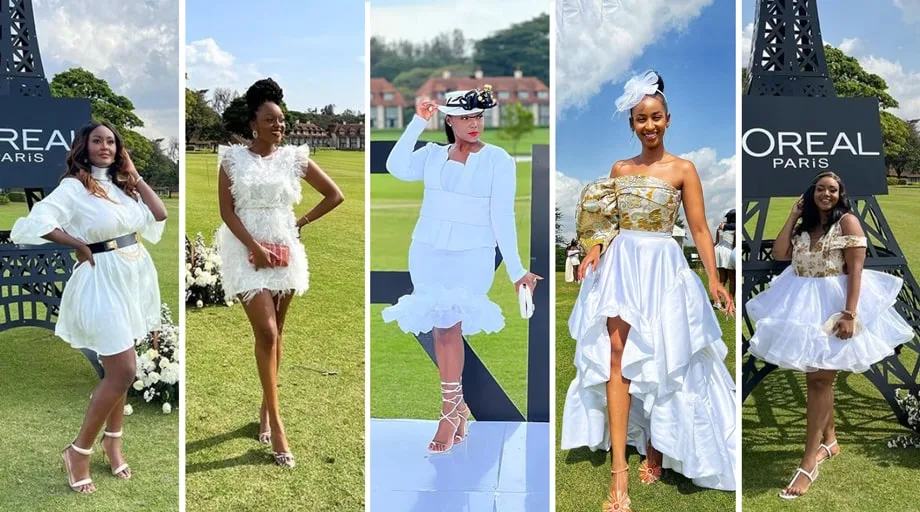
Red Carpet Dresses: Best Dressed Kenyan Celebrities And Beauty Influencers At L’oréal Paris Launch 2022

Without saying anything, fashion is the only way to express yourself. It reflects your personal style, elegance, mood, and personality.
Celebrities play a large part in shaping our society when it comes to fashion inspiration.
Nairobi fashion hub compiled a list of the top 10 most fashionable Kenyan women who rocked the red carpet at the L’Oréal Paris Kenya Launch.
On Instagram and YouTube, the majority of the trendy Kenyan female celebs and beauty influencers included here have a sizable following.

Taking a look at the best and boldest ensembles from the L’Oréal Paris Kenya Launch gives you a good idea of where the red carpet stands right now. The winning looks were elegant yet unique, and they should continue to inspire fashionistas for years to come.

1 Catherine Kamau

Catherine Kamau Karanja, better known by her stage names “Celina” and “Kate Actress,” is a Kenyan actress who has won numerous awards.
She rose to prominence thanks to her portrayal as Celina in the Citizen TV drama Mother In-Law. Sue na Jonie, Plan B, and Disconnect are just a few of the films she has been in.

2. Maureen Bandari

The Funshion Mistress, Maureen Bandari, is a passionate fashion blogger who has expanded into hair and beauty care to become a household name in Kenya

3. Sarah Hassan

4. Joyce Maina

5. Shely Sophisticated

6. Pearls and Loaf

7. Maureen Lwanga

8. Lydia Karleen Mukami

9. Anita Nderu

10. Jackie Matubia


As the month of June approaches, the temperatures begin to increase, allowing us to break out our summer staples. There are plenty of style ideas to steal from the celebrity set when it comes to designing your summer wardrobe, whether you’re a fan of a summer maxi, simple slips, or classic white dresses.


It never hurts to look to the stars for some fashion inspiration, whether you’re stuck in a style rut or simply want to treat yourself to some new investment purchases.

Content Courtesy of NFH Digital Team

Kolade Bobby A Ugandan Fashion Designer Is Repurposing Donated Clothing And Reselling It In The Country Of Origin.

Bobby Kolade (Kolade) A Ugandan fashion designer is upcycling donated clothing and reselling it in the country of origin.
Bobby Kolade is upcycling donated clothes into new products and attempting to resell them in an effort to combat a culture of excess that he claims has infected and damaged Ugandan culture and fashion.

https://www.instagram.com/p/CdTbD41IO7H/?utm_source=ig_web_copy_link

“It’s very difficult for a designer like myself, and for my peers, to manufacture competitive clothing in Uganda because the second-hand garments that flood our markets are so inexpensive,” Kolade told The Current presenter Matt Galloway.

“Not only are we importing used clothing from the global north. We’ve also brought in a culture of excessive consumption and cheapness.”

With a concept dubbed Return To Sender, Kolade, a designer and entrepreneur, is attempting to reverse the flow of clothing.

According to Kolade, over 80% of all garment sales in Uganda are of secondhand things discarded in wealthier countries where fast-fashion reigns supreme. It has its own market in Kampala, where Kolade lives, named Owino Market. While some of the apparel on the market is functional, products such as ski jackets and wool suits are inappropriate for Ugandan conditions.

“The items that are shipped here are not always the items that we require,  As a result, many people simply adapt “Kolade stated.

“I once told a trader at Owino Market that I couldn’t afford this jacket. It’s simply too thick… And he added, “You know, style doesn’t care about the weather.”

While the market is a pleasant place to uncover some hidden treasures and bargains, it is also incredibly harmful to the country’s apparel designers, according to Kolade.

The Second-hand Market
In North America, when someone contributes clothing, the best of it is sold in a local store. Other items are then sold to countries in the developing world.

“Originally, they were sent as a gift. People might also pick up garments at various locations throughout the city. But it swiftly transformed into a highly profitable enterprise “Kolade remarked.

https://www.instagram.com/p/CdBjmpmrK-n/?utm_source=ig_web_copy_link

“That means our local industries never recovered from the early 1970s industrial downturn.”

Many charity stores and clothing organizations in wealthier nations are now selling excess inventory abroad, which frequently ends up in African countries, he explained.
This makes financial competition difficult for Kolade and other designers.

“People in this market now believe that clothing should be… as inexpensive as second-hand clothing. People have discovered this “Kolade said.

“So if you come out with something fresh as a designer and the pricing is a little higher than what they’re used to, they won’t buy our clothes.

No way!”
This second-hand method might be a double-edged sword, according to Annamma Joy, a marketing lecturer at the University of British Columbia.

While it presents issues for designers, she believes that donating clothing and providing affordable solutions for those in need is more sustainable.

“The government is boosting the number of job openings. People become hired in this company therefore it has an influence that is good for the economy,” stated Joy.

“Those garments, on the other hand, are not what consumers in those countries want. It’s also more costly. Because secondhand clothes undercut the industry, it closes.”

Return To Sender
Return to Sender, Kolade’s endeavor fills this gap. Kolade takes clothing that has been sent to Uganda and gives it his own personal touch.

One of his items, for example, is what he refers to as a four-panel T-shirt. He takes four different shirts and chops them up into fascinating combinations.
“It’s a metaphor for what we’re attempting to do because we’re trying to give these clothes a new identity,” Kolade explained.

He then sells them to individuals all around the world through his website.
The clothing also comes with a “clothes passport,” which outlines where the items utilized for the outfit came from.
“Hopefully, it’ll be a way of interacting with… individuals who see this item of apparel and wonder, “What is it?” ‘Where did it come from?’ And the wearer only needs to present his or her passport “Kolade stated.

https://www.instagram.com/reel/Cc-xD6GoO6H/?utm_source=ig_web_copy_link


He claims he isn’t bothered by individuals donating their garments since he realizes they believe it is a charitable deed and are unaware of the wider consequences. Instead, he believes that consumers would aid businesses by purchasing his sustainable inventions.

“‘Hey, listen, we can make something exciting, something new, something extremely innovative and resourceful,’ we’re trying to convey.
Smaller industry can be developed here,  Take a look at what we did with your trash.
If you want to help the industry in our country, please buy it back.’ “Kolade stated.

Content couretsy of CBC Canada, Buziga Hill & NFH


Jeffery Wilson, The Founder And Director Of The Jw Show, Represented Kenya At Africa Fashion Week Seattle.

Africa Fashion Week Seattle’s African-inspired designs are sweeping the global fashion market like never before, and it’s time to celebrate African excellence once more.

The Seattle Marriott Redmond hosted a colorful and vibrant exhibition and fashion event on May 8th, presenting local and international designers from all over the world.
Jeffery Wilson, our very own Kenyan Fashion Guru and Director of the JW Show, represented Kenya at Africa Fashion Week Seattle.

About JW Show

We aspire to connect Kenya, Africa, and the rest of the world via fabric and design.

Make a date with us and be a part of this renowned spectacle where elegance meets style. This fashion spectacular brings together men and women who are pushing the boundaries of sustainable local fashion enterprises that have crossed borders and drawn the attention of the globe.

About Africa Fashion Week Seattle Fashion For Humanity

It gives me great pleasure to warmly welcome you to this year’s Africa Fashion Week Seattle. This event was created to not only showcase the beauty of African fashion and culture but also to promote child education in African communities where many school-aged children are underprivileged and marginalized.
Every day, millions of African children, particularly in South Senegal and Tanzania, struggle to learn due to poor learning conditions. Images of young students sitting on the floor or on the ground due to a lack of desks have deeply moved me. Like most of you here today, I was fortunate to attend schools where I had access to every tool available to aid my learning.

The desperation of these children should serve as a wake-up call for us; we must act. To begin, we can provide them with a desk where they can write and learn. This is the first step in keeping these bright young minds in school.

In Senegal, a school desk costs $65 and a classroom requires 40 desks. By participating in Africa Fashion Week Seattle, you will make a difference by providing Senegalese or Tanzanian children with the opportunity to further their education and achieve their dreams.

We have been able to provide up to 101 desks, enough for two classrooms, since April 2021, and our goal is to provide 500 chairs by the end of the year 2022.

We will need all of the assistance we can get to reach this goal. I believe that by working together, we can improve access to education and learning quality in Africa, beginning in Senegal and Tanzania.

I’d like each of you to take a moment to consider this question:

  • Do you believe in education?
    Do you think education is important for breaking the cycle of poverty?
  • Do you think education is the key to opening the golden door of freedom for African children?

We don’t have to look far to find the answers to these questions.

Everyone reading this letter, in my opinion, is a living example of education’s limitless power.
Education represents everything to these children since it is the only avenue that can guarantee them socioeconomic freedom for themselves and future generations.

You will make a significant difference in the world by supporting our project, as you will be a part of something bigger than our local communities.
Your contribution will help to safeguard the future of an African youngster whose light would otherwise go unnoticed. There is no cause more noble, worthy, or spiritually fulfilling in my opinion, and I’m sure you’ll all agree.

Content courtesy of The JW Show, Africa Fashion Week Seattle & NFH

Ad