Tuesday 5th of May 2026

Nairobi, Kenya

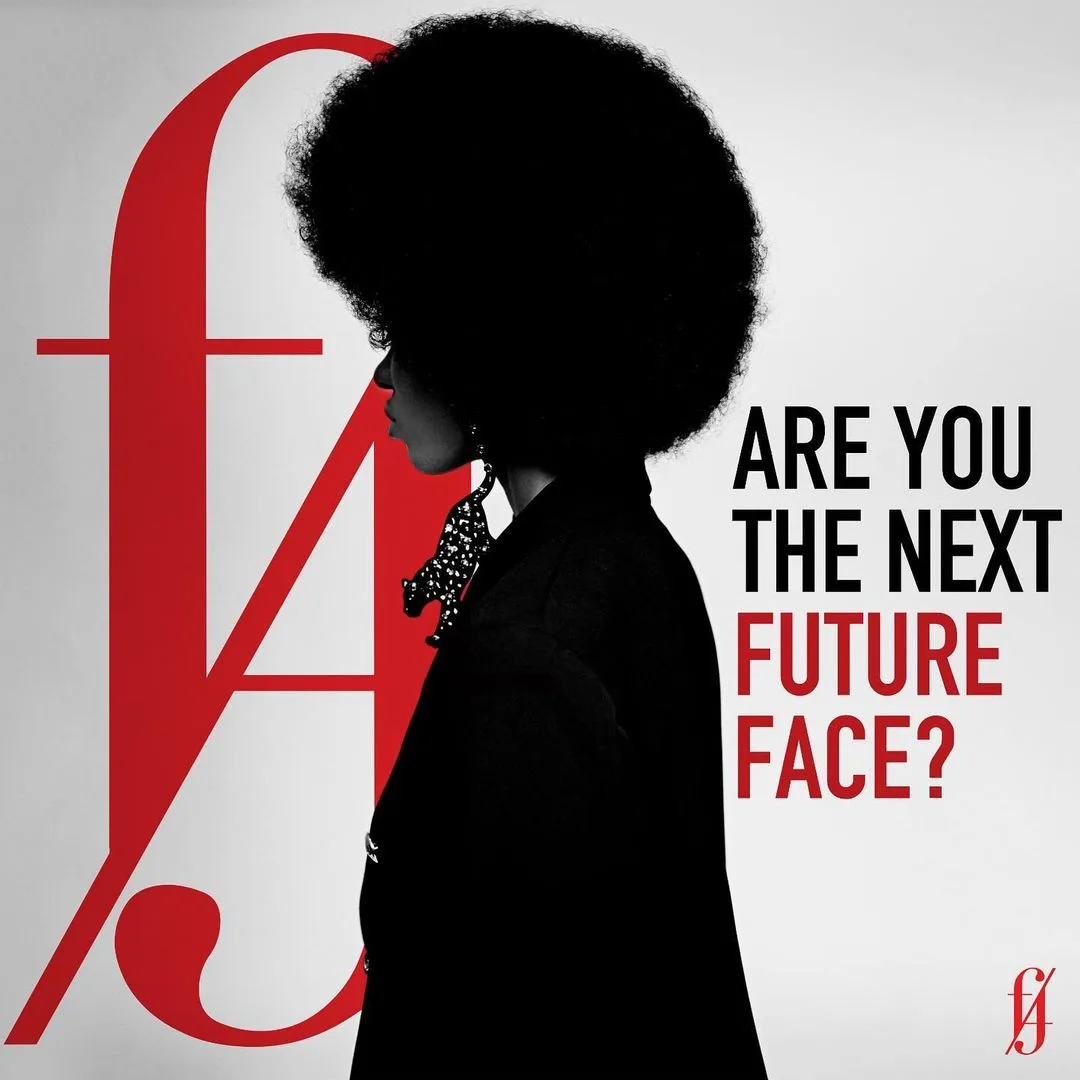
Don’t Miss Future Face Africa’s Grand Finale This Weekend

After physical castings in eight African countries and thousands of digital applications worldwide, Future Face Africa‘s grand finale will take place at Eko Hotels & Suites on Sunday the 30th of January 2022.

https://www.instagram.com/reel/CZU0KGIoPYh/?utm_source=ig_embed

Two contestants will win the title of Africa’s next future face, and the two winners will each receive a two-year international modeling contract with a top international modeling agency, as well as a USD 5,000 cash prize. In addition to providing a career start in modeling, the competition also prepares the winners for global competition.

https://www.instagram.com/reel/CZVMENQoj8P/?utm_source=ig_embed

Championed by former model Elizabeth Elohor, whose agency Beth Modelling Agency has groomed and raised a plethora of successful models through initiatives like Elite Model Look Africa, which offered African models the pivotal push needed both internationally and locally. We can expect an outstanding evening with top celebrities, prominent players in the Nigerian fashion industry, models, and more coming out for a night of glitz and glamour.

For tickets reservations call
07069999919, 08069748761

Content Courtesy Of Future Face Africa 

Future Face Africa, Africa’s Largest Model Search Competition, Prepares For A Grand Finale

Future Face Africa, Africa’s largest model search competition, is preparing for its grand finale event in Lagos. After a rigorous selection process involving physical castings in eight African countries, as well as thousands of digital applications from all over the world, the Future Face Africa judges have selected 18 finalists who will be flown into Lagos for a shot at turning their modeling aspirations into a reality.

The grand finale event will be taking place on Sunday, January 30, 2022, at Eko Hotel & Suites, where models will be competing for a chance to win a 2-year modeling contract with a top international modeling agency, as well as a $5,000 USD cash prize.

https://www.instagram.com/p/CZPUec0qPP6/?utm_source=ig_embed

The FFA project is spearheaded by none other than Elizabeth Isiorho, a pioneer in the African modeling industry and the founder of Beth Model Management Africa, Africa’s largest modeling agency, and the organization behind Future Face Africa. Over the past 17 years, Beth Model Management has served as an industry pacesetter, helping to launch the careers of dozens of internationally placed models, and has cultivated some of the best talents in the industry, such as Mayowa Nicholas and Davidson Obennebo.

Elizabeth Isiorho previously organized Elite Model Look Nigeria, but after a 2-year hiatus, re-emerged with Future Face Africa to expand her model search beyond the borders of Nigeria alone, and offer a wider range of hopefuls a chance at success. FFA will be giving opportunities to people from various countries, backgrounds, and skin tones, aiming to go beyond the buzzwords of “diversity” and “inclusivity” to create an initiative that truly celebrates the range of beauty that the industry has to offer.

https://www.instagram.com/reel/CZUlildo5Gw/?utm_source=ig_embed

FFA will be equipping selected models with the knowledge and skills to achieve international success and to have long-lasting careers in a very competitive industry. For these models, Future Face Africa will be a once-in-a-lifetime opportunity that could change their lives forever.

Future Face Africa is proudly sponsored by Ecobank, Aquafina, MAC, Haute Couture, and Natures Gentle Touch.

Content Courtesy Of  Future Face Africa

Otile Brown Woman ft. Harmonize (Official Music Video)

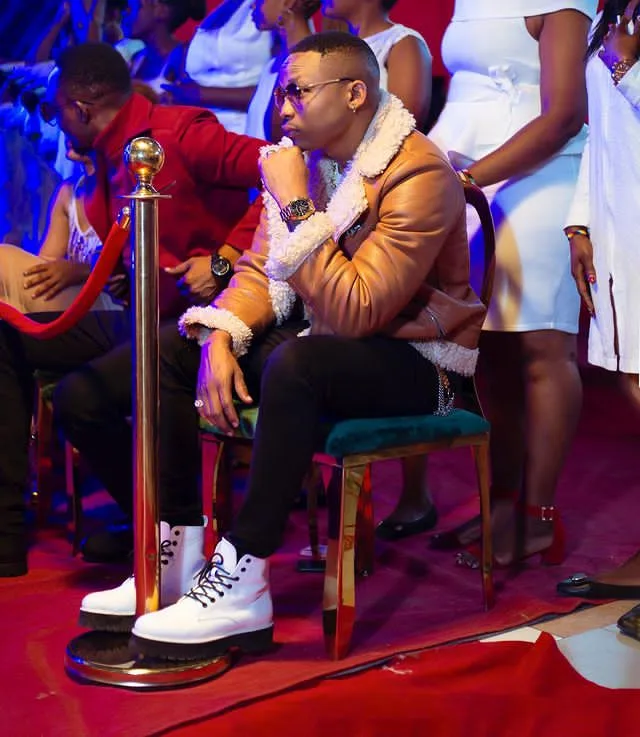
Kenyan independent R&B singer, songwriter, guitarist, and actor, Jacob Obunga popularly known as Otile Brown came through with another stunning banger, the celebrated Kenyan musician Otile Brown has released a new song dubbed ‘Woman’ featuring Harmonize from Tanzania.

The song expresses the feelings of a man who praises the beauty of a woman that he is in love with. Otile Brown sings through the first half of the song before Harmonize joins him.

Otile Brown become the first Kenyan musician to hit 1 million make subscribers on Youtube

[taq_review]

The woman is written and performed by Otile Brown and Harmonize The audio is produced by Ihaji MadeIt Video Directed by Hanscana from Dar Es Salaam

Content courtesy of NFH Digital Team 

Honey TV’s Wawu That’s My Dress Returns to Kenya for a Second Season

The popular format of the wedding show sees brides from all over the country descend on Nairobi to look for their perfect wedding dress. In the presence of their loved ones, they each have the chance to try on different dresses to determine which style suits them or not.

Kenyan Media Maven – Amina Abdi Rabar is back as the show’s host. Rabar is one of East Africa’s most popular celebrities with just over a million followers on Instagram alone. It brings spirit and a touch of modernity to the wedding fair. The Kenyan season is produced by Fareed Khimani’s Nusu-Nusu Productions.

https://www.instagram.com/p/CYlJtYMMuzG/?utm_source=ig_embed

The wow, that’s my dress The format has traveled across the African continent having started in Nigeria with a famous stylist – Dami Oke as host, Kenya with Amina Abdi Rabar, and more recently Zambia with musician Esther Chungu as host. The show has become a popular format for the channel as a continuation of their focus on weddings in the lifestyle television format.

The bride’s dress is the centerpiece of any wedding and can make or break her day.
A Kenyan boutique is a hot spot for a bride who is looking for the perfect dress for her big day. Hosted by Amina Abdi, Wawu, That’s My Dress: Kenya follows all the activity at this boutique as brides and their loved ones swing by to meet the in-house team that is ready to help them find the perfect wedding dress.

Catch Amina Abdi Rabar on Wawu, That’s My Dress: Kenya and other pan-African lifestyle show on DStv’s HONEY channel (173).

Content courtesy of Honey TV & NFH Digital Team

Out of Africa and Onto Vogue: What’s the Story Behind British Vogue’s February Cover?

“It is about the elevation of a continent,” says Editor-In-Chief Edward Enninful of the landmark cover celebrating “a new generation of African supermodels”

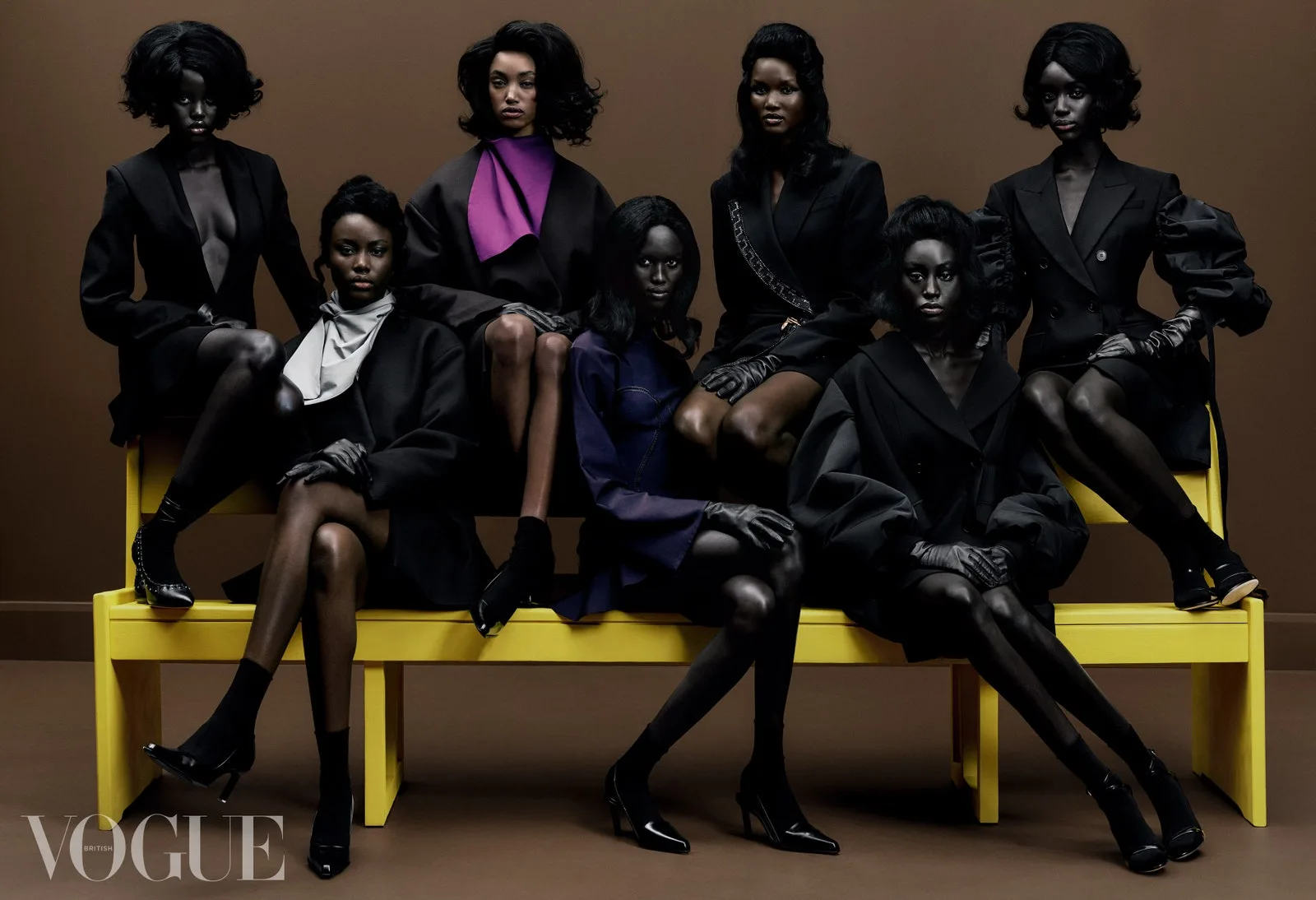
At first glance, British Vogue’s February cover might seem jarring to some; the shadowy tableau of nine dark-skinned Black women, stone-faced and stiffly posed, almost evokes the feeling of mannequins arranged in a store window. Arguably, this might be exactly its intent: to present Black, dark-skinned beauty and unabashedly African features as aspirational rather than an anomaly as a standard, rather than a token.

“This is a celebration of women, of matriarchy, and of the beauty of Black women,” said photographer Rafael Pavarotti of the milestone. “They are the past, the present, and the future.”

The cover is Pavarotti’s first for British Vogue, as well as a first for several of the array of emerging African stars featured: Adut Akech, Amar Akway, Majesty Amare, Akon Changkou, Maty Fall, Janet Jumbo, Abény Nhial, Nyagua Ruea and Anok Yai.

“I saw all these incredible models from across Africa who were just so vivacious and smart,” explained British Vogue’s Editor-in-Chief and European Editorial Director Edward Enninful OBE, himself a dark-skinned British-Ghanaian. “These girls are redefining what it is to be a fashion model.”

While the shift is undeniably overdue, as we know, change is often hard, particularly for an industry that has long reinforced the marginalization of Black models and by extension, Black fashion lovers by simply declaring them not in vogue (pun intended).

“In the beginning, I felt really isolated…I got thrown into the modeling industry very quickly and I kind of had to navigate it on my own,” Yai, who was famously discovered at Howard University’s 2017 Homecoming and has since appeared in campaigns and on catwalks for luxury brands across the world, tells contributing editor Funmi Fetto.

“Backstage, there would maybe be one other Black girl, but now my tribe is backstage,” Yai added. “I can speak my own language to my friends. They are basically like my family.”

Top African supermodel Adut Akech garnered her own alternate cover for the February 2022 issue. Inside, the 22-year-old echoed Yai’s sentiments while reflecting on her own still-growing career.

“I would literally be the only Black, dark-skinned girl in the show. There were no Sudanese models, no African models,” she recalled. “Now, I go to a show and there are girls from my country, girls from Africa who look like me. So yes, there has been a huge change. It has gone from me being the only one at a show to 15 or 20 of us. I’m just so happy that we are finally at this place. I was tired of always feeling out of place and feeling like an outcast.”

https://www.instagram.com/p/CYtqCecFEFT/?utm_source=ig_embed

The cover undoubtedly marks a triumphant moment, but will the overdue inclusion prove to be just another fashion trend?

“You know, fashion tends to follow waves,” noted Enninful, who also styled the cover. “We’ve had the Brazilian wave. We had the Dutch wave, the Russian wave, the Eastern European wave…And while, in the last decade, the Black model has come to prominence, I love that we are finally giving more space to African beauty.”

The highly stylized looks created for the shoot were intended to exaggerate that beauty, reportedly drawing on influences ranging from The Supremes to the often poised and strategically posed portraits of West African photographers James Barnor and Malick Sidibé. Strikingly, the most direct reference is to Grace Jones’ legendary Nightclubbing album cover, on which the Jamaican-American icon appears almost ebonized as she stares piercingly into photographer Jean-Paul Goude’s lens.

“African women and their elegance are at the center of this beauty look,” explained make-up artist Ammy Drammeh, who is of Gambian-Spanish descent. “That elegance is innate, you know? They’re not trying, they just are.”

As the rest of the fashion world finally takes notice of that cover-worthy elegance, Enninful asserts that now, “We need to ensure these girls last. We have to invest in them, nurture them, and support them with editorial, with advertising, with shows. It has to be 360…Getting these girls and then throwing them away after one season? That has to stop.”

The February issue of British Vogue arrives on newsstands Tuesday, Jan. 18. The full cover story can be read online.

Content courtesy of British Vogue & NFH Digital Team

British Vogue’s Momentous All African Cover Spotlights 9 Young Women Redefining What It Is To Be A Model

With a new generation of African models in the spotlight, fashion is, at last, embracing what it is to be truly global. Funmi Fetto talks to some of those redrawing the map.

Photographs by Rafael Pavarotti. Styling by Edward Enninful.

It’s a grey, mild-for-November Tuesday morning, in a brutalist indoor car park off an industrial road within a not particularly fashionable enclave of west London. There’s a large table, methodically laid with lateral flow tests. One would be justified in thinking that this is not where the magic happens. But then, a door opens into a cavernous studio with dramatic black drapes. Inside, nine striking Black models – their facial features varied and distinct – await hair and make-up.

They are playfully conversing; I note snippets of Dinka and hints of other mother tongues peppering the conversation. They’re laughing and teasing one another while moving and mouthing the lyrics to Wizkid’s “Don’t Dull”, “Ojuelegba”, “Essence” and pretty much the entire tracklist of Made in Lagos. These women are a wholly different type of model and are currently pushing the boundaries not only of beauty but of the entire fashion world.

Adult, Anok, Nyagua, Janet Jumbo, Maty Fall, and co are representative of an ongoing seismic shift that became more pronounced on the spring/summer ’22 runways. Prada, Louis Vuitton, Balenciaga, Saint Laurent, Miu Miu, and many more were awash with dark-skinned models whose African heritage stretched from Senegal to Rwanda to Sudan to Nigeria to Ethiopia. For an industry long criticized for its lack of diversity, as well as for perpetuating beauty standards seen through a Eurocentric lens, this change is momentous.

“I saw all these incredible models from across Africa who were just so vivacious and smart,” recalls Edward Enninful, British Vogue’s editor-in-chief, and European editorial director, explaining the inspiration behind shooting an all-Black, all African cover. His excitement for this moment is tangible: “These girls,” he continues, “are redefining what it is to be a fashion model.”


This, he asserts, is well overdue. “You know, fashion tends to follow waves. We’ve had the Brazilian wave. We had the Dutch wave, the Russian wave, the Eastern European wave… And while, in the last decade, the Black model has come to prominence, I love that we are finally giving more space to African beauty.” Unlike the trends that have gone before, which favored a certain aesthetic – the perpetually sun-kissed Amazonian curves of the Brazilians, the strong jawlines of the Eastern Europeans – this African wave taps into a variety of aesthetics from across that vast continent.

Consider Adut Akech. At 22, she is arguably the most successful African model working today. Following her runway debut at Saint Laurent, in 2016, her international Vogue covers have run into double digits, she has notched up numerous fashion and beauty campaigns – from Valentino to Estée Lauder – and recently bought a house in LA. Undoubtedly she has inspired other African models, such as Janet Jumbo, the 19-year-old Nigerian who walked Louis Vuitton and Burberry and says the wave of success African models are riding right now “gives me hope that I can succeed at this”.

Akech, dressed in a toweling robe, her tousled hair redolent of a protagonist in a James Barnor photograph, recalls the landscape of five years ago as a world away from what we see now. “When I first started modeling internationally…” She makes a face, eyes incredulous and lets out a wry laugh. “I would literally be the only Black, dark-skinned girl in the show. There were no Sudanese models, no African models. Now,” she says, smiling, “I go to a show and there are girls from my country, girls from Africa who look like me. So yes, there has been a huge change. It has gone from me being the only one at a show to 15 or 20 of us. I’m just so happy that we are finally at this place. I was tired of always feeling out of place and feeling like an outcast.”

The experience of not belonging resonates with Anok Yai, a fellow Sudanese model, who in February 2018 became only the second Black model ever to open a Prada show (the first was Naomi Campbell, in 1997). “In the beginning, I felt really isolated,” she says. “I got thrown into the modeling industry very quickly and I kind of had to navigate it on my own. I also have social anxiety, so I struggled a lot with connecting with people. Backstage, there would maybe be one other Black girl, but now my tribe is backstage. I can speak my own language to my friends. They are basically like my family.”

For all the celebration of this moment, the elephant in the room remains. Why are we only just beginning to truly embrace African models on the international runways? Particularly when, as Omoyemi Akerele, the founder of Lagos Fashion Week, says, the issue cannot be put down to a lack of fresh talent: “Over the last decade, we have worked alongside agencies dedicated to discovering and nurturing new faces from across the continent. Models like Mayowa Nicholas started out walking at Lagos Fashion Week.”

The pandemic, as well as the logistics of the African continent, have, Vogue contributing casting director Ashley Brokaw explains, played a significant role in the lack of African models on the international runways. “The reason everyone saw a lot of new faces this season was really a function of access,” she says. “Prior to the pandemic, we had sorted through initial visa issues – some countries were definitely easier than others – we got all the paperwork, we got all the necessary travel documents for the girls done in advance, and then everything shut down. So, the explosion of African girls on the catwalk that we suddenly see is a result of things opening up.”

The previous scarcity of African models, continues Brokaw, can also be attributed to outmoded casting processes. “Over the years, I have had to do my scouting through an agent, perhaps based in Milan or Paris, who would filter their choices down to me. Now, thanks to social media, I can reach out directly to scouts in say Rwanda or Burundi, or Uganda and find a great girl. They can also text, WhatsApp, or find me through Instagram. The level of access through social media is just incredible. This means I’m now able to choose girls through my own lens, which makes the process so much more democratic and inclusive.”

The power of social media has also been a game-changer for Piergiorgio Del Moro, the founder of DM Casting, which he runs together with Samuel Ellis Scheinman. “Every day,” begins Del Moro, who discovered Akech, “I receive tons of messages and images from scouts and potential models from all over the world.”

The previous system, which, Scheinman explains, “came down to where money was invested to find models”, meant that the Black girls cast were predominantly light-skinned African Americans, and only one or two were African because the agencies didn’t have the right connections to get girls from Africa into Europe. “And so, for us, we see social media as a real change in terms of how scouting has blossomed in Africa. We are now able to have a photo of a girl sent to us in a nanosecond.”

Logistics, economics, and technology aside, there is no denying how much the global reckoning around race, diversity, and inclusion, heightened in the wake of George Floyd’s murder, has forced a shift in mindset towards racial inequities and unconscious bias. The casting process, agrees Scheinman, is no exception. “The industry has definitely gone through a soul search about what diversity means, what inclusivity means, and what being truly global means when it comes to casting. We really saw this starting to shift about five years ago, and so for us as casting directors, the more options we have, the more we’re going to want to explore every version of beauty. Now that we have access to these amazing girls, there’s no reason not to work with them.”

As the casting director for Kerby Jean-Raymond’s label Pyer Moss, which actively celebrates Blackness and casts accordingly, Katherine Mateo has long been vocal about the narrow ideals of beauty perpetuated by the fashion industry. And she’s not afraid to highlight the complicity of the casting process. “For many years, we have been stuck on what society has trained us to believe is the ‘perfect’ skin color, size, age, height. But the fact of the matter is people want to see the world that reflects their reality. Our world does not have one type of beauty, and we as casting directors have the power to directly connect with brands and publications and hold them accountable for the change we would like to see.”

Del Moro adds, “It is our job to push diversity. Diversity of age, diversity of size, diversity of skin color. Some editors, like Edward [Enninful], have over the years raised their voices about diversity, and you also have some designers who have it at the forefront of their minds. But where they don’t, it’s our job to push for it.”

Valentino’s Pierpaolo Piccioli is known to champion African models such as Akech; his groundbreaking spring/summer ’19 haute couture show famously featured an all-Black cast. “For months, I had been nourishing the desire, the fantasy, to make couture inclusive. Simple as it may seem, it started with an iconic picture by Cecil Beaton of the Charles James salon. I said to myself, ‘What if instead of these white-swan models we had a salon filled with Black women wearing couture?’” His research took him to archive editions of Jet and Ebony.

What he discovered strengthened his resolve. “Magazines aimed at a Black readership had to buy most of the clothes for their editorials because couture houses didn’t want to lend to them. The more I delved into it, the more I felt I had to do something. Not to say or to promise, but to do. Fashion is the language I use to express my values and ideas, and I thought the only trustworthy, valuable statement that I could make was through a couture show with only Black models. Do I think it’s enough? No, it’s not. But every time I look at that finale picture, I know it meant something, and I know I want to do more.”

While he is under no illusion about the mammoth hurdle to eradicate racial inequity in fashion, Piccioli is excited about the current trajectory of African models. “I am pretty sure there is no coming back from this. It is unlikely to be replaced by constraints and unreachable standards of beauty. These must be defeated because being standardized does not belong in the future we wish to witness.”

The characteristically straight-talking Bethann Hardison, a trailblazing veteran Black model, agent, and long-time activist for diversity in the industry, has reservations. She suggests caution over what could potentially be a double-edged sword. To be clear, she asserts that this isn’t to rain on anyone’s parade; her perspective comes from experience:

“Remember, I’ve been around for a while, so I see these things through a different gaze,” she explains. “Of course, I believe in racial diversity, but the good news and the bad news is that fashion changes. I worry that this situation becomes this thing where, ‘If you’re Black you’re in,’ which means then at some point, you could be out.” Again, to avoid misinterpretation, Hardison adds a caveat. “Look, I’m not saying that this will absolutely be the case in this situation, but generally when you lean so hard in one direction, the natural move after a while is to begin to lean far into the opposite end.”

There is validity to her point. There is a constant tug of war within the thorny triad of diversity, authenticity, and longevity. Is it real? Will it last? For how long? Scheinman admits that there is an element of casting that is performative. “We have some clients for whom diversity is embedded in their DNA, and there are others where we have had to have very active discussions with them, where they then say, ‘I really want to change, I want to be more inclusive.’

While the industry perhaps hasn’t necessarily invested much in the way of size inclusivity, I feel like the racial aspect of diversity is the one that is most embedded. It’s like a non-negotiable. For Piergiorgio and me, there’s no question that the world could go back to, say, a ‘Russian casting’. It’s just not modern. Not only is diversity an obligation, but it would also be irresponsible to treat it as something so disposable.”

This is music to the ears of Akerele, who stresses that while ensuring representation from marginalized communities to reflect our “global village”, stakeholders must be mindful to ensure no one is left out of the conversation. “Casting directors across the world must hold themselves accountable to a higher standard. The underlying question should be, ‘Who am I excluding?’” This responsibility, however, argues Abrima Erwiah of the Ghana-based brand and social enterprise Studio One Eighty-Nine, extends far beyond casting directors.

The onus, she believes, is on everyone, from consumers to brands to editors and anyone who engages with the industry. “Yes,” she admits, echoing some of Hardison’s misgivings, “some people might see it as a trend and a moment and try and suck it dry to move on to the next sexy thing, but whether we believe we have power or not, we all have to come together and work on this as a community. If the logistics and the infrastructure are there to support these models, I think it will work.”

It is a sentiment, a clarion call if you will echoed by Enninful. He believes the way to ensure that this “moment” isn’t transient, is to ensure the models’ careers go the distance. “It’s sad and heartbreaking for me to see girls who are on the rise suddenly taper off. We need to ensure these girls last.


We have to invest in them, nurture them, and support them with editorial, with advertising, with shows. It has to be 360.” Recalling Alek Wek’s early modeling career, he reveals the secret to her longevity: “Alek Wek didn’t suddenly become Alek Wek. There was a group of us behind girls like her, propelling them forward. This is what we have to do in all our different roles. Getting these girls and then throwing them away after one season? That has to stop.”

Outside, the grey skies have dimmed to a blue-black. The energy among the models is still high. The infectious sound of Afro B’s “Drogba (Joanna)” reverberates around the studio, and the frisson of excitement that permeated the air earlier in the day shows no sign of abating.

As the hairstylist prepares her for another shot, Akech mulls over the hope that the uprising of African models goes beyond a trend. “I mean,” she says, choosing her words carefully, “that is the goal, that it becomes more than a moment.” And then, almost immediately, as if to correct herself, she answers more resolutely: “Actually, I don’t see it being a trend. Also,” she says, laughing, “there are so many of us – we are just not going to go out of style.”

Iman, the groundbreaking original African model, who not only paved the way but has long campaigned for diversity on the catwalk, has a message for Akech et al. “If beauty is in the eye of the beholder, then let the beholder be you.” And her charge to the world? “All hail our African models with their jet-black skin, impossibly long limbs and natural hair, full of joy and absolutely no compromise.”

Content courtesy of British Vogue Magazine & NFH Digital Team
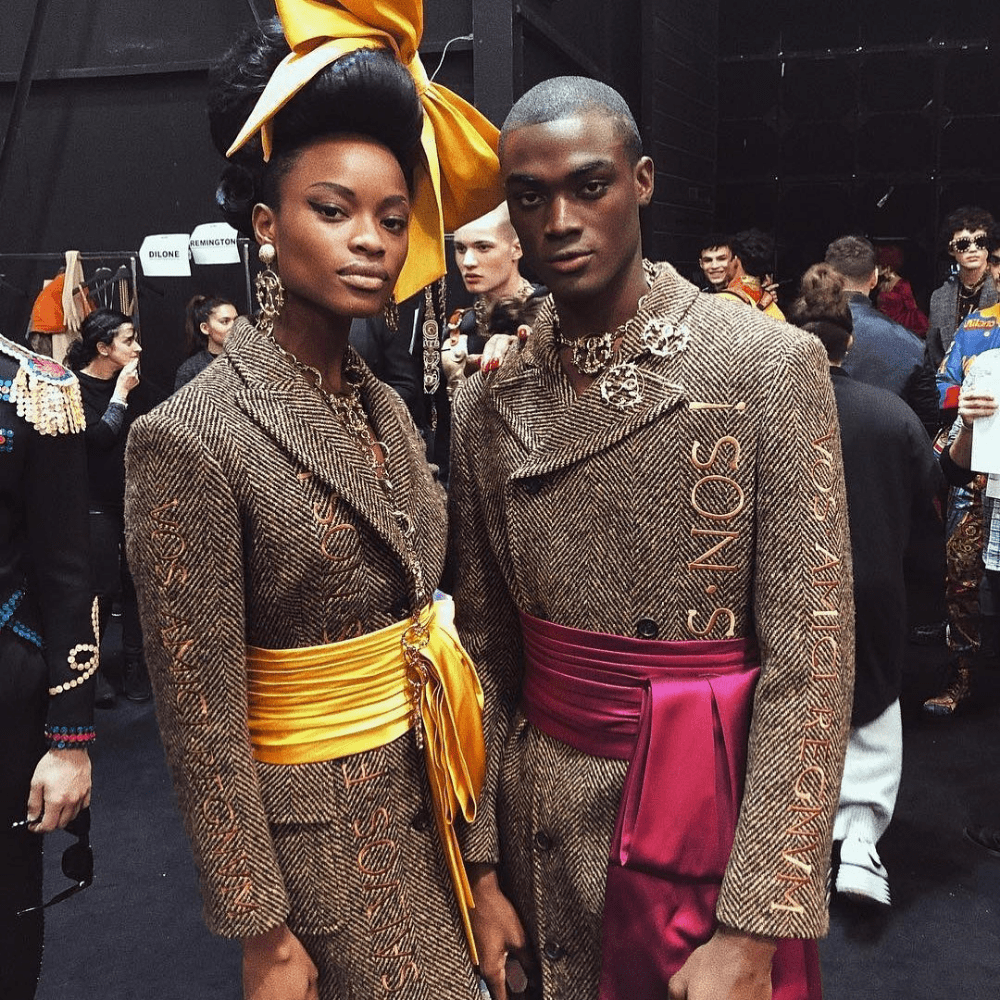
Alternative Fashion Styles to Try This Christmas

The holidays become more festive when you take your style to the next level and embrace your passion for fashion. As a new year approaches, many people develop a strong urge to upgrade their style and improve their fashion sense. Wondering what clothing to purchase, how to source it, and composing outfits can be very stressful. Digital marketer, creative director, stylist, and designer Aaliyah Hinds helps OBSERVER ONLINE break down the latest fashion trends and the best alternative fashion styles to try just in time for Christmas.

“Alternative fashion is being your truest self, stepping out and not being afraid of what anyone else has to say. It is wearing what you want, doing what makes you happy and showing us your true colors,” said Hinds who, working with the likes of video director Yannick Reid and artistes like Protoje, Koffee, Sevana, Lila Iké, and more, has built a strong network around alternative fashion.

Hinds highlighted five alternative fashion styles this Christmas season.

Trending Colours

This season, pastel colors like mint green, periwinkle, and baby pink are dominating the scene. These colors can make anything pop ranging from hair, boots, dresses, jackets, and more. They are often used as accent colors against neutral colors like black, grey, brown, and white to provide contrast. Ginger and deep red colored hair have also become widely popularised this season among black women who have become tired of the standard black or brown-haired look. Art exhibitions pop-up fashion shops and cafe dates are the perfect places to debut these colors.

Fabrics

Leather and silk are making waves into almost any article of clothing such as dresses, tops, bodysuits, and jackets. Articles of clothing where various types of fabrics are stitched together have also become very chic. This is known as patchwork.

“You can see this a lot more with brands like Shein and Fashion Nova who do a lot of color blocking,” explained Hinds.

These online fashion brands have become well known among Jamaicans so this option should be much easier to explore. Classy restaurant dinner dates at night, paint and sip events, and brunch outings suit these fabrics the most.

Style Combinations

The most dominant outfit combination recently has been an upgraded version of baggy pants from the 90s with cropped tops or very small shirts.

“Crop tops have never really gone out of style but fashion has found so many new ways to reinvent it,” said Hinds.

Graphic t-shirts with baggy pants have also become common nowadays for a more casual look. These pants tend to be made of materials such as denim, chiffon, silk, and khaki. The best places to show off this style include the movies, picnics at the park, and zoo outings with friends.

Hairstyles

Buzz cuts, low cuts, and undercuts have also started to trend lately. If you want to be more adventurous with your hair, the best time to start is right now. These hairstyles are perfect for any occasion where you want an edgier or fiercer look.

Body modifications

Nose piercings, extra ear piercings, sleeve tattoos, calf tattoos, and full leg tattoos are also ingrained in alternative fashion right now. Feel free to express yourself with piercings and creative tattoo designs that speak to your soul.

Alternative fashion takes the casual ‘everyday outfit like jeans and a t-shirt or a simple dress to another level by amalgamating old styles with fresh vibrant fabric. The Collective Moda, The New Wave Celebrity Closet, Thrift Nature JA, and Back on the Rack are all excellent starting points to try alternative fashion.

“Some of these outlets donate to charity and you may even find pieces that are under one thousand dollars,” said Hinds.

You can also attend ‘Fashion Night Out’ and various catwalk events during Fashion Week to gain fashion inspiration on your own. Pinterest is also a platform where one can research alternative outfits and be inspired.

Although Hinds has achieved a lot in the fashion industry, she aspires to own a Jamaican fashion house, create a clothing line and do styling for several artists.

“I also want to have whole artistry that encompasses all the arts. At the end of the day, fashion itself does include a lot of these arts such as painting, drawing, and even 3D printing,” shared Hinds.

As an artist in every sense with skills such as painting, modeling, and photography, she will definitely be working even harder to cement herself as a local fashion icon who adores her career.

“I get to do what I actually love to do and I get a sense of fulfillment after completing a project. I get the opportunity to work with a lot of local and international artists, meet new people and learn new things.” shared Hinds.

Content courtesy of Jamaica Observer & NFH Digital Team 

Miss South Africa 2021

Miss South Africa 2021, the 63rd edition of Miss South Africa, is all set to be held in October this year where stunning beauties from all over the country will compete for the national crown. The winner and her runner-ups will represent South Africa at either Miss Universe 2021, Miss World 2022, or Miss Supranational 2022.

The official Top 10 finalists were announced on 3rd August 2021 which included Dr. Moratwe Masima, Cheneil Hartzenberg, Kgothatso Dithebe, Jeanni Mulder, Kaylan Matthews, Bianca Bezuidenhout, Lalela Mswane, Catherine Groenewald, Tiffany Francis, and Zimingonaphakade Mabunzi.

The Top 30 was announced on 6 July 2021 which included Andile Mazibuko, Ane Oosthuysen, Bianca Bezuidenhout, Catherine Groenewald, Cheneil Hartzenberg, Danielle Marais, Eloi¨se van der Westhuizen, Ferini Dayal, Itumeleng Baloyi, Jamie Cloete, Jeanni Mulder, Kaylan Matthews, Keashel van der Merwe, Kgaketsang Mathobisa, Kgatlhiso Modisane, Kgothatso Dithebe, Lalela Mswane, Lehlogonolo Machaba, Licalle Isaacs, Lisanne Lazarus, Mawusive Sibutha, Moratwe Masima, Olin-Shae De La Cruz, Pearl Ntshehi, Precious Mndalama, Pumeza Zibi, Savannah de Almeida, Tiffanu Francis, Tshegofatso Molefe and Zimi Mabunzi.

https://www.instagram.com/p/CXVTwwrN-lO/?utm_source=ig_embed

The judges who determined the Top 30 included Melinda Bam – Miss South Africa 2011, Tamaryn Green – Miss South Africa 2018, Liesl Laurie – Miss South Africa 2015, Bokang Montjane-Tshabalala – Miss South Africa 2010.

The accomplished panel of jury who will crown Miss South Africa included Shannon Esra – Actress, Tamaryn Green – Miss South Africa 2018, Basetsana Kumalo – Miss South Africa 1994, Andrea Meza – Miss Universe 2020 from Mexico, Mamokgethi Phakeng – Vice-Chancellor of the University of Cape Town, Dineo Ranaka – Television and radio personality and Pia Wurtzbach – Miss Universe 2015 from the Philippines.

Content courtesy of Angelopedia NFH Digital Team

SA Designer Takudzwa Dlamini set to further Fashion Studies in Milan

A huge stepping stone for me as a start-up  SA designer Takudzwa Dlamini is set to further her studies at the Milano Fashion Institute in Milan.

South African fashion designer Takudzwa Dlamini is described as a woman of very few words who uses fashion as a voice to communicate. Dlamini is set to further her studies after being accepted into a prestigious fashion school in Italy, Milan but says there is still a lack of support for young talent in South Africa.

https://www.instagram.com/p/B1YrltZjZdF/?utm_source=ig_embed

Who Is Takudzwa Dlamini?

Takudzwa Dlamini is a 27-year-old fashion designer whose work is dedicated to redefining society’s view of women and the perceptions of femininity and masculinity and how they interact.

She completed her Bachelor of Arts (BA) in fashion design at LISOF in 2017 and obtained her BA Honours degree in fashion design from the University of Johannesburg in 2020. She has always wanted a career in fashion since she was a little girl.

https://www.instagram.com/p/CI0CTbxjvhv/?utm_source=ig_embed

She is also the owner of her very own fashion brand, Taku Dlamini. According to Design Indaba, the contemporary womenswear brand prides itself on sustainable production practices.

“The key themes in her work are culture, feminism, storytelling and she always aims to invoke a sense of nostalgia,” highlights the organisation.

She has shown her work at the African Fashion International Fashion Week in Johannesburg.

https://www.instagram.com/p/CIfjYAzDG07/?utm_source=ig_embed

Milano Fashion Institute

The talented fashion designer has been accepted to study a Master of Brand and Business Management at the Milano Fashion Institute in Milan, Italy.

“It’s a huge stepping stone for me as a start-up business. I think there’s so much I am yet to learn about the business aspect of fashion. Italian fashion is synonymous with high-quality craftsmanship and there’s so much one can learn from that,” Dlamini told IOL.

“I am always learning and looking to enhance my knowledge and skills. You can never know enough.”

She mentioned that going to Milano Fashion Institute would be a dream for her.

“I’ve always wanted to live in a fashion capital and immerse myself in that space. I am also excited to expand my knowledge and skills particularly in the business of fashion.”

https://www.instagram.com/p/CIXg4jZjv-f/?utm_source=ig_embed

‘Lack Of Support For Young Talent’

Although she has already been accepted to the Milano Fashion Institute, Dlamini has a financial challenge, she does not have funding. She sees this as an opportunity for young designers to be supported more with funding opportunities.

“I feel there is quite a big lack of support for young talent in our industry. I would also love to see more woman designers at the forefront of a very male-dominated industry,” she mentioned.

Content courtesy of The South African & NFH Digital Team 


Africa Focussed Luxury E-Commerce Platform Jendaya Launches

The luxury e-commerce platform that wants to target African consumers, while also exposing African brands to the rest of the world, officially launched Monday.

The London-based platform is helmed by Ayo Rufai, Kemi Adetu, and Teni Sagoe. Jendaya’s launch has been highly anticipated for months, with the expectation that its designer offerings and shipping to Africa, Asia, the UK, the US, and Europe will both help to both bolster luxury e-commerce on the continent and promote African luxury designers globally.

“Jendaya is the only e-commerce marketplace that uses the social power of community and culture to help global shoppers discover diverse designers,” the company’s chief executive, Ayo Rufai, said.


According to Rufai, Federico Marchetti, former chairman, and chief executive of Yoox Net-a-Porter Group has served as a mentor to Jendaya’s team, while Rotimi Akinyemiju, former COO of Moda Operandi, and Omoyemi Akerele, founder of Lagos Fashion Week, are among the company’s board of advisors.

Jendaya users can expect a strong curation of brands, including some that will be new names for most consumers, as well as the ability to pay using cryptocurrency, he added. The platform currently stocks 60 brands, including JW Anderson, Balenciaga, Imad Eduso, Tokyo James, Jermain Bleu, and Okapi.

A new destination to discover, learn and shop luxury fashion in Africa and beyond. We partner with boutiques and brands from around the world. We’re committed to making a positive impact in the luxury industry. Our sustainability initiatives are reflected in the made-to-order designs that are encouraged on our platform helping to combat fashion waste. We are also working on providing business-friendly debt solutions to designers.

We’re “thankful” for the amazing talents on the African continent and from all over the globe who are contributing to our journey. We couldn’t have made it to this point without you. JENDAYA is where the old world meets the new school, a people-powered luxury e-commerce marketplace.

Mbabazi House of Style Kampala is a Testament to one Woman’s Passion for Fashion and Empowerment

There was a time when Grace Byeitima, owner of Mbabazi House of Style, was interested in lawyering, not pattern layouts, But her mother forced her to learn about the latter.

“I wanted to be a lawyer,” said Byeitima, who is from Kampala, Uganda. “My mother was a teacher in a vocational training institute, and she made me go where she was teaching and learn how to sew.

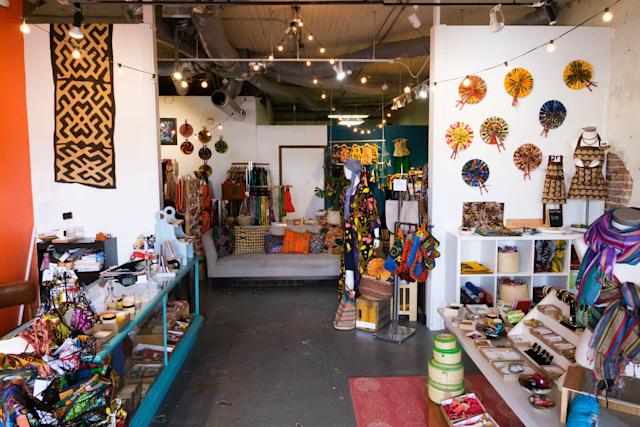
“I went grudgingly, but I went anyway.” Yet today Byeitima, 43, who has sold African-inspired garments, jewelry, and other knickknacks from her shop in the Broad Avenue Arts District since 2017, is grateful that her mother insisted that she learn how to sew.

That’s because it not only has allowed her to craft a life of independence for

“I would make sure that I left school on time to work on it [patchwork clothing] so that I could use the sewing machine first.”

But when her mother was ultimately laid off from her job, that dashed Byeitima’s hopes of attending college and studying law. On top of that, Byeitima, who was 16, learned that she was pregnant.

herself but for other women who want to use entrepreneurship to escape jobs that devalue them.

This is what Byeitima aimed to do back in Kampala, she said one of the ways that her mother endeared her to sewing was by bringing home unfinished sewing work – and paying her and her siblings to finish it.

“Some of the pieces, like what you’re seeing right now, is patchwork,” said Byeitima, as she pointed to ruby, saffron, and black cowl neck shift that she was wearing.

“So, I have this baby, my mom has no job, and I have this baby to take care of,” she said, It wasn’t long before Byeitima learned that she was more a target for exploitation than employment.

“I realized no one would hire you if you have a lot of baggage, and I had a baby,” she said. “The simple jobs I could have gotten would have been as a secretary or a receptionist. But you’d go to apply for these jobs, and men would want to sleep with you.”

“As I looked for jobs, I found that people don’t want to pay you what you’re worth…” But soon, Byeitima began crafting a way out.

Literally.

She began sewing garments for her baby daughter and taking the child from store to store to model them. That helped her land a year’s apprenticeship at a textile workshop that one of her mother’s former bosses owned.

“That’s where I learned actually most of what I know now, like pattern cutting and drafting and all of that,” Byeitima said.

In the meantime, she said, her mother opened a bridal shop, and together, they opened Mbabazi House of Style – Mbabazi means grace or kindness in Ugandan – in Kampala in 2005.

Mbabazi is also Byeitima’s mother’s name – Mbabazi Loy Rujumba.

“The business was thriving, because I was making African print cool for younger generations,” Byeitima said. “I was working for a lot of the embassies, doing a lot of their furnishings and everything else. We were known in the ex-pat community for doing really creative work…”

Yet Byeitima was doing more than making money. She was trying to help other women make a better way for themselves.

“We began training women in sewing skills and offering them jobs. I still work with my mom on that,” she said.

“It grew into something bigger than just me…no girl with skills should have to beg for a job if they can work for themselves, and no girl should be compromised [sexually] to get a job…

“I started it for me, to look out for myself and my baby, but then it evolved into a social business as well.”

Change continued for Byeitima.

In 2011, she met John Haley, a Memphian who was working for a Non-Governmental Organization – organizations that provide services or push for policies but are unaffiliated with any government – in Uganda. They married in 2014, and she moved with him to Memphis.

“I never dreamt of being in another country, but I knew I would fall in love with Memphis,” Byeitima said. “The trees, my God, there were so many trees…I’m from Africa, and when we see trees it’s in the forest

“I just fell in love with the city…we went to a concert at Levitt Shell, and I have never seen so many people in one place just enjoying music. And I love music.”

Byeitima fell in love with Broad Avenue after her mother-in-law took her there. That’s when she began to get ideas for a store there.

But not without the urging of her mother.

“My mom was like: ‘You’ve been in the U.S. since 2014 and you haven’t opened a store?’ I was like, ‘This woman is crazy. She thinks this is easy…”

So, Byeitima did what she learned how to do when she took her baby from shop to shop in Kampala to show her designs.

Content courtesy of Commercial Appeal & Nairobi Fashion Hub 

Rolonda Rochelle 53 Years Old Who Has proven That Age is Just a Number for Beauty

Rolonda Rochelle is an African-American, based in Atlanta, United States of America. She is a brand ambassador and pro-aging advocate and a licensed real estate sales agent at Palmerhouse Properties, a full-service Atlanta-based residential and commercial real estate brokerage.

https://www.instagram.com/p/CPl9W11h0eL/?utm_source=ig_embed

Rolanda’s real name is Rolanda Wright. We know very little about her family. Rolonda posted a photo on IG where she wished her dad Father’s Day.

A picture was also included, showing her father looking like Richard Roundtree. But, he was not mentioned.

According to some sources, Rolonda is currently living in Decatur Georgia. Her hometown was Atlanta, Georgia.

She might not be as famous as Nicki Minaj or Beyonce or Cardi B but her striking beauty and youthful looks hideout the fact that she is 53 years old. Rolanda Rochelle is an African American living in the United States of America.

Rolanda is a realtor, brand influencer, lifestyle and travel blogger, and a pro-aging advocate who chose to live a single life with many people imagining that she got a husband but her youthful looks and elegance come from a no husband relationship, meaning she got no stressing in her life. She recently teased her fans on tick-tock about her imaginary husband with many not getting how such a beautiful and youthful-looking 53 years Rolanda lives without having a man in her life.

Height, Diet, Distinct Features

Rolonda Rochelle is 5 feet 8 inches tall. Her distinctive features are her dark brown eyes and grey hair. And of course, her wide smile.

Rolonda, even though she was older than 50 years old, was still active and healthy. Her healthy diet that includes lots of fruits and vegetables and plenty of nuts is the key to her fitness. However, she does enjoy a good glass of wine.

https://www.instagram.com/p/CWgMckML3v-/?utm_source=ig_embed

Social Media Reach: Instagram. Facebook. Twitter

Rolonda was a huge social media presence as of February 2021. She was active on all major social media platforms. She had 277k Instagram followers. Similar to her Instagram page, she had 13k followers and 14k likes.

On her Instagram handle going by the name Rogirll, she shows off her beauty and proves the phrase ‘Black doesn’t crack’ fully embellishing itself in her.

Rolonda Rochelle Net Worth, Movies, Realtor

Rolonda is most well-known for her appearance on the comedy skits of Kountry. She also had her own career. Rolonda was an Atlanta realtor. She was a luxury agent in real estate.

https://www.instagram.com/p/CQUexWgh11Q/?utm_source=ig_embed

On her Facebook page, she listed her professional information as an actress and pro-aging advocate. She was mostly known for her Instagram videos with Kountry Wayne. She didn’t have any movie credits. We don’t know what brand she was a brand ambassador.

Rolonda was a strong pro-aging advocate. Rolonda is openly accepting her age. She’s a social media celebrity who inspires others to embrace their own age without being embarrassed.

She was also a CASA volunteer. CASA volunteers are legal volunteers that are trained to fight for the rights of neglected and abandoned children.

Our sources indicate that the average base income for an Atlanta realtor was more than $76 000 per year.

Rolonda must earn around this amount, give or take. Her net worth was $800 million as of February 2021.

Rolonda Rochelle Husband, Daughter, Married

Rolonda revealed in an Instagram post that she was still single with no husband. She also shared that she has a grown-up son.

Rolonda’s video showed her talking with an imaginary husband, only to discover later that she wasn’t married and didn’t have a husband.

Rolonda also posted an Instagram photo with her daughter in which Rolonda was out protesting injustice and equality for black women.

Rolonda is most well-known for her role in Kountry’s cougar girlfriend, which she did in many of his skits.

https://www.instagram.com/tv/CQuLTkpA-Y1/?utm_source=ig_embed

Kountry is a comedian on social media. He posts short, funny videos to Instagram.

Kountry’s videos tend to be about everyday things, such as relationships and children.

Content courtesy of Nairobi Fashion Hub Digital Team 

Ad