Saturday 26th of September 2026

Nairobi, Kenya

Birimian Unveils the First Cohort of the IFM-Birimian Accelerator x Africa, the Accelerator Program Launched with Institut Français de la Mode

Birimian, the first operational investment company dedicated to African luxury and premium heritage brands, has selected the finalists of its first call for applications (see list below). These finalists will join the acceleration program IFM-Birimian Accelerator x Africa, in partnership with Institut Français de la Mode (IFM). The designers selected will also be highlighted at the Première Classe event organized by WSN as part of Paris Fashion Week on October 1–4, giving the brands valuable exposure to the European fashion scene.

Launched in June 2021, IFM-Birimian Accelerator x Africa is an innovative acceleration program for emerging African heritage brands in the fashion, accessories, and jewelry sectors. Every year for ten months, the program, funded by Birimian, intends to support ten young designers selected by a committee of experts from the international creative scene. The brands participating in the program will also receive investment and/or consulting and support services from Birimian.

The accelerator program provides essential tools to develop emerging brands:

  • Defining a brand platform
  • Strengthening the creative process
  • Targeting the relevant audience
  • Establishing a consistent marketing strategy
  • Financial management
  • Planning and structuring of collections
  • Distribution strategy
  • Communication policy, and more.

This program is a unique opportunity for designers and emerging brands, both on the continent and in the diaspora, to get strategic, operational, and financial support for ten months, thus allowing them to make their activities more professional and organized. It is a program focused on training the young African creative guard and promoting creative entrepreneurship.

The talent identification process took two months and involved scouting, active engagement with brands, and selection of candidates from three segments: ready-to-wear (general public and premium) for 80% of the brands, ready-to-wear fashion (premium and luxury), and accessories for 20%. 85% of them are “made in Africa.” Their collective customer base reflects Birimian’s ambitions with a strong openness to the international market (40%) and significant potential for influence beyond the borders of the continent. 80% of them boast a revenue of over $US50,000, one of the main selection criteria.

The first group, characterized by a geographic diversity representative of the continent’s main economic hubs, illustrates the richness of the brands’ creative worlds. It includes the following finalists:

Laureen Kouassi-Olsson, CEO of Birimian, commented, “The class of designers invited to join the IFM-Birimian Accelerator x Africa program embody the new creative African guard: reinvented tradition, undeniable creative talent, Afropolitan, urban, and digitally focused on the world, proudly showcasing their heritage through collections whose originality no longer needs to be proven.

However, it remains fragile, hence the need to strengthen their basics and provide them with operational, strategic, creative, and financial support. This is the entire purpose of this program, which is fully aligned with our investment strategy. The network of experts it draws on and the unique access to the ecosystem of the French and European creative scene will inevitably create value. We cannot wait to warmly welcome them to Paris alongside Institut Français de la Mode.

“The 10 brands selected for this first intake of the IFM-Birimian Accelerator x Africa are full of creative talent and ambition for their development. The designers and entrepreneurs will work on all the components of their brand with the objective of not only boosting their reputation but also developing sustainable businesses in an international ecosystem while preserving their African heritage.

The right balance will be struck by working together towards creative, inclusive and sustainable entrepreneurship”, concludes Thomas Delattre, Director of the Fashion Entrepreneurship Center at Institut Français de la Mode.

About Birimian
The first operational investment platform dedicated to African luxury and premium heritage brands, Birimian supports designers on the continent in their growth and international development over the long term. Birimian’s main objective is to accelerate the international emergence of African creators by positioning itself as their major partner in four main sectors: fashion, accessories, beauty & cosmetics, and gourmet.
Birimian is aimed at brands that carry the continent’s culture, tradition, history, and cultural heritage, magnificent in its diversity, in their DNA and identity, brands that adapt to modern and contemporary codes.

About IFM
Institut Français de la Mode is a higher education institution, a training center for apprentices, a provider of executive education, as well as a center of expertise for the textiles, fashion, and luxury industries. It offers 16 educational programs at vocational, Bachelor, Master, Executive MBA, and doctorate levels, which prepare students for all the professions in the fashion industry in the fields of management, design, and craftsmanship.
Based in the heart of Paris on a new 9,000 m² campus, Institut Français de la Mode welcomes more than 1,000 students of some fifty nationalities – managers, designers, technicians, entrepreneurs – encouraging meetings, collaborations, and cultural effervescence.

Institut Français de la Mode is a member of HESAM Université, of the Conférence des Grandes Ecoles and of the International Foundation of Fashion Technology Institutes (IFFTI). It is supported by the French Ministry of Economy. It is recognized by the French Ministry of Higher Education.

Content courtesy of IFM-Birimian Accelerator x Africa 


Oakland Clothing Designer Sources Textiles from Africa

How an Oakland clothing designer Ade Dehye is challenging fashion industry norms, sourcing directly from Africa with his 100% Black-owned and operated brand, “Tunde” Ahmad is merging textiles from Ghana with urban streetwear designs.

East Oakland’s Akintunde “Tunde” Ahmad had long wanted to visit the African continent and reconnect with his ancestry. When he arrived at the University of Ghana in Accra in 2016, taking a semester off from Yale to study abroad, he was captivated by everything about the bustling city.

“I was fortunate to be able to go for an entire semester and have a deeper and longer connection out there, learning African history from an African perspective, rather than Eurocentric or American perspective,” he said. “I was able to dispel a lot of myths and stereotypes that are negative, overwhelmingly, and put into our heads about the continent.”

One of the most stunning revelations to Ahmad was how prosperous Ghana’s fashion industry is but not in the fast-fashion, the mass-produced way we’re accustomed to in America. In Accra, you’ll see a lot of people in completely custom outfits, rather than something you’d find at a chain store.

The reason: It’s extremely easy to access affordable tailors, along with endless unique fabrics, from bògòlanfini (traditionally dyed with fermented mud) to woven kente (a handwoven cloth with strips of silk and cotton).

“Even every dorm on campus had a tailor,” he said. Ahmad started getting garments made and visiting different fabric markets. “The tailors get your measurements and can make different custom pieces.”

These experiences laid the groundwork for what is now Ahmad’s successful clothing brand in Oakland, called Ade Dehye, which uses custom West African textiles sourced directly from Ghana to create urban streetwear designs. It’s all operated under an ethical business model that aims to respect, rather than exploit, African culture and workers.

“It was a very natural progression,” he said. “I never really had a huge interest in fashion. But once you actually get to try stuff and see how it looks on yourself, that is how I caught the fashion bug.”

Now, his 100% Black-owned and operated brand works with a dozen tailors in Accra to create around 250-300 pieces at a time. Ade Dehye is known for its fusion of intricate prints stylized as streetwear, bomber jackets, lined trench coats, and two-piece outfits that you can mix and match. The pieces are then shipped to Oakland and sold online or through pop-ups. The timeframe from Ahmad selecting the fabrics and designs to receiving the garments can take anywhere between 10 weeks to five months.

“There needs to be more investment in Ghana, in the continent as a whole,” Ahmad said. “And not just in the clothing industry, but in industrializing the country as a whole, and getting West Africa more up to speed and competitive with the rest of the world in every sector.”

Although Ahmad wasn’t always interested in fashion, he was familiar with West African textiles. His mom often wears clothing made out of West African prints, so Ahmad was exposed early on to textiles like Kente cloth, Ankara, and mud cloths. “I was no stranger to these fabrics. But I’d never been able to get stuff tailor-made to me,” he said.

Ahmad’s path to fashion wasn’t always clear, but he always had a goal to make a difference. When he graduated from Oakland Tech High School in 2014 he was praised on national television for his achievement as a senior who was accepted into some of the most elite Ivy League universities. Ahmad received his bachelor’s in sociology from Yale in 2018, and his master’s in journalism and documentary film from Columbia Journalism School in 2019.

“I got a lot of attention for [my college acceptances], and I always wanted to return the favor to come full circle and actually get into education,” he said of his goal to return home and pay it forward like he watched his mom do as being an educator with the Oakland Unified School District for three decades.

While he wanted to make his way home eventually, he decided to stay in New York to work as a journalist and filmmaker in Harlem after graduating from Columbia. But when COVID-19 hit, he and his partner, Elena, traveled back home to Oakland for what was supposed to be no more than a 10-day shelter in place. They ultimately canceled their return flight to New York and stayed in the Bay Area.

When he came home, he got the opportunity to teach at OUSD’s African American Male Achievement program, designed to improve academic and life outcomes for male students. At the same time, he took part in the prestigious Ida B. Wells fellowship in investigative reporting. While Ahmad was forging a budding journalism career, he never stopped thinking about the time he spent in Ghana. He started dreaming up creating a 100 percent Black-owned brand solely sourced and produced out of Ghana.

Having no fashion knowledge other than what he learned during his time abroad as a college student, he reached out to the people in the fashion industry he had met during his stay back in 2016. One of them was local Ghana fashion designer Awurama Mankatah, owner of the Threaded Tribes clothing brand.

So far, Ahmad has self-funded the entire project, and money generated from pieces sold is reinvested into the brand.

Because tailors in Ghana specialize in making a limited number of custom-made pieces at a time, one of the biggest challenges was recruiting them to be involved. He leaned on Mankatah for guidance on finding the right tailors, as well as learning how long certain handmade fabrics take to make, and the different types of stitching and patterns. The roughly dozen tailors that work for Mankatah also work for Ahmad, and the entire manufacturing operates out of Accra.

For the most part, Ahmad has worked remotely to bring his vision to life, but he was able to travel to Ghana this past February.

From the beginning, Ahmad wanted to ensure his brand helped the African workers he partnered with financially and didn’t become an exploitative source as is the case in so many industries operating on the continent. Cacao is one of the most obvious examples of how Western countries take advantage of West Africa’s natural resources with little benefit to locals. While Ghana is currently one of the largest exporters of cacao, Western Europe and the United States have the highest number of chocolate manufacturers reaping profits.

“You see all of these folks from other places coming in and running things, and you understand this is a raw resource grab,” he said.

Ahmad knew he was taking a risk with his ethical vision for how to run Ade Adehye given how much easier and more lucrative it would be to run the brand out of China’s mass production infrastructure. “I purposefully chose not to do that,” he said.

So far, Ahmad has hosted two pop-ups, one in Alameda in May and one in downtown Oakland in August. During the Oakland pop-up inside Dish Boutique on 23rd Street, friends and visitors got the chance to mingle with Ahmad, ask questions about the pieces, and walk away with shopping bags filled with unique garments priced at $80-$250, which Ahmad says is a reasonable price for the handwoven items given the labor-intensive hours that go into making the garments.

Ahmad’s ultimate goal is to help other Black entrepreneurs follow the blueprint that he created with the help of other people in the fashion industry like Mankatah of Threaded Tribes to show how it is possible to run an ethically and sustainable company that’s successful.

For now, he’s getting ready to travel to Ghana for the second time to start working on what new pieces he will add to the Ade Dehye collection. In the end, he is keeping accessibility and his hometown in mind as he rolls out designs.

“I want to see my folks wearing my stuff. I come from East Oakland, I come from Oakland public schools, folks aren’t going to be paying $800, $900 for a trenchcoat,” he said. “I want the pieces to be accessible to my folks. It’s more about brand integrity, having morals and values that I’m trying to stick to.”

Content courtesy of The Oakland Side & Nairobi fashion hub


Nigerian Born Fashion Designer Joy Ijeoma Meribe Opens Milan Fashion Week 2021

Designer Joy Ijeoma Meribe opened Milan Fashion Week on Wednesday with her debut runway collection, a concrete success for a movement to promote diversity in Italian fashion just a year after launching

MILAN — Nigeria-born designer Joy Ijeoma Meribe opened Milan Fashion Week on Wednesday with her debut runway collection, a concrete success for a movement to promote diversity in Italian fashion just a year after launching.

The Italian National Fashion Chamber tapped Meribe to open six days of womenswear previews for Spring-Summer 2022 after her inaugural collection for the “We Are Made in Italy” initiative last year found commercial success.

“Beyond whatever video, proclamation, or manifesto that we make, the real test is whether clients buy your products. Joy passed that exam,’’ said Italian-Haitian designer Stella Jean, who helped launch the initiative in the summer of 2020, asking the question, “Do Black Lives Matter in Italian Fashion?” inspired by the U.S. movement and following racists gaffes by major Italian fashion houses.

“It wouldn’t have been so quick if there wasn’t an acceleration from the United States,’’ said Jean, who basked in the early success in the front row alongside Italy-based U.S.-born designer Edward Buchanan and Afro Fashion Week Milano founder Michelle Ngonmo.

Meribe broke down in tears after the show as she thanked the fashion chamber and the movement’s founders for getting her to the runway.

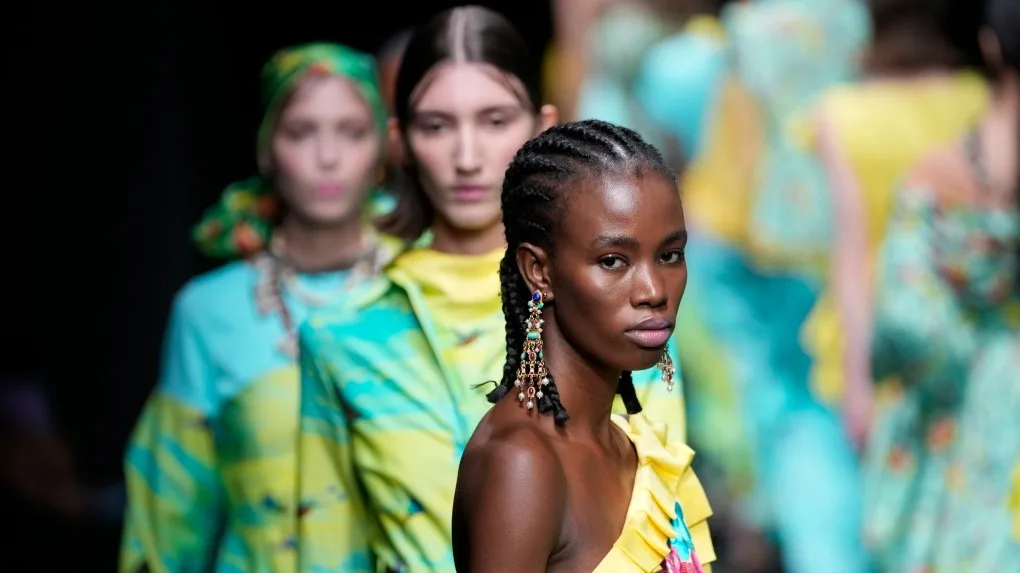
The collection featured tiered and ruffled skirts and jackets with built-in capes that were both regal, as seen in an off-shoulder dress sweeping the ground, and hip, including a mini day-dresses and shoulder-baring tunic. Textiles were an explosion of bright yellow against sky blue, with tropic prints featuring thatched cottages against flourishing banana trees, which Meribe said was meant to celebrate a return to more normality.

“We have passed from a dark moment, and I wanted to create something full of hope and light, the joy of restarting,’’ she said backstage.

The initiative that launched Meribe opened its second edition this fashion week, an all-female group of designers working in Italy with roots in Togo, Morocco, Haiti, Cuba, and India, following last year’s “Fab Five” inaugural class of all African-born designers.

“There is a movement happening,’’ said Buchanan, the American designer behind the Sansovino 6 label. “Of course everything takes time, but it takes somehow an industry to get used to the idea that these are talents like any other.”

To point, they have created a database of more than 3,000 fashion professionals with diverse racial and ethnic backgrounds living in Italy, including designers, merchandisers, photographers, and stylists, with the aim of putting to rest the notion that diverse talents weren’t available in Italy.

But even while marking progress on diversity being made in the industry, organizers said that a racist incident at a four-star hotel in Milan aimed at this year’s “Fab Five” underlined the work still ahead.

Ngonmo said that she was checking into the hotel with the five women when the desk clerks rudely dismissed routine requests by paying guests, indicating that they didn’t belong there. She posted the incident on social media and later spoke with management, who apologized and fired the two workers responsible.

“They dehumanized us, taking away our humanity and treating us like animals. It is really, really bad,’’ Ngonmo said.

Jean said the incident “is the proof that everything we are doing today, more than ever, needs to be done. It is a necessity.”

Content courtesy of abc News & Nairobi fashion hub 


The Story Behind Lupita Nyong’o’s Denim-Inspired Met Gala 2021 Beauty Look

Given that the springboard for Lupita Nyong’o’s 2021 Met Gala beauty was a Versace dress defined by a confluence of beaded detailing and denim panels, an above-neck approach equal parts pretty and irreverent seems a natural match. Fortunately, longtime conspirators Vernon François (hair) and Nick Barose (makeup) were more than up to the task, each ensuring that, in this case, an “American” moment meant a supremely creative one.

https://www.instagram.com/p/CTyOkp2ojmz/?utm_source=ig_embed

“Brooklyn-born conceptual artist Lorna Simpson inspired the look,” said François of Nyong’o’s molded mane, its transparent folds designed to echo the delicacy of tulle. “[Simpson’s] take on texture is powerful, and I wanted to imitate the effortless wave and movement that she conveys in her work.”

François relied on hairpieces, ample pins, and a spritz of Redken’s Triple Pure 32 for maximum hold, along with an ardent communication of contrast, artistic freedom, and history. “Lupita is incredibly visionary and adventurous, not only does she have the most versatile kinky, coily, hair but the ability to wear and show the beauty of all hair textures,” he says. “I’ve always wanted to bring this technique to life within the Afro hair experience, and doing it for the Met Gala is mind-blowing.”

And while the striking hair may have matched the sculptural nature of the actor’s Versace dress, Barose’s makeup took its cues from its blue hue. The makeup artist used ten different shades of blue shadows pulled from two separate Lancôme Hypnôse 5-Color Eyeshadow Palettes, Bleu Hypnotique, and the soon-to-release Drama Denim with bright accents here and there for even more dimension. A rim of black eyeliner and brickish lipstick completed the look. The trick is the ’90s one, in step with Barose’s overarching inspiration.

“We’ve been exchanging images of the denim dress, which is kind of my heyday,” explained Barose. “I was so inspired by the supermodels of the ’90s and Versace, so it’s something that’s second nature to me. But we didn’t want to do anything too on the nose. It’s a different spin.” The makeup artist also cites Old Hollywood and Western films as references, the shared characteristic of all genres that of a femme fatale a woman who is strong, powerful, glamorous, and fierce. “Mostly fierce,” said Barose. “That word is thrown around a lot, but a Versace moment is always fierce.”

Content courtesy of Vogue Magazine & Nairobi fashion hub

Met Gala 2021 The Best Dressed on the Red Carpet

Last night saw the long-awaited return of the Met Gala, an event that is often dubbed ‘the Oscars of fashion, and which always sees celebrities and designers pull out all the stops to create truly memorable red-carpet moments. After 18 months of cancelled events as a result of the Covid-19 pandemic, last night’s gala was even more special than usual as the biggest supermodels, actresses, sports stars and influencers made their way up those very famous steps for the first time in a while.

This year’s exhibition, and therefore the accompanying theme, was ‘In America: A Lexicon of Fashion’ or ‘American Independence’ which celebrates the Costume Institute’s 75th anniversary and explores a modern vocabulary of American fashion. When it came to the gala outfits, we saw both obvious and subtle nods to American fashion, culture, and history, while plenty of American designers were represented at the event.

It was a truly exciting night for fashion and there were plenty of memorable red-carpet moments.

One of America’s greatest exports is the image of the rugged cowboy, so it’s honestly surprising that the beige carpet at the Met Gala 2021 wasn’t full of spurs, wide-brimmed hats, and sturdy boots. Despite that, plenty of stars lived up to the “In America” theme by embracing Western wear in some way. From Leon Bridges who went traditional in a fringed Bode jacket to Jennifer Lopez who channeled a couture adventurer in an earthy brown Ralph Lauren gown, the looks that embraced the West were also the ones that felt riskiest and most alive.

Ben Platt, in Christian Cowan and Lupita N’yongo, in Versace, both embraced denim, while Shawn Mendes opted for a shirtless look in leather pants by Michael Kors. Kacey Musgraves was more abstract in an equestrian-inspired high-waisted skirt and boots by Ralph Lauren, while Kim Petras honored her childhood as a horse girl by wearing a spectacular printed Collina Strada gown complete with a horse’s head hanging from her neck.

Iman in Harris Reed

It takes a lot to steal attention on the Met Gala red carpet, but Iman managed to do exactly this in a striking look by Harris Reed. The model wore a completely handmade crinoline and gold leaf gown, jacquard bustier, and flares, with an enormous statement hat which Reed created in collaboration with Vivienne Lake. The stylist described the moment as their “biggest dream come true to date”.

https://www.instagram.com/p/CTx8bY3I7av/?utm_source=ig_embed

Zoe Kravitz in Saint Laurent

Post-pandemic, naked dressing is definitely back on the menu. This was proven by a number of stars last night, including Zoë Kravitz, who looked absolutely breathtaking in a completely sheer, beaded Saint Laurent gown, with sparkling Jessica McCormack diamonds.

https://www.instagram.com/p/CTyHxtrqZQe/?utm_source=ig_embed

Paloma Elesser in Zac Posen

Model Paloma Elesser was the picture of old Hollywood glamour in a deep red satin gown by American designer Zac Posen, which featured a dramatic feathered train.

Kendall Jenner in Givenchy

Supermodel Kendall Jenner is no stranger to the Met Gala, and she is also no stranger to a sheer dress, but last night’s custom Givenchy ensemble may have been her best effort to date. The gown – which was embellished with crystals and featured a fishtail train and a jewelled neckpiece – was inspired by the house’s most famous muse, Audrey Hepburn, and a dress she wore in My Fair Lady.

https://www.instagram.com/p/CTyGAMoq67p/?utm_source=ig_embed

Lupita Nyong’o in Versace

While there was plenty of amazing fashion to be seen last night, the Met Gala theme of ‘American Independence’ was not always obvious with every single look. However, Lupita Nyong’o ticked all the right boxes with her denim Versace ballgown, which definitely nodded to all things USA.

https://www.instagram.com/p/CTyGYdxq1ua/?utm_source=ig_embed

Rihanna in Balenciaga

It was a big night for Balenciaga with the house responsible for dressing some of the biggest stars in the world. This included Rihanna, always the queen of the Met Gala red carpet, who this year wore a black voluminous gown and beanie from the house’s latest couture collection, which she paired with lots and lots of Bulgari diamonds.

https://www.instagram.com/p/CTyOxrKK00y/?utm_source=ig_embed

Gemma Chan in Prabal Gurung

British actress Gemma Chan pulled out all the stops with her embellished Prabal Gurung mini dress, which featured a dramatic mint-green train. The dress was a tribute to Anna May Wong, the first Chinese-American film star of Hollywood’s golden era. “A trailblazer, fashion icon, and woman ahead of her time – she paved the way for those who came after and continues to inspire,” Chan wrote.

Michaela Coel in Balenciaga

It was Michaela Coel’s first time at the Met Gala, and she certainly did not disappoint. The actress, writer, and director arrived in a full Balenciaga look, where she was covered in sequins. The jumpsuit was made in a bright electric blue colour, which was presumably a nod to the American flag.

Kaia Gerber in Oscar de la Renta

Another star that nodded to old Hollywood glamour was Kaia Gerber who looked timeless and beautiful in a strapless black ball gown by Oscar de la Renta. The custom black faille gown featured ivy vines, which were made of black thread-work embroidery and lined the top of the corset bodice.

https://www.instagram.com/p/CTx65YKoeom/?utm_source=ig_embed

Normani in Valentino

Normani had a picture-perfect moment in a Valentino couture gown for the 2021 Met Gala. The dress featured an enormous skirt, a dramatic train, and huge sleeves, all of which made for big, head-turning fashion, which is what this event is all about.

https://www.instagram.com/p/CTyJ9R0KxkE/?utm_source=ig_embed

Content courtesy of Harpers Bazaar, Met Gala & Nairobi fashion hub 

Everything We Know About the 2021 Met Gala

The 2021 Met Gala is tonight, September 13th, with live red carpet coverage starting at 5:30 p.m. EST. Typically held annually on the first Monday in May, the Met Gala aka fashion’s biggest night of the year returns this year as a smaller, more intimate affair than in years past.

(The soirée was canceled last year, and postponed to this September, due to COVID-19.) While it may look a little different this year, there will still be a red carpet filled with fabulous fashions and celebrity sightings.

So, ahead of the big bash, here are all the details we know about the event thus far including what the theme is, who’s hosting it, what the Costume Institute exhibit will entail, and what we can expect to see on the step and repeat.

https://www.instagram.com/p/CTyGYdxq1ua/?utm_source=ig_embed

What is the Met Gala?

The Met Ball, or Met Gala, is the fashion world equivalent of the Oscars. It’s an evening when designers, models, and Hollywood stars convene in the year’s most over-the-top looks to celebrate and fundraise at a new exhibit from the Metropolitan Museum of Art’s Costume Institute. Typically, everyone dresses to the theme, and according to the feel, of the exhibit; past themes have included camp, religion, punk, and more.

When and where is it?

The 2021 Met gala will be held as an intimate gala on September 13, at the Metropolitan Museum of Art in New York.

What’s this year’s theme?

The 2021 Met gala is focused on celebrating all things American fashion. Andrew Bolton, the Wendy Yu Curator in Charge of the Costume Institute, felt it was time to reexamine American identity and fashion, especially as it has changed over the last several years due to both political and social justice movements.

https://www.instagram.com/p/CTyEDUbKSgD/?utm_source=ig_embed

“I’ve been really impressed by American designers’ responses to the social and political climate, particularly around issues of body inclusivity and gender fluidity, and I’m just finding their work very, very self-reflective,” he told Vogue.

“I really do believe that American fashion is undergoing a renaissance. I think young designers, in particular, are at the vanguard of discussions about diversity and inclusion, as well as sustainability and transparency, much more so than their European counterparts, maybe with the exception of the English designers.”

What will the exhibit look like?

The Costume Institute will actually present a two-part 2021 exhibit, “In America: A Lexicon of Fashion” and “In America: An Anthology of Fashion.”

https://www.instagram.com/p/CTyPVgXKpJC/?utm_source=ig_embed

Part one of the exhibition, “A Lexicon of Fashion,” will open on September 18 at the Anna Wintour Costume Center at the Met, marking the Costume Institute’s 75th anniversary. The exhibit will be organized to resemble a home, with intersecting walls and rooms that will establish what Bolton calls “a new vocabulary that’s more relevant and more reflective of the times in which we’re living.” Pieces from Christopher John Rogers, Sterling Ruby, Conner Ives, Prabal Gurung, and Andre Walker will be featured in part one of the exhibition.

Part two, “An Anthology of Fashion,” will open on May 5, 2022, in the period rooms of the museum’s American Wing. Bolton and the museum’s curatorial team will work with American film directors to create cinematic scenes within each room that depict a different history of American fashion. (A second Met gala will also take place on May 2, 2022, to mark the opening of “An Anthology of Fashion.”)

https://www.instagram.com/p/CTyZgE9IyMb/?utm_source=ig_embed

Who will be this year’s hosts?

Every year, the Met Gala has a number of cochairs who help host the event. For the 2021 Met gala, Timothée Chalamet, Billie Eilish, Amanda Gorman, and Naomi Osaka will co-chair the affair, while Tom Ford, Instagram’s Adam Mosseri, and Anna Wintour will serve as the honorary chairs.

https://www.instagram.com/p/CTx8bY3I7av/?utm_source=ig_embed

Will there be a red carpet?

Yes! While it’s a more intimate affair this year, to follow COVID-19 safety protocols, there will still be a step and repeat happening on the iconic Met steps. Get ready to take in all of the bold, outré ensembles.

Is there a formal dress code?

Yes. American Independence is the official dress code listed on the invitation for the 2021 Met gala. Expect this to be translated in more ways than one, though—from flashy star-spangled outfits to classic gowns made by American designers. With the Met Gala, the number one rule is to always expect the unexpected.

https://www.instagram.com/p/CTx4iBJo7Du/?utm_source=ig_embed

Who’s invited to the Met Gala this year?

Part of the fun of the Met gala is not knowing who will show up! Designers typically invite the buzziest celebrities of the moment as their guests, so you can expect some big Hollywood names on the carpet.

Can I watch the Met Gala?

Yes: Vogue will be broadcasting the only official Livestream from the event, providing unprecedented access to the splashy event. Beginning at 5:30 P.M. EST, the Livestream can be viewed here on the night of, and it will even be hosted by two special guests: Actor and recording artist Keke Palmer, and actor, writer, and director Ilana Glazer. Together, they will provide unprecedented access to the Met Gala’s famous red carpet, interviewing high-profile guests as they arrive in grand style.

https://www.instagram.com/p/CTyJ9R0KxkE/?utm_source=ig_embed

Are there Covid safety protocols in place?

The health and safety of guests and staff are a top priority. All attendees must provide proof of full vaccination, provide a negative rapid PCR test the day before, and wear proper face coverings when indoors except when eating or drinking.

Content courtesy of Vogue Magazine & Nairobi fashion hub  

Kenyan Genge Musician Nonini Launches Footwear Line In US, Shoe Designed in Italy

Kenyan rapper Hubert Nakitare better known as Nonini has launched a footwear line under his Mgenge2RU in the US. The artiste confirmed the info through his social media platforms. The shoe edition was created by Italian master-crafts, AliveShoes, who have many of their shoe editions appearing in international magazines like Vogue.

According to Nonini, he has invested over Ksh 2million in the shoe line and hopes the merchandise gets global recognition. “The shoes going for Ksh24, 000 are real international quality wear. They have been produced and endorsed by one of the best Italian shoe companies,” said the rapper.

His latest design is a unique and limited edition shoe wear in which he has collaborated with Italian master-crafts AliveShoes, through its founder and CEO, Luca Botticelli, AliveShoes, certified Nonini’s designer shoes for distribution and sale to the public this week.

The announcement comes days after Nonini and his team met the Floyd Mayweather African team in Las Vegas to discuss collaborative ideas they can work on touching on the apparel business.

“The US is a lucrative market because as you know, their economy is thriving and that is why my products are doing well here,” he expounded on his choice of launching in the US. Besides seeking performance opportunities, the rapper relocated to the United States of America four months ago, where he has been consulting on how to expand and monetize his ‘Mgenge2Ru’ brand.

“I am still working on my music with two major collaborations; one with Redsan and the other with Tanzanian rapper Chege, coming out soon. But I have discovered that all creatives in the world including US rapper Kanye West are trying to make it through brands.

“Fashion can take you places including those international fashion platforms like the New York Fashion week and so I have my eyes on the prize. This is where all my focus is now,” the celebrated hip-hop star who was part of the Kenyan hip-hop revolution in the 2000s said.

Popular for his big songs such as ‘Furahiday’, ‘Mtoto Mzuri’, ‘Keroro’ and ‘Nimetoka Mbali’, Nonini started working on his fashion design Mgenge2Ru when he was still at Calif Records.

He recalls how he would visit Gikomba market to buy clothes that he would then brand and sell to his fans. This is how the popular Calif Records T-shirts came up.

“It is only that Mgenge2Ru apparel is exploding now otherwise what people are seeing now is a result of constant work dating back many years. The time I have put in this cannot be measured.

“In the last two years, I have put in about Sh2 million into the work and that tells you that since I have no partner this is a real investment that has gone into it. I am trying to create merchandise that is self-sustainable and one that earns itself a good international identity. This is a game-changer,” he said.

Nonini’s music career is also thriving.

“Last Saturday I performed in Oakland in California among other shows and it is during my interactions with fans that I am learning what they want in terms of fashion,” Nonini said.

Nonini is not the only Kenyan making it big in the US when it comes to fashion designs.

Zedekiah Lukoye, aka Zeddie Loky, the founder and CEO of California-based Blkkburd Genes has been making waves in the US with his designs showcasing Kenya’s exquisite features, recently, he hit international headlines after rapper Jay-Z was spotted wearing his designer T-shirt showing Lamu’s Riyadh Mosque.

Each pair of kicks comes with collector edition packaging, You can buy your own pair here.

Mgenge 2Ru Kicks 
Mgenge2ru Jeshi Ed
Mgenge2RU Ladies 
Mgenge2ru Kids 
Mgenge2ru Kids 

Content courtesy of Mgenge 2ru Brand & Nairobi fashion hub 

Milan Fashion Week Returns in Full Swing With IRL Events

Camera Della Moda officially unveiled the rich schedule for September, which will see 173 appointments, 125 of which to be held in person.

MILAN — “Energy” was a recurrent word during the press conference Italy’s Camera Della Moda president Carlo Capasa hosted on Tuesday to officially present the Milan Fashion Week schedule.

Capasa particularly expressed his satisfaction over the return of physical events, which will account for 125 of the 173 appointments scheduled for show week, which will run from Sept. 21 to 27.

“We’re inverting the trend compared to the last couple of [mainly digital] editions, which is something that gives us a powerful injection of energy in this moment,” said Capasa.

The schedule features 42 IRL shows out of 65 in total. For instance, Roberto Cavalli, under the creative direction of Fausto Puglisi; Moncler, and Boss, the sister collection of Hugo Boss, are returning to the calendar and set to host physical events. For the first time, brands such as MM6 Maison Margiela, HUI, and Vitelli will stage runway shows in Milan.

Prada, Fendi, Giorgio Armani, Versace, Missoni, Salvatore Ferragamo, Marni, Max Mara, Jil Sander, Alberta Ferretti, Etro, and MSGM are among the established names slated to present their collections in-person, while Emilio Pucci, Dsquared2, Antonio Marras, GCDS, and Philipp Plein are some of the brands sticking to the digital format this season.

As reported, Gucci will head to Los Angeles to present its next collection on Nov. 2, coinciding with the LACMA Art+Film Gala taking place on Nov. 6, for which the fashion house is the founding and presenting sponsor. Yet the brand will host a special event dubbed “Vault” during Milan Fashion Week, the details of which are still under wraps.

Moschino and Bottega Veneta are missing from the Italian schedule as the former will showcase its women’s spring 2022 collection as part of New York Fashion Week, while the latter, after decamping to London and Berlin, will stage a show in Detroit on Oct. 21.

In addition to Gucci, other events on the Milanese calendar will include the “The Way We Are” exhibition marking the 40th anniversary of the creation of the Emporio Armani brand and to be staged at the Armani Silos venue, as well as cocktail parties celebrating the 20th anniversary of Pomellato’s “Nudo” collection, the 50-year career of Chiara Boni and the 60th anniversary of the Marcolin eyewear company.

As for the annual “Green Carpets Fashion Awards,” this year Camera Della Moda will forgo the event that traditionally wrapped the city’s fashion week in September. Having ended the collaboration with Livia Firth and the Eco-Age agency, the Italian fashion chamber will reprise the event next year under the new name, “CNMI Sustainable Fashion Awards.” More details will be unveiled on Sept. 22, when the organization will host an event, but Capasa said that the concept will remain the same and continue to acknowledge the work of those who stand out for their application of sustainability principles in fashion.

Shows at Milan Fashion Week will officially kick off on Sept. 22 with the We Are Made in Italy (Black Lives Matter in Italian Fashion Collective) digital presentation, offering five new talents who are people of color the chance to display their collections in a video filmed by Antonio Dikele DiStefano, the writer, and filmmaker behind the Netflix series “Zero.”

The Milan schedule will also mark the debut on the official calendar of labels including Colville, Andreadamo, Defiance by Nicola Bacchilega, Roberto Di Stefano, Iuri, Traffico, Radica Studio, and Airin Tribal, among others.

All physical events will be accessible upon the showing of the “Green Pass” as per the Italian government’s decision. The pass enables citizens to enter schools, bars, restaurants, cinemas, and other indoor venues by certifying they have been vaccinated, read negative to a test, or recovered from COVID-19 in the previous six months.

Capasa himself strongly appealed to everyone to get vaccinated as “this is the only weapon we have against the virus” and underscored the beneficial effects the vaccination campaign had on the economy since the Italian fashion industry’s sales significantly rebounded in the first half of 2021, registering a 24 percent increase compared to the same period last year.

Projections for sales generated by the fashion industry and categories such as jewelry, beauty, and eyewear combined show 20.9 percent growth to 83.1 billion euros in 2021 compared to the 68.8 billion euros in 2020. In 2019, sales generated by those industries were 90.2 billion euros, so the positive projection elaborated by Camera Della Moda would still not mark a return to the pre-COVID-19 level.

“If the Christmas holiday season and relative sales will go well and this projection is confirmed, we would recover 15 billion euros out of the over 22.5 billion euros we lost last year. We wouldn’t make up for all the losses but we aim to recover the rest in 2022, if not even grow next year. I think there’s great attention on Italian fashion right now, and data on our export performance confirm this,” said Capasa.

Exports are expected to increase 24.5 percent to almost 70 billion euros by the end of 2021 compared to the previous year.

In the first five months of the year, exports of Italian fashion goods grew 27.6 percent. Top destinations included Switzerland, France, Germany as well as the U.S., and China, where exports were up 31.9 percent and 93.9 percent, respectively, compared to the same period last year.

As for Milan Fashion Week’s attendance, Capasa said that European and American buyers and members of the press are expected, while fashion operators from China won’t be present due to travel limitations.

The international appeal of the event will be boosted by many initiatives Camera Della Moda has included in the schedule.

These comprise the sixth edition of “Budapest Select,” spotlighting four Hungarian brands, and the first effort of the “Fashion Bridges” project it launched with South African institutions and South African Fashion Week earlier this year. Four former students of Polimoda were paired with young designers of the SAFW to develop capsule collections that will be unveiled during Milan Fashion Week, before traveling to Johannesburg Fashion Week at the end of October.

To further support young talents, the seventh edition of Milano Moda Graduate will showcase nine talents hailing from different Italian fashion schools, while emerging brands Amotea, Des Phemmes, Federico Cina, Froy, and Traffico will be promoted at Rinascente as part of the “Milano Fashionable Project” initiative developed by the retailer with Camera Della Moda.

Content courtesy of WWD & Nairobi fashion hub 


Luxury Brand Balenciaga’s $3000 take on the Plastic Storage Bag, Commonly Know as Osuofia Bag

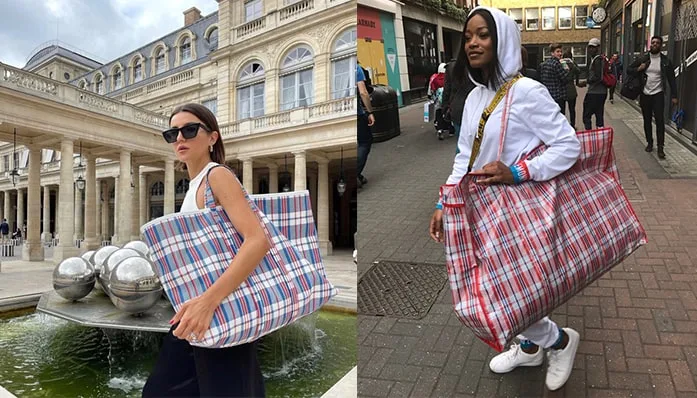
A $3000 tote bag by luxury brand Balenciaga has gone viral for its resemblance to a nostalgic and distinctly Kiwi accessory: the blue and red checked plastic storage bags you can buy for under $5.

“My grandmother had expensive taste,” wrote Twitter user @richy_wrld.
“Everyone knows this is the $2 marae blanket bag,” commented Green party co-leader Marama Davidson in response.

Broadcaster Kara Rickard shared a screenshot of the smaller version of the bag on her Instagram Stories, commenting, “What in the marae / nans whare/storage bag is going on here @balenciaga #maraeciaga”.

https://twitter.com/muthaterina/status/1433732211807715335?s=20

Balenciaga’s version is made in Italy from calfskin leather with organic cotton lining and is available in two sizes.

While it has obvious similarities to the local plastic bags used to store or transport everything from wool blankets to old clothes, it is actually also a style that is used around the world.

“Based on the quote RTs, I see it is a BIPOC household essential lol. Not just Polys” wrote Te Rina Triponel in the responses to her original tweet.

Around the world, there are various localized names for the style, including “shangazi kaja”, thailas and more. The BBC reported last year that the distinctive bags were popular in markets across West Africa, and are known as the “Ghana Must Go bag”.

“when in the 1980s hundreds of thousands of undocumented immigrants, most of them Ghanaians, hurriedly stuffed their belongings into them after being given short notice to leave Nigeria, it became known as Ghana Must Go.

A very similar style by Balenciaga had already been called out by Thai consumers in 2016 for its resemblance to the traditional market bags with their distinctive rainbow stripes.

Balenciaga’s designer Demna Gvasalia has become known for his ironic use of every day or capitalist symbols turned into luxury offerings.

In 2016 Demna’s other brand, Vetements, released a £185 slogan T-shirt featuring the DHL logo to much hype and ridicule, depending on what side of the fashion fence you fell (“Scam or subversion?” asked the Guardian at the time).

That was followed in 2017 with a Balenciaga tote bag that looked very similar to the famous bright blue plastic Ikea Frakta shopping bags (the “luxury” version was leather and handmade in Italy).

The brand recently released a neon yellow parka that was pretty much a very expensive version of a high-vis jacket, and last week launched a toolbox case for the Apple iPhone 12 think of it as a high fashion version of trolling.

This also isn’t the first time that the distinctive checked plastic of laundry/market/marae blanket bags has inspired luxury fashion designers.

In 2013 Phoebe Philo of French brand Celine memorably featured the blue, white, and red laundry-bag check on coats and such, while way back in 2007 Louis Vuitton sent models walking down the runway carrying designer versions of the bags.

While some say this is simply fashioned showcasing a sense of humor through parody, embracing high-low, or questioning the true definition of luxury, others criticize the appropriation of an affordable and accessible item, turned into something that is out of reach financially for most.

Balenciaga, owned by Kering, the conglomerate that also owns Gucci, Saint Laurent, Bottega Veneta, Alexander McQueen, and more, is set to open its first New Zealand store in Westfield Newmarket soon.

Content courtesy of  Stuff & Nairobi fashion hub 

Merck Foundation CEO Celebrated the Winners of “More Than a Mother” Fashion Awards 2020

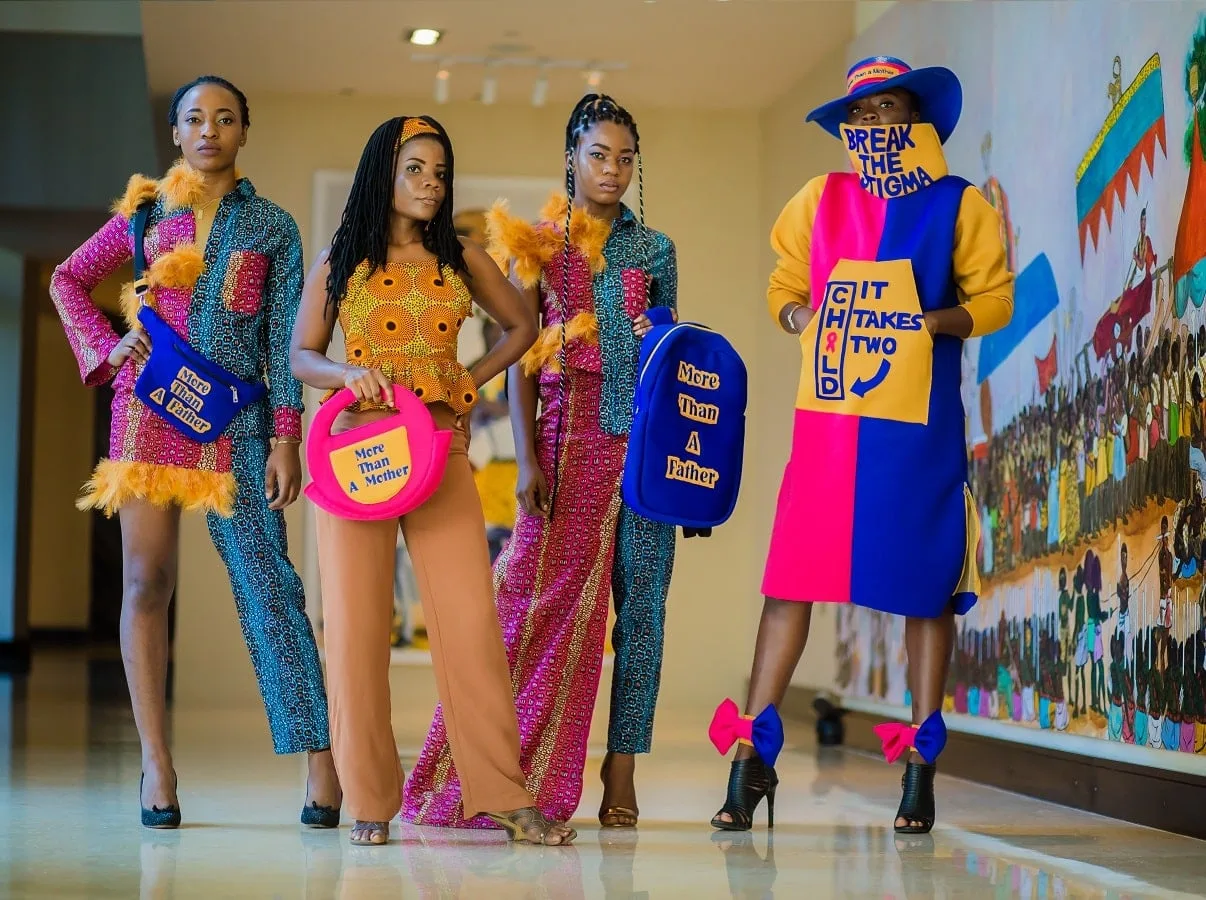
21 Winners of Merck Foundation More Than a Mother Fashion Awards 2020 from Ghana, Namibia and Zambia were celebrated during the ceremony new fashion awards 2021 were announced by Merck Foundation in partnership with African First Ladies.

Merck Foundation, the philanthropic arm of Merck KGaA Germany conducted an award ceremony to felicitate and celebrate the winners of ‘Merck Foundation More Than a Mother’ FASHION AWARDS 2020. The awards were announced in partnership with the African First Ladies, also the Ambassadors of Merck Foundation More Than a Mother.

Senator, Dr. Rasha Kelej, CEO of Merck Foundation and President of Merck Foundation More Than a Mother expressed, “I am very happy and proud to meet our winners of the Merck Foundation More Than a Mother Fashion Awards 2020 and welcome them to our newly established ‘Fashion with Purpose’ community. I am impressed with their designs that deliver strong and influential messages to empower infertile women and say ‘No to Infertility Stigma’, via sensitizing our communities”.

During the Award Ceremony, Merck Foundation CEO advised the winners, the young African Designers on how their respective designs can be created and executed to open a dialogue and create the culture shift desired.

The Videoconference was also attended by past winners of Merck Foundation More Than a Mother Fashion Awards. It was also attended by Fashion designers & students and media representatives across Africa.

“My vision is to develop a community of young African Fashion Designers in order to catalyze a movement, that reaches and extends far beyond just fashion, and creates a culture shift and be the voice of the voiceless in their communities.

The fashion industry has already got enough flakes for being superficial. Let’s change this perception and create a meaningful fashion trend aiming to educate our communities. I love fashion and I strongly believe that designers can make designs for Men and Women that they would be proud to wear to show their contribution toward their communities, villages, and cities across Africa”, added Senator Dr. Rasha Kelej.

As a part of the awards, Merck Foundation has provided the winners with one year of access to an online educational training program called “MasterClass” which is an immersive online experience and self-paced learning course that can be accessed anywhere with the Internet and offers online courses in many areas such as the art of designing, fashion, photography, lifestyle, discovering your inner voice and many other areas of Media, Film making and storytelling, etc.

“I am very excited to be a part of the ‘Fashion with a Purpose’ community in Africa, led by Senator, Dr. Rasha Kelej. She is a true fashion icon, who has a unique style. It was an absolute honor to meet her and be mentored by her. Thanks to Merck Foundation for involving us in such an important campaign”, emphasized Joel Musasa, Merck Foundation More Than a Mother Fashion Awards 2020 winner from Namibia.

During the Award Ceremony, Senator Dr. Rasha Kelej also announced the Call for Applications for their annual competitions for the best design that carries messages to address sensitive social and health issues. The two awards launched for the year 2021, for the African Fashion Designer community are:

  1. Merck Foundation Fashion Awards “More Than a Mother” 2021: All African Fashion Students and Designers are invited to create and share designs to deliver strong and influential messages to raise awareness about Infertility Prevention, Breaking Infertility stigma, and/or Empowering Girls and Women through Education.
  2. Merck Foundation “Make Your Own Mask” Fashion Awards 2021: All African Fashion Designers and Students are invited to create and share designs of masks and other clothing items that carry messages to encourage people to wear masks to show they care and at the same time make it creative and fun!

Content courtesy of Merck Foundation Fashion Awards

Stockholm Fashion Week Spring 2022, Aajiya Designer Maimuna Cole Is Dreaming Big

Among the most striking looks to appear at Copenhagen, Fashion Week were cowrie-print separates from Aajiya, a Stockholm-based brand founded by Maimuna Cole. Born in Sweden with Gambian roots, Cole says she’s designing with a higher purpose (or two or three).

She’d like to raise the profile of Africans in fashion and hopes to contribute to the infrastructure of West Africa by moving her business there at some point. In the meantime, she’s busy building her own universe and filling it with colorful prints and romantic openwork dresses that are attracting a growing fan base that includes Seinabo Sey, Sabina Ddumba, and Gabrielle Union.

Here, Cole talks to Vogue Runway about her influential grandmother (for whom the line is named), the struggles she faces as a Black designer, and some of the people who inspire her.

When did you first become interested in fashion?
Where it all started was when I moved to Gambia when I was 10 years old, and I lived with my uncle and my grandmother. They have a huge atelier there, and every day they’re sewing from the morning tonight. I would see my grandmother taking the leftover fabrics and putting them together, and I always felt it was very cool. She was such a creative woman and really inspiring to me, so I would also just take the pieces from here and there [and try] to make a top or skirt or whatever.

How did you start your business?
I started the concept of Aajiya when I was 16, and I’m 27. I was 16 when I moved back to Sweden, and I began small projects here and there. My first one was batik blazers, and the response from that was such that, I was like, Okay, maybe I’m good at this, so let me just start to do it. So I did, but then I felt like I was lacking the business part of it. So I studied business management.

After that, I was like, Now I feel like I’m kind of ready, but how do you start? Where do I go? Who do I connect with? So I went to Senegal for six months and created a collection, my first, which Seinabo Sey wore at Way Out West in 2019, and that became my viral moment. And that’s when I was like, You know what? I’m going to do this as a career.

What challenges did you face?
[After that I was] just kind of like, Do I want to stay here in Sweden? Because I never felt like I belonged in Sweden. I’ve never been comfortable. Growing up, I felt like I was always the outsider. I always felt like I was different, the only Black girl in the classroom. In fashion, it felt as if there was no door for us at all, like there was nowhere for us to turn, so we had to just move out of here. It’s like, you guys don’t want us to be part of this. We’re never invited to events; even internships are a problem.

I was like, If you don’t want to open the door for me, I’ll make sure to build my own door. Honestly, it’s sad that you have to leave your own home, your own country, to go somewhere else where you’re appreciated. [In Stockholm] it’s more like, Oh, we have our own circle; let’s stick with that. It’s been like that for years, and it’s not working so far because they haven’t really advanced in the fashion spectrum. If you look at America or England, everything is so diverse, things are happening, but here it’s just flatlined.

I can speak for a lot of Black people here, creatives; we always have to adapt. My story is I had to change my name to Maya because people couldn’t pronounce my name. It’s like, I’m losing my identity to adapt to you. I shouldn’t have to do that. You always have to adapt and it always feels like you don’t belong here. They speak English when they see you. And it’s like, No, I speak Swedish. Or it’s like, “How long have you been here?” No, I was born here. Why does it always have to be that conversation? And it’s daily all the time. I just don’t care anymore; I’m creating my own little bubble and if you want to come, you can come get some knowledge, some culture, some stories, so you can feel where I come from through my clothes.

Do you have any role models?
Selam  Fessahaye honestly opened the doors for us. I can say that because she definitely made me feel like I can do this too, being a woman and being from East Africa. I was like, Oh, my God, she really did this. And she did not care. She did that. She had the big silhouettes, the colors everything; it was so, so amazing. And for me, that really inspired me to also just not give a shit, basically.

Do you feel more comfortable in Sweden now?
I honestly had to create my own world and that is why my clothes are so loud prints, colors…. This is who I am and I’m not afraid to own my space.

How do your Swedish and African roots meet in your work?
My work is basically a description of me. I come from two worlds, and I’m putting that together and just creating strength through that. That’s the simplest way for me to explain it. And also African fashion has been so downplayed, and I just want Africans to take space in the fashion industry. It’s coming, it’s coming, but I’m taking my steps as well to be part of African fashion, to lift it up and [to] be more mainstream [so] you can go everywhere and [it’s] not just like a costume, so it’s beautiful. And I’m so excited for this.

Can you tell me about the cowrie print in your latest collection?
For me, this collection was an introduction of who I am, where I come from. And the cowrie shell has been so commercialized that the history of it has been kind of lost. So for me it was [like], Let me take that back and educate people and also wear it as armor. It’s just a luxury feel when you know the history of it. In Africa, it was the first currency before the colony, and for me, it was like, this is something rich and also very cool and very authentic, so why not put this as a print and just have loud colors on top of it?

What could the industry do to help you?
I think it’s becoming more open to new creatives, a new experience of clothes and not just sticking to just one thing. I’m starting to see that Africans are being more accepted in the fashion industry, like Kenneth Ize. He’s someone who is very inspiring, because he came and had his show in Paris, which was amazing, with fabrics that were made in Africa. That’s what I want to be.

I just want people to accept what I’m making, and in the near future, I’m going to introduce other fabrics, like batik that is handmade. There’s so much luxury in our culture, and I really want to show that to people. As Africans, we wear customized clothes every single time and bring that kind of luxury feel with fabrics that are handmade and sustainable as well.

What do you dream of doing long-term?
My ultimate goal is to have a studio in my home country and bring all the tailors together. The thing is, in Africa, they’re all self-taught, and they’re lacking skills that could be very good for them if they want to branch out and create their own stuff. My ultimate goal is to have my clothes made in Gambia. I make them in China right now. I want to move everything here, make all this stuff in Sweden.

And then once I feel like I’m stable enough, I can go to Gambia, back and forth, and just make my stuff from there. I really, really want to be part of the infrastructure in Gambia or Senegal. It’s a higher purpose, it really is. It’s not just to sell clothes or whatever; it’s to bring awareness to Africa, how creative they are, how sustainable they are really, because most of the things that they do, it’s [with] what they have. It’s a big job to do, but I am very determined.

Content courtesy of Vogue Magazine & Nairobi fashion hub 

Sharon Obara Crowned Miss World Kenya 2021 Winner at Trademark Hotel

Sharon Obara is the newly crowned Miss World Kenya. The beauty was crowned at an event held at The Trademark Hotel last evening in the presence of dignitaries, government officials, former beauty queens, and other invited guests. Chantou Kwamboka and Mwihaki Njogu took second and third place, respectively, Mokeira Onchiri took home the people’s choice award.

Sharon, whose biggest fear is living a mediocre life, takes over the crown from Wavinya Maria, who was emotional while handing over the throne to her.

The event saw guests entertained to the different categories in the pageant, including the dance segment, cultural wear, and the evening gown category.

ICT Cabinet Secretary Joe Mucheru and Nairobi Women Representative Esther Passaris were some of the government officials present. The CS was accompanied by Jomo Kenyatta and Jomo Pratt.

The elated CS, whose birthday was yesterday, promised to support the pageant further.
“As a ministry, we will step up and support this pageant. The kind of beauty and talent witnessed here today is one that cannot be undermined. Kenya has a lot of beauty”, said Mucheru as he made his remarks.

“It is my birthday today and I must say I chose the best place to celebrate this day,” said Mr. Joe Mucheru.

On her part, an emotional Terry Mungai, the franchise owner and CEO, was thankful for everyone present and was grateful to hear that the government would step in and support the work she has been doing with her able team for years.

“I have waited to hear the words that the government will support The Miss World Kenya franchise. Not that I haven’t heard these words before but I am happy to hear them from a man who truly means it”, said a teary Madam Terry.

The glam event saw guests dressed to the nines and had Obinna and Angela Muiruri as the emcees for the night.

Miss World Kenya 2021 judges included Emcee Ted Kwaka, singer Size 8, life coach Robert Burare and former Miss World Kenya, winners.

With the crown, Ms. Obara will now represent the country at the Miss World finals in December in Puerto Rico where she will battle for the global title with other 141 contestants to stand a chance to walk away with Sh10 million.

For winning Miss World Kenya 2021, she took home the crown and Sh250,000 prize money.

Ms. Chanton Kwamboka, who emerged as the first runner-up, was awarded Sh150,000 while the second runner-up Mary Kwamboka pocketed Sh70,000.

Sharon Obara will represent the country in Puerto Rico in December at the global competition.


Ad