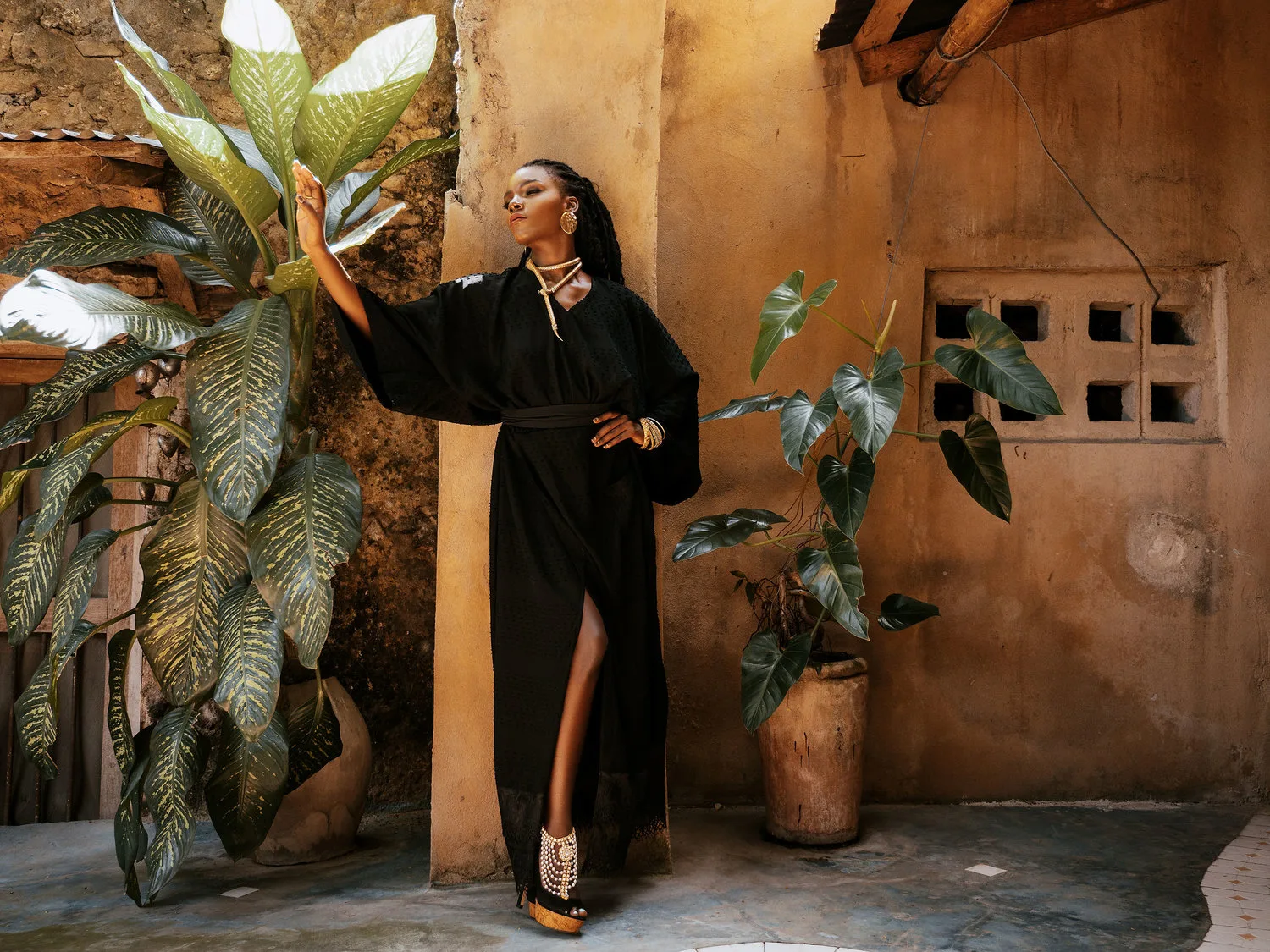
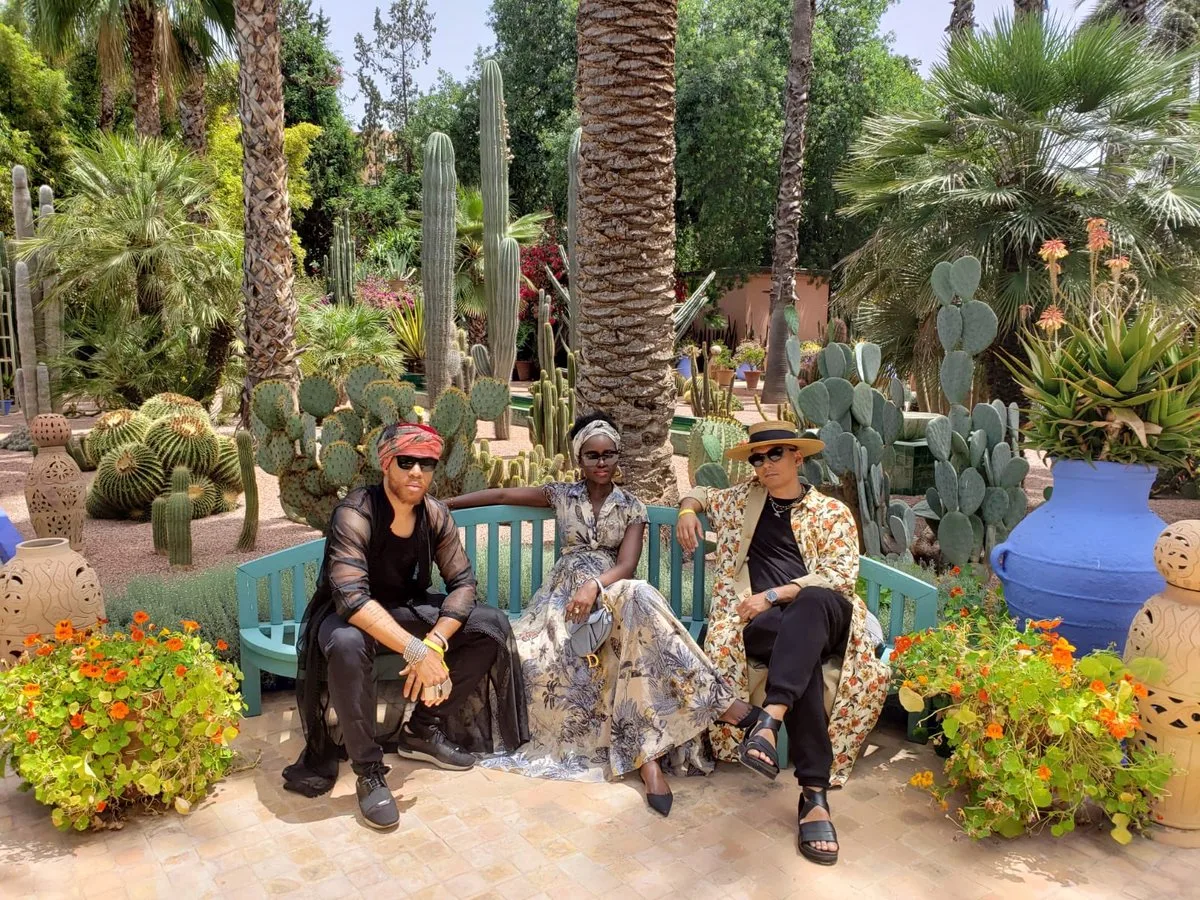
Sunny Dolat is a fashion curator, cultural producer and creative director who works independently as well as in the Nest Collective, which he co founded in 2012. The Nest is a multidisciplinary Kenyan squad who use film, fashion, literature, visual arts, events and music to work in in the intersections between aesthetics and communities; blackness/Africanness, feminism and queer theory; as well as design and technology, specifically located in the Kenyan experience.
Sunny has designed interventions such as Stingo & Chico Leco to provoke dialogue on the improvement of the infrastructure and operations of the East African fashion industry, as well as to shift the narrative and expectation of Kenyan fashion beyond ankara, kikoy and kanga. He centres his practice in making unapologetic statements about the beauty and dignity of black skin through works such as When We Are/When We Are Not.
Another project he helmed, a fashion book titled “Not African Enough”, is a voyage into contemporary Kenyan fashion and exploration of wider issues regarding Africa’s place in global cultural debate and dialogues. In it, Sunny challenged narrow definitions of African design and showcased original, unencumbered thinking and practice in this challenging sphere.
Over the past 2 years, Sunny has been transitioning into more curatorial capacities, taking leadership in Salt of the Earth for the Kenyan Pavilion at the International Fashion Showcase at Somerset House, and Beyond Expectations at the Institut Suedois in Paris among others.
Most notably, in July 2019, he curated and performed In Their Finest Robes, The Children Shall Return, an expansive fashion installation and ritual staged on the shores of Sao Tome and Principe for the N’gola Biennale, featuring 56 looks, one form every country on the continent and one from the diaspora.
Nigerian Fashion Designers are taking the fashion industry by storm worldwide, Nigerian fashion design is no longer a field that can be termed a waste or mediocre, The fashion designer is an all-around artiste pioneering style and trends. These designers serve you Nigeria’s latest fashion and African styles. Contemporary to contemporary, the art that is fashion has exploded into a canvas where each designer paints their vision. It can be said that Nigerian designers are capable of influencing the international fashion scene.
Though most Nigerian male designers are still on the come up in Nigerian fashion design, there’s room for more creatives to explore. Numerous platforms have been developed to showcase African fashion. The ARISE Fashion Week and Lagos Fashion Week have gone a long way in showcasing Nigeria to Nigerians and then the world.
1. Folake Folarin Coker
Folake Folarin-Coker is the founder of Tiffany Amber, a world-famous iconic label whose journey began in Lagos in 1998. Born in Lagos, she did her schooling in Europe (England, Scotland and Switzerland), where she got an opportunity to interact and engage with various cultures while still at a young age. Interestingly, she has a Master’s Degree in Petroleum Law from Switzerland, but as fate would have it, her insatiable passion for fashion led her into fashion design. Her curiosity for cultures steered her love and interest to focus on unique fashion designs that appeal to women of various tastes and preferences.
Folake’s tasteful and colorful creations have earned her global recognition, making her the first African fashion designer to showcase her talent at the New York Mercedes Fashion Week two years in a row. She has also been widely featured by International media houses such as CNN, and in 2013, she received an Enterprise Award at WIE (Women, Inspiration and Enterprise) Symposium. In addition, she has made it onto the Forbes Power Women in Africa list.
She has been instrumental in making the Nigerian fashion industry shine.
“Now, Nigerian fashion has a personality of its own. There are so many amazing designers in Nigeria doing such great things. If you mention a designer, someone would likely know who you were talking about. Ten years ago, that wasn’t the case. Lagos was more of a tailoring city back then as opposed to the designing city it has become,” Folarin-Coker said.
2. Duro Olowu
London-based, Nigerian born, Duro Olowu, shares both Nigerian and Jamaican roots and is a household name in both the Nigerian and global fashion industry. He is, undoubtedly, a well-respected Nigerian fashion design personality, famous for his unique and colorful African prints. He’s super talented in working with patterns, and his designs incorporate the rich culture, spirit, and diversity of the Nigerian people.
His interest in fashion began when he was only six years old and went on throughout his childhood. Olowu’s talent has earned him global fame and recognition with top clients to his name such as Michelle Obama, Solange Knowles, Uma Thurman, and Linda Evangelista, among others.
Despite being a lawyer by profession, fashion was Olowu’s first love. During his career, he has bagged numerous awards further raising his profile in the global fashion industry. In 2005, he was the first designer to be named New Designer of the Year at London Fashion Week without staging a catwalk show.
At the African Fashion Awards in 2009, he was named the Best International Designer and was one of the six nominees for the Swiss Textile Federation’s top prize of 100,000 Euros. Both British and American Vogue in 2005 named his waist patchwork “Duro,” as the “Dress of the Year.” One of Olowu’s famous quotes is, “My job is not dictating to women what they should wear; it is presenting them with beautiful options.”
3. Deola Sagoe
Deola Sagoe is a renowned Nigerian fashion designer, entrepreneur and founder of The House of Deola Sagoe. Her unique approach of designing lively and colorful prints has earned her a global following including notable personalities such as Oprah Winfrey and Will Smith, who have recognized her for her celebration of African prints.
Having launched her career in 1989, Sagoe has a Masters Degree in Finance and Management and has studied at both University of Lagos and University of Miami. She is a woman with many layers and this is reflected in her multilayered designs. Her signature designs, Attitude and Elegance, draw their inspiration from fabrics with a traditional Nigerian touch and western aesthetics.
She designed the label, Odua, for her mom, who played a major role in popularizing her in the industry. Her recent works include hand-dyed Adire fabric, which is made by Yoruba women. Her reputation spans beyond the African continent, earning her fame and respect.
Aside from showcasing her couture collection at Cape Town and New York Fashion Weeks, Deola won the MNET/Anglo Gold African Designs 2000 Award. United Nations World Food Program appointed her Nigeria’s ambassador to the program, “Catwalk the World: Fashion for Food.” This was aimed at raising funds to reduce, by half, the number of starving people in the world, especially children by 2015.
Her three daughters, Teni, Tiwa, and Aba Sagoe, have taken after their mother and are owners of the popular CLAN fashion label. Sagoe believes the African fashion industry has come a long way and there’s still plenty of room for growth “Just in Africa, there is a huge market, without even going to Europe… and the US, there is a huge market there,” Sagoe states.
4. Lisa Folawiyo
Lisa Folawiyo is a self-made Nigerian fashion designer who is famous for the way she creatively fuses traditional West African fabrics with modern tailoring techniques. She is known for her label, Jewel by Lisa, which she launched in 2005, and has since grown to become a global fashion brand with showrooms in New York and Nigeria.
Folawiyo uses Ankara, a traditional West African fabric, to create captivating and luxurious custom prints. She has her own fabric line that also produces accessories such as jewelry and purses. Line J Label, her diffusion line, showcases the best of Nigerian culture by incorporating Afropop with tasteful urban designs. Some of her celebrity fans include Beyonce, Kelis,Tasha Smith, and Eve.
Aside from Nigeria, her collections have been showcased in the UK, US, and South Africa. She has participated in New York Fashion Week 2010 and Paris Fashion Week 2010. Some of her career achievements include winner of the African Fashion Award in 2012, and she was featured in Vogue Italia in 2012. In 2014, Women’s Wear Daily (WWD) named Folawiyo among the eight emerging talents. In 2015, BOF500, a prestigious list of international brands, featured the designer among top fashion brands making an impact on the global scene.
Lisa Folawiyo studied Law at the University of Nigeria, but decided to pursue her love of fashion. She admits her style is simplistic but innovative, and she also loves to play around with colors and mix prints. International media houses such as Style.com, Gotham, and Women’s Wear Daily have reviewed her.
5. Soares Anthony
Soares Anthony is a young, energetic, and talented fashion designer who focuses on his men’s clothing line, Soares Anthony. His work draws inspiration from local Nigerian fabrics coupled with Japanese tailoring designs. His designs are masculine, yet modern and trendy by way of transforming an ordinary look into a sophisticated design that embraces elegance.
Anthony began acquired his love for fashion when he was a young boy where he spent his time sketching and drawing. He loves to work with colors, and his awesome talent has seen his pieces worn by famous politicians and celebrities. Young and successful, he is a talented fashion designer to watch out for as his name continues to cause ripples in both the local and global fashion industries.
His pieces are also sold globally in the UK, US, and France. Anthony uses his talent to make an impact on the community through a mentoring program he runs that helps young and upcoming Nigerian designers excel and compete on a global platform. Nature, colors, and artwork are his main sources of inspiration.
6. Lola Faturoti
Lola Faturoti is a Nigerian-born, New York-based fashion designer with extensive experience and renowned international repute. Faturoti, who hails from Ondo State, went on to school in London before moving to New York in the early 1990s. Her fashion journey began from childhood when she helped her grandmother, who was also a fashion designer. “I got interested in fashion because my grandmother was a designer. She designed Nigerian traditional clothes. That was my first introduction to fashion, which I hated because I wanted to be out playing instead of picking out seams!”
Her inspiration is mainly drawn from her roots, and Faturoti rose to fame in New York when she made a dress to celebrate Barack Obama’s election as President of the United States. The dress had these bold Yoruba words, “Oluwa gba President Barack Obama,” which means, “God Bless President Barack Obama.”
She confirms that her mother played a major role in defining her personal style. “My mom travelled a lot to London and New York. She bought me a lot of clothes, so I began to dress differently. I think that was the first introduction to me wanting to be different through clothing,” says Faturoti.
While in New York, she was employed in the Charivari Boutique where president of the company, Barbara Weiser, noticed her potential and passion for unique fashion and helped her launch her first fashion collection. Her passion for African fashion is profound. “Everything begins for me with the print and fabric, which usually has some shine,” exclaims Faturoti. Her deep African roots, as well as extensive global experience with having lived and worked in New York and Milan have been instrumental in her success and international spotlight.
7. Frank Oshodi
Frank Oshodi is a perfect presentation of how Nigerian cultural diversity has been embraced in unique fashion design trends. With extensive industry experience spanning over 25 years, Oshodi began his career as a model and was employed by top household fashion houses, such as Dakova and Nikki Africana.
He also worked on popular TV commercials such as Maclean’s before rising in the ranks to become a model manager. He went into choreography before finally launching his makeup label, House of Bunor and Fashion Designing. His big break came when Silverbird hired him to be the designer and makeup artist for Agbani Darego, who was the 2001 Miss World winner. Since then, Oshodi’s career has continuously rewarded him, enabling him to acquire many clients across the world.
Effortless beauty and elegance is the foundation of Oshodi’s career and is reflected in the years he has been in the industry. He has played a major role in numerous events such as The West African Fashion Week 2008, whose aim was to showcase the very best of Nigerian fashion. There’s no doubt that Oshodi’s journey so far is only the beginning of future successes that await him on the Nigerian fashion scene. He’s definitely a force to be reckoned with.
8. Zizi Cardow
Zizi Cardow has been instrumental in successfully showcasing the Nigerian fabric and culture on a global level. She launched her label, Zizi, which has seen her profile expand proudly, letting the world know how unique and elegant the Nigerian fabric is. She is credited with promoting the Ankara fabric, which has earned it global fame as the fabric is now being worn to red carpet events around the world.
When she was young, Cardow hoped to become a forensic profiler, but after landing her first fashion job at only 17 in an Italian-owned boutique ignited her interest in fashion. Being a popular African fashion ambassador, her success has seen her designs featured in many international catwalk events in Cape Town, Milan, Paris, the USA, and other destinations worldwide.
Her global revolution for the African fabric to be appreciated internationally has earned numerous awards, with the list being long and continuing to grow. In 2001, after only one year in the fashion industry, she bagged the Prestigious Designer of the Year Award at the Nigerian Fashion Show. With this award to her name, the world noticed her work, and her work was showcased on a global platform.
In 2002, other awards knocked at her door. The DAME Award recognized her for her outstanding achievement in fashion, and also winning the St. Moritz Style Selection Award and Nigerian Women Awards. From 2002, she kept winning numerous awards successively year after year, raising her profile in the industry. Some of the other major accolades Cardow has achieved include the 2010 UN Peace Ambassador, 2010 Global Leadership Award, 2010 Young Achievers Award, 2010 Fashion and Style Award, 2010 Merit Award for African Heritage, 2009 Zenith Award for Excellence, and 2007 African Role Model Leadership Award, as well as many others.
Her client base is vast, consisting of famous political figures and celebrities. She has also been featured by top international media houses such as CNN, SABC, Channel O, and FTV. Zizi Cardow has given back to society through numerous mentorship programs, which have, in turn, earned her awards.
9. Mai Atafo
Mai Atafo is a well-known Nigerian male bespoke designer. He rose into the limelight after launching his brand, Mai Atafo, which has been successful both on the local scene, as well as global fashion scene. His aim throughout his career has been to uniquely showcase the personality of a confident and elegant Nigerian gentleman.
Atafo is a trained IT specialist with a Master’s Degree in Information Systems and Technology from the UK. After returning from the UK in 2002, he worked in various positions in the corporate sector until 2010, when he resigned to pursue fashion full time.
Atafo’s clothing label has gained popularity while attracting top clientele. He has dressed personalities such as Most Beautiful Girl in Nigeria in 2005, Omowunmi Akinnifesi, and I.K. Osakioduwa. In addition, other famous personalities on his list are Mercy Johnson, 2Baba, Waje, Gbenro Ajibade, and Stephanie Okereke.
Atafo also launched his fashion line, Weddings by Mai, in 2011 with his designs being showcased at various high-profile events. Atafo has bagged numerous awards during his career to celebrate and appreciate his excellent craftsmanship. Some of the awards he has received include being the winner of City People Fashion and Style’s Hottest New Male Designer two years in a row, LFW Menswear Designer of the Year, Mode Men Magazine’s Fashion Designer of the Year, and Allure’s Most Stylish Man of the Year.
Atafo believes fashion is an all-round aspect. “Fashion goes beyond clothes. It is also hair and all those elements put together,” notes Atafo.
10. Ade Bakare
Ade Bakare is an established Nigerian fashion designer whose impeccable African designs have caused ripples around the globe. Having been in the fashion industry for two decades, his super elegant designs are popular, making him a household name in both Nigeria and London. His work is a perfect example of female sophistication.
Bakare was born and schooled in the UK, after which he was employed in some of the top and finest fashion houses of Christian Stambolian and Victor Edelstein. In 1991, he founded Ade Bakare Couture and began selling his own collections to various boutiques in England, Scotland, and Channel Islands.
His work ranges from exclusive evening gowns to stylish wedding gowns, hats and fragrances. He deals with high-end clients in both Nigeria and London, who have recognized his over-the-top fashion talent. Bakare also has perfumes named Breeze, and Ade Breeze which is a jersey line of his brand.
Bakare’s work has been showcased around the world in places such as New York, Vienna, Mozambique, Morocco, Paris, and Cape Town. Aside from having numerous English personalities and celebrities wearing his pieces, he also has first ladies, senators, and minister’s wives as clients. He has also been involved in numerous programs geared to inspire upcoming designers. The Ministry of Youth and Culture recognized Bakare for this role in supporting young and upcoming fashion designers.
Bakare has also received awards from the Paris Academy and Conde Nast Publication. His dresses are known to be classic with a modern twist while spanning various types of fabrics. Bakare is well-known and celebrated for his famous and luxurious female gazar and organza sweep coasts.
11. Kenneth Ize
Kenneth Ize’s name is on everyone’s lips. The Nigerian fashion designer and finalist for this year’s prestigious LVMH Prize, whose pieces have been worn by Naomi Campbell and Donald Glover, is giving a luxury finish to local artisanal aesthetics, rendering them desirable for high-end markets both at home and abroad.
Born in Lagos, Kenneth Ize is using his cross-cultural experiences to produce new contemporary forms in the Nigerian fashion industry. The designer received his fashion and design diploma in 2015, at the University of Applied Arts in Vienna, under Hussein Chalayan. In this same year Izedonmwen also received the Fred Adlmüller scholarship during his graduation show.
Kenneth officially launched his fashion brand in Lagos in 2013, immediately after his 3 year in university in which Bernhard Wilhelm headed the fashion department. His knowledge and diverse experience from assisting Edun to Asher Levine in New York has flourished Kenneth into a talented creator. He is utilising his international expertise to contribute to an emerging Nigerian fashion industry, being recognised as a key player during Lagos fashion and design week for three consecutive years.
12. Lanre da Silva
Lanre da Silva born 1978 is a Lagos-based fashion designer considered to be one of Nigeria’s leading couturiers. Launched in 2005, her eponymous label includes couture, ready-to-wear, jewelry and hairpieces. Da Silva’s collections often incorporate metallic fabrics, lace and African patterns, while referencing the 1940s or 1800s. The Africa Fashion Guide recognizes her as having “… created a name for herself in high fashion in Nigeria.”
After studying finance and business in the UK, Lanre Da Silva Ajayi changed her path and became a fashion designer in Nigeria. However, this did not happen over night. ‘Success, as we all know, is a learning curve that comes with patience, perseverance, hard work and endurance.’
Her passion for the industry is her major driving force to work hard all the time. Lanre’s style is rich in femininity and uses a multitude of embellishments. Lanre was flattered and excited when asked to collaborate on Vlisco’s Season 3 – 2017 lookbook, as she had always loved Vlisco fabrics. ‘I particularly love how they pay homage to African arts and that they are an authentic Dutch Wax brand, the original Wax Hollandais.’
13. Kubi Oyelese
Kubi Oyelese Popularly known as April By, a nickname coined from her birth month of April, Kubi Oyelese is famous for her beautiful bridal pieces as well as designing beautiful dresses for celebs like Agbani Darego, Tiwa Savage, Toke Makinwa, Seyi Shay and many others. A graduate of the renowned Fashion Institute of Technology of New York, Kubi’s company was founded in 2010
Toluwaloju Oluwofoyeku ” Toju Foyeh “
When we talk about fashion, we seldom think of professional and corporate jobs. Now imagine a lawyer who becomes a fashionista. Does it sound weird or unique? It is definitely not something you see or hear everyday but in a capsule, that is the story of cultural phenom, Toju Foyeh.
Toluwaloju Olowofoyeku was born on July 18, 1989. She is a young, beautiful, petite and talented fashion designer. She developed passion for fashion at a very young age. Her mother sells unique fabric and her grandmother was a designer.
The Toju Foyeh Brand is one of the strongest clothing lines for women of style and class. It has become the one stop shop for ladies looking for sophisticated and glamorous cocktail and evening dresses. She followed her dreams and now Toju Foyeh is a cultural phenomenon both at home and abroad. Her pieces have become legendary and now she is celebrated home and abroad.
Kathy Anthony
The Nigerian based renowned fashion designer, Kathy Anthony is a wiz with the Ankara fabric and imparts her knowledge through her fashion academy. Oluwatoyin Iwukemjika of Kathy Anthony is one fashion expert that knows how to make magic with fabrics. From the long standing aso-oke, ankara and lace to modern trends of fabrics and bridals, Kathy Anthony wows her clients with her delectable designs.
Specialized in female attires, she is the choice of many Nigerian fashionistas when it comes to making dresses for any occasion; evenings, owanbes, conferences etc., Her creativity has transcended the borders of the nation to gain international recognition. Recently, she did not only make the evening dress for the American Miss Minnesota pageant contestant, Kathryn Kueppers, the red floor-length chef d’oeuvre won the best evening wear/social impact statement at the preliminary competition. Kathryn eventually won Miss Minnesota at the main pageant.
Oluwatoyin Iwukemjika is a trained economist and had worked as a staff of Sterling Bank where she discovered her love for fashion design. She worked at some fashion houses before setting up Kathy Anthony in 2010, encouraged and supported by her husband. Kathy Anthony has become a hub for bespoke customers’ choice attires. The brand also runs a sessional fashion academy -the House of Style Fashion Academy. Kathy Anthony is a loud and clear statement in the Nigerian fashion industry and every Nigerian woman needs a piece of this in their wardrobes.
Yomi Makun
When it comes to Fashion among Nigerian Men in Nigeria, Yomi Casual is one of the resounding names that take the lead in the Industry. He is one highly talented man that has carved a niche for himself through his exceptional designs. This is evident in the high demand for his works by Men in Nigeria and Africa at large. Below is a concise biography of the exceptional Nigerian Men Fashion Designer.
In the whole of Nigeria and Africa, the founder and CEO of the biggest African inspired Ready to Wear Clothing Label, Yomi Casual stands as the most favorite fashion designer to a majority of entertainers and Celebrities far and wide. He has a passion and determination to always provide smashing styles and designs that speaks volume to the world.
The voice behind the fashion designs of Yomi Casual is targeted towards portraying the African culture and tradition. Talking about the Yomi Casual brand, it spreads across every city in Nigeria and Africa at large as a true representation of originality and perfection. The brand “Yomi Casual” even goes farther to penetrate the hearts and wardrobes of most big men and women, most especially politicians and celebrities in Nigeria.
Notable among the vast clientele base of the Yomi Casual brand are some prominent personalities including:: JJ Okocha, Desmond Elliot, Alex Ekubo, Sammie Okposo, Timaya, Alibaba, AY, Majid Mitchell, Bovi, Chioma Chukwuka, Chidi Mokeme, Ramsey Nouah Jnr, Seyi Law, and many others.
Yemi Osunkoya
Yemi Osunkoya is the award winning designer behind the Kosibah label,Yemi established the Kosibah brand in London in 1991 and named the company in honour of his mother. The name Cosiba comes from the Republic of Benin and is the day name of a female child born on a Sunday.
Among the awards that Kosibah and Yemi have won are:
International Designer of the Year, City People, Feb 2012
100+ Black Achievers, July 2010
Fashion Diversity, Nov 2009
Excellence Award, Gathering of Africa’s Best
Diamond Recognition from National Weddings UK, Sep 2005
Bridal Designer of the Year, 2002 and 2004, Mahogany Bridal Awards
Highly Commended, National Wedding Show, March 2002
Celebrated clients include Louise Rose, leading actress of Universal film Life & Lyrics,Alesha Harvey, Sheila Ferguson formerly of the Three Degrees, Hollywood actress Indra Ové, Miss World Agbani Darego, and singer Stephanie Benson. Kosibah’s clientele is truly worldwide, although particularly well represented in the UK, Nigeria and USA.
Kosibah specialises in contemporary and elegant couture bridal, evening and formal day wear using luxurious fabrics and sumptuous embellishments. Yemi’s signature use of corsetry and boned bodices cleverly recreates the classical and elegant hourglass figure, producing gowns that curve, shape and flatter the wearer. All gowns are made to measure and made to order.
Kola kuddus
Kola Kudus makes bold statement with men’s fashion, either African, western and the best of all, a mix of both! A fast-rising designer who has carved a niche for himself with his bespoke designs, Kola creates clothes for the modern man and his collection of clothes comes in brilliant colors, high quality and is timeless.
A product of London College of Fashion, Kola Kudus’ menswear label showcased its 2012 collection at the Lagos Fashion and Design Week (LFDW), a premiere fashion event that brings the media, fashion insiders, buyers and consumers to view the latest collections of selected designers.
Kola Kudus started as a personal shopper in 2004, the philosophy graduate grew into designing and outsourcing not as a pre-planned idea but it came to him when he had to make a career decision, seeing he was already in the line of business and because of his love for it, so in April/May of 2008, he setup up the fashion brand Kola Kuddus.
After Opening the Lagos Fashion and Design Week (LFDW), Kola Kudus has been featured on the Fashion and Style Section of The New York Times. He had sent his look-book and he received a feedback letter saying his work was not good enough. Then about a week to the event, he got another letter saying that his brand, Kola Kuddus has been chosen to participate in the show and it was this show that brought him the feature on The New York Times. This further strengthens the impression which he sought to give with his exclusive menswear.
As it is, He has come through the ranks of emerging designers to be in a place where he has forged and consolidated his place in the Nigerian fashion industry. “I will not say I am the best designer in the country. For me, being the best has never been the target in what I do. I have always said I wanted to be a greater designer and a successful designer. You do not have to be the best designer to be successful but I know I can be one of the best in the world, which is something that is achievable.”
The Kola Kudus brand, he said, is distinctly modern but marked by rich color, flawlessly constructed designs and quality fabrics. He remains loyal to African trends and styles yet epitomize global glamour by offering men his innate fashion sense. The ready-to-wear collections pay careful attention to detail and his classic and casual styles are developed with modern aesthetic.
Toyin Lawani
Toyin Lawani was born March 1st, 1982 and is a business mogul, fashion designer, creative director, and a fashion stylist. She is the CEO of Tiannah’s Empire. Toyin Lawani was born into an affluent family, one who shaped her drive to succeed. She started her business at the age of 16, whilst an English Language undergraduate at the University of Lagos, with a boutique that traded clothes, shoes and other accessories. This boutique later expanded to become a supermarket. At 17, she opened up a spa on Akoka road, Yaba, a Lagos suburb with surprising clientele.
Toyin Lawani trained at Opral Benson Training Institute, Los Angeles School of Fashion for a Diploma Course, Exodus Hair School in India and Johnyim Fashion and Beauty Institute in Korea. From all this exposure, she dabbled in fashion and other ventures. Now she runs 20 businesses in one building. Tiannah’s Styling is one of the leading fashion houses in Africa. With a large clientele ranging from media houses, politicians and top celebrities, you can spot a Toyin Lawani design from miles away.
Toyin Lawani has worked on several fashion shows within and outside the country showcasing different designs or coordinating the shows. She coordinated the Mademoiselle Aglaia Fashion show in 2012, Showcased even while she was four months pregnant at the 2013 Africa Fashion Week London, Showcased the Iro and Buba Evolution at the 2015 Africa Fashion Week Nigeria and showcased her kiddies line (Elegante Kids) at the same event. In 2016, Toyin Lawani made headline all over the world as the first Nigerian Designer to organize a celebrity and kids runway show simultaneously and more.
Ituen Basi
Ituen Basi is a remarkable fashion designer. She began her career as an undergraduate of Theatre Arts at the University of Ife, where she designed and tailored costumes for stage plays and beauty pageants. Her love for fashion took her to further her studies in the field at American College in London and London College of Fashion, where she majored in Tailoring and Clothing Technology. Ituen Basi launched her brand in Lagos in 2009 and she was largely recognised for her exemplary skills in fabric treatment and print manipulation.
Her Ankara designs shook the industry in 2012, introducing not just wearable art but Ankara beads and bags. Her hard work is evident as her Ankara collection got her The Most Innovative Designer award in 2009 whilst her ‘Independence’ collection earned her Emerging Designer of the Year, Africa 2010 at the Africa Fashion Week, Johannesburg. In 2011, at the first Arise Magazine Fashion Week, her Love Series collection landed her the Most Creative Designer. Her ‘Double Take’ collection at the 2012 Mercedes Benz Fashion Week Africa in Johannesburg, earned her Designer of the Year, Africa
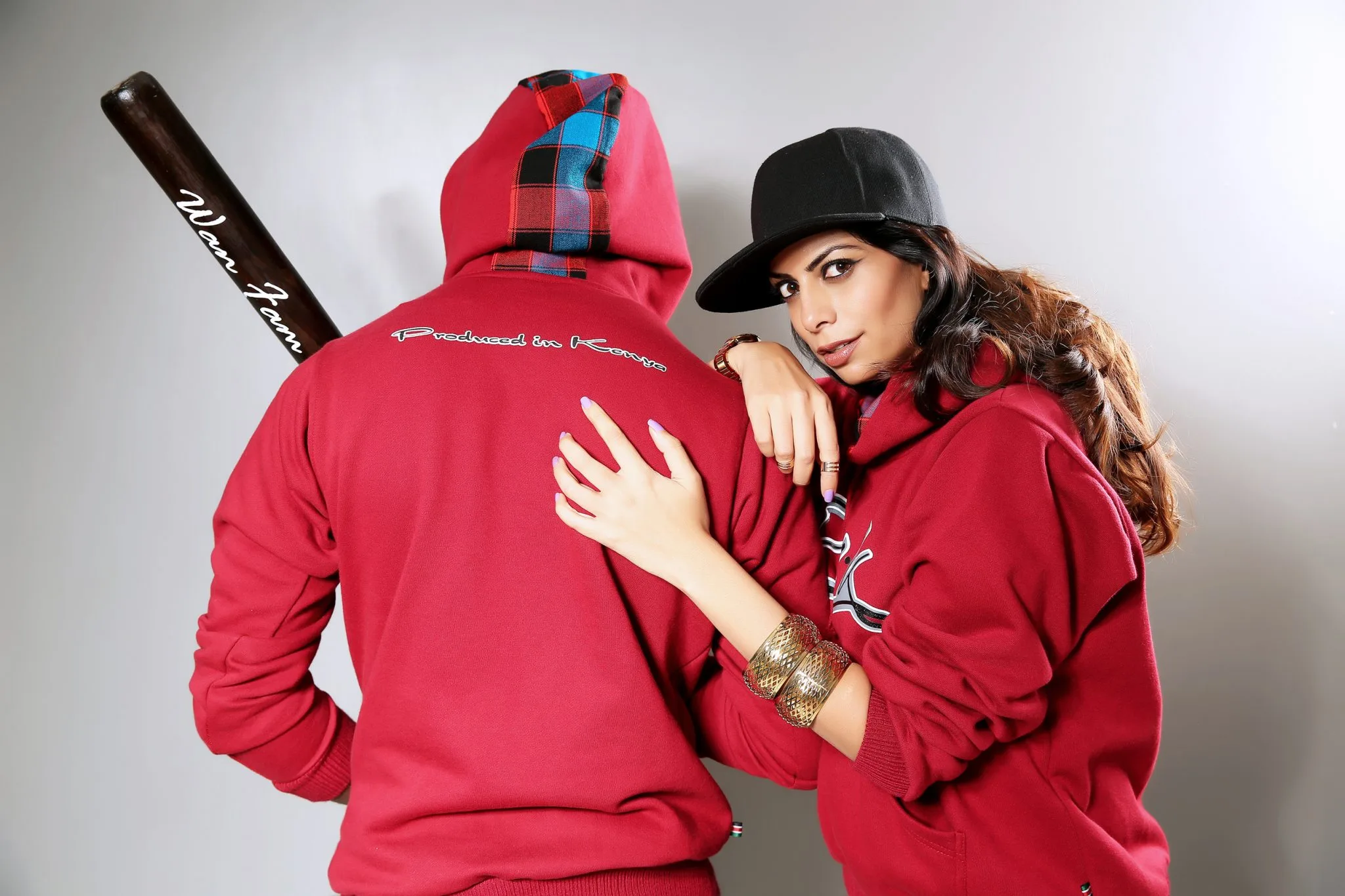
Brief introduction about yourself and your fashion house Name is Jeff Wanjala. I’m m the co-founder and CEO of Wan Fam Clothing
Can you describe Wan Fam Clothing, and the idea and concept as if I knew nothing about it or the market it is in? Wan Fam Clothing was founded by my brother, Mr. Emmanuel Wanjala and I in 2009 as when were were doing hand painted t shirts for client.
In 2011 Wan Fam Clothing was born and ventured into the fashion and apparel industry as a recent start-up manufacturer of an upscale urban fashion clothing line targeted at consumers between the ages of 16 and 35. Wan Fam Clothing not only develops the clothing line, but supports it with advertising and promotion campaigns.
Wan Fam Clothing markets its line as an alternative to existing clothing lines, and differentiate itself by marketing strategies, exclusiveness, and high brand awareness. The company uses high-end materials such as khaki, fleece, upholstery and twill. Current products include travel/gym bags, backpacks, sweatshirts, sweatpants, jackets, bags, and t-shirts both for men and women. Future plan includes business suits, children’s clothing, footwear and leather products.
The key message associated with the Wan Fam clothing line is upscale, local, versatile, and affordable clothing. In the future, the company hopes to develop lines of accessories for men, women, and also children.
What were you doing before Wan Fam Clothing, and what motivated you to start the business? I was a student. I have a friend called Chif who used to make hand painted t shirts for me and other clients. In 2009 he got employed and put his t shirt business on hold. I asked him for some brushes and paint and since I knew my brother was good at graffiti and sketching so we thought we tried his talent on t shirts.
We were constraint on cash so we bought second hand branded t-shirts, covered the branded works with white paint and branded our artwork on that. We did few t-shirts, posted on Facebook and got 13 orders and we grew from there
What techniques do you use? Tell us about the process. How did you learn/master this technique and why do you use it?
What challenges did you face? The biggest setback for us has been fabric availability and capital. Sometimes you get really good fabric, you make the products and when you go back to get more, it’s no longer available. This goes hand in hand with the fact we lack capital just to buy enough fabric and stock it.
Another setback which goes hand in hand with lack of capital is the fact we have created more demand than what we can actually supply. Which to an entrepreneur it’s one of the greatest achievements but I count it as a setback because some clients get disappointed when they don’t find what they like ready-made.
As for now we tell people to Pre-order in case whatever they want no longer in stock but at times you get clients who need our stuff there and then. Either they want to wear it at a specific event or they are flying out. So despite having created demand I can call it a setback since you end up disappointing a client who really has passion for Wan Fam products.
How did the obstacles make you feel? Definitely obstacles don’t create a good feeling but they helped me get better. They made us focus in what we can do and not put energy on what we cannot.
It also helped us not flood the market with our products but rather move at pace thus controlling what we give consumers and how we give them and also focus on what the consumer wants from our products
What were your achievements? a) We have managed to have sold out collections with the fastest selling in less than 48 hours. b) Managed to catch the eye of Cable News Network (CNN) and got featured on their African start-up program c) Managed to work with some influential people who I admire and my most notable one was working with personality Pinky Ghelani. The whole process and support was amazing. From doing a collection together to working on photo shoots together to exchanging ideas.
Favorite moments? The moments mentioned above and every step of the way has been a step to our goal and a learning experience thus every moment is what helps us get better and closer to what we want to be and stand for.
What’s your take about Kenya fashion industry? It still has a long way to go but it’s better than where it was when we started. Most of our problems can be solved at the top national level then the effect will be felt positively by designers, manufacturers, labourers and consumers in the fashion industry.
If you were given opportunity to work with local or international fashion designer who will you love to work with? Virgil Abloh
What are your thoughts on fashion in Africa? It’s amazing. Everyone has their eye on Africa now. We have brands like Kate Spade having some of their products made in Rwanda, Michael Kors bags being made in Ethiopia, United Aryan Ltd making Levi’s and Wrangler in Kenya, Philips-Van Heusen via the local subsidiary Hela Intimates making Victoria’s Secret, Calvin Klein, Tommy Hilfiger in Kenya..
The presence of big brands, just to name a few, in Africa is a sign that the African market is doing well at the moment with even bigger things in future.What we need are better policies which are not only written on paper but implemented on the ground that will see the market move in a direction where the designers, creatives and entrepreneurs in the industry get their share of the fashion pie.
How are African fashion designers influencing fashion in the western world? We have seen designers leaving people in awe at the New York Fashion week and also designers like Gold Carvier Crew leaving a mark at Vienna Fashion week this year. We have also seen celebrities like Beyonce, Rihanna, Gwen Stefani just to name a few rocking African designs while performing or red carpet events.
We have seen the influence African fashion and culture had on the blockbuster film Black Panther etc. So African fashion designers are now getting noticed for their incredible work, unique designs and influence. No just because they are African but because of the signature pieces, quality of works and stories behind each thread
What can the African fashion industry learn from the western world? The main thing, in my opinion, we can learn is setting up our products and services to those international standards already set and practiced by western world, This is in terms of the quality of raw materials, quality of finish products etc. Another thing we can learn from the western world is building of brands. Most designers are good at making the products but building brands around it becomes hard. We need to build African fashion brands. Brands create loyalty.
Having a brand name makes work easier in the long run, also creates a space where your work will speak for you not only now but in future. Designers should also learn about protection of intellectual property. Some designers put a lot of work on coming up with their name and products just for them to be counterfeited locally and internationally.
Lastly, Africa is a developing nation, thus we can learn what the developed countries did wrong and do things differently thus we don’t have the burden of having to experiment or focus so much on what doesn’t work but we can study the western world and pick only what works thus saving money, time and resources.
Over the last few years have you noticed any significant changes with the African fashion trends? Yes…there has been an increase in urban fashion brands with focus mainly on African made products rather than making items in Asia or other countries and selling locally.
When dealing with Africa is it important for the fashion world to be ethical and socially responsible, and put in place strong corporate social responsibility governance? Yes. Especially in Africa.
Unlike in developed countries, most of Africa’s clothing industry relies on unskilled labour for its production. Meaning most of our seamstress and other labour workers don’t come from a a well-off family or fashion education to back her production abilities and this shows that the less fortunate are the backbone of the industry so it’s only right the African fashion industry gives back to these important people and this can be done via CSR which may include training, education, social causes etc
Where can we find your designs? We are at Westlands Commercial Centre, Block B, Suite 3, You can contact us via +254705 818 84 or info@wanfamclothing.com We also do deliveries wherever you are
What does e-Commerce mean to you and your business? E-commerce is a very important tool especially in fashion especially in this digital age. And like many tools it can be a plus or minus for designers depending on how they adopt the wave into their businesses.
Do you think e-commerce is important for African fashion designers that are trying to get recognized and reach a global market? It is important but not as important as it is made out to be. Africa designers have managed to create unique products using unique materials and even marketing them uniquely so I think we should also sell them uniquely than just follow what the western markets have done.
The e-commerce sites are popping up every week and also closing down or being neglected at almost similar rate. E-commerce is an important tool but like every tool, it should be used correctly where appropriate to produce the best results
How does your strategy change when running an online store to an offline store? It changes because now you have all these different people from all over the globe that you need to server rather than a usual brick and mortar store where you server who you see and interact with. This means a lot will change since e-commerce can provide you with the information you need to curve your business’ future.
E commerce can provide info such as where most of your clients are, what they like, what colour or design they don’t like etc and this can help a designer know what to make in his or her next collections, what sizes to make more of and also understand his/her clientele in a different level.
This is something that a brick and mortar store will have limitations in. This information can help change how you make your item, how many items you make, your target and how to market. In turn this changes your whole strategy from design, marketing to even amending your business plan to fit with the market demand and supply
Where do you see African fashion in the next 5 to 10 years? ~ I’m sure I’ll see more fashion houses from Africa. ~ We’ll also see more designers being recognized in their works in terms of film costume designers, stylists etc. ~ Well also see more African fashion events being given international plat forms. Like the Lagos Fashion week, Dakar fashion week etc ~ I’m sure the future has international designers teaming up with African designers. We’ll see more clothing pieces being curated for African market than taking anything being given to us.
What 5 pieces of advice would you give to young African fashion designers wanting to enter the fashion industry? 1. Patience – Overnight success doesn’t take a night 2. Know what you want from the word go. I know people who started with clothing lines who are now doing business cards, food etc because they didn’t know what they wanted when starting 3. Do what you love 4. Don’t compromise on quality 5. Make products, work and partnerships with the long-run mind set. Think of building a name rather than quick cash
Is there anything else you would like to add? Just want to thank our clients and everyone who has supported us: From the ones who own all our collections in their closet, to those who set even a minute to visit our stand at events, to those who just show support online.
None of our achievements would have been possible without you and your unwavering support. There would be no Wan Fam (One Family) without you.
Content courtesy of Wan Fam Clothing & Nairobi fashion hub
Fiu Negru is an Angolan clothing line founded in 2013 by Mariângela Almeida and specializing in women’s ready-to-wear products. The brand aims to remain innovative without disrupting the practices and traditional of Angolan craftsmanship. The preservation of the designer’s African heritage lies at the heart of the brand, and even the name Fiu Negru is a nod to the past.
“Fiu Negru [meaning Black Thread] refers to our past. It is the link that we have with our ancestors, our culture and our traditions,” the designer said, speaking to Villas & Golf, Angola. Having been named Angolan Fashion Designer of the Year in 2015 by Moda Luanda, the brand continues to grow and spread its reach.
In this collection, the brand Featured its own version of the logo mania trend – the brand employed sporty flourishes and details in a series of maxi and slip dresses in a soft palette of pale yellow, tamarind and millennial pink.
Content courtesy of Fiu Negru & Nairobi Fashion Hub
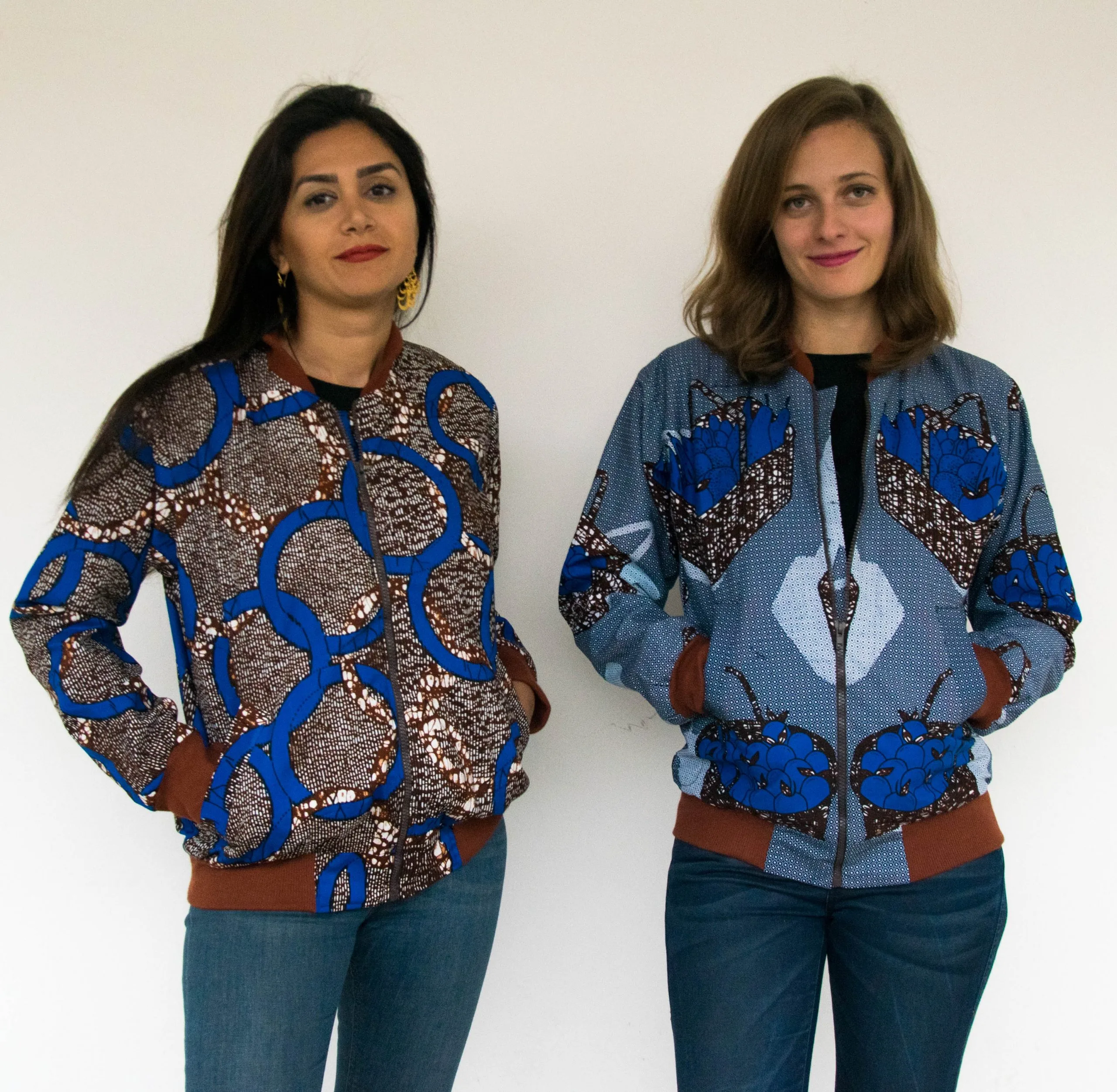
My name is Kevin Outa, and I am a self-taught photographer and designer based in Nairobi, Kenya, specializing in creative portraiture, fashion photography, and food photography. I also hold a Bachelors’ degree in Political Science and Economics from the University of Nairobi (but I haven’t used it so much) Deep End Clothing is a Nairobi-based fashion enterprise that focuses on the creation of Africanized Denimwear. This means that we create both clothes and bags from denim and a mix of different African fabrics.
Can you describe Deep end Clothing, and the idea and concept as if I knew nothing about it or the market it is in? Deep End Clothing is an online fashion house that specializes in the creation of bespoke denim clothing items such as bags, jackets, dresses, shirts, and trousers, among others. We make custom designs using denim as the primary fabric, mixing it with either Ankara, khaki, or the legendary Maasai shuka.
We also specialize in developing branded items, such as t-shirts. As for the market segment, Deep End Clothing targets the middle to luxury segment. This is because we mainly concentrate on developing custom designs as per the specifications of our clients. However, this does not mean that we do not create our own designs; we do, as a means to show our potential customers what they can expect when they choose to work with us.
Some of Deep End Clothing Collections check out their Instagram page @deependke
What were you doing before Deep end Clothing, and what motivated you to start the business? Before Deep End Clothing, I was still at the university and navigating my early years as a photographer. In 2016, when I originally conceived the idea of this brand, I saw it as a means to expand my reach as a photographer. This is because I believed that it would enable me to interact with more people who could be interested in my services as a photographer.
After a lot of mental and financial push and pull, we finally created our first designs in September 2017. Many things have changed for me and for Deep End Clothing since that time. The focus has shifted from me wanting to reach more people as a photographer, to me wanting to build a Kenyan fashion brand that will stand out and redefine the current wave of African street style. We might still be a long way off, but there is no better way to dream than to go for something that seems out of your reach.
What techniques do you use? Tell us about the process. As a brand that creates both bags and clothing, we usually rely on the services of two very talented tailors to actualize our bespoke designs; one for the bags, and another for the clothing items. Most of our designs are usually hand-drawn, but I also use inspiration from platforms such as Pinterest and Instagram.
This helps me know what designs are currently trending, and how I can remake them into something that is truly representative of Deep End Clothing. Once I develop the designs or receive some recommendations from a client, I have to decide and inform them on which material mix would work best for that particular design. For clothing items, I usually have to meet with the clients so that I can get their specific measurements.
The next step is to liaise with our tailors and see if the designs are workable. If they are, then the next step is to source the materials (which I do personally), and deliver them to the tailor, depending on whether it is a bag or piece of clothing. On average, it takes about a week to create and deliver the designs to our clients.
How did you learn/master this technique and why do you use it? Like most things in this life, I learned and understood the design and creation process on the fly. It helps that I work with highly-skilled tailors who guide me and have helped me grow and develop Deep End Clothing into the brand that it is today. There have been a few times where I have made mistakes and they laughed at me so much, but I have come to see the importance of taking it all in stride and using such experiences to learn more.
It also helps to laugh at yourself! I feel that this method works best for our brand because we are still relatively young, and the ability to create bespoke items makes it easier for me to control the output in terms of quality and client specification. We stick to this method because it allows us to focus on producing high-quality denim designs that will interest our potential customer base, by targeting them directly.We do not want to rush into mass producing substandard products due to lack of production capacity.
What challenges did you face? As a young brand, I would say the biggest challenge for us was to put our products out there. When you develop new products, there is always that nagging feeling at the back of your mind. For me, this is because you start to think of how people will respond to you and your brand, and whether people will really like your product enough to buy it. As a creative, this also happens when I finish working on a new photography project.
It happens every time I develop a new design. Over time, I have come to understand that you will never really know the potential of what you hold until you put it out there. I still struggle with this, but it is not actually an obstacle you can clear, but a journey that you have to go through every day. Another challenge is trying to get people to understand the value of locally-made bespoke items.
There are many times I have encountered potential customers that want me to lower prices just because they saw a cheaper alternative elsewhere. This is very frustrating because they do not see the hard work, effort, and emotion that goes into building a Kenyan brand. Every time we put a single product out there, it bears the soul of up to five people; the designer, the person who sells the fabric, the tailor, the brand holder, and you. We all work together to ensure that you as our client get what you want.
For me, bespoke clothing carries more value than mass-produced items because it gives you the added luxury of buying something that you have actually contributed to its development (financially and design-wise) and fits you perfectly.
Some of Bags collections from Deep End Clothing
How did the obstacles make you feel? Angry. Frustrated. Depressed. Like our brand is not worthy. There were times where I felt like giving up altogether. These are things that we feel on a regular basis, but there is no other alternative than to push on. That is why our brand continues to produce designs for our wonderful community.
What were your achievements? Haha! It’s really hard to decide on a particular moment because the most notable achievement for me is to be able to meet new people through this brand; people that have unwaveringly built us up and supported us. I would consider this as one of the things we treasure deeply.
Favorite moments? I would say the best memory was when Deep End Clothing got the chance to exhibit some of our designs at last year’s edition of the PAWA Festival. It was an awesome experience to put our brand out there while interacting with denim enthusiasts and fellow creatives.
There was also a small disagreement with the County Government of Nairobi during the event, but thankfully, it was sorted out.
What’s your take on the Kenya fashion industry? The Kenyan fashion industry is a very diverse space with everyone having a particular taste that sets them apart. I see some people going back to retro styles and thrifted outfits, and others getting more into designing and creating their own outfits.
This is very exciting because it means that new designers and brands have the opportunity to develop a following for their products. The diversified nature of Kenyan fashion means that the industry is growing at a steady pace. There are exciting opportunities coming up all around that we cannot wait to get a hold of!
If you were given the opportunity to work with a local or international fashion designer who will you love to work with? Adele Dejak. Her designs and what she creates are just wow. I believe that the way she conveys Africa in her products is what every Kenyan brand aims to achieve.
What are your thoughts on fashion in Africa? I believe that fashion in Africa is getting noticed more and more on the global stage because African brands have embraced their authenticity and true nature. This means that even major players in the African fashion scene have started investing more in products that embrace their culture.
Therefore, when we present our designs on the global stage, they are truly representative of our African culture. This gives us an even better standing and we earn more respect from our peers globally. In totality, it creates an opening for African fashion brands to thrive worldwide.
How are African fashion designers influencing fashion in the western world? With the growth and expansion of the internet, it is becoming even easier for African designers to share their products online. This expands their reach globally, increasing their spheres of influence. I would say that the number of people from the western world who are interested in African products is increasing significantly. There are also fashion brands in the western world that embrace African-inspired designs and prints in some of their collections.
We cannot ignore the role that fashion designers from different parts of the world play in the global scene. As African designers, it is our responsibility to package our products in a manner that highlights our way of life and shows the world what we can do. When we constantly share this with the rest of the world, it gives people a deeper understanding of our diverse cultures. This, in turn, help increase our influence as more people want to learn about our brands that support African culture.
What can the African fashion industry learn from the western world? The emphasis on quality; both in service and the products offered. This has been deeply ingrained in my mind, and I feel it is the single most significant thing we can learn. The reason is that how you treat your customers (both returning and potential) will reflect on your ability to retain them.
The quality of your products will also determine just how people interested in your brand will interact with you. When your brand exemplifies quality in service, as well as develops high-quality and durable products, it becomes easier to build a trusting community around your brand.
Over the last few years have you noticed any significant changes in the African fashion trends? Creative autonomy. This means that more and more people are taking control of their own fashion sense. The focus has slowly shifted from people buying well-known names to them focusing on creating or working with fashion brands that can address their specific needs. This kind of shift has been necessitated by the need to be unique.
When you create something you love, you will be more comfortable and confident, and this will show in how you present yourself. This is what should form the basis of any brand. This is what I have built my brand on, and is what will dictate the emerging trends in the African fashion industry in the coming few years.
When dealing with Africa is it important for the fashion world to be ethical and socially responsible, and put in place strong corporate social responsibility governance? Yes, I believe this is very important. When building a brand from scratch, there are many ethical and social considerations. It is important to fully understand your base of operations so that you do not engage in activities that might be detrimental to the success and progress of your fashion brand, and the society at large.
However, it is important to understand that although different societies align with different values, this should not act as an impediment to our overall objective as creatives, which is to express ourselves through what we make. I believe there is a way to balance your values as a fashion house, with those of your society. It should not be a case where one supersedes the other, but a level ground for you to reconcile the aspects of social and ethical responsibility with the values of your brand.
Where can we find your designs? You can find most of our designs on Instagram ( @deependke ) and on Facebook ( Deep End Clothing ) You can also regularly find us at different pop up stores and locations, so make sure you follow us across our socials so that you get updates on when and where you can find us personally! It also doubles up as a good avenue for you to interact and engage with our brand.
What does eCommerce mean to you and your business? As an online-based business, e-commerce is one of the most important things in Deep End Clothing’s business structure. The ability to buy and sell products online makes it possible for us to share our designs with potential customers in our immediate environment, as well as all over the globe. Our business reach is limitless.
Do you think eCommerce is important for African fashion designers that are trying to get recognized and reach a global market? The internet and the rise of e-commerce have provided upcoming designers and young entrepreneurs the opportunity and platform to display their products and services on a global scale. The benefits of this cannot be understated. In this digital age, as long as you have a product or service you think people might be interested in, you can post it on social media and get immediate feedback.
You just have to be consistent and intentional in your efforts to ensure that your products get recognized. Competition is rife everywhere, especially in the global market. This means that although the platform to get your designs noticed is readily available, you have to work smart to guarantee that your products have a global reach.
How does your strategy change when running an online store to an offline store? As with running an offline store, operating an online store requires you to have a solid strategy to put you in a better position to make sales. In both cases, you will have to consider how you display your products, branding, and marketing plan, among other things. When you operate an offline store, you will also consider other aspects such as rent and miscellaneous expenses, store positioning (because of walk-ins), and hours of operation. On the other hand, if you run an online store, you have to consider which is the best platform to build a following on, how to get this following to engage with your online brand, and if you want to physically interact with this following.
You also have to think of the frequency of these physical interactions, as well as how you will deliver your products when people order from you. I believe that how you display your products online will contribute significantly to people engaging with your brand. This is because it is the first point of contact between you and your potential customer.
To this end, I have come to really appreciate the value of photography to ensure that you display all your products in an enticing and professional manner. You should also try to be responsive as possible to customer requests and inquiries to make sure that you do not lose any potential leads.
Where do you see African fashion in the next 5 to 10 years? With all the brands coming up, I believe that African fashion will have a very commanding presence in the international fashion scene. The number of people investing in and shopping with local brands will continue to grow considerably, locally and globally. I can attribute this to the growth of e-commerce as well because, with time, it will be even easier than it is now to sell and ship your products to any part of the world.
What 5 pieces of advice would you give to young African fashion designers wanting to enter the fashion industry?
Never hesitate to create what you love. This is the purest form of expression, and slowly but surely, people will start to see the value of what you make.
Do not be afraid to start small. It is very easy to put yourself off by thinking of what could go wrong, or feeling as though you do not have enough resources. Do not get lost in your head. Just start and bring your ideas to fruition. There’s nothing as satisfying as the feeling of seeing an idea or concept transform into something you can see and touch. We started Deep End Clothing with only two designs, then started building up slowly. You can do it too.
Focus on yourself and your brand. You are likely to yield to the temptation of comparing yourself with more successful fashion brands in your space. However, it is important not to dwell on these thoughts; you should concentrate on building your brand and use these established brands as your motivation to grow. They might as well be a very valuable asset in your network. Also, be sure to have adequate information about the business environment you want your brand to operate in.
Specialize. When starting out, it is important to have a signature style that will be associated with your brand. This helps you attract the kind of customers that you want to work with, and ensure that you retain them as part of your community. It also helps when you focus on creating a strong product base, one collection at a time.
Put your designs out there. Once you create something, share it. There are so many platforms for you to share your work with others. You will get honest feedback and even find people who might be willing to work with you. There is no need to develop something and just keep it to yourself; you should put it out there and always be ready for whatever people say. Absorb what you need to, and keep creating.
Is there anything else you would like to add? It is always difficult to share what you have created. You never know how others will respond to it, but I feel that if you have the need to create, you should do so and allow people to experience it with you. After all, sharing is caring, right?
Content courtesy of Deep End Clothing & Nairobi Fashion Hub
Fatmah Naeem began designing while studying optometry in the UK,instead of focusing on her lectures, Naeem would sketch outfits that she dreamt of making.
She decided to follow her dream and become a fashion designer, Naeem began studies in fashion design in Canada and never looked back,In 2012, Fatmah launched An-Nisa Abayas, mixing her Arabic and Indian heritage into her designs.
We always love a little drama in our Eid Collections, this year we wanted to give you light fabrics with pops of color here and there. Our Silk Kaftans are decorated with intricate hand embroidery in soft pastel colors.
An Nisa draws influence from the designer’s Indian/Zanzibari background. Named for the fourth chapter in the Holy Quran, which has 176 verses referring to women, brand was born from a need to provide local, contemporary designs to Tanzania’s sizable Muslim population.
There is a dark heart in all of us speaking to a forbidden interest in the things we don’t often speak about,Veils, lace, layers of luxurious fabrics and edgy silhouettes. This is a collection that honors all the things hidden with beauty,A combination of romanticism and a dark threatening appearance, is a common theme in this collection. While I was designing, I had a supernatural character in mind; Witches.
As the brand evolved, Naeem began to expand her range, incorporating kimonos and kaftans, in addition to the abayas that are the foundation of An Nisa. Using materials such as pure silk and lush velvet and incorporating a variety of prints and textures, An Nisa continues to create designs that span borders and cultures.
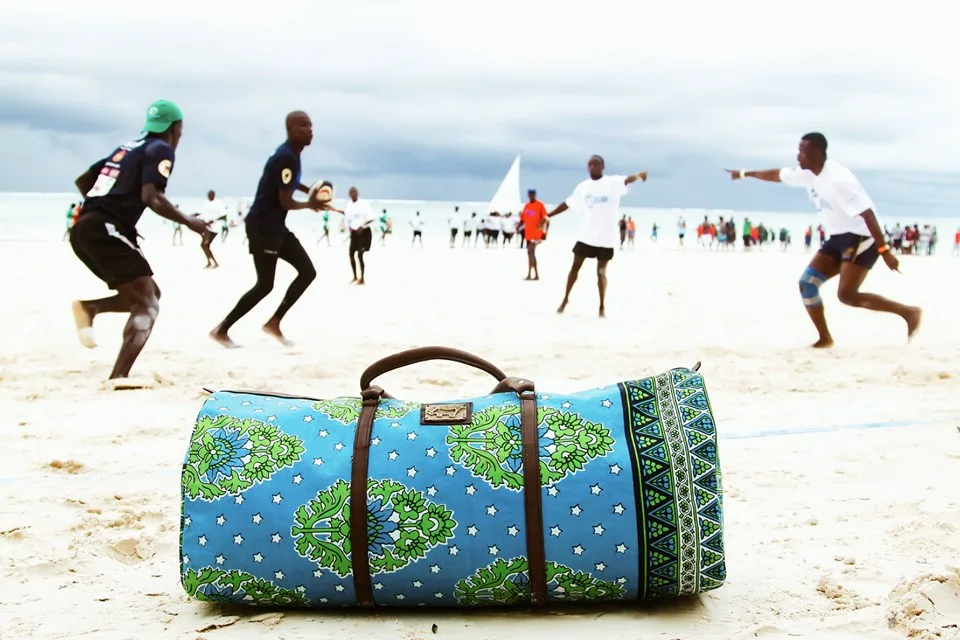
Ngiri-giri bags are handmade, using local material from leather, cotton canvas and locally made traditional cotton material, called kanga, creating bright, long-lasting and totally individual bags in a variety of styles and sizes. Each Ngiri-giri bag is unique!
When did you launch the brand and what was the reason behind it?
Ngirigiri was launched in 2010 with the vision of creating and sustaining employment in Mombasa Kenya.
Whats your background?
I moved back to Africa as a teacher in 1998 to teach at the international school in Mombasa. After being born in Nairobi I always knew I would return to Africa at some point. Meeting, then marring my Swiss husband we went on to have our 3 sons here in Africa, and Africa was home once more. My love for design and desire to engage in the community, I started working along side a disabled workshop where my visions came to life and Ngirigiri was born. In 2018 we set up our own workshop still with the focus on disability. I am hugely proud to be where we are today. Fashion with humanity, touching lives, is what we are all about.
How many people are involved in the company and what are their roles?
We have just set up our own workshop in a local village, which is very exciting! Raff, who is my workshop manager No 1. He has worked with me for the last 10 years. His roll is the production and quality of the work, he works on all new designs and concepts with me and together we produce the look and feel that we are after. Joy; has just come on board. Locally trained in tailoring she is now in charge of all the cutting of the patterns of the bags. The ethos behind Ngirgiri is to train up all our team to be able to cover all areas in the workshop. Harold; Has been working as a tailor for many years. His roll in the workshop is the finishing and stitching of the bags. Every bag is hand made and we believe in high quality.
And then there is ME!
If you could start over with the business, would you do anything differently?
Starting my own work shop this year has been empowering as well as overwhelming at times, so much to learn in a very short time. You need to be committed to your ideas, designs and have a splash of passion in what you are producing, this will pull you through the ever changing world we are living in. I am hugely grateful for the journey I am on.
What is the hardest lesson you have faced since you started the company?
Don’t mix friendship with business.
Tell us one piece of advice you would give to anyone else setting a small business:
Risk more than others think is safe. Care more than others think is wise. Dream more than others think is practical. And smile, it will all work out. Maybe not the way you thought, but the way it is meant to!
2020 is almost here, where do you plan on taking the brand?
So many exciting projects ahead. We are have launch our online shopping sight, giving us the opportunity to reach a wider platform of our clients.
2020 will see us collaborate with a new brand that is about to launch. Watch this space, very exciting times for us.
To date, what has been the highlight since launching?
Everything has been a milestone for us this year, with so many new beginnings. Taking our brand to London & Dubai in 2017/18 has been amazing.
I think for me it was receiving an email from a husband who had spotted one of our bags in Dallas Texas airport and knew his wife would just love one.
He did something he had never done before and asked the lady where she had bought it. He then contacted us and bought his wife one of our bags.
He then wrote and told us just how thrilled she was and how glad he was to have found his nerve. That for me was a highlight.
Which city do you feel most at home in, London, Paris or New York?
Mombasa, my home town!
Style means….?
Being bold and authentic, with that touch of class.
Best thing about London to you?
The vibe. I love being in London.
Statement shoe or statement bag?
Statement bag every time!
Most memorable piece of advice given to you?
Be very careful of who you step on, on your way up. As you will meet them on your way down! Given to me by my very wise Father. His words of wisdom have kept my feet very firmly on the ground. Hugely grateful to have him in my life!
Where can people find out more? (website/social media) www.ngirigiri.com
Some great collection from Ngiri giri Bags check out their online shop here www.ngirigiri.com
What does ”Voilà” mean? Originally a french, now a universal term, “Voilà” /vwʌˈlɑ/ literally means ‘Look there!” It is used when showing to other people something that you have just made or got and are pleased with, You can use it to call attention, to express satisfaction or to suggest an appearance as if by magic, Bold African materials, unique and modern designs, teamed with the finest yet discrete workmanship…and…Voilà!
Your wardrobe Where Europe meets AfricaVoila has a well-defined, easily recognized style, stemming from the ability to blend modern styles and occidental influences with the beauty, timelessness and nobleness of African fabrics. Offering modern elegance that is always in keeping with current trends.
Simplicity is the ultimate sophistication. Leonardo da Vinci We value simple things, yet sophisticated and unique designs. Just because they do all the things we need easily and none of the things we don’t.
Simplicity is harmonious. This approach is deeply rooted in accurate, strikingly simple yet far from minimal styling: a trendy design featuring ongoing experimentation in shapes, teamed with the constant value of experience.
The perfect simplicity of every single Voila outfit conceals precious painstaking care for details and impeccable workmanship.
The dynamic & multitasking women line Voià Apparel was founded with the goal of offering the modern working woman the best fitting dress or outfit she’s ever worn to the office (whatever that “office” is) and afterwards (wherever the night may take her).
The line thus includes cleanly cut, comfortable and sophisticated dresses and other apparel that instantly transform from office wear to a playful uniform for post work revelry.
And because, our customers are dynamic and creativity has no limit, our collections are one of the most rich and monthly updated with outfits that feature timeless structures and classy cuts.
Our values ~ High-Quality Standards:
We strive to provide our customers with high quality, yet unique, pieces. Our designers and artisans adopt high standards of production with each piece they make. ~ Dispelling Stereotypes:
It is all about positive images of Africa. We focus on ensuring that its history, the talents, diversityand creativity of its people are shared wherever Voila outfits are worn. Each outfit comes with a proverb, historic fact or joke from Africa. ~ Ethical Fashion:
We only work with tailors and artisans that provide fair wages and safe work conditions to their employees. ~ Local Economic Development:
We are committed to investing in grassroots talented tailors and providing them with opportunities to expand their work. Through their success, jobs are created and their local economies are stimulated. ~ Environmental Sustainability:
We are dedicated to using eco-friendly packaging for our pieces which are recyclable. In addition, Voilà Apparel does not use any material resulting from animal exploitation (e.g leather, fur, etc.). We rather use the highest quality of simili leather. ~ Customer Service Excellence:
We are dedicated to satisfying customer needs and creating an enjoyable shopping experience.
FOR THREE YEARS, I have been a diligent student of Rihanna’s 2016 song “Work.” The first lesson it taught me was in the fine art of ubiquity: The omnipresent earworm hovered over casual intimacies, significant encounters, mundane journeys and made sense of itself wherever, in whatever crevices it chose.
Then “Work” found its way into my own work. In my script for “Slave Play,” which debuted at New York Theater Workshop in 2018, the protagonist Kaneisha suffers from obsessive-compulsive disorder and Rihanna’s “Work” plays in her head on repeat, taking on a frighteningly oppressive quality and revealing the historic bedrock I was attempting to excavate: namely, that black people, specifically women, must live with the knowledge that their emotional and physical labor is the backbone of every relationship that they endeavor to have with their partners, with America. The song, which weaves through the dialogue, brought more attention to the play than any other device could have.
This sense of casual immensity is what drew me to Robyn Rihanna Fenty, 31, as not only a performer but as an artist and a businessperson: a model for my own maturation. When listening to her repetitive, patois-filled song work, work, work, work, work, work one hears a Barbados-born1musician who recognizes that the histories that are carried in her movement and her tongue are foreign to the listener.
But instead of shying from that otherness, she dines upon it, a lesson for any of us who have held onto the shame of difference. As she prepares to launch Fenty, the fashion line she has created in partnership with LVMH2 — the first luxury fashion house the conglomerate has created from scratch (which will begin sales at a pop-up in Paris on May 24, then be fully available at fenty.com on May 29) I wanted to discover what lessons she had to offer as she carried that confident otherness deeper into the nonmusical work she has been concentrating on this decade.
In April, we agreed to meet among barrels of chocolate at Dark Sugars Cocoa House,3 in the Shoreditch neighborhood of London. I thought about the unenviable position that Rihanna has come to occupy throughout her 14-year career, since she first moved to Stamford, Conn., and released her first tracks in 2005. To be black, a woman and an immigrant in the United States is to be a collection of negations of the American dream yet she stepped past those negations and into a fantasy of abundance few could imagine.
In the last five years, we have witnessed her release her most critically acclaimed album,4 become creative director of women’s collections for the German sportswear brand Puma,5 develop a line of size- and gender-inclusive lingerie under the Savage x Fenty label and debut her Fenty Beauty line,6 which literally changed the face of the cosmetics world by introducing a foundation palette with 40 shades, from the palest to the darkest skin tones.
Now, Rihanna has become the first black woman to run a major luxury fashion house. Featuring structured silhouettes in subdued neutrals (at least to start) that emphasize strong shoulders, cinched waists and exposed legs, the Fenty brand is hoping to disrupt the market not only by channeling the imagination of a black woman but by revolutionizing the luxury distribution model by focusing on direct-to-consumer online sales.
This allows Rihanna and her team of collaborators the freedom to drop new additions to the collection — which includes sunglasses, shoes and other accessories every few weeks, like singles from an album. LVMH and the artist decided last year to expand their current relationship beyond cosmetics into a full-fledged fashion company, and Rihanna has already imbued the collection with her high-low aesthetic, incorporating intricate leatherwork and meticulous techniques like boning, then queering the looks by playing with gender tropes.
Rihanna is uniquely positioned to forge a path for black owners in luxury fashion: Not only is she a muse of that realm herself but she has studied the maps she’s inherited from her forebears. From a red-carpet style indebted to the silhouettes of Zelda Wynn Valdes7 as well as the lush fabrics of Sean Combs’s Sean John line8 and the steely assurance of Jay-Z’s Rocawear9 collection, we have seen black fashion’s past adorning Rihanna as she steps into black fashion’s future.
Indeed, the mission of the Fenty clothing line, according to Jahleel Weaver, a stylist for Rihanna who is now the label’s style director, “is to really speak to how multifaceted today’s woman is. We’re thinking about each release as a different facet to a woman’s wardrobe and how she approaches dressing.
Luxury has been defined in the past as one woman, one brand: You know who the Saint Laurent woman is, you understood who the Céline woman was when it was Phoebe.10 Which is fine, but you think about how that relates to the modern woman. I don’t think she is just one thing, Rih being the perfect example of that.”
Suzanna Haller started the Ngiri Giri workshop back in 2007. Her focus was to bring about a style using the local material called Khanga, which is widely worn by the local African ladies. With its bright vibrant colour and traditional print the material stands out and gives each and every bag a unique look.
The workshop is in the heart of a coastal village creating local employment for many people in the disabled community – a cause very close to our heart. Each and every Ngiri Giri bag is handmade using local material, which has been hand selected to create a range of bags that stand out in style and design.
In an ever changing world that sees design and style moving towards sustainable fashion that is kind, not only to our planet but also to our local community, the team at Ngiri Giri are proud to be part of the “Fashion with Humanity” movement.
Content courtesy of Ngiri Giri & Nairobi Fashion Hub
Connie Aluoch’s training in Fashion Design started at the Evelyn College of Design, Kenya in 1996 where she earned a Diploma in Fashion Design and Garment Making. In 1998, she enrolled in the prestigious Fashion Institute of Technology (FIT), New York where she graduated with a Bachelor’s of Fine Arts in Fashion Design.
While at FIT, she participated in a one year study abroad program at Polimoda International Institute of Fashion Design & Marketing in Florence, Italy. During her study in Italy, she fully immersed herself in the Italian culture and language and is speaks and writes fluent Italian.
In 2003 Connie moved back to New York from Italy and worked for various leading international designers and production houses such as Emporio Armani, Alek Wek and Matthew Williamson in the Design and Public Relations departments.
She has worked at three of the ‘Big 4’ international fashion weeks. At the New York Fashion Week, she worked as a Backstage Director for the ground crew ensuring models were properly styled for the runway. At the Milan Fashion Week, she worked for Vivvene Westwood and Dsquared2. At the London Fashion Week in 2011, Connie was instrumental in showcasing the first Kenyan Male Designer John Kaveke.
In 2004, Connie moved home and has been actively participating in the development of the Kenyan fashion industry. She continues to mentor aspiring fashion stylists and has served as a judge for fashion design events and modelling competitions across the country. In 2009, she returned to Italy and graduated from Istituto Marangoni in Milan with a Masters in Fashion Styling.
As part of her mentoring and passion to give young people the requisite skills in fashion, she is a Fashion lecturer at the University of Nairobi, School of Arts and Design.
Her distinct and unique styling work has seen her featured numerous times in East Africa’s largest selling Fashion magazines; True Love and Drum. She also has a column in the weekly “Nairobian” Newspaper an affiliate of the Standard Media Group.
She was in charge of the styling for Tusker Project Fame Season 4, and conducts image training for private and state corporations as well as working on local international advertising campaigns. She has been styling the Kenya Television (KTN) News Anchors since 2013 and this has seen the station set itself apart from other news channels styling.
To ensure that her business remains profitable in the ever changing and competitive fashion landscape, completed the Owner Manger Executive Program for entrepreneurs in 2015 at the Strathmore Business School.
She is the first Kenyan in the East and Central African region to obtain a Master’s Degree in Fashion Styling and awarded the “2014 Established Fashion Stylist” in Kenya
The Dior Cruise 2020 show is about to begin in Marrakech. Catch all the action, from start to finish, see below.
Scroll through Instagram at any given time and it seems like everybody is vacationing in or at least planning to visit Marrakech. The historic buildings, colorful souks, and local fashion is enough to propel the Moroccan city to the top of anyone’s travel bucket lists, including Christian Dior. This week, the luxury house staged its Cruise 2020 show against the stunning backdrop of the city’s El Badi Palace.
In an Instagram, the brand explained that Maria Grazia Chiuri chose Marrakesh because “the city across centuries has drawn a stream of influential travelers, artists and creatives, from former Dior Creative Director Yves Saint Laurent to novelist and philosopher Albert Camus, photographers Cecil Beaton and Irving Penn, and more.”
Eager to celebrate the intersection of Mediterranean, European and African culture, the brand worked with local artisans, Uniwax a company in the Ivory Coast that worked with the design studio to reinterpret two of the House’s signature motifs: toile de Jouy and tarot cards plus other black designers and artists including Grace Wales Bonner and Mickalene Thomas who, lent their own design touches to the iconic skirt and bar jacket silhouette.
With celebs like Lupita N’yong and Shailene Woodley on the ground, the two-day extravaganza kicked off with a special dinner and traditional music performance at the Palais Bahia. Jessica Alba, who recently celebrated her 38th birthday and is a Dior ambassador, also celebrated with the luxury house.
On the runway, dresses with intricate beading and African-inspired patterns in varying lengths and cuts—maxi, mini, long-sleeved and sleeveless—and the brand’s signature cinched waist made a splash. Patterned head wraps, capes, and jackets added a finishing touch to the looks.
For the finale, Diana Ross surprised the crowd with a performance of Ain’t No Mountain High Enough.
Content courtesy of Dior , Elle & Nairobi Fashion Hub