Sunday 30th of August 2026

Nairobi, Kenya

Joburg Fashion Week will hit the virtual runway this year

African Fashion International (AFI) will present the 2020 Joburg Fashion Week which will be presented via a virtual runway from 13 to 14 November.

Due to the global pandemic, the fashion industry has had to move into the digital domain and fashion shows around the world have been presented via virtual platforms.

Joburg’s 2020 virtual show will feature a ready-to-wear virtual runway with an assortment of curated locations that showcase the beauty of Johannesburg. The runway will be reimagined with each setting to enhance each designers’ storytelling with African culture and heritage.

https://www.instagram.com/p/CDLpCchA_-J/?utm_source=ig_embed

The virtual platform will also allow audiences to view, click and pre-order designer collections during and post the event.

The New Face Of Fashion Weeks

Due to COVID-19, virtual fashion shows and digital catwalk collections are emerging as an alternative to fashion weeks.

In addition to the influence of the global pandemic, the rising financial and environmental cost of producing fashion events have also caused an about-turn, and 3D virtual shows and augmented reality experiences are emerging as an exciting and even more accessible alternative compared to the traditional fashion calendar.

African Fashion International are no strangers to hosting virtual runway shows. The last day of AFI Fashion Week Cape Town in March 2020 was livestreamed under unforeseen COVID-19 precautions, making AFI the first on the continent to incorporate digital mediums.

https://www.instagram.com/p/CCdl2L4gv-D/?utm_source=ig_embed

Eighteen local and international designers were showcased at the fashion week, which also featured masterclasses and stage performances from AKA and Ricky Rick. The third day of the fashion week was streamed live due to the COVID-19 outbreak and no audience was allowed into the venue.

AFI recognises the value of the virtual platform and the power it has for inclusivity within the industry by reaching audiences who otherwise would not participate in traditional physical shows.

African Fashion International

Established 13 years ago, African Fashion International focuses on Africa’s diverse heritage and history by hosting talented African designers who work with exceptionally skilled artisans to produce high-quality luxury garments in line with the latest trends.

The association hosts the AFI Joburg and AFI Cape Town Fashion Week each year, which showcase, promote, and retail refined African brands from 40 pan-African designers. Fashion-lovers and aficionados can find the AFI exclusive runway collections in the online boutique store.

https://www.instagram.com/p/CCqJCJrAivR/?utm_source=ig_embed

Marketing Manager for AFI, Roshee Pillay says AFI’s hybrid fashion week aims to bring hope to the industry and connect African brands to global markets.

“The front row is open to everyone, as we come together to reinvent the fashion industry, restore hope and drive sales for designers through our e-commerce platform,” she says.

Content courtesy of The South African & Nairobi fashion hub 

The Next Wave of African Designers Taking Their Place on the Global Stage

For too long, fashion’s gatekeepers in Western nations have largely ignored the abundance of ideas and creativity brimming out of African countries, where designers have been toiling away without recognition outside of their local communities.

While there is still a ways to go, there has been a slow but steady influx of platforms geared toward exposing these talents to a wider audience. From online concept store The Folklore, which distributes luxury and emerging designer brands from Africa, to Orange Mentorship, an initiative that provides mentorship of young fashion entrepreneurs in Africa, many of the continent’s designers are finally starting to get their due.

Among the most recent success stories are arguably Thebe Magugu, the designer who grew up in the city of Kimberley in South Africa’s Northern Cape and just launched his first e-commerce shop, and Kenneth Ize, whose reinterpretation of traditional West African fabrics and Nigerian craft made its official debut this year at Paris Fashion Week. Notably, both designers were finalists of last year’s LVMH Prize, with Magugu scooping up the top award.

Still, while there have been several regional fashion weeks in recent years, they have yet to attract the kind of global attention paid to the four main capitals. (It was at Arise Fashion Week in Lagos two years ago where Naomi Campbell notably called for there to be an African edition of Vogue.) Even smaller showcases held in predominantly white cities like Copenhagen and Sydney have drawn a significant amount international guests.

Recognizing the need for more structures in place to support emerging African fashion talent, the Ethical Fashion Initiative recently announced the launch of its first Accelerator Programme, which targets existing fashion brands producing in Africa who require additional support to accelerate their business in the global marketplace to become investment ready. The organization selected five designers to participate in the platform: REIGN, Margaux Wong, Lukhanyo Mdingi, WUMAN and Jiamini.

The five talents were picked out of a pool of 250 applicants by a judging panel comprising of Nigerian actress Dakore Egbuson-Akande, Japanese retail magnate Hirofumi Kurino and creative consultant Susi Billingsley. As part of their selection, the designers will get to reveal their latest collections in 2021 during Pitti Uomo, the bi-annual international menswear trade show where guest designers such as Telfar, Jil Sander and Givenchy have all shown in the past.

Ahead of their debut on the global stage next year, PAPER caught up with the five winning designers to get their thoughts on the state of the African fashion industry, how their heritage and culture influences their work, and what they’re most excited about as they get ready to show their work on an international platform.

Margaux Wong

Margaux Rusita is a Guyanese/Burundian designer with more than 18 years of experience based in Burundi, East Africa. Her company, Margaux Wong, is known for its signature technique of turning rare cow horn and brass into luxurious and wearable art.

The creative director works with her team to produce distinguished artisan jewelry using tedious traditional techniques, and she’s also mentored hundreds of young designers over the last 10 years in her home country.

How has your African heritage influenced your creativity and design approach?

Having spent the last 11 years living and working on the continent has morphed my Afro-Caribbean decent and love of Africa and all its colors very well with my work and expression. I have been able to immerse myself in the culture, traditions, history and traditional jewelry making techniques, which I have been able to observe and learn throughout the years. It is clear that preserving certain techniques is quite difficult especially in the world of fast fashion, which is why we hold on to them. It is very important to us to maintain the integrity of culture for posterity while engaging with contemporary ideas for design and expression.

What have been some of the highlights and challenges of being based and producing in your country?

Burundi has been known as being a war-torn, poverty-stricken country for many years. We are very pleased that in a very small way, we have been able to change that narrative by telling positive stories about what we do and actually showcasing the amazing work that we have been doing at shows on at least four continents.

Winning the trust and respect of my male employees has taken many years of hard work and is still a challenge to some degree, as they are used to being the leaders in their homes, jobs, and communities. I give daily support and encouragement, knowing myself how capable our artisans are but also acknowledging the trauma background of war and near death from which they came.

We have also had challenges with inefficient banking systems as well as shipping challenges due to our landlocked position on the continent. With the successes and challenges, however, we have been able to come this far. Building my brand and business in Burundi has been a major stepping stone for me as a designer, business owner, and innovator. There is no doubt about that.

“It is very important to us to maintain the integrity of culture for posterity while engaging with contemporary ideas for design and expression.”

What does it mean for you to get the support of a platform like the EFI?

As a designer, I can’t say that I have chased this kind of recognition much over the years. My focus has been to work on my craft and hopefully over time, have my work speak for itself. I think my attraction to EFI went way beyond being recognized. I saw an organization that was offering much needed mentorship, guidance, technical support, and validation for all the years of hard work I had previously put in.

Now that I am benefiting from their support, I feel further validated as an artist. I am further convinced that I am on the right track and feel encouraged that my art needs to be shared with the world, not only as my art but as a boost to all those with whom I have worked all these years.

What are some of the ways African fashion designers can be supported so that they can become global businesses?

African designers, like any designer from every background, require lots of support in order to become globally successful businesses. I think our proximity to global competitors, peers, platforms, and experienced professional mentors is a major challenge.

What the EFI has done by creating the bridges we need to connect with the rest of Africa and the Western fashion world is revolutionary and exactly what we needed as an answer to this challenge. African designers also need to be connected to African investors and mentors who are immersed in the continent and can assist in strengthening trade relationships and cultural exchange within the continent. This involvement can help to solidify our confidence in our ability to enter any room on the global platform and exist as people who are able to compete with competence, confidence, and drive.

WUMAN

Ekwerike Chukwuma is a Nigerian fashion designer/artist who launched the men’s and womenswear brand WUMAN in 2013. He cites the female anatomy as a perennial source of inspiration, which he first obtained from his medical school studies.

The cross-disciplinary areas of architecture, poetry, and geometry inform his contemporary storytelling approach to design while staying true to his African heritage and its unique perspective across the global fashion industry.

How has your African heritage influenced your creativity and design approach?

My heritage and culture have always influenced my design thinking and process. I feel the pulse of Africa, she is a great woman who is dear to me.

The beauty, rich culture, history, and diversity are all elements that form the core of my design process. My works tell stories inspired by my existence in Africa, stories that stimulate you to further see, understand, and love Africa.

What have been some of the highlights and challenges of being based and producing in your country?

One of my highlights of being based and producing in Nigeria is the privilege of learning to work and grow with the resources available. I have also had access to the rich heritage of craft and skills available within my country. I have also had a nearness with my culture firsthand. The challenges faced here include funding, inadequacies in manufacturing, a bit of lack of technical know-how and labor force, economic instabilities, power supply as well as infrastructural deficiencies.

“My works tell stories inspired by my existence in Africa, stories that stimulate you to further see, understand, and love Africa.”

What does it mean for you to get the support of a platform like the EFI?

It means a lot to me and my brand. I see this as a great step in the right direction. The EFI is a reputable organization and selecting me for this great opportunity further amplifies my brand in a bid to grow and succeed both here in Africa and globally.

What are some of the ways African fashion designers can be supported so that they can become global businesses?

African fashion designers can be supported to excel globally through more training and education, access to more developmental programs like the EFI accelerator, platforms that give them more visibility, support in manufacturing, and funding.

Lukhanyo Mdingi

Hailing from a small coastal town in the Eastern Cape of South Africa, Lukhanyo Mdingi describes his design aesthetic as having a “languid sensibility.” The Cape Peninsula University graduate participated in Pitti Uomo’s Fall 2017 Generation Africa in Florence initiative that gave him his first taste of international exposure.

The cross-cultural references help inform Mdingi’s approach, which uses theory and research to create timeless essentials that are refined each season. “Our intention is to collectively create a body of work that has a sense of soulfulness to it, work that is steady, solid, and strong,” he says.

How has your African heritage influenced your creativity and design approach?

Immensely. I think that this is something that is intrinsic to so many artisans and designers. I believe that our diverse and unique heritage is something that is grounded and rooted in the spirit of love. Community is what binds our lineage and culture, celebrating and bringing this within our work allows us to collaborate and celebrate all that we bring to the table.

What have been some of the highlights and challenges of being based and producing in your country?

The highlight is always celebrating the moment this is done solely when all parties involved have put in the work, time, and consideration of their individual roles. Collaboration is so important to us, when you are able to witness the steady and seamless growth of your ally then see them reach their potential, it’s that moment that becomes a highlight, that is priceless.

The challenging aspects, in any career, are finding the people that are aligned with our vision as much as you are aligned with there’s, identifying the intentions and the precision that you envision, and making sure that there are parallels between all involved whichever project you choose to embark on.

“Community is what binds our lineage and culture.”

What does it mean for you to get the support of a platform like the EFI?

It feels like the natural step. The nuances between the EFI and our label are parallel. The importance of craft, collaboration, and considered design is the premise of both entities. What the Accelerator Programme has done is yield our label and give it the platform for our narrative to be seen and heard.

Presenting the new body of work during PITTI UOMO is a space that raises the bar.

What are some of the ways African fashion designers can be supported so that they can become global businesses?

I think it’s simple. It’s continuing to provide platforms such as the EFI accelerator programme to tell our narratives.

Jiamini

Kenyan-based accessories brand Jiamini (meaning “belief in yourself” in Swahili), known for its durable, hand-beaded embroidery, turns traditional pieces into contemporary jewelry. The brand promotes sustainable development solutions while being influenced by African techniques and craftsmanship. Among its company missions is to help local communities rise above poverty through economic empowerment.

How has your African heritage influenced your creativity and design approach?

The diversity of African culture and creativity has always been the foundation of our brand, closely examining the craftsmanship, heritage, and traditional approach used by our forefathers, which have been a strong influence in our designs. Our African heritage has enabled us to communicate an authentic expression of the past, present and future, through design.

What have been some of the highlights and challenges of being based and producing in your country?

Having the opportunity to produce in Kenya enables us to not only create employment but to share, learn and implement traditional skills, knowledge, and techniques, from vast local communities used in production.

“Our African heritage has enabled us to communicate an authentic expression of the past, present, and future, through design.”

What does it mean for you to get the support of a platform like the EFI?

This opportunity couldn’t have come at a better time. A time when the fashion industry in Africa has witnessed tremendous growth in recent years and the global demand and discussion on African-inspired fashion are on the rise.

Getting recognition from the EFI accelerator program and being able to present at Pitti Connect gives us a platform to tell our authentic rich story through design, as well as show the world the quality, richness, and luxury that Africa is capable of developing and producing.

What are some of the ways African fashion designers can be supported so that they can become global businesses?

A great way to support African fashion brands would be through meaningful collaboration and skill transfer programs with already established international brands.

REIGN

Sipho Mbuto and Ben Nozo first met in 2015 as students at the Durban University of Technology in South Africa. They often worked together on class projects where they exchanged ideas and fashion concepts, not knowing that upon graduating they’d team up to create REIGN, which they describe as a brand that “narrates African culture reimagined with traces of eastern and western influences.”

The duo says they constantly enroll in fashion learning programs to be mentored while also mentoring others by engaging in tutorials and workshops.

How has your African heritage influenced your creativity and design approach?

Growing up in the small town of Port Shepstone in Kwa Zulu Natal. It was a beautiful town, however, we had no access to art and cultural infrastructure or creative media. We were at least fortunate to grow up in a family of artisans who were able to influence our perspective and development.

They are an integral part of our drive-in working with arts and crafts. Even listening to stories of their youth while crafting these unique items, made us think differently about creativity and gender as a Zulu man. Specifically how there are certain roles individuals play in the culture of the concerning family clan.

What have been some of the highlights and challenges of being based and producing in your country?

Textiles there are still many challenges for African designers in Africa, one of them being the Chinese domination of the textile industry, such as the unavailability of fabrics, even the ones that are produced locally are created using imported equipment from Asia and Eastern Europe. Not enough funds countless people with incredible ideas languish because they are not able to access the necessary funds to enter the marketplace.

Fashion is a business where you need money in every step, to make quality designs, to market them, and promote them. Lack of accelerator and mentorship programs Industry-related education is another major challenge and if the government doesn’t see a value or a need for the luxury fashion industry locally, it becomes difficult for us to convince the international market of our existence in Africa as mostly we are reliant on help from abroad.

Production and lack of good manufacturers  Most African brands are small operations, with no production capacity to supply large orders. Scaling up is hard, given electricity shortages and other manufacturing glitches that come with producing in a developing country. Getting an opportunity to work with our chosen team of people and to learn and grow with them.

“People rarely know who contributes to the growth of the industry outside tokenized representation or engagement in the African contemporary conversation.”

What does it mean for you to get the support of a platform like the EFI?

It’s an exciting opportunity for us as a growing brand as it provides a chance to market our brand to an international market. Gaining a better understanding of the business of fashion and also learning about the different distribution channels of supply chains. Working together with artisans, understanding the inspiring stories behind their craft, motivates us to look deeper into sustainability and producing ethically also.

What are some of the ways African fashion designers can be supported so that they can become global businesses?

Working together with our government on setting up more legislations, policies, and fashion laws to favor African fashion designers by the government would definitely help to improve the African economy while making our fashion brands globally recognized.

Creating efficient distribution channels for designers distribution is usually a challenge for designers. Most designers cannot fully control the distribution of their clothes, having this distribution platform in place can eliminate cost, time, and anxiety in most fashion businesses. Including disadvantaged designers in the fashion conversation, graduates and emerging creatives, stylists, and directors.

People rarely know who contributes to the growth of the industry outside tokenized representation or engagement in the African contemporary conversation. Our own fashion channels are inundated with European or western content.

Photos courtesy of Ethical Fashion Initiative

Content courtesy of Paper & Nairobi fashion hub 
Eva Marcille Defends Her Traditional African Hairstyle That Critics Slammed Her For Wearing To Cynthia Bailey’s Wedding

Eva Marcille is a beauty who isn’t afraid to experiment whether it comes to fashion or hairstyling. After she wore a unique hairstyle to Cynthia Bailey‘s wedding, she has a message for close-minded critics.

Eva appeared in a beautiful white dress that hugged every curve of her body along with gold jewelry and an embellished towering hair bun.

Many people slammed her for the style itself and the fact that she would wear it as a bridesmaid to another person’s nuptials.

‘For a runway…absolutely. For someone else’s wedding…absolutely not,’ commented one.

‘Alllllllllll the loctitians in Atl… & this is what we come up with…,’ said another.

This person commented: ‘Eva could’ve pulled it back not sticking straight up like she was going to Whooville!!!!!’

There were people who came to her defense.

One person wrote: ‘People who keep talking about not liking her hair don’t know fashion. @evamarcille I LOVE YOUR HAIR style that way! It speaks to your personality and style and it looks bomb! This type of style is not for the faint of hearts. It’s for the out the box, eccentric and free spirited types.

And if @cynthiabailey felt some way about it, best believe a woman on her wedding day would have no hesitation saying so, lol. And you guys sound crazy asking her why she styled her hair that way. Obviously, it’s because she liked it that way. Girrrrl, don’t pay these basics no mind.’

Content courtesy of Celebrity Insider & Nairobi fashion hub  

A letter to the fashion industry: what you need to do to go beyond performative allyship

Model and activist Ashley Chew pens a public letter urging the industry to do better

She has graced countless magazine covers, posters, merchandise and even face masks. Her smile was always accompanied by short face-framing curls or deep polished waves. Headlines across the world ran images of the 26-year old African-American woman. Her name was Breonna Taylor.

In early summer 2020, our Instagram newsfeeds were flooded with black squares, captioned with statements such as “we stand with you” or “we love diversity”. Some companies embarrassingly posted nothing at all. The murder of George Floyd reached the fashion industry in the most complex of ways. It seemed trivial for us to post our new haircuts, DIY at-home spa treatments or sponsored content. I cringed at so many tone-deaf companies and even unfollowed their accounts.

Performative activism contributes to the problem, and what I mean by that is sharing an Instagram post about the importance of racial equality without diversifying staff, castings and content. It means nothing to talk the talk unless you are prepared to do the work, to act and do better. For two weeks straight I scrolled past black squares. After a while, I didn’t even care about them anymore. I wanted to know what was going to happen within you, the industry, afterwards, how you would go beyond Instagram statements and implement meaningful change.

In 2015, I started the #BlackModelsMatter movement. The hashtag is currently trending at 83,000 on Instagram. At the time, New York Fashion Week catwalks featured less than 10 per cent models of colour. In 2019, there was at least one model of colour in every single runway show and diversity now stands at 43 per cent.

Beyond the hashtag, I worked vigorously for the phrase not to become trendy – the fight for better Black representation in fashion is not a trend. I’ve spoken for The New York Times, Columbia University, The Indianapolis Museum of Art, magazine panels and even an event in Lagos, Nigeria. I served on The Model Alliance Advisory Board and have sat in with The Humans Of Fashion Foundation. I have poked microphones directly in designers’ faces backstage at Fashion Week asking what more can be done.

” Performative activism contributes to the problem ”

Performative activism does not go to these lengths. Performative activism posts a graphic online, and goes about their Zoom meetings while their African-American colleagues are on the receiving end heartbroken. Performative activism says, “we value diversity”, yet allows racism to manifest itself within meetings, editing, casting rooms, and on set. Allyship is not confined to a Black square on social media. Allyship requires honesty, responsibility and accountability.

As a working African-American model and visual artist, I have been well-equipped for racism; I have the choice about who I choose to champion. During New York Fashion Week, I don’t attend shows that do not cast Black models. On social media, I do not follow brands that don’t reflect society.

Your attention is your highest currency. Brands like Telfar, Fenty, Aerie, Pacifica, Christian Siriano, and Pyer Moss have my full support. These brands undoubtedly have shown diversity in race, age, gender and body positivity long before Covid-19 and the Black Lives Matter movement. If every company took similar initiatives, some rooms in the industry wouldn’t be so unbearable, unwelcoming, and uncomfortable.

” What good is using Black culture if Black people aren’t allowed in the room? ”

I still have hope for the future of fashion, but there must be accountability. As a society we are so pressured into making the next thing, buying more things, and being the next big thing. It is essential for us to care about the people that contribute to those exact things. “Never let them convince you that broken glass or property is violence,” said Marc Jacobs in response to the damage done to his Soho location in the midst of the Black Lives Matter protests. “Property can be replaced, human lives cannot.”

I am relieved that activism is not taboo anymore. Activism can happen anytime, anywhere by anyone. Five years ago, I was a liability. People in this industry were afraid to exercise their freedom of speech in fear of being blacklisted or even fired. But what you, the fashion world, needs to know is this: caring about people shouldn’t be a liability. What good is using Black culture if Black people aren’t allowed in the room? There is no one better to tell Black stories than Black people. Black editors matter, Black designers matter, Black directors matter, Black models matter, Black creatives matter, Black lives matter.

This article originally appeared on Harpers Bazaar

Content courtesy of Harpers Bazaar & Nairobi fashion hub 

A new Generation of E-commerce Retailers want to Globalise African fashion

Sites like Industrie Africa, The Folklore and Afrikrea are connecting African designers to customers abroad, but designers are wary of what international demand will do to their businesses.

For African designers, local e-commerce platforms can provide a gateway to an international audience eager to shop their collections. After several setbacks, a new generation of players is stepping up to bring African fashion to a global customer.

Companies including Industrie Africa, Afrikrea, Kisua and The Folklore are attracting designers wanting to gain awareness among customers outside of Africa. These companies help facilitate cross-border shipping and handling as well as marketing, all resource-intensive hurdles that could otherwise act as barriers for African fashion designers who have a willing buyer outside of their native continent, but no way to reach them sustainably.

“Shortly after launching my business on Instagram, I had people from New Zealand, Accra, New York messaging me about purchasing,” says Vanessa Iloenyosi, founder and designer of Nigerian label Nyosi, which launched in 2017. “There was no way to get things to them effectively.” Iloenyosi then partnered with The Folklore after the company, which acts as an online curator for luxury African fashion customers in the US, reached out to her.

E-commerce marketplaces for African fashion tap into a growing demand for African designer goods all over the world. Currently, Africa’s e-commerce opportunity is estimated to be $19.8 billion by Statista. According to McKinsey, the continent’s local manufacturing industry is also expected to grow to $930 billion by 2025.

This presents an opportunity for African e-tailers to promote Africa’s fashion industry globally. African designers are hoping that these partnerships, in addition to offering benefits like better shipping rates and distribution, will introduce a greater pool of customers to African fashion.

Working with a team of buyers who understand the local market also makes for a better experience selling abroad. But some designers are wary of what globalising the African fashion market means for their businesses and are pushing for a local emphasis on e-commerce plays.

https://www.instagram.com/p/CF226fFFxka/?utm_source=ig_embed

With programmes like the Africa free-trade policy, a growing middle class and internet use, initiatives to encourage artisanship and African sourcing such as the Designers Consociate and grassroots work to encourage government subsidies, designers and e-tailers on the continent are hopeful that African fashion will become more than a fad for Western customers or a luxury that only richer Africans home and in the diaspora can access.

Some see it as a long time coming, but earlier attempts to establish a go-to online marketplace for African fashion have stalled.

Zuvaa, founded in 2014, lost trust with designers after marking down prices and refusing to pay the agreed commissioning rate, resulting in a 2017 petition that racked up 3,000 signatures.

The company ended up shutting down in 2019 due to the lack of infrastructure and an operations team versed in the African e-commerce industry, according to founder Kelechi Anyadiegwu. Oxosi, a once-promising African e-commerce play positioned as “Africa’s answer to Moda Operandi” that worked with prominent brands including Maki Oh, Brother Vellies and Osei Duro and inked a deal with the costume department of HBO’s Insecure, abruptly shut down in 2017. Oxosi did not respond to requests for comment.

The perks of online partnerships

E-tailers like Afrikrea, which is based in Ivory Coast and launched in 2016, are able to address shipping costs for African designers through lucrative partnerships with DHL, a company invested in tapping into Africa’s growing e-commerce.

https://www.instagram.com/p/CGDkr7qlbI6/?utm_source=ig_embed

Designers selling on Afrikrea can create storefronts and receive payments from customers anywhere in the world, an important benefit for sellers based in Africa who have had difficulties accepting online payments from platforms like Shopify in the past.

Founder Moulaye Taboure recently raised $1 million in funding to further promote African designs and expand intracontinental distribution.

Amira Rasool, founder of The Folklore, uses a slightly different strategy. She and her team spend as much as four months on the continent sourcing products, coaching designers on how to price for a global market, helping to find stylists, product shooting, and negotiating shipping rates with third-party agencies. The designers then make the products and ship to the company’s warehouse in New Jersey, where it is then dispersed to customers.

African fashion e-commerce platforms also serve functions that go beyond shipping and distribution. Fashion education is a core component of Industrie Africa and critical in building up e-commerce on the continent, says founder and CEO Nisha Kanabar. Kanabar says she started the platform to shatter stereotypical interpretations of African design, which usually involve the Dutch Wax Print known as Ankara, and earn the market respect by amplifying Pan-African voices.

The platform launched in 2018 as an encyclopedia of contemporary African design and centuries-old artisanship native to the continent, then segued into e-commerce, allowing customers to shop by filters such as sustainability and material type important because it helps promote the work of African artisans in the textile industry. Most clientele is based in the UK and the US.

“African fashion consumers are already shopping online on Asos, Zara, Harrods. They just need to be taught [and] shown to ‘shop African’,” Kanabar says.

The drawbacks of scaling globally

While many African designers aim to get their collections in front of a global audience, that growth can strain small businesses as they try to meet customer expectations that don’t align with their operations. Fashion consumers have gotten accustomed to fast fashion practices that African designers cannot afford to bear, say Maxwell Boko and Mmuso Potsane, the South African design duo behind the label Mmuso Maxwell.

“See-now, buy-now is distorting people’s understanding of how fashion design works,” the design duo says. The designers argue that while international African e-commerce retailers are offering support for designers, an overreliance on Western imports undermines the industry.

“People want to come to the party when people are already there. It’s sad that co-signs from “international media” is what assures people of the unique lens that African designers bring to fashion,” says Boko.

Others in the industry are similarly wary of hinging too much of African designers’ success on how much they can resonate with a global customer. Zara Odu, a former buyer at Oxosi, says the platform came about as a way to represent that African fashion industry for Africa’s online shoppers. “Oxosi came at a time when designers were starting to get tired of pandering to international buyers and retailers,” she says. “They had spent so long waiting to belong in stores internationally; but Oxosi came with a ‘for us, buy us’ perspective accompanied with the most beautiful visuals and narrative. It was undeniably powerful, and everyone wanted to be a part of that.”

Even successful international partnerships introduce new pressures on designer businesses. For Iloenyosi, selling on The Folklore has been largely beneficial, but the cost of production led to a significant disparity between the cost of products on her Instagram page and the Folklore website leading to queries from some customers. The designer is launching her own e-commerce platform as an alternative for customers who are OK with waiting much longer for products.

Still, African designers are garnering notice from international retailers as the marketability of the sector becomes clearer, thanks in part to the African specific e-commerce platforms. Browns, owned by international luxury marketplace Farfetch, recently joined forces with Homecoming the multi-hyphenate platform whose aim is to support and bolster art and design in Africa  to showcase Africa’s fashion talent.

The festival ended with Nigerian designer Orange Culture announcing an e-commerce partnership with Farfetch. Designers like Kenneth Ize, Thebe Magugu and Mowalola have also earned global recognition.

African e-commerce platforms and buyers who understand the limitations that designers on the continent face are, ultimately, a boon for the industry.

“Designers will only grow if they can continue to sell at a steady and sustainable pace. With growing interest in traditions that are central to Africans, which boost the manufacturing and textile sectors, African merchandising will grow, allowing for better products to be made and sold all over the world,” says Odu.

Writen by BY ADEDOYIN ADENIJI

Content courtesy of Vogue Business & Nairobi fashion hub 

African Prints, Jumpsuits And Funk Describe Xuly Bët’s SS21 Paris Fashion Week Show

Malian – Senegalese fashion designer Lamine Badian Kouyaté produced a collection through his brand Xuly Bët that demonstrated resilience and positivity, something that the world and fashion needs at the moment. A collection with African prints but one of multicultural dynamism, and diversity for the Paris week slate of shows is needed more in the City of Lights.

Held at Paris’ l’Aiguillage, an old SNCF train station that has been reconverted into artist residencies and photo studios, held more symbolism than one would imagine. More on that in a moment.

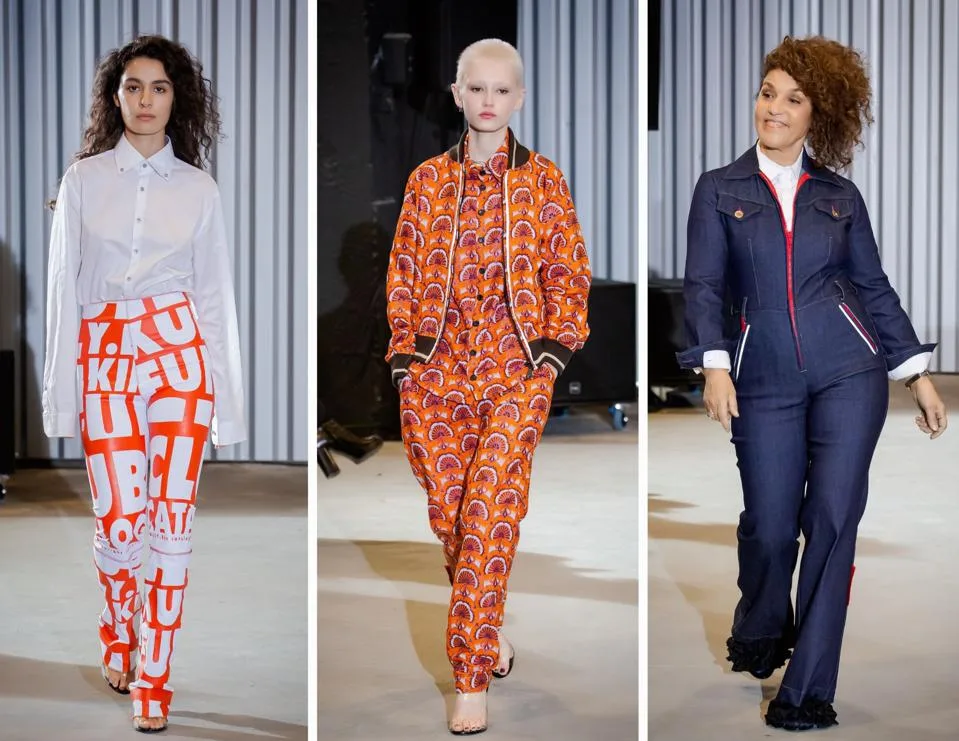
Menswear and womenswear looks ranged from lively African prints on dresses to pants suits. Printed messages across pants can be seen, to gold metallic jumpsuits, to even auto-mechanic inspired blue collared shirts and work jumpsuits.

Casual blazers and pants fill the collection, and shorter hem lines can be found for women’s eveningwear.

It was Xuly Bët’s family and friends that modeled the 44 looks from rapper Kalash, former Miss France Flora Coquere, Brazilian singer Flavia Coelho and comedian Ayoub Layoussifi. The music was handled by Honey Dijon, Neneh Cherry and Robyn.

https://www.instagram.com/p/CGA1mW_AuDt/?utm_source=ig_embed

And the location’s name “aiguilles,” meaning ‘guided’ fits perfectly as 2020 is a year that is guiding humanity into hope amid confusion.

Opening the show with the words of writer and social activist Michaela Angela Davis, Kouyaté and Rodrigo Martinez, the brand’s CEO wanted to honor Davis, as a sort of representation of the times the world is now in. “2020 is not a more difficult year than the others,” writes Davis.

“Times are not harder. It’s just that today, and finally, we open our eyes to society’s dysfunctions, the poverty that always existed, the racial crimes that surround us without ever being mentioned, this colonization that we are paying the price of today. Nevertheless, I remain an eternal optimist. Everything will change.”

Written by Allyson Portee

Content courtesy of Forbes Magazine & Nairobi fashion hub 


Fashion Brand SaS Corner Embraces African Design Through Old-school Hippie Style

Boasting a collection of tops, trousers, dresses and pinafores, SAS Collection looks to the continent of Africa for inspiration for its hippie-style feelgood pieces.

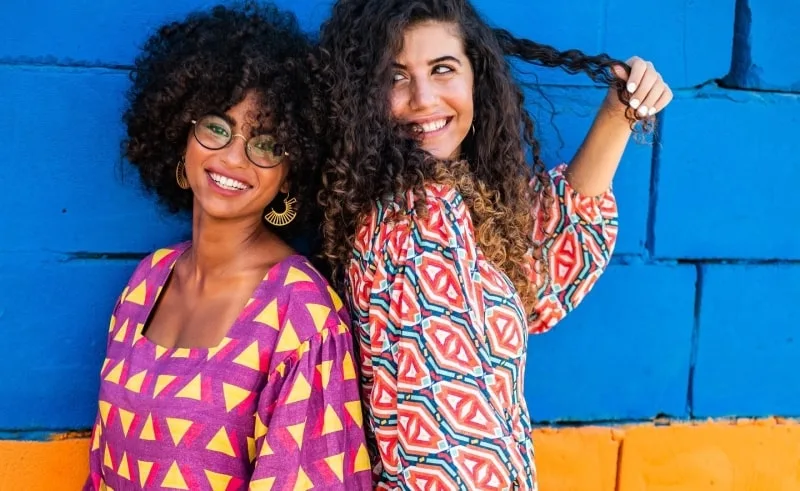
Moved by the vividness of African colours – from the fierce reds of the Maasai culture to  the proud blues and yellows of South Africa’s Southern Ndebele tribe Sara Saleh launched a brand that would embrace its own loud, bold and experimental nature. SAS Corner – which came out July 2020  takes the patterns of Tanzania, Kenya and Zambia, and incorporates them into hippie designs that have been taken straight out of the 1970s.

Using 100% Egyptian cotton, SAS Corner’s collection offers dresses, trousers, pinafores and two-piece sets, all embodying a summer aesthetic, with each pattern named after a different element in Swahili.

“When people dress in bright colours, they get the unique opportunity to translate their soul through the clothes they wear,” Saleh tells #CairoScene. “With our collection, which turns to the vibrancy of colours found across Africa, we’re going for clothes that scream positivity and good vibes, all the while maintaining the comfort and designs inspired by hippie fashion.”

Content courtesy of Cairo Scene & Nairobi fashion hub

Tik-Tok Newest Sensation Tory Lynn With New Headbanger Music Video Dubbed Lately

Dubbed as the Kenyan Tik-Tok queen for her enchanting, effortless song covers and infectious smile after her Otile Brown ‘Dusuma’ challenge video went viral, Tory Lyn has not stopped at that as she is now taking her music career to a whole new level.

Tory Lynn is a famous name on the social circle, if you have heard the name or a viral video with her you already know she has amazing vocals and more so after her Tik-Tok video gathered more than 1.5 million views of her singing cover songs.

[taq_review]

She has since got a recording deal with an American Music Label Mpact Muzik where she has found her second home to help her get her music to the next level. Also signed to the record label is Kenyan dancehall star Teferah.

Tory Lynn has recently released a new music video titled ‘Lately’ with amazing, snappy and beautiful visuals Tory Lynn looks set to take over the Young Kenyan Pop market with a bang.

The youngster has mushroomed to a diva on her new release and as her voice echoes on the well-crafted beat you can’t help but desire for more. This is an ultimate rise in a genre that needs rejuvenation and we might have more stars come to the fold from our socials to make the East African music scene popular again.

Her style is a blend of RnB, Soul and Afro vibes.

Watch her new music video ‘Lately’:

Content courtesy of  Mpact Muzik & Nairobi fashion hub Online Digital Team 

LVMH Prize finalist Sindiso Khumalo debuts at Milan Fashion Week with Harriet Tubman-inspired collection

South African designer Sindiso Khumalo made her debut at Milan Fashion Week with a collection based on American abolitionist Harriet Tubman.

With the pandemic keeping many presentations digital, Khumalo’s namesake label presented a fashion film to feature the new collection and honor the life of Tubman, who used the Underground Railroad to free dozens of slaves after reaching her own freedom in Philadelphia. The film shows a model wandering through fields and farmland, hinting at the landscape Tubman might have known as a child.

The collection, “Minty,” titled after Tubman’s childhood nickname, features illustrations by Cape Town artist Shakil Solanki and tailored styles in hand-printed silk taffeta and handwoven cotton from Khumalo’s workshop in Burkina Faso. Khumalo’s brand also works with the NGO Embrace Dignity to employ women who were previously in sex work to hand crochet and embroider garment details.

Khumalo, who earlier this year was one of the joint finalists to share the €300k ($352k) LVMH Prize for Young Fashion Designers, along with London-based Priya Ahluwalia, focuses each of her collections on the life of a historical Black woman.

Her previous collection highlighted the Egbado princess Sarah Forbes Bonetta, who was taken as a prisoner of war as a child and spent many years in the British Royal household under Queen Victoria. Her next collection will be inspired by South African activist Charlotte Maxeke.

“As a Black woman I want to make sure that we’re also part of history,” Khumalo said over a video call. “Harriet Tubman was my height — she was tiny — and freed 70 slaves. I want my kids to know that there were superheroes who were Black and female and petite.”

Having studied architecture at the University of Cape Town, Khumalo worked with lauded architect David Adjaye in London, where she also completed a masters in textiles at Central Saint Martins before returning to establish her label back in South Africa.

We caught up with Khumalo about her collection and presenting her work at Milan Fashion Week for the first time.

CNN Style: What do you want to communicate through your label?

Sindiso Khumalo: I am paying homage to specific Black women from a specific time in history to ensure their stories are told. I can’t believe there are some South Africans who don’t know who Harriet Tubman is. I want to educate people on Black culture and Black history and I think it’s really important that I use my platform to educate, and to bring hope as well. I feel like if I share these stories, people will feel like they can make some change, even if it’s small. It’s important for us to have these role models and talk about them because they are icons of our history.

Another reason I choose these women is to highlight the violence Black women experience, and the violence they experienced in the 1800s. We are still experiencing the same violence today with Uyinene Mrwetyana in South Africa and Breonna Taylor in America — there’s just this violence towards Black women that we have to address.

Why did you choose Harriet Tubman as your inspiration for your Spring-Summer 2021 collection?

In every collection I hint at the next muse. I was studying Sarah Forbes Bonetta and Harriet came through in some of the research I was doing. I embroidered Harriet on one of the dresses from Autumn-Winter. For Harriet actually there’s a lot more work to be done so I think she will have two collections.

I don’t look for the muse, it feels like we find each other in the process. The muse will always be a female and she will always be Black and she’ll always be from a specific time in history.

There are so many women who haven’t had their story told Bonetta had the most extraordinary life, and when I was telling people about her, no one knew who she was.

What are some of the details in the collection that relate to Tubman’s life?

One of the first details is that we worked with this artist Shakil Solanki on making hand-printed designs of cotton plants. I wanted to imagine Harriet in her Sunday best, but she’s six years old  my son is six picking cotton on a plantation in the sun. I wanted to portray the darkness in a very compelling way so I asked Shakil to paint the most beautiful cotton plant he could make. These plantations were beautiful with lovely homes and well-dressed women. But (the designs) are also a reminder that this is the plant that a six-year-old girl was picking. It’s a beautiful plant but it has a very dark history.

Sometimes when we talk about slavery, we abstract things so much that you don’t actually understand the human story there. I’m a mum  the idea of a child picking cotton is just repulsive to me. It’s not just slavery, but the human story within that.

The other way I brought her into the collection is through her name. Philadelphia was such a crucial part of her life, and when she was there she named herself Harriet after her mother. She was born Araminta, Minty for short. But on the garments it’s Harriet because that’s what she named herself. We included the Philadelphia Fleabane, which was the first wildflower she would have seen crossing into freedom.

Did you find that the limitations of this year’s Fashion Week allowed for more creative expression?

We’ve never made a fashion film before. We’ve never had a reason to. It’s a very different thing from the stills. Strangely there’s a small town called Philadelphia outside of Cape Town, and Philadelphia was the borderline where Harriet stepped into her freedom, so we wanted to tell that story.

I don’t think I could have made the same statement in a (runway) show. And that I think is the joy of everything slowing down everyone has had to sit and watch and engage. Fashion week is a flurry everyone’s going from show to show to show and you’re just hoping somebody sees your stuff. Maybe from now on we’ll always have a film to go with the collection because it’s a way for people to really go deeper and understand our message.

Tell me more about the NGO you partnered with for this collection.

I’ve been working with Embrace Dignity for a few months now. They work with women in Cape Town who are former sex workers and place them with work that is safe and non-exploitative.

We actually train these women up in our studio in crochet and hand embroidery. For me, it’s also about imparting a skill that they can also use themselves because in Cape Town we have a tourist market. It’s a combination of giving them a safe place to work, a non-judgemental place, and then also giving them a skill that they can then use. Everybody needs the chance at a second chapter we have so much poverty in South Africa.

I like to think of myself as a bit of a modern-day Robin Hood. I sell these luxury clothes and then try to make some kind of change within a community. I think people get overwhelmed and they feel like they can’t change anything, but I look at icons like Harriet Tubman and Nelson Mandela and I think you can make a change. You have to do something, even if it’s small.

Content Courtesy of CNN & Nairobi fashion hub

5th Glitz Ghana Women Of The Year Honours awards 2020

Glitz Africa has awarded some 11 women and the Ghana Health Service in the 5th edition of it’s Ghana Women Of The Year Honours.

The award recognizes women in various industries who use their position, expertise, and influence to inspire others to make a difference while empowering other women.

Recipients of this year’s honours were selected by a competent board of achievers who used objective criteria to determine the list of deserving women in different fields.

The Gala came off at the Mövenpick Ambassador Hotel in Accra at 7 pm on Saturday, September 25, 2020.

The event which was hosted bilingual broadcaster, Anita Erskine was streamed live on Glitz Africa YouTube channel and on partner media station.

https://www.instagram.com/glitzafrica.hq/?utm_source=ig_embed

Performers who thrilled attendees were at the ceremony were young poet Nakeeyat Sam Dramani, musicians Akwaboah, Efya and MOG.

This year’s event featured a campaign which promotes sexual consent running with the hashtags: #ISaidNo #NoConsentNoSex . This was promoted with influencers to sensitise the public about the effects of rape in the society.

Below are receivers of the 5th annual Ghana Women of the Year Honours :

Frema Osei-Opare –  Governance

Elsie Addo Awadzi – Corporate Personality

Prof. Rita Akosua Dickson – Excellence in Education

Dr. Afua Asabea Asare – Excellence in Public Service

Beatrice Agyemang – Excellence in Media

Rev. Dr. Gifty Akushika Lamptey – Excellence in Business

Ethel Delali Cofie – Excellence in Technology

Nana Ama McBrown – Excellence in Creative Arts

Berla Addardey – Young Star

Judge Prof. Akua Kuenyehia – Lifetime Achievement

Bozoma Saint John – Woman of the Year Diaspora

Ghana Health Service –  Honourary Recognition

Special Guests of Honour at the event were Konadu Agyeman Rawlings and Gender Minister, Cynthia Mamle Morrison and media personality and talent manager Frema Adunyame.

Glitz Africa is a high-end celebrity, lifestyle and fashion brand which puts the spotlight on the life of contemporary Africa in their quarterly magazines.

They are known for organising shows such as Ghana Women of the Year Honours  Glitz Style Awards which celebrates African creativity and style and Glitz Africa Fashion Week to provide a platform for established and upcoming fashion designers to showcase their works to an international audience.

Content courtesy of My Joy Online & Nairobi fashion hub

Issa Rae Is Now the Co-Owner and Face of Sienna Naturals

To re-launch a brand with bigger and better products is one thing. But to return to the game with improved offerings and a big celebrity name is a feat very few beauty brands can brag about, especially when the said celebrity is none other than Issa Rae.

HBO’s hit show Insecure is known for its beautiful display of natural hairstyles thanks to creator and star Issa Rae. This week, the filmmaker announced she is now the co-owner and face of Sienna Naturals, a brand of natural hair care brand with clean ingredients.

Rae will join the team with founder and CEO Hannah Diop to work on expanding the collection and its customer base.

“I’ve known Hannah for a long time, and I got to see the brand evolve from her home. It’s expanded so much beyond that. The care and the research that has gone into this natural, safe, healthy brand, I knew that I wanted to be involved,” Rae said in a statement according to The Cut.

“We get coerced into manipulating our hair into styles not right for us or using damaging products,” Rae continued. “I have an opportunity to make hair care digestible via my sense of humor, my openness to my own hair struggle journey.”

Diop says she was happy to work with Rae and praised how she used Insecure to showcase the versatile beauty of Black hair.

https://www.instagram.com/p/B7m6W5DAknr/?utm_source=ig_embed

“Sienna Naturals is not a company that is telling you how to wear your hair,” said Diop. “We believe in empowering our customers to be who they really are and have a product that supports them.”

Customers can add themselves to the waiting list to learn when the products will become available.

Content courtesy of Black Enterprise & Nairobi fashion hub

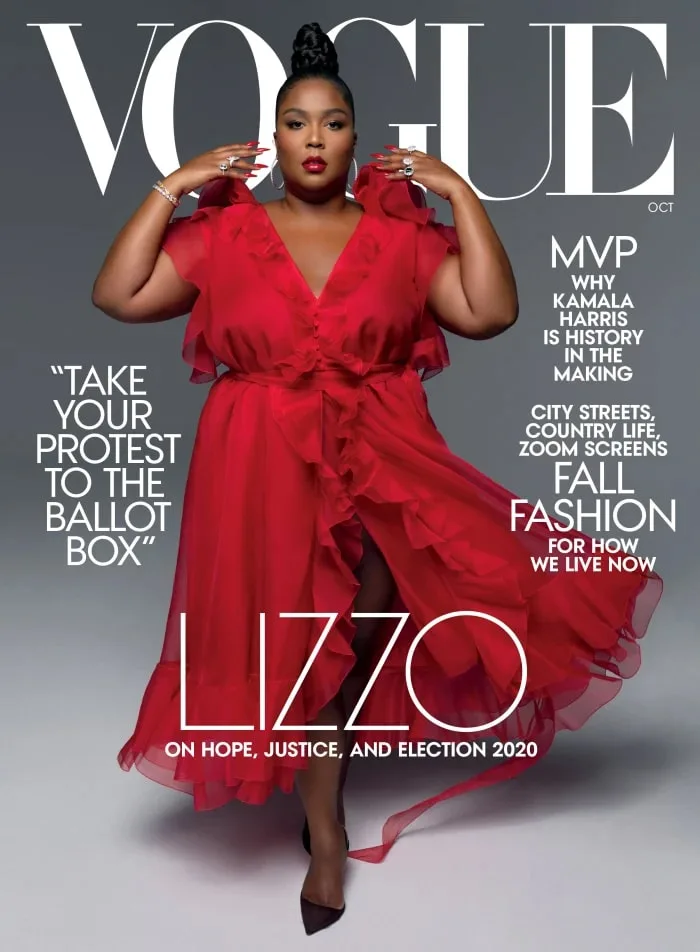
Lizzo On The Cover Of ‘vogue’ Magazine October Issue

Vogue released its October 2020 cover on Thursday, and it’s Good as Hell: The always fabulous Lizzo fronts the issue, which was shot by Hype Williams and styled by Carlos Nazario.

She Can Be Heroes “I had to travel the world and I had to meet people and read DMs and look into their eyes and really hear their stories, to believe that I was making an impact in a positive way,” says Lizzo. Moschino Couture cape. Sylva & Cie earrings. Bvlgari necklaces. Bracelets and rings by Tiffany & Co. and Chopard. Photographed by Hype Williams, Vogue, October 2020

Clad in a crimson Valentino dress that a politician could probably pull off at a luncheon, the ensemble is rather toned for the performer. (We’re used to seeing the artist in head-to-ruffles and over-the-top feathers, after all.) But the glam is turned up in the accompanying editorial, as Lizzo wears everything from a princess-worthy bubblegum pink Moschino Couture gown to a beaded LaQuan Smith top and skirt.

In the cover story, Lizzo talks justice and the upcoming election with Claudia Rankine. “I just want to encourage people to register to vote,” the bop singer said. “That is the most important thing to me. Because there’s a lot of upset people, and there’s a lot of people who have power. There’s a lot of voter suppression in Black communities. But there’s a lot of angry white kids now. And I’m like, ‘Yo, register to vote. Go out. You won’t get suppressed if you try to go to your ballot box.’

The self-love queen  who Vogue recently announced will be speaking at its Forces of Fashion conference in November also touched on the importance of maintaining a public image that is committed to positivity and celebrating her uniqueness.

“I think it’s important that I take full responsibility for the way the world perceives me because that is the way they’re gonna perceive someone who looks like me in the future,” Lizzo explained. “Maybe, hopefully, that would give some young girl someone to look up to and take away the opportunity for someone to weaponize her uniqueness against her. I had to travel the world and I had to meet people and read DMs and look into their eyes and really hear their stories to believe that I was making an impact in a positive way. And now that I believe in myself in that way, I’m gonna continue to just push that conversation by being a better me every single day.”

The October issue of Vogue will be available on newsstands on Oct. 6. You can read Lizzo’s full cover story here.

Content courtesy of Fashionista, Vogue & Nairobi fashion hub 

Ad