Thursday 22nd of October 2026

Nairobi, Kenya

The Green Thread: Nairobi’s Bold Bid to Become Africa’s Sustainable Fashion Capital

The Green Thread: Nairobi’s Bold Bid to Become Africa’s Sustainable Fashion Capital

NAIROBI, Kenya — As the global fashion industry grapples with its environmental footprint, a new vanguard of style is rising from the heart of East Africa. From January 28–31, 2026, the eighth edition of Nairobi Fashion Week (NFW) will transform the Kenyan capital into a high-octane laboratory for climate-conscious design.

Under the urgent banner of “DECARBONIZE,” this year’s event is more than a showcase of aesthetics; it is a manifesto for the future of global luxury. Nairobi is no longer just participating in the fashion conversation—it is leading it.

A Continental Shift: From Fast Fashion to Circularity

For decades, the global North has looked to Africa as a source of raw materials or a destination for textile waste. Nairobi Fashion Week 2026 is flipping that narrative. By centering circular design and upcycling, Kenyan designers are proving that heritage craftsmanship can provide the blueprint for a low-carbon economy.

The 2026 season highlights a sophisticated blend of:

  • Ethical Production: Small-batch “slow fashion” that prioritizes living wages and community-driven craftsmanship.

  • Climate-Smart Materials: Innovation in organic fibers and regenerative textiles that reduce the industry’s water and carbon footprints.

  • The Upcycling Revolution: Transforming existing materials into high-fashion silhouettes, a movement that has become a hallmark of the Nairobi creative collective.

The “Decarbonize” Movement

The theme of this year’s showcase, DECARBONIZE, reflects a deepening commitment to the United Nations’ climate goals. As Kenya’s creative economy gains unprecedented global visibility, NFW serves as a critical platform for designers who are reconciling bold African creativity with environmental responsibility.

“Nairobi is positioning itself as the pulse of the green movement,” says one industry insider. “We are seeing a fusion of cultural authenticity and radical innovation that challenges the very definition of how clothing is made and consumed.”

Why the World is Watching

Nairobi’s ascent comes at a pivotal moment. With international buyers and editors increasingly looking for “guilt-free luxury,” Kenya’s unique positioning—blending traditional artisanal techniques with modern, eco-conscious technology—makes it a formidable player on the world stage.

Now in its eighth season, Nairobi Fashion Week has evolved from a local runway into a continental powerhouse. It is a space where the “Nairobi look”—vibrant, conscious, and unapologetically African—is being codified for a global audience.

Event Details

  • Dates: January 28 – 31, 2026

  • Location: Nairobi, Kenya

  • Theme: DECARBONIZE

Nairobi Fashion Week 2026 invites the world to witness a cleaner, more conscious, and future-ready fashion landscape. In the streets of Nairobi, the future isn’t just being designed; it’s being sewn with a green thread.

Content courtesy of Nairobi Fashion Week & NFH Digital Team

The Great Green Transition: Inside Nairobi Fashion Week’s Radical “Decarbonize” Manifesto

The Great Green Transition: Inside Nairobi Fashion Week’s Radical “Decarbonize” Manifesto

NAIROBI, Kenya — In the global fashion hierarchy, the “Big Four” have long dictated the rhythm of style. But as the industry grapples with an existential environmental crisis, a new northern star is rising from East Africa. From January 28–31, 2026, Nairobi Fashion Week (NFW) Season VIII will transform Kenya’s capital into a high-stakes laboratory for the future of “Conscious Couture.”

This season, the glitter of the runway is anchored by a stern, singular directive: DECARBONIZE. It is a theme that elevates NFW from a mere trade show to a continental manifesto, challenging the very chemistry of African luxury.

A Circular Revolution in the Heart of Nairobi

For Creative Director Brian Kihindas, the “Decarbonize” mandate is an urgent response to an industry at a crossroads. Under his leadership, NFW has evolved into a sophisticated ecosystem where heritage textiles meet radical circularity.

“Decarbonize is our way of asking designers and audiences to consider the environmental impact of fashion,” Kihindas explains. “It’s about celebrating creativity while being mindful of the planet—rethinking production, embracing circularity, and designing garments that honor both people and the environment.”

The four-day event is meticulously structured to bridge the gap between high-concept art and commercial viability. Attendees will navigate a multi-sensory journey:

  • The Marketplace: A direct-to-consumer hub where the public can engage with the hands that sew their clothes.

  • The Dialogue: High-level panel discussions featuring industry titans, climate scientists, and policymakers.

  • The Spectacle: Runway shows that blend traditional African storytelling with futuristic, low-impact fabrication.

The Alumni: Architects of a New Narrative

The strength of NFW lies in its enduring “Alumni Effect.” Icons such as Eva Wambutu, known for her eco-conscious, silhouette-driven empowerment pieces, and Lucy Rao of Rialto Fashions, have used this platform to prove that sustainability is not a trend, but a foundational pillar of African luxury.

The inclusion of accessory powerhouses like Kipato Unbranded—which transforms recycled materials into socially conscious jewelry—and Egypt’s Reem Jano, whose sculptural pieces blur the line between art and adornment, reinforces the Week’s commitment to holistic design.

Season VIII: A Cross-Continental Tapestry

The 2026 lineup represents a sophisticated global exchange, featuring designers who treat “slow fashion” as a form of poetry:

  • Wanni Fuga (Lagos, Nigeria): Bringing a sustainable collection that marries minimalist elegance with the refined confidence of the modern African woman.

  • Naaniya (France/Mali): A bridge between diasporic memory and ancestral resonance, utilizing heritage textiles for a contemporary audience.

  • VAST (by Sarah): A masterclass in materiality, fusing West African handwoven textiles with natural hides and upcycled materials.

  • Studio Lola: Elevating knitwear to “wearable poetry” through sumptuous, hand-worked wool and timeless silhouettes.

  • Yevāana Handmade: A unique synthesis of Sri Lankan and Kenyan craft traditions, focusing on hand-smocked and ethically created artisanal textiles.

The Verdict: Fashion as Soft Power

As the global North looks toward Africa for the next wave of creative inspiration, Nairobi Fashion Week is ensuring that this influence is rooted in responsibility. By prioritizing decarbonization, NFW is not just making clothes; it is engineering a movement.

As the lights dim on the final runway on January 31, the true measure of success will not just be the silhouettes seen, but the carbon footprint saved—setting a new, gold standard for fashion weeks from Lagos to London.

Content courtesy of Nairobi Fashion Week & NFH Digital Team

The East African Renaissance: Claudia Naisabwa Set to Storm Cape Town’s Inaugural WAV Festival

The East African Renaissance: Claudia Naisabwa Set to Storm Cape Town’s Inaugural WAV Festival

CAPE TOWN, South Africa—As the sun sets over the Atlantic seaboard on January 2, 2026, the historic Green Point Track will transform into the epicenter of a new cultural movement. The WAV Festival, an ambitious inaugural celebration of R&B and soul through a distinctly African lens, is not merely a concert; it is a manifesto of the continent’s rising soft power.

At the heart of this historic debut is a woman who has become the face of East Africa’s media boom: Claudia Naisabwa.

The 23-year-old Kenyan powerhouse has been tapped to co-host the festival alongside South African personality Olly Zondi. For industry insiders, the pairing is a masterstroke of Pan-African synergy, bridging the gap between Nairobi and Cape Town while signaling a shift in how African entertainment is packaged for a global audience.

The “Claudia Naisabwa Factor”: A New Era of Influence

In the high-stakes world of international entertainment, Naisabwa represents the elusive “Triple Threat” of the Gen Z era. A proud native of the Samburu people, her ascent from a local TV and radio presenter on NTV Kenya to an international emcee is a testament to what critics call the “Claudia Naisabwa Factor.”

It is a unique blend of “girl-next-door” relatability and high-fashion sophistication. Her influence transcends traditional broadcasting; she is as comfortable officiating national events for President William Ruto as she is driving viral trends on TikTok and Instagram. This versatility has made her a crucial bridge for luxury brands and music labels looking to tap into the “poptimism” of Africa’s fashionable youth.

“WAV Festival represents the future of African and diasporic R&B—soulful, forward-thinking, and deeply connected,” say the organizers at The Malachite Group and Africa Creative Agency. “Claudia brings an authentic East African perspective that perfectly embodies the global wave we are creating. She represents the rise of young African women owning the narrative.”

https://www.instagram.com/reel/DTYFH_0DaHU/?utm_source=ig_web_copy_link&igsh=MzRlODBiNWFlZA==

A Convergence of Sound and Style

The festival’s lineup reads like a “who’s who” of contemporary soul and alternative sounds. Headlined by Mariah The Scientist, the roster includes:

  • Global Heavyweights: Wale and Sasha Keable.

  • The African Vanguard: Kelvin Momo, Shekhinah, Manana, and Langa Mavuso.

  • Emerging Pioneers: Nanette, Kujenga, and Lia Butler.

For Naisabwa, this South African debut is a pivotal chapter in her self-styled “Africa TakeOver” Tour. Having already graced stages in Uganda and Tanzania—and with a highly anticipated hosting slot at the upcoming AFRIMA Awards in Nigeria—she is rapidly becoming Kenya’s premier entertainment export.

Beyond the Spotlight: Purpose-Driven Power

While her fashion choices and high-energy stage presence dominate the headlines, Naisabwa’s true impact lies in her social architecture. Through her CN Initiative, launched in 2024, she has mentored over 500 young women on mental health, body positivity, and creative entrepreneurship.

As the youngest nominee under 25 in the Forty Under 40 Africa awards, she uses her platform to champion girl-child education and anti-teenage pregnancy awareness, proving that the modern “Media Darling” must be as committed to social change as she is to the camera.

A Global Stage

Supported by global titans like Spotify, Don Julio, and Johnnie Walker, the WAV Festival is poised to redefine the “Festival Season” in the Southern Hemisphere. As fashionistas and music enthusiasts descend upon Cape Town this January, all eyes will be on the stage—not just for the melodies, but for the young woman from Nairobi who is proving that the future of African media is female, fierce, and undeniably global.

Content courtesy of BM Publications  & NFH Digital Team

The Vanguard of African Design: Inside Delight Technical College’s 2025 Graduation and Grand Fashion Runway

Delight Technical College is proud to announce the successful graduation of the Class of 2025, held on December 19th at the Kenya National Theatre. Under the theme of resilience and innovation, the ceremony marked eight years of technical education excellence, awarding diplomas and certificates across the Schools of Fashion and Design, and Media and Artificial Intelligence. Principal Mr. Saitoti Meitamei commended the graduates for their discipline and urged them to go forth and shape the future of their communities.

By Oscar Alochi

NAIROBI, Kenya — December 19, 2025

On a balmy Friday evening at the historic Kenya National Theatre, the air was thick with the scent of fresh fabric and the electric hum of anticipation. This was not merely graduation; it was the “Grand Fashion Runway,” a high-stakes debut for the next generation of African creative pioneers from Delight Technical College.

As the global fashion industry increasingly looks to Nairobi as a hub for sustainable innovation and cultural storytelling, the Class of 2025 stood ready to answer the call.

A Vision of Resilience and Excellence

The ceremony opened with a poignant address from the Principal’s desk. Mr. Saitoti Meitamei, Principal of Delight Technical College, stood before a sea of caps and gowns to declare the milestone a victory of “resilience, creativity, and innovation”.

“The world you are stepping into is dynamic and ever-evolving,” Meitamei told the graduates. “It calls for thinkers, dreamers, and doers who can craft solutions with imagination and courage. You are those pioneers”. He urged the ambassadors of the institution to carry forth the core values of discipline, integrity, and excellence into a world hungry for new narratives.

The Runway: Where Heritage Meets the Future

The afternoon transitioned from formal conferment to a spectacular three-part fashion showcase that would not have been out of place on the screens of Vogue or the streets of Milan.

  • Runway 1 & 2: Displayed the technical mastery of the School of Fashion and Design. Looks ranged from intricate tailoring to bold, avant-garde silhouettes that blurred the lines between traditional African heritage and contemporary street style.

  • Media & AI Recognition: In a nod to the shifting global landscape, a dedicated segment honored the fusion of Media and Artificial Intelligence. This integration highlights the college’s commitment to equipping students with tech-forward skills—from digital journalism to AI-driven design—ensuring they remain competitive in a digitized modern world.

Among those lauded were top-tier graduates like Neris Kweh Nfor, Ashley Njeri, and Miriam Muthoni Munene, all of whom secured Distinctions in the Diploma of Tailoring, Fashion & Design.

The Alumni Legacy: From Classroom to CEO

The event served as a bridge between current success and future potential, spotlighting alumni who have already conquered the international stage.

Notable figures included Diana Kilonzi, founder of Stitched by Dee, known for her bold, custom-made designs, and Sammy (Finest) Olwangu, the designer who has dressed Africa’s biggest celebrities, including Nyashinski and Otile Brown. Their stories of transformation—from students to industry leaders—provided a tangible roadmap for the 2025 cohort.

Nairobi’s Creative Renaissance

As an institution approved by the Ministry of Education (TVETA-accredited), Delight Technical College has spent eight years refining a model of “Technical Education Excellence”. By offering modularized courses and flexible study options, the college champions an inclusive approach to higher education that aligns with Africa’s global industry needs.

As the guests departed the Kenya National Theatre at dusk, the message was clear: the Class of 2025 is not just graduating into the industry; they are here to shape the future.

Delight Technical College is currently accepting applications for the 2026 Academic Year, with intakes in progress for Diploma, Certificate, and Artisan courses in Fashion, Media, and AI.

Content courtesy of Delight Technical College & NFH Digital Team 

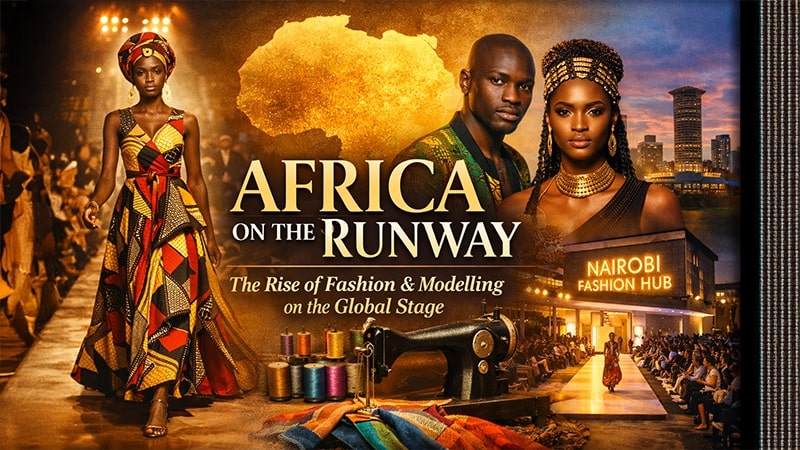
Africa on the Runway: How Fashion and Modelling Are Rewriting the Continent’s Story


Africa on the Runway: How Fashion and Modeling Are Rewriting the Continent’s Story.

Africa’s fashion and modeling industries are no longer whispers in the wings of the global style conversation. They are a chorus loud, inventive, and insistently original, pulling the continent’s textiles, stories, and faces onto international runways, into glossy editorials, and onto e-commerce storefronts. That rise is not accidental: it’s a product of grassroots creativity, entrepreneurial grit, strategic partnerships, and a growing recognition from international buyers and media that African fashion is not a niche but a market and cultural force. Yet the lift-off comes with persistent friction, structural, financial, and logistical, that the industry is learning to overcome in real time.

The landscape: creative abundance, structural scarcity.

From Lagos to Johannesburg and Nairobi to Dakar, designers are mining local crafts, indigenous textiles, and contemporary sensibilities to produce work that reads modern and memorably African. The continent’s apparel and footwear sector is sizeable and growing: recent industry analyses describe a multi-billion-dollar market driven by a young, urbanizing population hungry for styles that speak to identity and aspiration. At the same time, major gaps remain limited capital flowing into creative businesses, weak local supply chains, high costs of quality raw materials, and underdeveloped intellectual-property protections that make scaling risky for designers. These are not cosmetic issues; they shape whether a designer can move from a market stall to sustainable factory runs and from seasonal shows to year-round international distribution. (Euromonitor)

Models, agencies, and representation: progress and persistent gatekeepers.

The modelling side has made visible strides. A new generation of African faces, not merely tokenized but celebrated for their variety and cultural specificity, has appeared on major magazine covers and in advertising campaigns. Publications and runways have started to reflect a broader beauty code, from British Vogue’s landmark Africa-focused features to boutique agencies exporting talent overseas. Yet pipelines are uneven. There are still too few professional agencies with scouting, training, and welfare systems that match international standards, and many aspiring models lack access to education on contracts, health, and financial planning. Where models and agencies collaborate with reputable fashion weeks and hubs, the speed and quality of career development rise. (British Vogue)

The twin engines: local markets and foreign support.

Growth is being fuelled by two complementary currents. First, robust local demand: middle-class growth, the rise of luxury boutiques across African capitals, and digital platforms are expanding domestic consumption. Second, strategic foreign interest from global retailers in cultural institutions that open distribution channels and funding pipelines. International prizes, retail partnerships, and editorial coverage have helped put designers on global maps and provided practical capital and mentorship. Still, dependence on foreign grants or one-off placements is risky; sustainable scale requires stronger domestic investment, better trade policy, and predictable financing instruments for creative SMEs. (Vogue)

Private sector, individuals, and corporate sponsorship: the new patrons of style.

Where governments have been slow to act, individual entrepreneurs and corporations are stepping in. High-net-worth patrons, local retailers, hair and beauty brands, and multinational sponsors are underwriting runway shows, pop-ups, and incubators. These contributions are catalytic: they offer marketing reach, seed capital, and platform visibility. Corporate sponsorships, when thoughtfully structured, can professionalize events and link designers to logistics, export know-how, and retail distribution. But sponsorships must be strategic and long-term: short promotional spends boost visibility but don’t replace investments in production capacity, digital infrastructure, and skills development.

Nairobi Fashion Hub: a case study in market-making

In Nairobi, one organisation exemplifies how a local initiative can alter industry dynamics. Nairobi Fashion Hub (NFH) began as a digital platform and has since developed into a multifaceted ecosystem builder: promoting designers, staging showcases, profiling models and fashion professionals, and creating networking opportunities across East Africa. By amplifying local talent and connecting creators to commercial and editorial channels, NFH helps convert creative capital into economic capital. Its programming, from runway events to training and editorial features, addresses a key industry bottleneck: visibility. For many Kenyan designers and models, platforms like NFH are the bridge between local recognition and regional or global opportunity. (NFH – African Fashion)

What’s changing the rules of the game

Several converging trends are reshaping possibilities:

  • Digitization: E-commerce, social media, and digital lookbooks let designers sell globally without traditional wholesale deals. The pandemic accelerated virtual showcases and direct-to-consumer models. (Vogue)
  • Sustainability and craft revival: A pivot toward regenerative materials, circular fashion, and elevated craft narratives gives African brands a competitive edge in conscious luxury markets.
  • Pan-African collaboration: Fashion weeks and platforms are increasingly pan-African, pooling designers and buyers across borders to build scale. Lagos Fashion Week, for example, has emerged as a major node linking local talent to sponsors and international buyers, a model that other hubs emulate. (Vogue)

The obstacles that won’t vanish overnight

For all the momentum, friction points remain stubborn:

  • Financing: Creative businesses are often high-risk to conventional lenders; alternatives like creative funds, impact investors, and blended finance are still nascent across the continent. (UNESCO)
  • Manufacturing and sourcing: Without integrated supply chains (from spinning yarns to dye houses to finishing facilities), designers face long lead times and quality variability that deters large buyers.
  • Skills and standards: Technical training in pattern cutting, grading, manufacturing management, and modelling professionalism is unevenly distributed. Bridging that gap requires structured vocational programs and private-public partnerships.
  • Market access costs: Trade tariffs, logistics, and export paperwork add layers of cost that make international expansion expensive and slow.

Practical wins: what accelerates success

A set of practical interventions has proven effective in markets that have moved faster:

  1. Incubation + Market Access: Hubs that combine business training with buyer introductions (like NFH’s programming) shorten the runway to commercial deals. (NFH – African Fashion)
  2. Sponsorships with capacity building: Corporate funding tied to supply-chain investments, training, and production support builds durable capacity instead of one-off events.
  3. Regional trade facilitation: Lowering intra-African trade frictions helps brands scale across borders before taking on far-flung export markets.
  4. Investment vehicles for creatives: Dedicated fashion funds, blended finance, and grant-to-equity structures reduce early-stage risk and help brands professionalize.

The human story that matters

At the heart of every statistic are designers, models, tailors, textile workers, and entrepreneurs turning ideas into livelihoods. For them, fashion is not mere glamour; it is jobs, cultural preservation, and new career pathways. Initiatives that respect that human dimension, offering fair pay, worker protections, and sustainable growth, will create an industry that is both stylish and just.

Looking forward: from creative bursts to a durable industry.

Africa has the ingredients for a globally resonant fashion ecosystem: raw creativity, rich textile heritages, a hungry consumer base, and an increasingly connected diaspora market. To turn that potential into long-term impact requires patient capital, smarter public policy, and more hubs that combine visibility with commercial scaffolding. Organisations like Nairobi Fashion Hub are doing the hard, unglamorous work of shaping markets: cataloguing talent, staging consistent platforms, and building the networks that turn runway applause into export contracts.

If stakeholders, designers, models, funders, governments, and media double down on infrastructure and skills while protecting creative agency, Africa will not just contribute to global fashion: it will help redefine the industry’s aesthetics, ethics, and economy. The continent’s next decade in fashion is not a matter of if but how fast and how sustainably it chooses to run.


Sources & further reading: UNESCO’s report on the African fashion sector (trends and challenges); market analysis on apparel in sub-Saharan Africa; Vogue coverage of African fashion and Lagos Fashion Week; Nairobi Fashion Hub’s platform and programming. (UNESCO)

Content courtesy of NFH Digital Team

The Vanguard of African Style: Nigerian Student Fashion and Design Week Sets the Stage for a High-Octane 2025 Return

The Vanguard of African Style: Nigerian Student Fashion and Design Week Sets the Stage for a High-Octane 2025 Return

The pulse of Lagos is set to quicken this December as the Nigerian Student Fashion and Design Week (NSFDW) prepares for its ninth edition. More than a mere runway show, the event has established itself as the definitive launchpad for the continent’s next generation of sartorial disruptors.

Scheduled for December 20, 2025, at the sleek GAC Motors venue in Victoria Island, the event will embed itself into the heart of “Detty December”—the city’s world-famous season of cultural exuberance.

A Global Launchpad for Emerging Talent

Since its debut in 2013, NSFDW has served as a bridge between raw creativity and commercial viability. The platform’s track record is formidable: over 300 designers have debuted on its runway, with many transitioning from student hopefuls to international contenders.

The success of the 2024 alumni serves as a testament to this trajectory. Winners PatrickSlim and Vienne Styling recently made their mark at Dallas Fashion Week 2025, garnering international acclaim and proving that the NSFDW pipeline leads directly to the global stage.

Where Creativity Meets Opportunity

This year’s theme, “Detty December,” captures the festive, expressive spirit of Nigeria’s year-end celebrations. However, the event offers more than just aesthetic appeal. The 2025 itinerary includes:

  • Avant-Garde Runways: Showcasing the boldest visions in contemporary African attire.

  • Expert Panels: Thought leadership sessions focused on the business of fashion.

  • Networking Hubs: Bridging the gap between young designers, seasoned stylists, and global investors.

“Every year, we observe how our participants take bold steps that redefine African fashion,” says Abiola Orimolade, Founder of NSFDW. “NSFDW is a comprehensive system that guides young creatives from emerging talent to recognized professionals. We are creating a space where creativity meets opportunity.”

The Cultural Impact

As Lagos continues to cement its status as a global fashion capital, NSFDW 2025 stands at the intersection of innovation and enterprise. By aligning with the city’s most vibrant season, the platform ensures that African youth innovation remains at the forefront of the international cultural conversation.

For those looking to witness the future of African design, participation details and media inquiries are available at www.nsfdweek.com or via @nsfdweek on Instagram.

Content courtesy of NOVA & NFH

Fashion Brand Mulu Evolves From Plus-size Pioneer To Family Lifestyle Label

September 2, 2025, Dubai, UAE – MULU, once recognized as a leading plus-size fashion brand for women, is rebranding into a lifestyle fashion label for the entire family. The launch of the new MULU Reborn Collection on September 4, 2025, reflects the personal journey of the founder, Kanessa Muluneh, and a new vision: to dress families with ease, comfort, and togetherness. The Reborn Collection will be available online at www.mulu.world with sizes ranging from baby all the way up to 5XL.

The rebrand was set in motion because of personal reflection, says Kanessa Muluneh. “When I first launched MULU, I was plus-size and designed clothes for women like me. I didn’t have kids, and my priorities were different. Today, I am a mother of three, and I have a family. That was when I realized MULU had to be reborn, too, as a brand catering to the whole family expanding beyond where we started. MULU is about creating fashion that bonds families.”

MULU’s mantra is “unlock ease, unlock MULU” and a design approach focusing on “clothing that moves with you”. The Reborn collection launches with five classic basics (black, navy, maroon, brown, green) balanced with two playful additions (yellow and light blue). All the pieces are made of comfortable, premium fabrics that adjust to all body sizes.

Since moving to Dubai three years ago, Kanessa Muluneh has adapted Arab cultural influences while keeping the brand’s global appeal. Family values are at the heart of MULU, and the new collection includes traditional pieces like abayas with a modern twist. Pricing ranges from 400-600 AED and targets established families across all categories.

MULU’s rebrand tackles what Kanessa Muluneh sees as a gap in family fashion: “We want to make life as a family easier. MULU Reborn is designed for daily activities like school runs, trips to the shop, errands, and all the things we do every day.” The launch on September 4 aligns with the back-to-school season when families set up new routines and look for clothing solutions that suit everyone. The date holds personal significance as well and marks nine years since Kanessa’s wedding anniversary when she started her family.

Kanessa Muluneh, founder of MULU, said: “Life is already full of responsibilities, especially when you have a family, and clothing shouldn’t add to that stress. That’s why we are including everyone in the collection: from babies and kids to teens, moms, dads, uncles, aunties, cousins, and even grandma and grandpa. Think of those traditional Christmas photos where the whole family wears matching sweaters, only this time, it can be MULU.”


About MULU:
MULU, established in 2018 by Kanessa Muluneh in the Netherlands, is a premium family
lifestyle brand based in the UAE. More than a clothing line, MULU is a family-first movement
catering to everyday families living their daily lives. The brand creates elevated essentials across
all age groups and sizes from babies to plus-size adults. MULU’s mission is to create fashion
that bonds families. MULU’s products are available in over 15 countries, including the
Netherlands, Germany, Belgium, Denmark, Sweden, Austria, UK, USA, Canada, Ghana, and
Kenya.

Content courtesy of MULU & NFH Dgital Team

Setting Sail in Style: Louis Vuitton Unveils Monumental Cruise Ship Store in Shanghai

SHANGHAI— In a breathtaking display of architectural innovation and experiential luxury, Louis Vuitton has anchored its most ambitious retail concept to date in the heart of Shanghai: “The Louis,” a monumental, life-size cruise ship-shaped destination that transcends the traditional boutique. More than just a store, this extraordinary structure seamlessly integrates a vast flagship retail space, a sophisticated restaurant, and an immersive museum charting the brand’s illustrious history, setting a new benchmark for luxury engagement in the global market.

This isn’t merely a popup; it’s an immersive brand experience, a testament to Louis Vuitton’s audacious vision & unwavering commitment to innovation.Resembling a colossal, deconstructed Louis Vuitton trunk, ‘The Louis’ stands as an architectural marvel. Its distinctive design immediately captivates

— Nairobi Fashion Hub (@nairobifashionhub.bsky.social) 2025-07-08T14:36:31.996Z

Unveiled on June 28th, 2025, “The Louis” stands majestically in the HKRI Taikoo Hui shopping plaza on Wujiang Road, its gleaming metallic Monogram-clad exterior designed to evoke the grandeur of an ocean liner and the iconic stacked trunks that are synonymous with Louis Vuitton. The 30-meter-tall edifice, a collaborative marvel including design by OMA’s Shohei Shigematsu for its exhibition spaces, pays homage to both Louis Vuitton’s deep maritime roots in crafting travel-ready trunks and Shanghai’s historical identity as a pivotal port city, the “Gateway to the East.”

A Voyage Through Luxury Retail

Stepping aboard “The Louis” is to embark on a multi-sensory journey across its three expansive levels. The core of the ground floor features a sprawling Louis Vuitton flagship boutique, a meticulously curated space showcasing the Maison’s comprehensive collections. From the latest ready-to-wear pieces and an extensive array of signature leather goods to elegant accessories, contemporary footwear, and exquisite fine jewelry, every item is presented with an emphasis on craftsmanship and allure. The open, fluid layout encourages exploration, inviting patrons to discover the breadth of Louis Vuitton’s creative universe in an environment that is both grand and intimate. Personalization services, including Shanghai-themed hot stamping, further elevate the bespoke shopping experience.

Louis Vuitton has once again pushed the boundaries of luxury retail with the launch of an extraordinary new concept in Shanghai: ‘The Louis’, a futuristic, life-size cruise ship anchored majestically on Nanjing Road, right by Taikoo Hui.#nairobifashionhub

— Nairobi Fashion Hub (@nairobifashionhub.bsky.social) 2025-07-08T14:35:08.173Z

Gastronomic Port of Call: Le Café Louis Vuitton

Perched on the top floor, Le Café Louis Vuitton offers an elevated culinary experience that mirrors the brand’s commitment to excellence and innovation. Designed with warm wood surfaces and soft lighting, the café evokes the intimate ambiance of an old cruise ship cabin, complete with an elegant outdoor terrace providing a “seaside” atmosphere.8 Under the guidance of chefs Leonardo Zambrino and Zoe Zhou, the menu presents a unique fusion of French and Shanghainese culinary influences. Guests can indulge in creative interpretations such as “Monogram Raviolis,” a refined twist on Chinese jiaozi stamped with the iconic LV mark, alongside other bespoke dishes like the “Cesar Salad Eclipse,” reimagined with a vibrant yuja dressing.9 This dining destination transforms a shopping trip into a leisurely and sophisticated indulgence.

Charting the Course: The Visionary Journeys Exhibition

Integral to “The Louis” experience is the “Visionary Journeys” exhibition, a comprehensive museum spanning the first two floors that offers an unparalleled deep dive into Louis Vuitton’s storied heritage. Conceived by Shohei Shigematsu of OMA, this multi-room exhibition is not merely a historical retrospective but a captivating narrative of the Maison’s evolution.

Visitors begin their journey through “Trunkscape,” an immersive installation of Monogram canvas trunks curving into an archway, setting a cinematic tone.11 The exhibition then unfolds through a series of thematic rooms:

  • Origins: Celebrating the iconic trunks and leather goods that are at the heart of the “Art of Travel,” tracing the brand’s inception in 1854.
  • Voyage Room: A tribute to the romance of travel, featuring bag patents and vintage travel posters, spotlighting Louis Vuitton’s spirit of adventure across eras.
  • Workshop: Offering live demonstrations by skilled artisans, showcasing the intricate craftsmanship and dedication to detail that define Louis Vuitton’s creations.
  • Perfume Room: A fragrant display of rare perfume bottles and vintage toiletry kits, highlighting the brand’s historical foray into personal care.
  • Books and Sport: An unexpected but fascinating exploration of Louis Vuitton’s ties to literature through works by Gaston-Louis Vuitton and its role in major sporting events, displaying renowned trophy trunks used for Formula 1 and the Olympics.

The exhibition culminates in a gift shop, offering an exclusive selection of merchandise, providing a tangible link to the immersive experience.

This isn’t just a nod to the brand’s iconic luggage heritage; it’s a bold reinterpretation, asserting Louis Vuitton’s dominance in the contemporary luxury sphere. The sheer scale and meticulous detailing of this installation are breathtaking, showcasing the brand’s craftsmanship on an epic scale.

— Nairobi Fashion Hub (@nairobifashionhub.bsky.social) 2025-07-08T14:38:19.692Z

A Strategic Landmark in a Shifting Market

The launch of “The Louis” is a strategic move by LVMH to not only reinforce Louis Vuitton’s formidable presence in China but also to adapt to the evolving luxury market. In a climate where consumer spending habits are shifting and “experiential goods” are gaining traction over traditional purchases, this concept store is designed to be a cultural landmark that attracts crowds beyond the typical luxury shopper. As Pietro Beccari, Chairman and CEO of Louis Vuitton, stated, the concept represents a “new chapter in the brand’s cultural evolution,” embodying the “spirit of travelling through ideas, emotions, and inspiration in a joyful way.”

By creating a destination that offers shopping, dining, and a rich cultural experience, Louis Vuitton is not just selling products; it is cultivating a deeper connection with its audience, transforming retail into an adventure, and solidifying its position as a cultural powerhouse in the dynamic landscape of global luxury. “The Louis” stands as a bold testament to Louis Vuitton’s enduring legacy and its visionary approach to the future of retail.

Content courtesy of NFH Digital Team


Nicole Tikolo Wins UK Fashion Award, Championing African Heritage and Size Inclusivity

At just 23, the Kenyan fashion student makes history with her curve-celebrating coastal collection at the 2025 Fashanne Awards.

LONDON, United Kingdom — Kenyan fashion design student Nicole Tikolo has taken center stage on the UK fashion scene, winning the People’s Choice Award in the Womenswear Design category at the prestigious 2025 Fashanne Awards. Her striking collection, Urembo wa Pwani Swahili for The Beauty of the Coast captivated voters across continents, marking a breakthrough moment for African representation and size-inclusive design on the global stage.

At just 23, Tikolo becomes the first Kenyan to earn this accolade at the Fashanne Awards often described as the “BAFTAs of student fashion.” Currently studying at Nottingham Trent University, she impressed both judges and the public with a deeply personal, technically accomplished collection that channels her Taita roots and sun-soaked memories of the Kenyan coast.

Her collection, Urembo wa Pwani (“The Beauty of the Coast”), draws inspiration from her Taita heritage & childhood visits to the Kenyan coastline.The line features flowing silhouettes, bespoke prints of madafu (coconuts) & the Taita White Eye bird, & fabrics that evoke the breezes of Diani and Lamu

— Nairobi Fashion Hub (@nairobifashionhub.bsky.social) 2025-06-30T14:11:55.580Z

With bespoke prints featuring madafu (coconuts) and the rare Taita White Eye bird, Urembo wa Pwani celebrates the beauty and confidence of curvy women. From the flowing silhouettes to the color palette inspired by coastal sunsets and the carved geometry of Swahili doors, the collection is as much a love letter to Kenyan culture as it is a call for inclusivity in fashion.

“I wanted to design clothes that feel like home that move with you and speak to women who’ve long been excluded from the mainstream fashion narrative,” Tikolo said. “This win isn’t just mine. It’s for Kenya, for African creativity, and for every woman who wants to feel seen in her own skin.”

The Fashanne Awards draw hundreds of entries from the UK’s top fashion institutions. Tikolo’s Entry #62 stood out not only for its storytelling and craftsmanship, but for its significance in a global plus-size fashion market worth $193 billion — a market still widely underserved by mainstream brands.

“Because I’m curvy too,” she shared during her campaign. “I know what it feels like to be overlooked. I wanted to create something that’s beautiful, functional, and deeply meaningful — not just for me, but for every woman out there with the same struggle.”

The garments — crafted in cotton satin for structure and crepe de chine for movement reflect Tikolo’s mastery of silhouette and her belief in intentional design. Weeks of drafting, refining, and stitching led to a collection that not only wowed industry insiders but resonated emotionally with the global public.

Tikolo’s designs celebrate curvy women through wearable volume, precise tailoring, and intentional printwork. Influenced by visionary African designers like Andrea Iyamah, Kim Dave, and Banke Kuku, her work weaves cultural storytelling into global-relevant fashion

— Nairobi Fashion Hub (@nairobifashionhub.bsky.social) 2025-06-30T14:15:20.796Z

Tikolo credits her university training and spiritual grounding for her success.

“Faith and fashion go hand in hand for me,” she explains. “I pray through my process. Every detail, every seam carries intention and purpose.”

With Africa’s fashion industry projected to surpass $15.5 billion by 2025 (African Development Bank), Tikolo’s victory is symbolic of a larger continental shift — where African designers are stepping forward as creators, not just consumers, of global fashion narratives.

Now setting her sights on the future, Tikolo is preparing to launch her own curve-inclusive fashion label in Kenya one that merges storytelling, print innovation, and technical precision to dress the modern African woman.

“Winning this award is just the beginning,” she says. “It’s time for African stories to take up space. It’s time for every woman every shape, every background — to feel beautiful, represented, and powerful in what she wears.”

Emerging Kenyan fashion designer Nicole Tikolo, a student at Nottingham Trent University, has achieved finalist status in the Womenswear Design category at the 2025 Fashanne Awards in the UK.#nairobifashionhub

— Nairobi Fashion Hub (@nairobifashionhub.bsky.social) 2025-06-30T14:08:37.509Z

As Tikolo ascends in the fashion world, she joins a new generation of African creatives rewriting the rules of the industry blending heritage with innovation, and using fashion as a platform for visibility, empowerment, and transformation.

Content courtesy of NFH Digital Team

Christie Brown Academy and Mastercard Foundation Empower Africa’s Next Generation of Fashion Entrepreneurs

Accra, Ghana – In a landmark event on June 14, 2025, at the Marriott Hotel in Accra, the Christie Brown Academy (CBA), in collaboration with the Mastercard Foundation, celebrated the graduation of its second cohort of 25 aspiring fashion entrepreneurs. This milestone concluded a transformative one-year pilot program designed to bridge the gap between creative passion and business acumen in the African fashion industry.

The program’s curriculum is described as “future-forward” and “intensive,” focusing on equipping young Africans, particularly young women and economically disadvantaged individuals, with the tools to build globally competitive and sustainable fashion businesses. The academy’s core mission is to empower these creatives, helping them transition from designers to successful entrepreneurs.

Christie Brown Academy, founded by renowned Ghanaian designer Aisha Ayensu, is redefining fashion education in Africa. With a core mission to empower young African creatives, the CBA delivers a transformative curriculum that prioritizes the business of fashion and creative design.#nairobifashionhub

— Nairobi Fashion Hub (@nairobifashionhub.bsky.social) 2025-06-27T10:02:41.039Z

A Showcase of Innovation and Identity

The highlight of the event was a vibrant graduation fashion show where the 25 graduates presented their original collections. These collections were more than just garments; they were a reflection of the participants’ personal growth, cultural identity, and deep commitment to innovation. Attendees and industry stakeholders witnessed a stunning display of creativity, with designers using a variety of materials, from repurposed denim to traditional kente fabrics, to create beautiful and impactful pieces. The runway showcased a mix of avant-garde, sustainable fashion, streetwear, and couture, positioning Ghana as a rising hub for innovative fashion production.

Bridging the Gap: The Vision of Aisha Ayensu

Aisha Ayensu, the renowned Ghanaian designer who founded the Christie Brown Academy, emphasized the academy’s crucial role in the industry. “Through the Christie Brown Academy, we are meeting these participants at the point of their needs and bridging the gap between creativity and entrepreneurship in Africa’s fashion industry,” she stated. She further explained that the academy’s goal is to not only train designers but also to build brands of excellence that reflect the essence of Africa in both appearance and structure.

“Through the Christie Brown Academy, we are meeting these participants at the point of their needs and bridging the gap between creativity and entrepreneurship in Africa’s fashion industry,” said Aisha Ayensu, Founder and Director of Christie Brown Academy.

— Nairobi Fashion Hub (@nairobifashionhub.bsky.social) 2025-06-27T10:03:32.639Z

Mastercard Foundation’s Commitment to Youth Empowerment

The partnership with the Mastercard Foundation is a cornerstone of the academy’s success. Representing the foundation, Nene Diallo, the Capacity Development and Mass Entrepreneurship Lead for Pan-African Programs, highlighted the alignment of the program with the foundation’s vision of unlocking the potential of African youth. “We are committed to investing in entrepreneurship, skills development, and dignified work for young women,” Diallo said, adding that the graduates represent the future of African innovation and the creative industry.

Seed Funding for Future Leaders

As a testament to their commitment to nurturing youth-led enterprises, the Mastercard Foundation awarded $1,000 in seed funding to three exceptional graduates to help them kickstart their fashion ventures. The recipients of this grant were:

  • Barbara Clement
  • Mavis Nelson
  • Nancy Osei

This financial support extends beyond the graduation, offering these entrepreneurs a crucial starting point for their businesses. The academy also provides ongoing support, including access to a database of industry resources and expert personnel, to ensure their long-term success.

The event featured a graduation fashion show spotlighting the participants’ original collections which are a reflection of their personal growth, cultural identity, and commitment to innovation. The showcase positioned Ghana as a rising hub for innovative fashion production.#nairobifashionhub

— Nairobi Fashion Hub (@nairobifashionhub.bsky.social) 2025-06-27T10:04:47.183Z

Looking Ahead: A Global Force in Fashion

The Christie Brown Academy is envisioned to become Africa’s leading fashion education institution, developing global talent and contributing to the continent’s economic growth through fashion entrepreneurship. The success of this pilot program demonstrates the academy’s effectiveness in preparing a new generation of African youth to build resilient and impactful fashion brands, cementing Africa’s voice, values, and vision on the world stage.

Content courtesy of  NFH & Nueva Comms

Nicole Tikolo’s “Urembo wa Pwani” Brings Kenyan Coastal Elegance to the 2025 Fashanne Awards

Emerging fashion designer Nicole Tikolo is capturing attention across the UK and beyond as a finalist in the prestigious 2025 Fashanne Awards under the Womenswear Design category.

Currently pursuing her fashion studies at Nottingham Trent University, Tikolo’s standout collection, Urembo wa Pwani Swahili for The Beauty of the Coast, is also in contention for the People’s Choice Award.

Emerging Kenyan fashion designer Nicole Tikolo, a student at Nottingham Trent University, has achieved finalist status in the Womenswear Design category at the 2025 Fashanne Awards in the UK.#nairobifashionhub

— Nairobi Fashion Hub (@nairobifashionhub.bsky.social) 2025-06-30T14:08:37.509Z

Inspired by her Taita heritage and childhood memories of Kenya’s coastal towns, the collection is a vivid celebration of African femininity. It features flowing silhouettes and original prints that incorporate iconic elements like madafu (coconuts) and the Taita White-eye bird, paired with breezy fabrics that evoke the essence of Diani and Lamu.

“I design for women who want to feel beautiful, confident, and seen,” Tikolo shares. “This collection is rooted in my story, my heritage, and a deep belief that African fashion can be both globally relevant and proudly local.”

Tikolo is rallying support from Kenyans, East Africans, the global diaspora, and advocates of inclusive fashion to vote for entry #62 in the People’s Choice category, a move that could propel her vision onto an even larger platform.

Her collection, Urembo wa Pwani (“The Beauty of the Coast”), draws inspiration from her Taita heritage & childhood visits to the Kenyan coastline.The line features flowing silhouettes, bespoke prints of madafu (coconuts) & the Taita White Eye bird, & fabrics that evoke the breezes of Diani and Lamu

— Nairobi Fashion Hub (@nairobifashionhub.bsky.social) 2025-06-30T14:11:55.580Z

Her journey reflects a powerful shift in fashion’s global narrative one where African identity, body positivity, and storytelling converge. Influenced by boundary-pushing designers like Andrea Iyamah, Kim Dave, and Banke Kuku, Tikolo’s work embraces wearable volume, intentional printwork, and precise tailoring to honor the curves, colors, and cultural richness of African women.

“This nomination isn’t just about me,” she says. “It’s about showing the world what Kenya has to offer about telling stories with fabric and celebrating the coastlines, curves, and creativity of African women.”

The Fashanne Awards ceremony, celebrating innovation among UK-based fashion students, will announce the People’s Choice Award winner on June 26, 2025.

Tikolo’s designs celebrate curvy women through wearable volume, precise tailoring, and intentional printwork. Influenced by visionary African designers like Andrea Iyamah, Kim Dave, and Banke Kuku, her work weaves cultural storytelling into global-relevant fashion

— Nairobi Fashion Hub (@nairobifashionhub.bsky.social) 2025-06-30T14:15:20.796Z

As Tikolo stands poised to leave her mark on the global stage, she joins a new generation of African designers redefining beauty, representation, and identity in fashion.

Content courtesy of NFH Digital. 

Mr. & Miss Kasarani 2025: Crowning Purpose Over Prestige in Nairobi’s Fastest-Growing Youth Pageant

Every year in Kasarani, Nairobi, something special happens: the Mr. & Miss Kasarani pageant. It’s not just about looks; it’s a way to help young people grow into leaders and make a difference in their community through fashion, talent, and culture. Started in 2019, it’s now a big event that many look forward to.

By Oscar Alochi | Nairobi, Kenya

In a community nestled within the northern suburbs of Nairobi, a local initiative has steadily evolved into a movement empowering youth, igniting talent, and nurturing leadership. Mr. & Miss Kasarani, founded in 2019, is more than a pageant. It is a purpose-driven platform that continues to reshape the cultural, social, and civic landscape of Kasarani and beyond.

Now celebrating its 6th edition in 2025, the event has cemented its status as one of Nairobi’s most vibrant and impactful community-based pageants, offering young people more than a runway — it offers a launchpad into leadership, self-expression, and service.

From Modest Beginnings to a Community Phenomenon

What began as a small, localized competition intended to showcase emerging talents in Kasarani has blossomed into a dynamic annual celebration of identity, resilience, and vision. Organized by Driq Events, the pageant was the brainchild of Jonathan Wanyama, a seasoned events professional and impassioned youth mentor.

Driven by the philosophy of the three Ds — Discipline, Determination, and Dedication  Wanyama envisioned a platform where youth could not only shine aesthetically but also evolve holistically.

“It’s not just about the crown. It’s about impact, self-worth, and purpose,” Wanyama told reporters ahead of the 2025 edition. “We’re building a generation that knows its value and uses it for good.”

Founded in 2019, Mr. & Miss Kasarani is a community-based pageant dedicated to empowering youth through fashion, leadership, and cultural expression. What began as a small platform to showcase local talent in the heart of Kasarani has grown into one of Nairobi’s most anticipated and impactful……

— Nairobi Fashion Hub (@nairobifashionhub.bsky.social) 2025-05-09T14:46:50.210Z


A Program Built on Empowerment, Not Appearance

Far from conventional beauty contests that prize superficial attributes, Mr. & Miss Kasarani is a rigorous development program that prioritizes mental strength, talent development, civic responsibility, and public engagement.

Participants are taken through intensive training programs that span:

  • Public speaking and communication
  • Poise and professional etiquette
  • Social responsibility and leadership
  • Creative expression through fashion, art, and performance
  • Mental health resilience and self-esteem building

The application and selection process, marked by transparency, professionalism, and confidentiality, ensures that all candidates are treated with dignity and judged on merit. It reflects the values of equity and inclusion at the core of the pageant’s mission.

This initiative provides a nurturing space for young people to build confidence, discover their creative potential, and become community ambassadors.Every year, Mr. & Miss Kasarani get bigger and better. More and more young people who want to make a difference join in

— Nairobi Fashion Hub (@nairobifashionhub.bsky.social) 2025-05-09T14:49:10.331Z


The Crown as a Commitment to Community

The grand finale of the competition is nothing short of electric. Staged in front of packed audiences filled with local leaders, families, business owners, and youth groups, the event is a spectacle of fashion, performance, and purpose. But behind the glitz is a deeper resonance: the symbolic passing of responsibility.

Winners of Mr. & Miss Kasarani assume year-long ambassadorial roles, often leading or participating in community-centered initiatives such as:

  • Charity drives and fundraisers
  • Environmental clean-up campaigns
  • School outreach and mentorship programs
  • Youth forums and mental health awareness events
  • Advocacy for gender equality, governance, and civic education

Past titleholders have gone on to become radio presenters, youth leaders, public speakers, social entrepreneurs, and influential content creators across Kenya’s rapidly expanding digital and creative economy.

The final show of Mr. & Miss Kasarani is exciting for everyone in the community. The young people show off beautiful clothes, their special talents, and their ideas for how to make Kasarani better. You can feel the excitement in the room as everyone cheers them on.

— Nairobi Fashion Hub (@nairobifashionhub.bsky.social) 2025-05-09T14:51:11.066Z

The 2025 Edition: A Generation Rising

This year’s edition, the 6th since the initiative’s founding, is expected to be the most ambitious yet. With a growing interest from national media, local authorities, and regional youth organizations, Mr. & Miss Kasarani 2025 is poised to raise the bar for grassroots empowerment platforms.

Registration drives have drawn applicants from all corners of the sub-county, and organizers are introducing new themes focused on climate action, inclusive innovation, and mental health advocacy.

“There’s a renewed energy among this year’s contestants,” noted one of the lead coordinators. “They’re not just here to compete. They’re here to represent, to challenge ideas, and to lead with compassion.”

Shaping the Future, One Role Model at a Time

In a time where youth often battle unemployment, disenfranchisement, and mental health challenges, Mr. & Miss Kasarani provides a counter-narrative one that highlights potential over despair, voice over silence, and action over apathy.

By fusing fashion with advocacy, performance with purpose, and beauty with brains, the event is creating a new blueprint for youth development in urban Kenya, a grassroots model that could inspire similar initiatives nationwide.

As Kasarani prepares for the crowning night of its 2025 edition, anticipation is high. But it’s not just about who will wear the sash or take the title. It’s about what they will stand for and how they will use their voice.

“At its core, Mr. & Miss Kasarani is a call to purpose,” said Jonathan Wanyama. “These young people are not waiting to be told what to do. They’re taking the lead.”

About Driq Events

Driq Events is a youth-focused creative agency based in Nairobi, Kenya. Specializing in event production, talent development, and community activation, Driq Events has organized dozens of successful programs focused on uplifting the next generation. Their flagship initiative, Mr. & Miss Kasarani, stands as a testament to their commitment to social impact through creativity.

Mr. & Miss Kasarani 2025 is more than a pageant. It is a movement born of community, driven by youth, and sustained by vision. In every contestant lies a future leader, and in every edition, a renewed promise that the future of Kasarani will be shaped by those bold enough to dream, speak, and serve.

Content courtesy of Driq Events & NFH Digital Team

Ad