Sunday 3rd of May 2026

Nairobi, Kenya

Teaser Hoochie Dressing Is Not Appropriate for African American Women!

Let me start by stating that anyone has the sociological (not legal) right to dress however they please. But in a real world, our women must understand that how they portray themselves will affect how they are seen, treated, and approached.
The same is true for us men as well, but we would all do well to understand that there is a double standard and that wearing whatever a woman wishes would not alter that standard.
Therefore, regardless of her intentions, regardless of right and wrong, and regardless of whether she is aware of or accepts this harsh, unforgiving truth, a woman who dresses like a “hoe” or hoochie will probably be perceived as one.

Additionally, she might draw in things or attention that she does not desire.
Other nations are aware of this. This is understood by other civilizations. Other racial groups are aware of this. And every religion in the world is aware of this. But for some reason, Americans have succumbed to the “everything goes” mentality.

The term “Teaser Hoochie Dressing Black Women” will now be defined (THDBWs).
You may claim that these are my thoughts, but whether you agree with them or not, you must admit that they are nonetheless facts.
THDBWs are women (or girls) that dress conspicuously in tight clothing to highlight certain bodily features. Many of them desire the eye contact, but they only desire particular kinds of guys to approach them.

However, if the man who approaches her piques her curiosity, she will flirt, smile, and enjoy the attention if he says the same things as the other man did.

Dressing To Impress Is Not The Same As Dressing To Tease

The Teaser Hoochie Dressing “Black” Woman does not simply dress in this manner because she enjoys looking in the mirror. She is in denial if she both admits to you that she is lying to you and if she also tells herself that.
She may not be aware of the signals she is giving by the way she dresses, but I would wager that she is quite aware of them most of the time.
She might dress that way to draw attention to herself by using “the booty,” which will make her feel better because she lacks confidence.

She may wear that clothing because she could genuinely be a “hoe,” often known as a chicken-head or a hoochie.
She might wear those clothing because her buddies do. Perhaps she doesn’t know the difference between sexy and hoochie, which is why she dresses that way.
She might dress that way since she seen her relatives doing so. She might even dress that way because she is determined to wear whatever she wants to wear, regardless of the signals that sends.
She might even dress that way because she is determined to wear whatever she wants to wear, regardless of the signals that sends. Perhaps she doesn’t value herself. She might be teasing. Or perhaps she’s a sweet girl who is sweet but illiterate.

I’ll say it again: Any woman, regardless of her ethnicity, is free to wear whatever she wants to wear, as long as it complies with the law. And I’m entitled to go alone through the worst parts of Chicago, Detroit, New York, or Atlanta at 3 in the morning while counting $100 dollars. However, if I do, we both know what will probably happen.
Was I a nuisance to anyone? No. Is anyone being injured by me? No.
But when the police arrive, they’re going to think I’m stupid and disconnected from reality.
Why? Because I ignored common sense in my surroundings and unintentionally exposed myself to the negative aspects of society.

For the ladies I discuss in this article, the same is true. Consequences of actions might be just or unfair, right or wrong.

Michael Jackson said the word “dangers.” Bell That chick is pooooiiissssssoooonnn, according to Biv Devoe. But today, so many brothers choose to reject the cautionary tales set to music in favor of being seduced by a huge butt and a grin, wallet and all. We men are constantly exposed to images of female body parts that tease and tempt us, whether it’s through magazines like Playboy and the Sports Illustrated Swimsuit Edition, beauty contests, your neighborhood Hooters, Beyonce, or the anaconda-loving Nikki Mirage.

Therefore, what should a guy do when they are the spiders and our hormones cause us to fall into their webs?

If A Woman Does Not Respect Herself, She Will Not Respect Her Male Companion
Brothers, try your best to choose a woman with substance, character, and identity who respects and appreciates herself. She has so much more to give than just her physique, therefore she need not show off every curve.
While the other women frequently have an almost enticing appearance, resistance is not pointless. You might not be able to escape if you allow yourself to be teased and drawn into the web.
What I’m about to tell you requires self-control, high moral standards, moral integrity, and character.
But the more you take a stand, the more women will learn that you cannot be so easily deceived.

And at that point, everyone’s circumstances will start to alter.

Writer: Trevo Craw

Content courtesy of Thy Blackman & NFH

African Models: Nigeria Moves To Prohibit The Use Of Foreign Models In Commercials

The ban intends to promote Nigerian advertising and highlight its skills.
Nigeria prohibits voice actors and international advertisers from working on its commercials. Nigeria is the first nation to pass a law of this kind. The prohibition will go into force on October 1; however, active projects using foreign talent that were in progress before to the announcement will be permitted to continue.
The Advertising Regulatory Council of Nigeria (ARCOND), which first broke the news on August 23, said that the proposal was in line with government initiatives aimed at expanding the Nigerian advertising business as a whole.

Olalekan Fadolapo, the director general of ARCON, stated in a statement that the restriction is consistent with the Federal Government’s aim to foster homegrown talent and broad-based economic growth across all industries, including advertising.

With effect from October 1, 2022, all advertisements that are intended to be exposed on Nigerian advertising space must not use foreign models or voice actors, according to the Advertising Regulatory Council of Nigeria Act No. 23 of 2022, which establishes ARCON as the Federal Government’s primary regulatory body for advertising, advertisement, and marketing communications.

The director-general further stated that only Nigerian artists and models should be used in all commercials and marketing communications materials.

He clarified that ongoing advertising and marketing initiatives may continue until the end of their allotted time before the prohibition will be put into effect.

However, the Advertising Standards Panel (ASP) will not approve any further requests for revalidation for the ongoing exposure of such ads, according to Fadolapo.
ARCON advised the public, advertisers, media outlets, advertising communities, and advertising agencies to be aware of the restriction.

Steve Babaeko, president of ARCON, claimed in an interview with the UK’s The Times Newspaper that the new prohibition was a sign of burgeoning national pride.

If you looked at the advertisements from ten to twenty years ago, approximately half of the actors were foreigners, and the voiceovers were all done in British accents, according to Steve Babaeko. “I believe that the law is just now catching up to public opinion.
You could have detected a revival in Nigeria as recently as eight years ago. He added that people were typically dissatisfied in the past when Nigerians had upcoming films that were being shot abroad with foreign actresses.

Babaeko continued by claiming that the decision will increase Nigeria’s advertising influence and noting that other African nations now dominate Nigeria’s market share.
The most recent development has caused social media users in Nigeria to become further divided, with some claiming it was a positive step and others arguing it will have negative effects in the future.

Content courtesy of The Guardian Nigeria, Okay Africa & NFH 

Kenya Fashion: Nairobi is Becoming a Popular Destination Thanks to Kenyan Fashion Designers.

Ismail Einashe visits two designers who give various interpretations of contemporary Kenyan fashion in a BBC series of letters from African journalists.
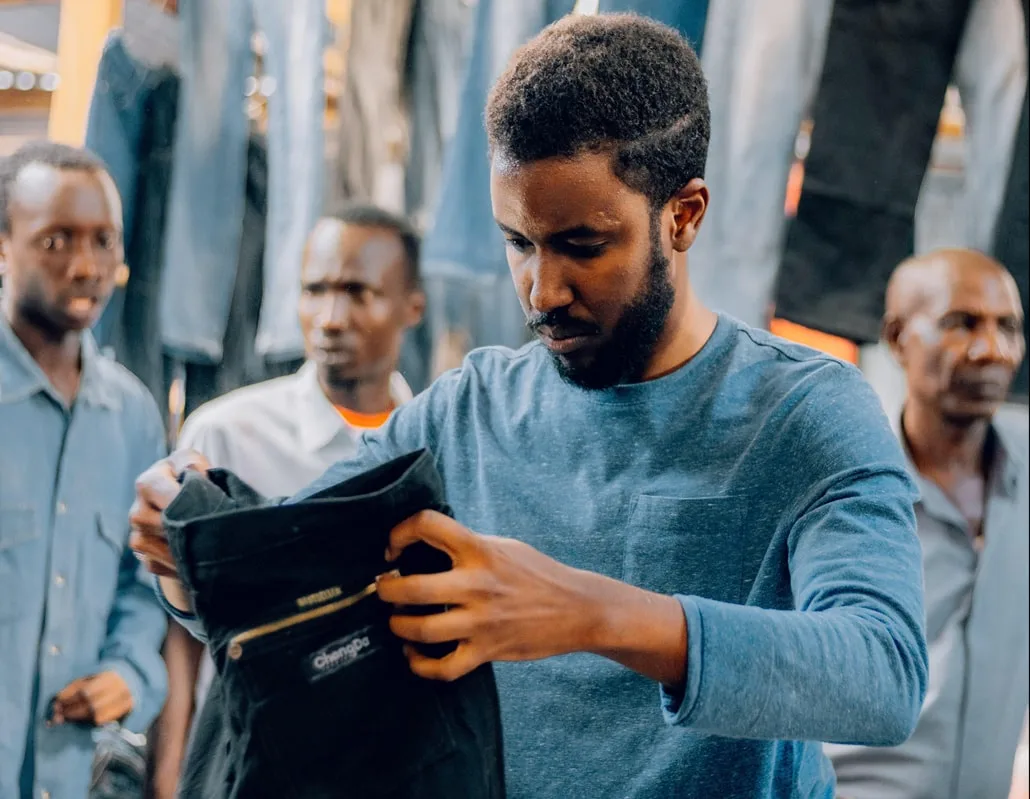
Two tailors are using sewing machines to join, hem, and create gorgeous, patterned bags on a cloudy afternoon in the capital of Kenya. Totes created from old jeans are hung on the walls of the workshop.

Suave Studios, which is bustling with tailoring activity in downtown Nairobi, is housed on the second story of a lovely white and blue-painted structure.

Suave Studios, a company founded in 2013 by Mohamed Awale, has become recognized as one of the most interesting names in the city’s burgeoning fashion industry.

https://www.instagram.com/p/CUT_9rXo3uy/?utm_source=ig_web_copy_link

It uses leftover textiles to create wallets, passport holders, messenger bags, and other accessories like backpacks and backpacks.

Awale is inspired by Nairobi’s enormous, spreading Gikomba, the biggest market of its kind in East Africa, which is accessible to the public.
He claims that the more bags we sell, the more garbage we eliminate.
For Nairobi’s trendy students and young professionals, the tailors transform used clothing like discarded jeans, leather jackets, and suits purchased from the US and Europe into reasonably priced products.

According to the designer, his company started out on the current property in only one room and has since grown.

Awale even attracts business from industry behemoths like Google and markets his goods abroad.

He received financing from the Ethical Fashion Initiative earlier this year to enroll in a two-month fashion program in Florence, Italy, with a focus on bags and accessories.
He gained knowledge about bag design, fashion history, and business expansion.

https://www.instagram.com/p/B50NwQtnw97/?utm_source=ig_web_copy_link

Awale’s vision has been elevated by this experience, and he has decided to relaunch his label as Rummage Studios in September with a new brand identity that is centered on international growth.

The ready-to-wear, high-end fashion label of designer and creative consultant Kepha Maina is at the other end of the fashion spectrum in Nairobi.
In 2013, he started his own label, which he now runs out of his home/workshop in the heart of Nairobi.

The human form, architecture, and self-expression all serve as sources of inspiration for Maina.
A significant factor was the mid-’00s trend for thin jeans, which was popularized by British and American Indie bands like The Libertines and The Strokes.

Since Kenya didn’t have this popular style, he adopted a do-it-yourself strategy and altered and made the jeans from used clothing.

His simple designs are influenced by pioneering Japanese designers Issey Miyake, Yohji Yamamoto, and Comme des Garçons as well as enduring names like Azzedine Alaia and Jill Sander.

The innovative British designer Alexander McQueen, who Maina claims “elevated” clothes “into art,” was a major inspiration for him.

Maina was profoundly influenced by the late McQueen’s artistically dark dress sense and high-concept performances that captivated audiences.
Maina claims that “McQueen opened my eyes that you can use fashion to make a message.”

Additionally, he finds inspiration in East African visual artists like Ibrahim el-Salahi, a well-known Sudanese painter and influential modernist.
Nairobi does not follow seasons because the fashion sector is too small, unlike the fashion Meccas of Paris and Milan.

Four collections have been displayed by Maina to date, and the fifth will debut in September.
He claims that Nairobi’s aesthetic is sleek, angular, and modernist, setting it apart from other African fashion hubs like Lagos.

The challenge for designers is that the majority of wealthy Kenyans are much more inclined to buy a Hermès purse or a Gucci jacket than they are to buy high-end clothing from a Kenyan designer.

Despite these obstacles, Maina claims that there has been a visible rise in the number of designers, stylists, and creatives working in Nairobi during the past several years.

Many of them are attracting attention from around the world, such designer and creative director Sunny Dolat, who has shown at Somerset House in London and assisted in shaping the Victoria & Albert Museum’s exhibition on African fashion.

It appears that there is a talented generation at the helm, and Nairobi’s vibrant fashion sector is just getting started, whether you are searching for a recycled fashion item from the likes of Awale or the more high-fashion creations of Maina.

Content courtesy of BBC News, Suave Studios, Flux Collection & NHF 


The 13th Annual Ankara Fashion and Music Festival is presented by Peter Lentini in Los Angeles, With Wande Coal and Yemi Alade as the stars

On September 2–4, Labor Day Weekend, the largest African cultural festival in the United States returns to feature African fashion designers and musicians.

The 13th Annual Ankara Fashion & Music Festival Los Angeles will bring together Africa’s best performers over Labor Day Weekend to turn up the heat with style and performances from top musicians (AFLA).

https://www.instagram.com/p/CgpKHJLrira/?utm_source=ig_web_copy_link

Seyi Brown, a Nigerian actor and comedian who will serve as the event’s host over the course of three days, will introduce works of art, African fashion designers, live performances, and musicians who represent some of the continent’s best cultural exports.

The largest African cultural gathering in the United States is the Ankara Fashion & Music Festival Los Angeles.

This year’s event will have an array of musicians, artists, actors, dignitaries, fashion designers, and entertainers with African roots, including:
1. Yemi Alade (Afrobeats Singer, Songwriter, and Actress)
2. Wande Coal (Afrobeats Singer and Songwriter)
3. Titi Lokei (Afrobeats Music Artist)
4. Nola Ade (Nigerian American Music Artist)
5. Nadia Mukami (Kenyan Music Artist)
6. Ada King (Afropop Artist),
7. Super Model Nyakim Gatwech (“The Queen of Dark” AFLA Red Carpet Host)
8. Njeri Karago (Kenyan Consulate)
9. Mame Mbaye (Senegal Consulate)
10. Robert Sichinga Jnr. (Zambian Consulate)
11. Salie Rayhana (South African Consulate)
12. Grant Arthur Gochin (Honorary Consul of Togo)

Peter Lentini, a well-known Afrobeats DJ who was reared in Lagos, Nigeria, formed the AFLA. Lentini is a self-made American success story who, for the past 15 years, has provided a diverse range of entertainment through event production and concerts featuring African performers all over the world.

https://www.instagram.com/p/Cg7GOrmrofA/?utm_source=ig_web_copy_link

The Ankara Fashion & Music Festival Los Angeles was founded by Lentini to promote entrepreneurship by increasing the visibility of African artists across a variety of industries and to create a social environment for African cultural pride in the United States.

“The emergence of African artists and culture at this period is quite fascinating. There is no denying that Africa has had a significant impact on American culture, as evidenced by the introduction of Afrobeats, which is now a staple of popular music.

With some of the top musicians from Africa, this festival will continue to emphasize the distinctiveness of African music, fashion, and entertainment, according to Lentini.

The three-day event begins on September 2 and ends on September 4. Wande Coal will perform as the opening night’s main attraction at Catch One. The African Marketplace Pop-Up and Afrobeats Day Party will take place at The Fountain LA on the second day, starting at 2 p.m.
A runway fashion display with live African music will start at 5 p.m. on the last night at Exchange LA. At 8 p.m., Nigerian singer Yemi Alade will perform live. The evening will conclude with a Red Carpet event.

https://www.instagram.com/p/CgWx8-vOXKj/?utm_source=ig_web_copy_link

Celebrities confirmed to attend and walk the red carpet:
1. Folake Olowofoyeku (CBS series “Bob Hearts Abishola”)
2. Bayo Akinfemi (CBS series “Bob Hearts Abishola”)
3. Sammi Rotibi (Actor “Batman v Superman: Dawn of Justice”)
4. Yinka Rythmz (Music Artist) Fanatic aka Billie Lennox (Grammy Award Winning Multi-Platinum Record Producer)
5. Isaac C Singleton Jr (Pirates of the Caribbean: The Curse of the Black Pearl)
6. Jimmy Jean-Louis (“Claws” TV Series and S.W.A.T”) and many more.

Venue locations:
Catch One: 4067 West Pico Boulevard Los Angeles, CA 90019
The Fountain LA: 2889 W Olympic Blvd, Los Angeles, CA 90006
Exchange LA: 618 S Spring St, Los Angeles, CA 90014

MEDIA CONTACTS:
Peter Lentini and Ankara Fashion & Music Festival Los Angeles (AFLA)
Deborah Griffin, Publicist
Strictly Industry
Email: deborahmckj@yahoo.com
Phone: 323-839-4521

Ankara Fashion & Music Festival Los Angeles (AFLA) – (on-site press contact)
Yvette Morales, Publicist
YM & Associates PR | Marketing | Branding
Email: YMoralesY@YM-PR.com
Phone: 949-244-9769

Ankara Fashion & Music Festival Los Angeles – VIP Talent & Media Executive Director
Noah Ogun Oluyide
Top Dreams Universal
Email: Topdreamsuniversal@gmail.com
Phone: 424-835-1057

Deborah Griffin
Strictly Industry
323-839-4521
deborahmckj@yahoo.com

Content courtesy of EIN News Wires, Ankara Fashion & Music Festival Los Angeles & NFH

Nigerian Fashion Brand Badeseré is Making a Strong Case For African Fabrics With its New Collection Dubbed “Orixa”

The current “Orixa” collection by Badesere, the eponymous fashion label from Nigeria, has been released. The ankara cloth is the centerpiece of the collection, which bears the name of a Yoruba goddess from southwest Nigeria.

A sparkling selection of pret-a-porter items are available at Orixa, including slacks with sheer details, sheer shirts, and matching tank tops.

“The collection was inspired by the awakening of consciousness, the love of self, and the entire acceptance of my Africanism,” says creative director Badesere. Our traditions and our gods had previously been taught to be unfriendly and barbaric, but in reality they are full of life and lessons.

The Ankara signifies our identity as Africans, while the sheer represents our means of subsistence in the riverine area of Lagos, which is our fishing net.

Credits:
Designer/styling: @badeserelagos 
Photography: @sammiephotomagic
Model: @pa3lo.pa3lo
Publicist: @moafricapragency

Content courtesy of Badesere Lagos & NFH

Fresh by Dotun Unveils Man About Town 2022 Collection

The popular Nigerian menswear brand FreshbyDotun has released their newest line, dubbed “Man About Town,” for the outgoing man who appreciates comfort and flair.

The creative and colorful collection offers a wide selection of exquisitely crafted kaftan and agbada designs that are both soft and seductive to the touch and to the sight.

The newest collection by FBD, which was modeled by Nollywood favorites Maurice Sam, Bryan Okey, Ibrahim Suleiman, and comedian Hero Daniels, is for the sophisticated man who is all about tradition but demands elegance and class.
High-quality materials were used to make the garments, and geometric patterns and embroidery were strategically placed. Man About Town is readily available in all FBD locations as well as online, ready to meet all of your professional and leisure time requirements.

Credits
Designs: @freshbydotun
Photography: @spotlightpi
Model: @maurice_sam @bryanbonbastiq @herodaniels @ibrahimsuleimanofficial
Publicist: @moafricapragency

Content courtesy of Fresh by Dotun & NFH

Top 20 Kenyan Fashion Influencers Making A Wave In The Creative Industry

Social media has given the world access to outstanding fashion influencers from across the continent and the entire world in this digital age. As new opportunities keep appearing, the Kenyan influencer market has been keeping up with digital trends and conventions.

We get a peek of how Kenyan fashion influencers present their aesthetics through their own designs thanks to the expanding number of Instagram creators, YouTube producers, and TikTokers.
You’ve come to the right place if you’re looking for some new fashion inspo, as we’ve carefully selected some fascinating Kenyan influencers for you to check out.

Esther Akoth Akothee

Diana Marua Bahati

Amber Ray

DJ Sadic

Berhane Lucia

https://www.instagram.com/p/Cdir5E8j9TZ/?utm_source=ig_web_copy_link

Esther Macharia
Ola Wanserska
Maureen Waititu
Dorea Chege
Dr. King’ori
Jackie Matubia
Arrow Bwoy
Adelle Onyango
Sharon Mundia
La belle fashions
David The Student
Nana Owiti
Don Krg Lobos
Bridget Shighadi
Wabosha Maxine
Backyard Shoez
Jacque Maribe
Tracy Wanjiru
Jacquey ‘Wilbroda’ Nyaminde


The Contemporary Womenswear Brand Asantii

After working in the African design sector for more than 20 years, our founder Maryse Mbonyumutwa set out to establish an international fashion company with roots in the region. This is how the Asantii story began.
a company selling classic items manufactured with integrity. A company with a mission that is leading a revolution in fashion, promoting African designers, artists, and craftspeople, and improving the brand’s employees and their families through the Pink Ubuntu social investment program.

In this uncharted territory, the first step was to establish a manufacturing infrastructure. Currently, nearly 4,000 employees, mostly women, work for Pink Mango and its partner C&D Products in Rwanda.

The second step involved assembling a dream team of African designers, assisted by a group of worldwide specialists in luxury brands and supply. By coming together in the spirit of Ubuntu, they created Asantii, a stunning fashion label that represents Africa to the rest of the world.

Pride
With each collection, we are pleased to add to Africa’s rich cultural history and foster creativity.

The designers in the Asantii team come from 12 different African nations and are passionate about sharing their distinct viewpoints with one another and the rest of the globe. These designers draw new inspiration from their nation’s craft and textile traditions, cultural histories, and natural landscapes each season to help shape the prevailing mood. They are assisted by a London-based team of fashion specialists.

Wisdom
In the field of sustainable fashion, we are employing our industry expertise to have a beneficial social, economic, and environmental impact.

Asantii is committed to bringing about change in the fashion industry by a significant dedication to mindfully sourcing materials from all over Africa and ethically creating our designs at our cutting-edge facilities in Rwanda. Asantii is sustainable by default. We encourage female collectives and craftspeople and place an emphasis on classic, year-round looks that will breathe new life into your wardrobe.

Gratitude
Asantii was established on a strong commitment to uplift everyone who works and collaborates with us, embracing the spirit of Ubuntu, a belief in our shared humanity.

Everything we do is motivated by the principle of ubuntu (giving back), from prioritizing the needs of our employees and their families through corporate social responsibility to promoting the individual brands of our designers through capsule collections. Our ultimate goal is to serve as a catalyst for the growth of Africa’s fashion, apparel, and textile industries.

Asantii expresses gratitude to a continent that has provided so much for all of us.

Content courtesy of Asantii & NFH


Ghana’s Fashion Revolution Is Centered On The Secondhand Market.

The largest secondhand market in Ghana, Kantamanto, is inspiring a new generation of designers to support a local fashion scene.
Tourism is big in Ghana, where I’m from, especially now that more people are coming to celebrate Detty December. The country’s emerging creative scenes, including those in the arts, music, and fashion, have yet to be fully investigated.

Recently, the fashion industry in particular has flourished in this country as more and more young people take an interest in it and work to develop a style culture that is distinctive to their country.

Although they are affected by western media, local fashion creatives have learned to expand on what they observe there. Due to the lack of retail presence of the majority of the glamorized popular American and European brands in Ghana, designers and stylists in Accra have not only drawn on their ingenuity to create something out of nothing, but have also excelled in doing so.

However, the expansion of our fashion ecosystem is not just dependent on the creativity of these individuals but also on a market that existed much before the fashion revolution. Ghana’s largest secondhand market is located at Kantamanto. It is the go-to location for inexpensive clothing and is credited with popularizing the phrase “Obroni Wawu,” which translates to “Dead Man’s Clothes.”

All of these garments rest in Kantamanto Market, which is also a source for designer goods and uncommon fabrics.
Accra now has a strong thrift culture thanks to Kantamanto. Everyone can readily access the market, making it convenient for those looking for trendy accessories to make a quick trip and purchase what they require.
Adom Gee, a self-taught stylist and designer, travels to Kantamanto at least three times every week since he needs to buy fabric there for his clothing line, “Adom Gee The Brand.” “Walking around Kantamanto really gives me the inspiration to produce more,” he says.

He has experience in the fashion industry and is familiar with every corner of this vast market to get what he needs, but even he acknowledges that “you never know what you will arrive and find here.”

“I feel like Kantamanto will forever be a relevant part of Ghana’s fashion ecosystem” – Larley Lartey

As one of the up-and-coming designers, Adom is appreciative of markets like Kantamanto that enable him to design unique items for his business. His style of the Ghanaian rapper Kwesi Arthur and his African-inspired brand designs are starting to gain him recognition.

Speaking with model-turned-stylist Larley Lartey in Accra, she revealed that she first encountered Kantamanto during her school years, when she always aspired to be the coolest person in the room.

I distinctly recall leaving senior high school in the middle of a class to go to Kantamanto and buy some clothes because I wanted to stand out. In her styling job, Larley produces the looks she sees in her head using Kantamanto, whether she buys a specific piece of clothing or makes it from scratch with fabric she finds in the market.
However, as more individuals join her in using Kantamanto for their fashion requirements, she regrets that “the demand is larger than the supply.” Lartley now works with several well-known Ghanaian musicians, including as Stonebwoy and King Promise, and she hopes to work with foreign musicians like Dua Lipa or Kali Uchis in the future.

Nutifafa is a multihyphenate creative who works as a model, stylist, creative director, and environmentalist. She takes pride in having a distinctive viewpoint that doesn’t just follow the latest trends. Young and newly arrived in Accra, she rapidly observed that the majority of locals were simply copying what they were seeing in the west at the moment.
However, she dared to stand out and has distinguished herself in her field. Her unconventional approach to fashion has been the secret to her success in the industry as she has worked on fashion projects in a variety of positions, including styling and creative directing. Because she openly claims that the majority of her clothing is secondhand from the market, Kantamanto serves as the foundation for Nutifafa.

You may discover your sense of style at Kantamanto, she claims. Even while Kantamanto has its advantages, Nutifafa is concerned about the effects the tons of clothing that arrive each week will have on the environment. She promotes recycling and repurposing of clothing through her company Upcycled Ghana in an effort to stop this.
“Kantamanto is the source for all the high-end apparel products we typically wouldn’t have access to,” – Style in Drip Drip
Champagne, 40K Phyll, and Webster are the three buddies who make up the collective Drip Drip Styling, which is swiftly rising to prominence in the field. When they first met at Kantamanto, they shared the aim of earning money by selling used clothing, but they have since become well-known personalities in the styling sector.

The group explains how simple it is for them to locate uncommon apparel in bales. As a fan of Prada bags, 40K displays some merchandise from the high-end company he found while thrifting. When describing some of the difficulties they encounter, Champagne remarks that “the quality of the things that come presently in the bales is declining.” Despite certain difficulties, the lads credit their success in styling in part to the easily accessible sector they operate in.

In addition to styling some well-known figures in the African music industry, the trio is expanding into designing for a brand they have founded called D2 Essentials.

Content courtesy of Dazed Digital & NHF

Lagos Fashion Week And Africa Fashion Week Nigeria Make A Triumphant Return.

As two Nigerian powerhouses, Lagos Fashion Fair Exhibition and Africa Fashion Week Nigeria join forces to host their events together in September at the prestigious Eko Hotel and Suites on the 7th to the 9th of September, fashion lovers, designers, industry experts, and enthusiasts are in for a special treat.

Ayo Olugbade, CEO of Lagos Fashion Fair, and Princess Ronke Ademiluyi, founder of Africa Fashion Week Nigeria, have joined forces in this historic cooperation to jointly stage their events. This unprecedented collaboration is expected to transform the way that fashion shows are conducted in Nigeria. For their eighth edition, both brands are making a spectacular entrance.

The Lagos Fashion Fair Expo powered by Atlantic Exhibition seeks to provide the ideal platform for fashion enthusiasts to interact with fashion suppliers from throughout the nation.

The Lagos Fashion Fair will bring together fashion suppliers and merchants to develop new avenues of distribution for the industry.

In order to highlight the best of Nigeria’s and Africa’s up-and-coming creative design talent, Africa Fashion Week Nigeria was established as a sister event to Africa Fashion Week London, the largest festival of African fashion in the United Kingdom (UK).

This year’s event promises to be at the forefront of promotion of African indigenous textiles, colors, and design with the sole goal of exposing African creatives on a worldwide platform as African fashion continues to dominate the global fashion landscape.
The LFF and AFWN joint event this year will provide fashion consumers, industry experts, trendsetters, stylists, models, and designers with the opportunity to shop at discounted prices, forge business connections, and build networks with domestic and foreign firms.

Some of Nigeria’s top up-and-coming designers, including AdirestylesNG, Ego by Ego, Fashion by Ashani, HardleySeen,

Nivaldo Thierry from Mozambique, YawsCreations from The Gambia, and Hortense Mbea Afroplan from Ethiopia are among the designers joining us this year on the Pan African catwalk in addition to KaffyKreate, PnJofficial, Dushin Craft, and Max Chidera Official.

Additionally, adire workshops by Adire Oodua Textile Hub and celebrity designer Kunle Afolayan displaying his Kunle Kembe Adire line will be included during the three-day event, which will take place at the Eko Hotel from September 7 to 9.

Exciting attractions that have been thoughtfully packaged for the guests anticipated to congregate in Lagos for this year’s event are lined up to light up the fashion runway and exhibition.

Attendees at this year’s event will enjoy a series of non-stop fashion moments, including a masterclass session by serial entrepreneur Toyin Lawani, who will offer a refreshingly different fashion experience to all fashion lovers and enthusiasts yearning for a breath of fresh air in the Nigerian fashion space. The event also serves as a platform for emerging fashion designers to grow their businesses and connect with a global market.

Content courtesy of Business Day & NFH

Shop Zetu Powering Fashion Made in Kenya: The Future of Fashion Industry In Kenya is Bright

When Shop Zetu’s “Powering Fashion Made in Kenya” event first began, Wandia Gichuru, CEO and Co-Founder of both Shop Zetu and Vivo Group, who had only been in the business for a little over ten years, said that Kenyans were not only ready and willing to support local brands, but were also more than willing to put in the effort necessary to produce high-quality goods.

Several different groups of interested parties came together at the event on July 18, 2022, to talk about how we may cooperate more effectively in support of “Kenyans wearing Kenyan.” HEVA Fund’s Wakiuru Njuguna, Caroline Mutoko, Anne Mutahi, Connie Aluoch, Patricia Kihoro, Esther Nyawira, the founder of Elsie Glamour, and Sandstorm Kenya’s Mark Stephenson served as the moderators.

“The fashion sector is designated as a priority industry and as one of the pathways to industrialization in Kenya’s Vision 2030 because of its incredible economic potential and its capacity to create large numbers of jobs, generate income, strengthen trade, accelerate technology adoption, attract investment, and foster local entrepreneurship” (with the majority being women and youth entrepreneurs).

However, a recent survey’s findings revealed that only 5% of Kenyans buy any clothing or accessories created in Kenya. In a recent study, the British Council found that “the Kenyan fashion market has been described as complex, and hard to figure out and satisfy.” This is both a significant difficulty and a significant opportunity for the entire value chain.

Instagram stories with the hashtag #MadeinKenya were filled with new Kenyan products to check out as well as insights from the event that individuals in attendance learnt.

“A family, a community, and an enterprise are not built by one person. For this amazing opportunity fashion created in Kenya to flourish, cooperation will be essential. My main takeaway from the discussion on #WeWearKenyan powered by #Shopzetu this morning is that.
I appreciate Wandia Gichuru for developing the platform. Patricia Ithau

Whatever way you choose to describe the Kenyan fashion scene or sector, you can’t deny that things appear to be moving in the right direction.

Content courtesy of Kenyan Vibe & NFH 


Nkano Senyolo, A Businesswoman, Is Committed To Assisting South African Fashion Designers Achieve Their International Success.

In addition to foreign designers like Alessandro Michele and Virginie Viard, South African fashion designers have often demonstrated that they belong in international fashion weeks.

Lukhanyo Mdingi, an East London native, debuted his African-inspired Bodyland line at Paris Fashion Week’s Autumn/Winter 2022 exhibition at the start of this year.
At the Autumn/Winter 2021 Paris Fashion Week, Thebe Magugu, winner of the LVMH Prize for Young Fashion Designers, debuted his Banyoloyi A Bosigo line.

Therefore, it is evident that our nation has a wealth of creative potential, but the issue is in making the world aware of it more.

Nkano Senyolo, an entrepreneur and the creator of IFW Business, is out to alter that.
IFW Firm is a business that helps up-and-coming and registered South African fashion designers by providing them with tools including educational courses, masterclasses, trade shows, exhibitions, retail, and showcases to help them expand their businesses.

Senyolo, a fashion design graduate from the University of Johannesburg’s college of art, design, and architecture with more than 11 years of experience in the fashion industry, observed that there was an imbalance in the sector. Examples of this imbalance include:

African fashion trends lagged behind, there were many excellent designers with little exposure, many people with extraordinary creativity but little business sense, and the South African fashion industry was greatly underappreciated, to name a few difficulties.

She established IFW Business and IFW Projects (NGO) in 2019 due to her solution-driven, ardent, and charitable nature.
Her company’s goals include connecting designers with manufacturers of clothing, helping designers create a sustainable online presence that will draw more customers and buyers, securing and organizing attendance at international fashion shows and exhibitions, and creating outstanding fashion portfolios so that designers will be given preference in retail selection.

In order to eventually establish itself as the go-to brand for creative people or fashion designers looking to expand their brand, gain access to resources, and have more business opportunities, the company is currently managing a group of ten South African fashion designers and their collections while also working to incrementally expand its portfolio (nationally and internationally).

They were given the chance to participate in other international fashion shows after a successful debut in Amsterdam, Netherlands, in March of this year, where they showcased two talented South African fashion designers, Sandi Mazibuko and House of Fabrosanz.
Two local designers will go to Turkey in August on the company’s behalf to participate in the Cappadocia Fashion Week.

Africa Fashion Week Europe (AFWEU) hosts Cappadocia Fashion Week every year to give designers a venue to display their clothing and to promote various designers between Africa and Europe.

Nguni Brand and House of Fabrosanz will also be making appearances at Cappadocia Fashion Week as South African companies.

Rapule Mathonsi, the label’s creative director, Nandi Mtsokoba, the production director, and Wendy Magafela formed Nguni Brand together (Sales Director). The lovely and vibrant Nguni culture served as the inspiration for Nguni Brand.

They mostly take cues from Zulu, Xhosa, Swati, and Ndebele cultures, with some Sotho culture incorporated to produce distinctive patterns. The objective is to establish this as a global brand in addition to making it known in Durban, South Africa.

“We want the beauty of our cultures to be seen by people all around the world. We are a new, established, and energetic brand,” adds Mathonsi.

Designer Sandisiwe Mazibuko established Fabrosanz (FRS) in 2011. Fabulous Royalty Sanz is the abbreviation for Sandisiwe’s name, and Sanz stands for Fabulous Royalty.
The name of the company reflects Sandi’s desire for her clothing to make the wearer feel regal and wonderful.

The Nguni print, which is the most popular because it is purchased internationally, is one of the FRS’s own culturally inspired prints that it uses to create clothing for both men and women. Since the Zulu culture is a significant part of Fabrosanz’s heritage, it is important that she convert it into wearable clothing.

The Venda, Tsonga, and Sepedi-inspired prints were designed in 2021 as a way to commemorate the brand’s ten years in the business. These prints were influenced by earlier collections.

“The fabrics, colors, and themes found on these civilizations’ traditional clothing served as the inspiration for our collection offers. According to Mazibuko, the prints are created by combining various shapes with vibrant colors that all have cultural significance.

IFW Business intends to invite further regional designers to fashion weeks including Istanbul Fashion Week in December 2022 and Nairobi Fashion Week in November 2022.

Content courtesy of IOL & NFH 


Ad