Tuesday 5th of May 2026

Nairobi, Kenya

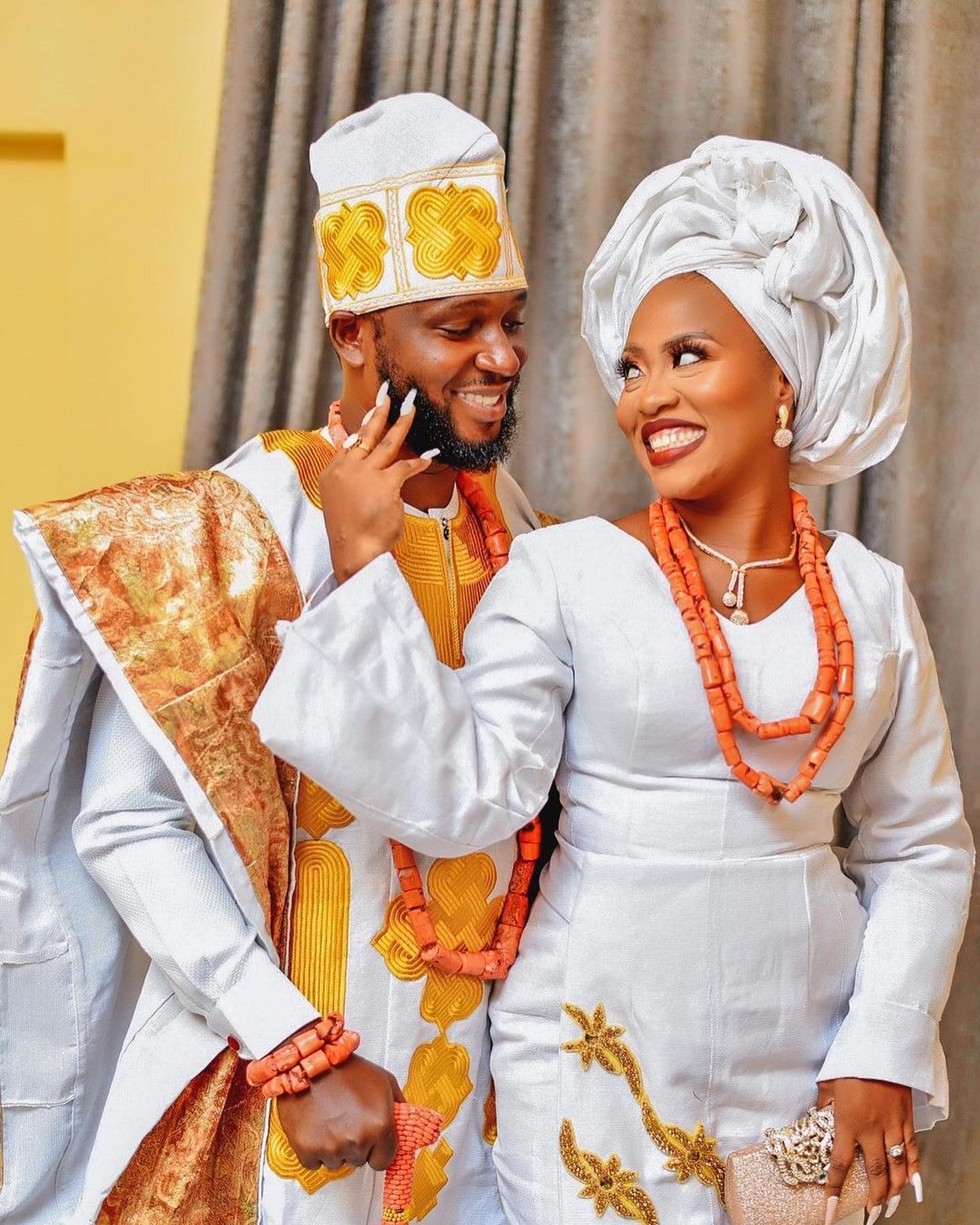
Lekucci Global, A Fashion Label, Has Unveiled Its Afrocentric Collection.

The Afrocentric Collection (AC’22) has been unveiled by Lekucci Global Nigeria Limited, a fashion firm.

According to Adelekan Mogbodofo, the brand’s Chief Executive Officer and Creative Director, the collection includes a mix of mainstream fabrics that symbolize current Africa, as well as a selection of pieces from Africa’s primordial art, fabrics, and accessories.

“Afrocentricity is an ideology and a philosophy that gained traction during the era when blacks were colonized without regard for their culture, language, or identity,” Mogbodofo stated when asked what motivated him to develop the collection.

“The wearing of African and African-inspired clothing expresses African identity and black nationalism.” The Afrocentric collections are cultural products of Nigerians and the black diaspora, and they are worn exclusively or in combination with Western outfits.

“Fashion is really essential,” remarked Fadeshola Ojamomi, the company’s Brand Manager, at the debut of the collection. It improves one’s quality of life, and like anything worth doing well, it’s worth doing well. We had to introduce the Afrocentric collection in order to ensure that our clientele looked more fashionable in 2023. It’s a collection that expresses who we are as Africans and how we should present ourselves.”

Content courtesy of Lekucci Global, Punch NG & NFH

International Cosmetics Brand Mac Has Collaborated With Local Artists To Develop Young Talent In Kenya

MAC Cosmetics takes pride in assisting emerging and renowned artists in furthering their careers. Stephanie Cherono, a Kenyan makeup artist, collaborated with MAC Cosmetics to host a Masterclass targeted at educating other aspiring makeup artists.

Stephanie Cherono was inspired by make-up and was mentored by MAC, where she perfected her skills and developed into the professional artist she is today.

MAC Cosmetics’ talent development program aims to:

  • Support local artists by providing them with platforms on which to develop their skills and share their knowledge.
  • Provide a venue for young Kenyans to develop their talents by allowing them to teach and learn about professional makeup applications to improve their skills.
  • Encourage people to use their makeup talents and applications in a way that is bold and free.

“Our masterclasses give you unparalleled access to the top talents in the industry. It’s a chance for the brand to inspire and engage with our customers as well as up-and-coming artists “Sheila Mwaura, Manager of Sub-Saharan Africa Retail Operations, says

MAC is a well-known international cosmetics brand.

MAC Cosmetics (stylized as MAC) is an American cosmetics company started by Frank Toskan and Frank Angelo in Toronto in 1984. After becoming a part of Estée Lauder Companies in 1996, the company relocated to New York City. Make-Up Art Cosmetics is an acronym for Make-Up Art.

Content courtesy of African Elite Group & NFH

The Stadio School Of Fashion Has Teamed Up With H&m, The World’s Largest Retailer.

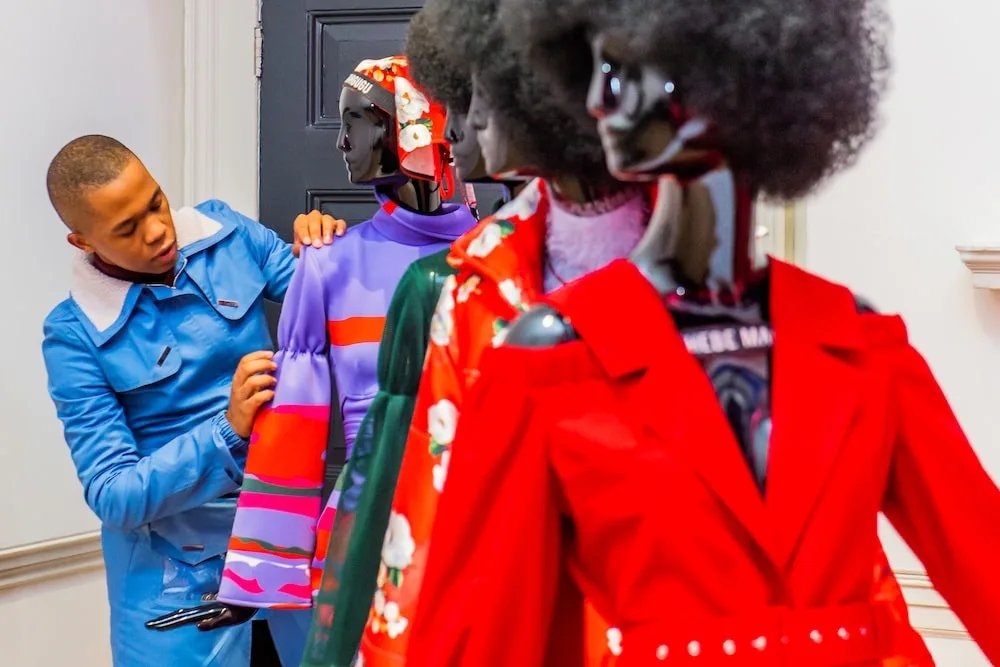
Known fashion designers Thebe Magugu and Rich Mnisi are among Stadio’s illustrious alumni.
Stadio School of Fashion, formerly Lisof, has announced two interesting collaborations, one of which is a cooperation with worldwide retailer H&M.
Distinguished fashion designers Thebe Magugu and Rich Mnisi are among Stadio’s illustrious alumni.
The British Accreditation Council has recognized the school as the sole fashion educational institution in South Africa (BAC).

Third-year BA and BCom fashion students from Hatfield and Randburg campuses will have the opportunity to work alongside creative talents from the Swedish retailer as part of the collaborations.

Caroline Nelson, country manager at H&M South Africa, said, “As a global fashion brand, we realize the tremendous value that collaborations like these provide to everyone involved.”

“In reality, partnerships are at the heart of our industry, and we’re always seeking new ways to build meaningful relationships with the industry’s curious and creative future talent.”
Another intriguing connection revealed by the fashion school is the possibility for second-year students to learn about establishing a fashion business from the local tailoring label Mr. Slimfit.

“I’m really looking forward to working with Stadio School of Fashion.” “I am really excited to work with these students, who I am sure are just as passionate as I am about growing our already amazing fashion industry,” said Theo Ngobeni, founder of Mr. Slimfit. “Most people who know me well know that I didn’t enter the industry through the traditional route I studied financial management at university so I am really eager to work with these students, who I am sure are just as passionate as I am about growing our already amazing fashion industry,” he said.

“We can only realize the whole potential of this growing sector and secure its economic sustainability if we work together.”

Stadio has a long history of assisting the South African fashion industry’s growth, as well as a commitment to instilling ethnic fashion traditions in its students.

The school believes that students will learn a wealth of information from the brands, spanning from marketing to visual merchandising, trend research, project management, consumer buying, and event photography, as a result of these agreements.

“We’re ecstatic to be cooperating with both H&M and Mr. Slimfit’s Theo Ngobeni. Both firms are enthusiastic about fashion, sustainability, and education, and we’re excited to watch how the collaborations develop and help define a better fashion future for everyone,” said Maryne Steenkamp, head of Stadio School of Fashion.

Content courtesy of Sowetan Live & NFH 

A Clothing Company For Men In South Carolina Celebrates African-American History.

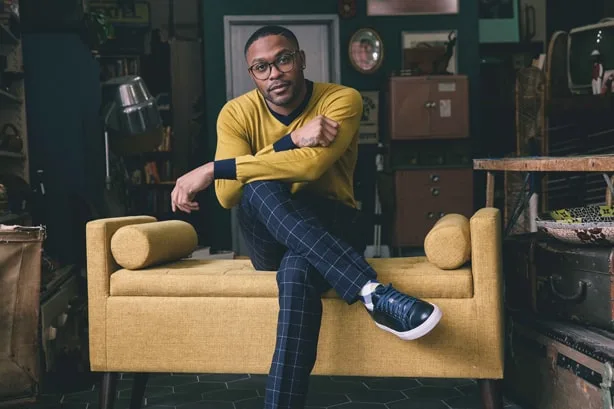
When Jaquial Durham talks about how he got his start in fashion, he tells how he missed his prom and instead utilized the money his grandmother provided him for a tuxedo to establish a fashion brand.

Durham explained, “She was unhappy, but that was exactly what I intended to do.” Later, the Clemson native began working with Mr. Knickerbockers to produce a collection based on African American history that would be sold in the company’s stores, but the company finally dropped out owing to the designs not fitting their target demographic.

Durham decided to take a break because he was frustrated. He completed his bachelor’s degree at Winston-Salem State University and two master’s degrees at George Washington University and Georgetown University during that time. He also founded Public Culture, a media organization that focuses on urban and rural communities through music, movies, sports, fashion, and technology.

He designed a fashion collection that told the tales of Black figures and organizations at primarily white universities by combining his studies with his media firm.

“There is a hidden story on white campuses in the South,” he remarked. Durham creates a capsule out of the history of African American individuals and monuments, as well as hand-painted art. In addition to the capsules, Durham curated QR codes for the clothing, which may be scanned to learn more about the design.

Durham said his first collection took two and a half years to complete, but it couldn’t have come at a better moment. Durham remarked, “It was excellent timing because I was recently admitted to Clemson for my doctoral degree.”

“So being accepted to the university, being able to return home and become more involved in the community was ideal.”

Durham’s collection was influenced by Dr. Rhondda Robinson Thomas’ book “Call My Name, Clemson,” which examines African Americans who have helped to keep Clemson University and the surrounding area afloat. The Student League for Black Identity (SLBI), a student-led organization that fostered culture and history at Clemson, is depicted in the first piece in the collection.

https://www.instagram.com/p/Cbpu5lBuLzE/?utm_source=ig_web_copy_link

Three new sculptures in the Clemson collection honor Harvey Gantt, the first African American student accepted to the university, Littlejohn Grill, a popular hangout for primarily Black Clemson students, and Eva Hester Martin, a direct descendant of Fort Hill Plantation slaves. “I chose to distribute them separately because I wanted to give each item his own life story and opportunity to shine,” Durham explained.
Three new sculptures in the Clemson collection honor Harvey Gantt, the first African American student accepted to the university, Littlejohn Grill, a popular hangout for primarily Black Clemson students, and Eva Hester Martin, a direct descendant of Fort Hill Plantation slaves.

Durham intends to issue further collections featuring other Southern campuses, such as the University of Florida, the University of Mississippi, Mississippi State University, the University of Georgia, the University of Alabama, and others.
Visit The Public Culture Collections for additional information about Durham’s line.

Content courtesy of Central Daily & NFH 

Fashion for Conservation: Meet Sarah Vigne Founder Of Rock and Stones Ltd

Describe yourself (Who is Sarah Vigne) and your fashion brand in a few words.

Sarah is a natural entrepreneur with a wealth of experience in the development of sustainable enterprises that may provide revenue for wildlife conservation organizations.
Sarah founded the ethical fashion label Rock and Stones, and while working for the Ol Pejeta Conservancy in Kenya (www.olpejetaconservancy.org) for eight years, she developed a number of new revenue streams centered on retail, “voluntourism,” and “value adds,” resulting in increased visitor engagement (“immersive tourism”) and significantly increased financial resources for conservation.

Oscar Alochi: Can you describe Rock and Stones, the concept and idea as if I had never heard of it or the market in which it exists?

Sarah Vigne: ROCK AND STONES was founded in 2009, inspired by the vibrant contemporary fabrics made across the African continent, which represent the intriguing history of the Swahili trading empire and its ties to West Africa, India, Arabia, Europe, and the Americas in their designs.

Kitenge and Kanga are two of our favorite fabrics. These popular clothes include vivid designs in brilliant colors, as well as a Swahili inscription in the case of the Kanga. The abundance and variety of designs on these fabrics are amazing, ranging from post-modern abstractions to conventional paisleys and depicting subjects as varied as political and religious leaders, architecture, cuisine, animals, plants, plumbing, forms of transportation, and complicated patterns. Proverbs, aphorisms, insults, and blessings are among the Swahili inscriptions on the Kanga.

Kanga and Kitenge are wrap garments worn in Kenya, Tanzania, Uganda, Sudan, Mozambique, the Congo, and everywhere where Swahili is spoken. The Kanga, which is as popular as a t-shirt in the United States but has a far greater cultural value, is still evolving. It is a valuable medium for personal political, social, and religious expression, similar to the T-shirt but incomparably more exquisite and functional.

The Kanga has become an intrinsic element of East African culture as both an art form and beautiful, practical clothing.
‘The Kanga struts in style… Wear it with a smile,’ as the slogan goes.

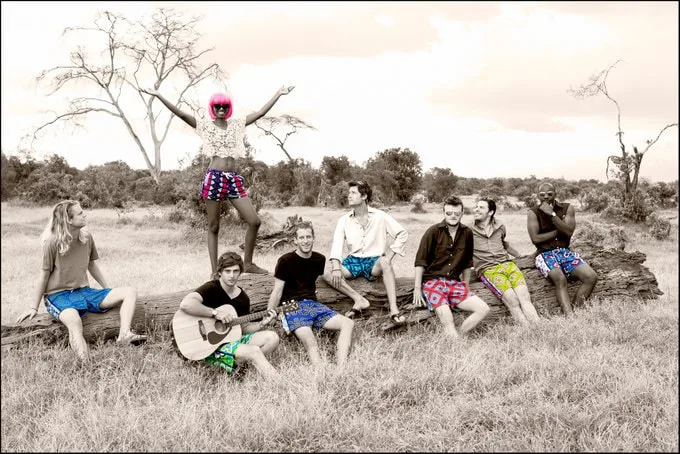
Rock & Stones is based in Kenya, and we specialize in bringing the depth of African culture to our tailoring workshop, where we transform our carefully picked African Kanga and Kitenge fabrics into a collection of ready-to-wear garments for all ages and sizes.

Specializing in beachwear, festival clothing, and casual wear…

Our firm supports the local communities that make our clothes with such care, and we aim to open our own training workshop soon to provide a life skill to both boys and girls, men and women, who want to work with Rock & Stones to find a market.

OA: What were you doing before Rock and Stones, and what motivated you to start the business?

SV: The prospects that Africa offers inspire me. It’s such a bright and colorful place, with skilled and talented people that only need a helping hand to progress economically. I’ve worked in tourism, horticulture, and as an investment banker before that.

OA: What techniques do you use? Tell us about the process.

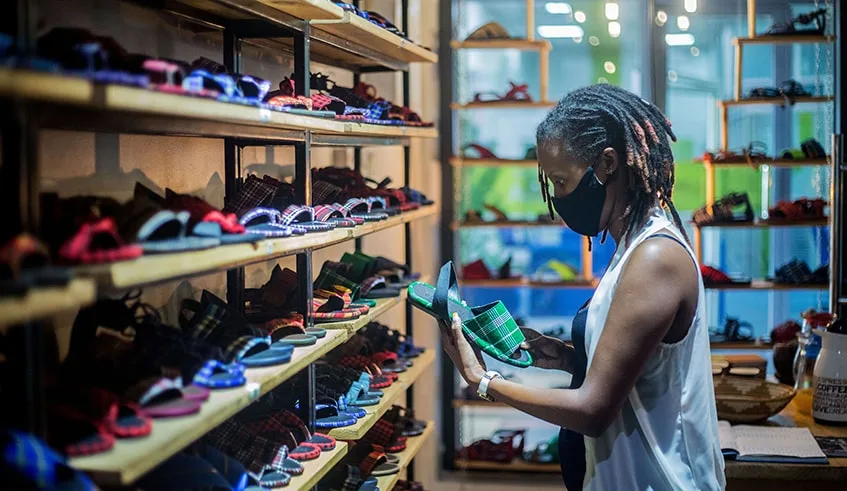
SV: We are primarily a tailoring business that produces shorts and other clothing items from vibrant African textiles of the greatest quality and grade.

OA: How did you learn/master this technique and why do you use it?

SV: I can’t sew to save my life, but I know some amazing tailors who can, and it is up to them to manufacture our products.
However, I have mastered the art of quality control inspection!

OA: What challenges did you face?

SV: Keeping the company afloat during COVID was a problem, but we managed to do so and keep everyone working, despite the fact that I stopped paying myself.
We are still recovering, but we believe we have passed the worst of it.

OA: How did the obstacles make you feel?

SV: We were successful once we got through them. I’ve discovered that one of the most crucial life skills is learning to be comfortable with being uncomfortable.

OA: What were your achievements?

SV: We have a company that makes roughly Kshs 25 million each year and is growing.
That in its own right is an achievement I think.

OA: Favorite moments?

SV: After a long day at work, relaxing with a glass of wine in the evenings

OA: How do you get dressed in the morning?

SV: I go through a lot of various outfits before deciding on my final one, which irritates my husband.

OA: What’s your take on the Kenya fashion industry?

SV: Potential, potential, potential!

OA: How different is the UK fashion industry compared to the Kenya fashion industry?

SV: Of course, the fashion sector in the United Kingdom is far more competitive, and standards are normally higher, but that in its own right provides us in Africa with a great opportunity.

OA: Any future collaboration with Kenyan fashion designers?

SV: We’re always looking for opportunities to work and partner, but there’s nothing substantial on the horizon right now.

OA: If you were given the opportunity to work with a local or international fashion designer who will you love to work with?

SV: Anya Hindmarch

OA: What are your thoughts on fashion in Africa?

SV: We have a long way to go, but we have a lot of potentials, as previously stated.

OA: What has changed during this period of Covid-19

SV: The local markets took a beating, but we’re starting to bounce back now… However, there is still a long way to go.

OA: How has your fashion brand adopted the new technology of virtual fashion shows during and after the Coronavirus pandemic?

SV: We’re much more online now, and that’s where we see ourselves going in the future.

OA: How are African fashion designers influencing fashion in the western world?

SV: Increasingly – we have a place, we are bright and colorful, and we are the new big thing

OA: What can the African fashion industry learn from the western world?

SV: Efficiency, prompt delivery – on time, in the appropriate quality, at the right location

OA: Over the last few years have you noticed any significant changes in the African fashion trends?

SV: Yes, they are increasingly influenced by western trends, which is both good and terrible. Even as we modernize and progress, we must remain true to our roots.

OA: When dealing with Africa is it important for the fashion world to be ethical and socially responsible, and put in place strong corporate social responsibility governance?

SV: Of course, we have a strong ethical attitude at Rock and Stones.
We donate a portion of our profits to charity and do everything we can to keep people employed and engaged.

OA: Tell us about UK Fashion Week.

SV: Don’t really know too much about it – we are an African brand!

OA: Where can we find your designs?

SV: www.rockandstones.com

We also have a number of locations in Nairobi, as well as our own shop in Nanyuki’s Dromans complex.

OA: What does eCommerce mean to you and your business?

SV: We consider that as critical to our company’s future success.

OA: Do you think eCommerce is important for African fashion designers that are trying to get recognized and reach a global market?

SV: Yes, it’s crucial, but you should also invest in marketing and social media. You may generate traffic to your eCommerce site by building a digital following.
You’re dead in the water if you don’t have this.

OA: How does your strategy change when running an online store to an offline store?

SV: As previously said, digital marketing and social media are critical.

OA: Where do you see African fashion in the next 5 to 10 years?

SV: Growth – and perhaps, we’ll be able to start breaking into high-value Western markets on a large scale.

OA: What 5 pieces of advice would you give to young African fashion designers wanting to enter the fashion industry?

SV: 

  • Stay true to your roots – Africa is the next big thing
  • Work hard and persist – things don’t happen overnight
  • Ecommerce is the future – meaning that digital marketing is key
  • Wear your own fashion with pride
  • Continuously survey global trends – what do people wear and what do they want

OA: Is there anything else you would like to add?

SV: Go for it!!!

Content courtesy of Sarah Vigne, Rock and Stones & NFH 

Fashion That Benefits People, The Environment, And Wildlife In Africa’s Urban Ranch Kenya

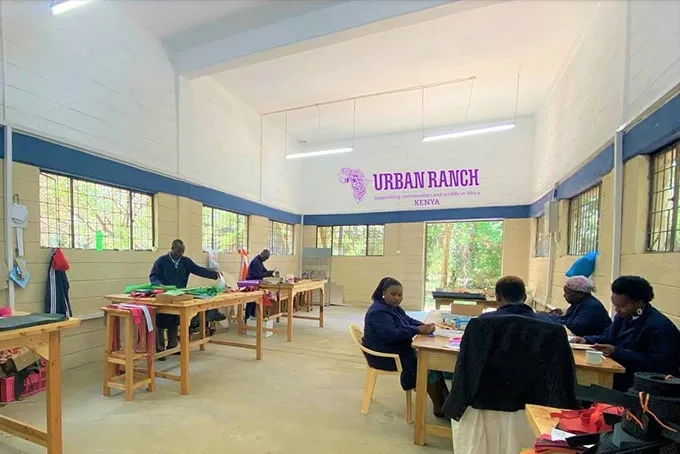
Urban Ranch Kenya was established in 2021 with the goal of revamping Kenya’s leather supply sector by sourcing cow skins from conservancies where livestock and wildlife may coexist. By only purchasing our leather from these conservancies, we help wildlife conservation in Kenya even before any of our products are manufactured!

Urban Ranch not only uses finest Kenyan leather, but we also produce innovative color combinations for our products, keeping us current with worldwide trends and fashion.

However, the narrative does not finish there! When our leather products are sold, we donate 5% of the proceeds to Lion Landscapes, a Kenyan nonprofit dedicated to lion conservation. Our donations go toward ensuring that Kenya’s lion populations have adequate safe habitat to thrive.
Our products are not only amazing, but they are also “lion friendly” in every respect.

Many of our leather goods are embellished with stunning beadwork stitched by Kenyan ladies from community groups in rural Kenya. We send them our products to bead, and they add an extra sparkle to many of our leather items with their remarkable skill and our high-quality beads.

Urban Ranch is assisting in the empowerment of people who would otherwise have no employment opportunities by bringing our distinctly Kenyan products to foreign markets.

Our products may be purchased online (www.urbanranch.co.uk) and in our Nanyuki flagship store (www.urbranranchkenya.com) (next to Dormans coffee shop).

Content courtesy of Urban Ranch Kenya & NHF

Rock and Stones, a Handmade in Africa Collection for Conservation

Rock and Stones Ltd was founded in 2009, inspired by the vibrant contemporary fabrics made across the African continent, which represent the intriguing history of the Swahili trading empire and its ties to West Africa, India, Arabia, Europe, and the Americas in their designs.
Kanga is our favorite cloth, This popular fabric features bold designs in vibrant colors, as well as a Swahili inscription on the Kanga.

The fabrics’ designs range from post-modern abstractions to conventional paisleys, and show subjects as diverse as political and religious figures, architecture, cuisine, animals, plants, plumbing, forms of transportation, and complicated patterns, Proverbs, aphorisms, insults, and blessings are among the Swahili inscriptions found on the Kanga.

Wherever Swahili is spoken, such as Kenya, Tanzania, Uganda, Sudan, Mozambique, the Congo, and elsewhere, Kanga and Kitenge are worn as garments to wrap around oneself.

The Kanga, which is as popular as a t-shirt in the United States but has a far greater cultural value, is still evolving. It is a valuable medium for personal political, social, and religious expression, similar to the T-shirt but incomparably more exquisite and functional.

The Kanga has become an intrinsic element of East African culture as both an art form and a beautiful, practical clothing.

Our firm supports the local communities that make our garments with such care, and we plan to open our own training workshop soon to teach life skills and market access to men and women who want to work with Rock & Stones.

Content courtesy of Rock and Stones Ltd  & NFH

Attirety Fashion Services and The JW Show: Celebration of Womanhood at Salama Center & Mentorship Hub, Thika

Join us for a day filled with positive empowerment as we give back to our fellow women by volunteering our time and talents at a charitable event.

April 16, 2022 | 10 am
Salama center & mentorship hub, Thika
By girl child network
To give in kind, cash or time, WhatsApp 0703620598
Mpesa Paybill: 899790
Account: 1003006000224

In tandem with the JW Show, Attirety Fashion Services is collaborating with the Girl Child Network, a charity. An organization dedicated to empowering the young girls, women, and youth of Kiandutu slum in Kiambu county, who are survivors of gender-based violence and live in poverty.

We’re collaborating with health professionals and other groups to help these mothers and youth. We intend to start a regular program with the help of well-wishers who are in better financial conditions.

We want to reach out to 100 young women and girls. We want them to know that they are not forgotten. The backbone of civilization is made up entirely of women. We honor them because they raise generations of leaders, thinkers, innovators, and doers.

Content courtesy of The JW Show, Attirety Fashion Services & NFH

Nice & Lovely: Kate Actress Is The Brand Ambassador For L’Oréal East Africa In Kenya.

Catherine Kamau, better known as Kate Actress, has been named as the new brand ambassador for L’Oréal, the creators of Nice & Lovely.

Kate Actress has been charged as a brand ambassador with raising brand awareness and teaching clients on the proper use and application of a number of beauty products, as well as explaining the benefits of utilizing Nice & Lovely product lines.

The company also announced the launch of the world’s first jelly-in-cream product at the occasion. The company’s Kenyan scientists created the Nice & Lovely Jelly cream, which is excellent for delicate skin. It has also been subjected to dermatological testing to determine its safety and ensure that it does not cause any allergies or irritation.

Since acquiring the brand in 2013, L’Oréal, the world’s leading beauty and cosmetics firm, has considerably improved the quality of Nice & Lovely hair and skin products, cementing its global leadership position.

L’Oréal estimates Kenya’s beauty business to be worth USD 200 million, with the potential to grow five-fold to a billion-dollar market in the next eight years, thanks to a burgeoning middle class that wants to splurge for feel-good moments.

“We opted on Kate because she symbolizes and exemplifies the brand’s principles authenticity, trust, excellent quality, and safety that makes it a household brand-used by the whole family,” said L’Oréal East Africa Managing Director Serge Sacre.

“Natural elements in products are preferred by 79% percent of Kenyan women,” he added. We are launching a product that fills an obvious market gap today as a result of significant study. When compared to the market’s 50 million inhabitants, the market is still modest, but it has been growing at double digits for the past decade.”

To take advantage of the growing potential, the beauty brand claimed it is investing heavily in education, talent acquisition, and distribution network expansion.

Body lotions make for half of the market, according to Nielsen data, which ranks Nice & Lovely as Kenya’s best-selling body lotion.

Kate shared her excitement and appreciation for being selected the brand’s ambassador on social media shortly after the ceremony.

“Nasiwezi jizuia, we did it my watuz, you all kept manifesting this for me, it’s here. The official face of nice and lovely Kenya,” she said in an Instagram post.

Kate’s Instagram account was also flooded with congratulations from other celebrities, like Joy Kendi, Jackie Matubia, Anita Nderu, and Njoki Muriithi, as well ordinary Kenyans, who wished her luck in her new role.


Content Courtesy of L’Oréal East Africa, Nice & Lovely East Africa & NFH

Forever254 A New Fashion Boutique Has Opened In Kenya, Offering Original Brand Clothing At Reasonable Pricing.

Kenyans are frequently seen wearing secondhand clothing, also known as mitumba attire, which is generally purchased from street vendors and informal retailers.
Because of its affordability, accessibility, and capacity to provide jobs for people of all economic levels, used clothing remains the most popular source of clothes in Kenya’s local fashion scene.

According to the Institute of Economic Affairs, China, which is known for being a global top producer of counterfeit products, would be Kenya’s largest source of secondhand clothing and footwear by 2020.
This has resulted in significant losses for the local fashion sector, hurting not just real garment producers, but also consumers who purchase low-quality goods that are not long-lasting and wind up costing them more in the long run.

In Kenya, a new fashion boutique has opened that sells authentic brand apparel at subsidized pricing.

The apparel store Forever254 was formed on this idea, It is the first of its kind to bring in original brand clothing at subsidized pricing, and it hopes to pave the way for other businesses to follow suit.
The store sells a selection of fashionable and stylish pieces from different globally known brands, making them easily accessible to Kenyans at moderate costs, in an effort to relieve Kenyans of the burden of flying abroad in order to be guaranteed authentic high quality clothes.

“We bring in apparel from original companies like Zara, Boho, H&M, MANGO, St. Oliver, and others and sell them at heavily discounted costs,” stated the store’s Managing Director, Giorgos Zisimatos.

The store opens at a good time for Kenya’s middle class, which is increasing as a result of increased disposable income, improved awareness of global retail trends, and altering tastes and preferences.
As the middle class opts for more authentic and worldwide branded apparel and shifts toward formal merchants, this has resulted in a need for more from the local shopping scene, in terms of both goods and services.

“Much of the clothes we provide is sold at a discount of roughly 30% off the original price. The same top quality, but at a significantly lesser price. This, we believe, provides a terrific alternative to buying counterfeit, low-cost clothes, which ultimately costs consumers more in the long run,” he added.

Africans are often devoted consumers, according to the Africa Growth Initiative. This can be observed in the store’s cautious but steady expansion since its inception three years ago, with two locations at the Waterfront and Sarit Centre.

“Our goal is to grow even further and make authentic clothes the go-to source for Kenyans in terms of clothing and footwear.” We want you to be able to dress well without going broke.”

The store is also involved in CSR and has worked with the St. Jerome Centre in Nakuru, which rescues, supports, rehabilitates, and provides a home for orphaned and abandoned children.

Molestation, desertion, violence, incapable parents, and other forms of abuse and disadvantage are all avoided at this school for children.

“During the Easter season, a portion of every purchase made at the business will be donated to the children,” he says.

Content courtesy of Forever254 Clothing Store & NFH

The Tommy Hilfiger Fashion Frontier Challenge Is A Competition For Innovative Fashion Startups That Will Take Place In 2022.

Tommy Hilfiger is pleased to announce that applications for the fourth edition of the Tommy Hilfiger Fashion Frontier Challenge are now open. Tommy Hilfiger is owned by PVH Corp, NYSE: PVH. The global program echoes Tommy Hilfiger’s sustainability vision of “Waste Nothing, Welcome All,” by amplifying and supporting new voices in social entrepreneurship who are shaping scalable and disruptive innovations to create a more inclusive future of fashion.

Individuals from historically underrepresented communities, such as Black, Indigenous, People of Color (BIPOC), people with disabilities, and women, are strongly encouraged to apply this year, in line with Tommy Hilfiger’s commitments to inclusion, diversity, and acknowledging the gap in equity and equal opportunities. Applications must be submitted online by April 29, 2022.

“The Tommy Hilfiger Fashion Frontier Challenge,” said Tommy Hilfiger, “aims to bring together entrepreneurs from all walks of life, investing knowledge and resources to unlock the unique power of their innovations.” “As a business owner, I’ve always wanted to create a global lifestyle brand that is inclusive of all people, a philosophy that I’ve carried with me throughout this challenge.” I am convinced that by working together, we can create a more meaningful and long-lasting future.”

The winners will receive the following prizes to help support their business idea:

  • A total prize pool of €200,000 will be split between two winners.
  • An extra €15,000 for winning the “Audience Favorite Vote”
  • A one-year mentorship with Tommy Hilfiger’s global internal experts
  • An INSEAD mentorship and course for a year

Fans of Tommy Hilfiger are invited to participate as Digital Judges in the first phase of the challenge. They’ll assist the company in whittling down all applications to the top 50. Interested applicants can apply online until April 20, 2022.

Through an internal process, the top 50 applicants will be whittled down to six finalists. Before the final event, each finalist will be invited to further develop their business plan with the help of dedicated Tommy Hilfiger and external experts. Each finalist will then present their concept to a jury panel and internal Tommy Hilfiger associate audience at the global Tommy Hilfiger Fashion Frontier Challenge final event in early 2023, after receiving training from an experienced pitch coach.


“At Tommy Hilfiger, we want to work with communities to drive long-term change through innovation, inclusivity, and diversity,” said Martijn Hagman, CEO of Tommy Hilfiger Global and PVH Europe. “As the fourth Tommy Hilfiger Fashion Frontier Challenge gets underway,

We’re excited to see what new ideas emerge that will benefit communities and help shape the fashion industry’s future.”

Since its inception in 2018, the Tommy Hilfiger Fashion Frontier Challenge has given out €550,000 to help global entrepreneurs bring their innovative ideas to life so that they can make a real difference in their communities. Lalaland, a platform based in the Netherlands that uses artificial intelligence to create customized and inclusive synthetic models of various ethnicities, and UZURI K&Y, a Rwandan eco-friendly shoe brand that employs local youth and uses recycled car tires from Sub-Saharan Africa, are among the winners of the third edition.

The Audience Favorite award went to Clothes to Good, a South African social enterprise that uses textile recycling to create micro-business opportunities and jobs for people with disabilities. On Tommy Hilfiger’s sustainability journey, which is powered by PVH’s Forward Fashion strategy, more information can be found.

Here’s where you can find out more about the Tommy Hilfiger Fashion Frontier Challenge, including how to apply:

Definitions:
Start-up: Your company is still in its infancy, with no product-market fit, customer segmentation experiments, or an overall positive contribution margin in sight. Your business has made some money.

Scale-up:
Your company has a validated product with good product-market fit, predictable and long-term unit economics (outlook), and is growing. Your business has been profitable for at least a year.

How do I submit my application?
Please submit your application and learn more about the program here.
Please note that applications for Year 4 will be accepted from March 14th to April 29th, 2022.

What happens now that I’ve submitted my application?
– If you’ve been chosen for the second round of the Tommy Hilfiger Fashion Frontier Challenge, we’ll let you know by June 2022.

– If you’re chosen, you’ll be asked to provide more information about your company, including a one-minute pitch video. Please note that all applications must be submitted in English, and finalists will be required to give a pitch in English.

– In October/November 2022, a team of dedicated internal Tommy Hilfiger associates and external subject-matter experts will work with six finalists to further develop their business/project plans during a digital Design Sprint with the help of a team of dedicated internal Tommy Hilfiger associates and external subject-matter experts.

– Finalists will then present their finalized concept at the global Tommy Hilfiger Fashion Frontier Challenge final event in early 2023, with the opportunity to win the prize package listed above.
Please read the terms and conditions carefully before applying, and if you have any questions, please contact us at challenge@tommy.com.

https://twitter.com/uzuriky/status/1404391171141640195?s=20&t=RHKfyvs_m1KdJbt0DEgb7g

About Tommy Hilfiger

Since 1985, TOMMY HILFIGER has been uplifting and inspiring consumers as one of the world’s most well-known premium lifestyle brands. The brand boldly mixes prep style and Americana heritage with fresh perspectives drawn from pop culture to design memorable products and collections, fusing the classic with the new to light up what’s next.

TOMMY HILFIGER captures the playful alchemy needed to drive innovative and immersive consumer experiences under Mr. Hilfiger’s vision. The brand’s vision is to Waste Nothing and Welcome All, a firm commitment to sustainability, inclusivity, diversity, and circularity that motivates teams to improve the fashion industry.

In 2020, global TOMMY HILFIGER retail sales were nearly $7 billion. The TOMMY HILFIGER and TOMMY JEANS lifestyles include men’s, women’s, and children’s clothing, footwear and accessories, close-to-body clothing, and a variety of license product lines such as eyewear, watches, and fragrance.

The Tommy Hilfiger Group, which is owned by PVH Corp., employs over 16,000 people worldwide and has a distribution network spanning 100 countries and 2,000 retail locations, including its largest global flagship store at tommy.com.

About PVH Corp.

PVH Corp. is a company based in the United States,  PVH is one of the world’s most well-known and admired fashion brands, with customers in more than 40 countries.
PVH is one of the world’s most well-known and admired fashion brands, with customers in more than 40 countries. Calvin Klein and TOMMY HILFIGER are two of our most well-known global brands. Our 140-year history is based on the strength of our brands, our people, and our dedication to moving fashion-forward for the better. That is the strength of the human race. PVH has that kind of power.

Contacts
Tommy Hilfiger
Virginia Ritchie
Vice President, Global Communications
E-mail: virginia.ritchie@tommy.com
Tel: +31 6 4318 4870

Content courtesy of Business Wire, Tommy Hilfiger & NFH 


ShowMax: The Real Housewives of Lagos Launch

The Real Housewives of Lagos premieres and quickly becomes a social media sensation.
The Real Housewives of Lagos (RHOLagos) is now available on Showmax, after trending on Twitter for 15 hours straight starting at 5 p.m. on Thursday, in anticipation of its Friday, 8 a.m. premiere (with no sign of dropping down the charts at the time of writing).
“Seeing The Real Housewives of Lagos trend on Twitter confirms what we’ve been thinking all along: that this is going to be a pan-African hit show,” says Candice Fangueiro, Showmax’s head of content.

The most recent installment of the hit reality TV show franchise follows the opulent lives of six of Africa’s most glamorous women: businesswoman Carolyna Hutchings, lawyer and luxury hair brand owner Chioma Ikokwu, Nollywood actress Iyabo Ojo, influencer Laura Ikeji-Kanu, public relations expert Mariam Timmer, and celebrity stylist Toyin Lawani-Adebayo.

They’ll be serving up all the high fashion, luxury, drama, and power moves that the franchise is known and loved for around the world, in true Lagos style.

Last night’s pink carpet South African premiere, hosted by Bonang Matheba at Summerplace in Sandton, Johannesburg, saw South Africa’s biggest stars turn out en masse in their finest. Chioma, Iyabo, Mariam, and Toyin all flew in for the event, which was also attended by Annie Ludick-Mthembu, Jojo Robinson, LaConco, Londie London, and Nonku Williams from The Real Housewives of Durban.

The start of what looks set to be a juicy rivalry between the two shows, with #RHODurban trending at number two on Twitter in South Africa, just behind #RHOLagos, at the time of writing, Twitter had a lot to say about who had the best looks.

The RHOJ premiere follows the RHOLagos premiere, which was hosted by Toke Makinwa and took place at the magnificent The Jewel Aedia in Lekki, Lagos (talk show host on BBNaija: The Buzz and Talk with Toke Makinwa).

RHOLagos will be the first Nigerian installment of the award-winning franchise, which will be distributed worldwide by NBCUniversal Formats, a division of Universal Studio Group’s Universal International Studios.

Following the success of The Real Housewives of Johannesburg and Durban, which are both now streaming on Showmax, this is the 16th international version of The Real Housewives format and the third African adaptation.

RHOLagos will be available on Showmax in Africa, the UK, and other international markets including Andorra, Belgium, Denmark, Finland, France, Germany, Greece, Iceland, Indonesia, Ireland, Italy, Liechtenstein, Luxembourg, Malta, Monaco, the Netherlands, New Zealand, Norway, Portugal, San Marino, Spain, Sweden, and Switzerland.

The Real Housewives of Durban’s penultimate episode aired today, ahead of the show’s finale on Friday, April 15, 2022, and a reunion in early May 2022. The queens rule over Sun City in today’s episodes, but where there’s sun, there’s bound to be shade!

Content courtesy of ShowMax & NFH

Ad