To re-launch a brand with bigger and better products is one thing. But to return to the game with improved offerings and a big celebrity name is a feat very few beauty brands can brag about, especially when the said celebrity is none other than Issa Rae.
HBO’s hit show Insecure is known for its beautiful display of natural hairstyles thanks to creator and star Issa Rae. This week, the filmmaker announced she is now the co-owner and face of Sienna Naturals, a brand of natural hair care brand with clean ingredients.
Rae will join the team with founder and CEO Hannah Diop to work on expanding the collection and its customer base.
“I’ve known Hannah for a long time, and I got to see the brand evolve from her home. It’s expanded so much beyond that. The care and the research that has gone into this natural, safe, healthy brand, I knew that I wanted to be involved,” Rae said in a statement according to The Cut.
“We get coerced into manipulating our hair into styles not right for us or using damaging products,” Rae continued. “I have an opportunity to make hair care digestible via my sense of humor, my openness to my own hair struggle journey.”
Diop says she was happy to work with Rae and praised how she used Insecure to showcase the versatile beauty of Black hair.
“Sienna Naturals is not a company that is telling you how to wear your hair,” said Diop. “We believe in empowering our customers to be who they really are and have a product that supports them.”
Customers can add themselves to the waiting list to learn when the products will become available.
Fabric map of Africa celebrating the richness of this beautiful continent through Mia Kora work and passion where art meets fashion.
Mia kora is a range of luxury scarves and shawls centered around the concept of bringing art into your everyday lives. Artwork and designs originally done by priya shah, mia kora now has a portfolio of artists joining the team to help create an art inspired fashion trend! The team has expanded now to 25 graphic designers working in house, agents in Africa and Australia, collaborations with various design companies who share our passion for conservation and a great team on the factory floor who help bring Mia Kora designs to life.
I’m honoured and humbled at the impact this map has had, and how it has evoked a range of strong opinions. This map was born during lock down. It was created as a mood board to inspire my next collection based on my love of African textiles and patterns.
It took time to evolve, and I was constantly editing images until it was aesthetically pleasing and showed a range of fabrics. The map is a visual representation of the richness and beauty of African fabrics. It is an artistic reflection. Art sees no political boundaries, cast, religion or gender. Art in its truest form speaks across all barriers and lines. The map’s aim is to spread positivity and joy. My dearest hope, as an African, is that this map raises worldwide appreciation and acknowledgment of African textiles and its high standing in influencing fashion and art.
Mia Kora Conservation
As life itself has been the very source of inspiration for Mia Kora’s collections, they have joined the worldwide movement to protect Africa’s elephants. By wearing one of Mia Kora ‘iconic elephants’ scarves, come together with them towards this cause.
Their latest collection is a tribute to the conservation efforts of the David Shepherd Wildlife Foundation. Alongside the other Artists who support this cause, they have designed scarves and shawls that are not only starting a new trend, but have a purpose. Mia Kora is also proud to be associated with Ol Pejeta Conservancy, helping raise funds through our scarves and paintings.
A slay queen stays ahead of the business curve by starting a business. Your Barclays bank account is on life support but the better things in life never take a break. Beautiful people weren’t created to suffer long hours chasing after paychecks. Be a boss and a rise up.
The world revolves around money.
You might still be stuck at your day job watching your nail polish dry and wondering if it’s too early to pull a disappearing act. If you had a hustle, then, you’d only have to answer to yourself.
Starting a business is never easy. However, you can start by getting someone else to draw up your business plan if you’re not a business person. You don’t need to feel pressured to do everything, all the time.
Stay away from shylocks or weird messages talking about securing a loan in less than 24 hours. It’s never a guarantee that this will end well for you. People are aware that Brazilian weaves cost over Ksh 200,000. You don’t want bailiffs auctioning off your hair collection.
Stay away from invisible money initiatives, this includes digital currency initiatives unless you know what’s going on. If you don’t understand how a business works then how do you protect yourself from con artists.
Don’t open up a beauty and hair shop that’s identical to all the others lined up along the street. I mean aren’t you unique from everyone else. You need something different to draw customers to your shop.
Don’t place posters advertising your business in public transport, washrooms, walls or electric poles. You’ll look tacky. You can’t be associated with people that call those numbers. You also don’t want random numbers enquiring if you’re a ‘minji minji,’ and wondering where you live exactly. Femicide is real.
Never sell beauty enhancing products that promise to reduce melanin or make women “curvy” in specific areas. Since these products tend to be illegal and harmful. You don’t want to risk ruining your brand. One bag egg will misuse these products, end up with mismatching body parts and attempt to drag your name through the mud. It’s not your problem that they didn’t read the instructions.
Let a kick-ass designer create a cool website for you. This includes a logo that elevates your status and one that doesn’t leave people wondering what you do. It needs reliable contact details because money never sleeps.
If you have a notable social media presence then consider promoting fashion events, clubs or artists on your pages for money. You should be paid for partying and having a good time. Influencers share information about what works for them so read up on them. You can leverage your followers, start a brand and sell fashion-related items like Huddah and makeup.
Your loved one promised you a business, but you still need to check the business registration documents. A lawyer can check them out. You can’t be tossed out during the rainy season into the concrete jungle because he found a new plaything. Houses, land, cars and other expensive gifts need legal documentation listing you.
Paperwork means everything!
Lastly, you might not be good with numbers, so hire someone, that is. So, you can focus on growing your business and your brand until you make money in your sleep.
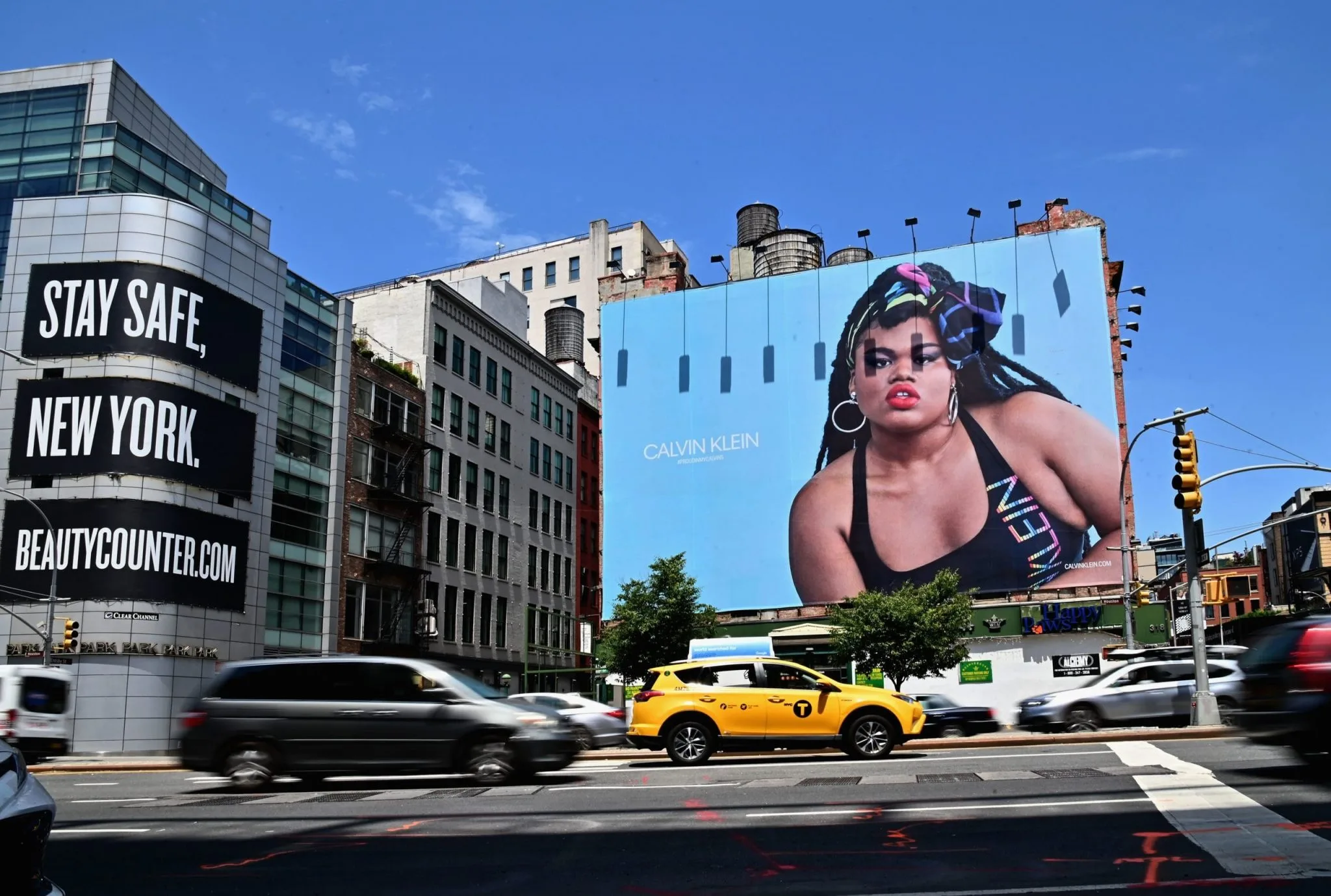
US fashion brand Calvin Klein has introduced a new campaign that features a plus-size, African-American transgender model. This and French cosmetics brand L’oreal Paris’ decision to alter its slogan have both sparked controversy on Chinese social media as many netizens said they felt the move was merely an attempt by the companies to be “politically correct.”
Jari Jones, the first plus-size transgender model to grace a giant billboard in New York in the history of Calvin Klein, has been encircled by public discussion not only in her own country but on Chinese social media. Her multiple identities such as being an African-American and a member of the LGBTQ+ community have become the center of controversy.
Some Chinese netizens said they believe the reason why Calvin Klein chose Jones was to pursue political correctness and pander to trending rights movement such as the Black Lives Matter campaign.
“The model is an African-American and a member of the LGBTQ community. Choosing her was the highest point of political correctness. I think this action will not help and is just a surface effort,” netizen “Minglasipangqi” commented on China’s Twitter-like Sina Weibo.
Some netizens also questioned why the fashion house didn’t go with a tradition tall and thin model.
“I understand that women have different sizes, but this model is too heavy and is not very healthy, I think. She doesn’t make me want to buy these clothes,” another netizen wrote.
Not all voices have been in opposition to the move. Some netizens said they feel that regardless of the results of the campaign, it is good that the company is taking action to support multicultural values.
“June is Pride month for the LGBTQ+ community and Jones’ identity as a member of the community can present the beauty of diversity to more people by being on the giant billboard at the center of New York,” Peng Yanzi, founder of the LGBT Rights Advocacy of China, told the Global Times on Monday.
Jones’ impact is not only limited to her gender identity, Peng said, adding that her body type can challenge some traditional impressions that might be out of date for women and models, Peng said.
Amid campaigns to protect the legal rights of African-Americans and transgender people in the US, breaking the mold when it comes to choosing models and promoting fashion icons is necessary and helpful, Peng said.
A Calvin Klein fan living in Beijing told the Global Times that she loves the brand even more because of the move.
“I like CK better after reading the news because it is a brand that recognizes the demands of their customers.”
While Calvin Klein has received some voices of support, French cosmetics brand L’oreal Paris has faced almost complete opposition on Chinese social media for changing its slogans and removing words like “whitening” from its products.
“It is too excessive. L’oreal should dye all its skin care products to black, or else white cream is also racist,” Sina Weibo user “Xiaoniaozhendechaojikeai” commented. The hashtag “L’oreal will stop using skin whitening” had received more than 110 million views on Sina Weibo as of Monday afternoon.
“Maybe next time white paper will also be banned.”
After African-American George Floyd was killed by a white police officer in the US in late May, many protests and campaigns against racial discrimination have broken out in the US and other regions around the world. Some companies have faced criticism for promoting skin whitening products from people who feel that these products promote the idea that lighter skin is better, according to a report from the Xinhua News Agency.
The world is embracing the word ‘body-positive,’ concerning fashion and beauty standards.
Being body positive is all about loving the body that you’re in, and making it work for you. It’s about realizing that you aren’t limited, to a particular fashion size, to be a part of fashion trends. It’s all about making peace with your flaws.
Earlier on, I knew that the standard beauty ideas were being tall, thin and with straight hair. It was a subconscious thing since most people look to fashion houses and publications to learn more about what’s en vogue.
Currently, there are several tutorials focused on looking after natural African hair including protective hairstyles and different head wraps. A lot of men and women are going back to their roots by embracing their natural hair. The natural curls that come out, when stylists don’t over manipulate hair, with heat and chemicals that relax and weaken hair.
However, hair care is a personal thing, so you can still wear wigs and weaves if that’s what makes you comfortable.
Being body positive also means embracing bodies that defy traditional beauty ideals. One example is how culture is embracing curvy artists like Nicki Minaj and Lizzo. With Nicki Minaj, her body transformation before plastic surgery after it is a big difference. It proves that people are free to do what they feel is right for aesthetic purposes.
On the other side, plus-size models are pushing the boundary and creating a more realistic outlook on beauty. You can open a fashion magazine and see variety in body shapes.
“You’ve got to love what you have because it is the only body that has been given,” Ashley Graham says in Vogue, November 2014.
Slick Woods has a gap tooth, & isn’t what you’d typically expect, but she’s still making strides, being a part of the Fenty tribe. She was selected to model for Rihanna’s fashion line.
Nigerian model Adetutu has tribal marks, on her face & she tweeted Rihanna so that she could get discovered. Rihanna followed her back on Twitter. Yaay, social media. I mean who would have expected it.
Duckie Thot is very dark & glossy and almost feels like a doll. Her blackness feels very surreal and a few decades ago, it would have been hard for her, to launch her modelling career.
Winnie Harlow has vitiligo. Her skin has different colour patches, and nothing can change that. She’s embraced it and used it to crack the modelling world. She was once a participant, on America’s Next Top Model, cycle 21 by Tyra Banks.
So it doesn’t matter if you’re covered in stretch marks from head to toe.
Or cellulite runs across your thighs with small dips, here and there. It’s all about standing in front of the mirror and repeating body-positive statements to yourself.
Nairobi Fashion Hub wishes you love as you spend extra time with yourself.
This is a first-of-its-kind Pan-African unranked compilation of the continent’s leading women, drawn from business, politics, media, science, sports and public life, who are challenging the status quo and creating a trail on terrain where there was none.
Africa’s 50 Most Powerful Women By Forbes Woman Africa Magazine
They are reshaping history, closing inequalities and pioneering new avenues of wealth creation and in turn, lifting others with them.
The unprecedented, unranked list features the continent’s leading women, drawn from business, politics, media, science, sports and public life, who are challenging the status quo and creating a trail on terrain where there was none. They are reshaping history, closing inequalities and pioneering new avenues of wealth creation and in turn, lifting others with them.
NAME
COUNTRY
TITLE
SECTOR
GRACA MACHEL
SOUTH AFRICA
FOUNDER, GRACA MACHEL TRUST
SOCIAL DEVELOPMENT
CLARE AKAMANZI
RWANDA
CEO, RWANDA DEVELOPMENT BOARD
SOCIAL DEVELOPMENT/GOVERNANCE
FOLORUNSO ALAKIJA
NIGERIA
EXECUTIVE VICE CHAIR, FAMFA OIL
OIL SECTOR
JENNIFER RIRIA
KENYA
GROUP CEO, ECHO NETWORK AFRICA (ENA); FOUNDING MEMBER, KENYA WOMEN FINANCE TRUST
FINANCE
LOUISE MUSHIKIWABO
RWANDA
SECRETARY GENERAL, ORGANISATION INTERNATIONALE DE LA FRANCOPHONIE (OIF)
AYA CHEBBI
TUNISIA
BLOGGER AND AFRICA UNION YOUTH ENVOY
MEDIA
ELSIE KANZA
TANZANIA
HEAD OF AFRICA AND MEMBER OF THE EXECUTIVE COMMITTEE, WORLD ECONOMIC FORUM
FINANCE
IBUKUN AWOSIKA
NIGERIA
FOUNDER AND CEO, THE CHAIR CENTRE GROUP
MANUFACTURING
DR JUDY DLAMINI
SOUTH AFRICA
FOUNDER, MBEKANI GROUP
SOCIAL DEVELOPMENT
CHARLIZE THERON
SOUTH AFRICA
HOLLYWOOD ACTRESS
ENTERTAINMENT
CHIMAMANDA NGOZI ADICHIE
NIGERIA
AUTHOR, PUBLIC SPEAKER
PUBLISHING
PHUTI MAHANYELE-DABENGWA
SOUTH AFRICA
CEO, NASPERS SOUTH AFRICA
TECHNOLOGY
OBIAGELI ‘OBY’ EZEKWESILI
NIGERIA
SENIOR ECONOMIC ADVISOR, AFRICA ECONOMIC DEVELOPMENT POLICY INITIATIVE (AEDPI)
SOCIAL DEVELOPMENT
GLENDA GRAY
SOUTH AFRICA
PRESIDENT AND CEO, SOUTH AFRICAN MEDICAL RESEARCH COUNCIL (SAMRC)
HEALTHCARE
THULI MADONSELA
SOUTH AFRICA
LAW TRUST CHAIR, SOCIAL JUSTICE RESEARCH AT STELLENBOSCH UNIVERSITY
LAW
WENDY LUHABE
SOUTH AFRICA
SOCIAL ENTREPRENEUR & CO-FOUNDER, WIPHOLD
FINANCE
ANGÉLIQUE KIDJO
BENIN
FOUR-TIME GRAMMY AWARD WINNER
ENTERTAINMENT
MANAL ROSTOM
EGYPT
FOUNDER, SURVIVING HIJAB AND FACE OF NIKE PRO HIJAB
HEALTH AND FITNESS
LYDIA NSEKERA
BURUNDI
PRESIDENT, NATIONAL OLYMPIC COMMITTEE (NOC) OF BURUNDI AND MEMBER OF FIFA COUNCIL
SPORT/GOVERNANCE
WINNIE BYANYIMA
UGANDA
EXECUTIVE DIRECTOR, UNAIDS
SOCIAL DEVELOPMENT
NGOZI OKONJO-IWEALA
NIGERIA
CHAIR, BOARD OF THE GLOBAL ALLIANCE FOR VACCINES AND IMMUNISATION (GAVI)
HEALTHCARE
PHUMZILE MLAMBO-NGCUKA
SOUTH AFRICA
EXECUTIVE DIRECTOR, UNITED NATIONS (UN) WOMEN
SOCIAL DEVELOPMENT
WARIS DIRIE
SOMALIA
PRESIDENT AND FOUNDER, DESERT FLOWER FOUNDATION
SOCIAL DEVELOPMENT
ELLEN JOHNSON SIRLEAF
LIBERIA
FIRST FEMALE PRESIDENT OF LIBERIA, NOBEL PEACE LAUREATE
GOVERNANCE
YVONNE CHAKA CHAKA
SOUTH AFRICA
AWARD-WINNING MUSICIAN
ENTERTAINMENT
SAHLE-WORK ZEWDE
ETHIOPIA
PRESIDENT OF ETHIOPIA
GOVERNANCE
MAMOKGETHI (KGETHI) PHAKENG
SOUTH AFRICA
VICE-CHANCELLOR, UNIVERSITY OF CAPE TOWN (UCT)
EDUCATION
REBECCA ENONCHONG
CAMEROON
FOUNDER & CEO, APPSTECH
TECHNOLOGY
BONANG MATHEBA
SOUTH AFRICA
MEDIA PERSONALITY, ENTREPRENEUR
ENTERTAINMENT
FATMA SAMOURA
SENEGAL
SECRETARY-GENERAL, FIFA
SPORT
IRENE CHARNLEY
SOUTH AFRICA
FOUNDER, SMILE COMMUNICATIONS
TECHNOLOGY
UCHENNA ‘UCHE’ PEDRO
NIGERIA
FOUNDER AND CEO, BELLANAIJA
MEDIA
ILWAD ELMAN
SOMALIA
FOUNDER, ELMAN PEACE CENTRE
ACTIVISM
WENDY APPELBAUM
SOUTH AFRICA
FOUNDER AND CHAIRPERSON, DE MORGENZON WINE ESTATE
ENTREPRENEUR
OLAJUMOKE ADENOWO
NIGERIA
FOUNDER, AD CONSULTING
ADVERTISING
BETHLEHEM TILAHUN ALEMU
ETHIOPIA
FOUNDER AND CEO, SOLEREBELS FOOTWEAR, GARDEN OF COFFEE, TEFFTASTIC
ENTREPRENEUR
NKOSAZANA DLAMINI-ZUMA
SOUTH AFRICA
MINISTER OF COOPERATIVE GOVERNANCE AND TRADITIONAL AFFAIRS, SOUTH AFRICA
GOVERNANCE
WENDY ACKERMAN
SOUTH AFRICA
EXECUTIVE DIRECTOR, PICK ‘N PAY
RETAIL
CASTER SEMENYA
SOUTH AFRICA
OLYMPIC CHAMPION
SPORT
RAWYA MANSOUR
EGYPT
FOUNDER AND CEO, RAMSCO
AGRICULTURE
ARUNMA OTEH
NIGERIA
ACADEMIC SCHOLAR, UNIVERSITY OF OXFORD FORMER TREASURER AND VICE PRESIDENT, WORLD BANK LONDON STOCK EXCHANGE AFRICA ADVISORY GROUP MEMBER
FINANCE
FATOU BENSOUDA
GAMBIA
PROSECUTOR, INTERNATIONAL CRIMINAL COURT (ICC)
LAW
HAJER SHARIEF
LIBYA
HUMAN RIGHTS ADVOCATE
ACTIVISM
AMINA J. MOHAMMED
NIGERIA
DEPUTY SECRETARY-GENERAL, UNITED NATIONS
SOCIAL DEVELOPMENT
PRECIOUS MOTSEPE
SOUTH AFRICA
FOUNDER, AFRICAN FASHION INTERNATIONAL
FASHION
LUPITA NYONG’O
KENYA
OSCAR-WINNING ACTOR
ENTERTAINMENT
VERA SONGWE
CAMEROON
EXECUTIVE SECRETARY, UNITED NATIONS ECONOMIC COMMISSION FOR AFRICA
SOCIAL DEVELOPMENT
MAGDA WIERZYCKA
SOUTH AFRICA
FOUNDER, SYGNIA
FINANCE
TARA FELA-DUROTOYE
NIGERIA
FOUNDER, HOUSE OF TARA INTERNATIONAL
BEAUTY
THERESA KACHINDAMOTO
MALAWI
CHIEF OF DEDZA DISTRICT
SOCIAL DEVELOPMENT
Forbes Africa research looked at Africa’s leading women across sectors and industries, as well as government agencies and non-profit institutions. We sifted through several recognition lists, conducted Forbes Africa own research in coming up with new names, and short-listed nominations that came in from Forbes Africa editorial teams across Africa, applying our own metrics of leadership, influence, consistency, and most importantly, impact. In addition to this list, this issue also features an important story on the effect of the coronavirus on corporate Africa.
Also in the focus section, a story on the future of African mining. And a tennis match on African soil that brought together two legends and the world’s second-richest man.
Ajani handmade came to be after realizing a gap in the local Kenyan beauty industry. Our products are developed to cater to natural and conscious self-care and lifestyle practices. They are a social enterprise aimed at catering to the demands of a growing natural and organic hair and skin care market. Ajani messages are socially rooted in challenging socially imposed beauty ideals. Through their work, they act as a platform for empowerment for women.
Some of Ajani handmade products
Ajani handmade target nurturing self acceptance by redefining mainstream standards of beauty by celebrating differences in physical make up and advocating for safe and informed self care and beauty practices. Through their brand their vision is to continue to develop an extensive and organic product line that nurtures and grows the local Kenyan handmade beauty industry by staying true to our social messages.
The story behind Ajani Brand
“Four years spent studying away from the luxuries and privileges of home left me with an afro, a world of information on African natural hair care and a will to make changes in the world around me. Through searching for information on how to care for unprocessed natural hair, I found that my story was one of many; often experiences that touched on identity, self awareness and self- esteem.
I noticed that reading and sharing these stories often led to conversations of empowerment and an unearthing of many previously unacknowledged histories and hidden social structures that shaped black women’s identities. The most exciting element of this journey was the acquisition of so much information and education on unprocessed African hair care, which had, oddly enough, never existed in my life world given that I had African textured hair.
Digging through vast amounts of new knowledge that other’s shared and experimenting with different recipes and hair care techniques naturally turned into a self- educating experience. This, coupled with a new holistic and health- conscious attitude led to two years of mixing, melting and whipping natural concoctions until I settled on a natural hair and body butter recipe that worked for both my hair and skin.
I decided to share my recipe as part of this Kenyan based product line for individuals with similar needs. I was keen to use my new skills and passions to navigate the world of social development, particularly pertaining to African women and how our life worlds affect our agency and capacities. Natural hair care was just my gateway.”
Content courtesy of Ajani Handmade & Nairobi fashion hub Digital team
Get some exclusive insights from Sandra Abongo and Emmy Belt, two women behind the success of Washindi Naturals, 100% natural body and lifestyle products. Sandra Abongo and Emmy Belt have an inspiring story to share. Learn more about their insights and the humble beginnings of there brand in NFH exclusive interview.
Some of Washindi Naturals 100% natural body and lifestyle products.
Sandra: My name is Sandra Abongo, Program Manager for projects and programs under the CBO Washindi Victory Center ( WVC ). Washindi Naturals ( WN ) started as a project under WVC and has now become its own fully-fledged social enterprise. Along with my partner and co-founder, Emmy Belt, through WN, makes high quality 100% natural body and lifestyle products.
We are a socially and eco-conscious brand creating opportunities for sustainable income for women in Kibera and other under-served areas through enterprise and financial training.
Emmy: I’m Emmy Belt, the Program Manager of Washindi Naturals. We started a year and a half ago, working with women from underprivileged areas, like Kibera and Kawangware. Our business side is selling artisanal, environmentally friendly and holistic body and lifestyle products.
We train women in basic business skills like production, quality control, accounting, inventory maintenance, sales, etc; The Tenets of Entrepreneurship!
When and how did you get into the beauty industry?
Sandra: In May 2018, by seeing the opportunities in the industry and how it can create avenues for change for the women we work with. We at WVC are always looking for sustainable ways of bringing change.
While researching one of these avenues and the opportunities within, we saw the potential for great impact through the beauty eco-conscious industry.
Emmy: We started in May 2018, first at small markets, then at the amazing co-share store Made in Kenya, while slowly growing our brand and reach.
We are still growing, but hope to expand our market two-fold in the next coming year!
What were you doing before you decided to set up Washindi Naturals?
Sandra: Working with WVC. I still do work as program manager for WVC.
Emmy: I’ve always had a passion for Eco-conscious and sustainable business and living, so when I wasn’t doing marketing and social media for our founder company, WVC, I had side projects that ranged from looking at the sustainability of using discarded corn cobs as fuel to recycling and re-purposing waste plastic in my neighborhood.
What was the catalyst in the journey of your natural product?
Sandra: Seeing the impact it made on the women we engage, as well as the significance and change that using natural, organic products has on mine and our clients’ skin and lifestyle.
Emmy:Apart from assisting women in empowering themselves keeping our products low impact, both on the planet and the body, is very important to me. It became a perfect mesh between my hopes for the world, and what I invest my time in!
How would you describe your signature look?
Sandra: African with a splash of new age!
Emmy: Natural, comfortable and inspired!
Why is it important for skincare products to be organic?
Sandra: The amount of synthetic and lower quality ingredients in commercial products can not only be ineffective, but even harmful. Organic products are free of chemical fertilizers, pesticides, and additives, meaning clients can be assured that they are getting an authentic experience in using said products.
This gives them peace of mind that what they are using is not industrial, but taps into nature’s goodness and thus is more beneficial, both to them and the planet.
Emmy: Not only are they demonstrably and resoundingly better for your body, but the production and use of them has a significant impact on our footprint on the planet! Let’s make change wherever we are able.
How important are the ingredients in skincare products?
Sandra: People should always look at what they are putting onto their skin. It is the largest organ in the body and thus is immensely crucial to the whole network of our body.
Therefore my advice is always to look at the ingredients to see what you’re introducing to this network. Stay away from parabens and heavy metals, as they (indicated by tons of research) have detrimental effects, especially as carcinogens.
Emmy: Just as what you eat affects you from within, beauty products affect you from without. There are many ingredients, both synthetic and natural, that can be damaging to you.
I recommend you take a look at the ingredients lists in your bathroom and do a quick search! It pays to know what exactly you’re introducing to your body, as the effects can be long-lasting or irreversible, to detrimental or beneficial effect.
What’s a skincare secret that you wish more people knew?
Sandra: Moisturise! Your skin needs TLC and the best form, in my opinion, is a little moisture, especially during harsh weather such as extreme cold or heat. Like here in Nairobi, it gets super hot and dry in the daytime, and cold at night! Moisturizing helps retain elasticity so, younger skin, protects from the elements, and keeps the skin from drying out:
Making our skin look healthier and smoother with a nice glow!
Emmy: Let your skin breathe! Don’t overburden it with treatments and products. Limit yourself to a scrub a week, minimal makeup, wash your face with only water. Let your skin find its own balance before starting treatments.
How important do you think it is for people to have a regular skin care regimen?
Sandra: Very important! As I said, it is our largest organ, so if we take care of it then we are already playing a huge part in taking care of our bodies as a whole.
Emmy: Extremely! Don’t get me wrong, a skincare regime doesn’t have to be drawn out to qualify as a regime.
Wash your face with water every morning and evening, use natural oils and butters where your skin needs an extra boost. Repeated and deliberate love and care is very important!
Why should anyone use your service or product?
Sandra: Our products are local, African, 100% natural, eco-conscious and are made with organic ingredients. Every purchase helps us grow and furthers our mission to empower women. I say “made with organic” following a conversation I had with one of our clients. Most of our ingredients are organic, with the exception of the saponifying agent (lye) which in most, if not all soaps, cannot be 100% organic.
This is a common misconception, which makes some people question “are you really organic?” So I always try to dispel their doubts or fears by explaining this factor. We also have something for all skin types, and they smell great, too!
Emmy: Our long term vision is to assist women with limited resources to become independent, to create sustainable and scalable livelihoods. In order to get there, we need to build our brand, and it’s important for us to model eco-consciousness and body positivity while we do that.
More Washindi Natural products collections available at selected store in Nairobi
You started working in the beauty industry several years ago, how has the industry changed since you began?
Sandra: We are just a year old, but I would say there is more awareness and absorption of natural and socially conscious products these days.
Emmy: People are getting more and more interested in products that do service to the planet and their bodies.
The last couple of years we’ve really seen this grow in Nairobi, giving our vision a market to move into and within. We’re excited to see more businesses go in this direction, and more customers choose natural!
Sandra: Sure, we are always learning and diversifying. Washindi Naturals keeps evolving by trying to stay above the fray. Stay looped in by following us on Instagram @washindinaturals !
Emmy:Definitely! We are taking a holistic approach to natural body and soul care, adding more skin, beauty and lifestyle products. But we are taking the climb slowly and surely, taking care of our base customers and the women we work with, by keeping our main focus on our core product line.
What is your brand philosophy?
Empowering through Enterprise! We do this by creating avenues and opportunities for sustainable livelihoods, while also championing for eco-consciousness.
What are 5 most popular beauty products you use?
Sandra: I use our whole product range, but if I had to choose: Coffee+Vanilla, Tea+Masala, and Charcoal+Pine soaps. The hair and body oils I use are Vanilla, and Lavender+Mint (these are great for massages, too, by the way!), and the Vanilla body scrub.
Emmy:That is a tough question to answer! I love citrusy and fresh scents, so if I have to choose I’d say the Coconut+Lemongrass and Chia+Eucalyptus Soaps, but then I also adore the relaxing combo of our Turmeric+Lavender+Rosemary Soap.
I also use the Lemongrass Body Scrub in the shower and the Lavender+Mint Hair and Body Oil for massages and to moisturize my locs.
How long have you been natural?
Sandra: As long as I remember!
Emmy: It started as a teenager when I began to realize that all these different products we were using were pretty much all the same, and to make it worse, damaging! The soaps were too harsh, whilst the conditioner and lotion faked moisture. It’s been a journey, but I’m much happier, having let the concept of natural and eco-friendly spread to other parts of my life, as well.
Which element of your job do you most enjoy?
Sandra:Working with the women. It’s a large reason I do what I do, because when I see the impact on their lives and how it has upgraded their living standards, in whichever way then I know I am accomplishing something great. I also love the production process. Whenever we make products, there’s a swirl of amazing smells.
I love it!
Emmy: Right now I wear many hats since Washindi Naturals we’re still sprouting, so to speak. I’m learning so much! It’s enrapturing, infuriating, rewarding, draining, and oh so worth it!
What is beauty for you?
Sandra: Inside and out. It’s character, it’s personality, it’s a je ne sais quoi!
Emmy: Beauty is confidence. The most attractive people I’ve met shone from the inside, and nobody could resist falling a little bit in love with them.
What are your 5 beauty do’s and don’ts?
Sandra: Do: wear sunscreen, moisturise, exfoliate, and tone. Those are my basics, I don’t do much more.
Don’t: Not use sunscreen or moisturiser!
Emmy: DO: Be Yourself, You Are Beautiful! DON’T: Worry Yourself, You Are Beautiful!
Does everyone look better with beauty products?
Sandra: Everyone is beautiful! We just want to help them stay healthy as well!
Emmy: Everyone looks better if they feel better! We hope to help with that.
If you turn up at a show/shoot and the model has terrible skin, what do you do?
Sandra: I guess the best quick fixes are make-up, which is not my forte I hardly wear any make-up.
If it’s not up to me to do a quick fix by make-up, I’d recommend one of our products depending on what is affecting her/his skin. I’d definitely always start with a good scrub the day before a big event, leaving your skin fresh and glowing!
Emmy: Wouldn’t it be great if that term didn’t exist? If blemishes and breakouts were normalized and also seen as natural? I’d work to help make that happen!
What inspires you today?
Sandra: A lot, but I’d say, first and foremost, my mother.
Emmy:There are so many amazing entrepreneurial and world improving women out there, and so many in Nairobi!
When I see the amazing company I find myself in, I hope I can measure up and work my hardest to someday be on equal footing with them. I’m currently very inspired by the ladies behind the Made in Kenya Store, who in addition to the store also have their own businesses!
Beauty Instagram profiles have become a major influence on the beauty industry, but you keep yours quite personal, how important are social platforms for you?
Sandra: As a marketing tool, they are vital in this day and age. Handled well, they can be pivotal to a business’ growth and have been to ours.
Emmy: We want to share with our customers our realness, zaniness, zest for life and zeal for the planet, and social media platforms are excellent to connect with our people!
Do you have any tips or advice for aspiring entrepreneur seeking to venture in organics products?
Sandra: Do your best. Dedication and tenacity are essential during the pivotal first years of growth.
There will be a lot of strife, manifested through obstacles and detractors, as you grow your business. An almost feverish focus will be required to manoeuvre these challenges.
And it always helps to have a substantive anchor, whether through family, a good team or personal hobbies. I’ve personally always garnered strength and respite through my faith.
Find something that keeps you whole, whatever that may be.
Emmy: Do your research, stay true to yourself, and stick it through. Starting a business is the toughest, but most rewarding thing you can do. It will beat you down time after time, but if you’ve chosen with your heart it will all be worth it.
Share with us 3 random facts about you that very few people know!
Sandra:I like dark TV shows “ they help me better understand the world in a strange new perspective” , I make amazing chocolate potatoes “ thanks to my dear friend Elena” and I often make up random words “ my friend Sofi and I are notorious butchers of the English/Portuguese language! ” .
Emmy: I went to circus school for a year when I was 19, I have a fear of depths “ nope, not heights ” and I like attention but I really don’t want to become famous.
What’s the biggest piece of advice you can give to other women looking to start-up?
Sandra: Press towards the mark. Don’t let challenges or doubts dissuade you.
Emmy: It’s hard to know when or if to quit, but know that there is no such thing as failure.
Not succeeding is the best learning experience!
Where our readers can find you and keep in touch with you? ( Provide your Instagram, website, Facebook page if any please)
Adopt a simple routine, clean your skin gently, and don’t abuse of the sun (stay away from it potentially!). Drink a lot of water, don’t smoke and laugh without limitation!
Did you find this interview with Washindi Naturals useful and intersting ? find more exclusive interview with industry expert by visiting Designer spotlight here
Content courtesy of Washindi Naturals & Nairobi fashion hub
Surprise! M.A.C. is at it again with its next collection inspired by the Queen of Latin Pop, Selena Quintanilla. It’s called M.A.C. Selena La Reina, which translates to Selena the Queen, the perfect name for the line. Selena (she’s a one-name superstar, right?) fans are so rabid, they created an online petition for M.A.C. to honor the late singer with a collection back in 2015.
A year later, it came out and sold out quickly. It was restocked and sold out again. News of the collab had then been quiet until now.
Get kissed by a rose! Lipglass in Bidi Bidi Bom Bom, the shade from our first Selena collection that you made a best-seller is back for an encore. Instantly swipe it on with our new virtual try-on.
“I am forever grateful to M.A.C. for allowing me to bring my creative vision to life for this collection and being able to share what I felt would celebrate my sister’s 25th anniversary,” said Suzette Quintanilla in a statement. “Working with M.A.C. on both collections has been an amazing experience.”
We don’t have all the details on Selena La Reina just yet but we do know M.A.C. is bringing back a favorite from the collection: Bidi Bidi Bom Bom Lipglass, a bubblegum pink with silver pearl lip gloss. It looks really pretty on its own or layered over your favorite bold lipstick.
M.A.C.The brand promises us more details on the release closer to launch, which is April 2020. It might seem far away but February is almost over already.
The original M.A.C. x Selena collection included black eyeliner, mascara, bronzer, a brush, five eyeshadow shades, three lipsticks and the above lipgloss. This time around, we’re hoping for a matte red lipstick, brow products, smoky-eye ready shadow and maybe even rosy blush to really get the Selena look.
For Quintanilla and her family, the collection is a chance to connect with the younger generation that sadly never got to experience Selena in person. “We’re in a whole new generation, and they’ve embraced her and they talk about her not just as an artist, but as a role model and what she represents to who we are as Latinos. She was an amazing artist, a great role model, a sweet person, and a real person,” says Quintanilla. “People, especially Latinos, can look at her and think ‘she’s me.'”
Toni-Ann Singh (born 1996) is a Jamaican -American actress and beauty pageant titleholder who was crowned Miss World 2019. She was previously crowned Miss Jamaica World 2019, and is the fourth woman from Jamaica to win Miss World.
The family immigrated to the United States when Singh was aged nine, settling in Florida. She attended Florida State University in Tallahassee, Florida, where she graduated with a degree in women’s studies and psychology.
Singh was born in Morant Bay, Jamaica. Her parents are from Jamaica; her mother is of African-Caribbean descent, while her father is of Indo-Caribbean descent.
In 2019, Singh competed in the Miss Jamaica World 2019 competition, where she ultimately won the title. Afterwards, Singh was given the right to represent Jamaica at Miss World 2019.
Singh left for London in November 2019, to participate in the Miss World pre-pageant activities. Singh placed in the top 40 of the Top Model competition and won the talent competition, which granted her direct entry into the top 40 semifinals. Finals night was held on 14 December at ExCeL London, where Singh advanced from the top 40 to the top 12, and ultimately to the top five. She was then crowned the winner, besting first runner-up Ophély Mézino of France and second runner-up Suman Rao of India. With her win, Singh became the fourth Jamaican woman to hold the title, with the last being Lisa Hanna who was crowned Miss World 1993, and the first black woman to win Miss World since Agbani Darego of Nigeria won Miss World 2001.Her win also made 2019 the first ever year that black women won the two most prestigious beauty pageant titles in the world, after Zozibini Tunzi became South Africa’s first ever black woman to have won the Miss Universe title.
Jamaica’s Toni-Ann Singh was crowned Miss World on Saturday.
“To that little girl in St. Thomas, Jamaica and all the girls around the world – please believe in yourself. Please know that you are worthy and capable of achieving your dreams. This crown is not mine but yours. You have a PURPOSE,” Singh tweeted on Saturday.
Singh, 23, was born in Morant, St. Thomas, Jamaica. She is a psychology and women studies graduate of the Florida State University.
Prior to the winning the pageant, Singh was taking a year off from school before attending medical school.
On Saturday, she earned an ovation from the audience after singing Whitney Houston’s hit “I Have Nothing” during the beauty pageant and after a round of questions from British journalist Piers Morgan.
“I think I represent something special, a generation of women that are pushing forward to change the world,” she told Morgan.
The two runners-up for the crown were Miss France and Miss India. Singh was crowned by last year’s winner, Vanessa Ponce de Leon of Mexico.
This is the fourth time that a representative from Jamaica is crowned as Miss World since 1959. Jamaica has previously won Miss World titles in 1963, 1976 and 1993.
It’s also the first time that all top beauty pageants — Miss USA, Miss Teen USA, Miss America, Miss Universe and now, Miss World — have crowned black women as their winners.
Last weekend, Zozibini Tunzi from South Africa was named Miss Universe after excelling through rounds of swimsuit and evening gown struts and answering questions about social issues.
From laser skin resurfacing to surgical and non-surgical hair loss solutions, Nairobi fashion hub breaks down the best cosmetic treatments and procedures to try in your forties.
When it comes to beauty and aesthetics, there is no such thing as one size fits all. But there are some tried and true principles that will keep you looking and feeling your best. In this series, Coming of Age, Nairobi fashion hub answers your most pressing questions about the best treatments, procedures, and practices from surgery and skincare to health and wellness and everything in between to consider at any age.
In case you needed yet another reminder that the forties are the new thirties, Kourtney Kardashian, Rachel McAdams, and Adam Levine are just a few celebrities who turn the big 4-0 this year.
Needless to say, the decade looks better than ever, and there are a growing number of non-surgical cosmetic procedures that can address visible signs of aging like fine lines and wrinkles, hyperpigmentation, skin laxity, and thinning hair. By taking a proactive approach to skin health and maintenance, patients can delay (or potentially even avoid) more invasive surgical procedures down the line.
New York City-based board certified dermatologist Cheryl Karcher, MD, says that she has plenty of patients who do not start regular Botox® treatments until their forties and fifties, and they do so for a variety of reasons. “Everyone is different,” she says. “Some people are frowners, some people are squinters. Some people have had severe damage to their skin others have taken really good care of their skin and do not have much damage — even in their forties and fifties.”
While the muscle-paralyzing agent is used to help prevent the formation of wrinkles during the twenties and thirties, it can continue to have a smoothing and softening effect by inhibiting the muscle movement that causes lines and wrinkles. The injections take about a week to kick in and touch ups are needed every three to six months for best results.
Dermal Fillers Because the body’s collagen and elastin production decreases with age, men and women alike may begin to notice sagging, reduced elasticity, and less volume in the face, neck, and body. For women, the hormonal changes that accompany menopause can further impact this process.
In these cases, soft tissue fillers can be used on various parts of the body (though they are most commonly used on the face) to plump and smooth unwanted lines and wrinkles. “Patients in their forties start losing a little more volume in the cheek area and they start getting jowls around the chin area,” says Dr. Karcher. “In that age group, I think fillers around the cheek and jawline are hugely transformative.”
Like neurotoxin injections, the results are both fast and effective — but maintenance is needed every six months to two years depending on the type or filler and area being treated.
Fractional Laser Treatments Uneven skin tone and texture is another complexion concern that increases with age (and the accompanying decrease in cell turnover). “By the time a patient is in their forties — depending on where they’ve grown up and what their lifestyle has been — signs of sun damage are usually present in the face. Brown spots called ‘solar lentigos’ and ‘mottled pigmentation’ are usually present,” says Dr. Karcher. “Also, due to the environment, the skin has lost some of its collagen and elastin and that’s were fine lines show up, a little bit of skin sagging shows up.”
Laser skin resurfacing — specifically, targeted fractional lasers, like Fraxel® — has the ability to solve many of these concerns. Whether you opt for an ablative or non-ablative treatment, the energy from the laser targets damage while stimulating collagen production, resulting in a brighter, smoother, and tighter complexion.
“Fraxel® helps rejuvenate the skin in a number of ways. It takes care of the mottled pigmentation, gets rid of the brown spots, and it also helps rebuild collagen and elastin,” says Dr. Karcher. “So, depending on how much damage a person has, anywhere from one to three Fraxel® treatments would be recommended.”
While wounding ablative fractional lasers have the ability to remove thin layers of skin for stronger results, the treatment comes with a longer downtime than their non-wounding non-ablative counterparts. But it should be noted that non-ablative fractional laser can require anywhere from three to five sessions to see the brightening, toning, and evening effects.
Ultrasound Skin Tightening (a.k.a Ultherapy®) For tightening and firming without a facelift, Ultherapy® is a non-invasive ultrasound-based cosmetic treatment that addresses skin laxity. It works by sending concentrated ultrasound waves deep into the skin and SMAS muscle. Unlike laser skin tightening methods, it targets the inner (not outer) layers of the skin. The ultrasound waves heat up the underlying tissue to activate the body’s healing response, which, in turn, stimulates collagen and elastin production.
“Patients in their forties have lost collagen and elastin, and there’s a little bit of skin sagging,” Dr. Karcher explains. On the face, Ultherapy® can tighten the jawline, under eyes, and forehead, while lifting the eyebrows. It can also be used to firm the skin of the décolleté and even the stomach.
While the procedure is more impactful than Botox® and fillers, it doesn’t quite reach facelift proportions. Like most laser treatments, it requires several treatments (spaced three to four weeks apart) and offers a solution for those looking for rejuvenation sans scalpel.
For the Hair and Body
Body Sculpting In case you haven’t picked up on it yet, many of the body’s natural responses and processes start to slow with age. The metabolism is not least among them. Coupled with the decrease in skin elasticity, patients in their forties may opt for surgical and non-surgical body contouring procedures that can remove unwanted fat deposits from most parts of the body (think: love handles, abdomen, buttocks, and thighs).
There are a number of treatments, at varying degrees of invasiveness, that fall under the ‘body sculpting’ umbrella. Non-surgical procedures like CoolSculpting®, SculpSure®, and UltraShape®, for example, eliminate excess fat by heating or freezing it. Newer options like EmSculpt®, meanwhile, offer toning and strengthening benefits by employing high-intensity, focused electromagnetic technology that mimics the effects of 20,000 crunches over the course of a 30 minute treatment.
These non-surgical treatments come with minimal downtime (especially when compared to a tummy tuck or liposuction), but three to four sessions will be needed to see results. While the effects are permanent and fully visible after about four to six months, they require patients to maintain their weight.
Hair Growth Treatments For men in particular, hair growth can slow in the forties, leading to a receding hairline, hair thinning, and baldness. For patients with severe hair loss, hair transplant surgery is the most effective and most invasive solution. While there are several techniques (micro-grafting, slit grafting, punch grafting, etc.), each hair transplant method involves moving hair from another part of the body to the desired area.
The most effective non-surgical hair loss solution for men and women alike is platelet-rich plasma (a.k.a. PRP) injections. Similar to a vampire facial on the face, the process involves injecting a PRP solution composed of the patient’s own platelets (usually drawn from the arm) into the scalp and affected areas. The blood acts like fertilizer, promoting stronger and thicker hair growth. Each treatment lasts about a half hour and patients have monthly visits for the first six months before switching to a bi-monthly schedule.
Over-the-counter topicals and supplements like Nutrafol® and Rogaine® can also yield results — especially when combined with PRP injections and other professional procedures.
The Takeaway
Whether you’re dealing with skin laxity, hyperpigmentation, hair loss, or weight gain, there are an increasing number of minimally invasive cosmetic procedures to tighten, brighten, and rejuvenate the face and body for patients of all ages.
Ugandan beauty and cosmetology brand, Minama has today announced the release of its latest skin care product, out on the market. The brand’s C.E.O Afsana Pey S.K announced the release of its Minama skin oil, which goes on the market today, in Uganda and across the continent.
“Minama skin glow oil has really helped many of our clients and myself, particularly for ailments like Acne, blemishes, black spots, scars etc. it also clears your skin and leaves it glowing with that beautiful shine,” she explains.
When asked what was her motivation for setting up the skin care line, Afsana explains that she suffered with skin issues for a long time, and being as there weren’t many solutions available on the market, she decided to start up her own skin care line, whose many other products include lotions, soaps, creams and other cosmetics.
“I know first-hand how bad skin can affect you, especially your confidence, so I started the line to help others and myself. We have more products launching in December, and we can’t wait for all our clients, old and new to get their hands on this skin oil,” she concludes.
Content courtesy of Minama Cosmetics & Nairobi fashion Hub