Tuesday 5th of May 2026

Nairobi, Kenya

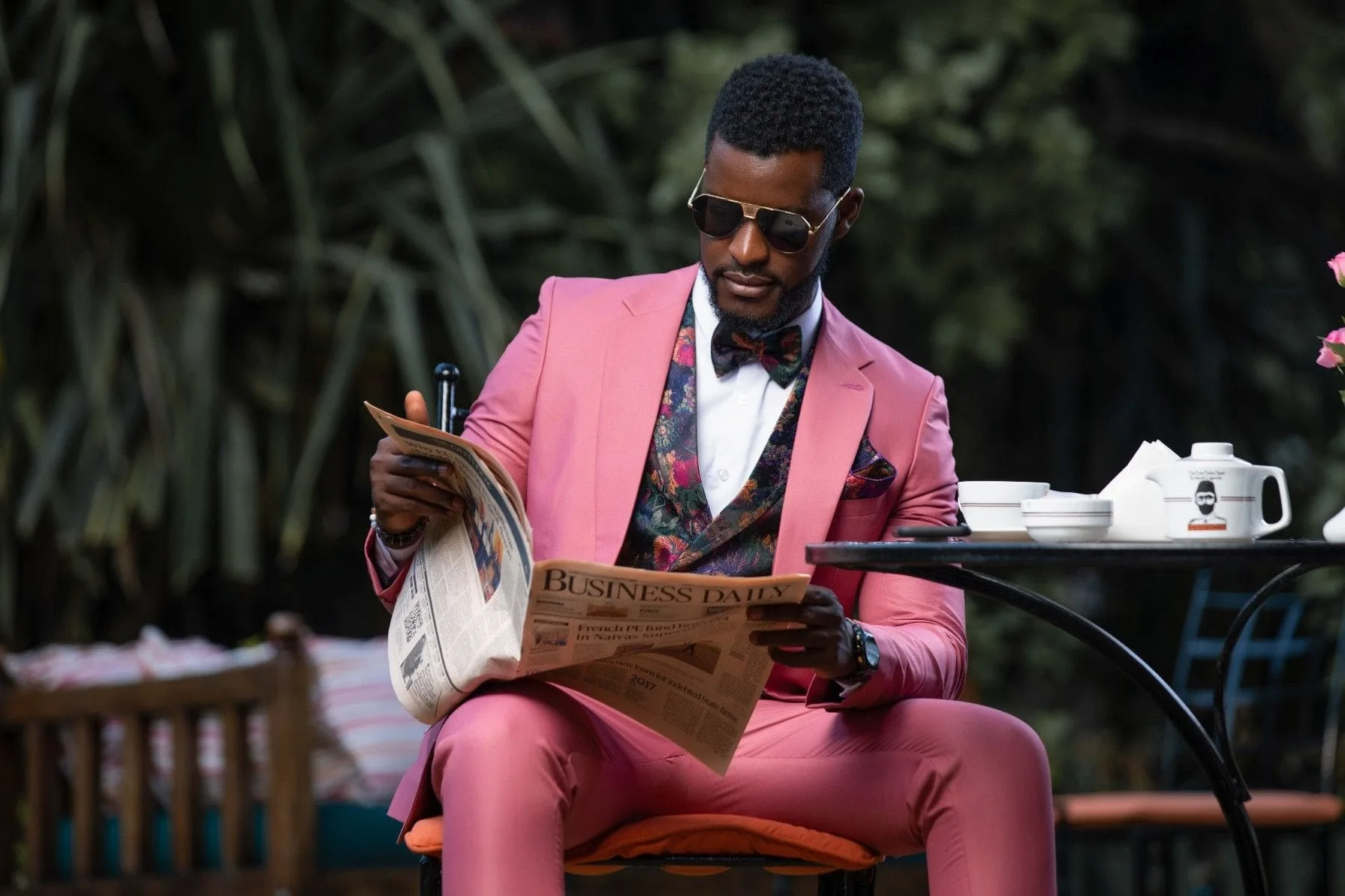
Who is Kenya’s best dressed politician?

Best dressed politicians in Kenya

Who is the best-dressed politician in Kenya? It’s difficult to pick just one.

All of us human beings like to compete. In anything and everything.  Particularly us men. And the dress-up fashion department is one we like to compete in. Especially for men with resources. And the government is, of course, full of such men. Politicians with a tonne of personal resources. Businessmen who have worked really hard to get to where they are. Well, most of them anyway.

In a room full of wealthy gentlemen it takes special fashion skills to be able to stand out.

Now, I’m certain you’ve already seen a lot of lists online. Lists on the best-dressed politicians in Kenya. Random lists with very little detail and know-how. Lists that have been put together just for the sake of it.

This is not one of those lists. Because at Nairobi fashion hub we like to take the business of fashion very seriously. So here’s a well thought out video we came across on Lee Makwiny’s youtube channel. It breaks down 2 of the best-dressed politicians in Kenya. It does so by very systematically assessing each politician’s sense of style. And not only that. It leaves you feeling inspired to up your fashion game as well. Particularly if your man. Because Kenyan men can sometimes tend to get lazy with their dressing. I’m sure you’ve heard the complaints from our women. I’ve had multiple women tell me. “I went for our date in a lovely wedding gown that took me weeks to save up for. And he showed up in a t-shirt and jeans. What a waste!” Don’t let that be you.

So without further ado. Here are 2 of the best-dressed politicians in Kenya. Enjoy and draw fashion inspiration.


Body Positivity

The world is embracing the word ‘body-positive,’ concerning fashion and beauty standards.

Being body positive is all about loving the body that you’re in, and making it work for you. It’s about realizing that you aren’t limited, to a particular fashion size, to be a part of fashion trends. It’s all about making peace with your flaws.

Earlier on, I knew that the standard beauty ideas were being tall, thin and with straight hair. It was a subconscious thing since most people look to fashion houses and publications to learn more about what’s en vogue.

Currently, there are several tutorials focused on looking after natural African hair including protective hairstyles and different head wraps. A lot of men and women are going back to their roots by embracing their natural hair. The natural curls that come out, when stylists don’t over manipulate hair, with heat and chemicals that relax and weaken hair.

However, hair care is a personal thing, so you can still wear wigs and weaves if that’s what makes you comfortable.

Being body positive also means embracing bodies that defy traditional beauty ideals. One example is how culture is embracing curvy artists like Nicki Minaj and Lizzo. With Nicki Minaj, her body transformation before plastic surgery after it is a big difference. It proves that people are free to do what they feel is right for aesthetic purposes.

On the other side, plus-size models are pushing the boundary and creating a more realistic outlook on beauty. You can open a fashion magazine and see variety in body shapes.

“You’ve got to love what you have because it is the only body that has been given,” Ashley Graham says in Vogue, November 2014.

Slick Woods has a gap tooth, & isn’t what you’d typically expect, but she’s still making strides, being a part of the Fenty tribe. She was selected to model for Rihanna’s fashion line.

Nigerian model Adetutu has tribal marks, on her face & she tweeted Rihanna so that she could get discovered. Rihanna followed her back on Twitter. Yaay, social media. I mean who would have expected it.

Duckie Thot is very dark & glossy and almost feels like a doll. Her blackness feels very surreal and a few decades ago, it would have been hard for her, to launch her modelling career.

Winnie Harlow has vitiligo. Her skin has different colour patches, and nothing can change that. She’s embraced it and used it to crack the modelling world. She was once a participant, on America’s Next Top Model, cycle 21 by Tyra Banks.

So it doesn’t matter if you’re covered in stretch marks from head to toe.

Or cellulite runs across your thighs with small dips, here and there. It’s all about standing in front of the mirror and repeating body-positive statements to yourself.

Nairobi Fashion Hub wishes you love as you spend extra time with yourself.

Chaos by Kai’s Divo Collection

Kaijuka Abbas, owner, and proprietor of Kai’s Divo Collection is the creative force behind some of the best-dressed celebrities from Bettina Tiana and Malaika Nnyanzi to Winnie Nwagi and Maurice Kirya.

He was named the Best Designer of the Year at the Men’s Fashion Week Nigeria 2019 which took place from the 28th to 29th November 2019 at the Royal Oak Event Center in Lagos.

Kai’s Divo Collection is a Ugandan fashion brand renowned for its unique take on style. 

In this chat, Abbas Kaijuka, the creative director of the brand, shares his inspiration for the collection.

What was the starting point for this collection?

This collection was about everything we think men shouldn’t wear. It was birthed out of a conversation I had had with some of my male clients. They were wondering what would happen if I gave them some of our signature dramatic styles to wear.

Men usually come to me for conventional menswear pieces such as suits. Yet, if you’ve been following my brand right from our early days, you know that I’m a rebel when it comes to menswear. In my world, menswear should be more fun and expressive.

Putting the collection together was easy, I worked with most of the fabrics that I usually work with for women’s wear and married some of the styles together, to create a collection that’s bordering gender-neutral.

We see a lot of tulle on pants and jackets, these are soft fabrics usually seen in women’swear.

What was your thought process making men wear tulle? 

My work allows me the opportunity to interface with lots of people, both men and women. From my experience, men are way softer than women. You can measure someone’s strength by the number risks they are willing to take. Men are not risk takers when it comes to style. I wanted to showcase the level of risk taking men ought to be at.

We also see a lot of capes, what was the idea behind these?

 I’ve always been fascinated by capes. They are the wings that make superheroes such as  Superman and Batman fly. In a cape, I see men who are out there saving the planet.

These are generally edgy looks for men. What’s your take on men getting adventurous with shapes and detail?

Like I said, I’d like men to be more adventurous. I’d like men to take more risks. It doesn’t hurt to think out of the usual box.

Kai’s Divo collection

Credits
Model: Akram Sempala (signed to @jorammodelmanagement)
Photos by @banjiphoto
Onset assistants: Isaac Baboki/ Thomas Verk
Shot on location at Camouflage

Sudanese Model Nyakim Gatwech Enters Guinness Book Of Records For Having The Darkest Skin Tone On Earth

Sudanese Model, Nyakim Gatwech is the latest in the Guinness Book of Records,Nyakim is known for her naturally dark skin color and has been nicknamed the Queen of the Dark, Nyakim has faced self-esteem issues and comments from people who promote bleaching to lighten skin color, but learned to embrace her beauty and pigmentation with love and support from her fans.

While millions of women across the globe are paying the high price for bleaching, Nyakim Gatwech got recognized by the Guinness book of World records for having the darkest skin tone on earth.

The model has graced covers of countless magazines as her alluring and uniquely black yet divine skin tone redefines the very definition of beauty, Nyakim has set the standard for many African ladies who have felt insecure about their different skin tones and whenever she walks the red carpet or runway, she commands the attention of everyone and steals the moment without an apology.

Nyakim Gatwech is best known as a Model. Model known as Queen of the Dark who found acclaim with her distinctive dark complexion. She was born on January 27, 1993 in Sudan. Another model named Shaun Ross shattered beauty expectations in the world of fashion with his skin pigment. She has faced discrimination for her skin since moving to the United States.

[taq_review]

She is one of the successful African Model , She has ranked on the list of those famous people who were born on January 27, 1993. She is one of the Richest Model who was born in Sudan.According to Trending Celebs Now, Nyakim Gatwech’s estimated Net Worth, Salary, Income, Cars, Lifestyles & much more details has been updated below. Let’s check, How Rich is Nyakim Gatwech in 2020?

Estimated Net Worth in 2019$1 Million – $5 Million (Approx.)
Previous Year’s Net Worth (2018)$100,000 – $1 Million
Annual SalaryUnder Review.
Income SourcePrimary Income source Model (profession).


According to Boredpanda, African model and fashion icon, who now lives in Minneapolis, Minnesota, Nyakim Gatwech she proud and  not shame about her melanin, and she makes sure the world is aware. She once said while captioning one of her photos on Instagram that her Chocolate is elegant and she represents a nation of warriors.

Content  courtesy of Nairobi fashion hub Digital Team 

Power of E-commerce in Rapid Expanding African Fashion Sector  

Thirty-two-year-old Gambian economist Marie Ba used to buy most of her clothes online from British fashion retailer ASOS. But when she wanted to update her closet with some tailored wax print African dresses, she took a chance ordering through Ghana’s KIKI Clothing platform.

“I was looking for something well designed and fitted, and it’s lovely to support brands based in West Africa, while looking quite unique in their pieces,” she says.

Online revenues for the African fashion sector are predicted to grow by over 14% annually over the next four years.

Within five working days the clothes were delivered by DHL from Accra, to her door in Gambia’s largest city, Serekunda. And Ba became part of a growing ecosystem of fashionistas purchasing their clothes within the expanding African e-fashion market.

African fashion has revelled in tremendous media interest recently. Beyoncé helped propel Senegalese designer Sarah Diouf’s Tongoro brand to international fame when the singer wore a patterned dress and wide-leg pants on holiday last year. Naomi Campbell and Alicia Keys are other megastars spotted wearing African-designed clothes.

Sub-Saharan Africa’s clothing and footwear market is worth $31bn, according to Euromonitor. The growth has prompted the expansion of foreign and local brands into the African clothing market. Companies are fulfilling increasing orders from the African diaspora, particularly in Europe and America, while sales of Ankara gowns and African print dresses are also popular among non-African consumers. This has led to the creation of African-based e-fashion platforms.

“We export African culture no matter where you are,” says Malian-born Moulaye Tabouré, the CEO of Afrikrea, an online marketplace that allows users to sell African clothing to over 100 countries. The Abidjan-based tech startup secured an additional $1m funding round in February, money Tabouré says will allow the business to grow its developer team, and expand its mobile technology and marketplace.

The company boasts a minimalist and user-friendly website, and says 5000 designers use its platform. These designers build an online “shop” with digital tools provided by Afrikrea. They then set the prices and communicate directly with customers, who are able to stagger their payments.

Afrikrea then deducts a commission of 10-15% per sale, and says it has facilitated over 4m sales since the company’s 2016 inception. The biggest market is the US, followed by France and the rest of the EU.

“Our target is to get the infrastructure growing, so we get at least 50% of our sellers from Africa,” says Tabouré. “The idea is to get people in Africa to say, ‘Maybe this is the best place to set up my business.’ But the biggest issue is to be able to organise, and sustain the growth.”

E-commerce in sub-Saharan Africa is in its nascent stage but it’s showing enormous potential as smartphones proliferate across one of the world’s youngest and fastest-growing populations.

A 2017 report by Statista estimated the e-commerce sector in Africa generated $16.5bn in revenue that year. The research firm currently predicts that revenue in the sector will reach $27.7bn in 2020 and rise to $47bn by 2024.

Online growth is being driven by the under-35s. Rubab Abdoolla, senior analyst of beauty and fashion at Euromonitor, says the e-commerce sector is being driven by “the increasing number of working mothers who are being supported by rapid adaptation to internet retailing”.

The wider African e-commerce landscape is being pushed by sales in fashion. Statista predicts revenue at $8.3bn in 2020 and projects an annual growth rate of 14.2% between 2020 and 2024. But this expanding e-fashion market faces major challenges.

Overcoming challenges

West Africa is a major cotton-growing region, but its textile industry struggles to compete with cheap clothes made in Asia. Since the 1980s, most of Africa’s textile industries have been wiped out and a generation of skilled workers have been lost.

Textile manufacturing in the region is estimated to have fallen by more than 75% in that time. Transporting clothing within the continent and beyond can be problematic, with expensive export costs and border difficulties.

“The number one business constraint I have is definitely the customs,” says Tabouré. “If African governments would realise the potential of having free trade between African countries, and facilitating customs for people shipping outside of Africa – especially with Europe – then there would be an extremely good advantage.

“In the US, we have an agreement [the US’s African Growth and Opportunity Act] that allows us to ship without customs up to $700. If we could have the same agreement with Europe, then that would change the game.”

These challenges are not stopping self-taught Ghanaian designer Felicia Parker. The Afrikrea user is able to sell her La Mode Afrique brand of kente cloth styles and other items to a growing customer base in London, Paris and elsewhere on the continent.

“When an order is placed, DHL will come to pick up the clothing from my door, and take it to most places in the world,” she says.

“The internet has made it really easy for anyone to purchase whatever designs they want, in the comfort of their home and workplace In the next five years, I hope I’ll have a big factory here in Ghana, and shop branches worldwide, that are full of African print fashion.”

This article originally appeared on African Business 
Written by WIlliam McBain

How to dress to attract women

“I don’t dress up for women, so why in the hell would I need to learn how to dress to attract women?” is what some of you are probably thinking. You like to dress casually. Jeans and sneakers. Even on dates with women you want to attract. You’re getting a lot of slack on your dress code. And you’re wondering why. Here’s why?

If you’re looking to attract high-quality women into your life, then a phenomenal sense of style is definitely the first major step. And contrary to what you may believe, Kenyan women have very high standards. Higher than most out there.

When she first lays her eyes on you, all she has to guide her decision making is your sense of style. That split second first impression will determine her level of attraction for you. And nothing screams “a quality man ahead!” more than a well thought out fashion sense.

So how do you ensure you dress to attract women? It’s easy. Ensure you have a few basics right.

Color scheme

Armed yourself a basic knowledge of neutral colors, your skin tone, and how these two aspects can be paired with stronger colors to make it all pop. There are 4 neutral colors.

  • Grey
  • Black
  • White
  • Tan

These colors can be worn with any other colors dependent on your skin tone. Essentially their neutral nature allows them to match perfectly with other bold colors. So for example. grey goes very well with red. It also goes well with blue. What you match it with will depend on your skin tone.

As a rule of thumb, go for some contrast with your dress code. The more light-skinned you are, the darker the shade of clothing. And vice versa.

That one statement piece

Every gentleman should always have that one luxurious statement piece. It could be an Italian fabric dinner jacket. Or a sweet pair of brogues. Maybe even be a high-end Tom Ford fragrance. It doesn’t matter.

All that matters is that it’s a unique standout piece that is not common in any way.

The 3 major advantages of a statement piece are:

  • They can be great conversation starters at functions, social events, and dates.
  • They tend to leave a powerful lasting impression on the women in question. You’ll linger in their thoughts long after the two of you have parted.
  • Because they are so powerful at creating attraction in women, they tend to bring back old flames. They do so by turning you into an entirely new you. As highlighted below.

https://youtu.be/GgaDW0zJ6bM

There you have it. A brief guide on how to dress to attract Kenyan women.

Garage in partnership with Gucci presents WATA

Joy Yamusangie and Ronan Mckenzie Embrace Movement Through Mythology, The artists discuss “WATA,” their new film exploring African ancestral myths and the power of community.

Photographer Ronan Mckenzie and mixed-media artist Joy Yamusangie have always bonded over an instinctual connection to the color blue. Both London-based, they continually crossed paths in the city’s creative circles, finding themselves drawn to each other’s work. Soon conversation gave way to collaboration trading artworks, photographs, films, and music revealed another shared fascination: water.

They discussed the importance of “looking back to those who came before”, and eventually Yamusangie suggested they take a look at the story of Mami Wata, an old ancestral myth rooted in traditions of the African diaspora. It became a point of entry for this film, made in partnership with Gucci. WATA, Yamusangie explains, is centered on “the stories that we have heard and how those stories directly reflect us and our lives, as people and as artists.”

Mami Wata is a water spirit, who according to lore is often seen carrying expensive baubles like combs, watches, and coins. Her most prized object is a mirror, which serves as a conduit for time travel, movement from the present into the future. Those who gaze into this mirror are magically empowered to manifest their deepest desires.

“Opening in deep blue, our film introduces the dynamic between ‘Mami Wata’ and ‘The Musician’, who is enticed by Mami Wata’s jewels,” says Mckenzie. While working on the film, both artists were thrilled to learn more about how their storytelling practices intersect, knowing already that they shared similar “sensitive tendencies toward color,” explains Yamusangie, whose paintings informed some of the scene compositions.

The two thought a great deal about how they might translate the force of water visually. They decided to cast a crew of dancers, “Wata Souls”, to bring the element to life. They worked with Abdourahman Nijea choreographer whose passionate, pulsating approach to movement helped them communicate as a unified force. There was plenty of rehearsal, but on the day of the shoot Nije invited them to “forget everything they’ve learned, and just let it flow.”

“What intrigued us most were the stories people told after interacting with Mami Wata, claiming to have experienced improved health and increased wealth. We were interested in the ‘disappearance chapter’ where no-one seemed to know exactly what had happened, just that their lives were somewhat better after the interaction,” says Yamusangie.

They interpreted this “disappearance chapter” as “a dream and confrontation,” with previous generations as Yamusangie puts it, adding “for us, these moments symbolize a respectful regard for our origins and ancestry, they are us accepting these histories and using them as a means for connecting with each other. [It is] a celebration and appreciation of our rich culture and African heritage, our freedom of experimentation, our lives in London.”

Both directors were delighted to see how much this story resonated with the rest of their team, especially music supervisor Melo-Zed, who alongside Roxanne Tataei, Birame Seck and Boofti composed an original score for the film. It’s about “us sharing and connecting with those around us, and enjoying creating newness inspired by what’s passed,” says Yamusangie.

They felt truly aligned after hearing “the horns, the elongated introductions, the rhythm switches and how the music didn’t adhere to a set structure but created its own,” shares Mckenzie, describing a logic that drives every aspect of the film. “Everyone had their own personal interpretations and connections, creating their own small stories within the larger one.” Their ultimate accomplishment was creating space for community, says Yamusangie. “It was more than just a collaboration between the two of us.”

The hope is that WATA will be the first of many shared projects; they are currently developing a joint exhibition featuring their respective mediums. “Collaborating in this way being artists from completely different practices has allowed us to learn about each other’s processes.” Even though, as Yamusangie says, they’ve “always translated our intent in contrasting ways,” they enjoyed negotiating those differences and discovering their similarities.

Mckenzie agrees, adding “We’ve allowed the knowledge within our respective fields to flow between us and bond to create this moving image art piece that we feel represents us both in strength and in equality. Our film is about appreciation, communication and sharing, and our collaboration is a testament to the very bones of what makes up WATA.”

Credit 

​​​​​​​Written & Directed by Joy Yamusangie and Ronan Mckenzie Produced by Julie Vergez
Cinematography by Beatriz Sastre
Movement Direction by Abdourahman Nije Talents Rudzani Moleya as ‘Mami Wata’, Abdourahman Nije as ‘The Musician’, Alison Letang, Andre Atangana, Jordan Clarke, Kirk Reid, Miranda Chambers, Prince & Majesty, Treasure Iyamu as ‘Wata Souls, Guest Appearances by Roxanne Tataei, Melo-Zed & Boofti Music Supervision by Melo-Zed Music Composition & Production Melo-Zed, Roxanne Tataei Vocalists Biram Seck, Roxanne Tataei Saxophonist Boofti Casting Tytiah Blake / Unit-C Styling & Costume Design Tess Herbert Production Design Sophie Durham Make-Up Artist Megumi Matsuno Hair Stylists Shamara Roper, Russie Miessi Editor Maxim Young Colourist Jason Wallis at Electric Theatre Company Post-Producer at Electric Theatre Company Oliver Whitworth V FX Artist Gaspar Matheron (Les Fistons), Alexandra Verhaest, Stefan Wähner Post-Producer at Les Fistons Arthur De Seze First Assistant Director Elle Lotherington Third Assistant Director Jens Klit Nielsen Production Coordinator Ayesha McMahon Production Assistants Ourania Mamalis, Mantenso Kotomah Runner Yasmin Tippett Steadicam Andrew Bainbridge Focus Puller JJ Sullivan Clapper-Loader Ashton Born Gaffer Joe Sherno Sparks Jovan Lawrence, Jon Prentice Spark Trainees George Wright, Shaun Witherup Grip Nick Teulon Grip Trainee Bradley Sinclair Wardrobe Assistants Lulu Bullock, Stephanie Aelbrecht Assistant Art Directors Alexander Scott, David Murray, James Findlay Make-Up Assistants Lisa Chau, Juri Nakayama, Manabu Nobuoka Hair Stylist Assistant Shanice Buckley Production Company Cadence Paris Executive Producer Carole Guenebeaud Production Coordinator Alice Du Lac Production Company Julie Machin LTD

Content courtesy of Garage and Gucci 

Don’t rush challenge Kenyan men’s | Entrepreneur’s edition

Getting inspiration from the recent don’t rush challenge? King Sidney decided to do a unique rendition of their own.

As usual, they didn’t follow the rules and tried to make it as creative as possible.

The entrepreneur slips in and out of different designer jacket outfits. He uses his pocket square to transition between each outfit. He does so with some swag. And very calmly bounces to the mellow, yet perfectly-fitting Lil Wayne soundtrack in the back.

Here it is. The entrepreneur Kenyan men’s edition of the popular don’t rush challenge.

https://youtu.be/E3WTaVKmMuQ

David Avido Ochieng Icon Of Hope In Kibera

David Avido Ochieng was born and raised in Kibera, Nairobi. As the firstborn in a family raised by a single mum, he had to take responsibility early. Dropping out of school, because money was short, he started to work long hours – without any hope that his paycheck will ever be enough to support his three siblings and mother the way they deserve.

Frustrated, he quit his jobs and reflected on what he wants from life and what is holding him back. Was it Kibera? People have strong opinions on this place, but most of them have never come here. Avido never felt that coming from Kibera was something to be sorry for. The opposite was the case. Kibera inspired him.

“There is no barrier,if you believe in your talent and take the next step, I want to encourageand create beauty,where people don’t expect.”
~ David Avido ~

This awareness is what started the lookslike avido story in 2017, when Avido decided to sew stage outfits for his dance crew himself. Through finishing his fashion & design diploma at Buruburu Institute of Fine Arts, he developed a solid skill set to grow as a designer. He took it from there and started expressing his message through crafting handmade pieces in Kibera.

By word of mouth, a diverse set of people in Nairobi soon got to know the designer and tailor with his iconic straw hat. Ruven came on board a German, who came to Nairobi to work and explore the city’s scene of creatives and start-ups. Cooperations with international musicians followed and lookslike avido received attention from Kenyan and international media.

Cologne in Germany became the service and distribution centre for lookslike avido fashion in Europe. The city celebrates diversity, is a centre for creative industries and a great location to reach people all over Europe and world wide.

David Avido Imapact on his Community 

Our goal is to localize our sourcing to the maximum and become 100% organic, By becoming part of the lookslike avido-story, you make Kibera proud and create opportunities:
We currently hire 12 local tailors (7 female, 5 male) on assignment basis. Fair remunerations are self-evident. Permanent employment is our goal, including pension payments and health insurance

  • We are part of the community
    • Schoolfees for 10 pupils in 2019: lookslike avido supports young students
    • 13 school uniforms in 2019: lookslike avido provides school uniforms to kids that can’t afford them
    • 150 youths mentored (2019): Youths want to know more about David Avido. We engage in mentoring youths from neighbourhoods like Kibera, to help them focus on their talents
    • 3 compound cleaning activities (2019): We regularly organize compound cleaning activities to make Kibera a cleaner place
  • 100% of our fabric is used. All left-overs are processed to shopper bags or donated to tailoring classes in the area
  • Our packaging and logistics in Europe are climate-neutral. We use recycled materials, where possible. You won’t find plastic in your LLA-box
  • 100% of our profit is re-invested into localizing the value chain

Content courtesy of Lookslike Avido & Nairobi fashion hub 


Erika Akoth Personal Fashion Stylist

Erika Akoth owner and founder of Erika A. Style Concept store, has worn many hats she is an avid traveler, a keen collector, a fashion curator, a stylist, and a former designer and model.
She has traveled the world, carefully collecting each piece that features at the store, from a variety of runways, designers, and craftsmen and women.

Erika A. Style has a keen eye for detail and beauty, and it matters that each collected and curated piece tells a story.

Erika Akoth is the curator behind the brand. She is a fashion and personal stylist, multi-label fashion curator and high end personal shopper. Erika has been involved in the fashion industry for more than twelve years. During this time, she has worked as a personal stylist, modeled for a variety of high-fashion projects and shopped for a range of private clients around the world.

She now owns and runs Erika A. Style, a luxury fashion concept store, in her home country, Kenya.

Akoth studied culinary arts but while she enjoyed cooking, she was also tired of the daily routine of creating in the background  she wanted something bigger and more fulfilling. She soon discovered that fashion was her missing ingredient.

Her love for food still informs her creative sense for fashion, and she believes that the secret to good fashion like good cooking lies with knowing how much is needed.

Scarabs are Erika A’s statement piece. She credits this to Steve Tyler whom she met at an event once, trying to get an autograph after one of his events. Tyler’s words to her on seeing her Scarab piece were, ‘what a beautiful statement piece!”

Erika has since worn them to many more events, believing they are her lucky charm.  She enjoys curating clothes, collecting art, decorating spaces and creating beauty in as many spheres as she can.

Content courtesy of Erika A. Style & Nairobi fashion hub

Erika A. Style

Erika Akoth is the founder and C.E.O of Erika A. Style is a fashion concept store located in leavy suburb of Karen off Bogani In Nairobi

The concept store has a variety of unique pieces collected from different parts of the world, the pieces are curated from luxury brands, fashion runways, designer stores, small boutiques and upcoming designers. Each piece is the only one of its kind, and once sold out, will not be re-stocked.

Personal stylist Erika Akoth at her Karen shop

Erika Akoth owner and founder of Erika A. Style Concept store, has worn many hats she is an avid traveler, a keen collector, a fashion curator, a stylist, and a former designer and model.
She has traveled the world, carefully collecting each piece that features at the store, from a variety of runways, designers, and craftsmen and women. Erika A. Style has a keen eye for detail and beauty, and it matters that each collected and curated piece tells a story.

The store offers a range of items from the fashion world: jewelry, clothes, shoes, hats and a variety of accessories including hats, scarfs and brooches. Erika A. Style’s signature piece is the Scarab and the store also features an eclectic range of scarab pieces including brooches, necklaces, printed scarves, rings and wrist bangles.

Erika A. Style Concept Store has been open since 2017. The store is located on Karen Road, off Bogani in Nairobi, Kenya. It operates on appointment only and clients are requested to call or email to make an appointment before visiting.

Content courtesy of Erika A. Style & Nairobi fashion hub 

A Slay Queen’s Guide To Surviving The Lockdown

A slay queen thrives under lockdown because there’s no alternative.

I mean, who’ll wear all those awesome clothes in your wardrobe. You’ve been saving those red bottom heels, for a special occasion. All the looks that you’ve put together for all the fun, social, fashionable events, that were indefinitely postponed till things are better.

I mean there’s only one version of you, and you need to put all your haters to shame. Of course, it’ll be hard for you to get the usual essentials in this lockdown.

This lockdown might stretch for a while into the unforeseeable future. So what’s the best way to stay ahead of the curve.

First, don’t let your skin suffer under any circumstances. You might need a dermatologist on speed dial. Of course, you can’t get stressed out and break out in hives like in high school while you were fighting against hormones.

A true slayer knows that a smooth face is the best foundation for makeup. You need to order for all your skincare items to be brought to your doorstep.

Secondly, don’t forget to look after your hair. You might have to smuggle your stylist to do an emergency touch-up or to remove your weave. However, if you’re in the middle of nowhere with strange saloons then you’ll have to invest in low-maintenance styles and perhaps a wig, or two.

After all, you can change your hairstyle whenever you’re bored. Remember to wash and oil your hair as you wait for your favourite spa to reopen.

Indeed, you have to put aside delicate clothes. You know, that you can’t visit the dry cleaners, so why risk staining your cashmere sweater with take-out food from ArtCafe. I mean, this isn’t the time to take fashion risks. You should only wear cotton or other garments that are machine-wash friendly.

The gym is no longer a haven. You can’t wear tight yoga pants and lacy sports bras and snap pictures of yourself looking toned. You know that your clothes are a certain size. Hence, outgrowing your clothes isn’t an option. A slay queen needs to flourish during difficult times. You only have one option: figure out how to work out from home.

Stock up on luxury essentials. I’m talking about those pricey perfumes, that come in pretty shapes, and sizes. Also, foreign chocolates, that can’t be sourced locally. Let’s not forget all your top make-up brands’ products. Nobody knows when the lockdown will end. What if that day is tomorrow? You need to prepared to look your best.

Don’t entertain any house guests at any costs. I mean, isn’t everyone preaching about social distancing.

Don’t waste your time obsessing and flaunting yourself online. You can’t announce all your boss moves and wonder why haters are one step ahead of you. It helps to keep your enemies confused as to your plot your way ahead.

You have to study fashion and make-up trends from around the globe. Indeed, you can dedicate time to piecing together new looks, practising poses and snapping away pictures. Besides, you need to look like a fashionable badass whenever you post anything online.

You need to consider learning the basics of a new foreign language. Besides, you’ll always be travelling, I mean hello Emirates Business Class, I’m coming back to you.

You didn’t bake in the hot sun, wearing stilettos at Huduma Centre, waiting for a new passport to chill at home.

Ad